







About this worksheet
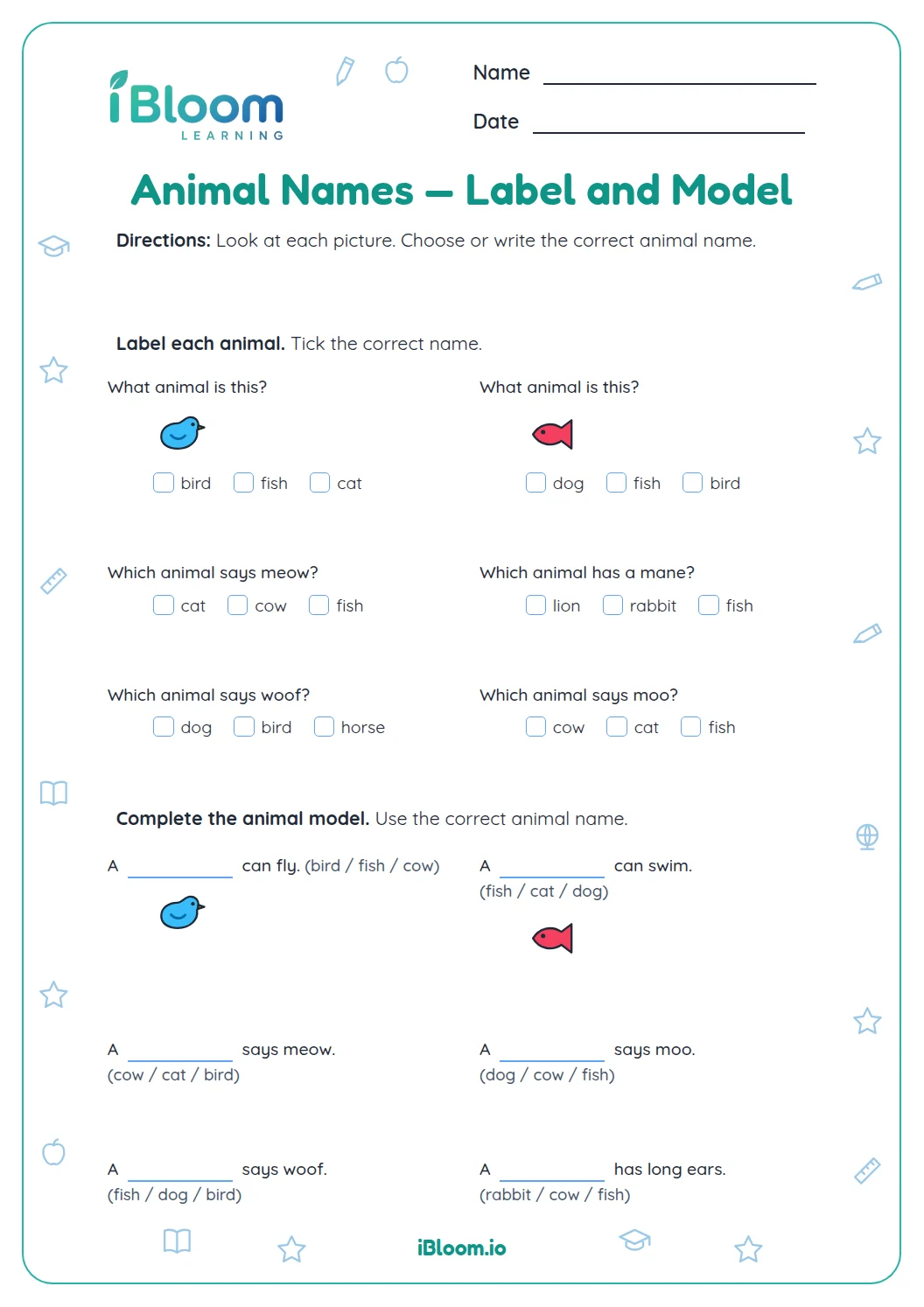
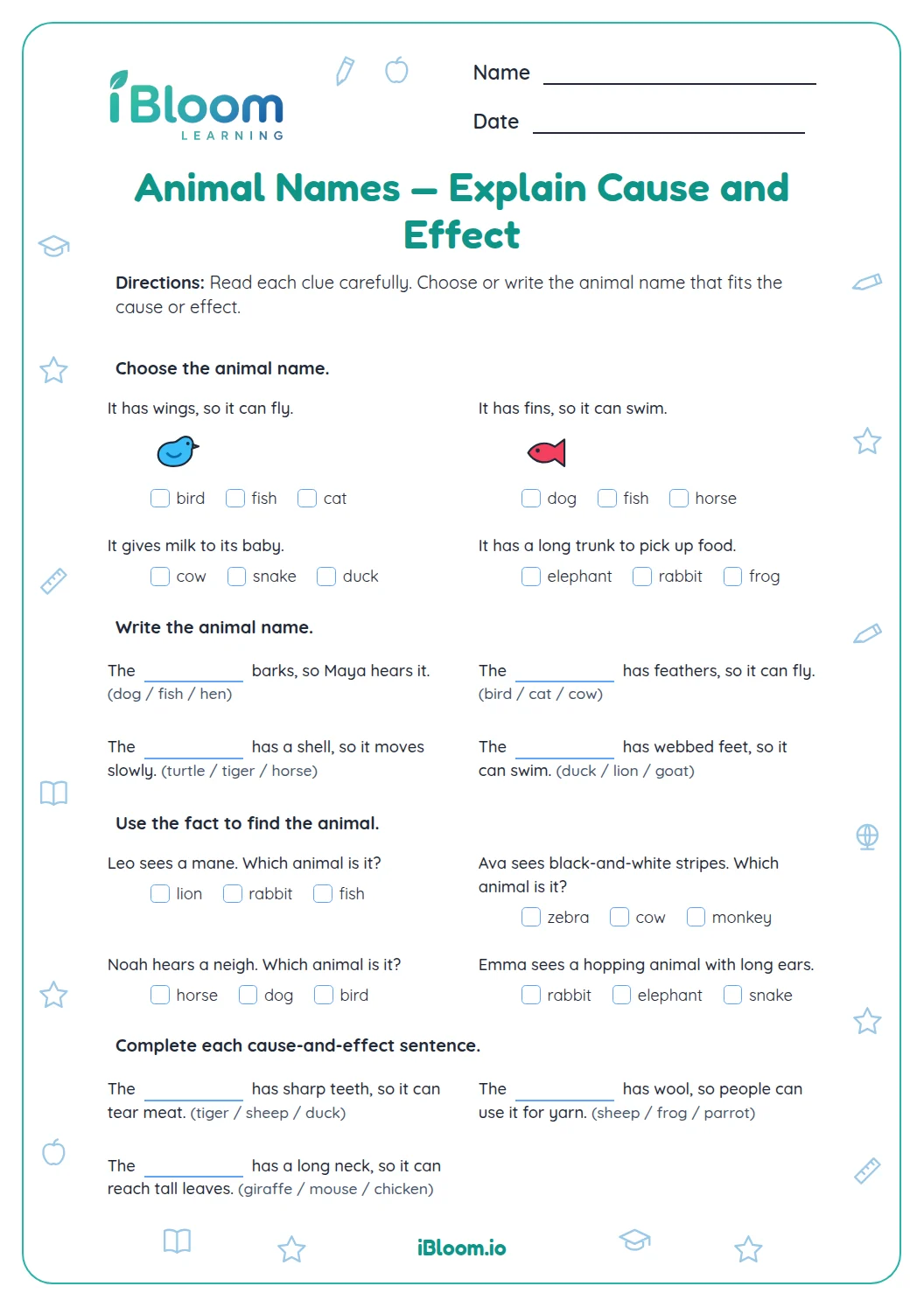
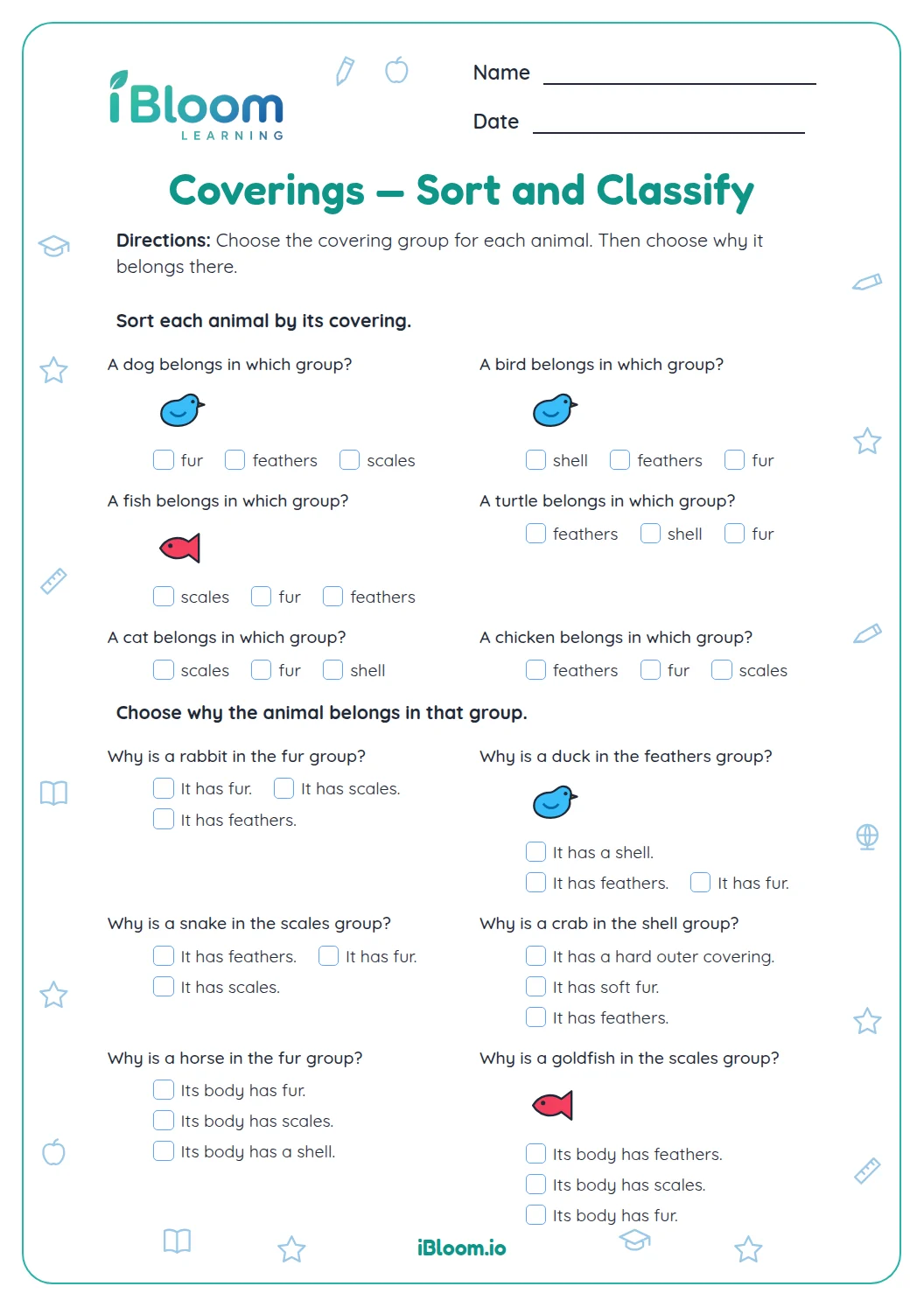
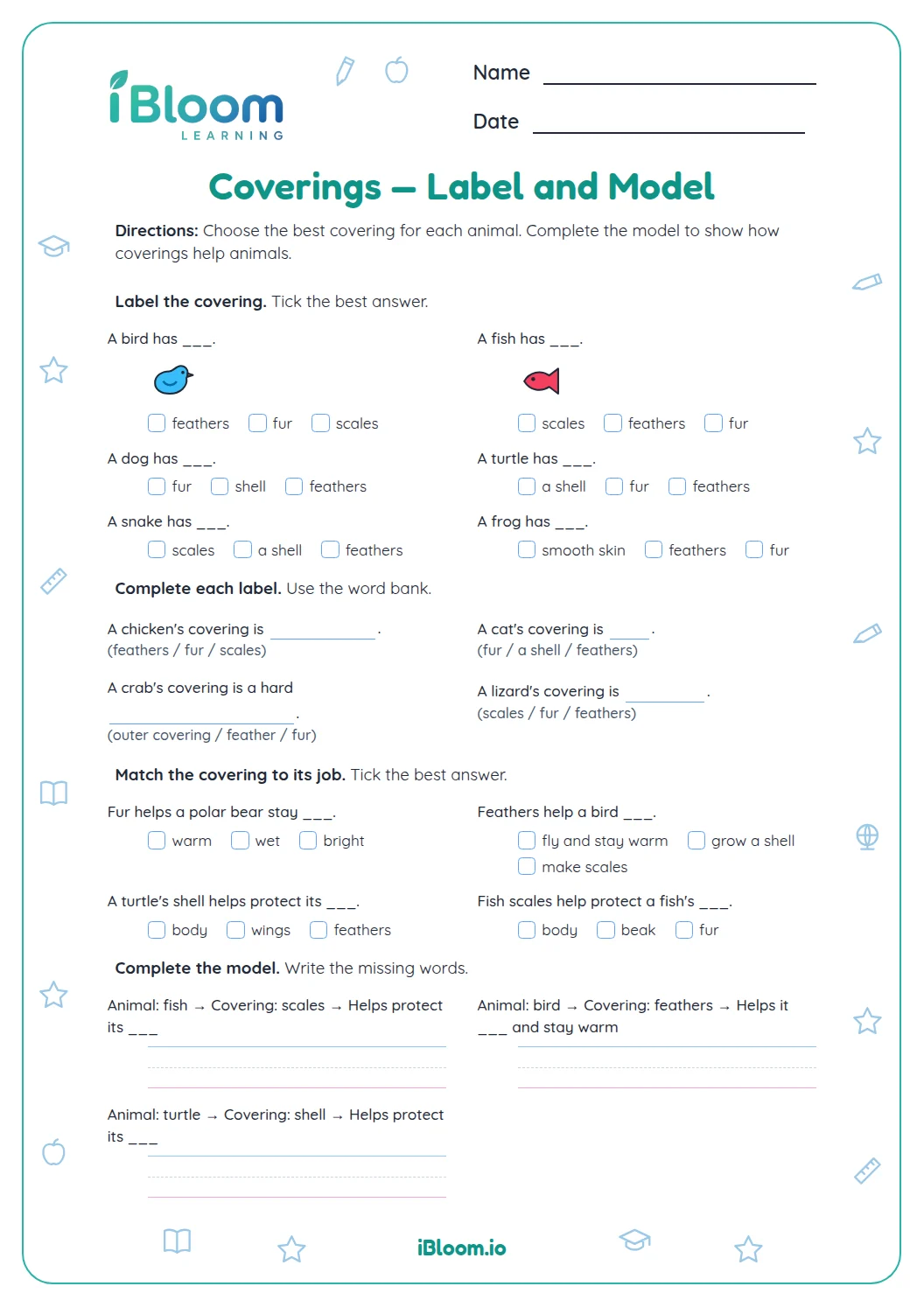
This free Grade 1 science worksheet introduces classification as putting animals into groups by a shared feature. Six questions ask children to identify fur, feathers, or scales. Four more sort familiar animals by two or four legs. Two questions show three animals and ask which one does not fit a named body-covering group. Two more compare pairs of animals that share a covering. Pictures and printed animal names support the task, and an adult can read the prompts aloud. The separate answer key identifies all fourteen choices.
What does it mean to classify an animal?
To classify is to place something in a group using a rule. A fur group contains animals with fur. A two-leg group contains animals with two legs. Naming the rule first helps children explain why an animal belongs.
This worksheet changes the rule between parts. Children look at body coverings in Part A, consider leg counts in Part B, and use a stated covering rule to find an animal that differs in Part C.
How do children sort by body covering?
The six pictured animals provide two examples of each covering: cat and rabbit for fur, duck and chicken for feathers, and snake and fish for scales. The Part A directions ask for the main body covering, so children focus on the feature that covers most of the animal.
Point to a pair such as cat and rabbit and ask what they share even though their ears and body shapes differ. A shared feature can group animals that otherwise look different.
How do children find the animal that does not belong?
In question 11, the rule is fur. Cat and dog fit that rule, while duck has feathers. The child should name the rule when explaining the answer, since another feature could produce another grouping.
- 1Grouping rule: fur
- 2Cat: fur. Dog: fur. Duck: feathers.
- 3Answer: duck does not belong in the fur group.
Can one animal fit different groups?
An animal has more than one feature. A duck belongs in the feather group when sorting by covering and in the two-leg group when sorting by legs. It is useful to say both statements aloud.
The leg questions show a goat, penguin, deer, and rooster. Count the legs or feet in each drawing and think about the whole animal, including any leg hidden behind another one.
How to use this worksheet
- 1Name the pictured animals before asking the child to classify them.
- 2Explain fur, feathers, and scales, then read the Part A choices aloud if needed.
- 3For Part B, announce the new rule: number of legs on the whole animal.
- 4In Part C, say the named covering before considering each animal.
- 5Check the answer key and ask the child to explain one choice using “because.”
- 6Compare the final animal pairs and name the body covering they share.
Mistakes to notice and fix
The mistake
Keeping the same grouping rule when moving from coverings to legs.
The fix
Read the part heading together and say the new rule before answering.
The mistake
Counting only the legs visible in a side-view picture.
The fix
Ask about the whole animal, including legs hidden behind its body.
The mistake
Choosing duck as the odd animal because it swims.
The fix
Return to the named fur rule; the reason is that a duck has feathers.
What to practice next
Make more practice
Questions parents and teachers ask
What animal groups are used on this sheet?
Part A uses fur, feathers, and scales as body-covering groups. Part B uses two legs and four legs. Part C returns to coverings and asks which animal does not fit the stated group. Part A also compares two animal pairs by their shared covering. The rule is printed in each part so children know which feature to consider.
Can I read the animal questions aloud?
Yes. Reading the prompts and choices aloud lets children focus on observing and grouping animals. Name each pictured animal together, then let the child choose an answer. Ask for a spoken reason afterward, such as “The duck has feathers,” to check that the grouping rule is understood.
Why can a duck belong to two different groups?
A duck has both feathers and two legs. It belongs in the feather group when the rule is body covering and the two-leg group when the rule is leg count. The worksheet separates those rules into different parts so children can apply one feature at a time.
Should children count only the legs they can see?
No. The leg questions ask about the whole animal, including a leg hidden behind another in a side-view drawing. A goat and a deer each have four legs; a penguin and a rooster each have two. Encourage children to combine the picture with what they know about the animal.
What are the answers to the final two questions?
The answers are duck and rabbit. In question 11, cat and dog have fur, while duck has feathers. In question 12, chicken and duck have feathers, while rabbit has fur. Ask the child to explain each answer using the named covering rather than a different feature. The two pair questions answer fur and feathers.