







About this worksheet
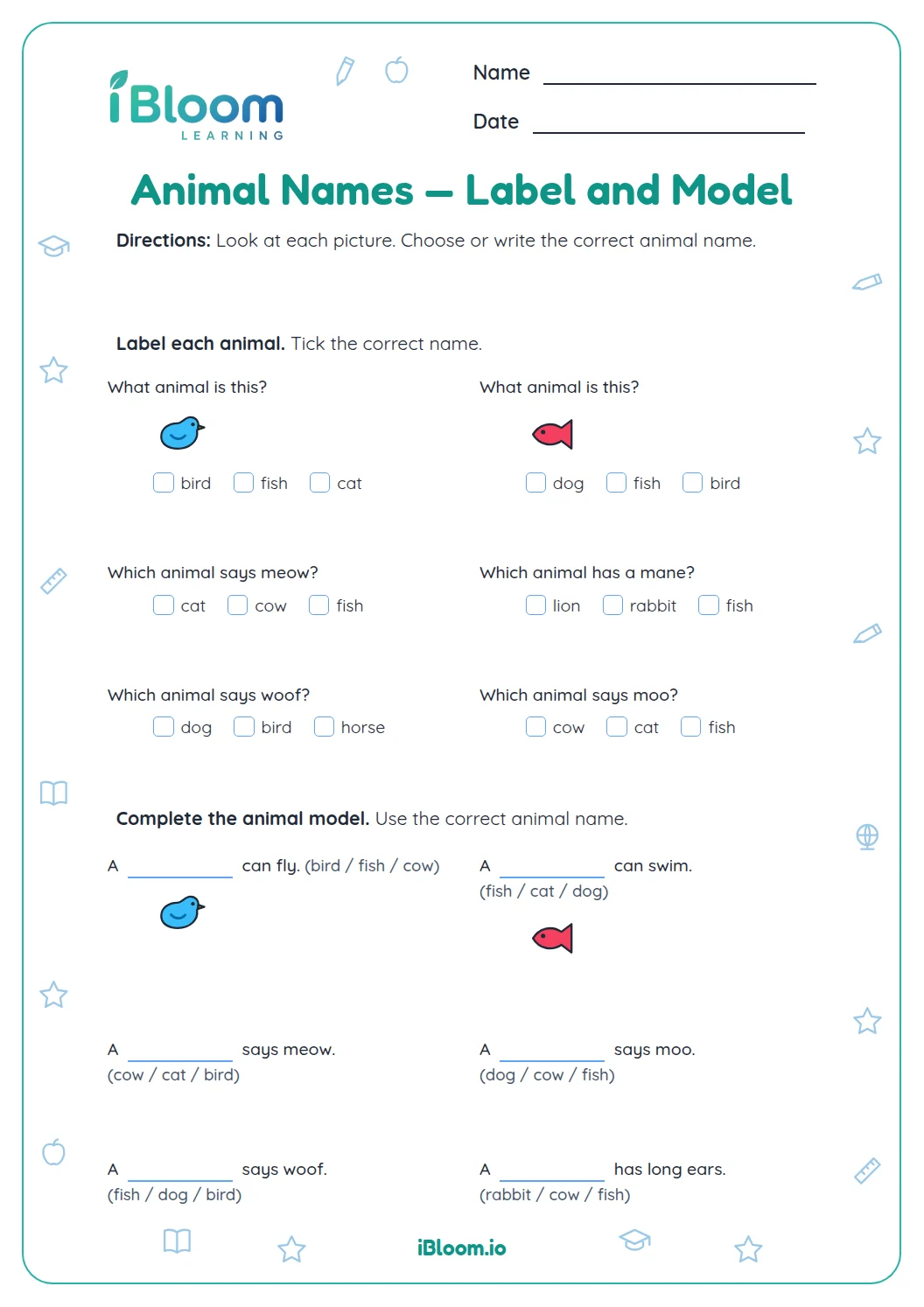
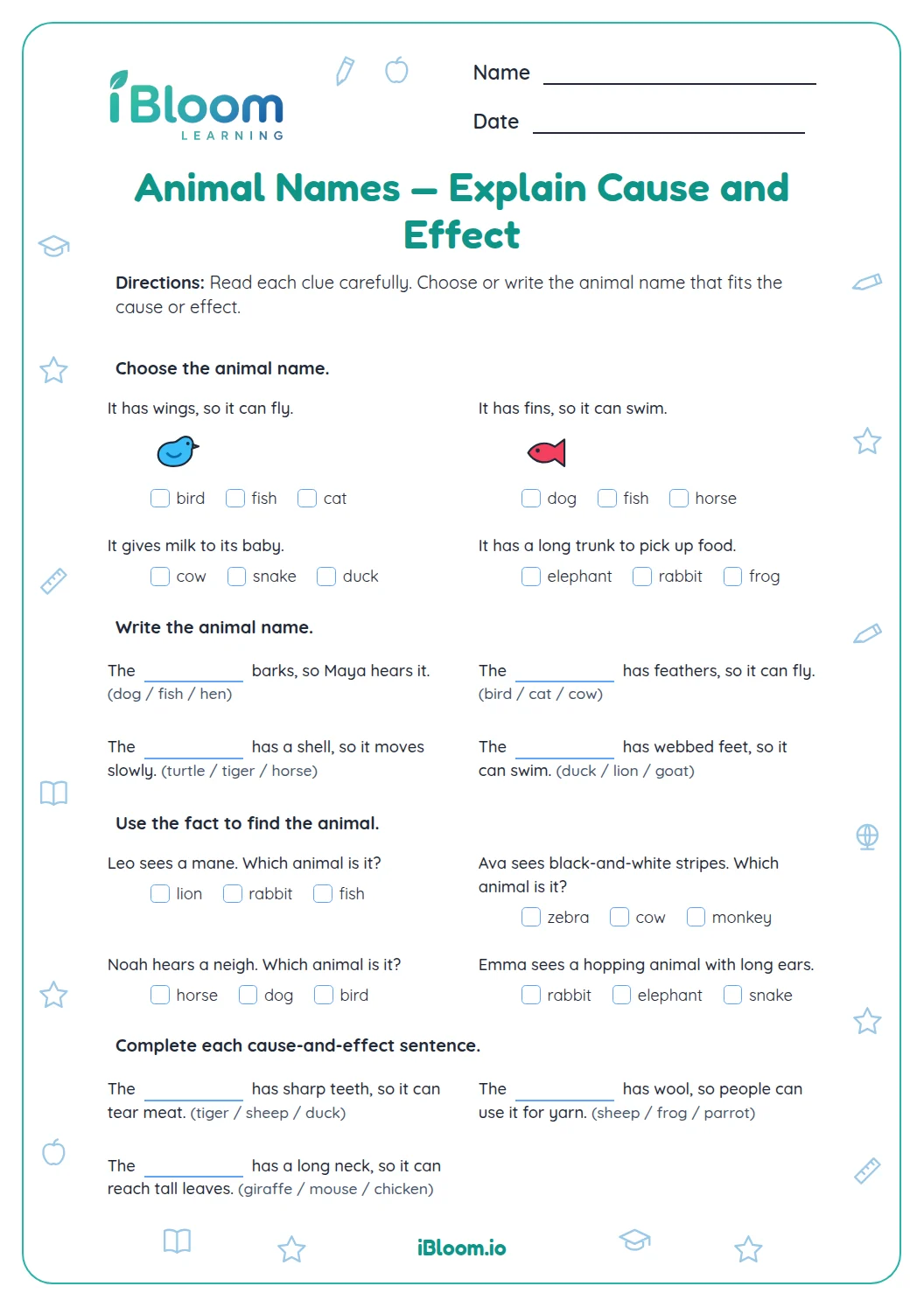
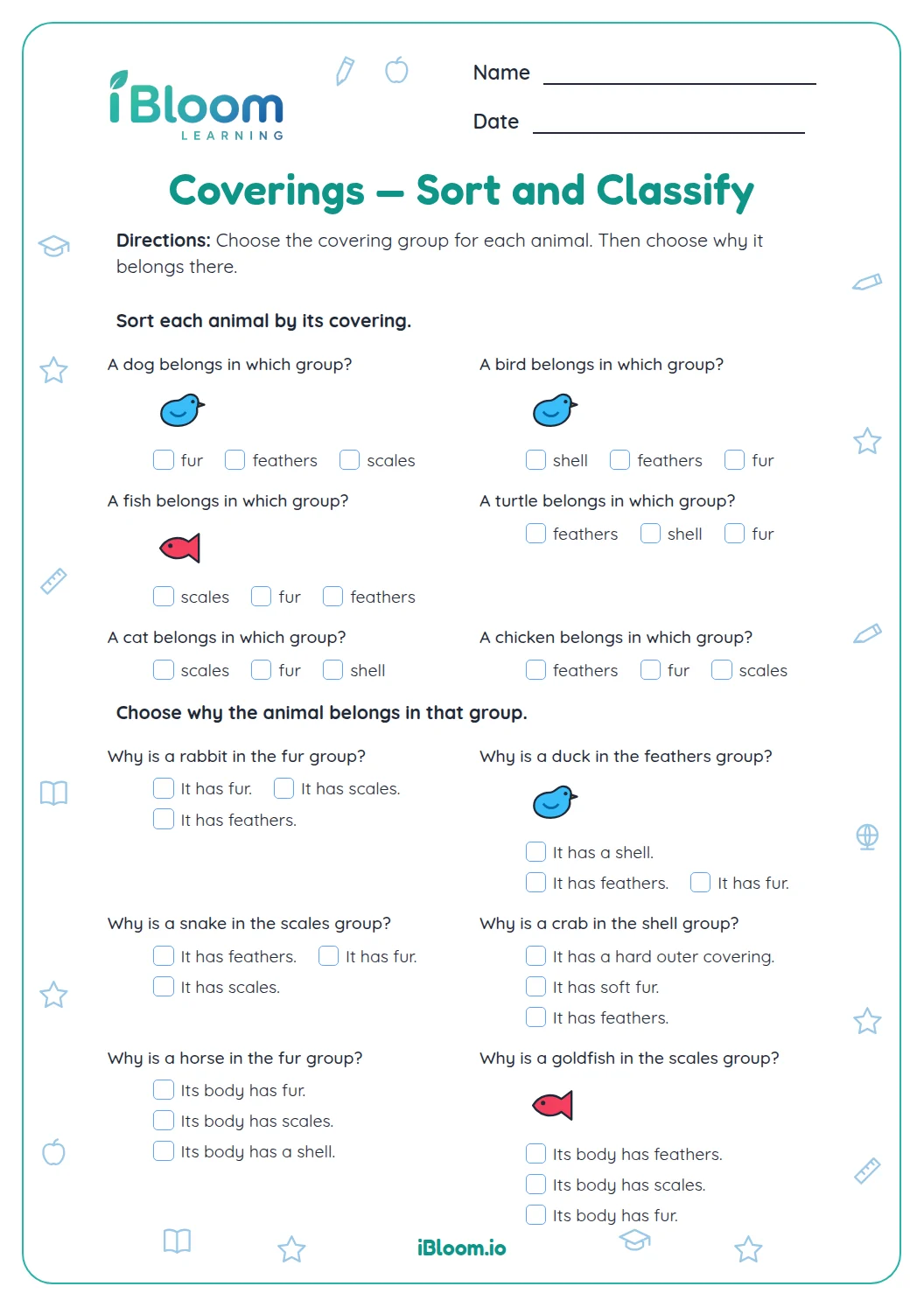
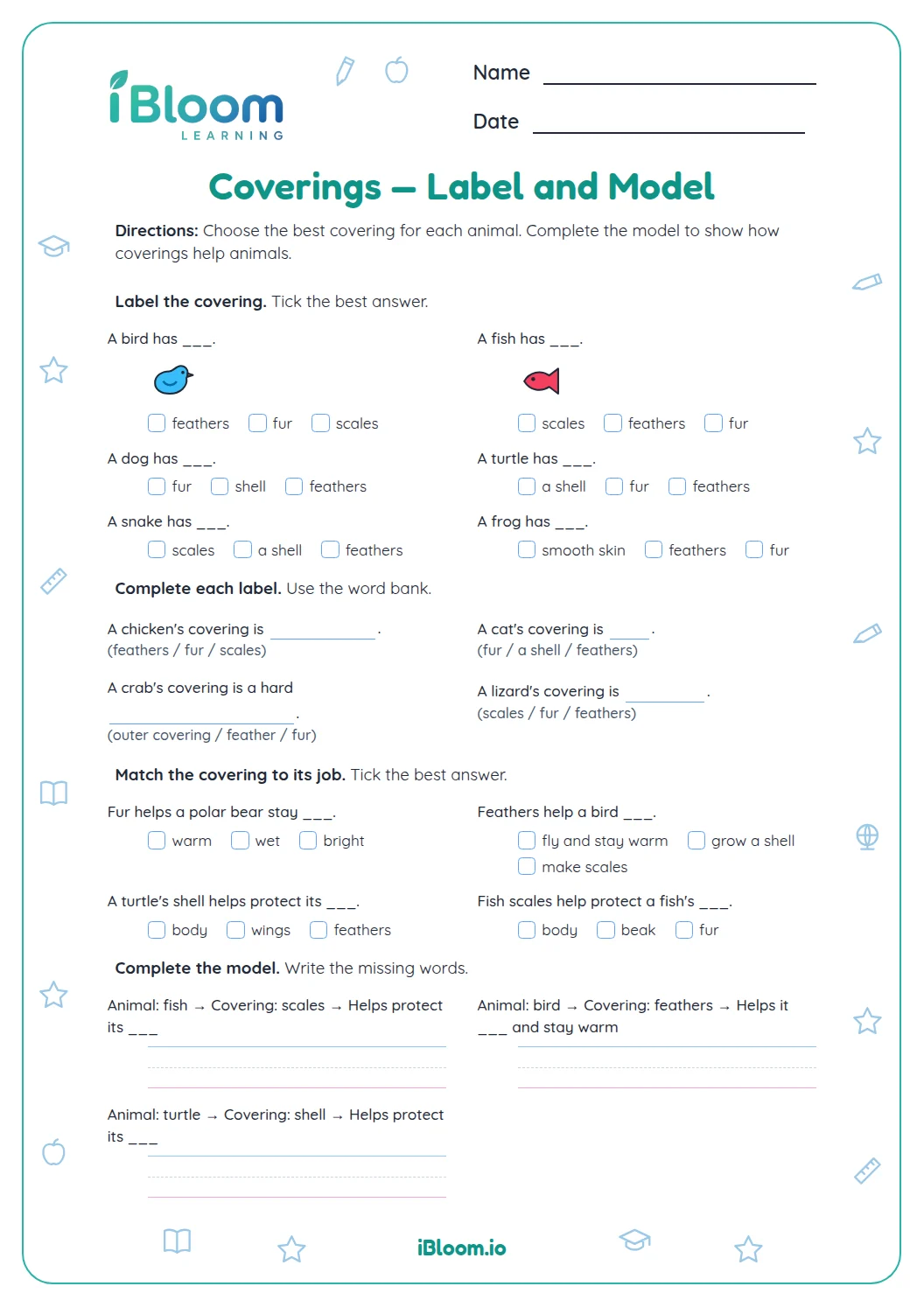
This free printable gives Grade 1 students 14 questions about classifying animals by observable features. Picture clues and short comparisons focus on coverings, body parts, leg counts, and habitats. Students group familiar animals by a shared feature across two parts. The worksheet and its separate answer key each span two pages.
How can you classify animals?
Classifying means putting things into groups by shared features. Animals can be compared by coverings, body parts, where they live, and how many legs they have. Look for the feature named in each prompt.
What features help identify animal groups?
Feathers are a clue for birds; fur is common among mammals; fish have fins and live in water. Insects have six legs, while spiders have eight. These observable clues help students sort familiar animals.
How do you choose a sorting rule?
A sorting rule names one feature shared by the animals in a group. For example, a duck and a robin can go together because both have feathers. A whale and a fish both live in water, even though they are different kinds of animals.
How to use this worksheet
- 1Read the feature in the question.
- 2Look closely at the animal or animal names.
- 3Compare body coverings, body parts, legs, or habitat.
- 4Choose a group whose members share the feature.
- 5Say the rule aloud to explain your choice.
Common mistakes and quick fixes
The mistake
Grouping animals because they look alike in color instead of using the named clue.
The fix
Read the whole prompt again, name the clue that matters, and check the answer against that clue.
The mistake
Saying every animal that lives in water is a fish.
The fix
Read the whole prompt again, name the clue that matters, and check the answer against that clue.
The mistake
Mixing up the number of legs on insects and spiders.
The fix
Read the whole prompt again, name the clue that matters, and check the answer against that clue.
What to practice next
Questions parents and teachers ask
What does animal classification mean?
Animal classification is the idea practiced on this page. Students use the sentence clues and examples to decide what belongs, then check each response against the answer key. Ask the learner to point to the clue that supports the answer before moving on. Invite the student to explain the choice in their own words.
Which grade is this animal classification worksheet for?
This printable is written for Grade 1. It starts with short, direct examples and moves toward using the same idea in complete sentences. An adult can read the directions aloud while the student completes the examples independently. Invite the student to explain the choice in their own words.
How should we use the answer key?
The answer key is a separate page. Let the student try a whole part first, then compare responses and revisit any missed item by rereading its sentence or prompt. For an open response, use the sample answer as one possible model. Invite the student to explain the choice in their own words.
Can this worksheet be used for classwork or homework?
Yes. Print the worksheet pages for individual practice, a small-group lesson, or a short homework review. The parts are ordered from simpler recognition toward applying the idea, so students can pause between sections and check their understanding. Invite the student to explain the choice in their own words.
What should students do when an answer is incorrect?
Have the student read the entire example aloud and identify the clue that matters. Then revise the response and explain the change in a few words. This keeps checking focused on the grammar or science idea rather than copying an answer without thinking. Invite the student to explain the choice in their own words.