






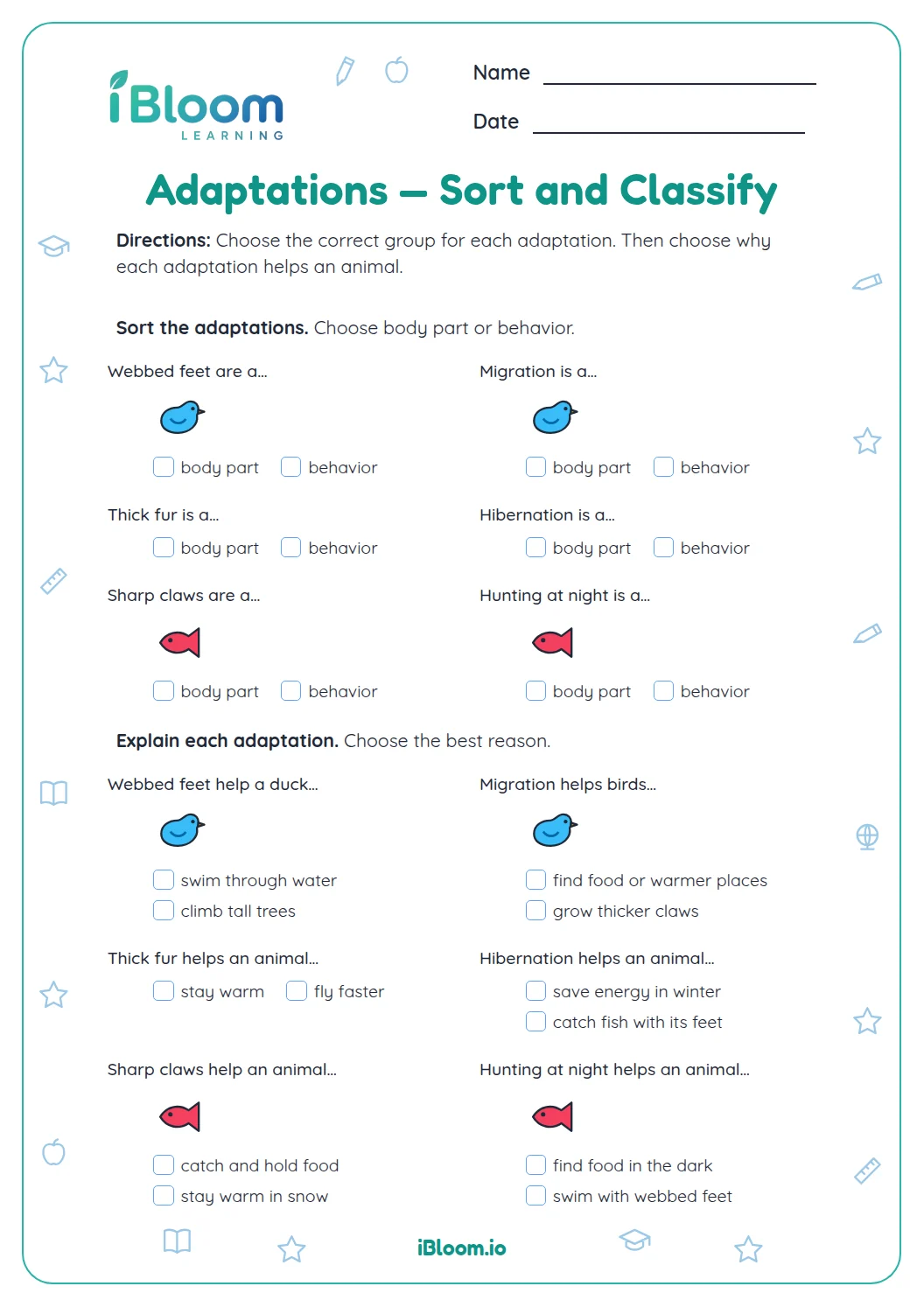


About this worksheet
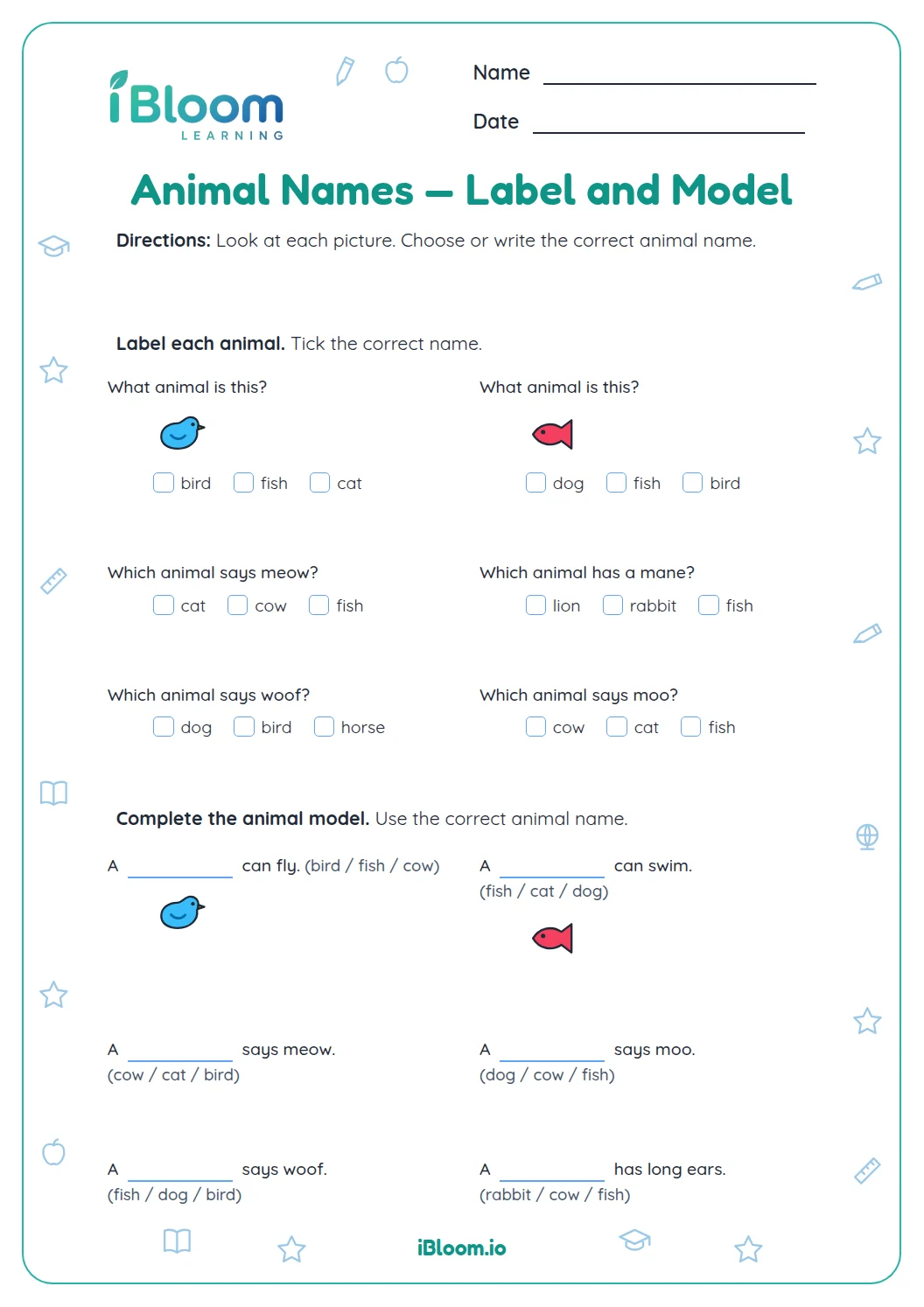
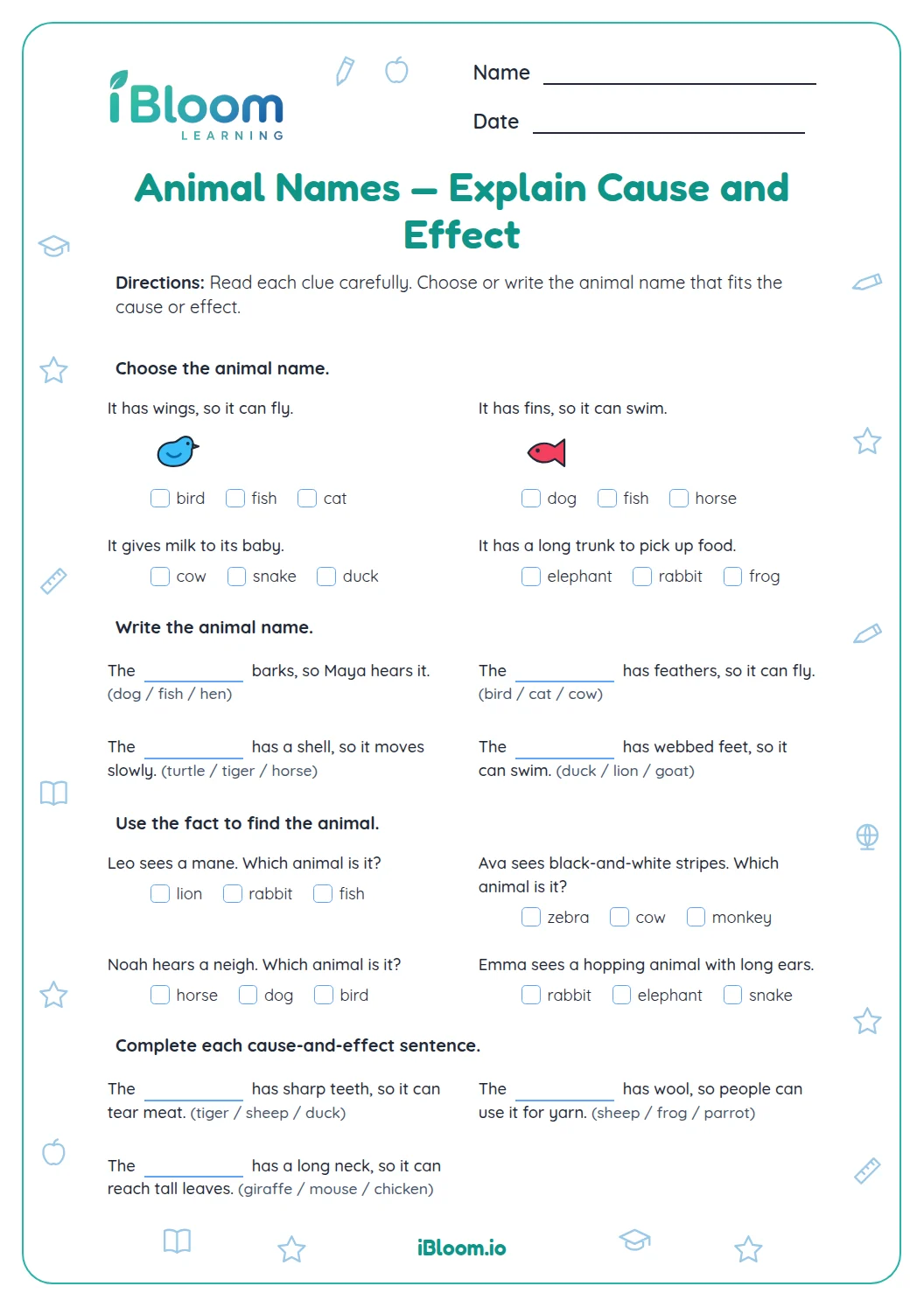
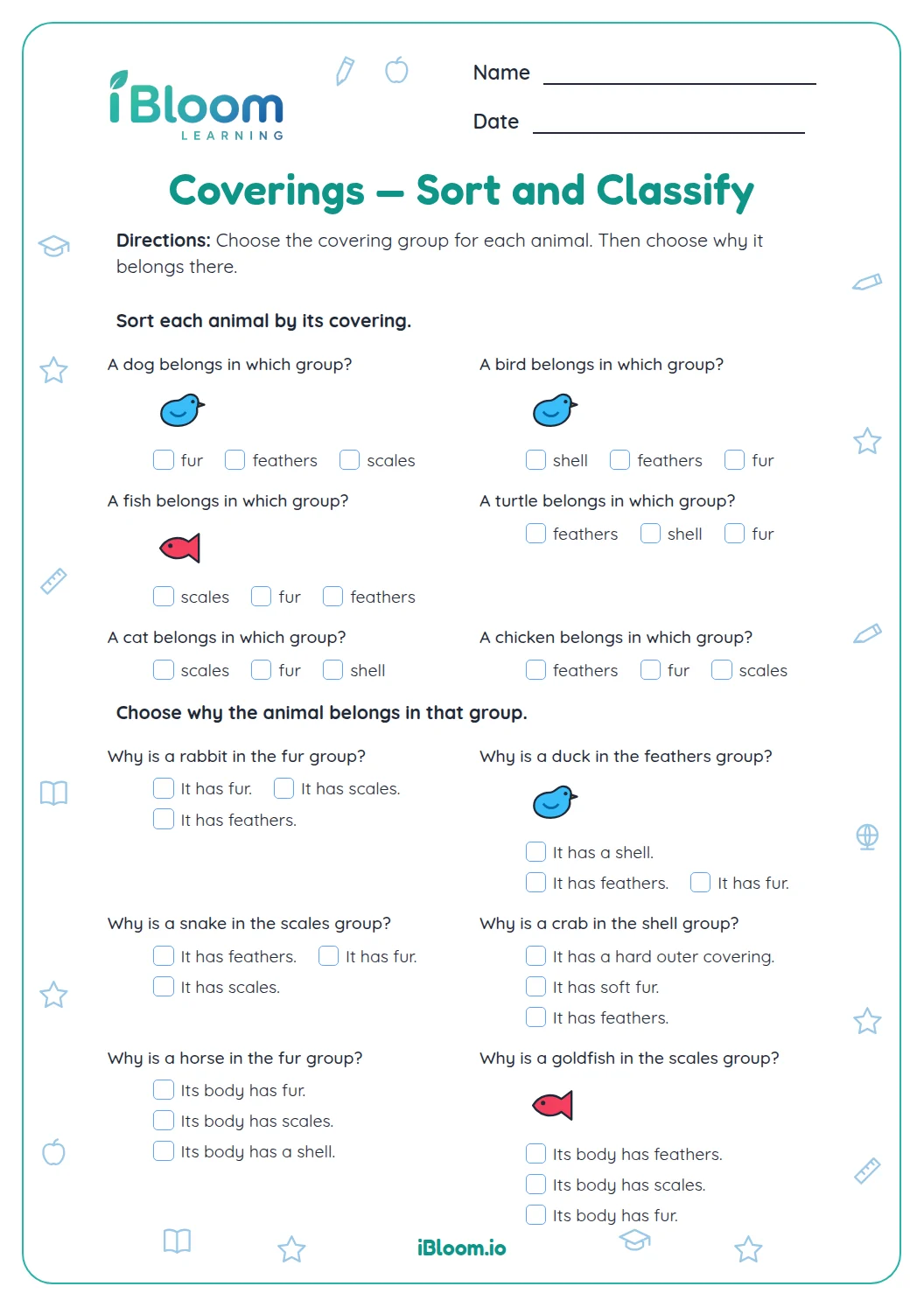
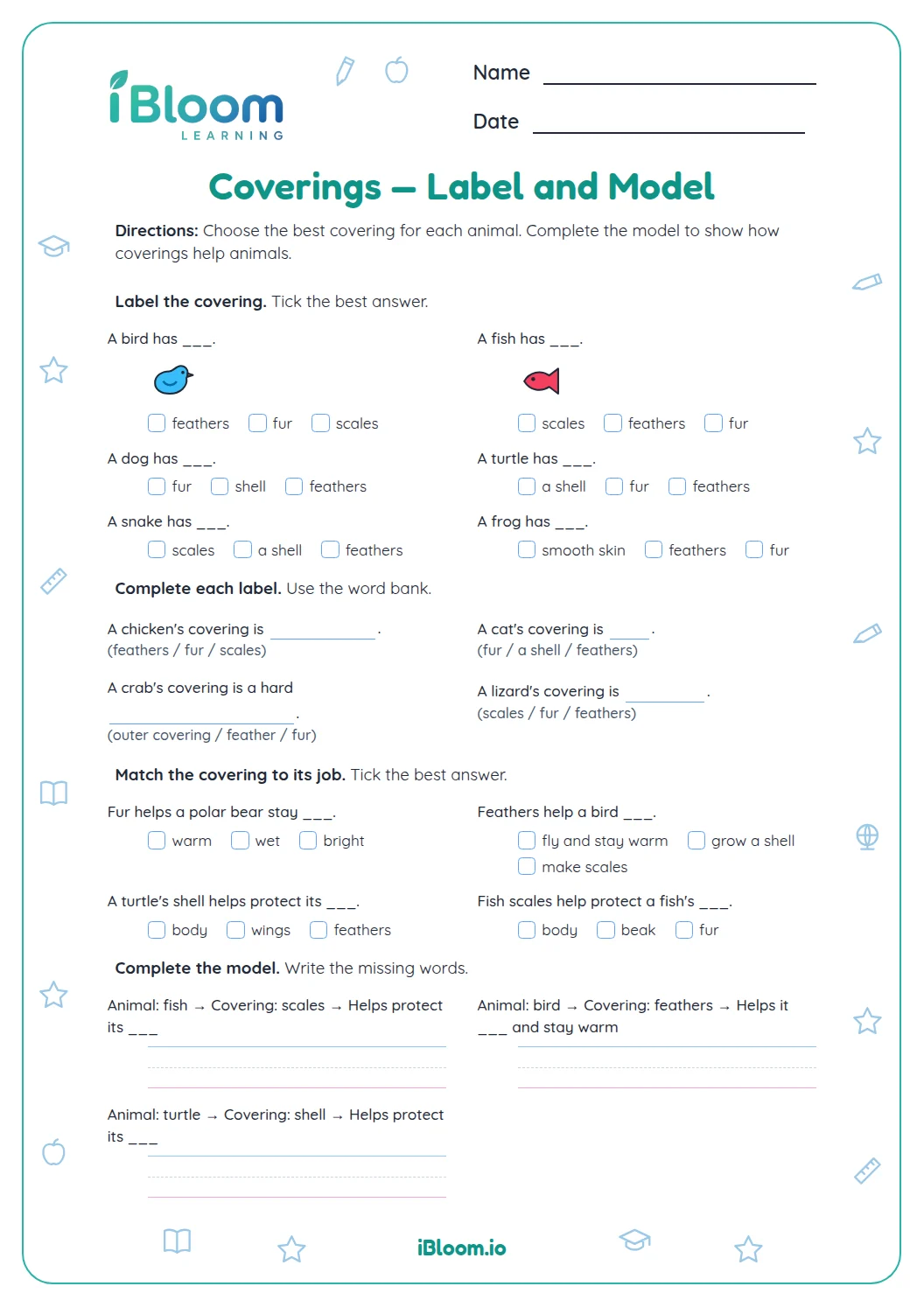
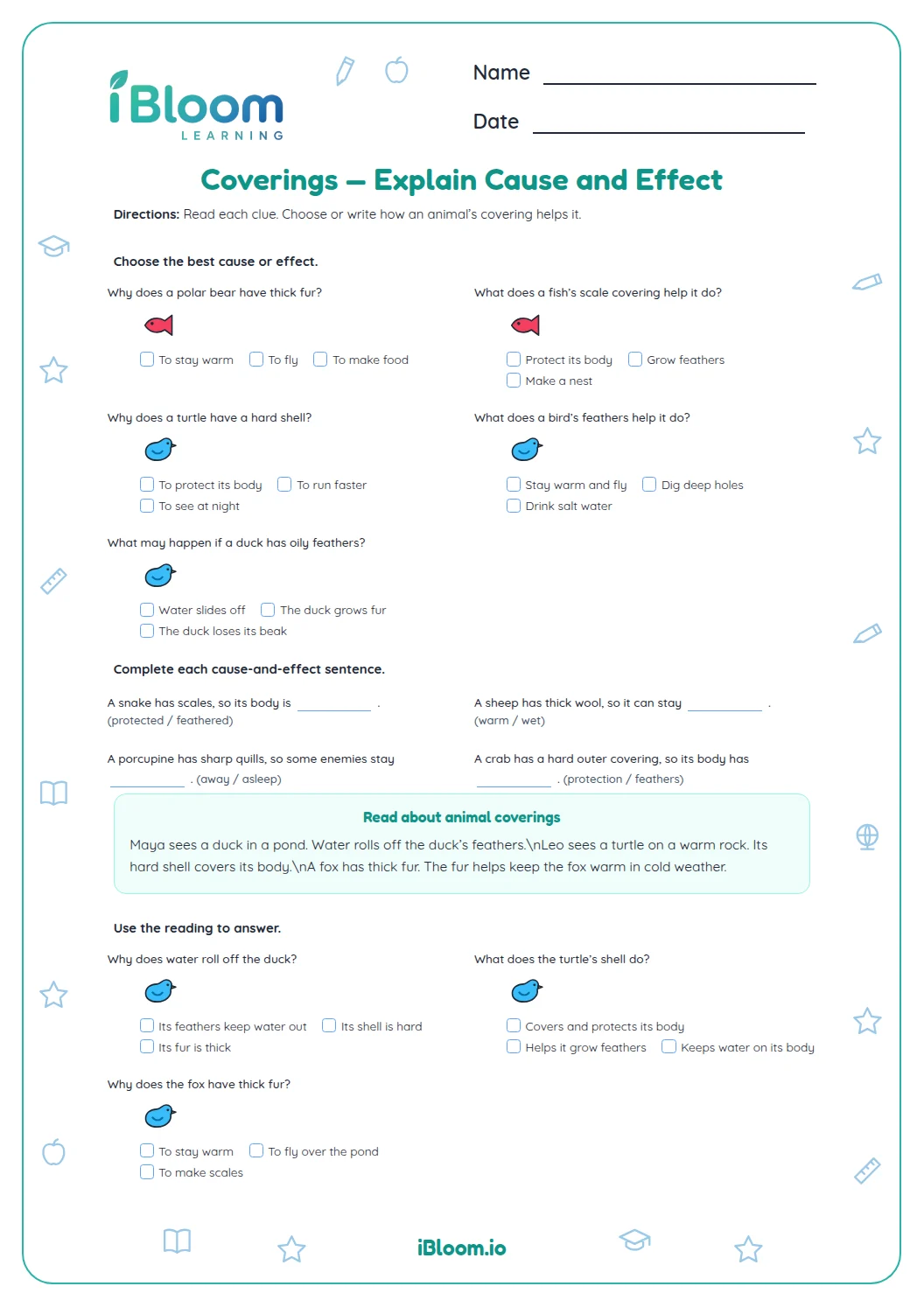
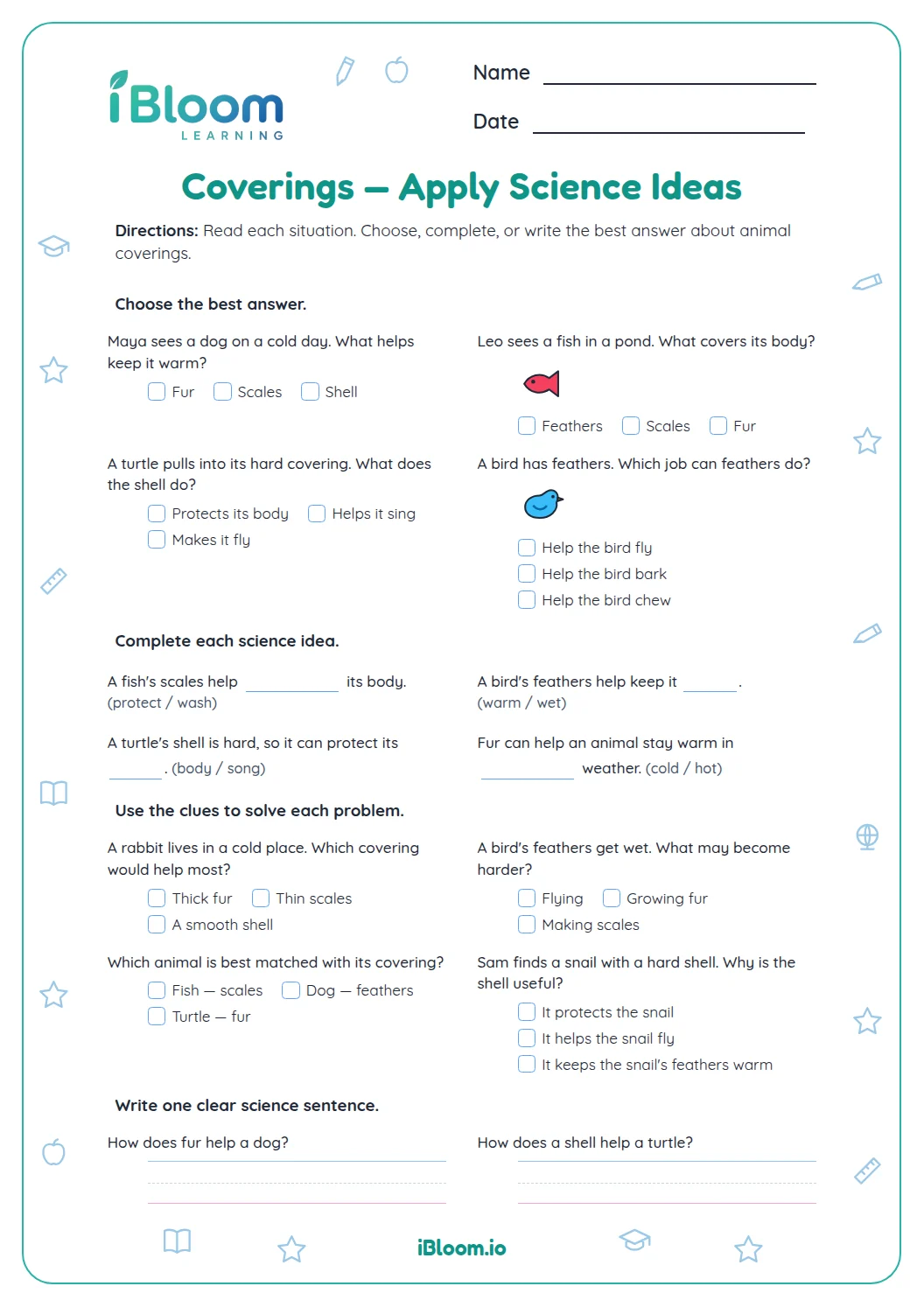
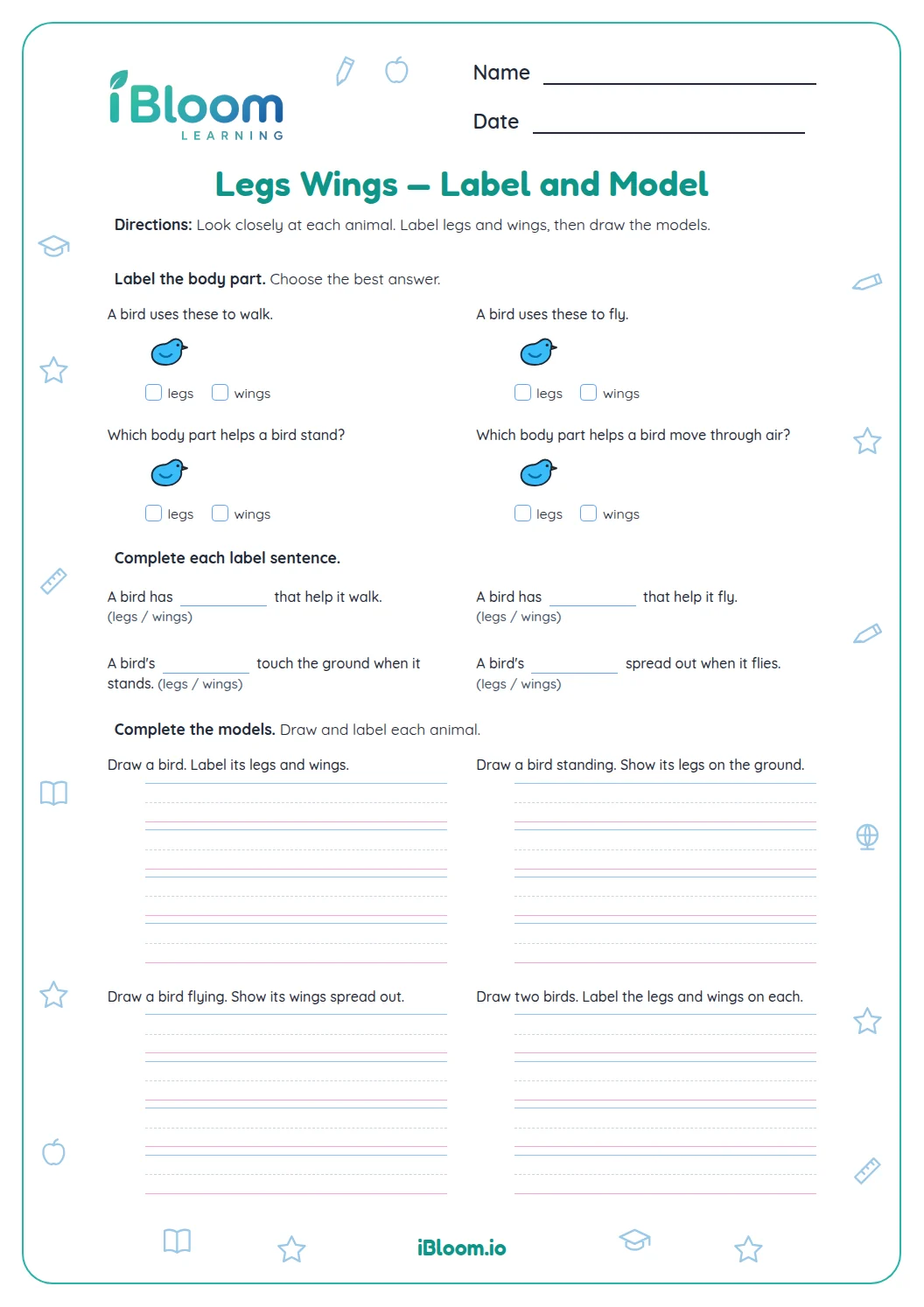
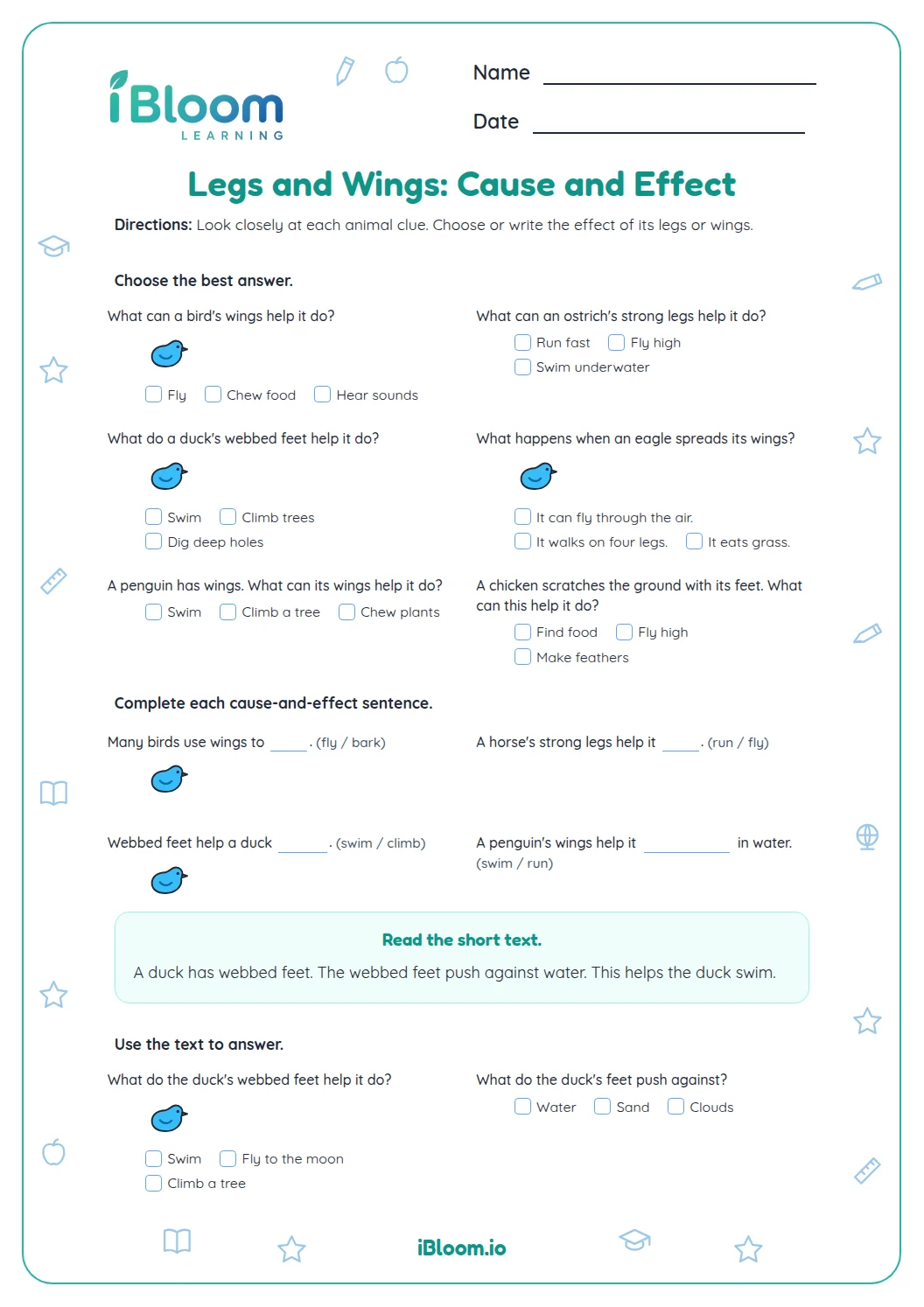
This free Grade 1 worksheet helps children classify familiar animals by observable traits such as feathers, fur, scales, wings and webbed feet. It moves from choosing a group to completing trait statements and making simple two-group models. The answer key gives the expected animal groups and describes what a complete model should include.
Which animal features help us sort animals?
The first questions connect a familiar animal to a body covering or feature. Children choose the group that matches the clue, then name traits in short statements.
A useful routine is to name exactly what can be seen: a bird has feathers, a cat has fur, and a fish has scales. The model questions then let children show how a rule creates groups.
- 1A bird has feathers. → feathered animal
- 2A fish has scales. → scaly animal
What belongs in a classification model?
A simple model has clear group labels and examples that follow those labels. The final item models two groups in words: Feathered animals can include a bird, and scaly animals can include a fish.
For young learners, the model is a way to show the sorting rule. Ask the child to point to the feature that makes each example fit its group.
How can I help a child explain a group?
Ask, “What do these animals have in common?” Encourage a specific feature rather than a guess about where an animal lives. A duck’s webbed feet, for example, are connected with swimming.
The answer key describes the important parts of each open response. A child may use a different animal example when it clearly fits the stated trait.
How to use this worksheet
- 1Read each animal clue aloud and name the feature in it.
- 2Complete the group choices before moving to the trait blanks.
- 3For the short responses, accept another animal when it truly has the named feature.
- 4Complete the two-group model with an animal that fits each body-feature label.
- 5Use the key to check group labels and examples together.
Common mix-ups and quick fixes
The mistake
Calling a fish feathered because it swims near birds.
The fix
Sort by the body feature in the clue: a fish has scales.
The mistake
Using “animal” as a group label when the model asks for a trait group.
The fix
Make the label tell the sorting rule, such as “animals with fur.”
The mistake
Naming a place instead of a body feature.
The fix
Ask what you can observe on the animal, such as fur, scales, feathers or a shell.
What to practice next
Make more practice
Questions parents and teachers ask
What does this animal classification worksheet practice?
It practices sorting familiar animals by visible traits, including feathers, fur and scales. Children also connect a feature such as webbed feet with swimming and draw two simple classification models. The answer key includes the expected group and examples for each model.
How many questions are on the worksheet?
There are 14 questions across four parts. Children make four group or trait choices, complete five statements, answer four short prompts and fill one labeled group model. The worksheet and its answer key each print as two pages. Use the sample answers to check the group labels and traits.
What should count as a correct animal example?
The example should match the trait named in the question. A cat is a clear example of an animal with fur, and a bird is a clear example of an animal with feathers. The key gives a sample, while accepting another accurate example.
How does the model activity work?
The final item gives two body-feature group labels and asks for one matching animal in each: a bird fits Feathered animals, and a fish fits Scaly animals. The key also accepts another animal example that clearly matches each trait.
Can we read the questions aloud?
Yes. The prompts are short and the main task is noticing an animal feature and using it to sort. An adult can read a clue aloud while the child chooses an answer, supplies a word or makes the model. This keeps the focus on observing and naming traits.