












About this worksheet
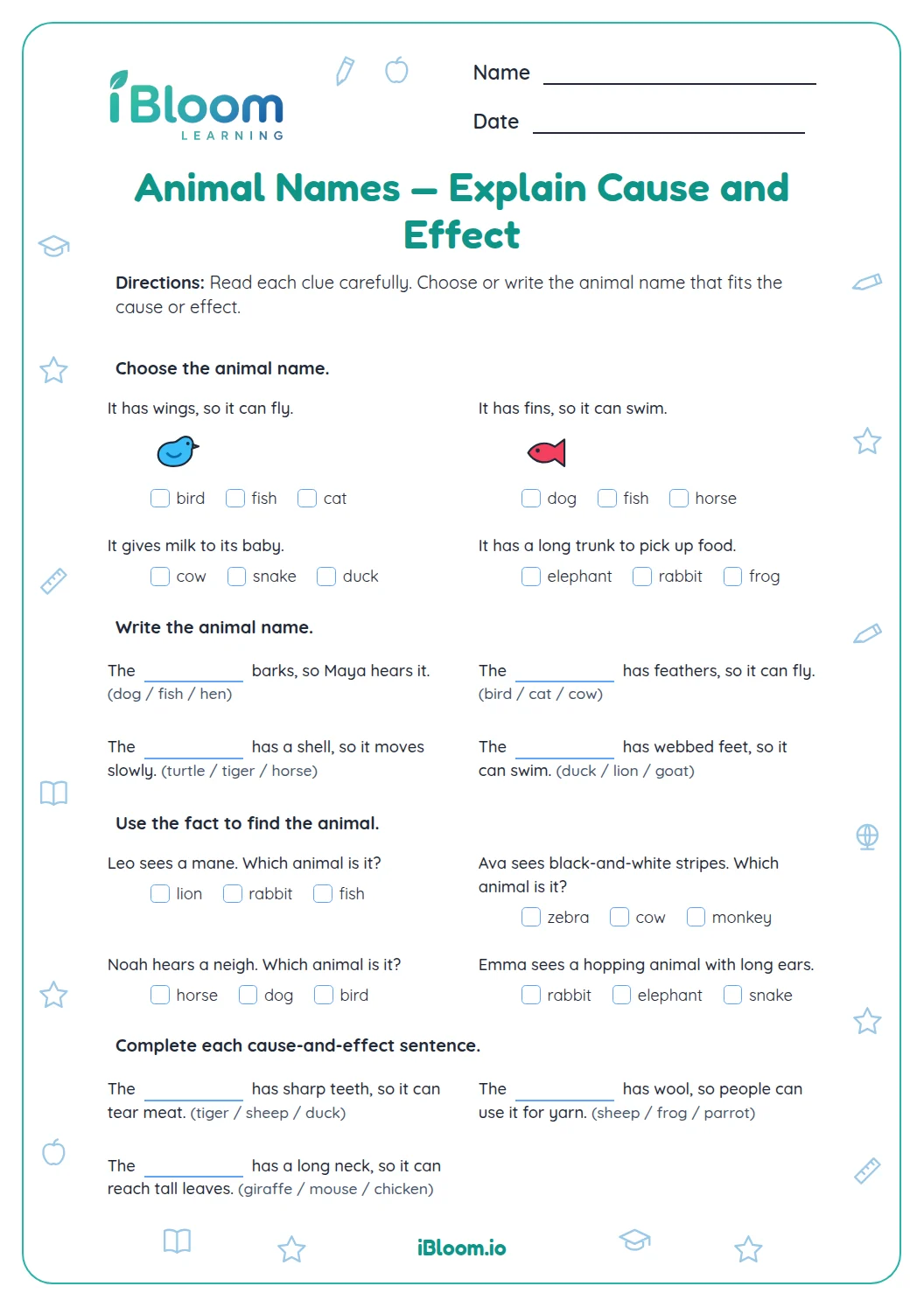
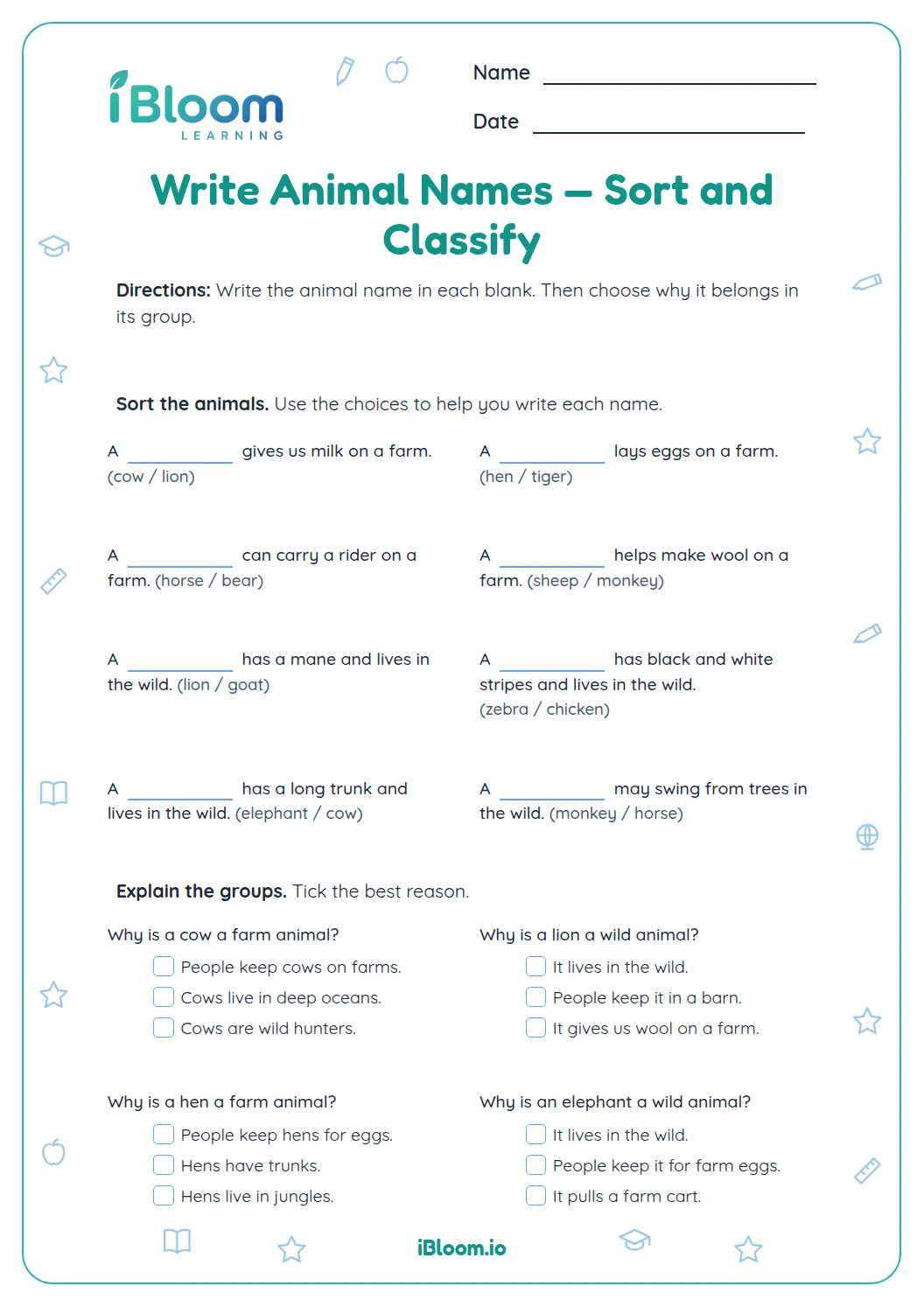
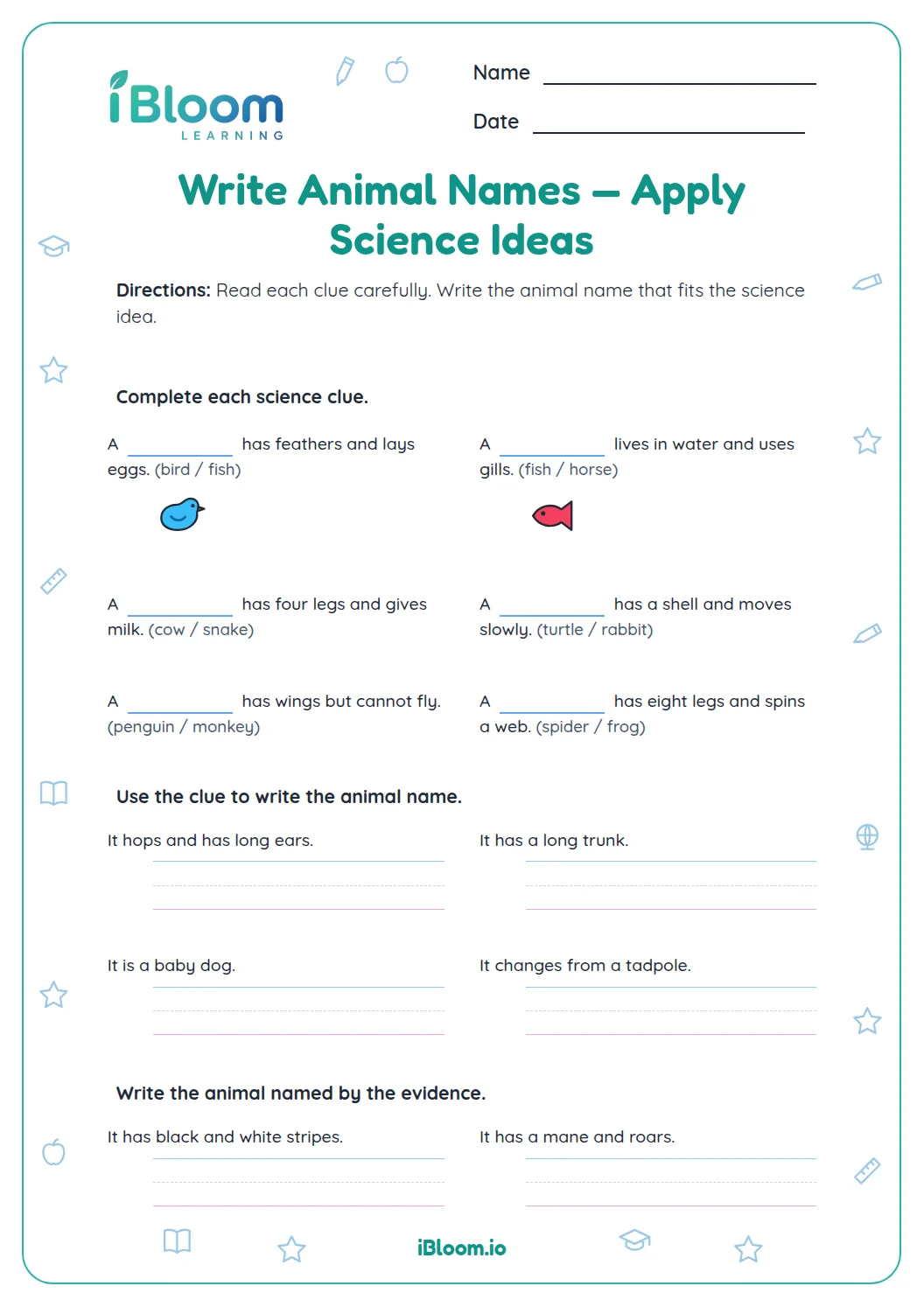
This free Grade 1 worksheet combines animal vocabulary with a simple land-and-water sort. Part A shows four animals and asks children to choose each name. Part B presents eight animal names with matching pictures; children sort them by where the animals live. Cats, dogs, horses and cows go in the land group. Fish, whales, sharks and dolphins go in the water group. Part C adds four sentences to finish with land or water. These 16 questions practice the word categorization in Common Core L.1.5a while keeping the groups tied to a concrete idea. A separate answer key marks every correct choice.
Aligned to L.1.5a
Which animal names are practiced?
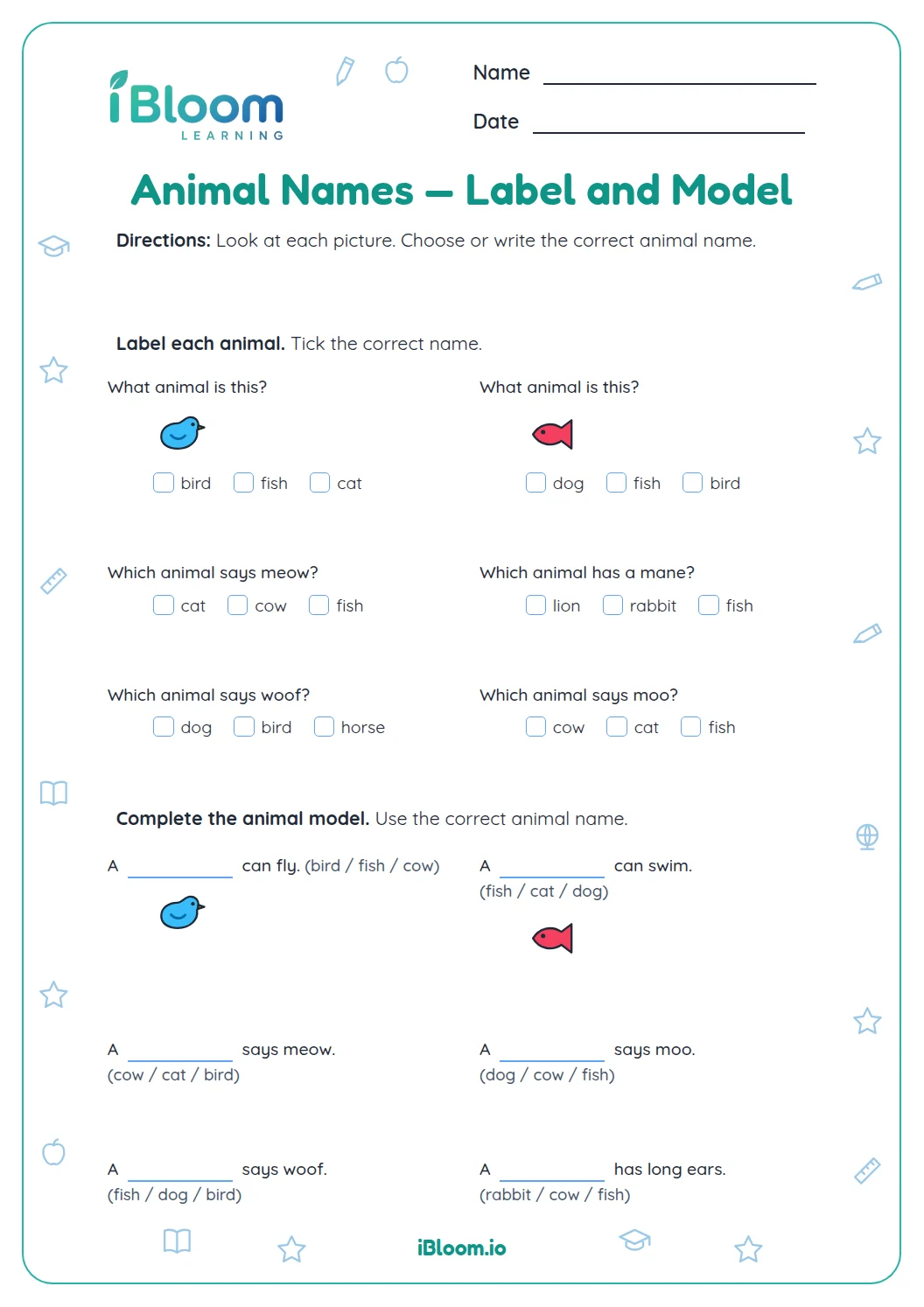
Part A asks children to identify a cat, a fish, a horse and a whale from pictures. Two names appear with each picture, and children choose the name that matches. Say both choices aloud when a child needs help reading.
Part B includes those four names plus dog, cow, shark and dolphin. The printed name and its matching picture stay together, helping children connect the spoken word, written word and animal.
What is the rule for the two groups?
The groups describe where the listed animals live. Cats, dogs, horses and cows live on land. Fish, whales, sharks and dolphins live in water. Swimming once is not the same as living in water.
Question 6 uses whale, which belongs in the water group. A whale comes to the surface to breathe air, but it still lives in the ocean. Keep the sorting question focused on its home.
- 1Animal name: whale
- 2Sorting question: Where does it live?
- 3A whale lives in the ocean.
- 4Choose: Water
How can an adult discuss the answers?
After children choose a group, invite them to complete a spoken sentence: “A horse belongs in the land group because it lives on land.” Use the same sentence frame for a water animal so the reason stays connected to the rule.
The printed activity has 12 choice questions and four reasons to complete. An adult can extend the conversation by asking which two animal names share a group and why. For instance, a shark and a dolphin both belong in water, even though they are different kinds of animals.
Name the animal, then apply the sorting rule
- 1Point to each animal in Part A and say its name before reading the choices.
- 2Read both choices and mark the name that matches the animal.
- 3Read the Part B rule: sort by where each animal lives.
- 4Say the printed animal name, then choose land or water.
- 5Finish each Part C sentence with land or water, then read the full reason aloud.
- 6Check with the answer key and ask for one spoken reason from each group.
Mistakes to watch for
The mistake
Choosing the water group for a dog because dogs can swim.
The fix
Ask where a dog lives, sleeps and spends its day. The rule is where it lives, so choose land.
The mistake
Putting a whale on land because it breathes air.
The fix
Separate breathing from home. Whales breathe air at the surface and live in water.
The mistake
Mixing up a horse and a cow when choosing an animal name.
The fix
Compare the ears, face and mane in the picture. Say both names aloud, then choose the matching animal.
Common Core alignment
Sort animal-name words into land and water categories.
On this sheet: Part B explicitly sorts eight printed animal names into two categories defined by where the animals live.
Show the official wordingHide the official wording
Sort words into categories (e.g., colors, clothing) to gain a sense of the concepts the categories represent.
What to practice next
Make more practice
Further reading
Questions parents and teachers ask
Which animals are in the land group?
Cats, dogs, horses and cows are the four land animals in Part B. The rule asks where each animal lives. Encourage children to say the whole reason, such as “A cow lives on land,” instead of choosing a group only because the animal has legs.
Which animals belong in the water group?
Fish, whales, sharks and dolphins belong in the water group on this sheet. Each lives in water, even though whales and dolphins come to the surface to breathe air. Ask children to connect the name to its matching picture before marking the group beside it.
Why is a dog a land animal if it can swim?
The sorting rule is where the animal lives, so a dog belongs in the land group. Being able to swim does not make water its home. Ask the child where a dog sleeps, eats and spends its day, then return to the words “Where does it live?”
Can a child complete this before reading every animal name?
Yes. An adult can read the animal names and choices aloud while the child uses the pictures to identify the animals. Point to the printed name as you say it. Then let the child choose the group and explain the sorting rule in their own words.
What does the answer key include?
The key marks all 12 correct choices and supplies land or water for the four sentence blanks. Use it to check one part at a time. If an answer differs, ask the child to name the animal and repeat the grouping rule before trying again.