Free printable practice
Animal Homes Practice Activities
Grade 1 science worksheets help children identify animal homes such as nests, dens, burrows, webs, hives, ponds, and trees.
Free printable worksheet PDFs
Preview every available page, then download the free worksheet PDF for home, homeschool, tutoring, or classroom practice.
Preview the exact activity before downloading it.
 Animal Homes — Sort and ClassifyGrade 1 science worksheets help children identify animal homes such as nests, dens, burrows, webs, hives, ponds, and trees. This sort and classify worksheet provides a distinct, age-appropriate way to practise the same lesson.Grade 1Free PDF preview
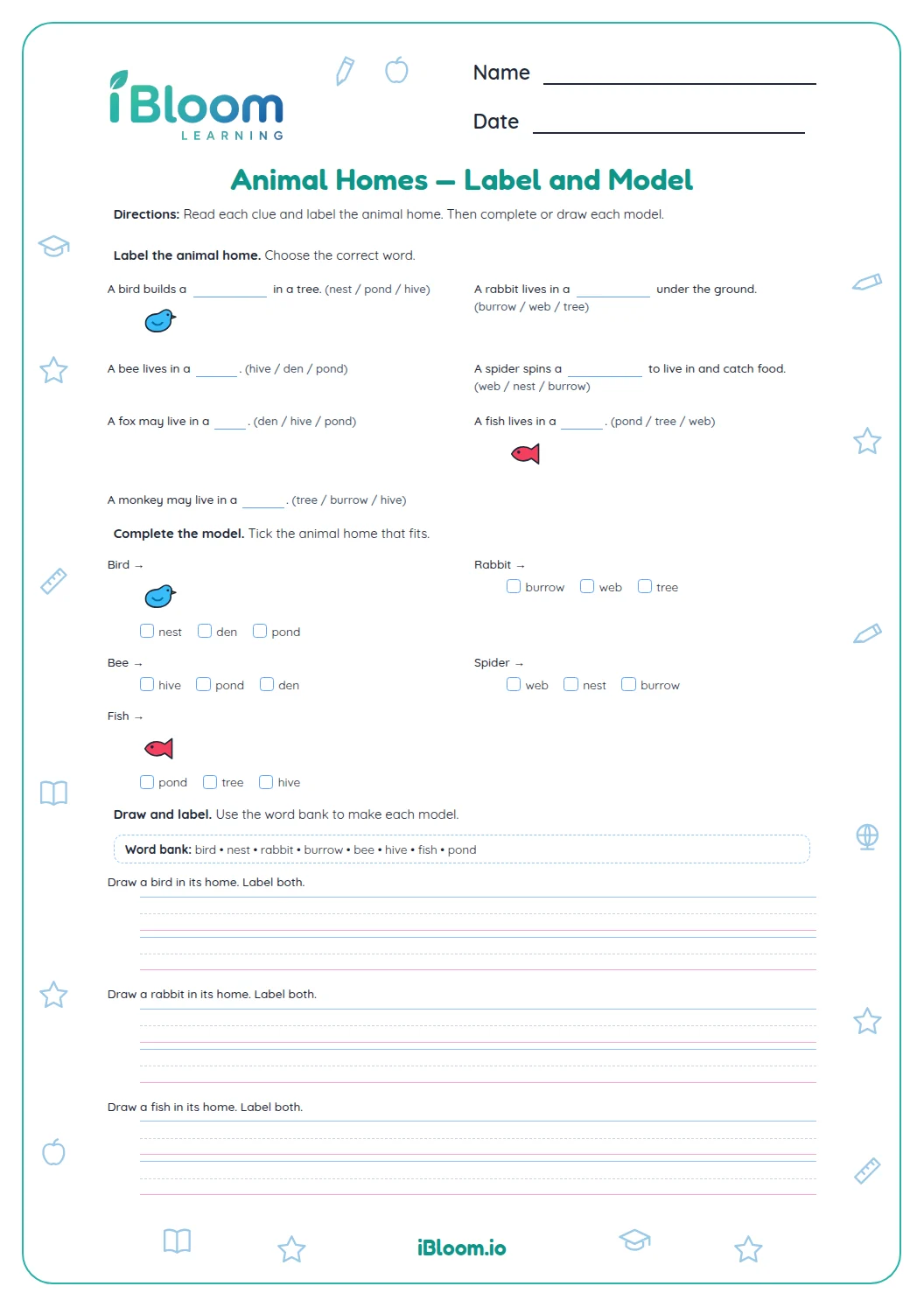 Animal Homes — Label and ModelGrade 1 science worksheets help children identify animal homes such as nests, dens, burrows, webs, hives, ponds, and trees. This label and model worksheet provides a distinct, age-appropriate way to practise the same lesson.Grade 1Free PDF preview6 pages
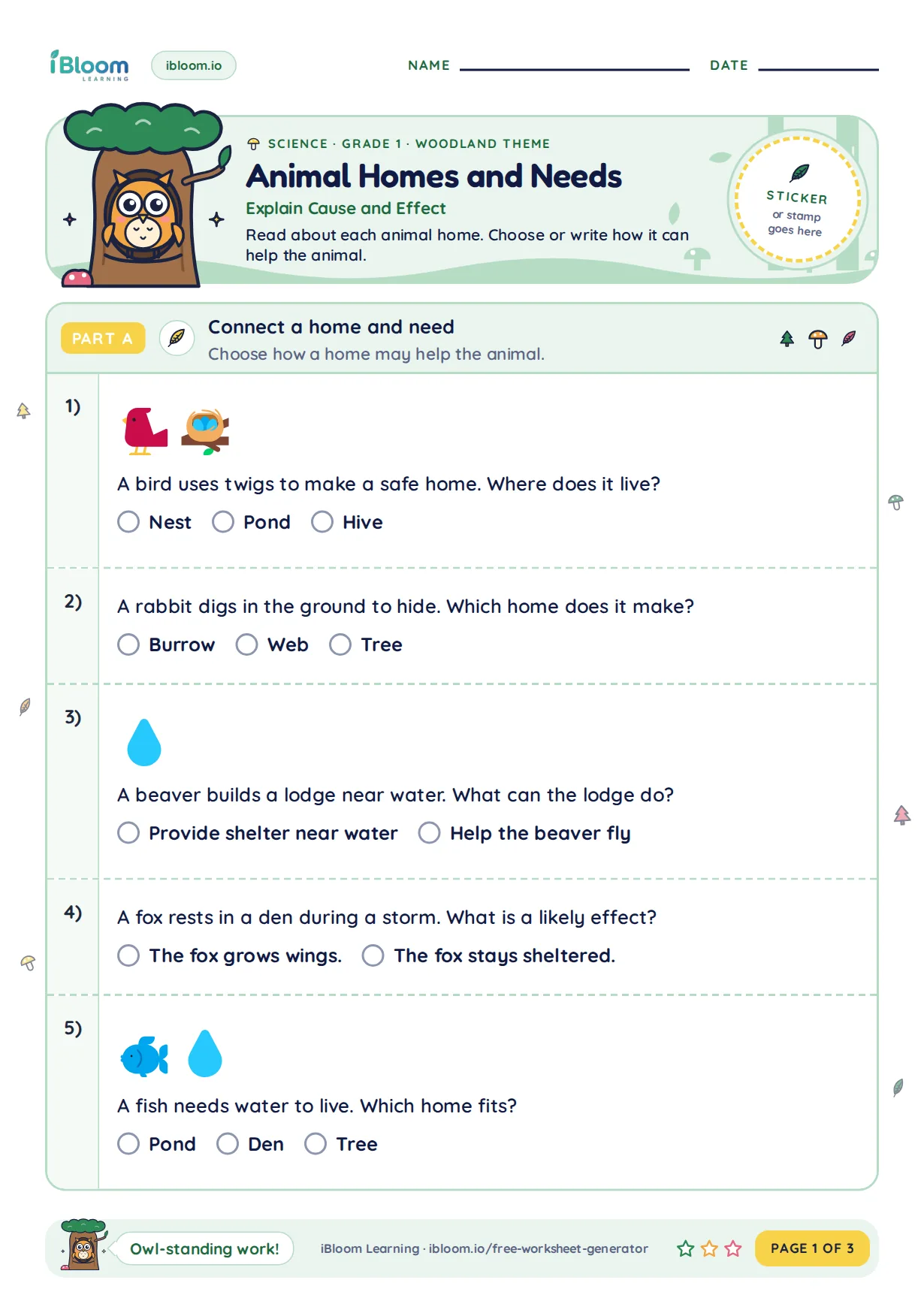 Animal Homes — Explain Cause and EffectGrade 1 science worksheets help children identify animal homes such as nests, dens, burrows, webs, hives, ponds, and trees. This explain cause and effect worksheet provides a distinct, age-appropriate way to practise the same lesson.Grade 1Free PDF preview
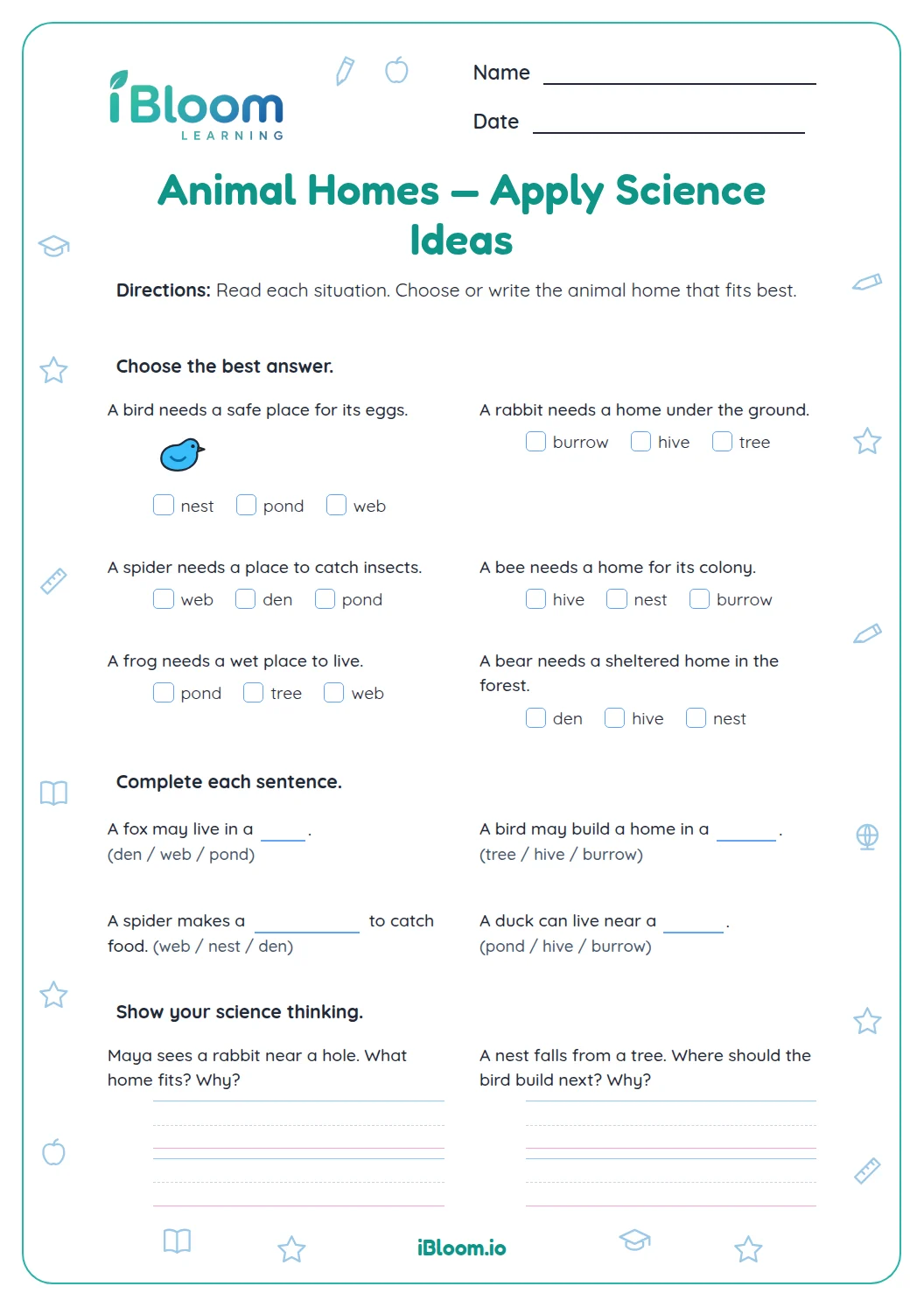 Animal Homes — Apply Science IdeasGrade 1 science worksheets help children identify animal homes such as nests, dens, burrows, webs, hives, ponds, and trees. This apply science ideas worksheet provides a distinct, age-appropriate way to practise the same lesson.Grade 1Free PDF preview
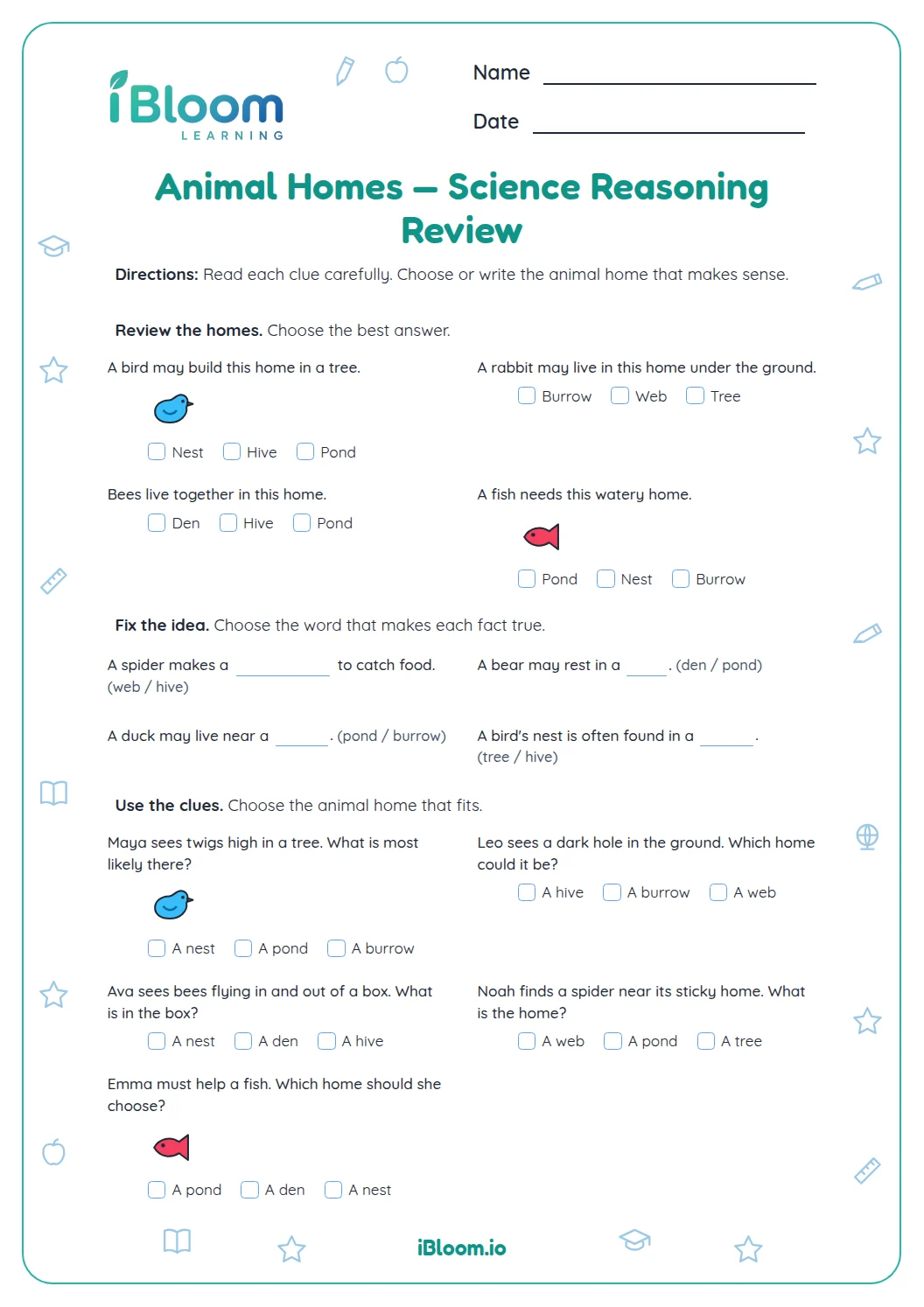 Animal Homes — Science Reasoning ReviewGrade 1 science worksheets help children identify animal homes such as nests, dens, burrows, webs, hives, ponds, and trees. This science reasoning review worksheet provides a distinct, age-appropriate way to practise the same lesson.Grade 1Free PDF preview
Practice that builds confidence
What children learn
These Grade 1 animal homes practice activities help children connect familiar animals with the places they live, rest, hide, and care for their young. Learners build science vocabulary as they compare homes such as nests, dens, burrows, webs, hives, ponds, trees, and other natural shelters.
The printable activities include picture matching, labeling, sorting, and simple observation tasks. Children practise using evidence from an animal’s body, behaviour, and surroundings to decide which home makes sense.
Animal homes are an early life science topic that helps Grade 1 children notice how living things meet their needs. In these worksheets, students identify where animals live and why those places are useful. A bird may build a nest in a tree, a rabbit may use a burrow, a spider may spin a web, and a bee may live in a hive. The focus is not memorizing a long list, but understanding that homes give animals shelter, safety, and a place to raise young.

How the practice progresses
Activities usually begin with clear pictures and simple matches: animal to home, home to name, or home to location. Children then move into sorting tasks, such as land and water homes, or choosing the best home from two options. Some pages ask learners to circle clues, label a picture, or explain their choice in a short phrase. This progression supports both science thinking and early reading without making the task too word-heavy.
Parent routine at home
Choose one worksheet and read the home words together first. Ask, “What would this animal need to stay safe?” Then let your child match or label independently. After checking, take a quick look out a window, in a book, or on a nature walk and name one real animal home you can observe, such as a bird nest, ant hill, or spider web. Finish by having your child say one complete sentence: “A ___ lives in a ___ because ___.”

Classroom uses
Teachers can use these printables during an animals unit, as a science center, small-group vocabulary lesson, or quick check after reading a nonfiction text. The picture-based pages are useful for discussion: students can justify answers, compare two homes, or group animals by where they live. They also pair well with drawing activities in which students design a suitable home for an animal and label its important parts.

Common errors to watch for
Children may confuse an animal’s home with any place the animal visits. For example, a bird may fly over water, but that does not make the pond its home. Some students also mix up similar shelters, such as dens and burrows, or think every animal builds its own home. Encourage them to look for clues: Is the home above ground or underground? Is it made by the animal? Does it help the animal hide, rest, or care for babies?
Free printable PDF download
Use this grade 1 animal homes worksheet page to preview the activity, print it, or download it as a PDF for quick practice. It works well for homework, homeschool lessons, tutoring, morning work, revision, and classroom centers.
Answers and answer key support
After the child completes the worksheet independently, parents and teachers can use the answer support or answer key information to check the work, review mistakes, and choose the next practice step.
Why iBloom worksheets help
The iBloom animal homes worksheets use familiar examples, uncluttered visuals, and varied response types so children can practise the same idea in more than one way. A helpful child-friendly strategy is: “Look at the animal, look at the place, then ask what the animal needs.” This simple habit turns matching into reasoning and helps young learners talk like scientists.
Helpful answers
Frequently asked questions
What animal homes are covered in these Grade 1 worksheets?
The activities include common animal homes such as nests, dens, burrows, webs, hives, ponds, trees, and other simple shelters that first graders can recognize from pictures and discussion.
How is an animal home different from a habitat?
An animal home is the specific place an animal rests, hides, or raises young, such as a nest or burrow. A habitat is the larger environment where the animal gets food, water, shelter, and space.
Can children complete these worksheets if they are still developing reading skills?
Yes. Many tasks use pictures, matching, circling, and labeling, so children can show understanding even with limited reading. An adult can read the directions and vocabulary words aloud.
What misconceptions should I listen for during animal homes practice?
Watch for children choosing a place only because the animal can visit it, not because it lives there. Also listen for mix-ups between similar homes, such as dens and burrows, or the idea that all animals build homes.
How can teachers use these worksheets in a science lesson?
Teachers can use them as a center activity, small-group vocabulary practice, a follow-up to an animal nonfiction read-aloud, or a quick assessment of whether students can connect animals with suitable homes.
Is this grade 1 animal homes worksheet free?
Yes. You can preview it for free and use the printable worksheet for home or classroom practice.
Can I download this grade 1 animal homes worksheet as a PDF?
Yes. Use the worksheet download option to save a printable PDF, or print the worksheet directly from the page.
Does this grade 1 animal homes worksheet include answers or an answer key?
When the activity has fixed answers, iBloom includes answer support so parents and teachers can check the completed worksheet.