


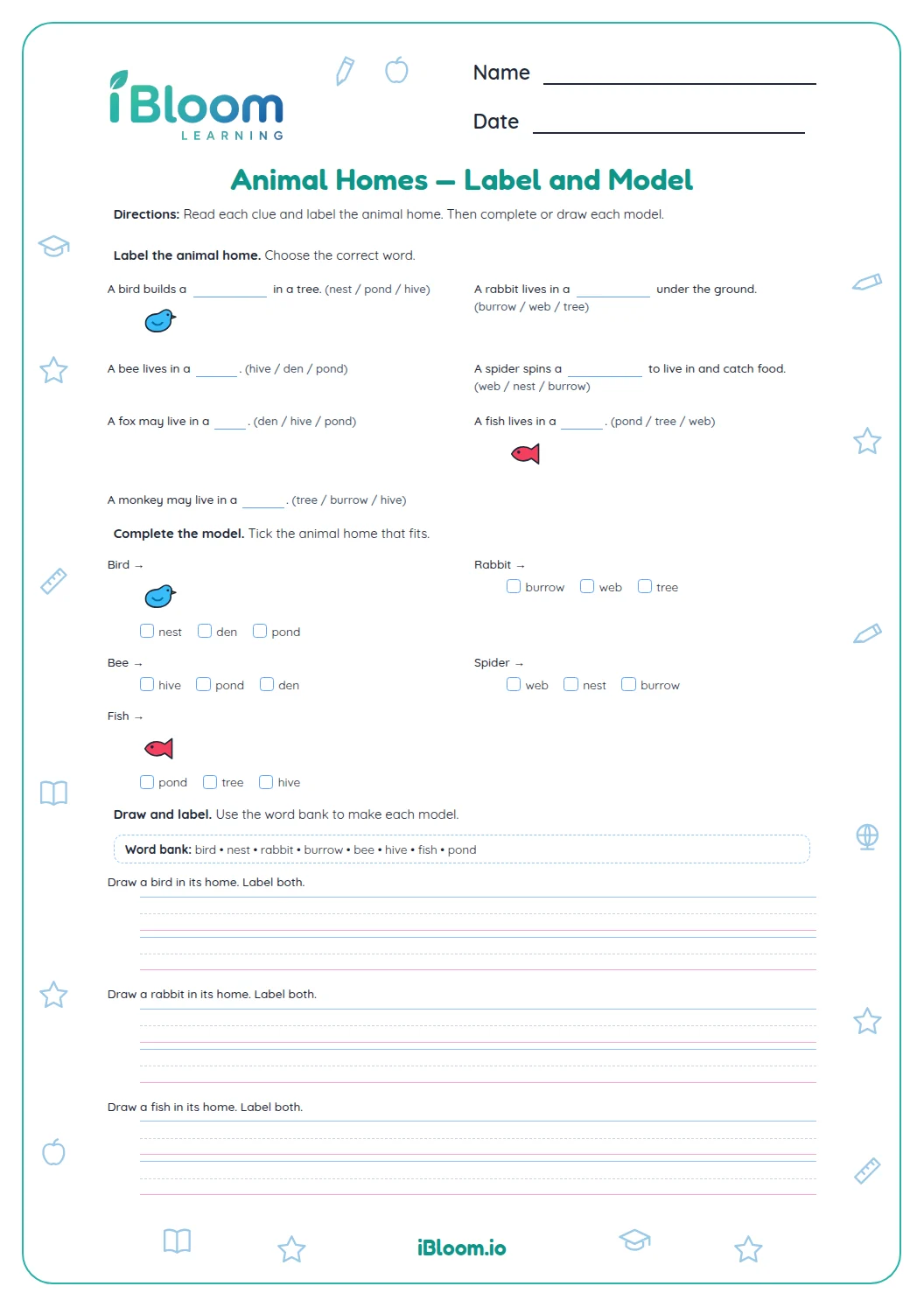
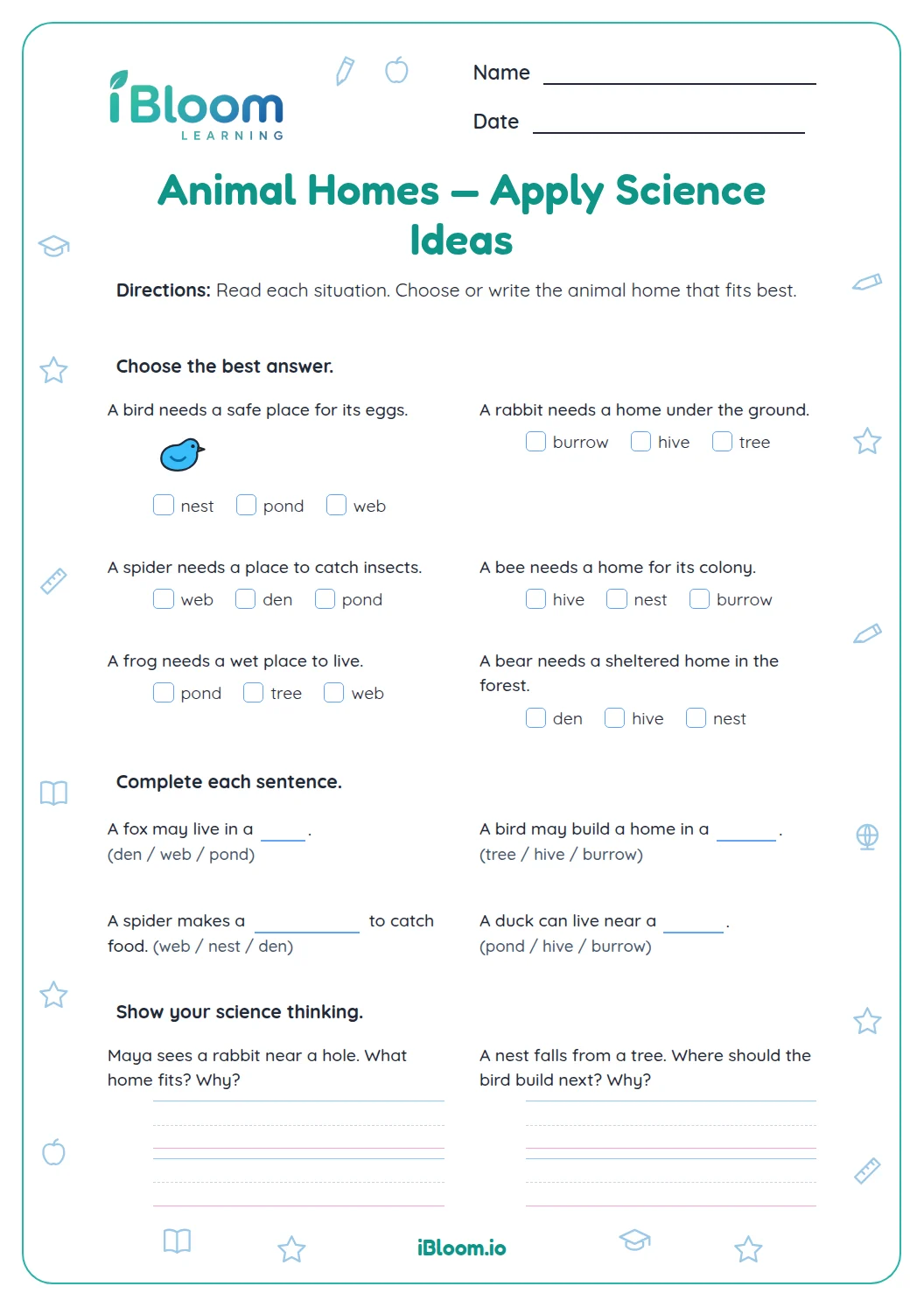
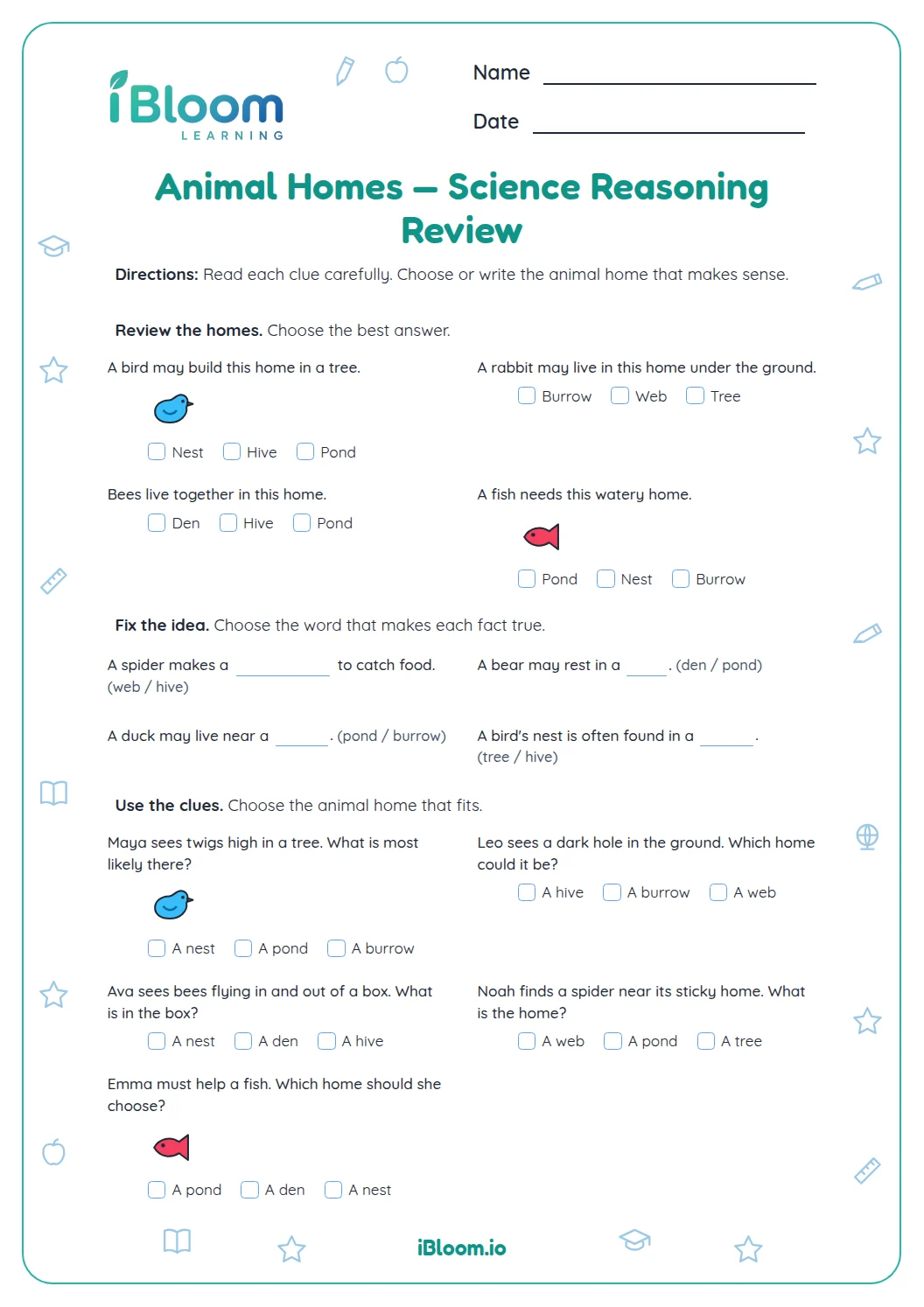
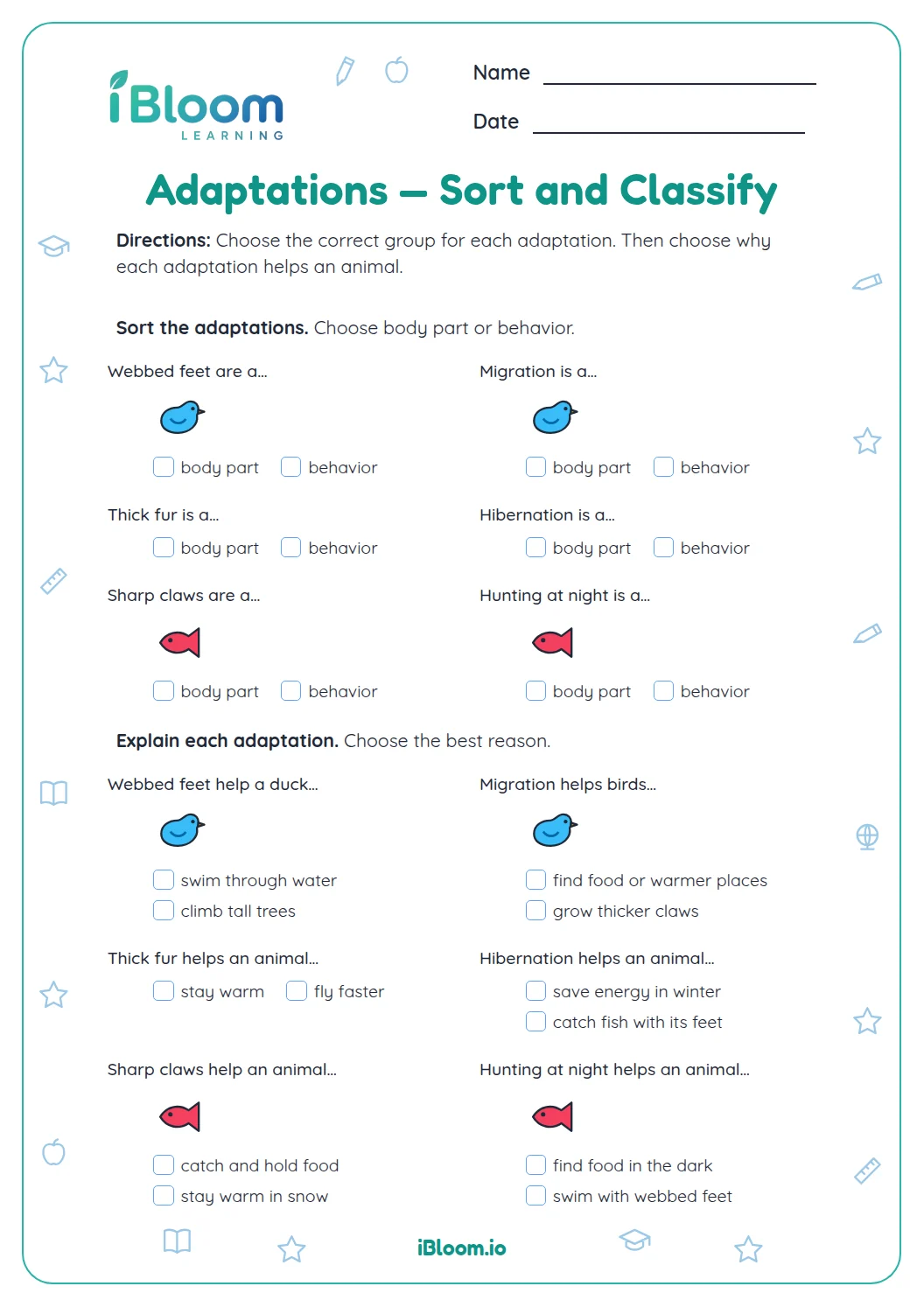


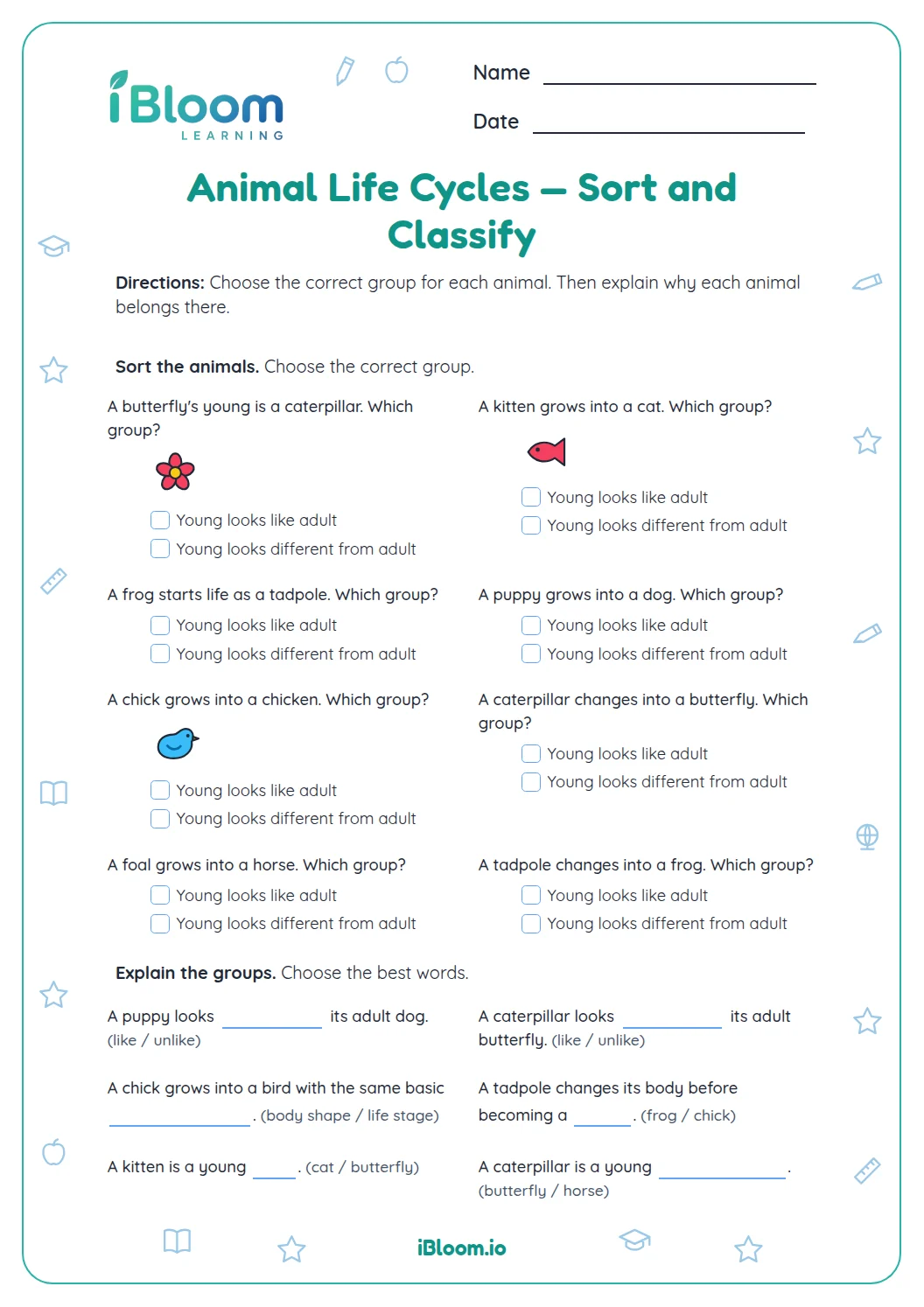

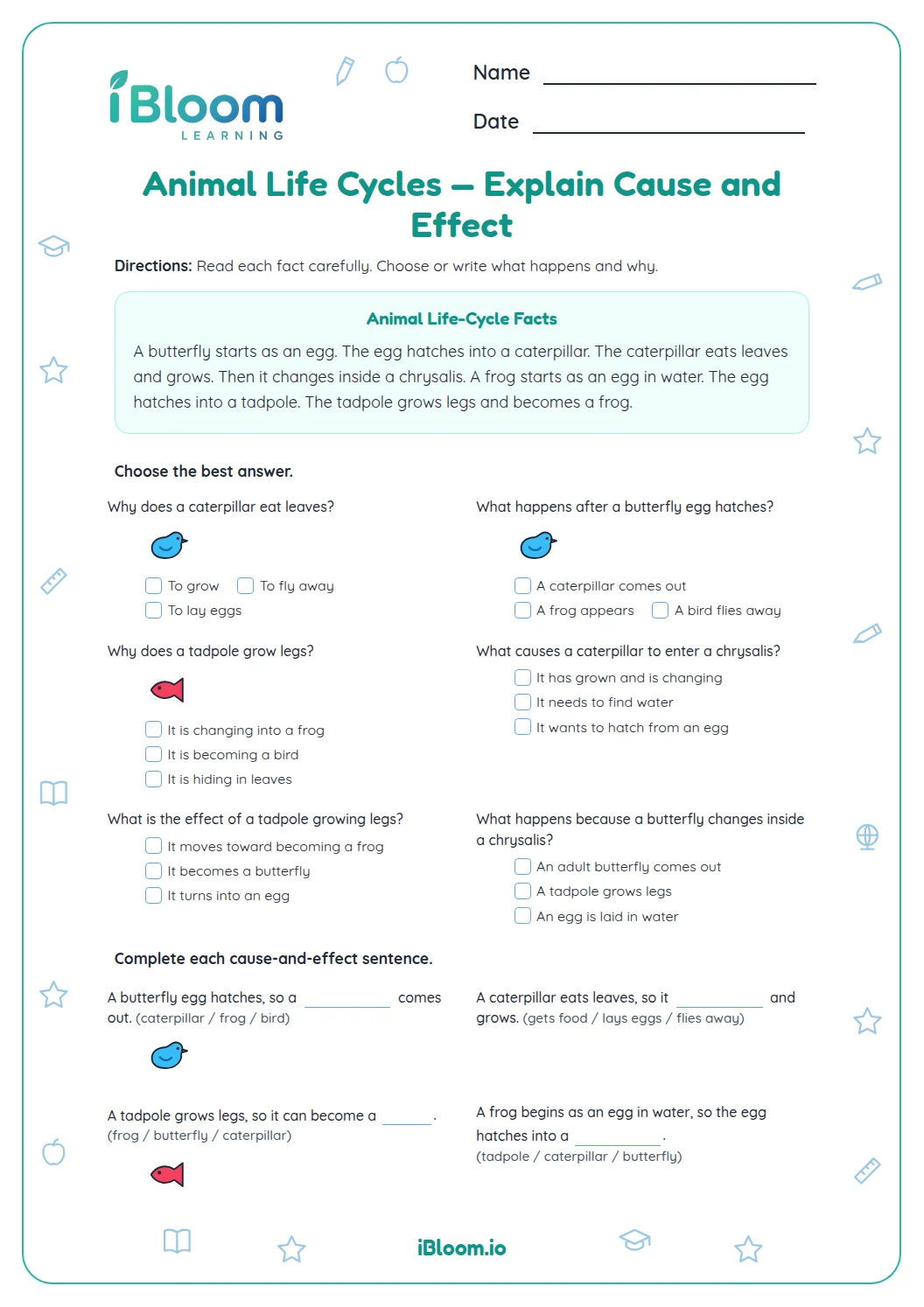


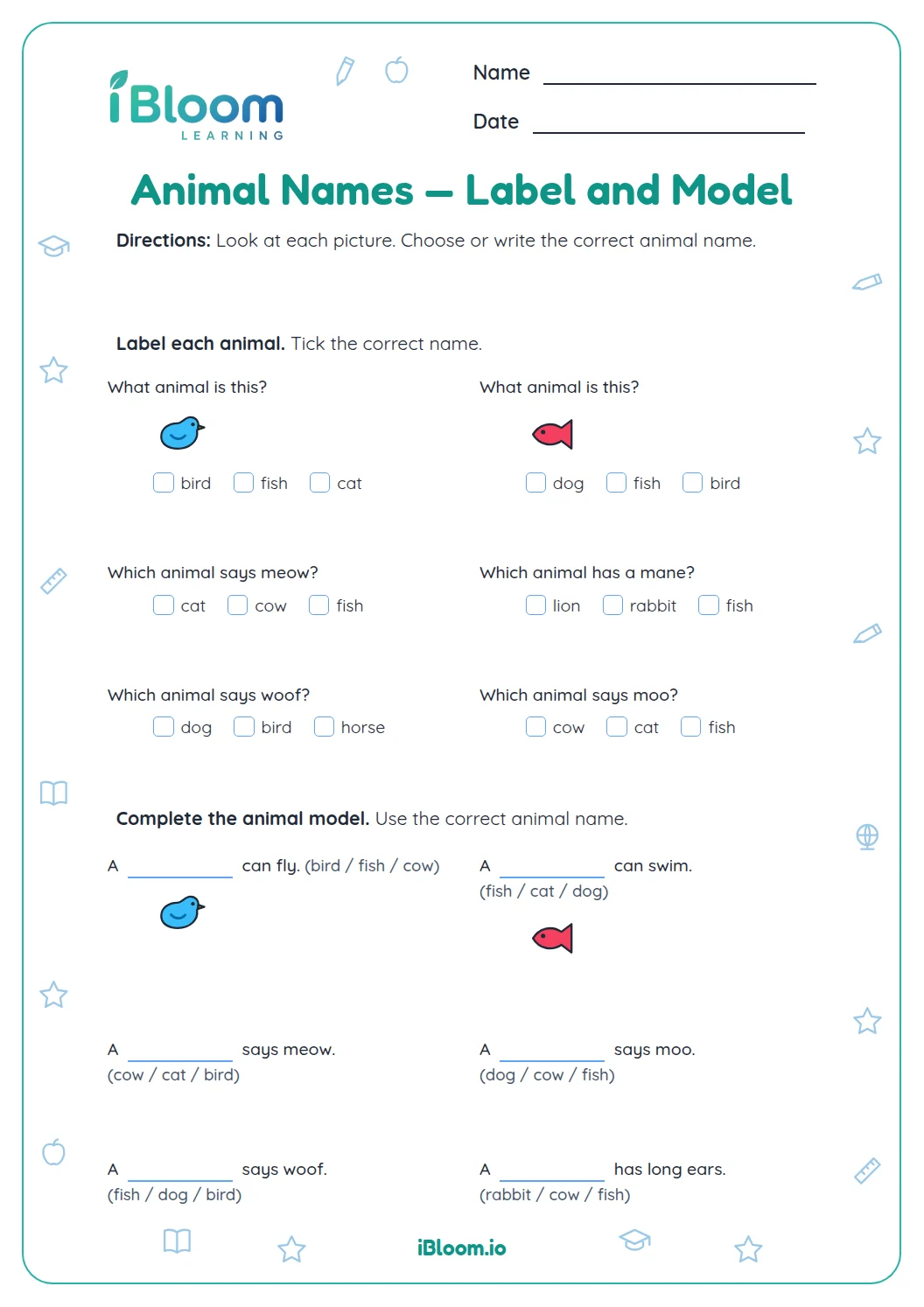
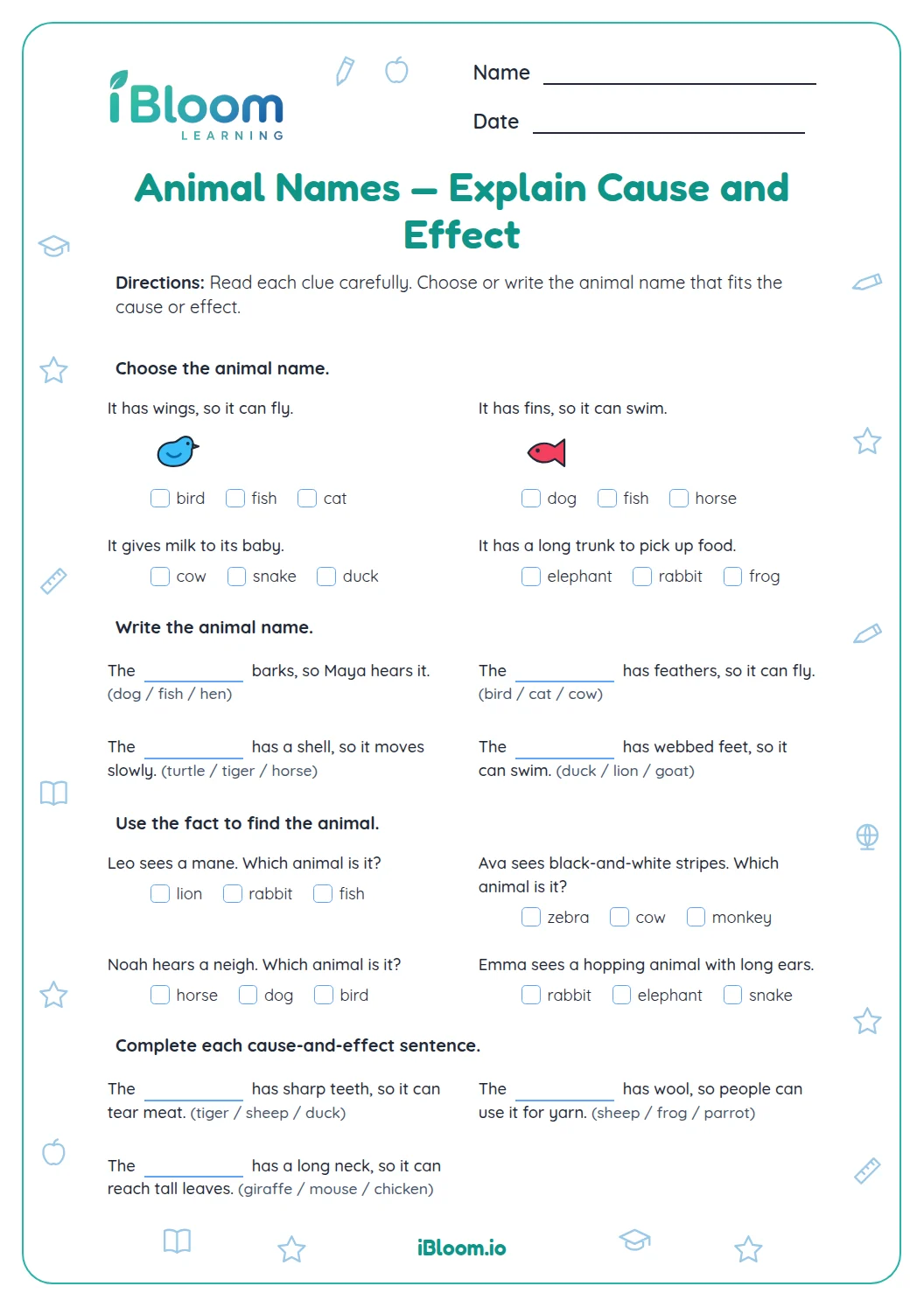


About this worksheet
This free printable Grade 1 science worksheet connects animal homes with the needs they meet. Learners use clues about nests, burrows, dens, and other homes to identify a likely effect, such as eggs being protected or a rabbit having a place to hide. The 16 questions include animal and home picture clues and a separate answer key.
How can a home help an animal?
An animal home can provide shelter or a place to protect eggs, food, or rest. Connect the home in the clue with the need it can meet.
For example, a rabbit’s burrow can give it a place to hide. If a bird’s nest falls, its eggs may no longer be protected there.
- 1A bird uses twigs to make a safe home.
- 2A nest can protect its eggs.
- 3Answer: A nest
How does the practice build?
Questions 1–8 identify homes and the needs they meet. Questions 9–16 use similar clues to choose a likely effect or purpose.
How can I use the answer key?
The key shows the choice that links each home with the need or effect in the question.
How to work through the page
- 1Read the direction at the start of each part.
- 2Try the first question carefully and check what it asks.
- 3Complete the rest of the part independently.
- 4Review answers with the key and correct any slips.
Common slips and quick checks
The mistake
Naming a home but not connecting it to a need.
The fix
Ask what the home provides: shelter, protection, food storage, or water.
The mistake
Mixing up an animal’s home and its food.
The fix
Separate the place where it lives from what it eats or stores.
The mistake
Treating a possible effect as certain.
The fix
Use may or could when the clue asks what might happen.
What to practice next
Make more practice
Questions parents and teachers ask
How can a nest help a bird?
A nest can give a bird a place to lay and protect its eggs. Question 1 shows a bird using twigs to make a safe home, and the answer is a nest. Other questions connect homes such as burrows, dens, and ponds with the needs they meet.
What might happen if a bird’s nest falls?
The eggs may no longer be protected in the nest. Question 7 asks children to connect the nest falling with a possible effect. “May” signals that the effect is possible, not guaranteed; the answer choice should follow from the clue about losing the nest.
Why does a beaver’s lodge near water make sense?
A lodge gives a beaver shelter close to the water in its habitat. Question 3 asks what the lodge can do, and question 13 asks how it may help. In both, the clue links the home with shelter near water.
What could change for a frog if its pond dries up?
The frog may lose water and shelter where it lives. Question 8 asks children to connect a dried pond with what may change for the frog. The answer uses “may” because the question asks for a possible effect of the habitat change.
How do the answer choices support cause and effect?
Each question names an animal and its home or a change to that home, then asks what help or effect follows. Read both parts before choosing. For example, a fallen nest may leave eggs unprotected, while a den can give a fox shelter.