






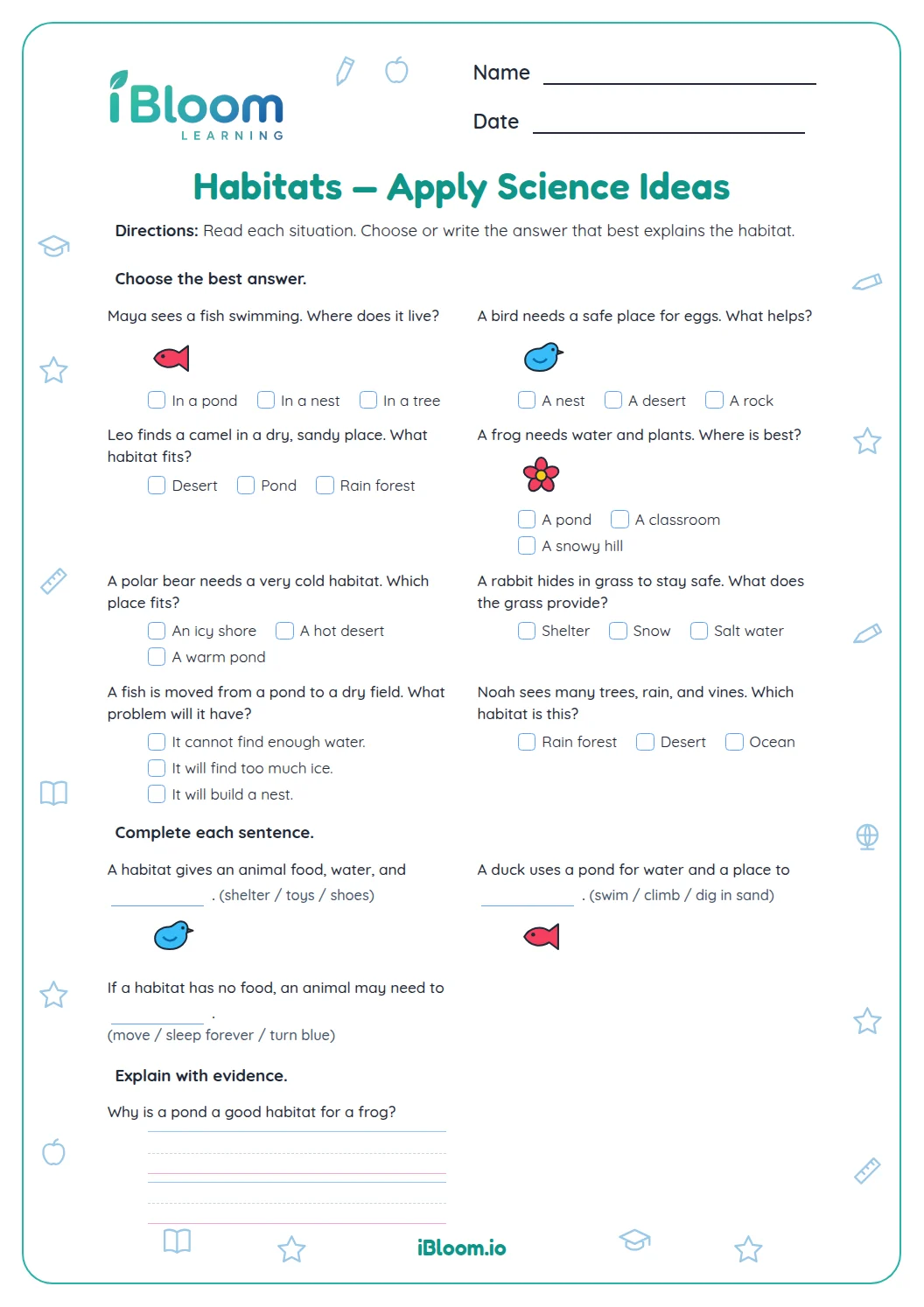
About this worksheet
This Grade 1 science worksheet asks children to apply what animals need to familiar situations. Across 14 multiple-choice questions, learners identify food, water, air, and shelter for animals such as a dog, rabbit, fish, bird, and turtle. The separate answer key shows the need that matches each situation.
Which animal needs appear on the page?
The questions cover four needs: food, water, air, and shelter. Examples connect a need to an animal or a resource, such as a nest providing shelter or a bowl of water helping a thirsty dog.
How do children apply the idea?
Each item gives a short situation. Learners decide what the animal gets from a resource or what is missing, then select the matching need.
- 1A thirsty dog needs water.
- 2A bowl of water helps meet the dog’s need for water.
How to work through the questions
- 1Read the animal and situation carefully.
- 2Ask what the animal gets from the resource or what is missing.
- 3Match the clue to food, water, air, or shelter.
- 4Read each choice and select the one that fits the situation.
- 5Check your answers with the separate key.
Common mix-ups and fixes
The mistake
Choosing food when a thirsty animal needs water.
The fix
Notice the clue word thirsty; it points to drinking water.
The mistake
Calling a nest food because a bird uses it.
The fix
Ask what the nest provides: a safe place to live, or shelter.
The mistake
Confusing air with water for a fish.
The fix
A fish uses water as its habitat and takes in oxygen from water; read the question to see which need it asks about.
What to practice next
Questions parents and teachers ask
What four needs are practiced?
The questions cover food, water, air, and shelter. Children match each need to an animal situation, such as grain for food, drinking water, breathing air, or a nest or den for shelter. Each item includes answer choices to help them apply the idea.
How does a nest help a bird?
A nest provides a place where a bird can stay and care for its eggs or young, so it meets a need for shelter. The worksheet uses the nest example to connect a familiar animal structure with a basic need.
What is the thirsty dog question asking?
It asks which pictured item would help a thirsty dog. Water is the matching choice because the dog needs water to drink. The answer key marks the water picture, making the word and image connection clear for early readers.
How many questions are included?
The printable contains 14 multiple-choice questions in two parts. The first part identifies needs in direct examples; the second applies the idea to situations involving animals and their resources. A separate key shows the correct choice for each example.
Can children use this page to discuss habitats?
Yes. Some examples mention places such as a pond, den, or nest. Use them to ask what the place provides for the animal, while keeping the worksheet question focused on the need named by its choices. The page also connects those needs to specific resources.