






About this worksheet
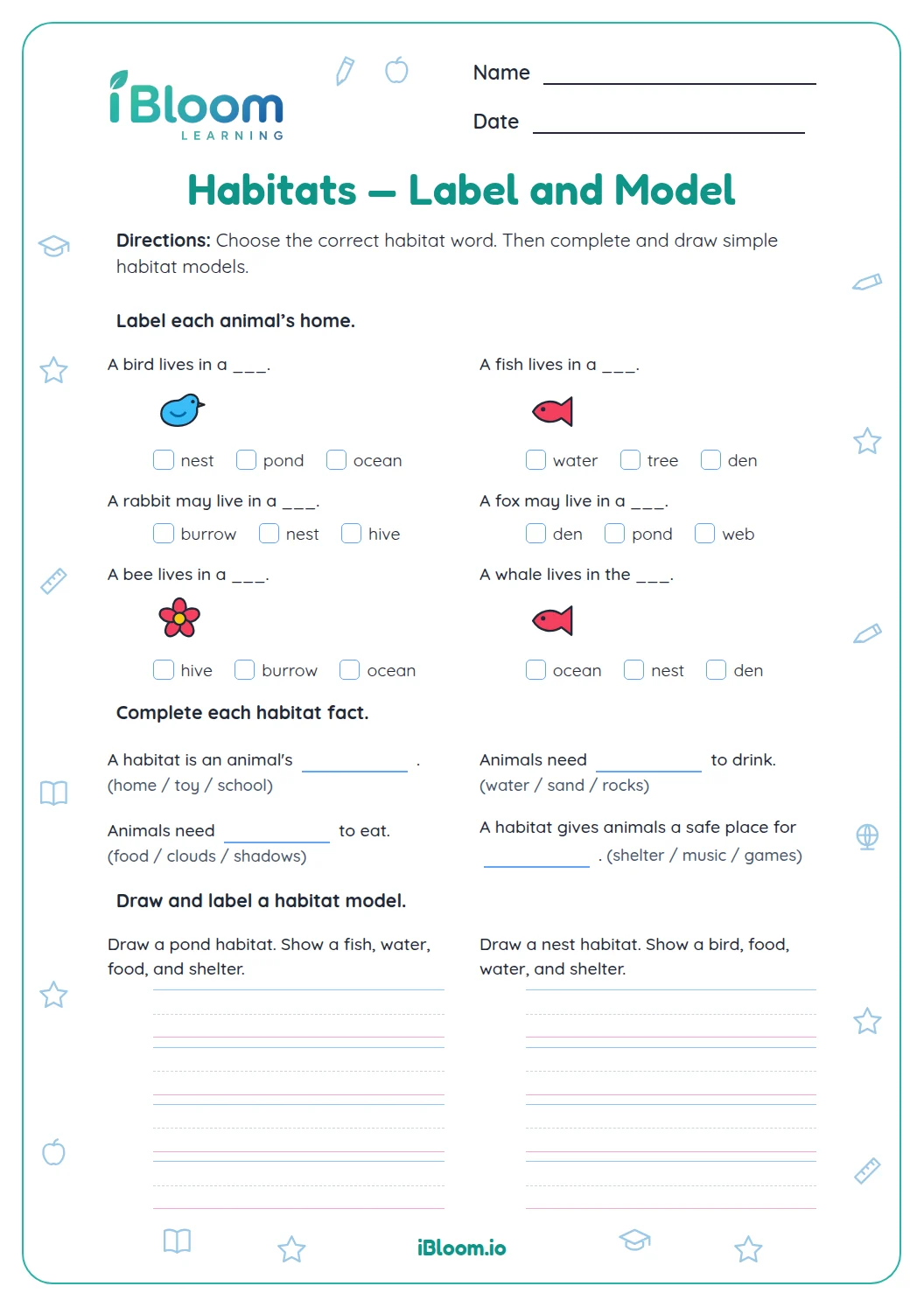
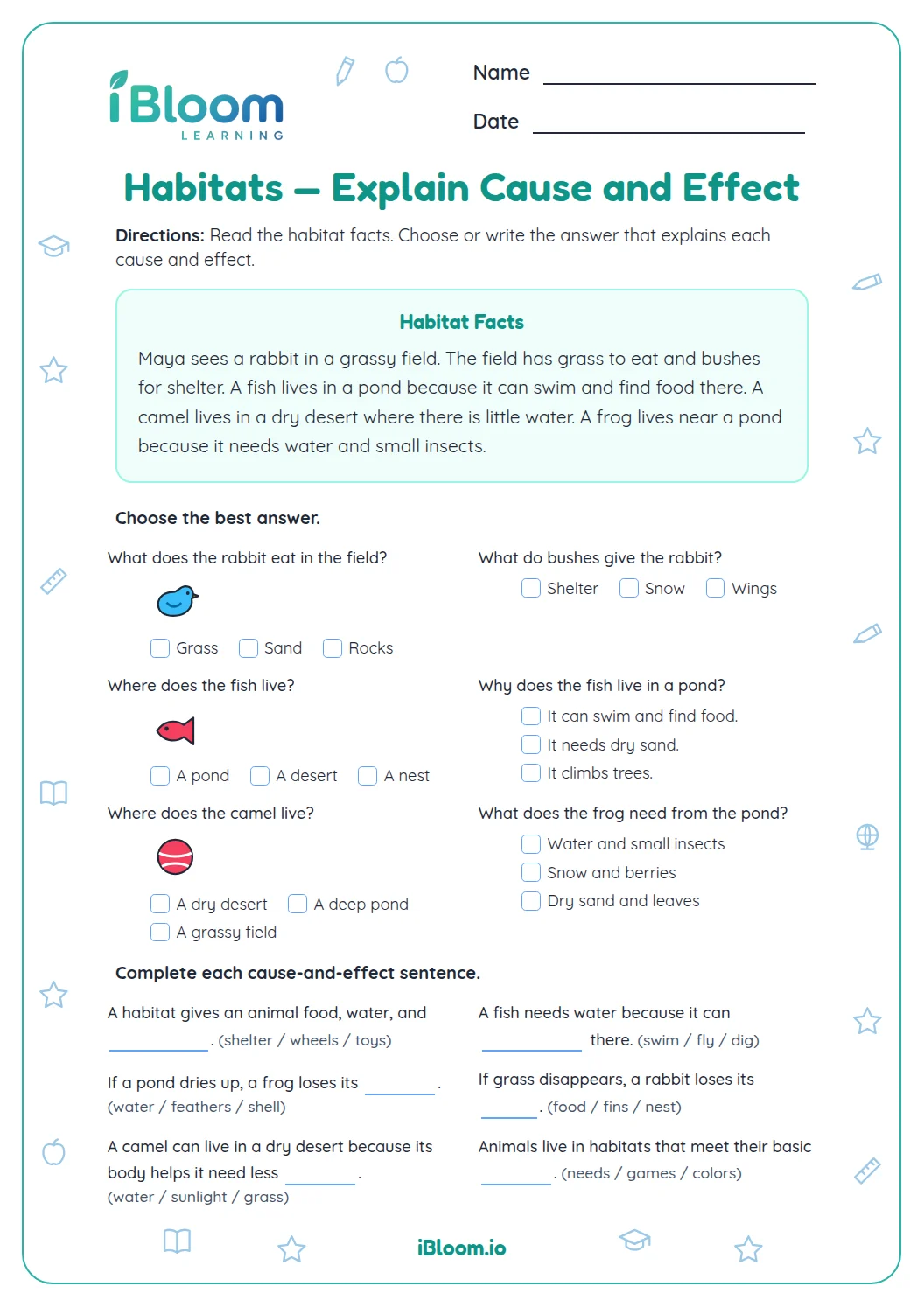
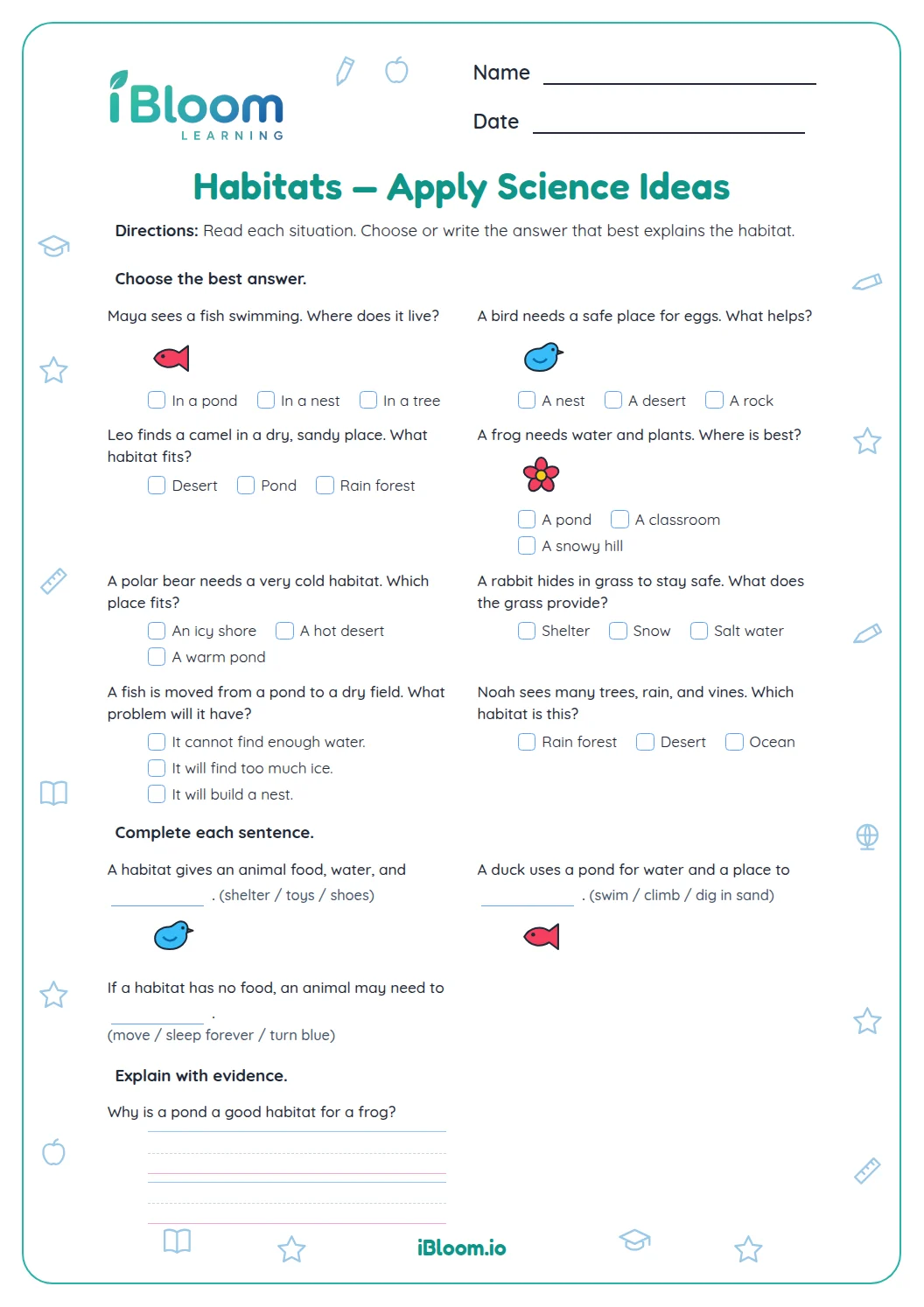
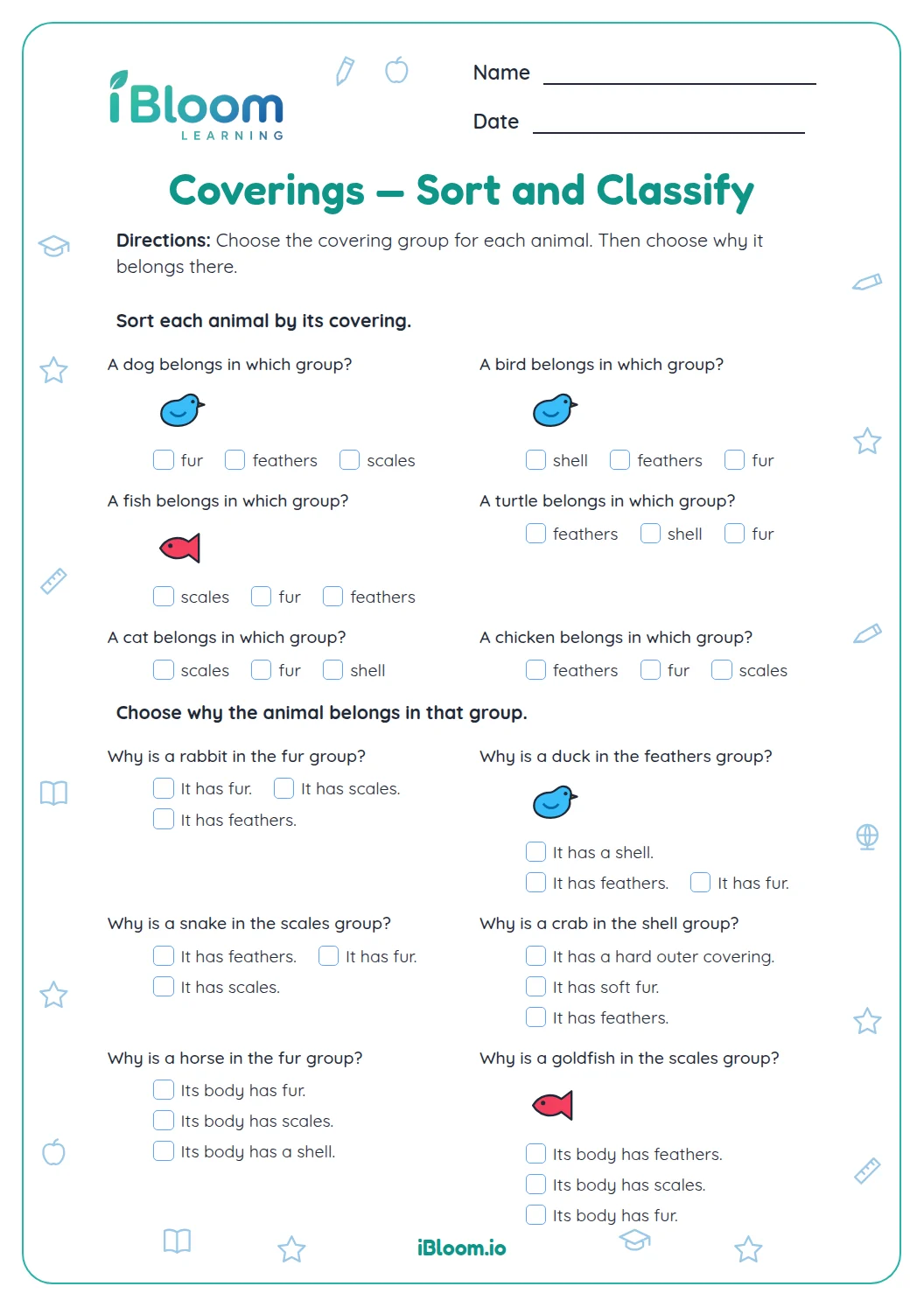
This free printable worksheet introduces Grade 1 children to camouflage, the colors, patterns and shapes that help an animal blend into its surroundings. In Part A, children match four animals to the place where they are hardest to see. In Part B, they sort four examples into three kinds of camouflage: same color as home, looks like an object, and stripes or spots. In Part C, they pick the reason a disguise works, and in Part D they write one sentence of their own. The answer key is on a separate page.
What is camouflage, and why do animals have it?
Camouflage is anything about an animal's body that makes it hard to see where it lives. A white hare in the snow, a green grasshopper on a leaf and a brown moth on tree bark all blend in with their surroundings.
Some animals use camouflage to hide from animals that might eat them. Others use it to stay hidden while they get close to food. Either way, an animal that is hard to see has a better chance of staying safe or finding a meal.
- 1A green grasshopper sits on a green leaf.
- 2Look at the animal's color and the color of its home.
- 3Both are green, so the grasshopper blends in.
- 4Kind of camouflage: Same color as home.
What are the three kinds of camouflage on the sheet?
Part B asks children to sort examples. Same color as home covers animals such as the green grasshopper and the white hare, whose color matches where they sit. Looks like an object covers animals such as the stick bug, whose body shape looks like a twig.
Stripes or spots covers patterns that break up an animal's outline. A young deer's white spots look like patches of sunlight on the forest floor, which makes its shape harder to see.
What is on this worksheet?
Eleven questions over two pages, in four parts that go from finding hiding places to explaining why camouflage works.
- Part A, Where does it hide?: a frog, rabbit, tiger and owl, each with a small picture and three hiding places
- Part B, Which kind of camouflage?: four short examples to sort into three kinds
- Part C, Why does it help?: two multiple-choice questions about reasons
- Part D, Write a sentence: name one animal and where it hides
- Answer key on separate pages, with a sample sentence for question 11
Why does the sheet ask why, not only where?
Choosing a place shows children can match colors. Explaining why shows they understand that blending in is what protects the animal. In question 9, the hare is hard to see because its fur is the same color as the snow, not because it is fast or quiet.
Question 11 asks children to put the idea in their own words. A good answer names an animal and a place and, if your child can, says why it is hard to see there.
How to use this worksheet at home or in class
- 1Warm up with a game: hold up a green paper frog and ask where to hide it in the room. Try a green book, then a white wall, and talk about which is harder to spot.
- 2Do question 1 together. Ask, "What color is the frog? Where is that color?"
- 3Let your child finish Part A and then Part B alone, saying each example aloud before choosing the kind.
- 4In Part C, ask your child to say the reason in their own words before choosing.
- 5For question 11, let your child say the sentence first, then write it, with a grown-up helping spell words.
- 6Take a short walk outdoors and look for something hidden in plain sight: a green insect on a leaf, a gray bird on a branch or a brown moth on a fence.
Common mistakes and quick fixes
The mistake
Choosing a place that is a nice home but the wrong color, such as a white rabbit hiding in green grass.
The fix
Ask, "What color is the animal? Which place is the same color?" Camouflage works when the animal's color matches what is around it.
The mistake
Thinking stripes make an animal easy to see, such as a tiger's stripes.
The fix
Talk about tall dry grass. Thin yellow and brown stripes look a lot like grass blades and shadows, which helps break up the tiger's shape.
The mistake
Choosing Same color as home for the stick bug, because it is brown like the branch it sits on.
The fix
Ask, "Is it hiding by its color or by its shape?" A stick bug's long, thin body looks like a twig, so it fits Looks like an object best.
What to practice next
Make more practice
Questions parents and teachers ask
What is camouflage in simple words?
Camouflage is a color, pattern or shape that helps an animal blend in where it lives, so other animals have a hard time seeing it. A green frog on a green leaf, or a white hare in snow, is camouflaged because it matches what is around it.
Why do animals use camouflage?
Some animals use camouflage to stay safe from animals that eat them, and others use it to sneak up on food. In both cases, being hard to see helps. A white hare blends into snow so hungry foxes miss it, while a tiger's stripes help it creep close to the animals it hunts.
Why do tiger stripes help in tall grass?
Tall dry grass has thin lines of yellow, brown and shadow. A tiger's stripes look like those lines, so the stripes help break up its shape and make it harder to see. Questions 3 and 10 both use this idea for first graders.
What are the three kinds of camouflage in Part B?
They are same color as home, looks like an object, and stripes or spots. A green grasshopper on a leaf matches its color. A stick bug looks like a twig. A young deer's spots break up its outline. Each example fits one kind best.
How can I explore camouflage with my child outdoors?
Take a short walk and look for animals or insects that blend in, such as a green bug on a leaf or a brown moth on bark. Ask what color the animal is and what color its surroundings are. Then ask why it would be hard to spot.
Is there an answer key for this worksheet?
Yes. The separate answer key pages show the correct choice for every question in Parts A, B and C, plus a sample sentence for question 11. Print the worksheet alone, keep the key for checking, or download both pages as a free PDF.