




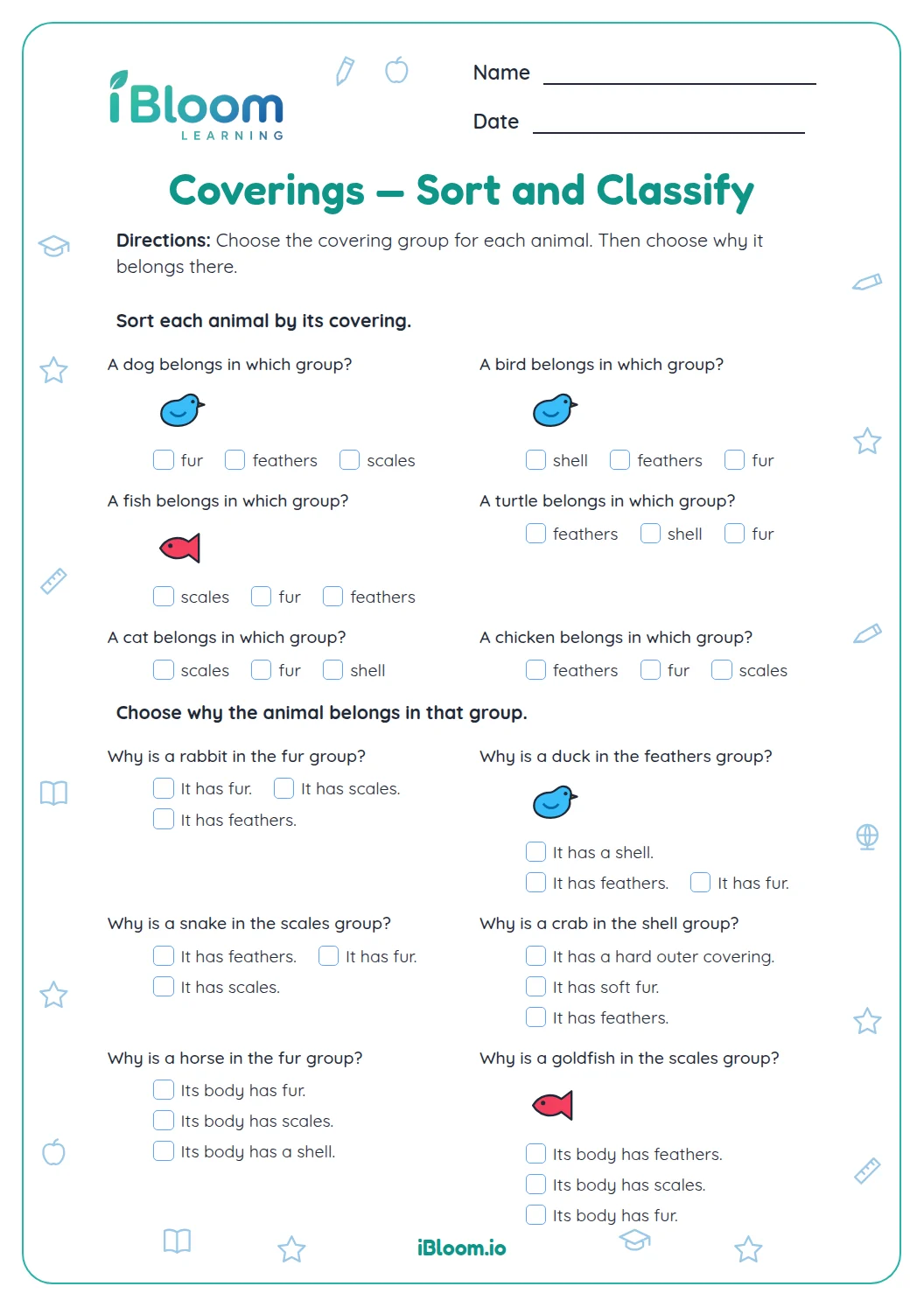
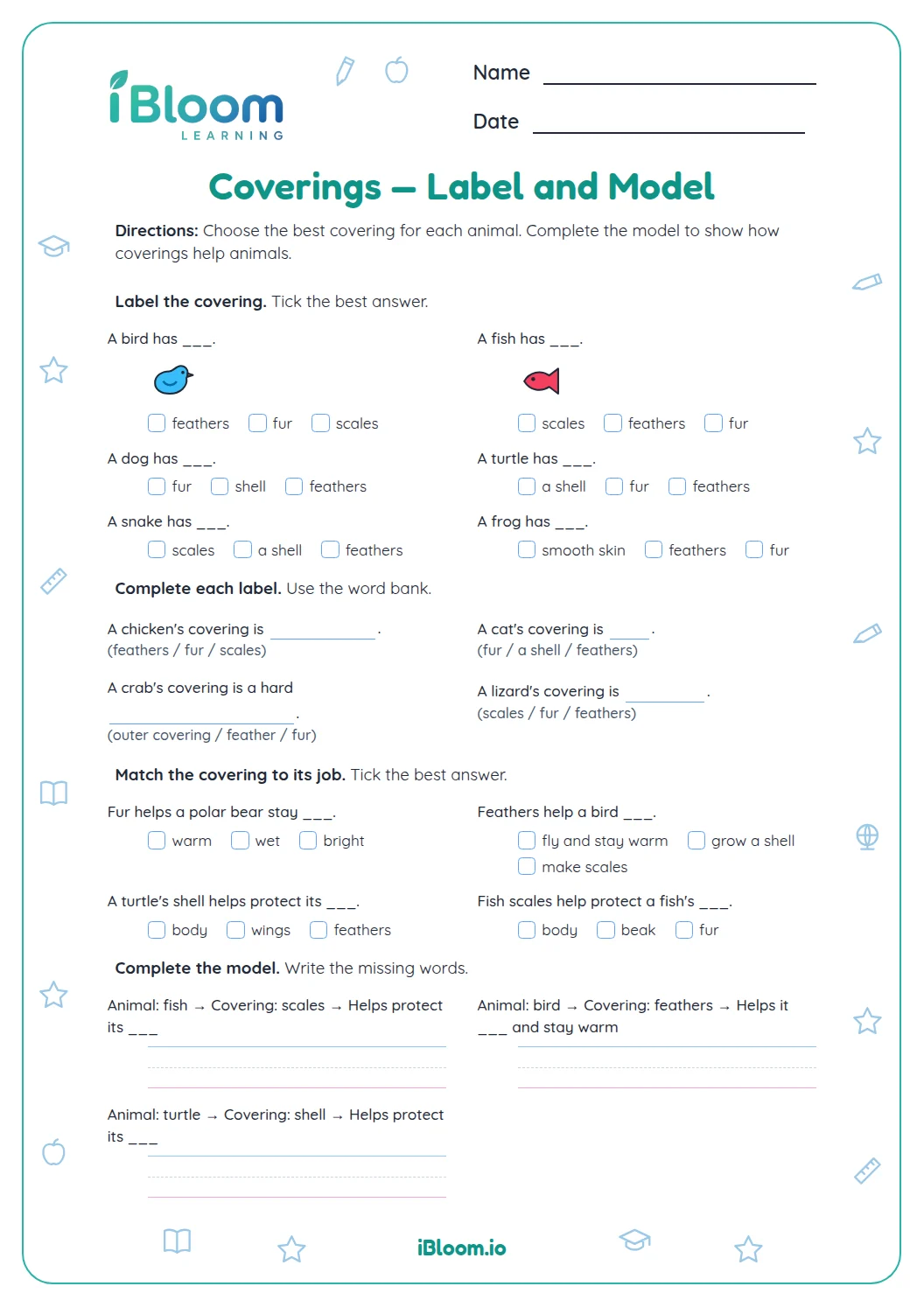
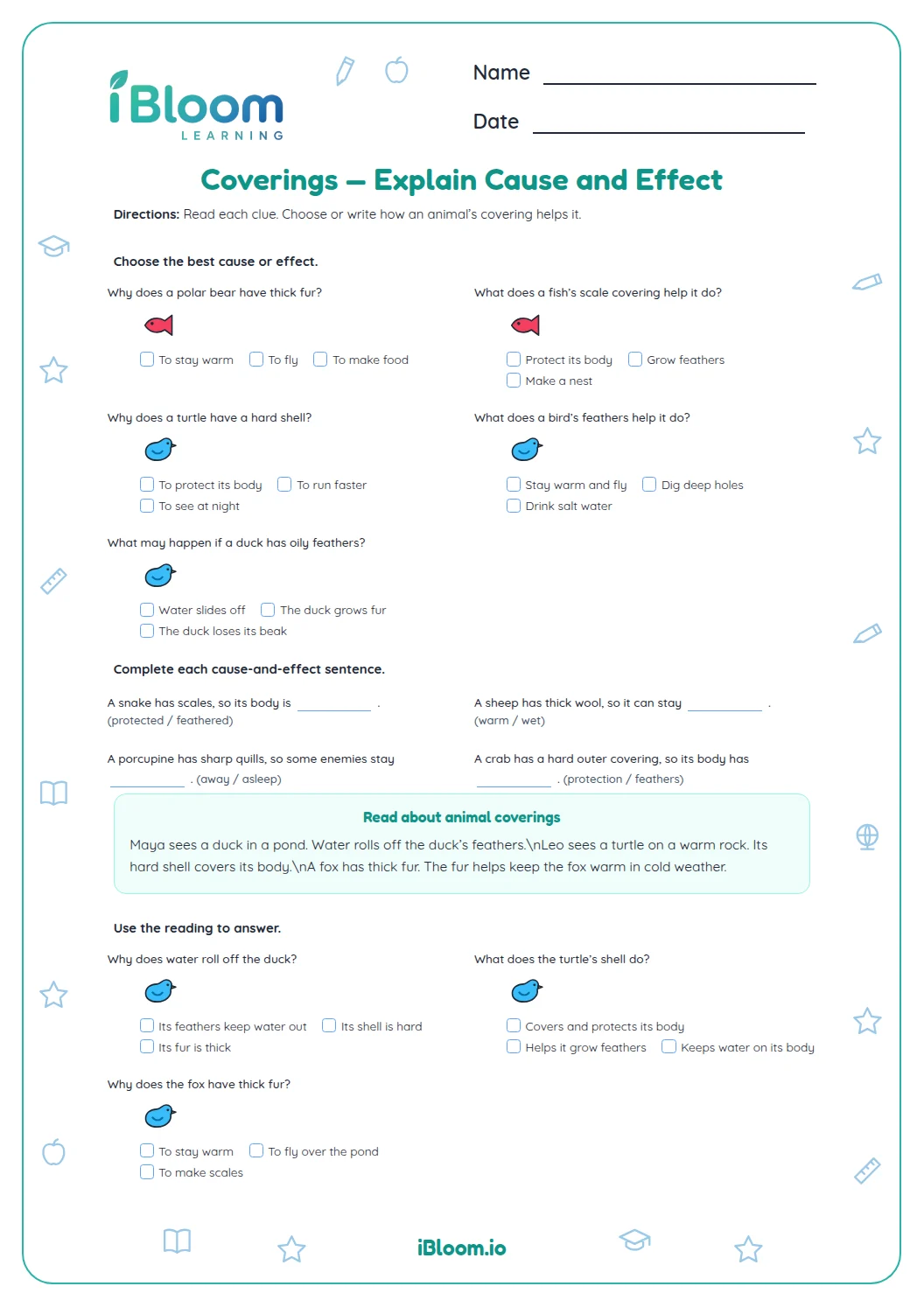
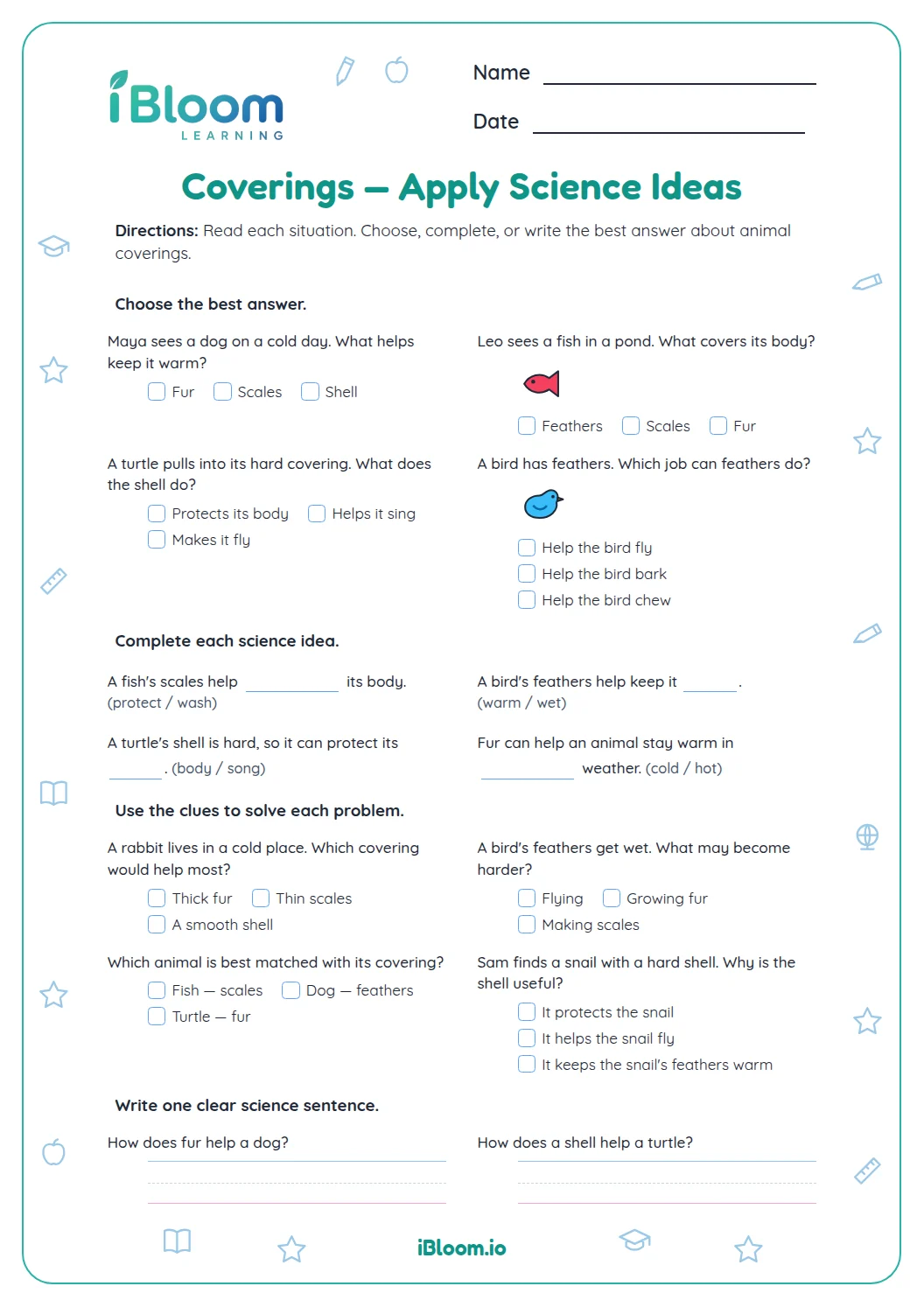
About this worksheet
This Grade 1 science worksheet asks children to compare an animal’s color or pattern with its surroundings. Fourteen questions use examples such as a green frog among leaves, a white hare on snow, and a brown moth on bark. Learners identify when an animal blends in or stands out and consider how being less noticeable may help. A separate answer key lists the best choice for each question.
How can children tell when an animal blends in?
Compare the animal’s color or pattern with the background. Similar colors can make an animal harder to notice.
- 1Green frog + green leaves
- 2The colors are similar.
- 3The frog may be harder to see.
What if an animal’s colors stand out?
A bright red bird on green grass is easier to notice than a green animal among green leaves. Camouflage depends on the match between an animal and its setting.
How does camouflage help in a habitat?
Blending in may make an animal harder for a predator to notice. The questions ask learners to compare the animal and its setting and choose when this effect may help.
How to use this worksheet
- 1Name the animal and its setting.
- 2Compare colors or patterns.
- 3Decide whether they match or stand out.
- 4Connect blending in with being harder to notice.
- 5Check answers using the key.
Mistakes to watch for
The mistake
Looking only at the animal’s size.
The fix
Compare its visible color or pattern with the background.
The mistake
Assuming an animal is camouflaged in every place.
The fix
Check the specific setting; a white hare blends on snow but may stand out on dark soil.
The mistake
Thinking camouflage changes an animal’s speed or size.
The fix
Explain camouflage as a way its appearance can make it less noticeable.
What to practice next
Make more practice
Questions parents and teachers ask
What does camouflage mean?
Camouflage is coloring or patterning that helps an animal blend into its surroundings. A white hare on snow may be harder to notice against a pale background. On this worksheet, children compare the animal and setting named in each question.
Does camouflage always help in every place?
No. A trait that blends into one setting may stand out in another. One question moves a white animal from snow to dark soil, where its fur may contrast with the background. The setting matters when deciding whether an animal blends in.
How is camouflage different from being fast?
Camouflage is about how an animal’s appearance compares with its background. Running speed is a different trait. These questions focus on color, pattern, matching a setting, and whether an animal may be harder to notice. A learner can identify a match even when the animal moves slowly or quickly.
Why are there examples with animals standing out?
Contrasting examples help children compare a close match with a poor one. A bright red bird on green grass stands out more than a green frog among green leaves. This comparison shows that camouflage depends on the animal’s setting.
How can I help a first grader explain an answer?
Ask the child to name both the animal’s appearance and the background. For example: “The moth is brown, and the bark is brown, so it may be harder to see.” This connects the answer to the specific clues in the question.
What does the answer key show?
The separate answer key lists the best choice for all 14 questions, including examples where an animal blends in and where it stands out. After checking, ask the learner to explain one choice by naming the animal’s color or pattern and its setting.