








About this worksheet
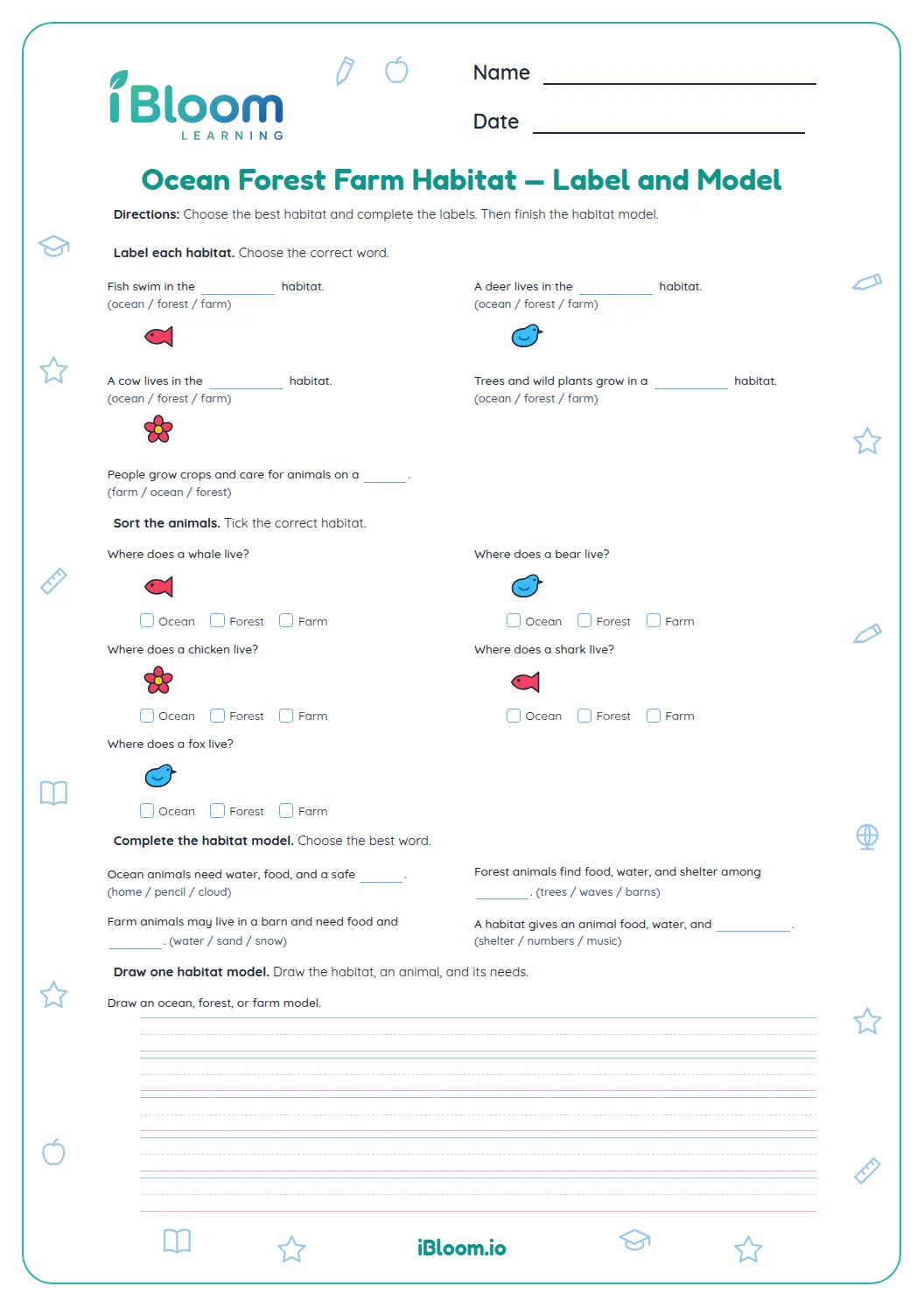
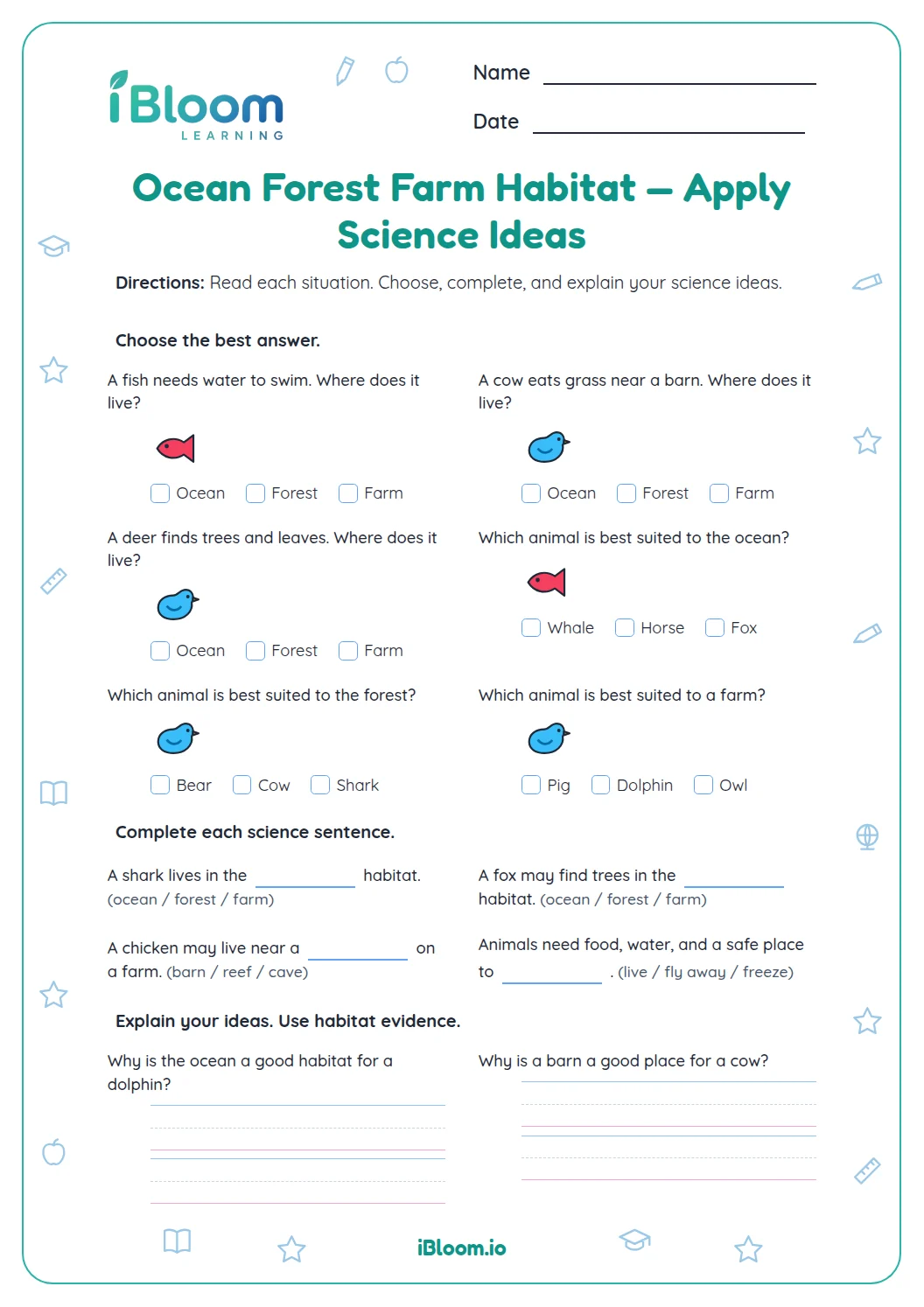
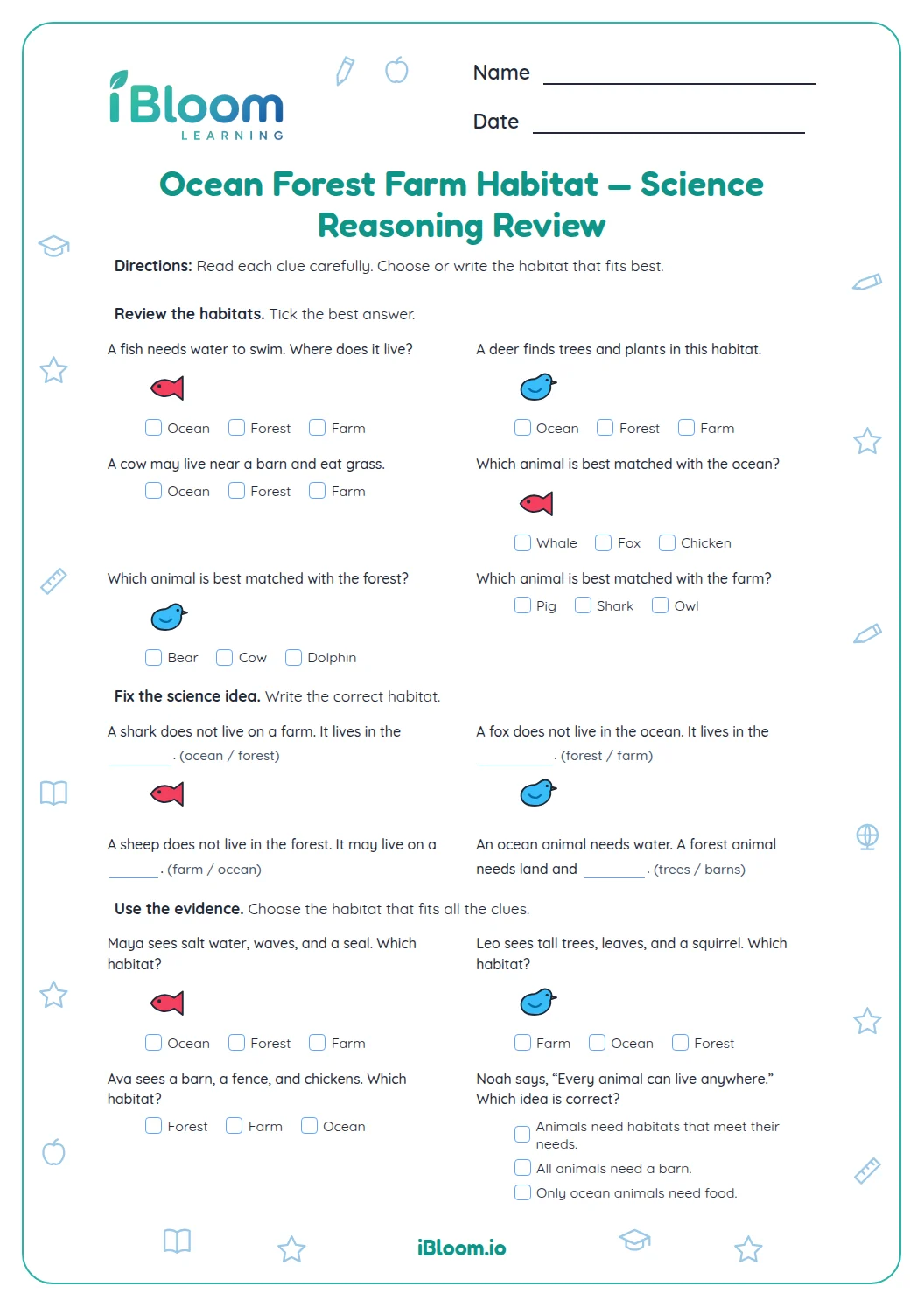
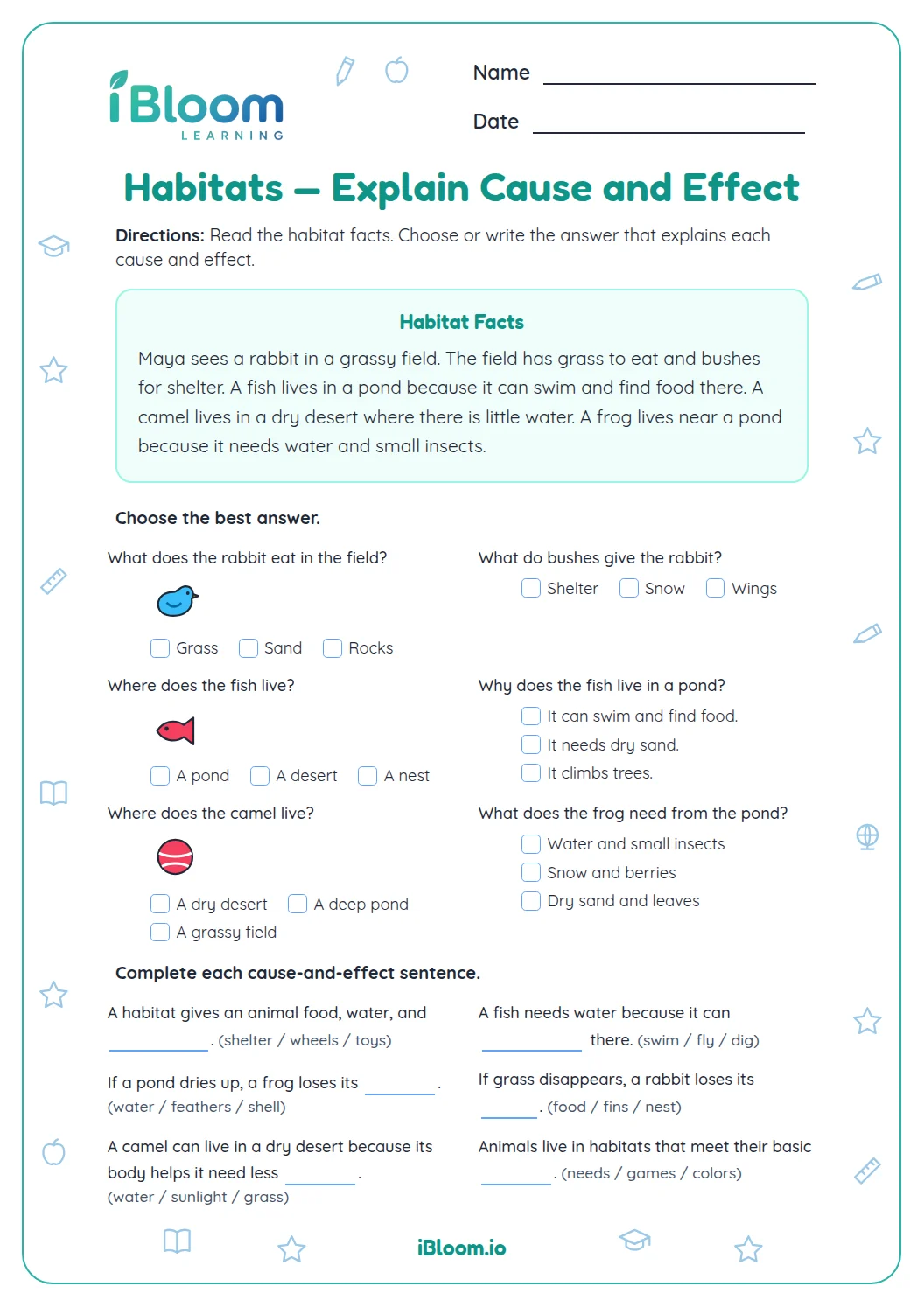
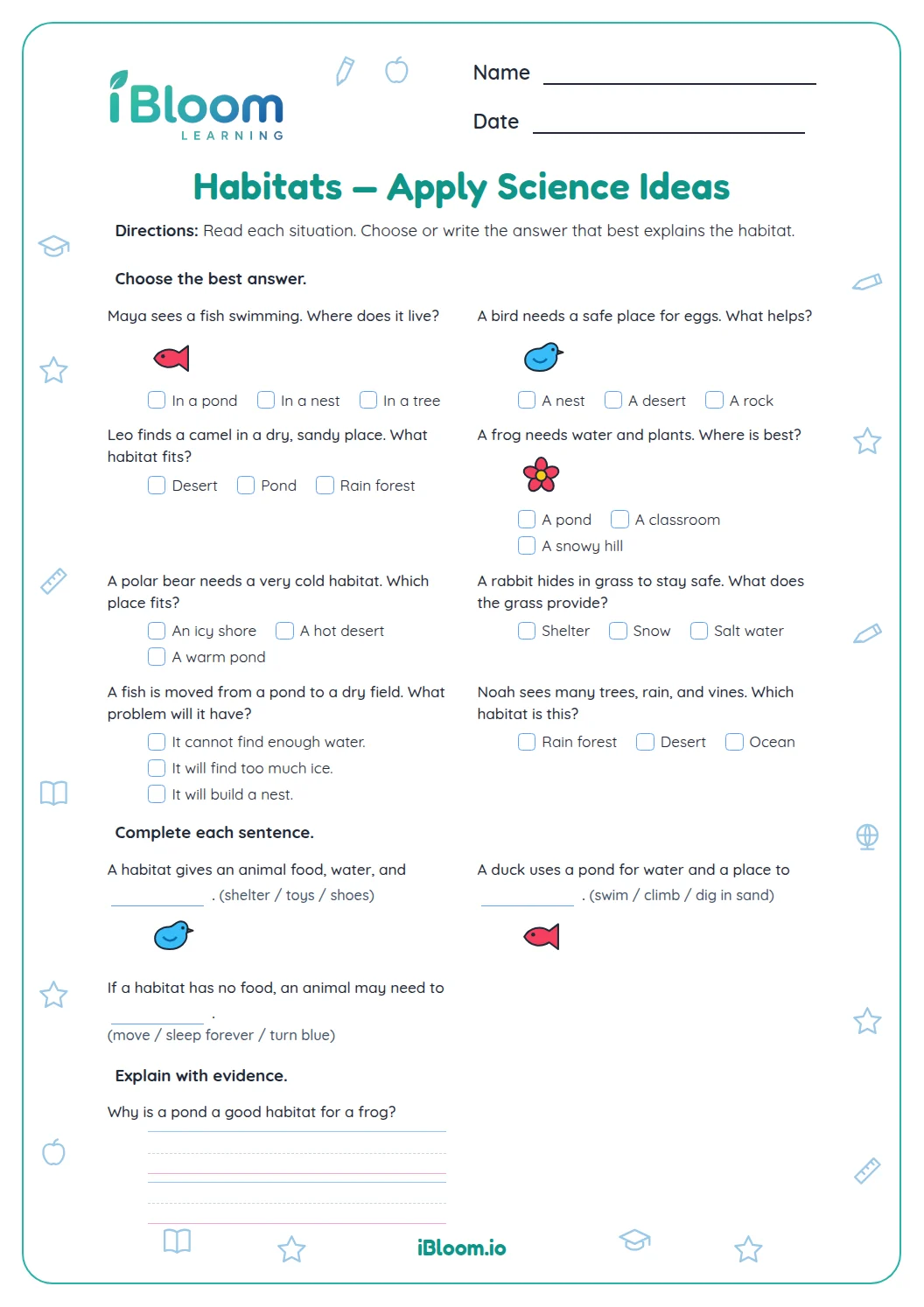
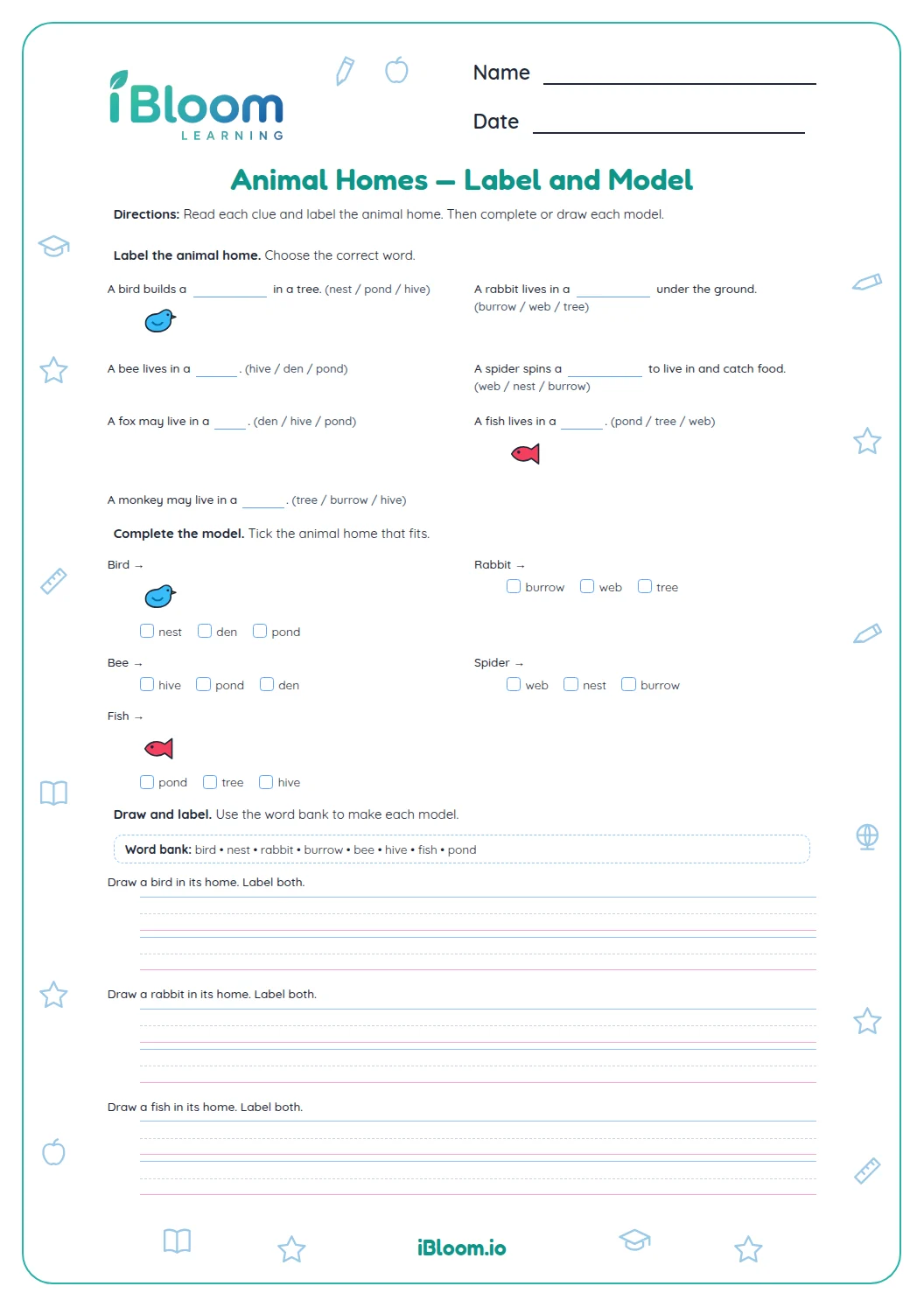
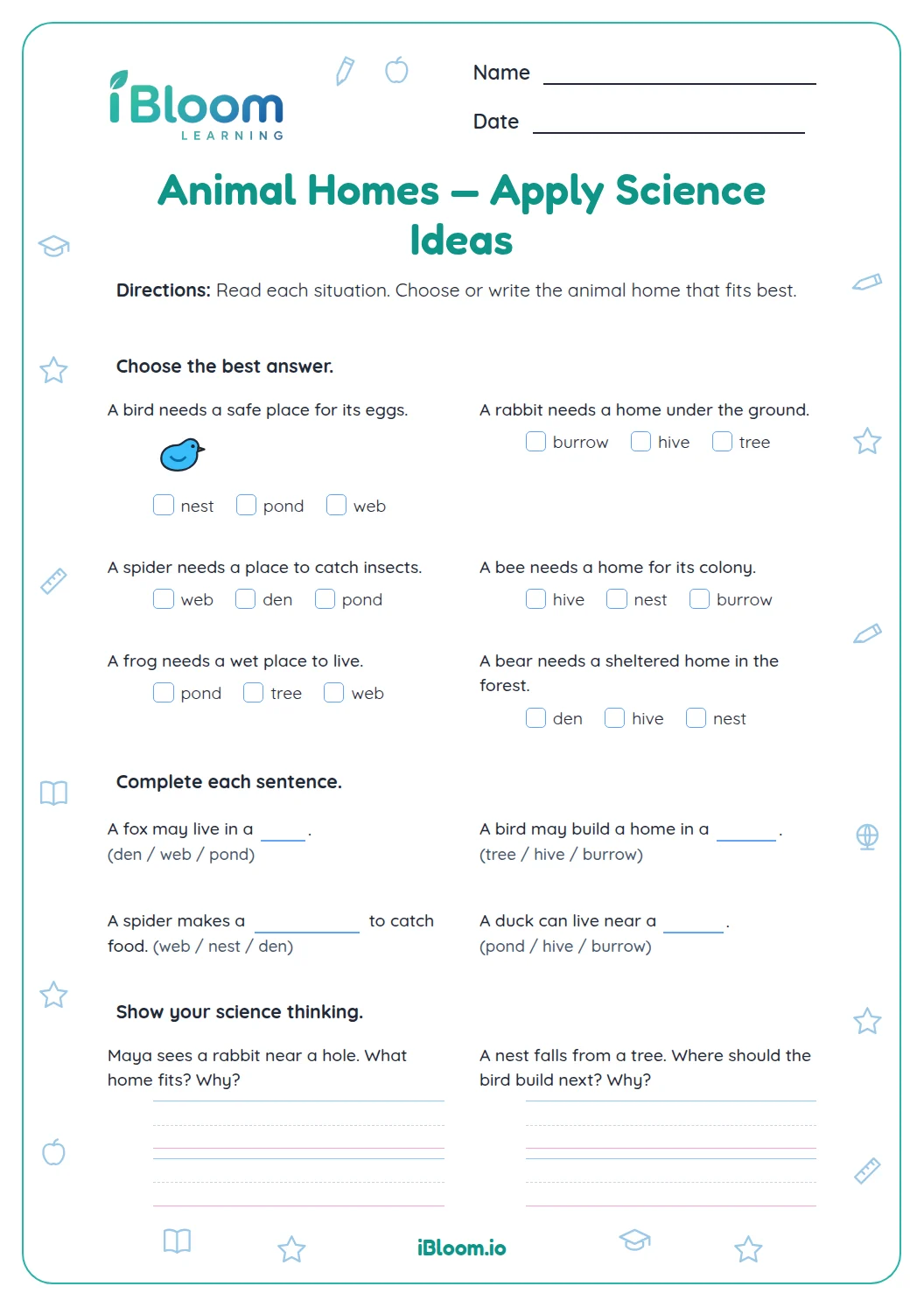
This Grade 1 science worksheet asks children to classify familiar animals by likely habitat. Fifteen picture-supported questions include ocean, forest, and farm animals, with five examples in each group. Learners use animal clues to compare the settings and select the best match from three choices. The page aligns with NGSS 2-LS4-1, which focuses on comparing life in different habitats; an answer key is included.
Aligned to 2-LS4-1
How can an animal clue help identify a habitat?
A habitat is a place where an animal can find what it needs. A fish or octopus is matched with the ocean, while a deer or owl fits a forest. A cow or chicken is commonly cared for on a farm.
Question 2 shows a whale. Choose ocean because whales live in ocean water; the picture and animal name are clues to use together.
- 1Animal: whale
- 2Ask where it lives.
- 3Whales live in ocean water.
- 4Choose ocean.
What can we compare across the three habitats?
The animal set includes five ocean animals, five forest animals, and five farm animals. Notice which animals share a habitat and how the three groups differ.
How do sorting and classifying work together?
Sorting puts each animal with one habitat. Classifying means using a shared clue, such as living in water or being cared for on a farm, to explain the group.
How to use this worksheet
- 1Name the three habitat choices: ocean, forest, and farm.
- 2Look carefully at the animal picture and read its name.
- 3Choose the habitat that is the best match.
- 4Explain one match with a simple clue.
- 5Check all 15 choices with the answer key.
Common mistakes and quick fixes
The mistake
Choosing by the animal’s color
The fix
Think about where the animal lives, not its color.
The mistake
Assuming every animal belongs on a farm
The fix
Use the ocean and forest choices when they fit the animal.
The mistake
Treating a match as the only place it can live
The fix
Choose the best fit among these three settings.
Next Generation Science Standards alignment
Compare the variety of life in different habitats.
On this sheet: The pictured animals are sorted and compared across three habitats.
Show the official wordingHide the official wording
Make observations of plants and animals to compare the diversity of life in different habitats.
What to practice next
Make more practice
Further reading
Questions parents and teachers ask
What does habitat mean?
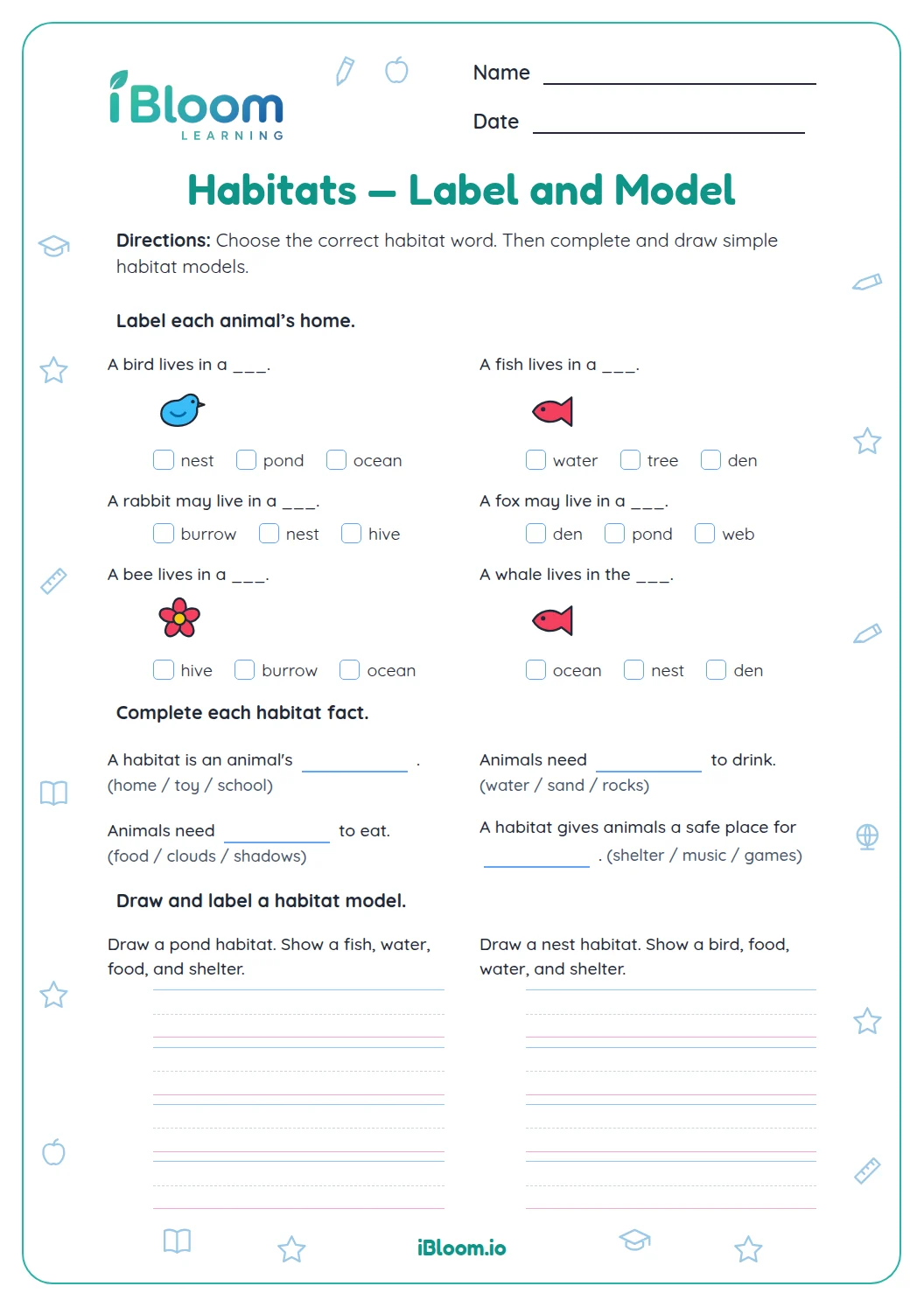
A habitat is a place where a living thing finds the conditions it needs to live. This activity uses three broad choices: ocean, forest, and farm. Children match familiar animals to a likely home and can explain a choice with a simple clue.
Why are there three habitat choices?
The sheet focuses on comparing ocean, forest, and farm settings. Keeping the choices consistent lets a first grader concentrate on animal clues, such as living in water or being an animal commonly cared for on a farm. No.
Are all animals found only in one habitat?
No. Animals may use more than one kind of place, and some animals live in many regions. In this activity, children choose the most likely match among the three named settings, using familiar examples rather than treating habitats as exclusive boundaries.
How many questions are included?
There are 15 picture-supported multiple-choice questions. Five animals are matched with each of the three habitats, and the answer key lists a habitat for every animal so an adult can review the choices. The groupings provide repeated examples for comparing the three settings.
How can I extend the activity after printing?
Ask the learner to name a clue for one choice, such as “A fish lives in water.” Then invite them to think of another animal for the same habitat. Keep new examples open-ended because real animals can live in a range of places.