









About this worksheet
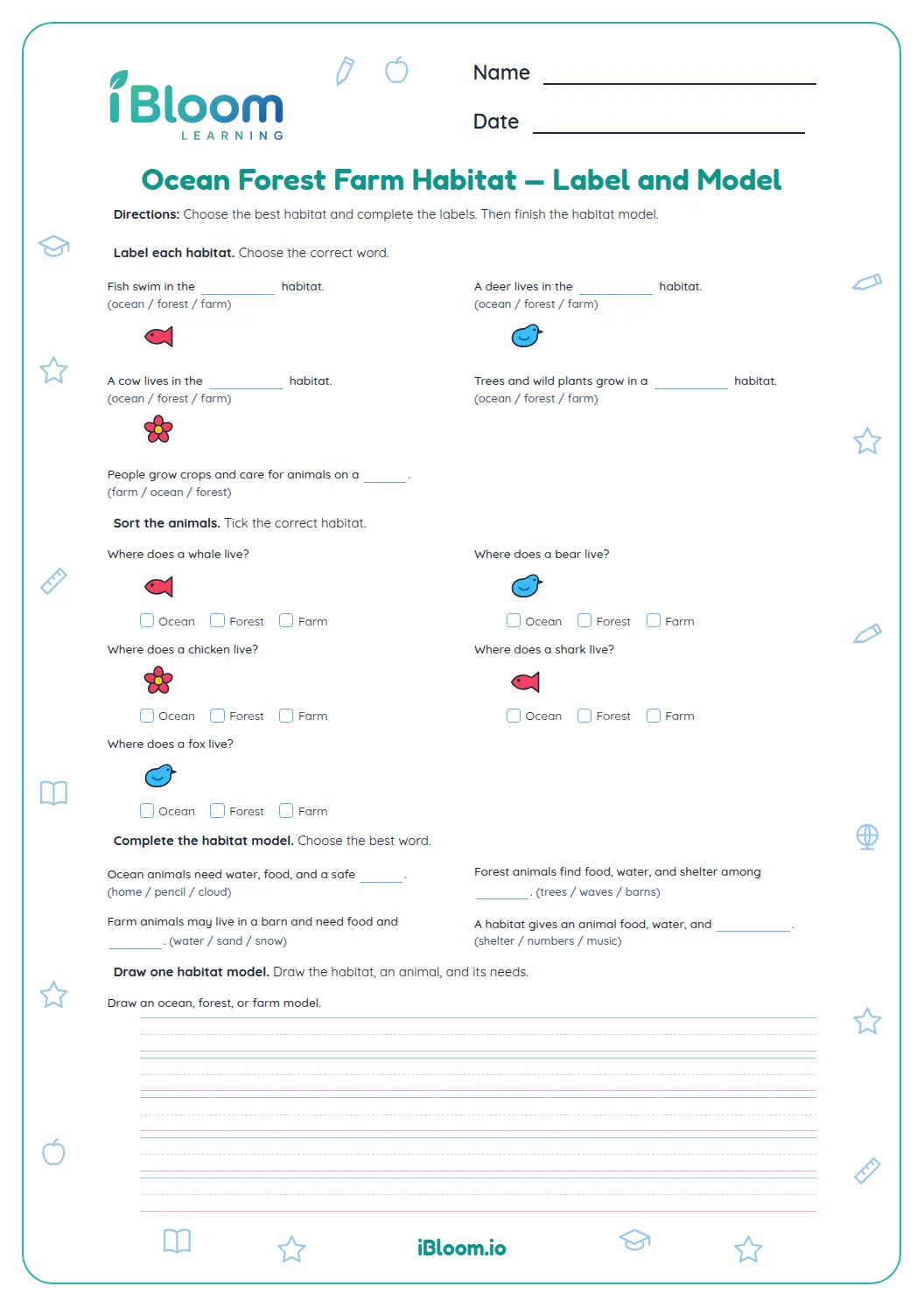
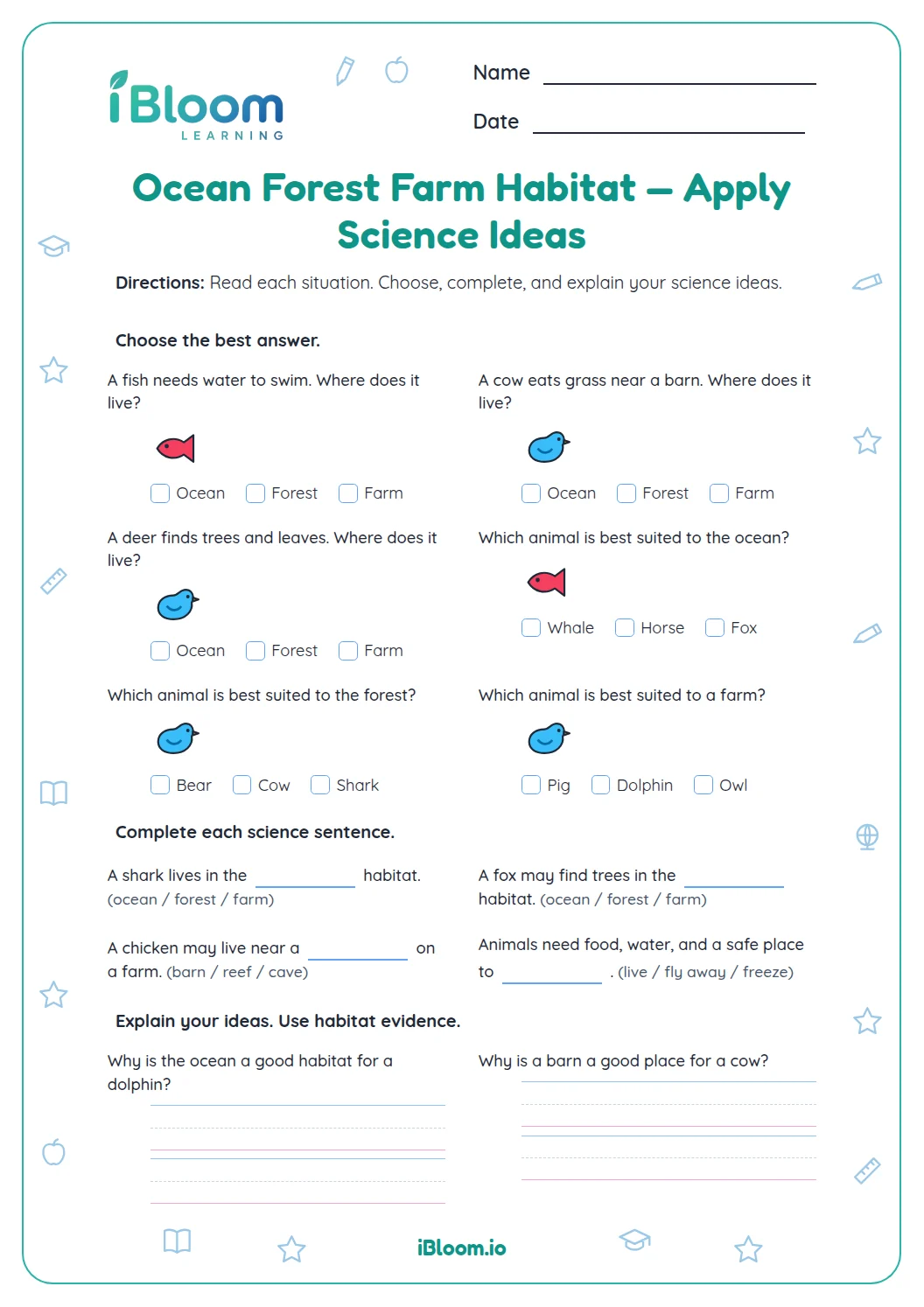
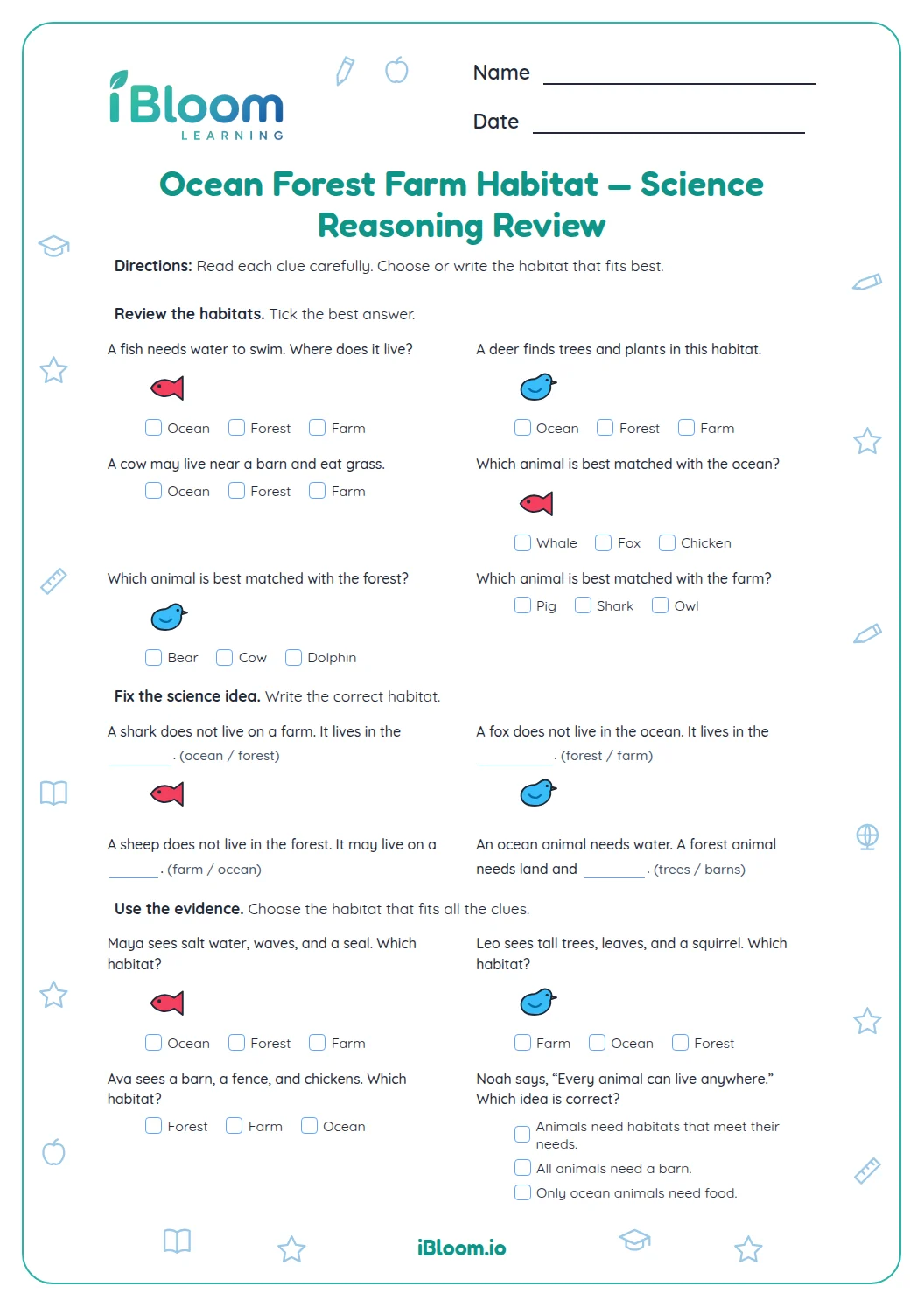
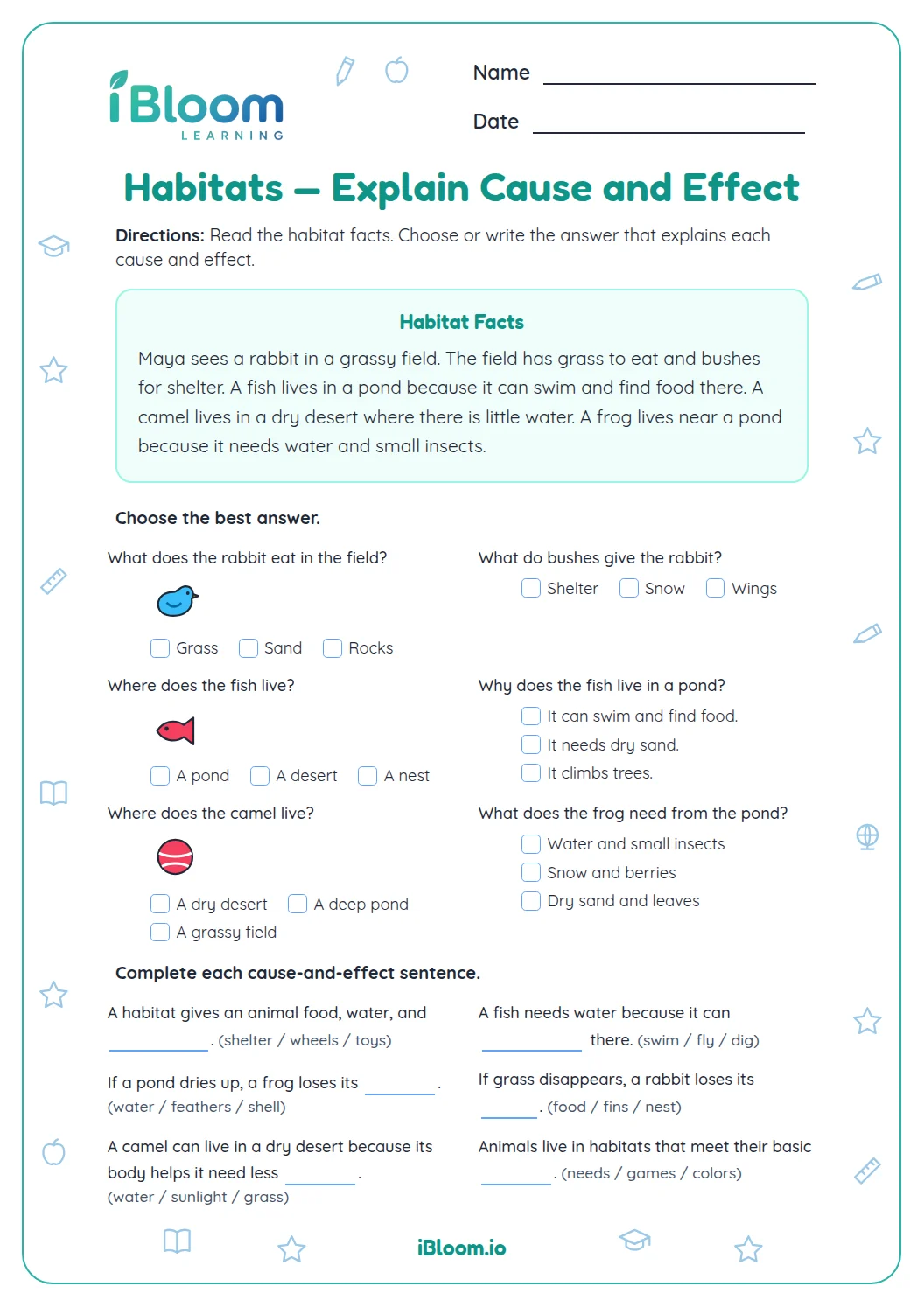
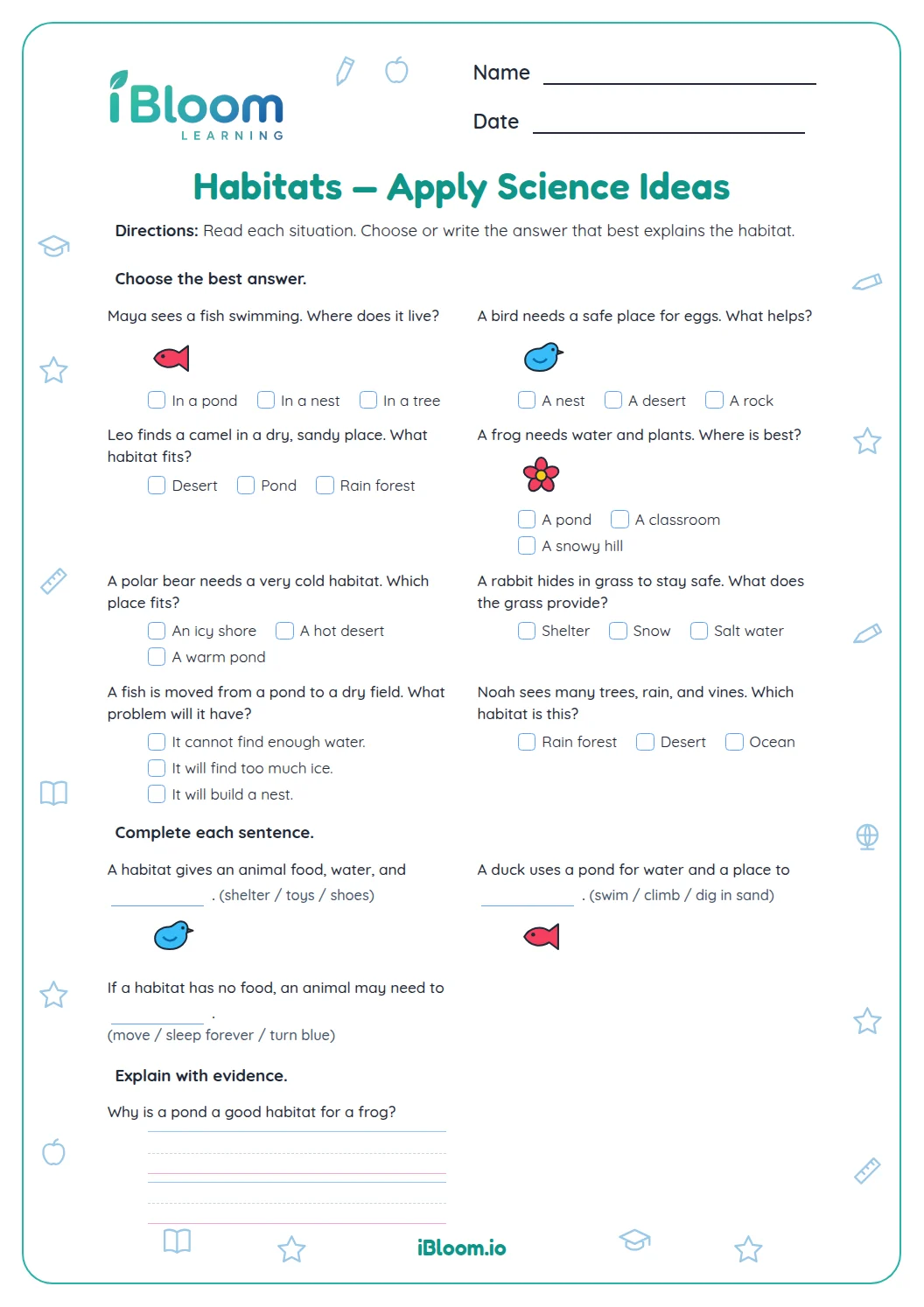
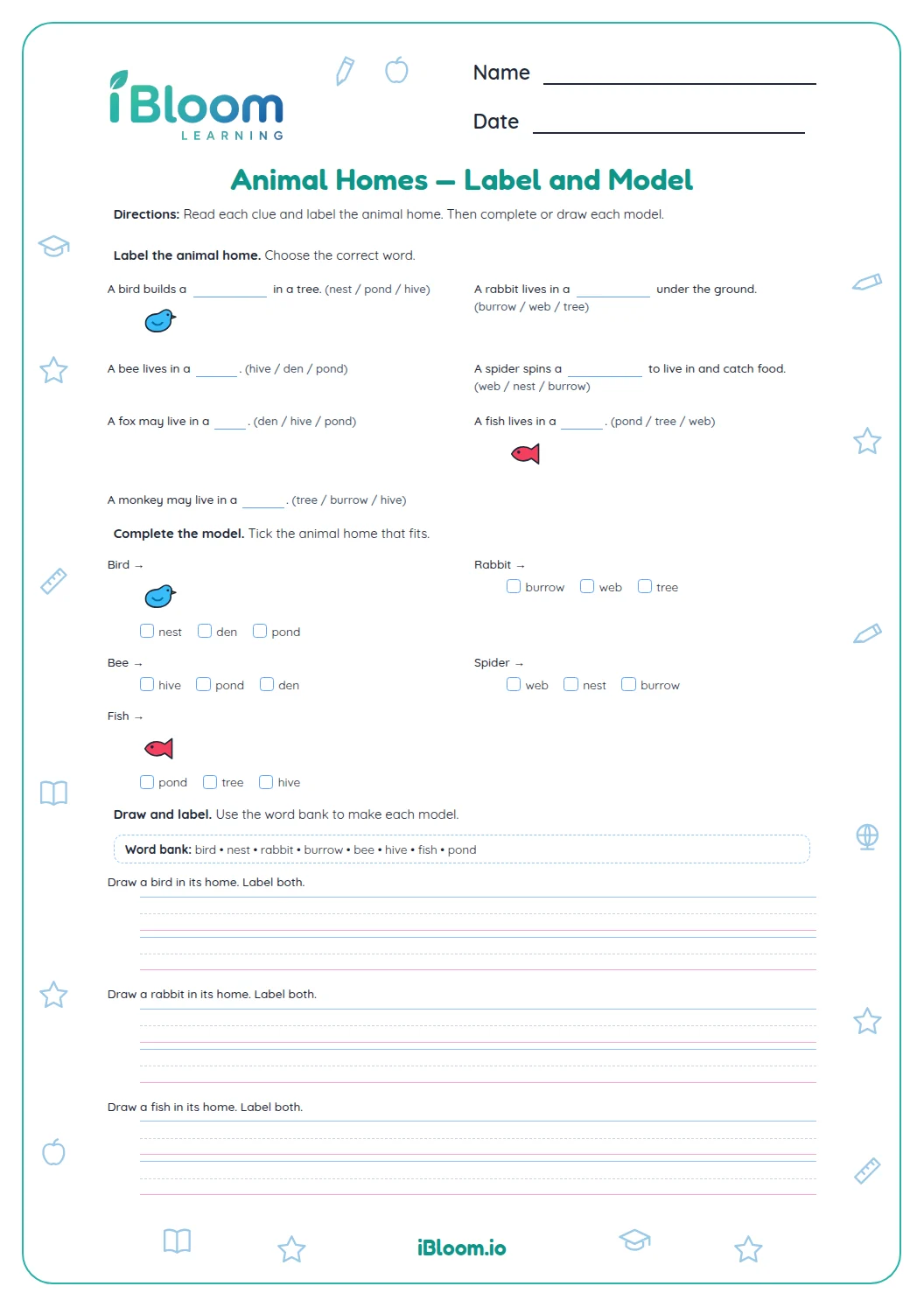
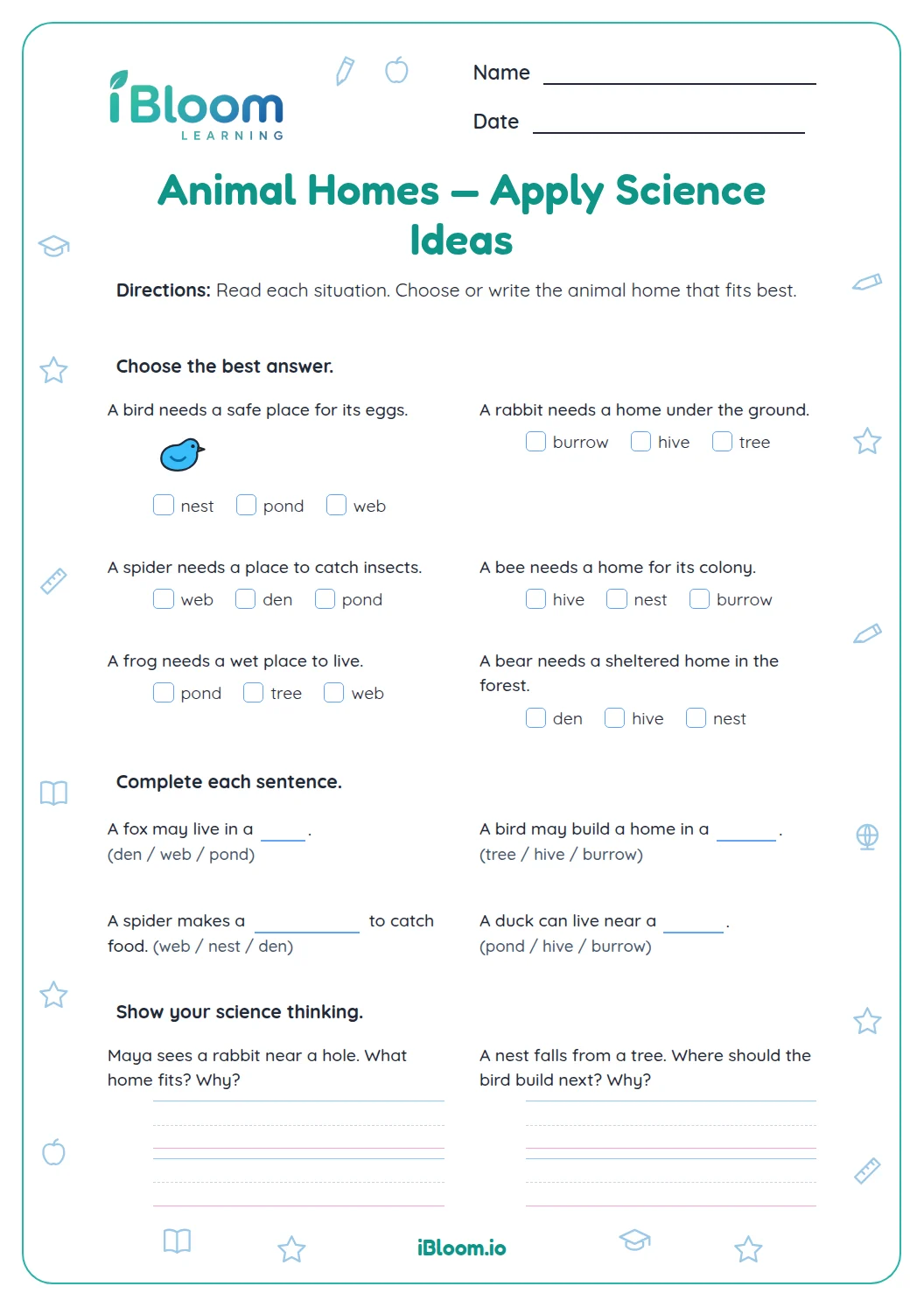
This Grade 1 habitat worksheet compares places where ocean, forest, and farm animals can find what they need. Fifteen questions use picture clues, multiple-choice responses, sentence completions, and short written explanations. Children connect water, trees, grass, and shelter with animal needs, then consider what may happen when a habitat lacks a resource. The answer key gives sample wording for open responses.
Aligned to K-ESS3-1
Where can each animal find what it needs?
A habitat is a place where an animal can find resources it needs. Fish use water, birds can find shelter in trees, and farm animals may get food and care on a farm. Picture clues support the first set of questions.
How does a habitat support an animal?
Connect a feature of a place with what an animal can do there. Ocean water lets a fish swim; trees can give a bird shelter; grass can provide food for a cow.
- 1The ocean is wet, so a fish can ___.
- 2A fish moves through water by swimming.
- 3Answer: swim.
What may happen when a habitat changes?
The final questions ask children to predict what an animal may lose if water, trees, or safe shelter is missing. A clear answer names the missing resource and its effect.
How to use this worksheet
- 1Read the animal and habitat clue.
- 2Use the picture and words to identify the setting.
- 3Connect a habitat feature with an animal need.
- 4Complete the sentence using the clue words.
- 5For written questions, explain what resource is missing and what may happen.
Common mistakes and quick fixes
The mistake
Choosing a place without checking the animal’s need.
The fix
Match the animal with a resource it can find there.
The mistake
Naming a habitat feature without its effect.
The fix
Explain what the water, trees, food, or shelter lets the animal do.
The mistake
Giving a prediction that does not mention the missing resource.
The fix
Use a cause-and-effect sentence, such as “Without trees, a bird may lose a nest place.”
Curriculum alignment
The worksheet gives children direct practice with this standard.
Connect animal needs with the places where animals live.
On this sheet: The habitat questions connect animals’ needs and body features with ocean, forest, and farm places.
Show the official wordingHide the official wording
Use a model to represent the relationship between the needs of different plants and animals (including humans) and the places they live.
What to practice next
Make more practice
Further reading
Questions parents and teachers ask
What is a habitat?
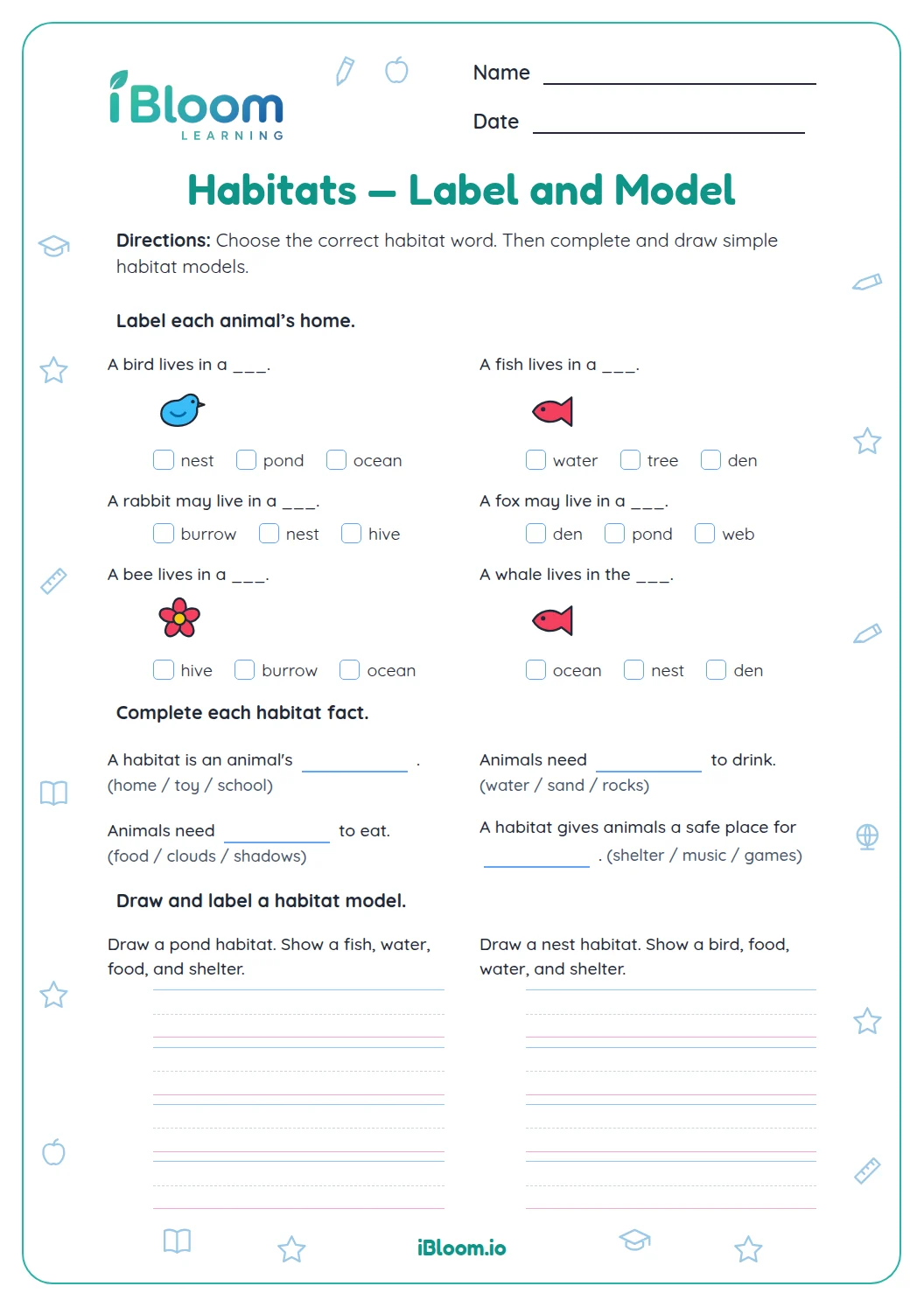
A habitat is a place where an animal can find resources it needs, such as water, food, or shelter. The worksheet uses ocean, forest, and farm examples to connect a place with the needs of fish, birds, and cows.
How many habitats are compared?
The page compares three settings: ocean, forest, and farm. Questions use fish, birds, and cows to explore how water, trees, grass, care, and shelter can support animals in those places. Children connect each animal’s needs with a useful feature of its habitat.
What does Part A ask children to do?
Part A asks children to match clues and pictures with a habitat or resource. Later parts ask them to complete cause-and-effect sentences and explain what an animal may lose when water, trees, or safe shelter is missing. The picture cues include fish, trees, a cow, and a bird.
What does cause and effect mean here?
Here, a cause is a habitat feature or change, and an effect is what an animal can do or may lose as a result. For instance, ocean water lets a fish swim, while losing trees may take away a bird’s nest shelter.
How many questions need written answers?
Three questions call for short written explanations: what may happen if a fish cannot find water, what shelter a bird may lose if a forest loses trees, and why a barn is useful. The key gives sample responses, so equivalent clear wording is acceptable.
Which standard is connected to this activity?
The page is designed around the Grade 1 topic of how living things use places and resources. Its 15 questions combine picture-supported choices, sentence completions, and three written explanations, followed by a separate answer key with sample responses.