








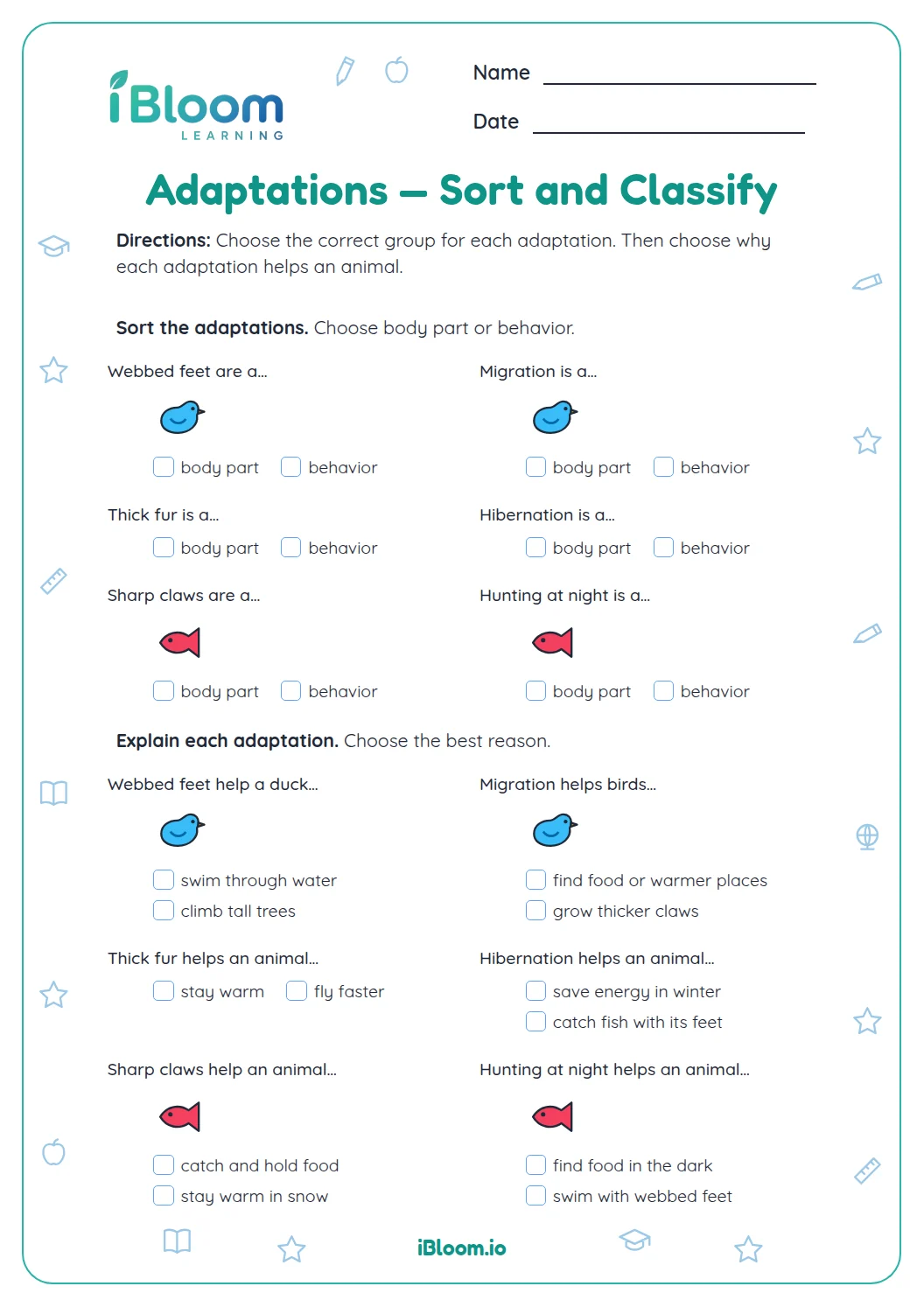


About this worksheet
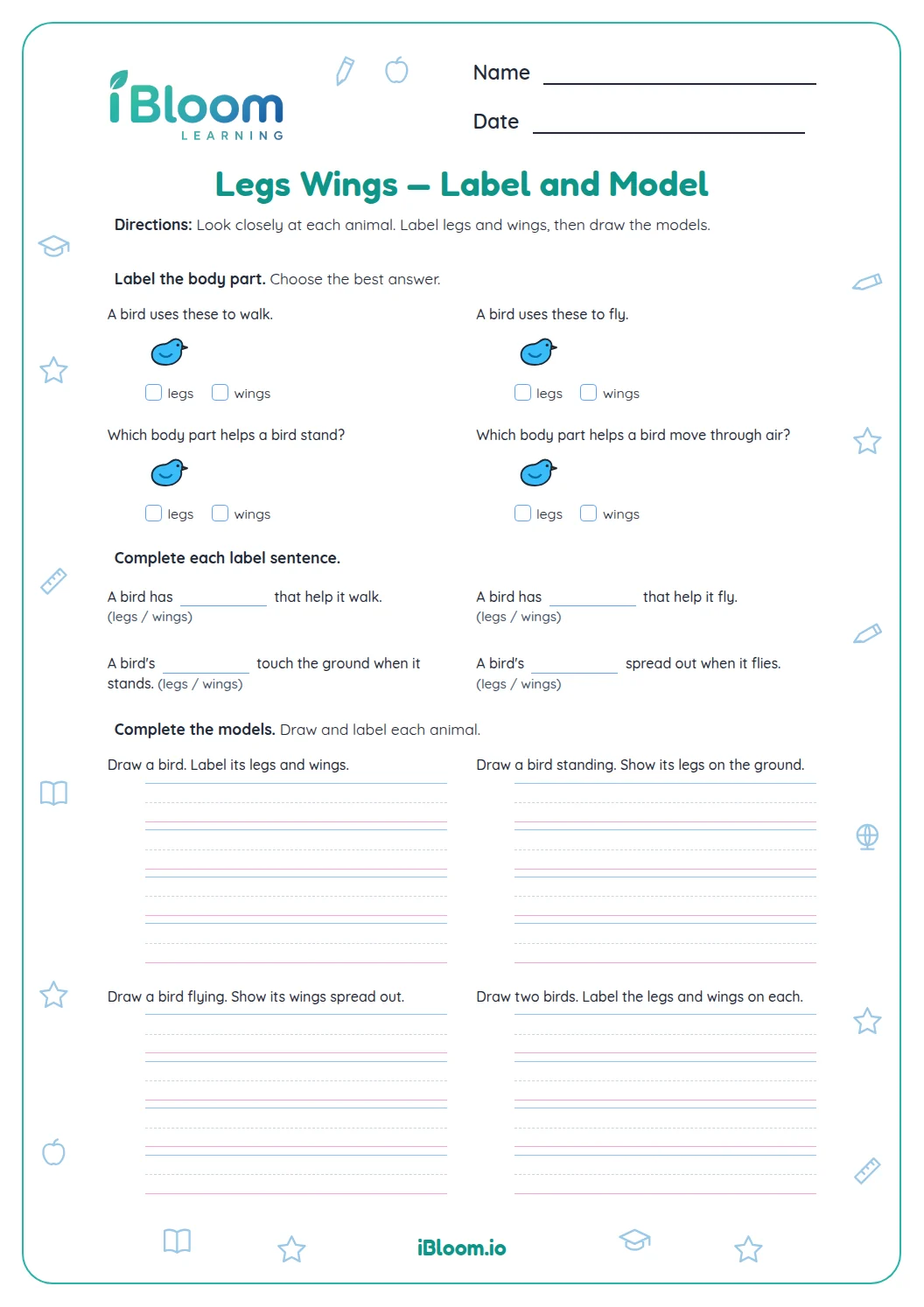
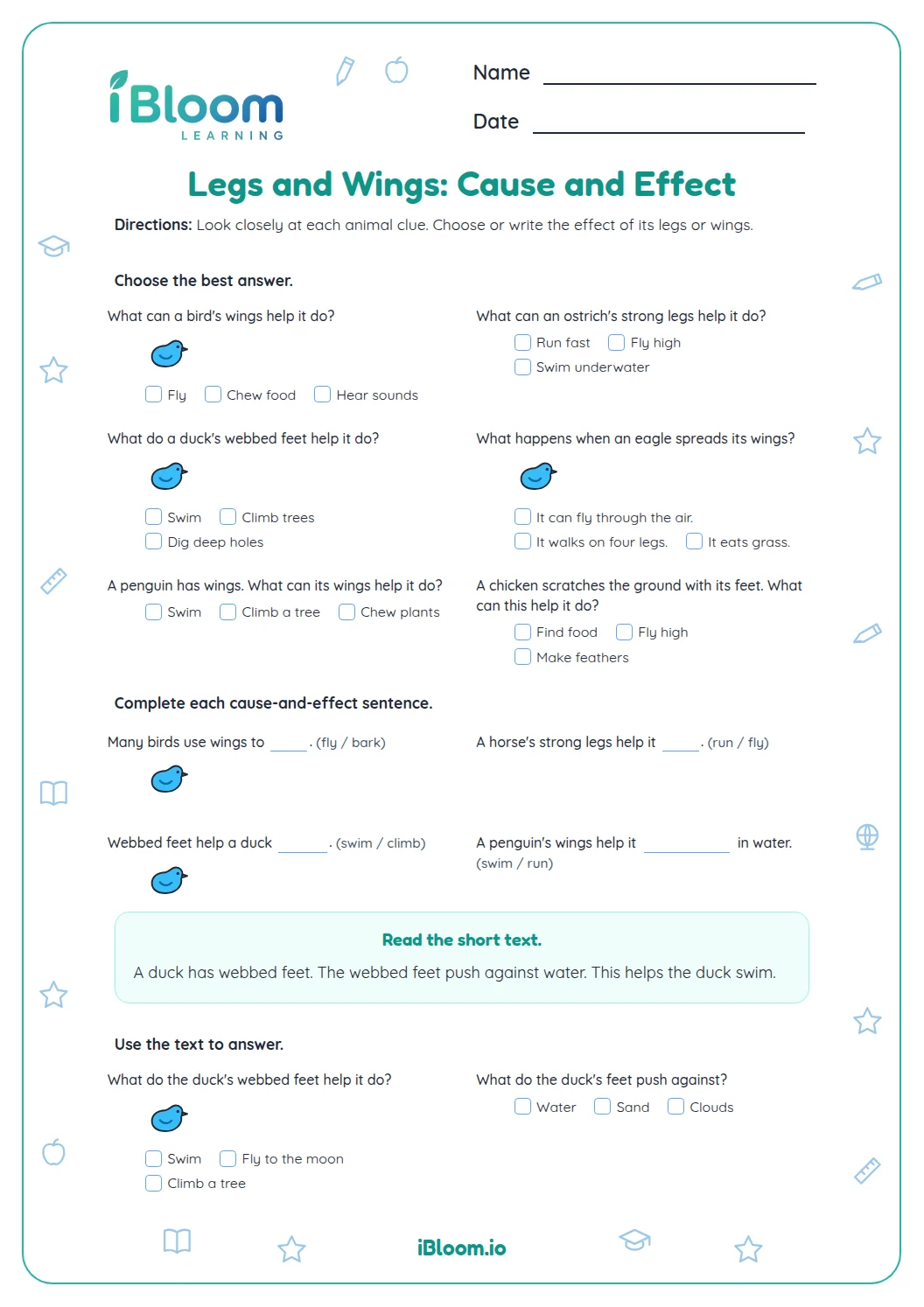
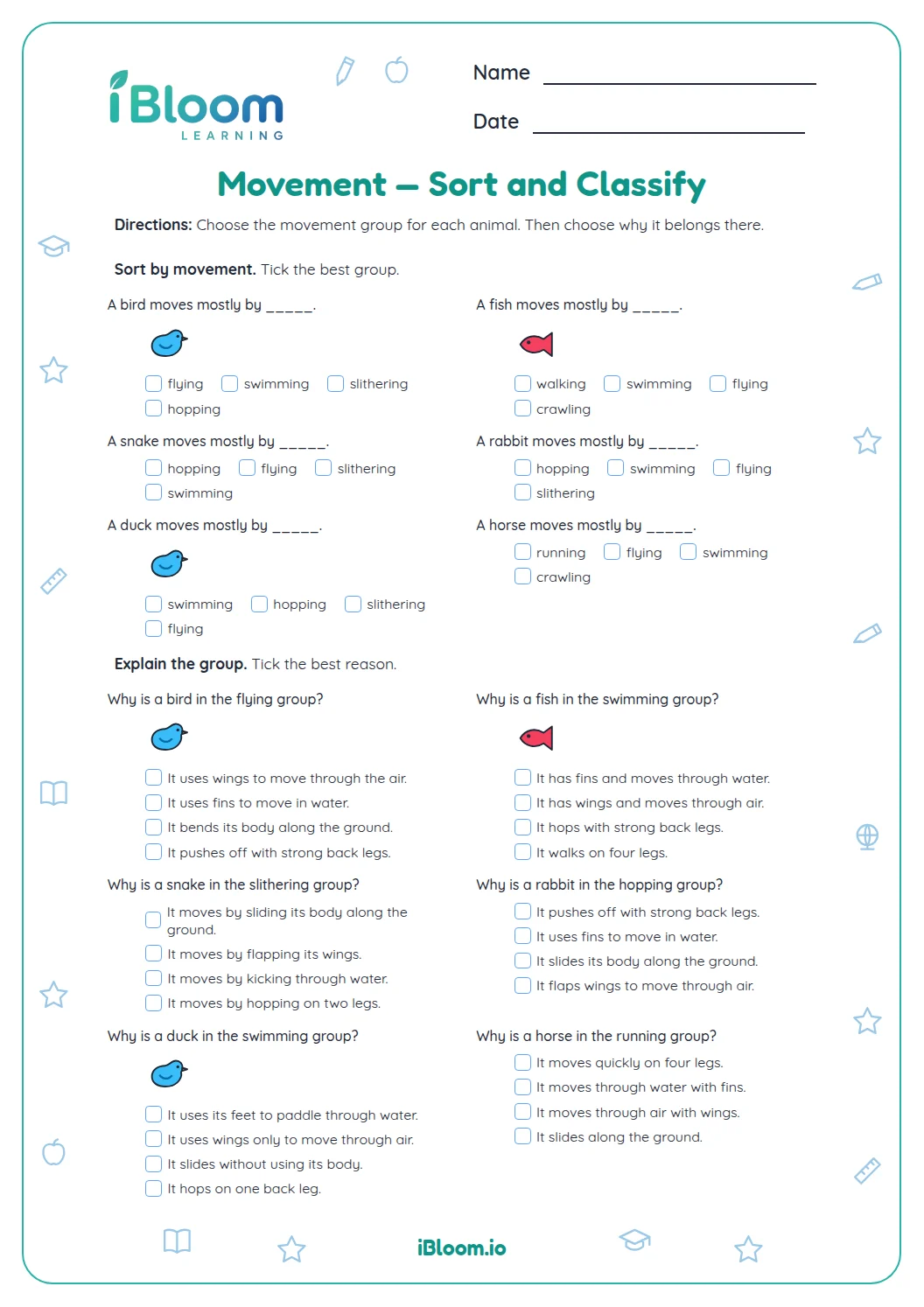
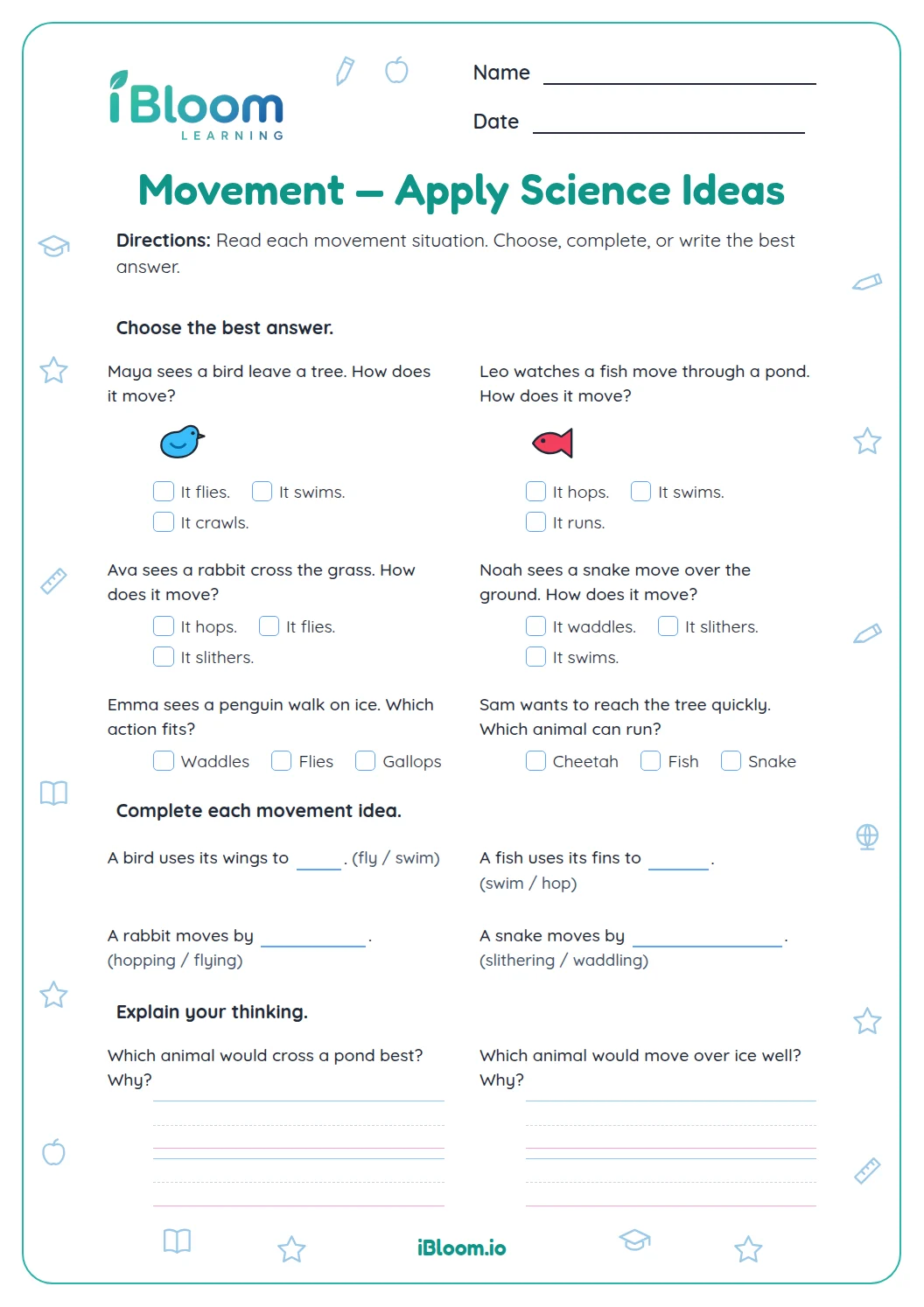
This Grade 1 science printable has 6 animal and body-part questions, 6 explanations of how parts support movement, and 4 comparisons or applications. Children connect visible structures such as legs, wings, fins, and webbed feet with movement. The separate key gives sample explanations.
Which animal matches the clue?
Use the stated number or kind of body parts to choose one animal.
- 1An ant has six legs.
How can you explain a body part’s job?
Name the part, then say what movement it helps with.
- 1A fish uses fins to move and steer.
How do two animals move in different ways?
Part C asks children to compare animals or apply a structure-and-function idea. Name a body part for each animal and connect it to movement.
- 1A duck uses webbed feet; a fish uses fins.
How to use this worksheet
- 1Read the animal clue carefully.
- 2Use its body-part pattern to choose an answer.
- 3Name a body part in each written explanation.
- 4Connect that part to a movement or job.
- 5For comparisons, give one detail about each animal.
Common mistakes and quick fixes
The mistake
Assuming every animal with wings flies.
The fix
Use the animal named in the question; winged animals do not all move in the same way.
The mistake
Naming a part without explaining its job.
The fix
Name the body part and connect it to an action, such as fins helping a fish move through water.
The mistake
Mixing up an animal’s legs and wings.
The fix
Reread the clue and keep legs, wings, and their functions attached to the correct animal.
What to practice next
Make more practice
Questions parents and teachers ask
Which animals have legs or wings?
Part A gives a clue and three choices. Children use familiar body-part patterns: an ant has six legs, a bird has wings and two legs, and a horse has four legs. Each question names an animal or a feature so children can connect the clue to the right choice.
How can a body part help an animal move?
Part B asks students to connect a structure with a job. A duck’s webbed feet push against water; a fish’s fins help it move and steer. The key gives sample wording, and accurate alternatives are fine. Ask the child to point to the exact word or phrase in the sentence that supports the answer before checking the key.
How do comparisons help explain?
Part C asks students to compare two animals or connect a body part to its job. A strong answer names the part and the movement it supports. The answer key gives brief examples. Ask the child to point to the exact word or phrase in the sentence that supports the answer before checking the key.
Does every animal with wings fly?
No. The worksheet uses careful examples and does not ask students to assume every winged animal flies. Some birds and butterflies use wings for flight; answer according to the particular animal and prompt. Ask the child to point to the exact word or phrase in the sentence that supports the answer before checking the key.
What is a strong written answer?
Name the animal’s body part and explain how it helps the animal move. For example, “A fish uses fins to move and steer in water.” The answer key gives sample wording; another accurate explanation is fine if it connects the structure with movement.