Free printable practice
Shade Structures Practice Activities
Grade 1 science worksheets help children explore how shade structures block light and make cooler, darker spaces outdoors.
Free printable worksheet PDFs
Preview every available page, then download the free worksheet PDF for home, homeschool, tutoring, or classroom practice.
Preview the exact activity before downloading it.
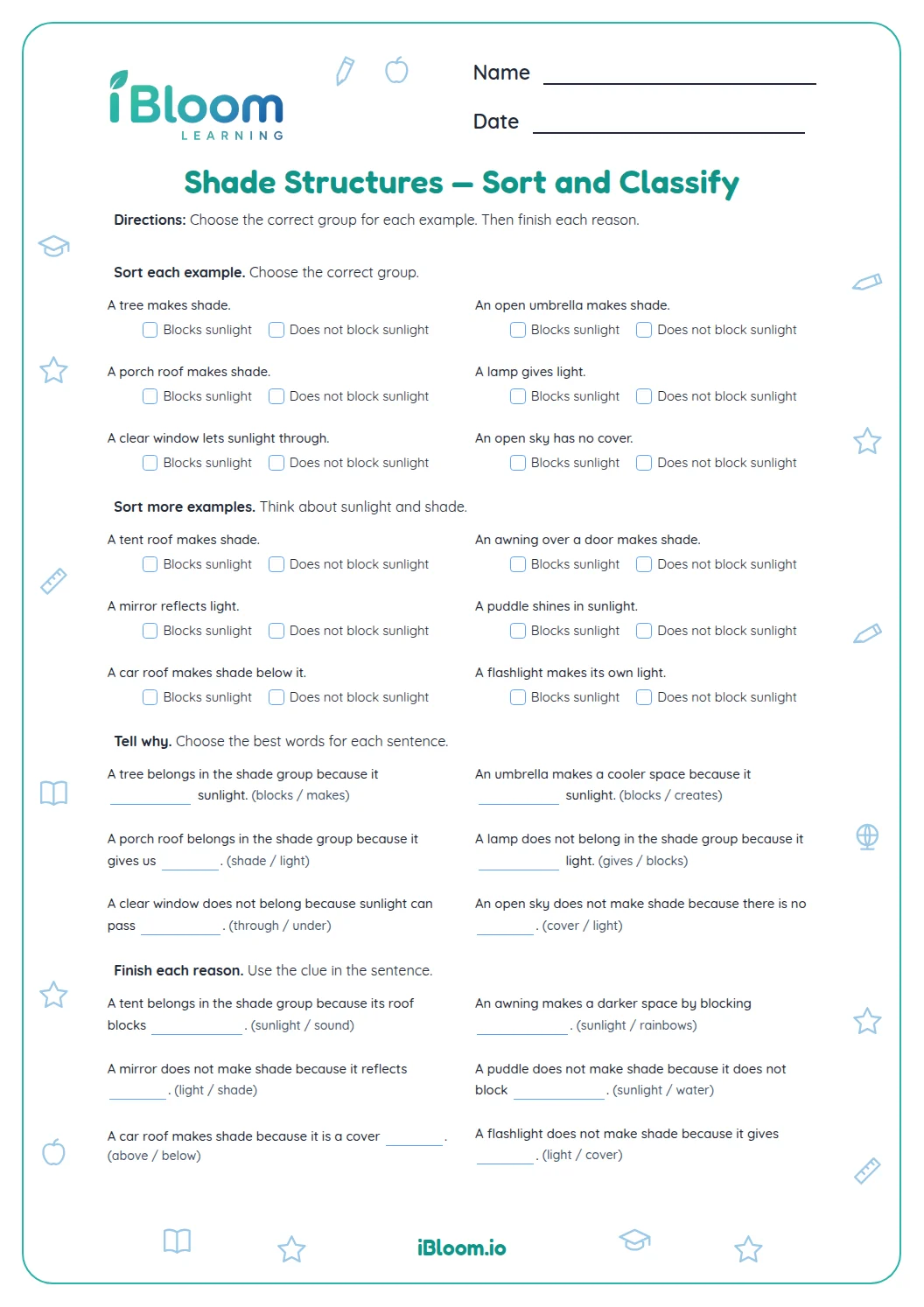 Shade Structures — Sort and ClassifyGrade 1 science worksheets help children explore how shade structures block light and make cooler, darker spaces outdoors. This sort and classify worksheet provides a distinct, age-appropriate way to practise the same lesson.Grade 1Free PDF preview6 pages
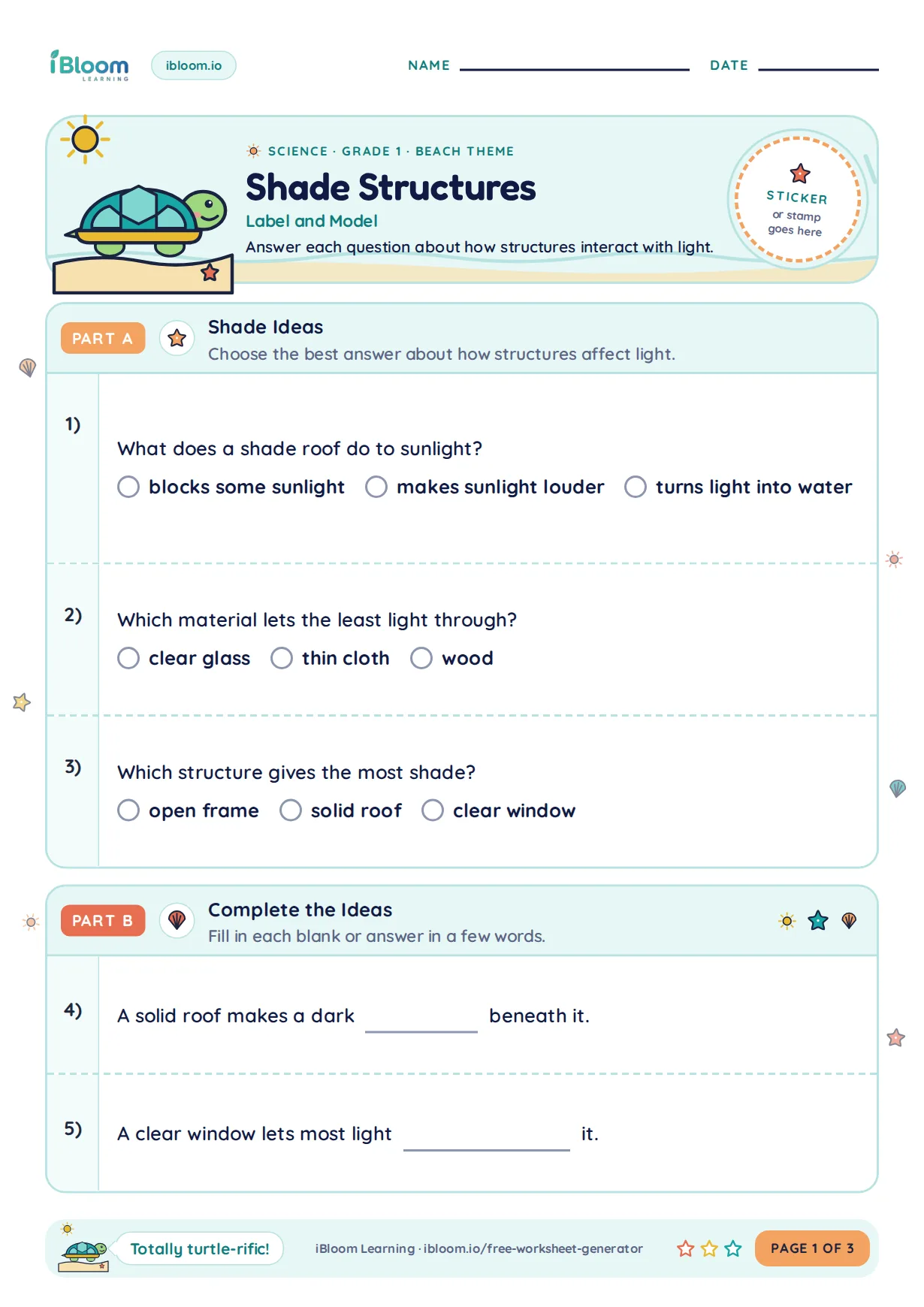 Shade Structures — Label and ModelGrade 1 science worksheets help children explore how shade structures block light and make cooler, darker spaces outdoors. This label and model worksheet provides a distinct, age-appropriate way to practise the same lesson.Grade 1Free PDF preview
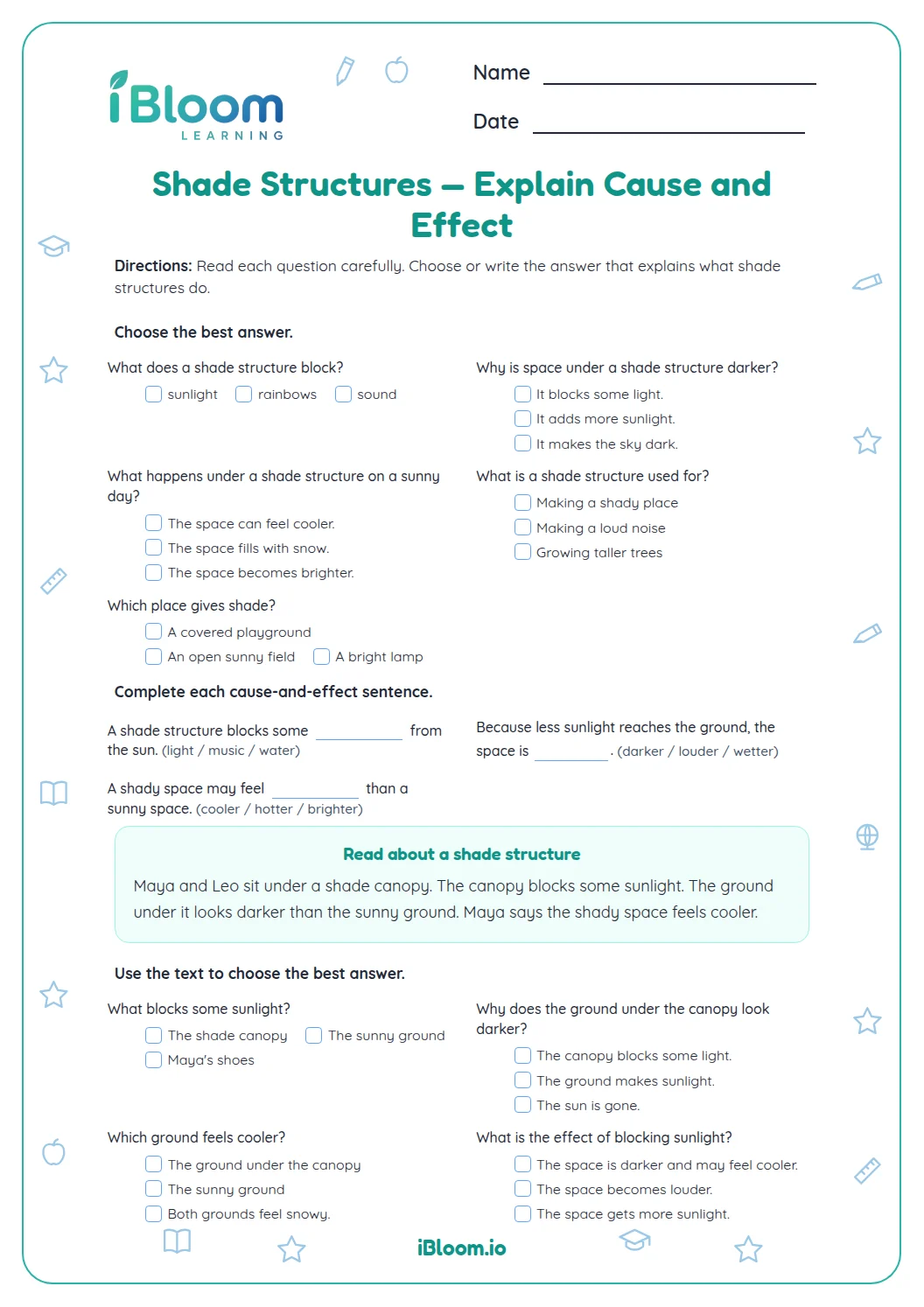 Shade Structures — Explain Cause and EffectGrade 1 science worksheets help children explore how shade structures block light and make cooler, darker spaces outdoors. This explain cause and effect worksheet provides a distinct, age-appropriate way to practise the same lesson.Grade 1Free PDF preview
 Shade Structures — Apply Science IdeasGrade 1 science worksheets help children explore how shade structures block light and make cooler, darker spaces outdoors. This apply science ideas worksheet provides a distinct, age-appropriate way to practise the same lesson.Grade 1Free PDF preview
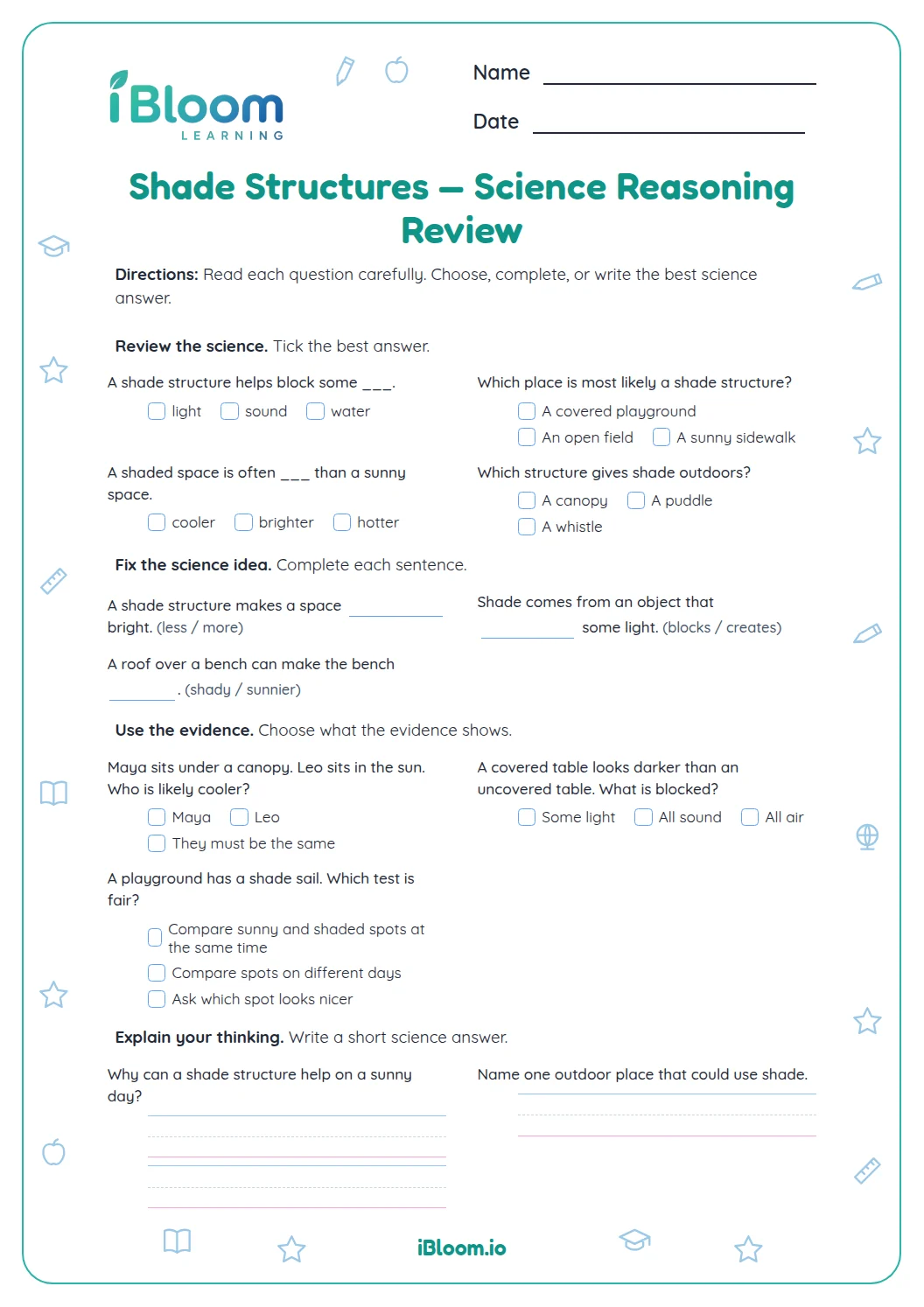 Shade Structures — Science Reasoning ReviewGrade 1 science worksheets help children explore how shade structures block light and make cooler, darker spaces outdoors. This science reasoning review worksheet provides a distinct, age-appropriate way to practise the same lesson.Grade 1Free PDF preview
Practice that builds confidence
What students learn about shade
These Grade 1 science worksheets focus on shade structures within the Energy, Sound, and Light topic. Children practise noticing how sunlight travels, how objects block light, and why people use shelters, trees, umbrellas, and roofs to create shade.
The printable activities include picture observations, simple sorting, drawing, labeling, and explain-your-thinking prompts. Students connect everyday outdoor examples to the idea that a structure can reduce direct light and change how a place feels.
Children begin with familiar scenes: a playground, park bench, patio, bus stop, or beach umbrella. They identify which areas are in sunlight and which are shaded, then connect the shade to an object or structure blocking the light. The key vocabulary is simple but important: light, sun, shade, structure, block, shadow, roof, cover, and shelter.

Building the idea step by step
The worksheets move from recognizing shade in pictures to explaining why it happens. A child may circle the shaded side of a tree, match a shade structure to its use, or draw a cover that would help keep a picnic table out of direct sunlight. This progression supports observation before explanation, which is appropriate for first graders learning early physical science.
A simple parent routine
At home, choose one sunny spot near a window or outside. Ask, “Where is the light coming from?” and “What could block it?” Let your child place a book, toy, or hand between the light and a surface, then compare the bright and shaded areas. After the quick investigation, use a worksheet page to draw or label what made the shade. Encourage complete oral answers such as, “The umbrella blocks some sunlight, so the chair is in shade.”

Classroom uses for teachers
Teachers can use these pages after a light and shadows demonstration, during science centers, or as a follow-up to an outdoor walk. Picture-based pages work well for partner talk: one student points to evidence, and the other explains the purpose of the structure. Drawing prompts can also become quick formative checks before students design a simple shade solution with paper, craft sticks, or classroom objects.

Common errors to watch for
Some students think shade is an object rather than an area with less direct light. Others may confuse shade with night or assume shade only comes from trees. Guide them to say what is blocking the light and where the shaded area appears. If a drawing shows a roof but no shaded space, ask the child to add the darker area and explain who or what it protects.
Free printable PDF download
Use this grade 1 shade structures worksheet page to preview the activity, print it, or download it as a PDF for quick practice. It works well for homework, homeschool lessons, tutoring, morning work, revision, and classroom centers.
Answers and answer key support
After the child completes the worksheet independently, parents and teachers can use the answer support or answer key information to check the work, review mistakes, and choose the next practice step.
Why iBloom worksheets help
The pages keep the science concrete, using everyday structures children can recognize before asking them to reason. A child-friendly strategy is: “Find the sun, find the blocker, find the shade.” This three-step check helps students slow down, use evidence in the picture, and explain how a shade structure works.
Helpful answers
Frequently asked questions
What is a shade structure for Grade 1 students?
A shade structure is something that blocks some sunlight and creates a shaded area. First graders may study examples such as umbrellas, roofs, tents, trees, and playground covers.
How do these worksheets connect to light science?
The pages help children see that light travels from a source, such as the sun, and that objects or structures can block that light to make a darker area called shade.
Do students need to know the difference between shade and shadow?
They should begin to understand that both happen when light is blocked. At this level, it is enough for students to identify the shaded area and name what is blocking the sunlight.
How can I make this topic hands-on at home?
Use a sunny window or outdoor spot. Let your child place an object in the light, notice the shaded area it makes, and then complete a worksheet by drawing or explaining the same idea.
Are these shade structure worksheets suitable for science centers?
Yes. The picture sorting, labeling, and drawing tasks work well in centers because students can discuss what blocks the light and why a shaded place might be useful.
Is this grade 1 shade structures worksheet free?
Yes. You can preview it for free and use the printable worksheet for home or classroom practice.
Can I download this grade 1 shade structures worksheet as a PDF?
Yes. Use the worksheet download option to save a printable PDF, or print the worksheet directly from the page.
Does this grade 1 shade structures worksheet include answers or an answer key?
When the activity has fixed answers, iBloom includes answer support so parents and teachers can check the completed worksheet.