








About this worksheet
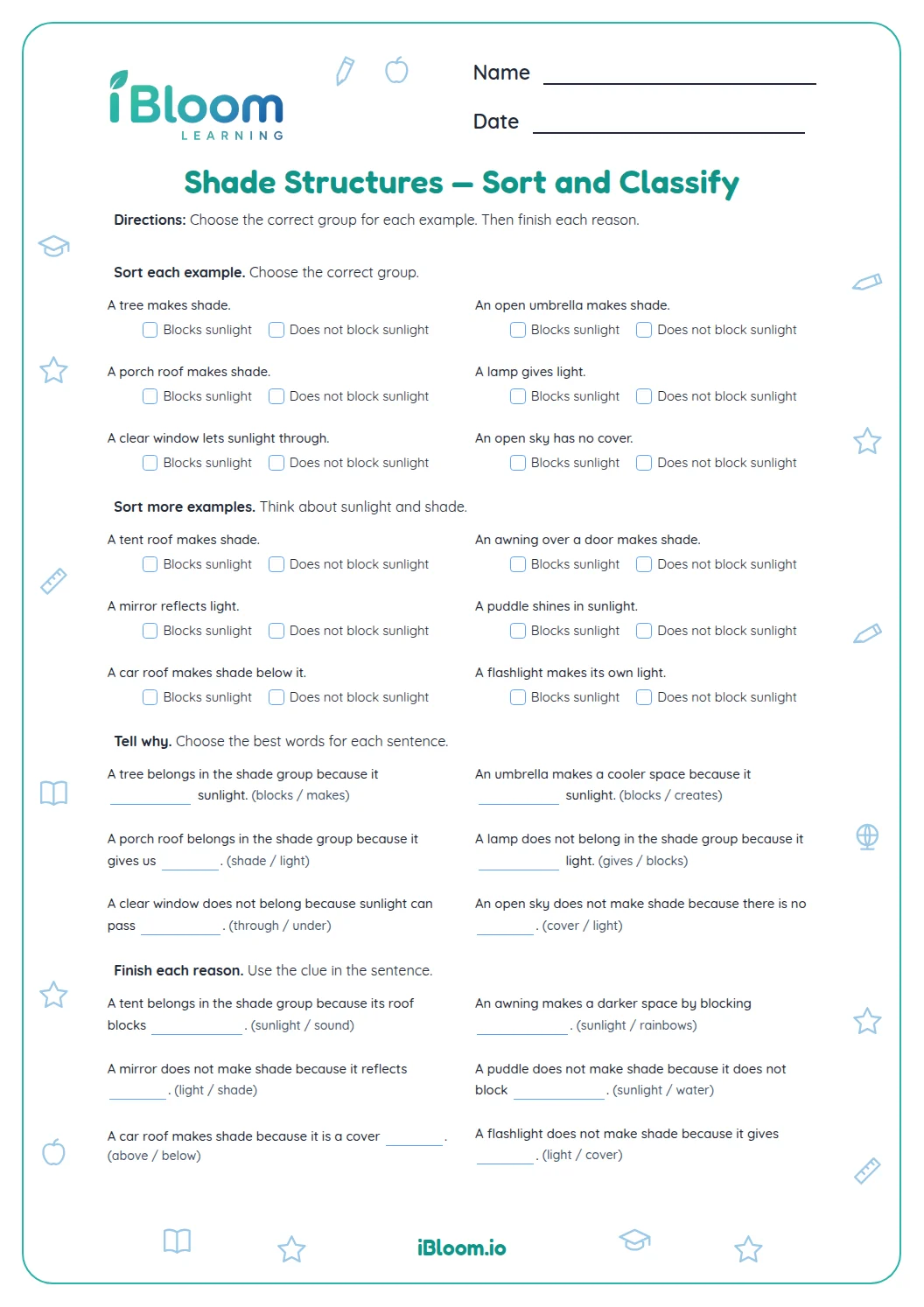
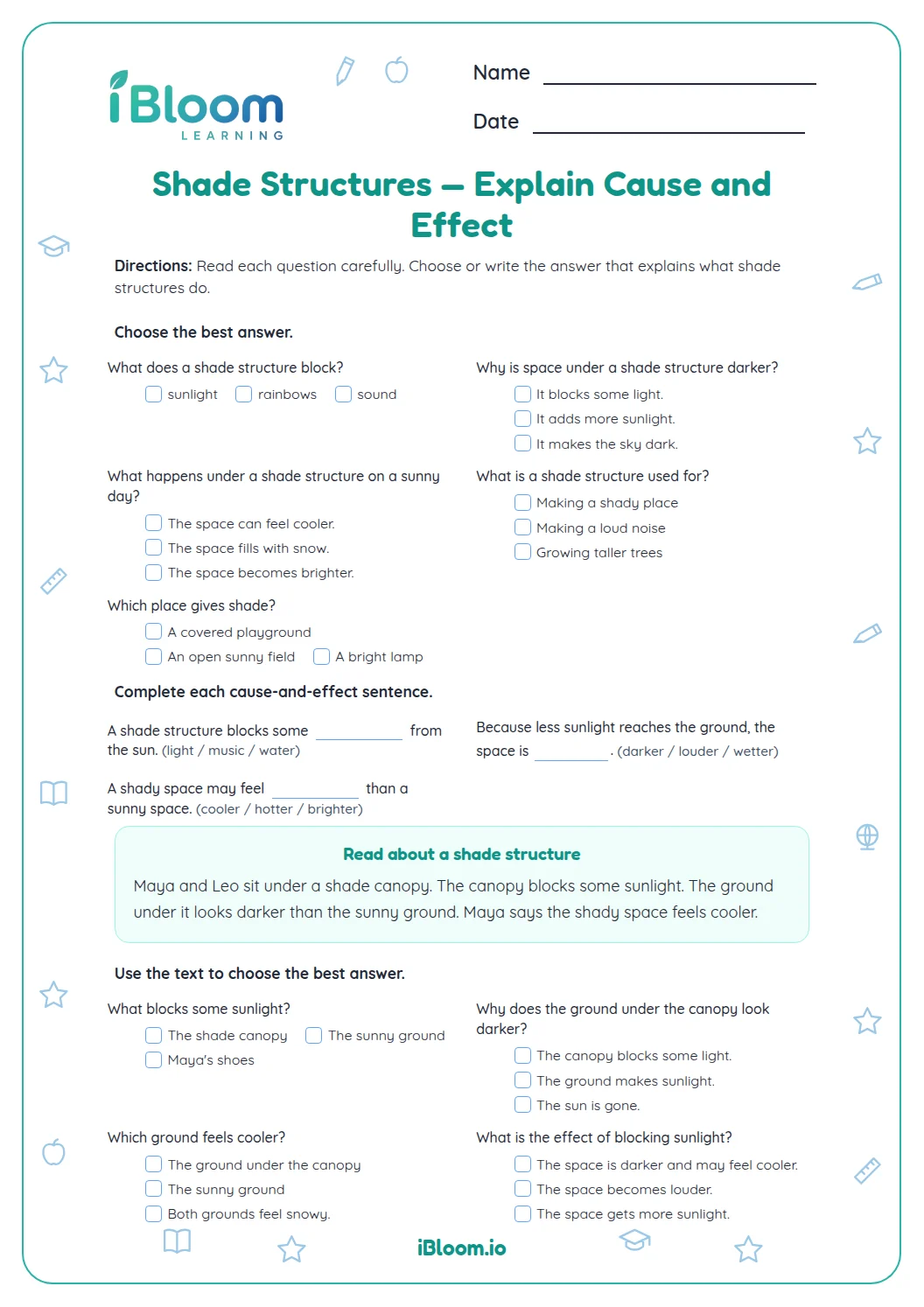
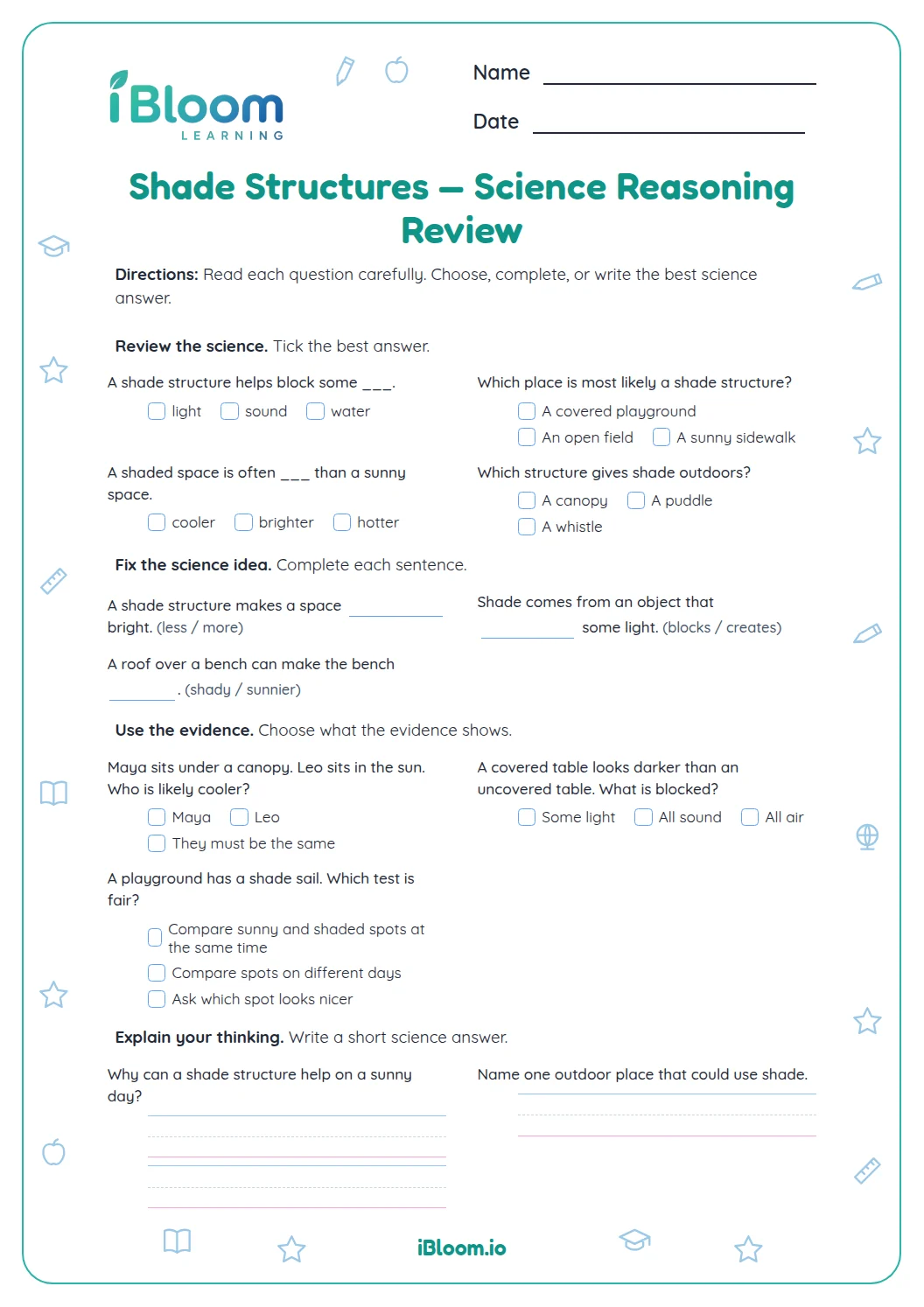
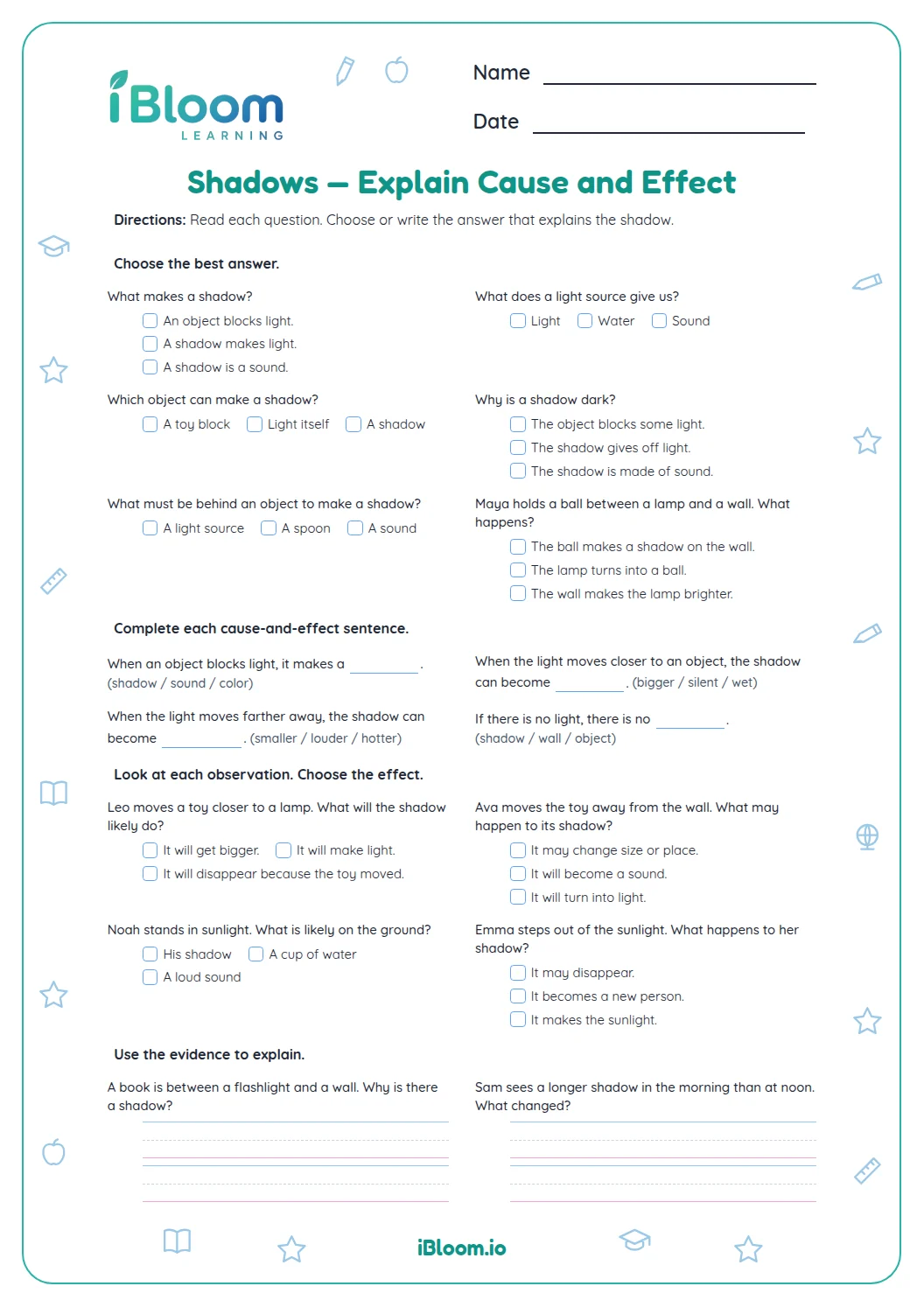
This Grade 1 science worksheet explores how shade structures affect light. Students compare materials, reason about where a shadow forms, consider what a fair material test keeps the same, and draw a roof with a shaded area. These questions connect a familiar purpose—making a shady place—to the idea that some materials block light while others let more light pass. An answer key includes sample responses.
Aligned to 1-PS4-3
What does a shade structure do?
A shade roof blocks some light from reaching the place beneath or behind it. A solid roof blocks more light than an open frame, while clear material lets much of the light pass through.
Question 1 asks students to identify the main effect: a shade roof blocks some sunlight.
Where does shade form?
Light travels from a source. When an object blocks its path, a shadow forms on the side away from the source. In the umbrella model, the chair is behind the umbrella from the Sun’s point of view.
- 1Sun → umbrella → chair
- 2The umbrella blocks light traveling toward the chair, so the chair is in shade.
How can students compare materials fairly?
Place one material between a light source and a surface, then observe how much light reaches the surface. Keep the light source, distance and surface the same when testing a second material.
What should a labeled model show?
A useful drawing includes a roof between the Sun and a place to sit. Labeling the roof and shaded area helps show how blocking light creates shade.
How to use this worksheet
- 1Read the question and identify the light source or material.
- 2Decide whether the material blocks light or lets light pass.
- 3For shadow questions, locate the side away from the Sun.
- 4When planning a comparison, keep the source and distance the same.
- 5Use the drawing question to label the roof and the shaded place.
Common mistakes and quick fixes
The mistake
Thinking shade forms between the Sun and the roof.
The fix
Find the side of the object away from the light source.
The mistake
Saying a clear material blocks all light.
The fix
Compare how much light passes through clear material and solid material.
The mistake
Changing several things during a material test.
The fix
Keep the light source, distance and surface the same; change only the material.
Curriculum alignment
Compare materials based on whether they let light through or block it.
On this sheet: Students compare light passing through materials and plan observations of blocked light.
Show the official wordingHide the official wording
Plan and conduct investigations to determine the effect of placing objects made with different materials in the path of a beam of light.
What to practice next
Make more practice
Further reading
Questions parents and teachers ask
What is a shade structure?
A shade structure, such as a roof or canopy, blocks some sunlight from reaching a place. This worksheet asks learners to connect the structure with the darker area it creates and to draw a roof over a shaded place.
Does every shade structure block all sunlight?
No. Gaps can let sunlight through, and some materials transmit more light than others. A solid roof blocks more direct light than an open frame. Question 9 asks students to think about how openings affect the light that reaches the space below.
Where does a shadow form?
A shadow forms on the side away from the light source when an object blocks light. In question 8, the umbrella sits between the Sun and the chair, so the shaded area is behind the umbrella, on the chair side.
What makes a fair material test?
A fair test changes one factor while keeping other conditions the same. To compare cloth and clear plastic, use the same light source, distance and test surface, and change only the material in the light path. This keeps the comparison fair.
What should the drawing include?
The drawing should show a shade roof and a shaded place, with both labeled. A student may add the Sun and show its light being blocked by the roof. The answer key describes the main idea the model should communicate.