Free printable practice
Sounds Pitch Practice Activities
Grade 1 sound pitch worksheets help children compare high and low sounds using pictures, everyday examples, and simple science vocabulary.
Free printable worksheet PDFs
Preview every available page, then download the free worksheet PDF for home, homeschool, tutoring, or classroom practice.
Preview the exact activity before downloading it.
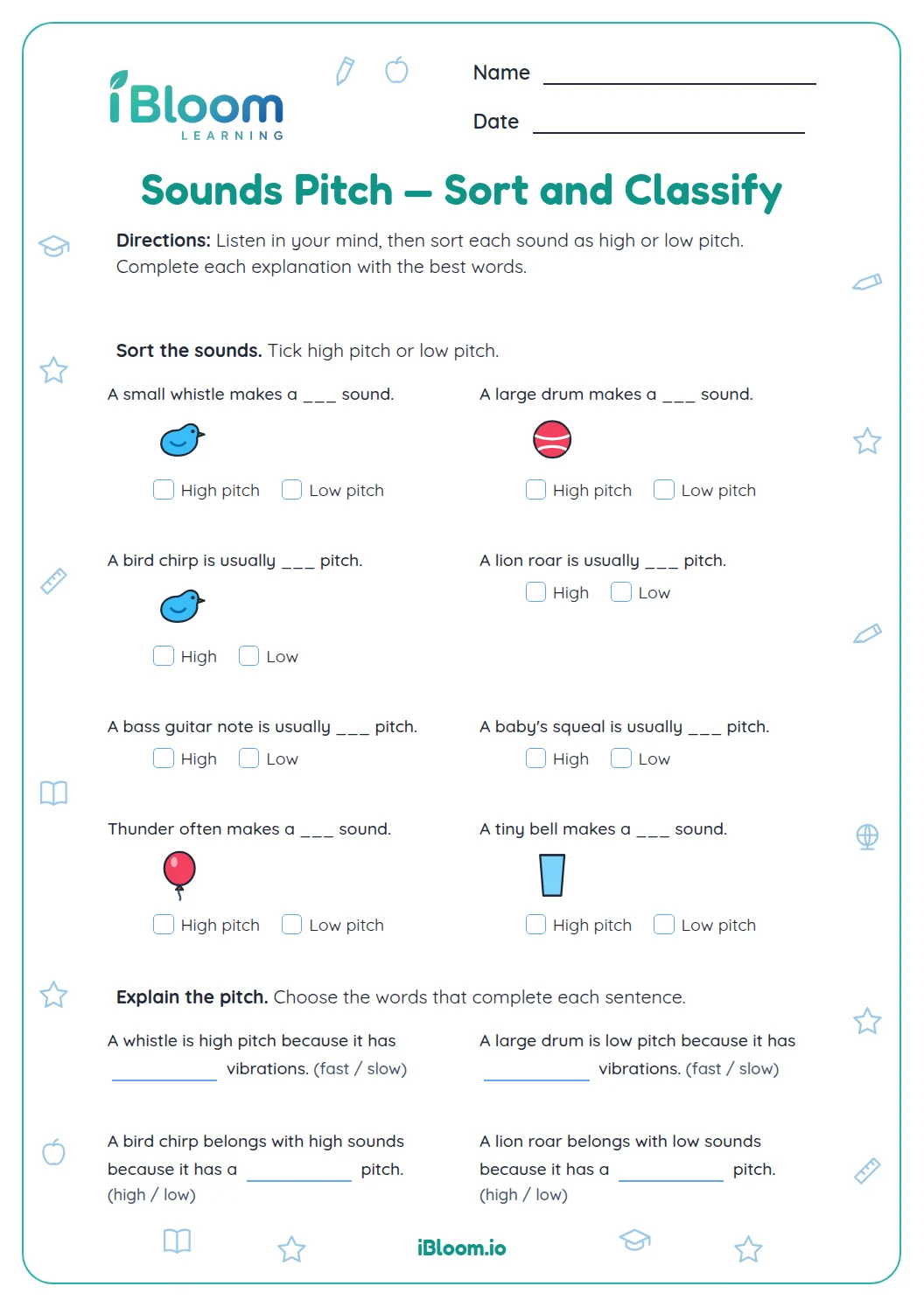 Sounds Pitch — Sort and ClassifyGrade 1 sound pitch worksheets help children compare high and low sounds using pictures, everyday examples, and simple science vocabulary. This sort and classify worksheet provides a distinct, age-appropriate way to practise the same lesson.Grade 1Free PDF preview
 Sounds Pitch — Label and ModelGrade 1 sound pitch worksheets help children compare high and low sounds using pictures, everyday examples, and simple science vocabulary. This label and model worksheet provides a distinct, age-appropriate way to practise the same lesson.Grade 1Free PDF preview4 pages
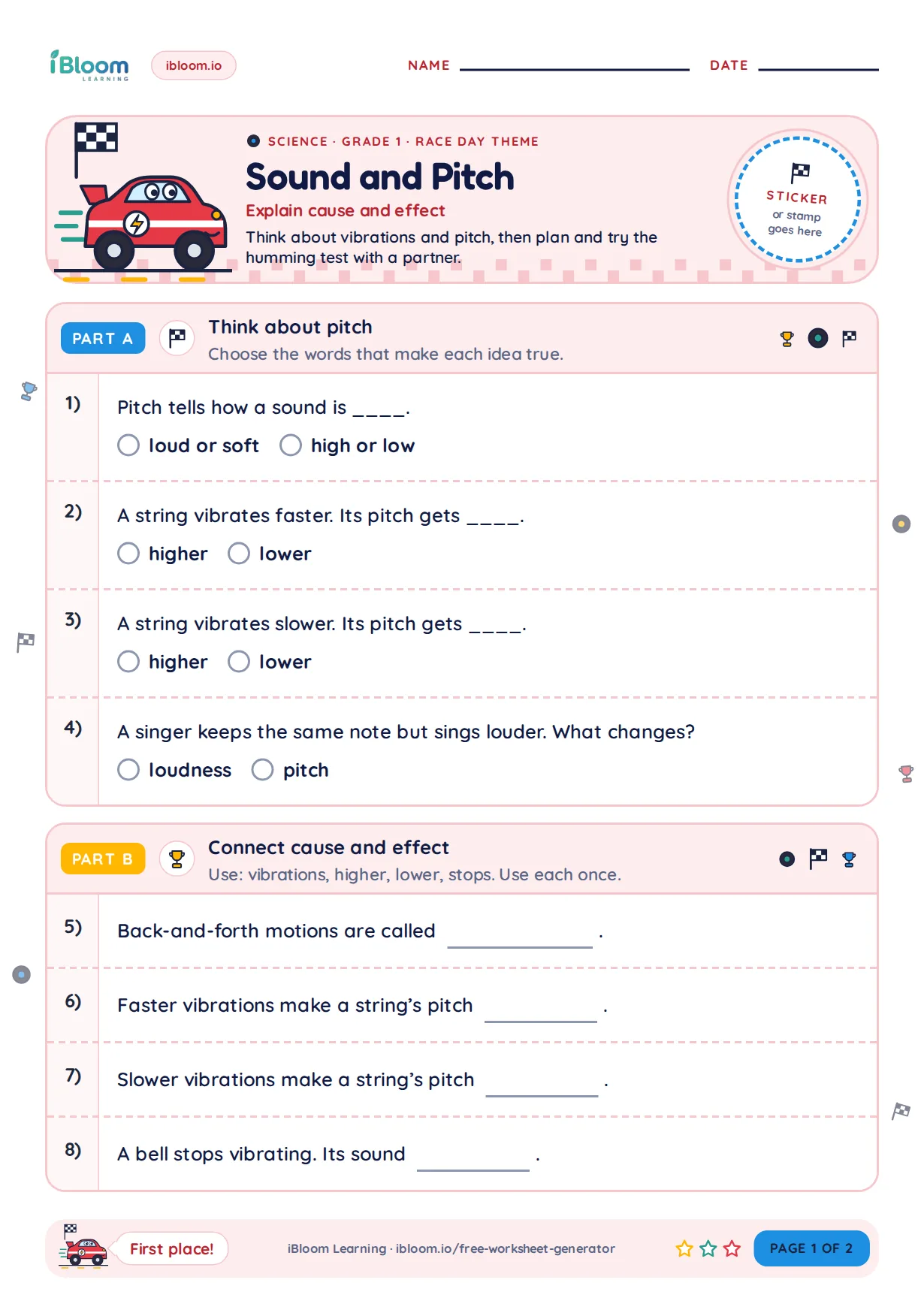 Sounds Pitch — Explain Cause and EffectGrade 1 sound pitch worksheets help children compare high and low sounds using pictures, everyday examples, and simple science vocabulary. This explain cause and effect worksheet provides a distinct, age-appropriate way to practise the same lesson.Grade 1Free PDF preview4 pages
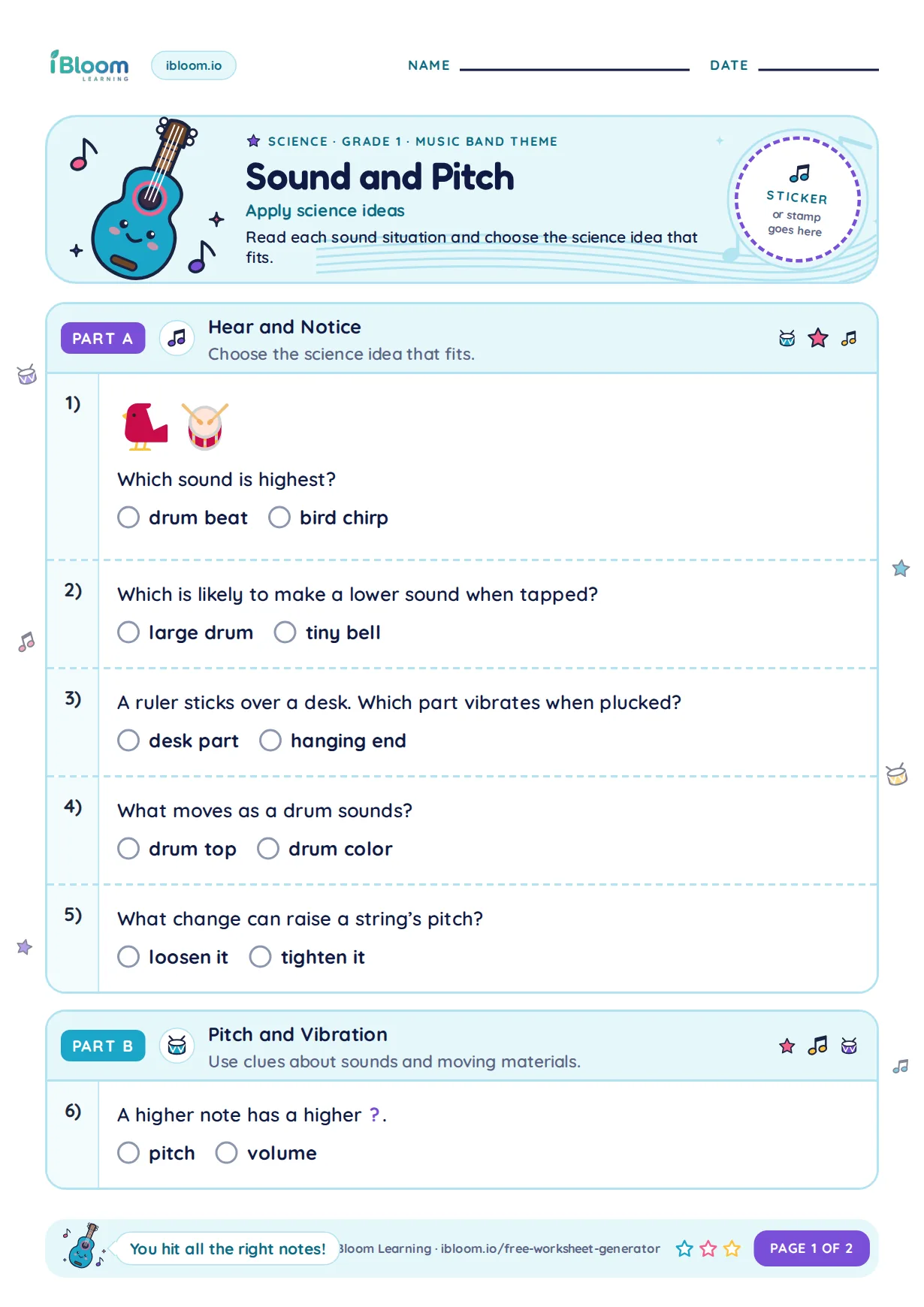 Sounds Pitch — Apply Science IdeasGrade 1 sound pitch worksheets help children compare high and low sounds using pictures, everyday examples, and simple science vocabulary. This apply science ideas worksheet provides a distinct, age-appropriate way to practise the same lesson.Grade 1Free PDF preview
 Sounds Pitch — Science Reasoning ReviewGrade 1 sound pitch worksheets help children compare high and low sounds using pictures, everyday examples, and simple science vocabulary. This science reasoning review worksheet provides a distinct, age-appropriate way to practise the same lesson.Grade 1Free PDF preview
Practice that builds confidence
What children learn about pitch
These Grade 1 science worksheets focus on pitch in the Energy, Sound, and Light unit. Children practise noticing whether a sound is high or low, then connect that idea to familiar noises such as whistles, drums, birds, bells, and voices.
The printable activities include sorting, matching, circling, drawing, and short response tasks. Each page keeps the science concrete so children can build the vocabulary of pitch while using careful listening and observation.
Pitch describes how high or low a sound is. In these worksheets, children compare pairs of sounds, label examples as high pitch or low pitch, and explain choices using simple words. A tiny bell, squeaky toy, or bird chirp can represent a high sound, while a drum, thunder, or large animal sound can represent a low sound.

Building from listening to reasoning
The practice moves from recognizing obvious examples to making comparisons. Children may match pictures to “high” and “low,” choose which object is likely to make a higher sound, or complete sentences about what they hear. This helps them understand that pitch is one property of sound, separate from how loud or soft the sound is.
A simple routine for parents
At home, choose three safe sound makers, such as a spoon tapping a glass, a rubber band being plucked, and a box being tapped. Ask: “Which sound is higher? Which is lower?” Then have your child complete one worksheet item and say the reason aloud. Keep the focus on listening carefully, not on making very loud noises.

Classroom uses for teachers
Teachers can use these pages after a sound demonstration, in science centers, or as a quick check after a lesson on sound energy. The worksheets also work well with partner talk: one student points to an example, and the other explains whether it is high or low. Picture-based tasks support early readers while still developing science language.

Common mix-ups to watch for
Many first graders confuse pitch with volume. If a child says a sound is high because it is loud, repeat the comparison with a quiet high sound and a loud low sound. Another common error is guessing from size alone; large objects often make lower sounds, but children should still listen or reason from the example given.
Free printable PDF download
Use this grade 1 sound pitch worksheet page to preview the activity, print it, or download it as a PDF for quick practice. It works well for homework, homeschool lessons, tutoring, morning work, revision, and classroom centers.
Answers and answer key support
After the child completes the worksheet independently, parents and teachers can use the answer support or answer key information to check the work, review mistakes, and choose the next practice step.
Why iBloom worksheets help
The collection stays tightly focused on Sounds Pitch within Science > Grade 1 > Energy Sound Light. Children see varied examples, clear answer choices, and age-appropriate vocabulary. A useful strategy for students is: stop, listen or imagine the sound, compare high and low, then choose the best label.
Helpful answers
Frequently asked questions
What does pitch mean for Grade 1 students?
Pitch means how high or low a sound is. Children learn to compare sounds such as a bird chirp, bell, drum, or thunder and decide whether each one is higher or lower.
How are these worksheets different from loud and soft sound activities?
These pages focus on pitch, not volume. A sound can be quiet but high, or loud but low, so children practise separating the idea of high/low from loud/soft.
Can I use real objects with these printables?
Yes. Simple items such as rubber bands, cups, spoons, boxes, and bells can be used before or after the worksheet so children can hear examples of different pitches.
What mistakes should I watch for when my child completes the page?
The most common mistake is choosing “high” for any loud sound. Ask your child to compare the sound to a squeak or a drumbeat and explain whether it sounds higher or lower.
Are the activities suitable for early readers?
Yes. The worksheets use picture clues, simple labels, and short prompts so Grade 1 children can practise the science concept without heavy reading demands.
Is this grade 1 sound pitch worksheet free?
Yes. You can preview it for free and use the printable worksheet for home or classroom practice.
Can I download this grade 1 sound pitch worksheet as a PDF?
Yes. Use the worksheet download option to save a printable PDF, or print the worksheet directly from the page.
Does this grade 1 sound pitch worksheet include answers or an answer key?
When the activity has fixed answers, iBloom includes answer support so parents and teachers can check the completed worksheet.