






About this worksheet
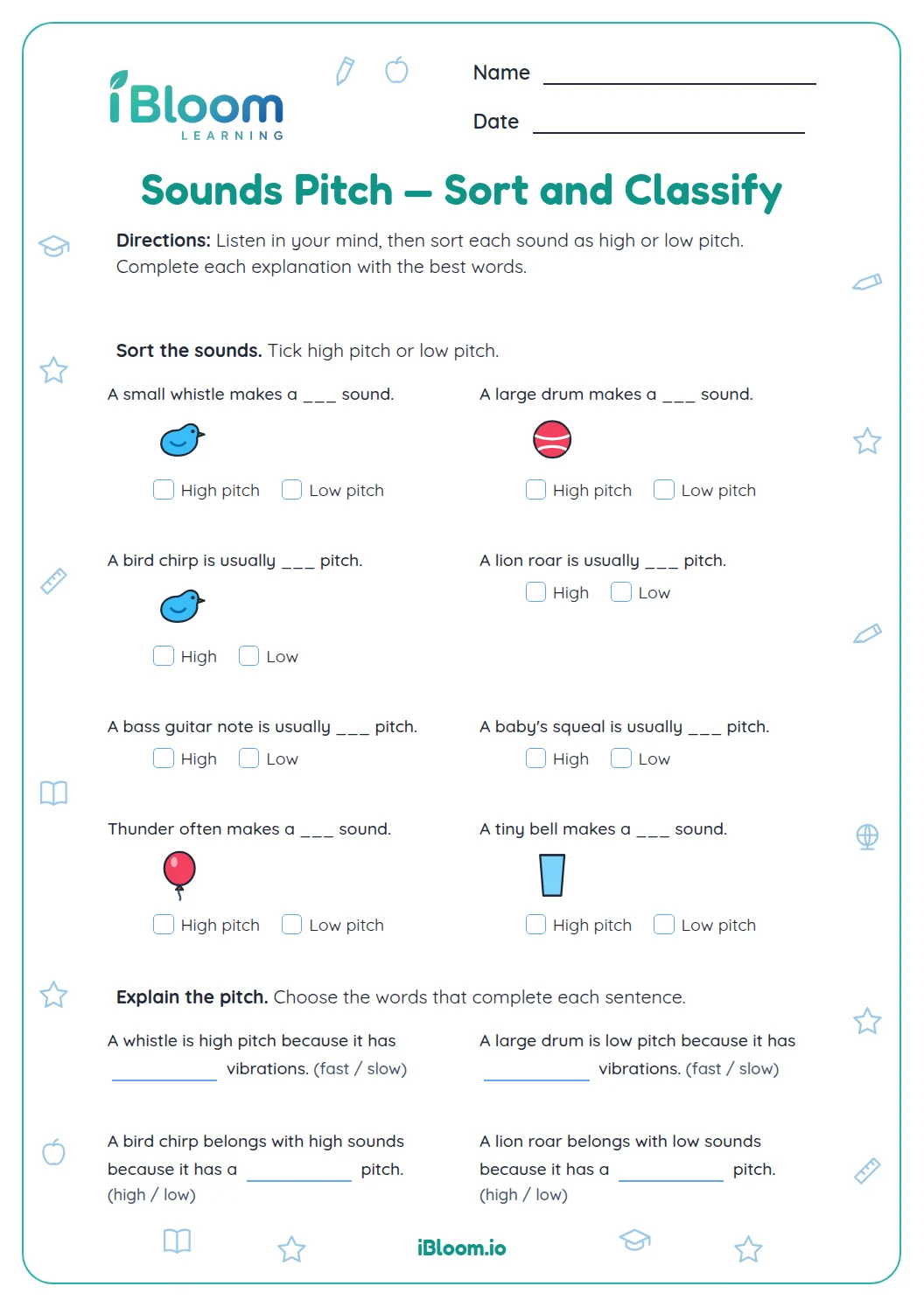
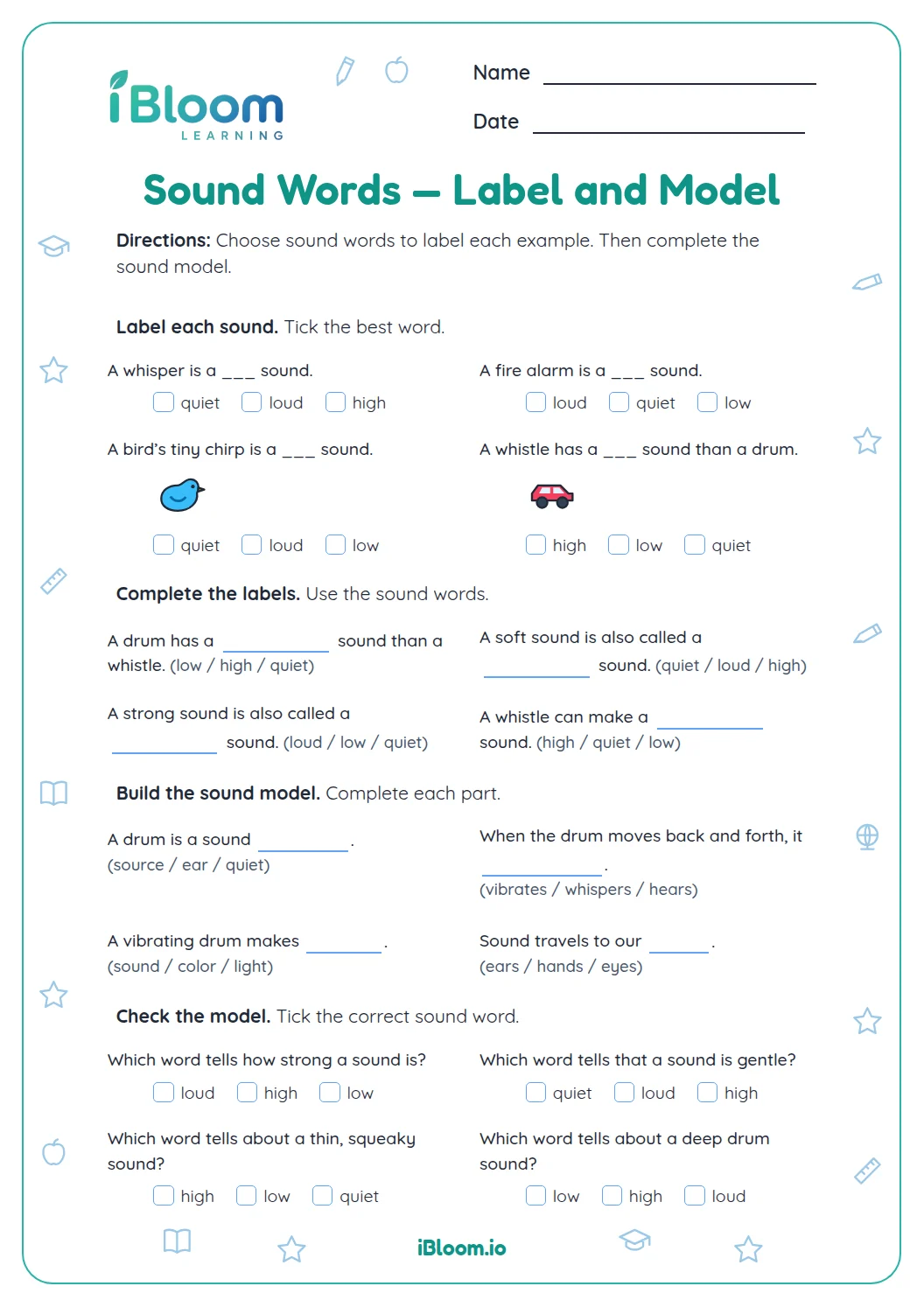
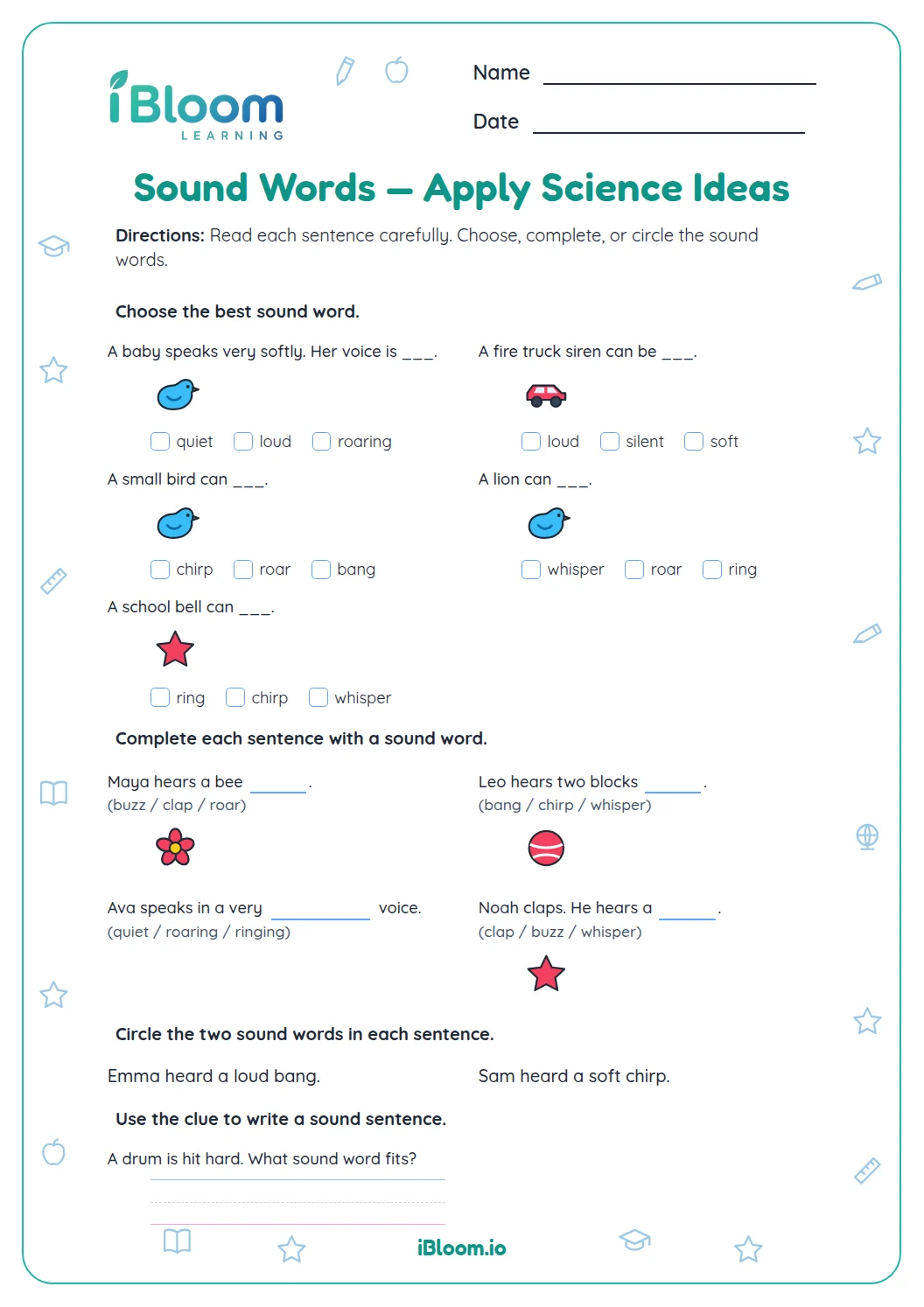
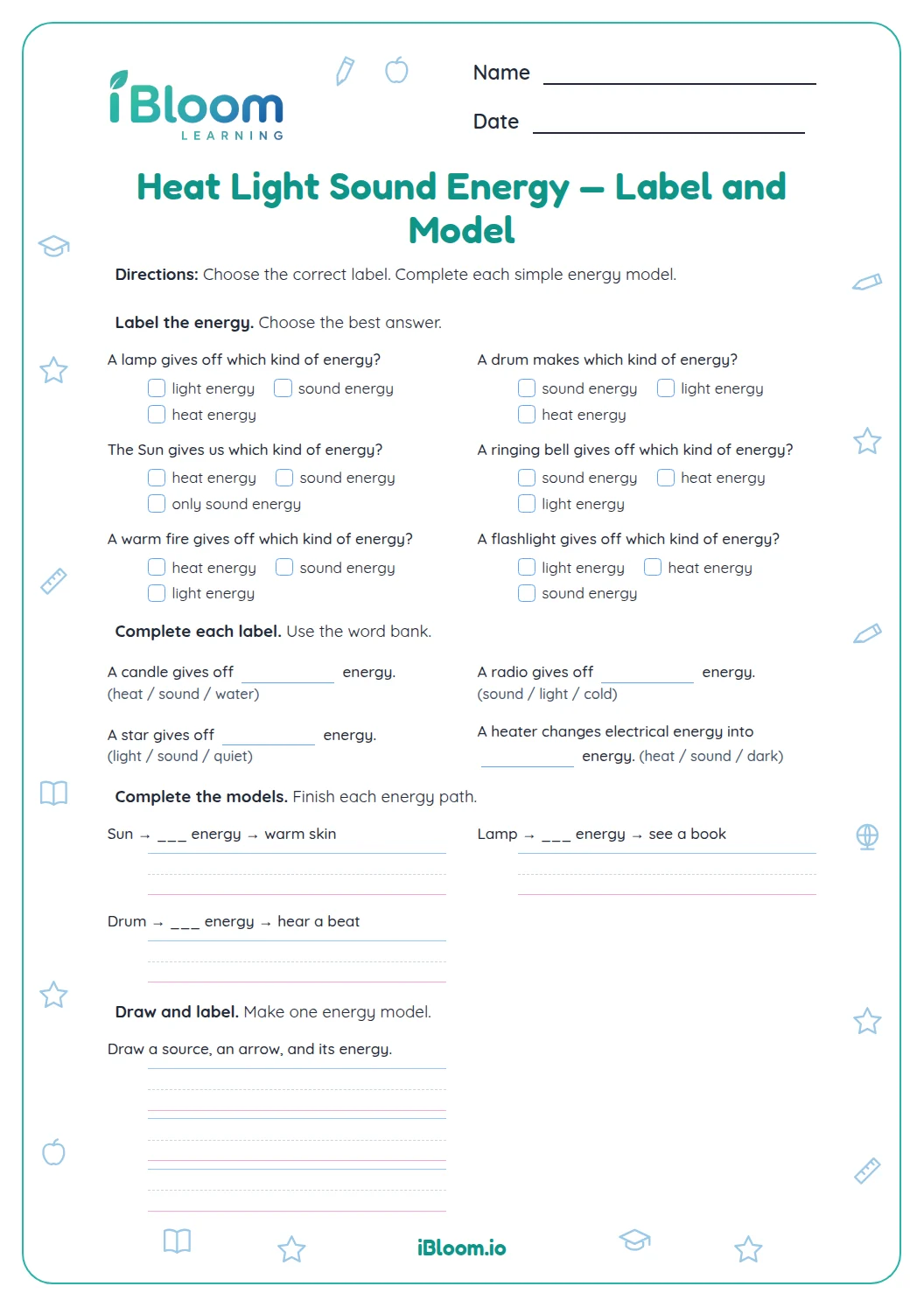
This free printable science worksheet helps first graders connect sound with vibrations and explain changes in pitch. Part A has four choices about pitch and loudness. Part B has four cause-and-effect sentence blanks. Part C asks children to plan and try a humming test with a partner, record what they feel, and explain four pitch or loudness changes. The investigation supports NGSS 1-PS4-1 by gathering evidence that vibrating materials can make sound. A separate key gives fixed answers and sample observations, which children compare with what they actually noticed.
Aligned to 1-PS4-1
How are pitch and loudness different?
Pitch describes how high or low a note sounds. Loudness describes how loud or soft it sounds. A singer can keep the same note and change its loudness, which is the situation in question 4.
Use ordinary speaking voices to discuss these words. A high note can be quiet, and a low note can be loud; “higher” does not mean “louder.”
How can children explain a change in pitch?
Ask children to name the cause first: the object vibrates faster or slower. Then name the effect: the pitch gets higher or lower. The word-bank items rehearse these pairs before the written explanations. The final two prompts also distinguish pitch from loudness.
- 1Faster vibrations make a string’s pitch ___.
- 2Cause: the string vibrates faster.
- 3Effect: its pitch gets higher.
- 4Missing word: higher.
What evidence can the humming test provide?
In question 9, partners plan to feel the front of their own throats gently with two fingers. In question 10, they hum comfortably and then stop, keeping their fingers in place. They record the change they felt. An adult can model gentle contact and read the directions aloud.
The sample observation is a buzzing feeling during humming that stops when humming stops. Children should report their own observation. Use the feeling and the sound together as evidence, then return to the separate idea that faster and slower vibrations explain pitch.
How to work through the sheet
- 1Say a comfortable high note and low note; name pitch as high or low.
- 2Read the four choices and distinguish pitch from loudness in question 4.
- 3Use the four word-bank words once each to complete Part B.
- 4With a partner, plan and carry out the gentle humming test in questions 9 and 10.
- 5Record the observation, then explain the string, bell and loudness examples using faster or slower vibrations.
Mistakes to look for and how to fix them
The mistake
Choosing “loud or soft” as the meaning of pitch.
The fix
Use high and low for pitch, and reserve loud and soft for loudness.
The mistake
Saying a higher note must come from slower vibrations.
The fix
Connect the pair explicitly: faster vibrations, higher pitch; slower vibrations, lower pitch.
The mistake
Copying a sample observation without trying the humming test.
The fix
Have the child hum and stop, then describe the change they actually felt before comparing it with the key.
NGSS alignment
Plan a humming test and use felt vibrations as evidence that vibrating materials can make sound.
On this sheet: Children plan where to feel vibrations, hum and stop, then record the difference as evidence about sound.
Show the official wordingHide the official wording
Plan and conduct investigations to provide evidence that vibrating materials can make sound and that sound can make materials vibrate.
What to practice next
Make more practice
Further reading
Questions parents and teachers ask
What materials are needed for the humming test?
Children need only their voices, two fingers and a partner to discuss the plan. They gently rest their fingers on their own throats, hum comfortably and then stop. An adult can model the contact first and help them describe what changes without pressing on the throat.
Does louder always mean higher in pitch?
No, loudness and pitch describe different features of sound. Question 4 keeps the singer on the same note while the sound gets louder. The answer is loudness. Use that example to help children choose high or low for pitch and loud or soft for loudness.
What should my child write after humming?
Your child should describe what they actually felt while humming and after stopping. The key gives a sample about buzzing during the hum and no buzzing afterward. If the feeling is unclear, gently reposition the fingers and try again with a comfortable hum before recording an observation.
Can I read the science questions aloud?
Yes, reading the prompts aloud lets first graders concentrate on the science ideas. Pause at words such as pitch and vibrations and explain them with the worksheet’s examples. Let the child choose the answer or say a complete explanation before helping them put that response on paper.
How does this sheet practice cause and effect?
The sheet connects changes in vibration speed with changes in pitch. Faster vibrations cause a higher pitch, and slower vibrations cause a lower pitch. Children first choose and complete those connections, then explain them in words using a string and two bells as the final examples.