Free printable practice
Solids Liquids Practice Activities
Grade 1 worksheets for identifying solids and liquids by observing shape, flow, pouring, and how materials behave in containers.
Free printable worksheet PDFs
Preview every available page, then download the free worksheet PDF for home, homeschool, tutoring, or classroom practice.
Preview the exact activity before downloading it.
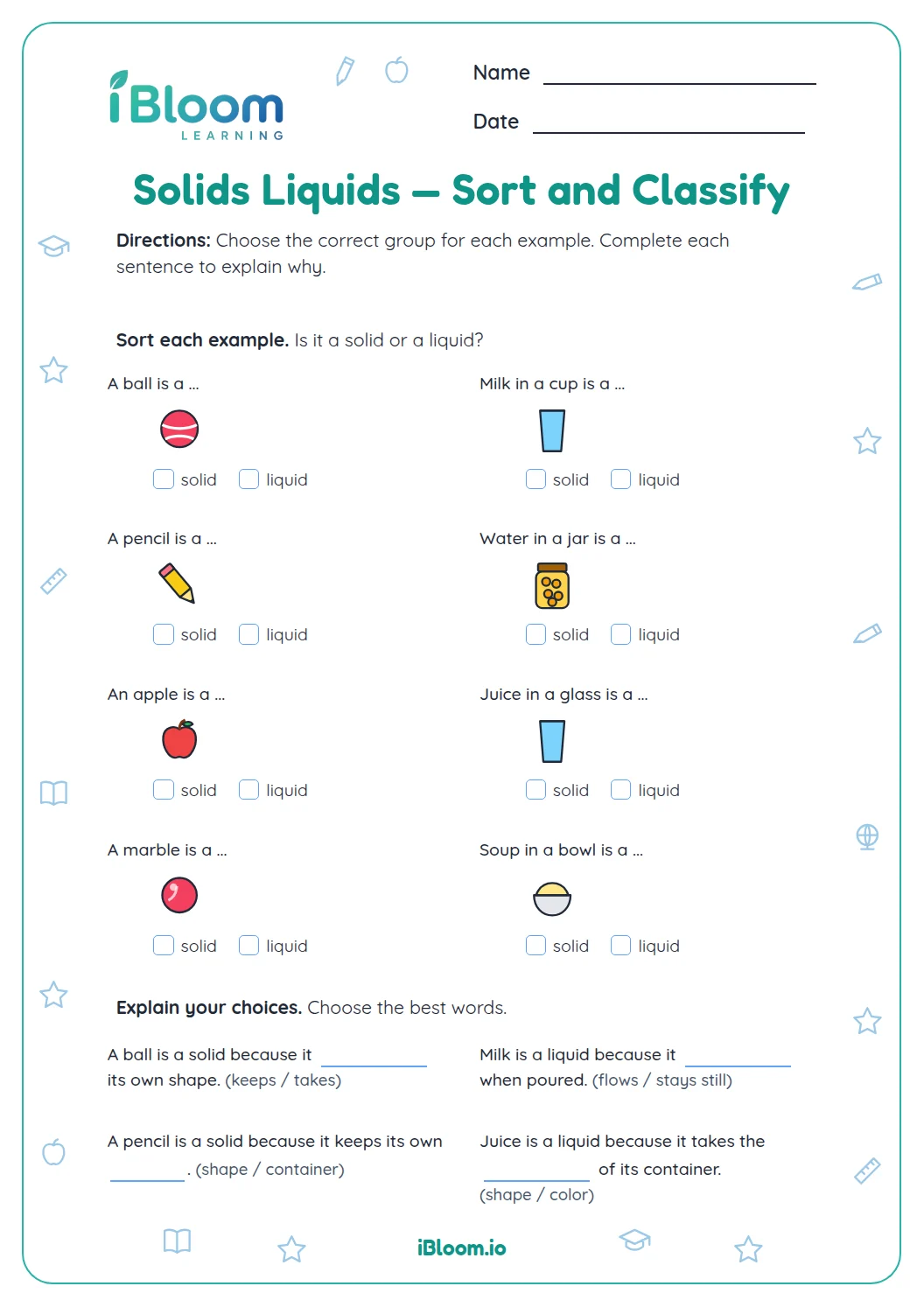 Solids Liquids — Sort and ClassifyGrade 1 worksheets for identifying solids and liquids by observing shape, flow, pouring, and how materials behave in containers. This sort and classify worksheet provides a distinct, age-appropriate way to practise the same lesson.Grade 1Free PDF preview
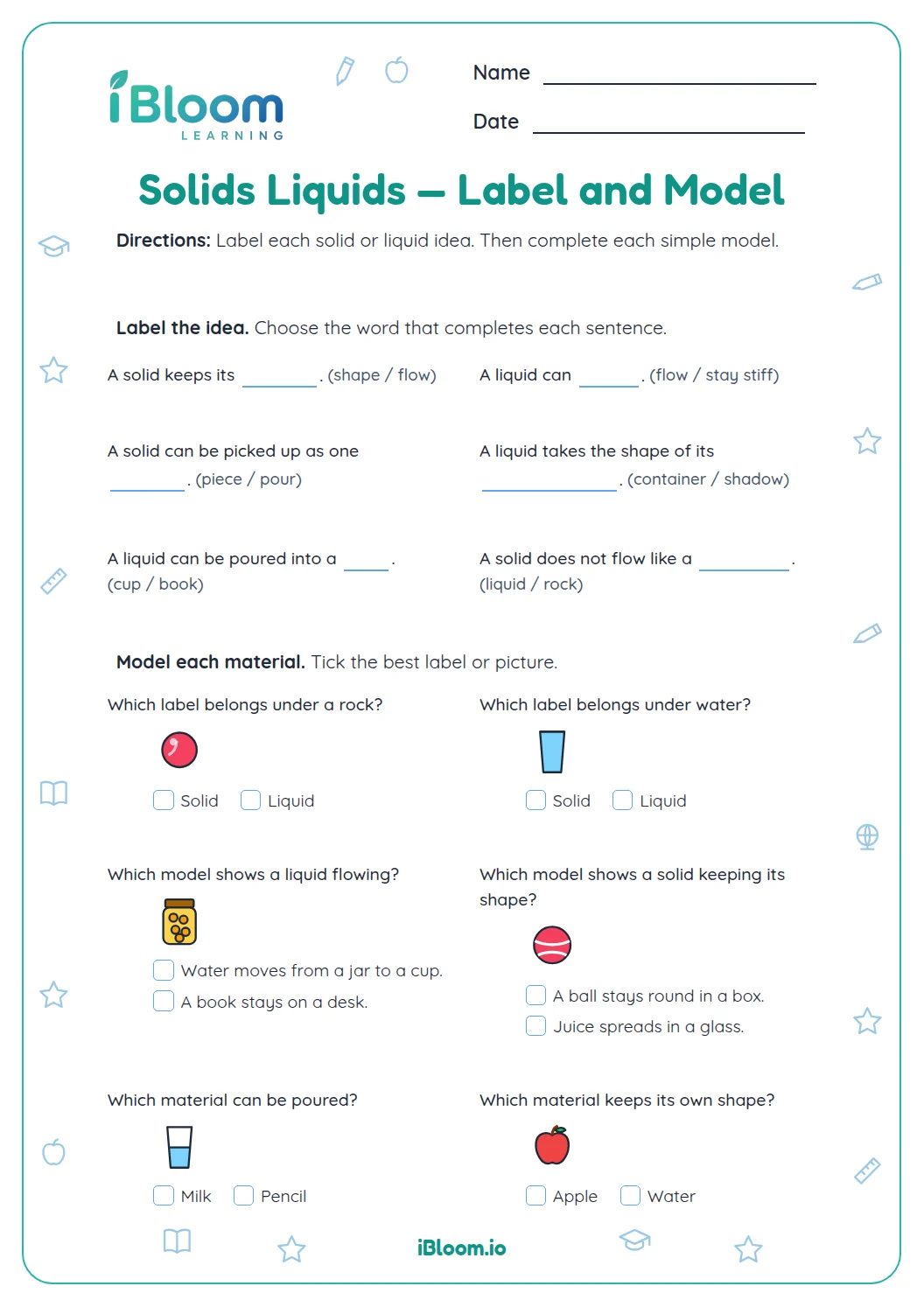 Solids Liquids — Label and ModelGrade 1 worksheets for identifying solids and liquids by observing shape, flow, pouring, and how materials behave in containers. This label and model worksheet provides a distinct, age-appropriate way to practise the same lesson.Grade 1Free PDF preview
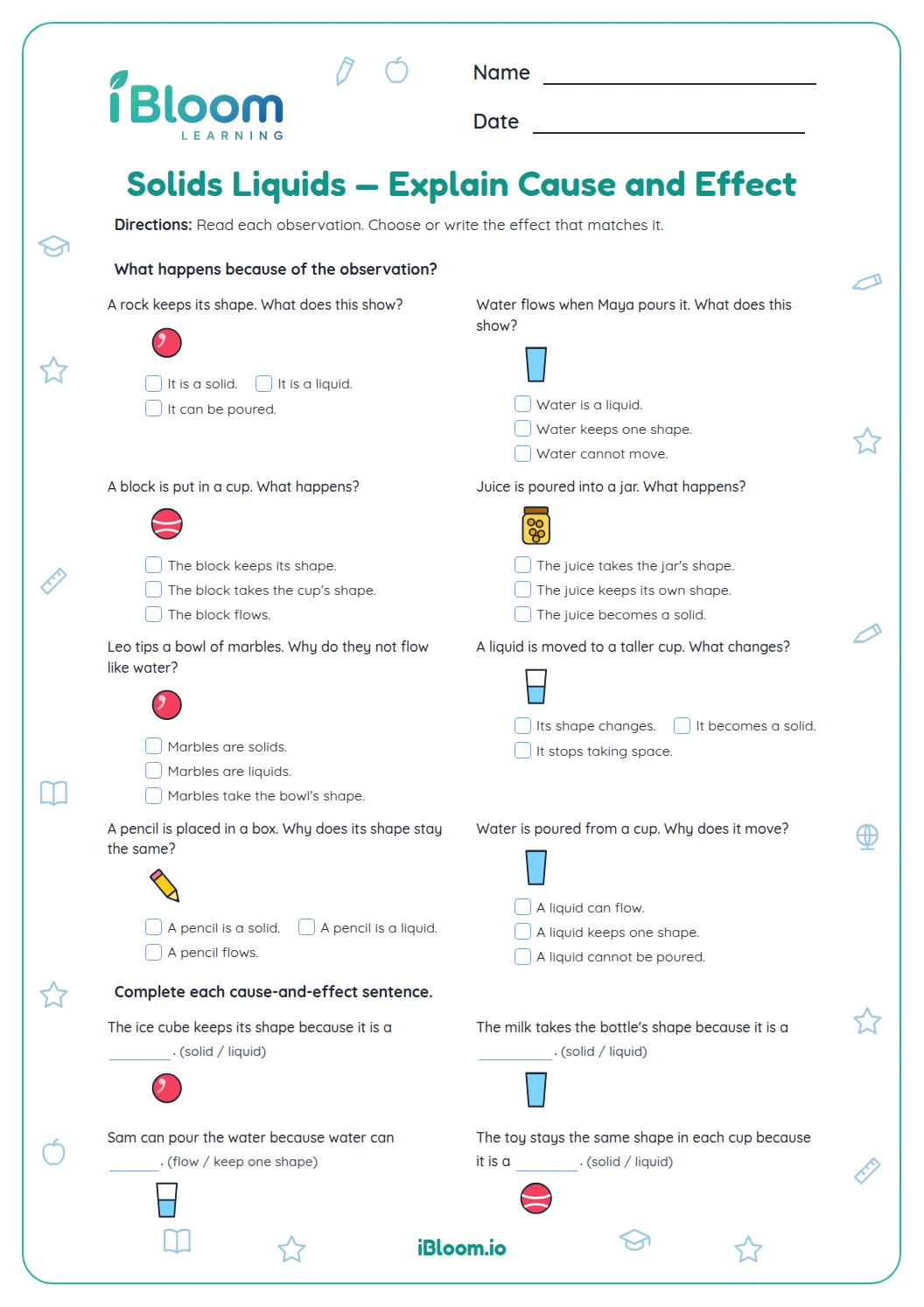 Solids Liquids — Explain Cause and EffectGrade 1 worksheets for identifying solids and liquids by observing shape, flow, pouring, and how materials behave in containers. This explain cause and effect worksheet provides a distinct, age-appropriate way to practise the same lesson.Grade 1Free PDF preview
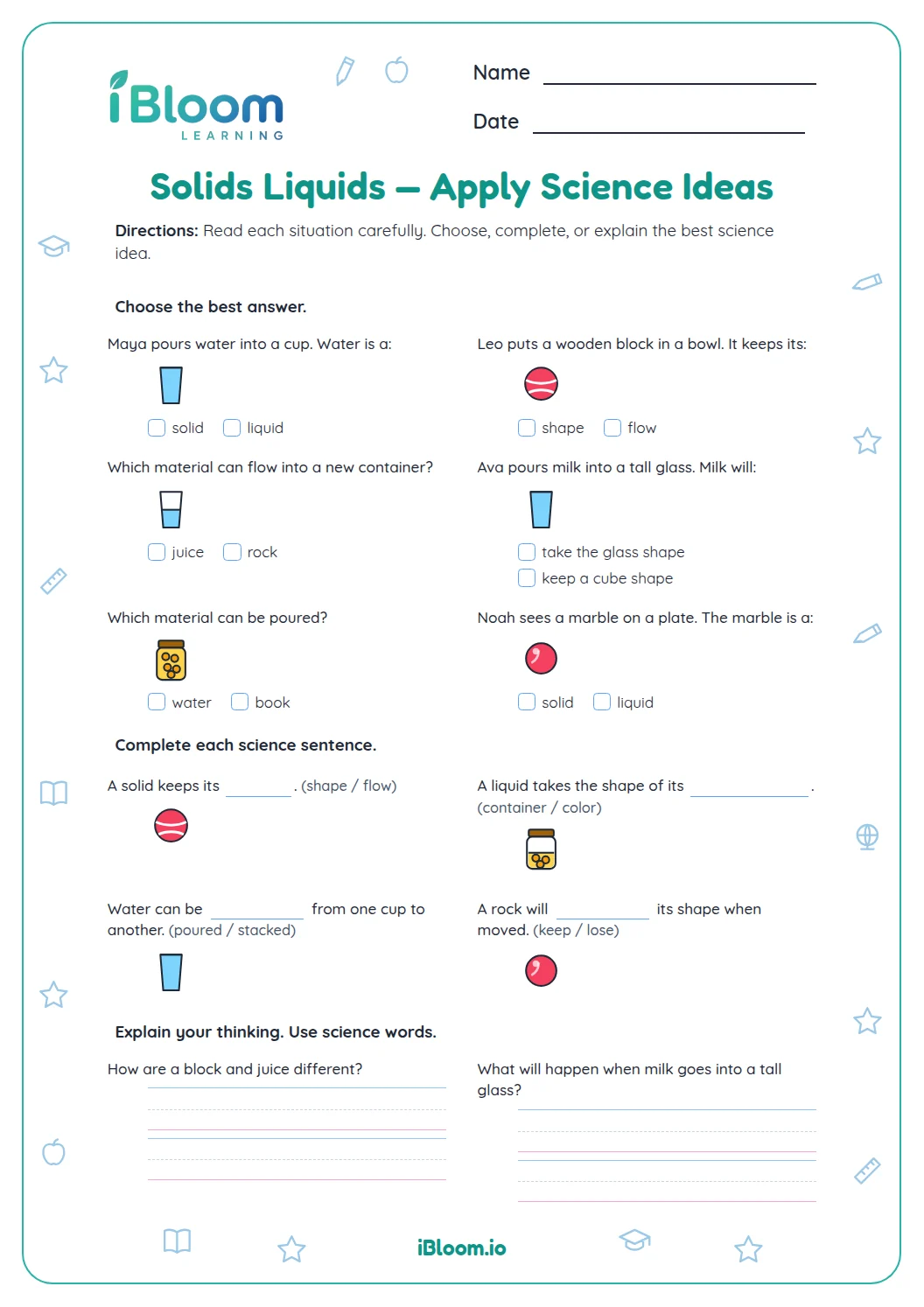 Solids Liquids — Apply Science IdeasGrade 1 worksheets for identifying solids and liquids by observing shape, flow, pouring, and how materials behave in containers. This apply science ideas worksheet provides a distinct, age-appropriate way to practise the same lesson.Grade 1Free PDF preview
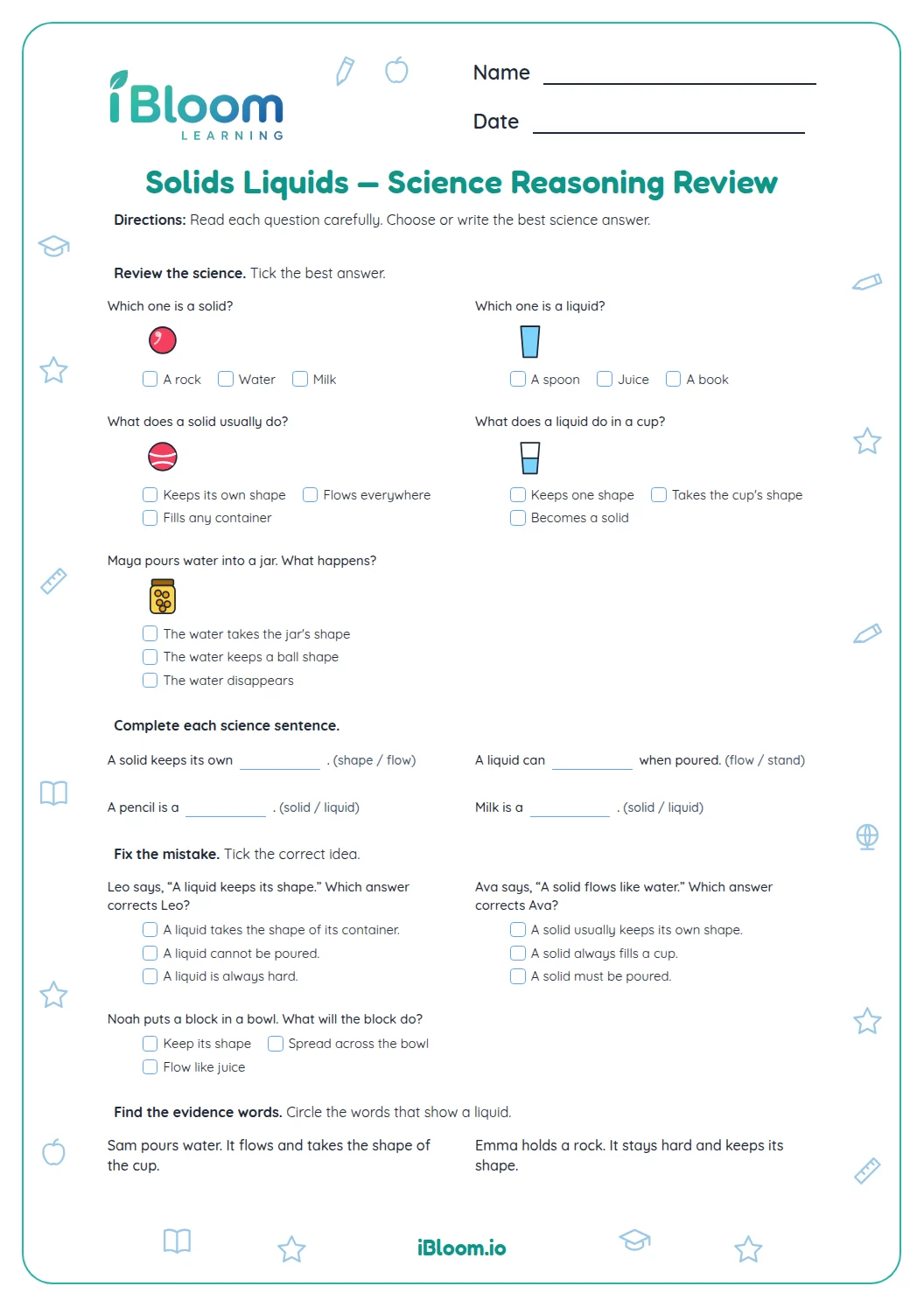 Solids Liquids — Science Reasoning ReviewGrade 1 worksheets for identifying solids and liquids by observing shape, flow, pouring, and how materials behave in containers. This science reasoning review worksheet provides a distinct, age-appropriate way to practise the same lesson.Grade 1Free PDF preview
Practice that builds confidence
What children learn
These Grade 1 science worksheets help children compare solids and liquids as part of learning about material properties. Students practise noticing whether an object keeps its shape, can be poured, flows, or takes the shape of a container.
The printable activities include sorting tasks, picture-based identification, simple observation prompts, and vocabulary practice using familiar examples such as blocks, water, juice, ice, and milk. Children build confidence by connecting science words to things they can see and handle.
In this solids and liquids practice set, children focus on observable properties rather than memorising definitions. A solid keeps its own shape, while a liquid can flow and usually takes the shape of the container it is in. Grade 1 students learn to describe what they notice using words such as solid, liquid, shape, pour, flow, container, hard, soft, and wet.

How the activities progress
The worksheets begin with clear picture recognition: circle the solids, mark the liquids, or sort items into two groups. Later pages ask children to explain why an item belongs in a group, compare two materials, or think about what happens when a liquid is moved from one cup to another. This keeps the science concrete and age appropriate.
A simple parent routine
At home, choose three safe solids and two liquids from the kitchen, such as a spoon, a toy, rice, water, and juice. Ask your child: Does it keep its shape? Can it be poured? Does it spread or flow? Then complete one worksheet page together and have your child point back to the real object that helped them decide.

Classroom uses for teachers
Teachers can use these printables after a short demonstration, at science centers, or as an independent check for understanding. They also work well with a class anchor chart where students add examples of solids and liquids. For discussion, ask students to justify answers instead of only naming the category.

Common errors to watch for
Some children may think all solids are hard, so include soft solids such as a sponge or cloth. Others may confuse a container with the liquid inside it, for example calling a cup a liquid because it holds water. Ice can also cause confusion; help children describe what it is like now, not what it may become later.
Free printable PDF download
Use this grade 1 solids and liquids worksheet page to preview the activity, print it, or download it as a PDF for quick practice. It works well for homework, homeschool lessons, tutoring, morning work, revision, and classroom centers.
Answers and answer key support
After the child completes the worksheet independently, parents and teachers can use the answer support or answer key information to check the work, review mistakes, and choose the next practice step.
Why iBloom worksheets help
The pages use familiar objects, visual sorting, and short response tasks so young learners can show understanding in more than one way. A child-friendly strategy is: “Look, touch if safe, ask if it keeps its shape, then decide.” This routine turns the idea of solids and liquids into a repeatable science habit.
Helpful answers
Frequently asked questions
What should a Grade 1 child know about solids and liquids?
A Grade 1 child should be able to identify common solids and liquids, explain that solids usually keep their shape, and notice that liquids can flow and take the shape of a container.
Do these worksheets include hands-on science?
The pages are printable, but they are designed to pair easily with hands-on observation. Children can look at safe classroom or household items, then use the worksheet to sort, label, and explain what they noticed.
How can I help my child if they think all solids are hard?
Show soft solids such as a cloth, sponge, or stuffed toy. Ask whether the item can be poured like water. This helps children see that a solid can be soft and still keep its own shape.
Are ice and water covered in this practice?
Ice and water may be used as familiar examples when discussing solids and liquids. If a child is confused, focus on the material’s current properties: ice has a fixed shape, while water flows.
Can teachers use these pages in science centers?
Yes. The sorting and picture-based tasks work well in science centers, small groups, or after a class demonstration about how solids and liquids behave.
Is this grade 1 solids and liquids worksheet free?
Yes. You can preview it for free and use the printable worksheet for home or classroom practice.
Can I download this grade 1 solids and liquids worksheet as a PDF?
Yes. Use the worksheet download option to save a printable PDF, or print the worksheet directly from the page.
Does this grade 1 solids and liquids worksheet include answers or an answer key?
When the activity has fixed answers, iBloom includes answer support so parents and teachers can check the completed worksheet.