Free printable practice
Material Properties Practice Activities
Grade 1 science worksheets help children observe, describe, compare, and sort materials by texture, magnetism, state, and whether they sink or float.
Explore Material Properties
Free printable worksheet PDFs
Preview every available page, then download the free worksheet PDF for home, homeschool, tutoring, or classroom practice.
Preview the exact activity before downloading it.
 Magnets — Sort and ClassifyPrintable Grade 1 science activities for exploring how magnets attract, repel, and interact with everyday materials. This sort and classify worksheet provides a distinct, age-appropriate way to practise the same lesson.Grade 1Free PDF preview
 Rough Smooth — Sort and ClassifyGrade 1 science worksheets for identifying, comparing, and describing rough and smooth materials using touch-based observations. This sort and classify worksheet provides a distinct, age-appropriate way to practise the same lesson.Grade 1Free PDF preview
 Sink Float — Sort and ClassifyExplore sink float practice activities within Material Properties Practice Activities, organised so children, families, and elementary teachers can move from broad learning areas to focused printable practice. This sort and classify worksheet provides a distinct, age-appropriate way to practise the same lesson.Grade 1Free PDF preview
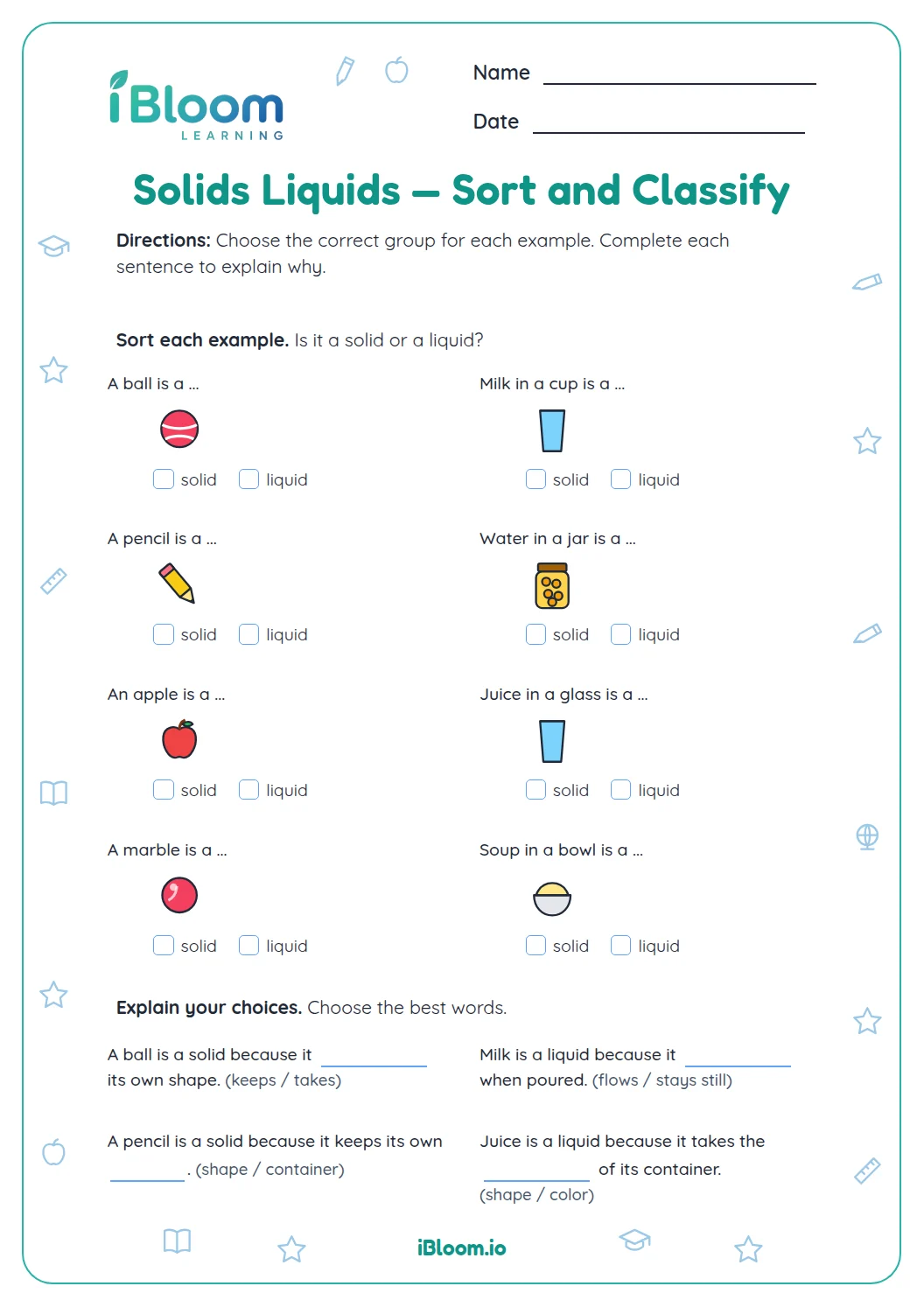 Solids Liquids — Sort and ClassifyGrade 1 worksheets for identifying solids and liquids by observing shape, flow, pouring, and how materials behave in containers. This sort and classify worksheet provides a distinct, age-appropriate way to practise the same lesson.Grade 1Free PDF preview6 pages
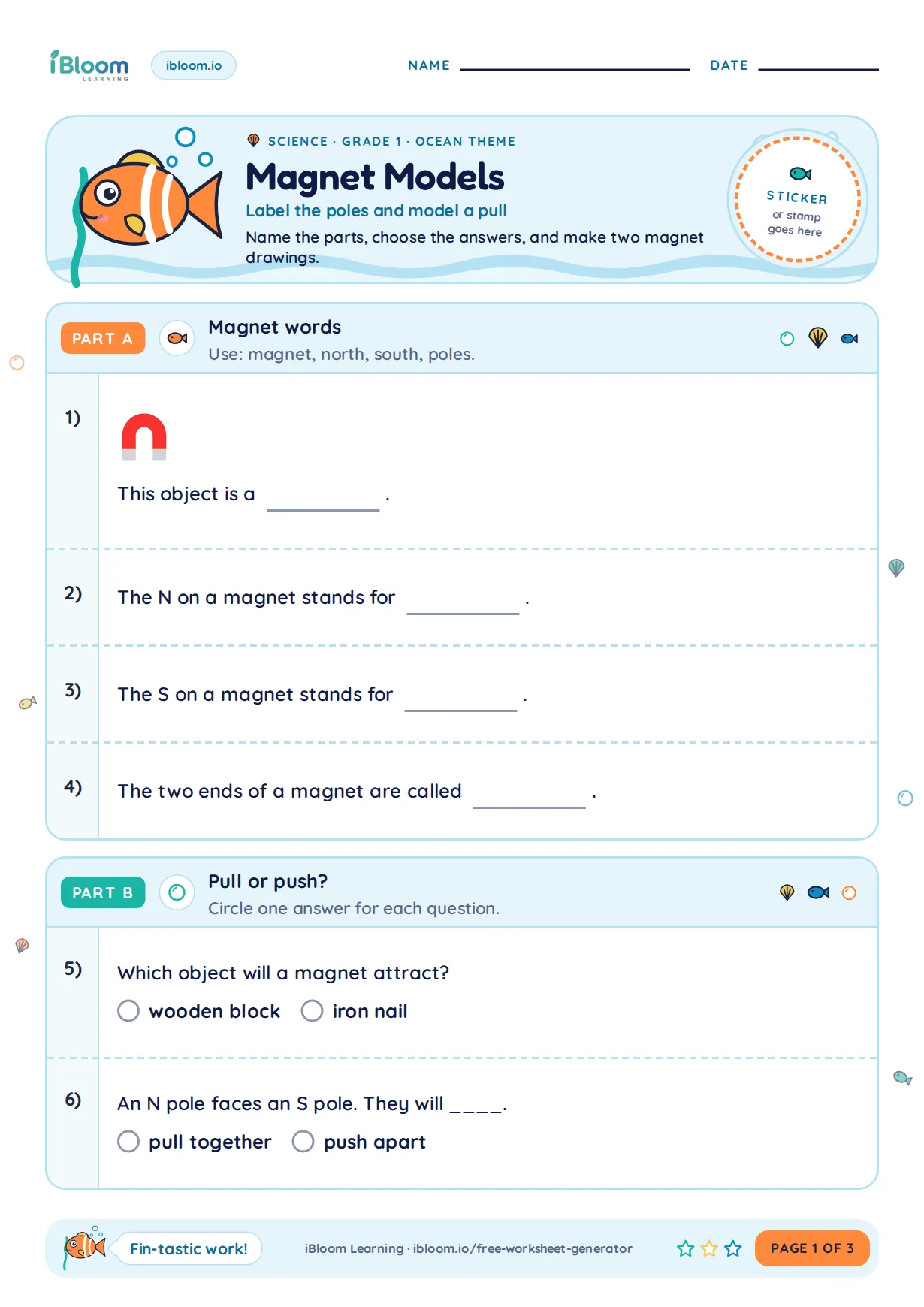 Magnets — Label and ModelPrintable Grade 1 science activities for exploring how magnets attract, repel, and interact with everyday materials. This label and model worksheet provides a distinct, age-appropriate way to practise the same lesson.Grade 1Free PDF preview4 pages
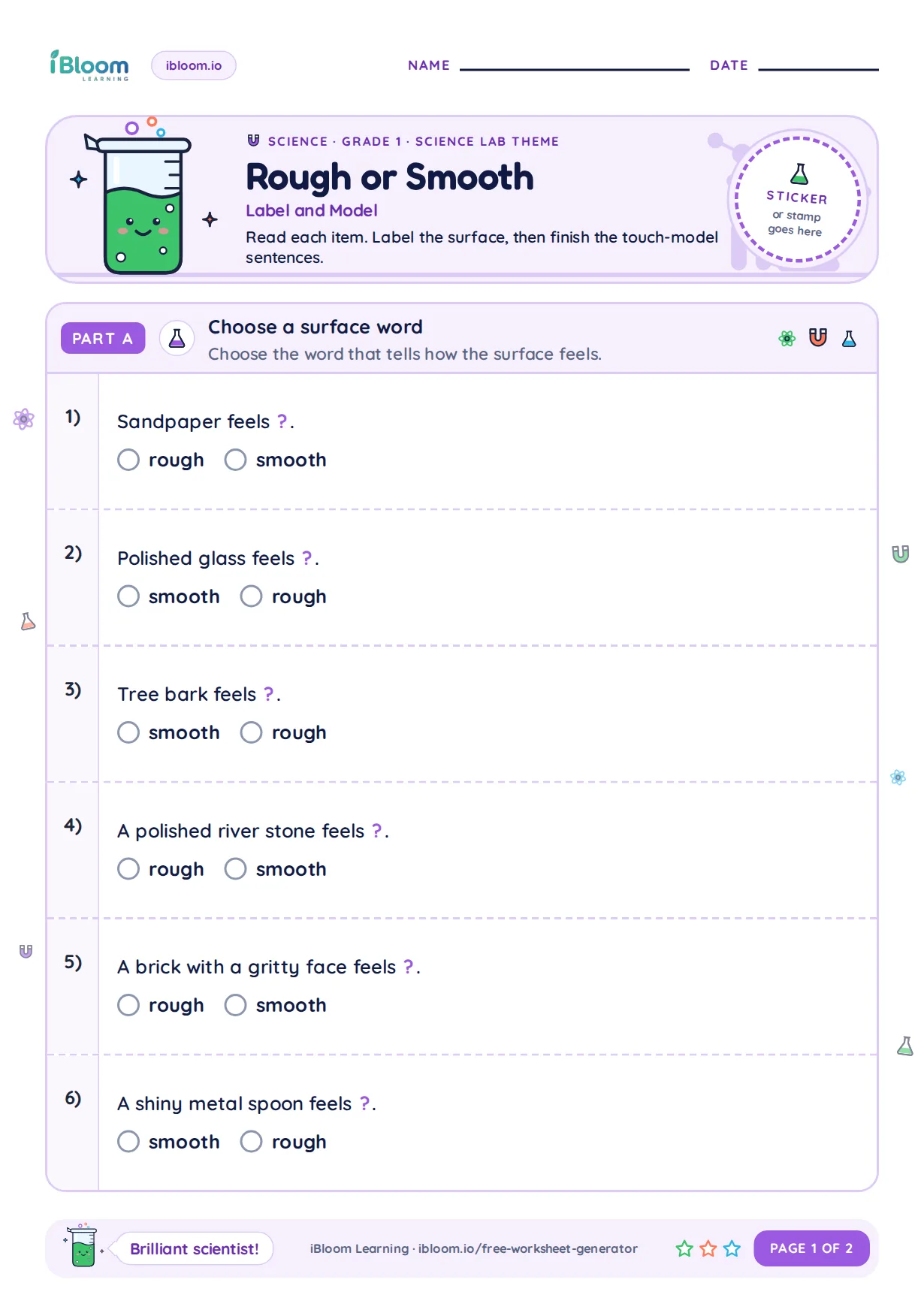 Rough Smooth — Label and ModelGrade 1 science worksheets for identifying, comparing, and describing rough and smooth materials using touch-based observations. This label and model worksheet provides a distinct, age-appropriate way to practise the same lesson.Grade 1Free PDF preview6 pages
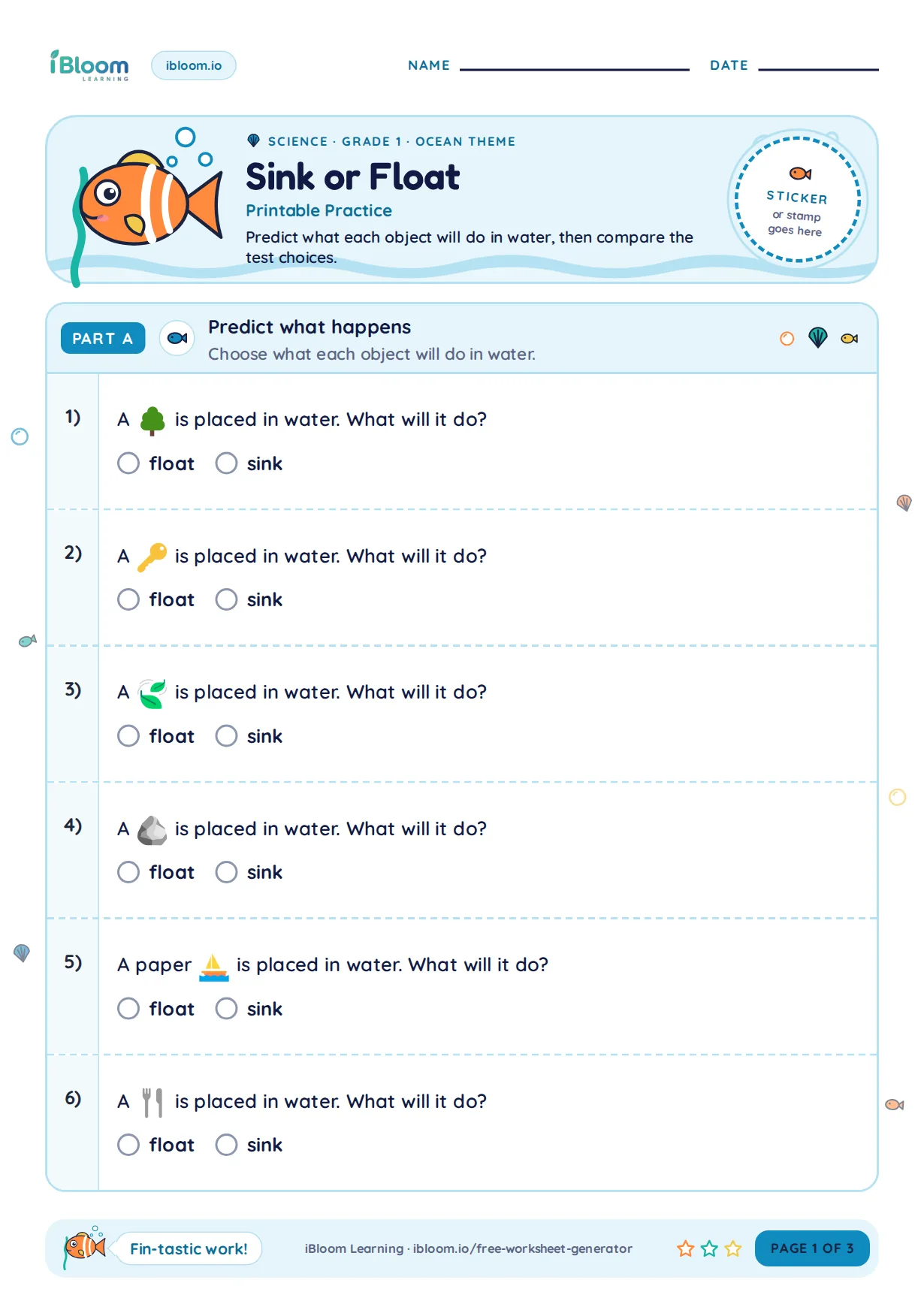 Sink Float — Label and ModelExplore sink float practice activities within Material Properties Practice Activities, organised so children, families, and elementary teachers can move from broad learning areas to focused printable practice. This label and model worksheet provides a distinct, age-appropriate way to practise the same lesson.Grade 1Free PDF preview
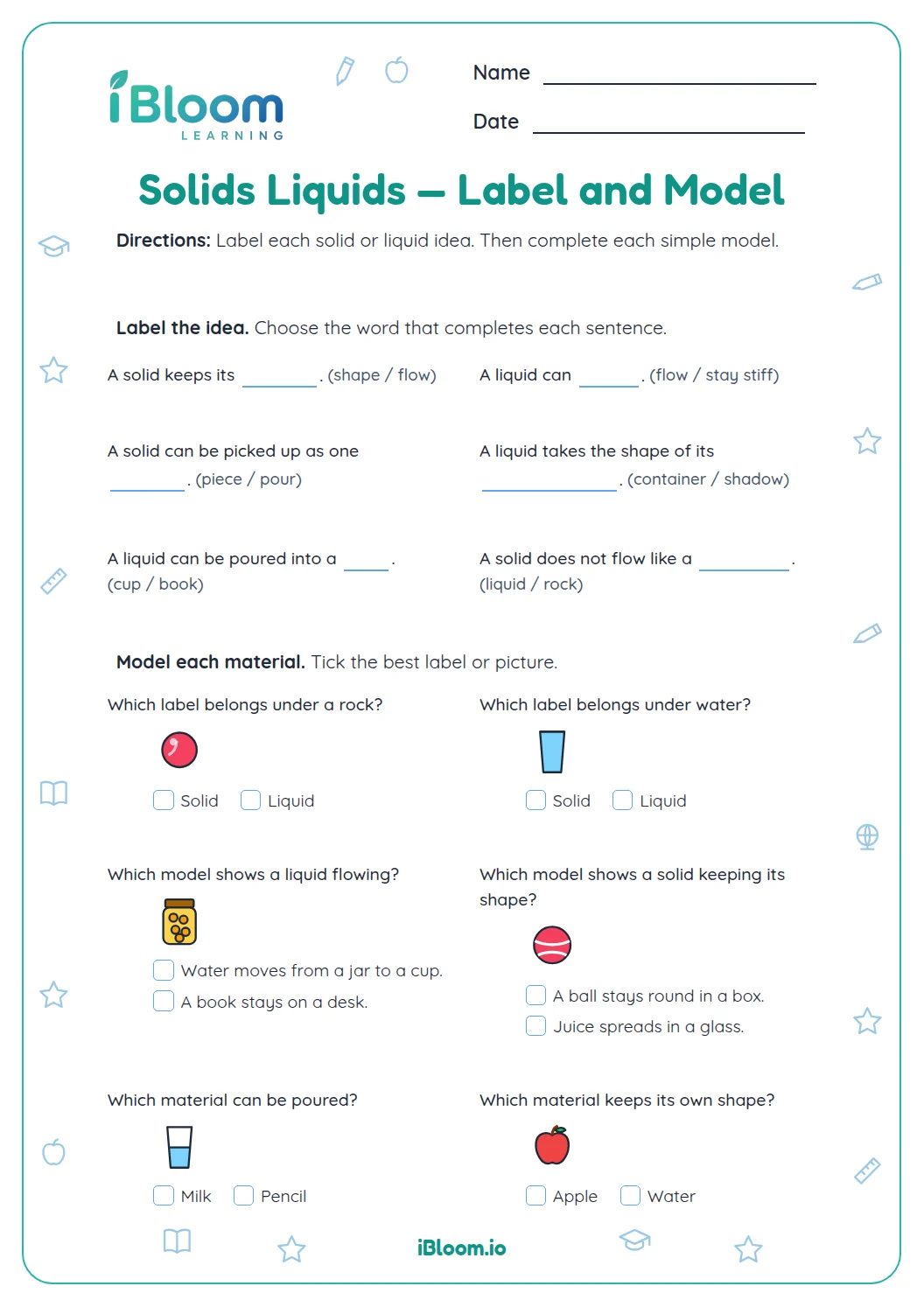 Solids Liquids — Label and ModelGrade 1 worksheets for identifying solids and liquids by observing shape, flow, pouring, and how materials behave in containers. This label and model worksheet provides a distinct, age-appropriate way to practise the same lesson.Grade 1Free PDF preview
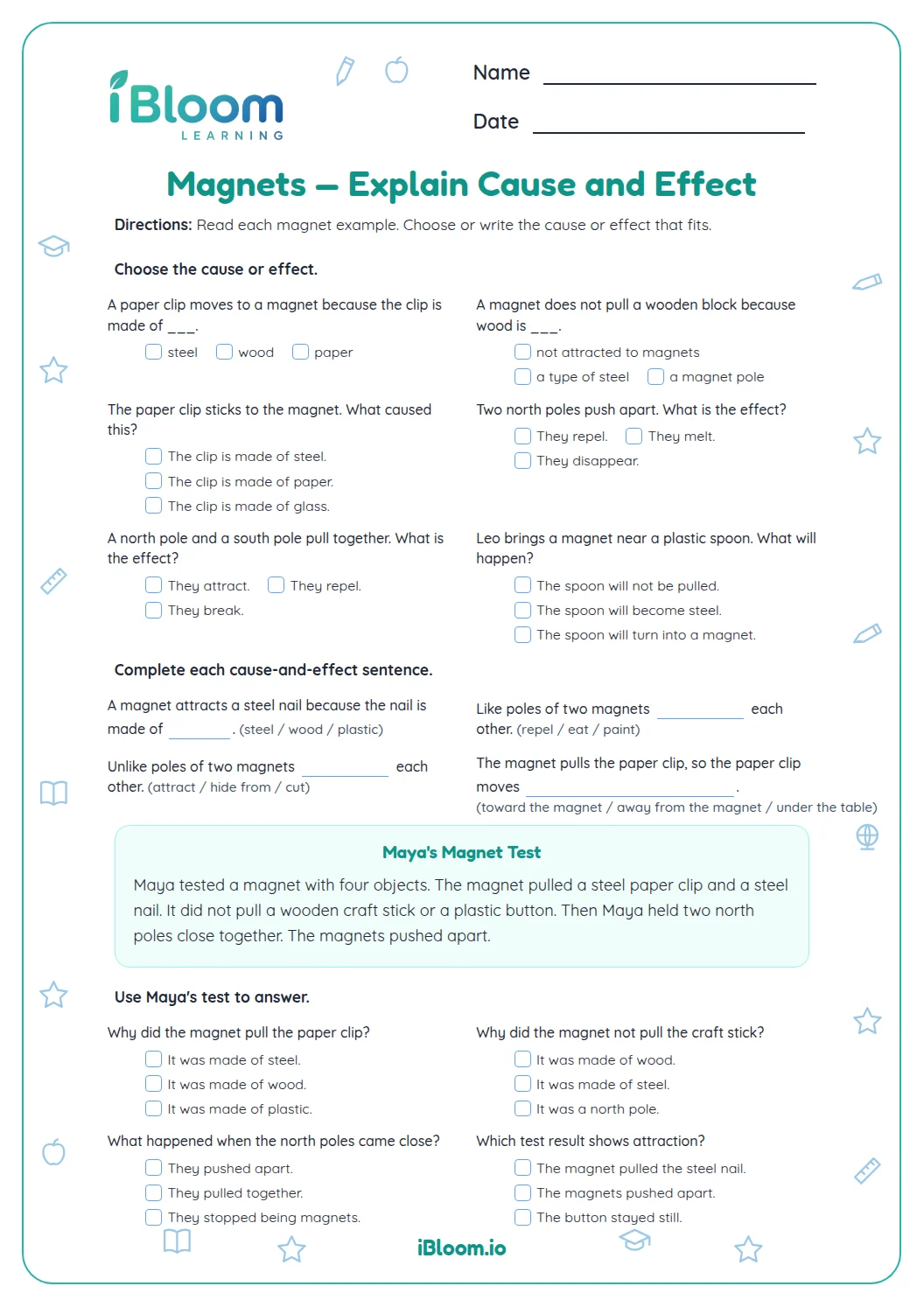 Magnets — Explain Cause and EffectPrintable Grade 1 science activities for exploring how magnets attract, repel, and interact with everyday materials. This explain cause and effect worksheet provides a distinct, age-appropriate way to practise the same lesson.Grade 1Free PDF preview
 Rough Smooth — Explain Cause and EffectGrade 1 science worksheets for identifying, comparing, and describing rough and smooth materials using touch-based observations. This explain cause and effect worksheet provides a distinct, age-appropriate way to practise the same lesson.Grade 1Free PDF preview
 Sink Float — Explain Cause and EffectExplore sink float practice activities within Material Properties Practice Activities, organised so children, families, and elementary teachers can move from broad learning areas to focused printable practice. This explain cause and effect worksheet provides a distinct, age-appropriate way to practise the same lesson.Grade 1Free PDF preview
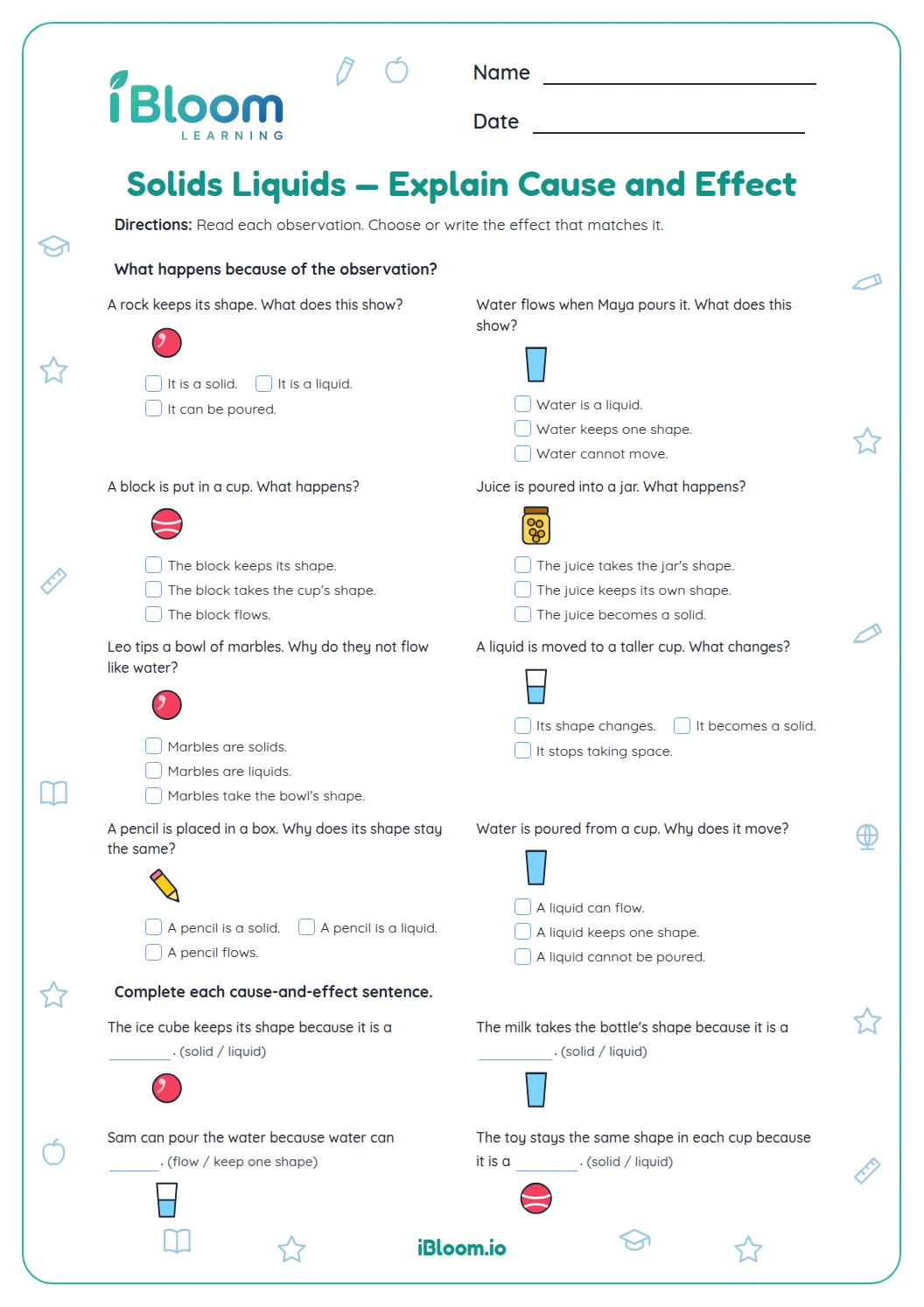 Solids Liquids — Explain Cause and EffectGrade 1 worksheets for identifying solids and liquids by observing shape, flow, pouring, and how materials behave in containers. This explain cause and effect worksheet provides a distinct, age-appropriate way to practise the same lesson.Grade 1Free PDF preview
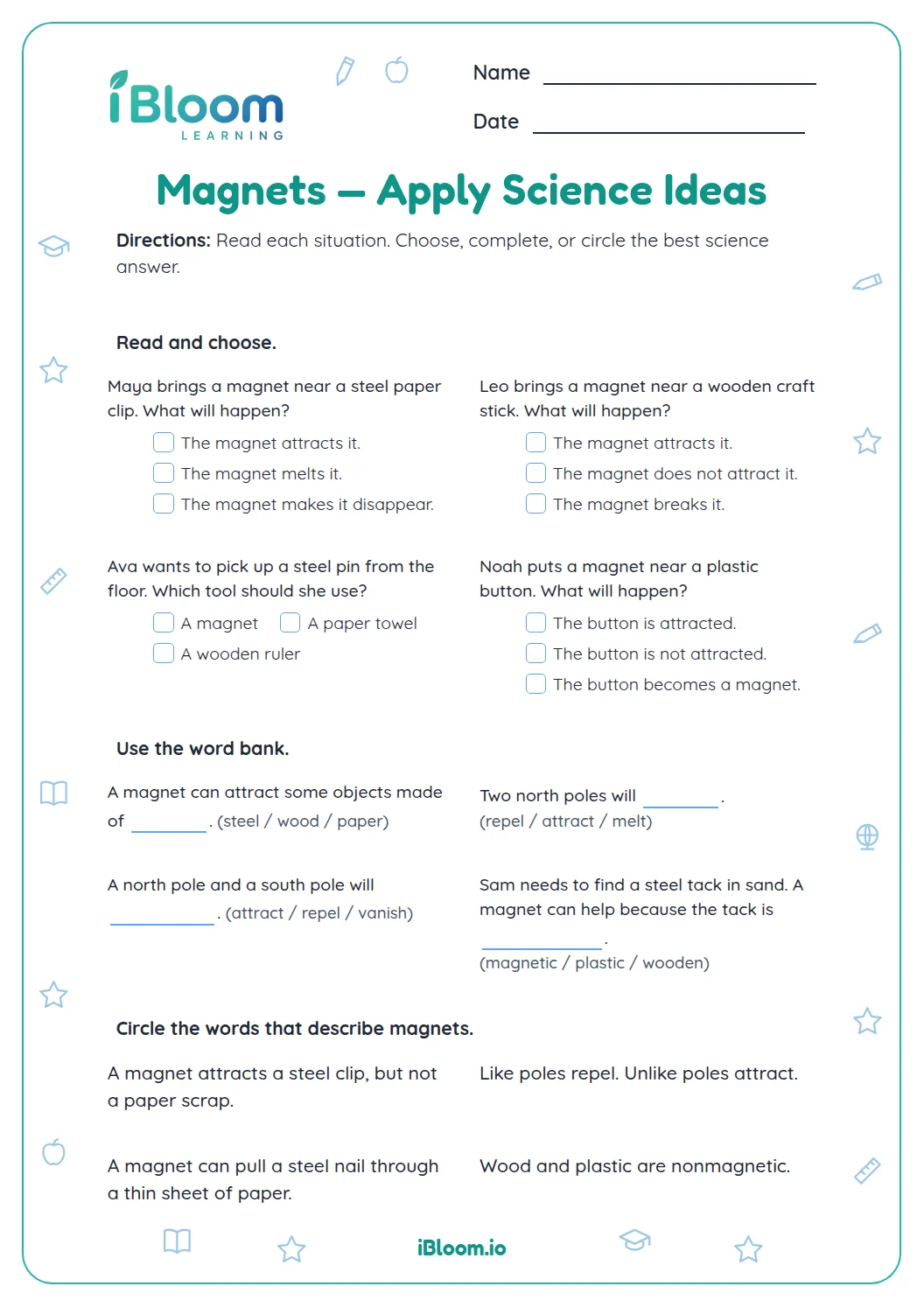 Magnets — Apply Science IdeasPrintable Grade 1 science activities for exploring how magnets attract, repel, and interact with everyday materials. This apply science ideas worksheet provides a distinct, age-appropriate way to practise the same lesson.Grade 1Free PDF preview4 pages
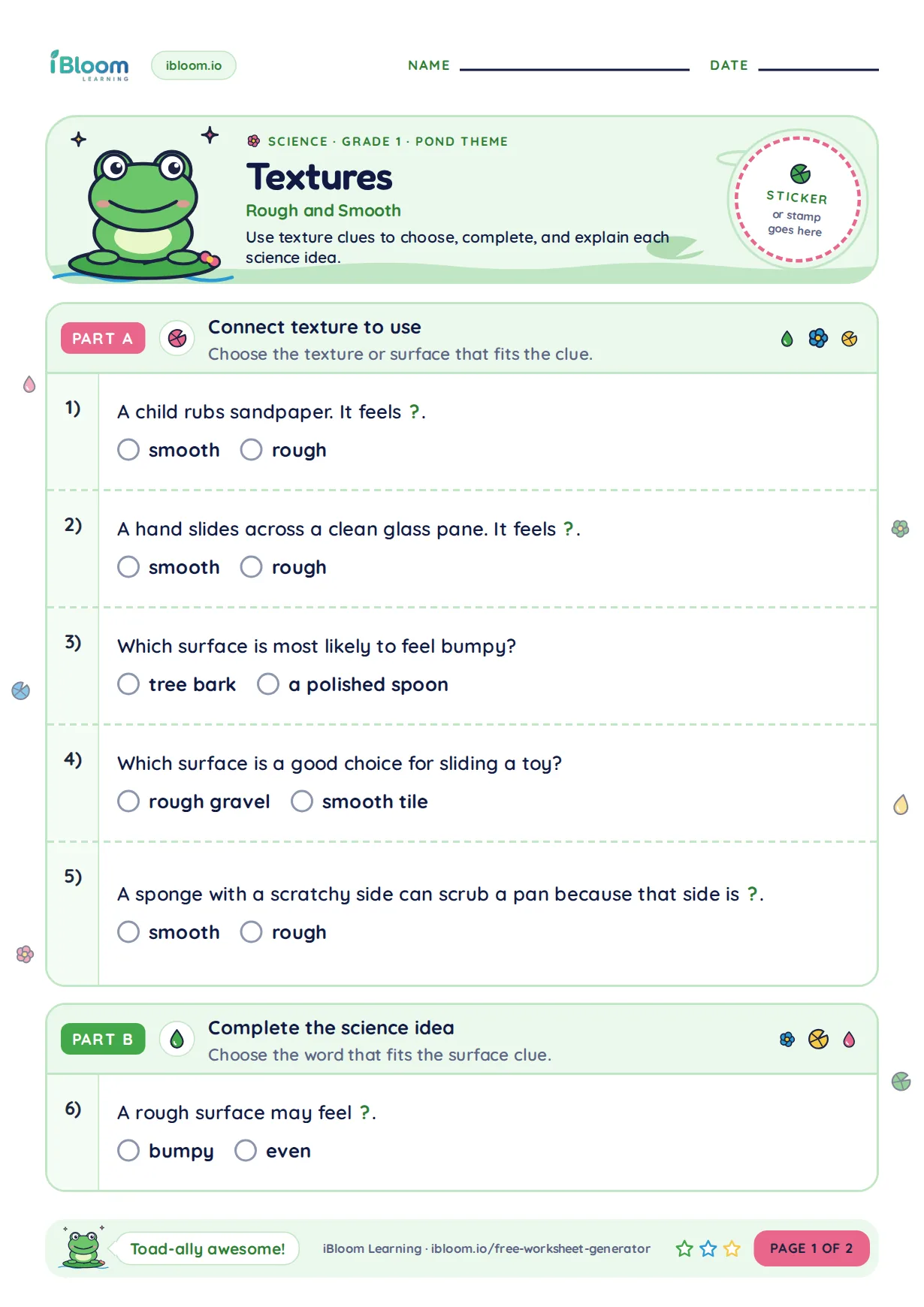 Rough Smooth — Apply Science IdeasGrade 1 science worksheets for identifying, comparing, and describing rough and smooth materials using touch-based observations. This apply science ideas worksheet provides a distinct, age-appropriate way to practise the same lesson.Grade 1Free PDF preview
 Sink Float — Apply Science IdeasExplore sink float practice activities within Material Properties Practice Activities, organised so children, families, and elementary teachers can move from broad learning areas to focused printable practice. This apply science ideas worksheet provides a distinct, age-appropriate way to practise the same lesson.Grade 1Free PDF preview
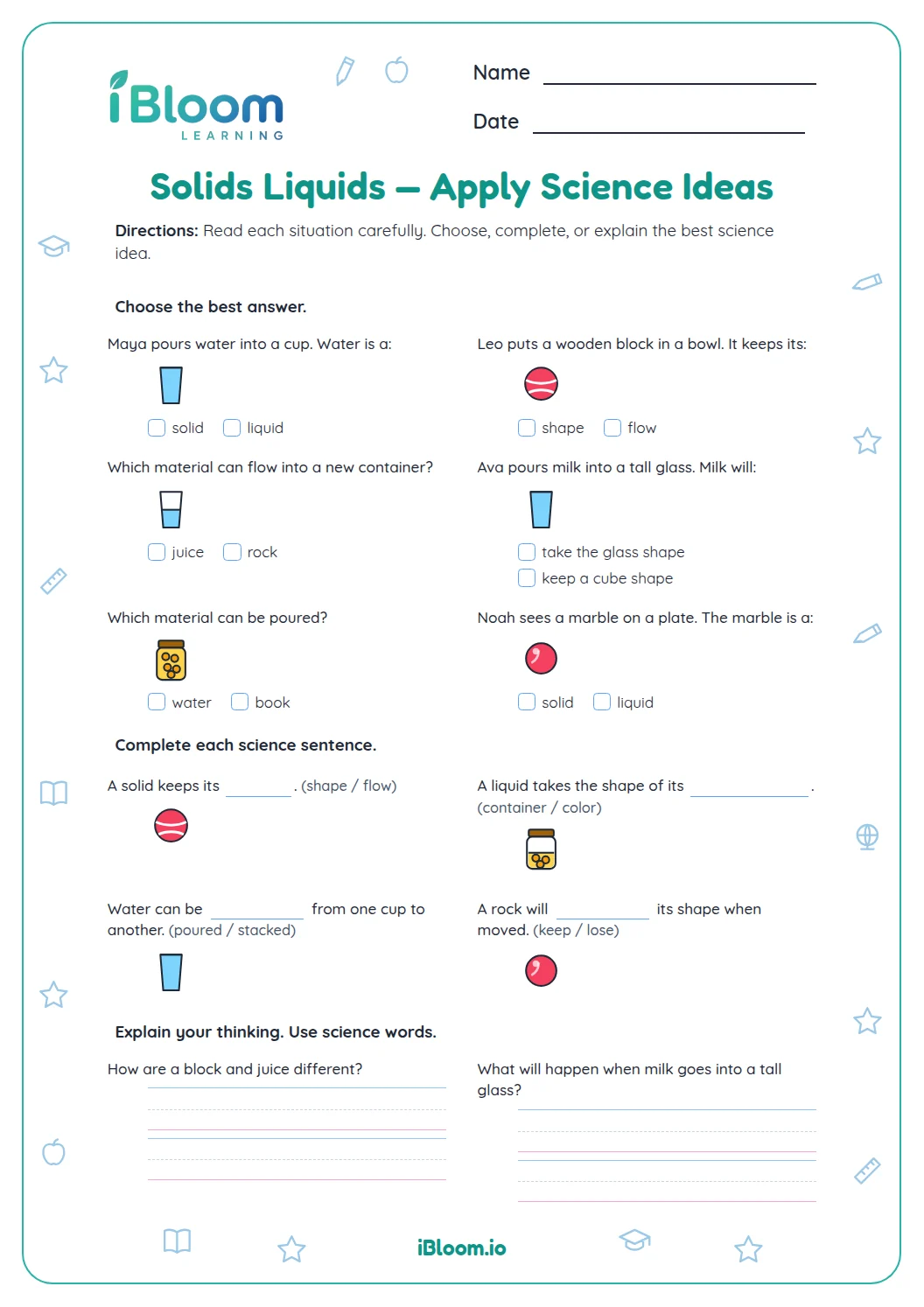 Solids Liquids — Apply Science IdeasGrade 1 worksheets for identifying solids and liquids by observing shape, flow, pouring, and how materials behave in containers. This apply science ideas worksheet provides a distinct, age-appropriate way to practise the same lesson.Grade 1Free PDF preview
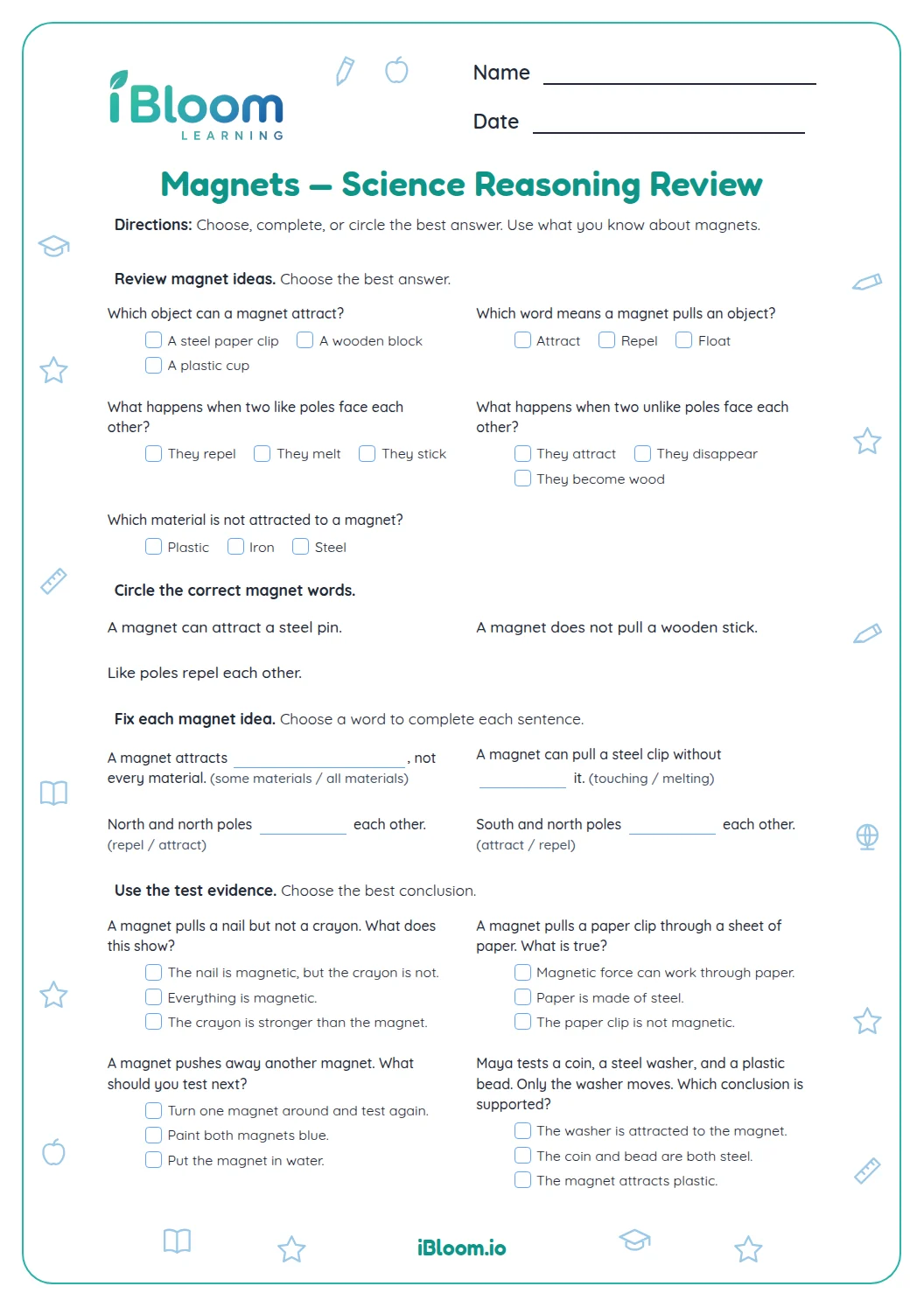 Magnets — Science Reasoning ReviewPrintable Grade 1 science activities for exploring how magnets attract, repel, and interact with everyday materials. This science reasoning review worksheet provides a distinct, age-appropriate way to practise the same lesson.Grade 1Free PDF preview
 Rough Smooth — Science Reasoning ReviewGrade 1 science worksheets for identifying, comparing, and describing rough and smooth materials using touch-based observations. This science reasoning review worksheet provides a distinct, age-appropriate way to practise the same lesson.Grade 1Free PDF preview
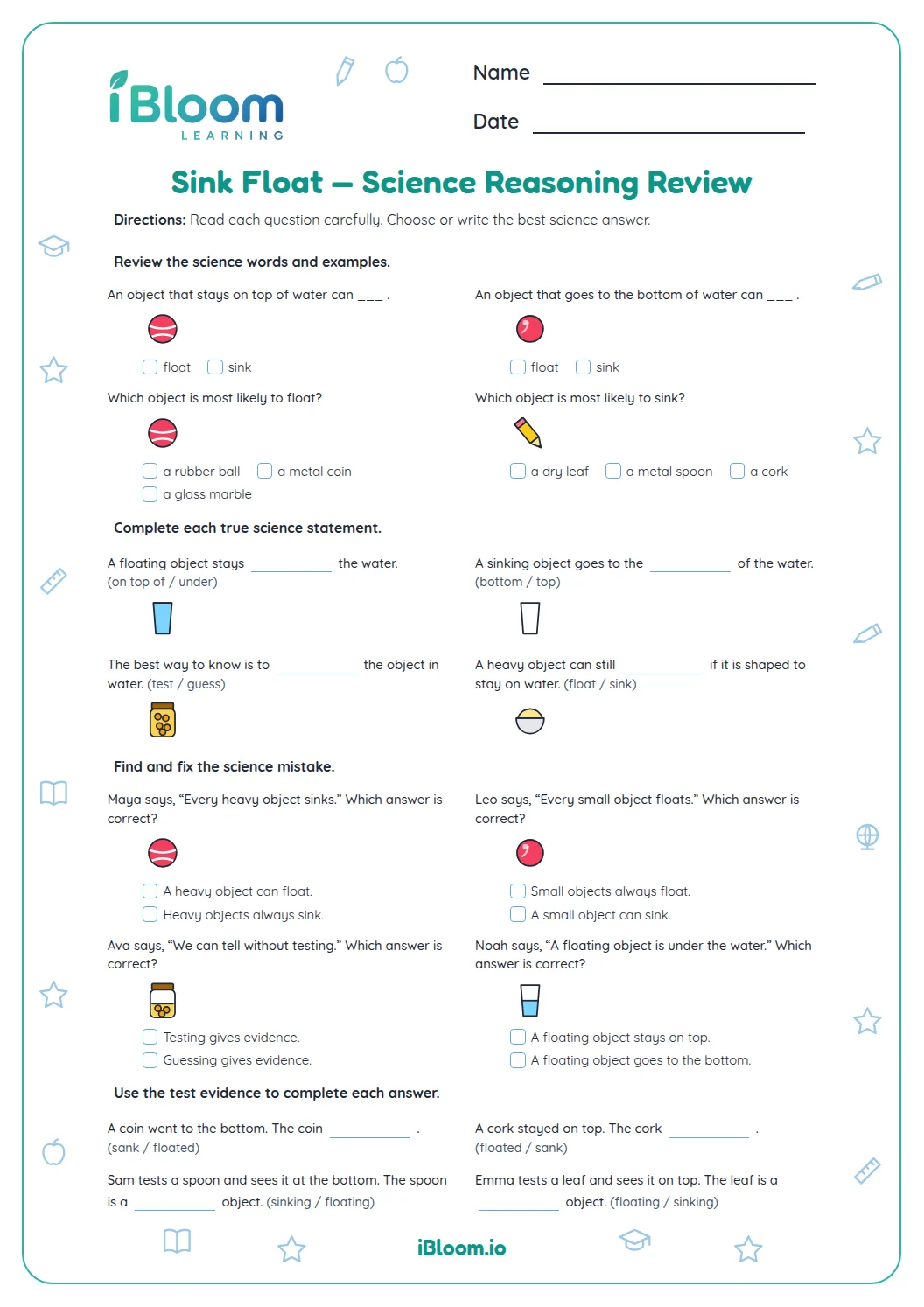 Sink Float — Science Reasoning ReviewExplore sink float practice activities within Material Properties Practice Activities, organised so children, families, and elementary teachers can move from broad learning areas to focused printable practice. This science reasoning review worksheet provides a distinct, age-appropriate way to practise the same lesson.Grade 1Free PDF preview
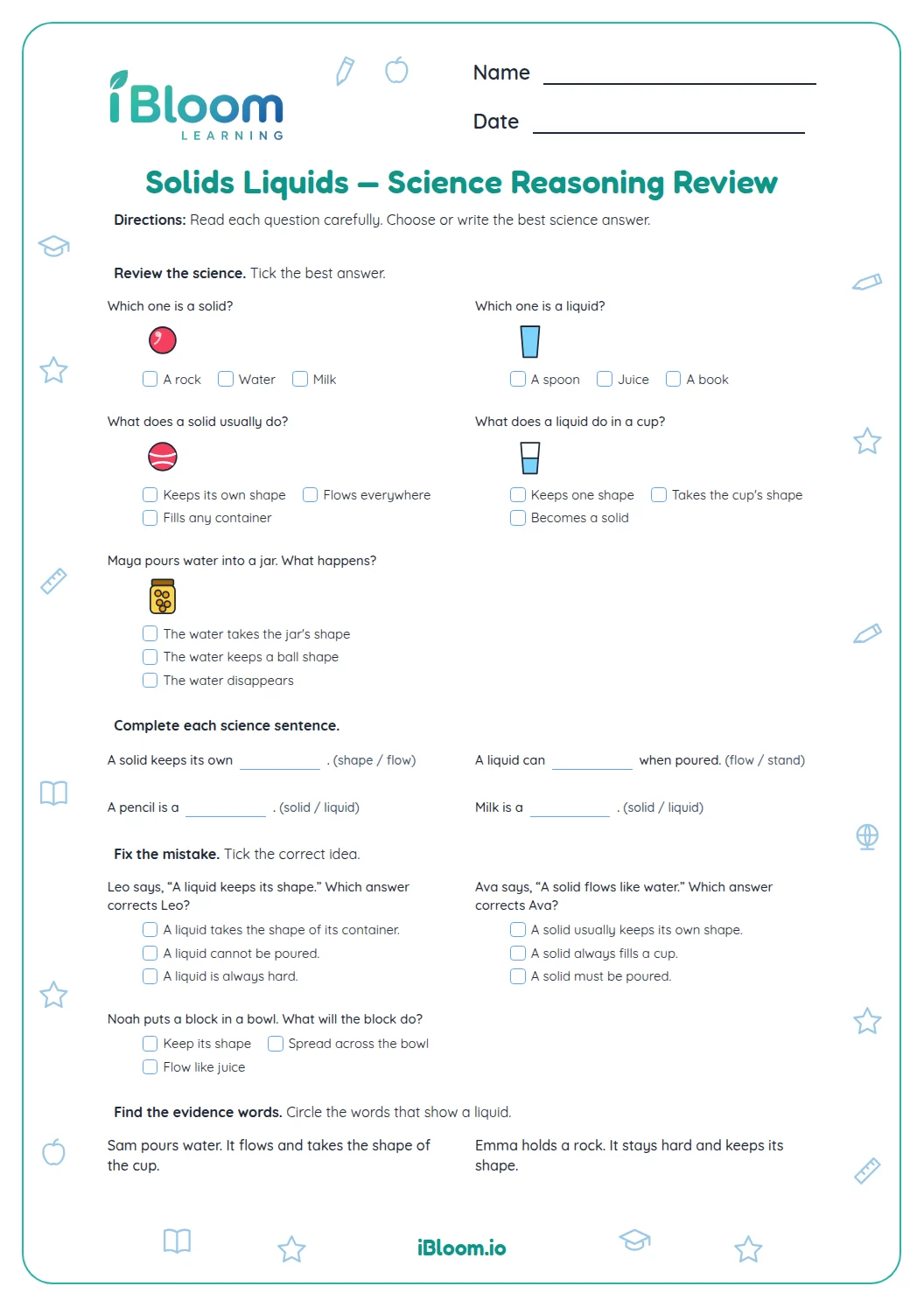 Solids Liquids — Science Reasoning ReviewGrade 1 worksheets for identifying solids and liquids by observing shape, flow, pouring, and how materials behave in containers. This science reasoning review worksheet provides a distinct, age-appropriate way to practise the same lesson.Grade 1Free PDF preview
Practice that builds confidence
What children learn about materials
These Grade 1 material properties worksheets help children notice how everyday objects look, feel, and behave. Students practise describing rough and smooth surfaces, testing magnets, identifying solids and liquids, and predicting whether objects will sink or float.
The printable activities include sorting tasks, picture-based observations, simple experiment recording pages, matching questions, and vocabulary practice. Each page encourages children to use evidence from what they see, touch, test, or compare.
Grade 1 students begin by understanding that objects are made from materials, and materials have properties. A rock may feel rough, a spoon may be smooth, a coin may be attracted to a magnet, and a plastic lid may float. These worksheets keep the focus on observable properties rather than memorizing facts, so children learn to ask, “How do I know?”

From texture to sorting
The rough and smooth activities build careful observation language. Children compare pictures and real objects, then sort them by surface texture. Encourage words such as bumpy, scratchy, soft, shiny, and flat when they fit the object. This helps students see that one object can have more than one property, such as a smooth, hard block.
Magnets, solids, liquids, and water tests
Magnet pages guide children to predict, test, and record whether objects are magnetic. They learn that magnets attract some metal objects, but not all materials. Solids and liquids worksheets develop the idea that solids keep their shape while liquids pour and take the shape of a container. Sink and float tasks invite children to compare results in water and notice that size alone does not decide what happens.
A simple parent routine
At home, choose four safe objects, such as a key, toy car, sponge, and leaf. Ask your child to describe each one, test it with a magnet if available, and predict sink or float before placing it in water. After each test, have your child say one full sentence: “The sponge floats,” or “The key is magnetic.” Use the worksheet as the record sheet.

Classroom uses for teachers
Teachers can use these printables in science centers, small-group investigations, or after a demonstration. Picture sorting pages work well before hands-on testing, while recording sheets support discussion after students handle real materials. The activities also pair naturally with oral language practice because children must explain what they observed.

Common errors and a child-friendly strategy
Watch for children who think all metal is magnetic, all heavy objects sink, or all liquids are water. A useful strategy is: predict, test, tell why. Children can point to the object, make a guess, do the test, and then complete a sentence using evidence: “I know because it stuck to the magnet.”
Free printable PDF download
Use this grade 1 material properties worksheet page to preview the activity, print it, or download it as a PDF for quick practice. It works well for homework, homeschool lessons, tutoring, morning work, revision, and classroom centers.
Answers and answer key support
After the child completes the worksheet independently, parents and teachers can use the answer support or answer key information to check the work, review mistakes, and choose the next practice step.
Why iBloom worksheets help
iBloom worksheets connect first grade science vocabulary with simple, concrete investigations. The pages move from recognizing properties to comparing, sorting, predicting, and recording, helping children build confidence as young observers.
Helpful answers
Frequently asked questions
What material properties do these Grade 1 worksheets cover?
They cover rough and smooth textures, magnetic and nonmagnetic objects, solids and liquids, and whether objects sink or float in water.
Do children need lab equipment for these worksheets?
No special lab equipment is needed. A small magnet, a bowl of water, and safe household objects such as coins, leaves, spoons, blocks, or plastic lids are enough for many activities.
How can I explain solids and liquids to a first grader?
Use simple examples: a solid keeps its own shape, like a block or pencil, while a liquid can pour and takes the shape of its container, like water or juice.
Why might a child think all metal objects are magnetic?
Many children see magnets stick to some metal items and overgeneralize. Testing different objects helps them discover that magnets attract some metals, but not all materials.
Are the sink and float pages about weight only?
No. The worksheets help children observe that sinking and floating are not decided by size or weight alone. Students make predictions, test objects, and record what actually happens.
Is this grade 1 material properties worksheet free?
Yes. You can preview it for free and use the printable worksheet for home or classroom practice.
Can I download this grade 1 material properties worksheet as a PDF?
Yes. Use the worksheet download option to save a printable PDF, or print the worksheet directly from the page.
Does this grade 1 material properties worksheet include answers or an answer key?
When the activity has fixed answers, iBloom includes answer support so parents and teachers can check the completed worksheet.