






About this worksheet
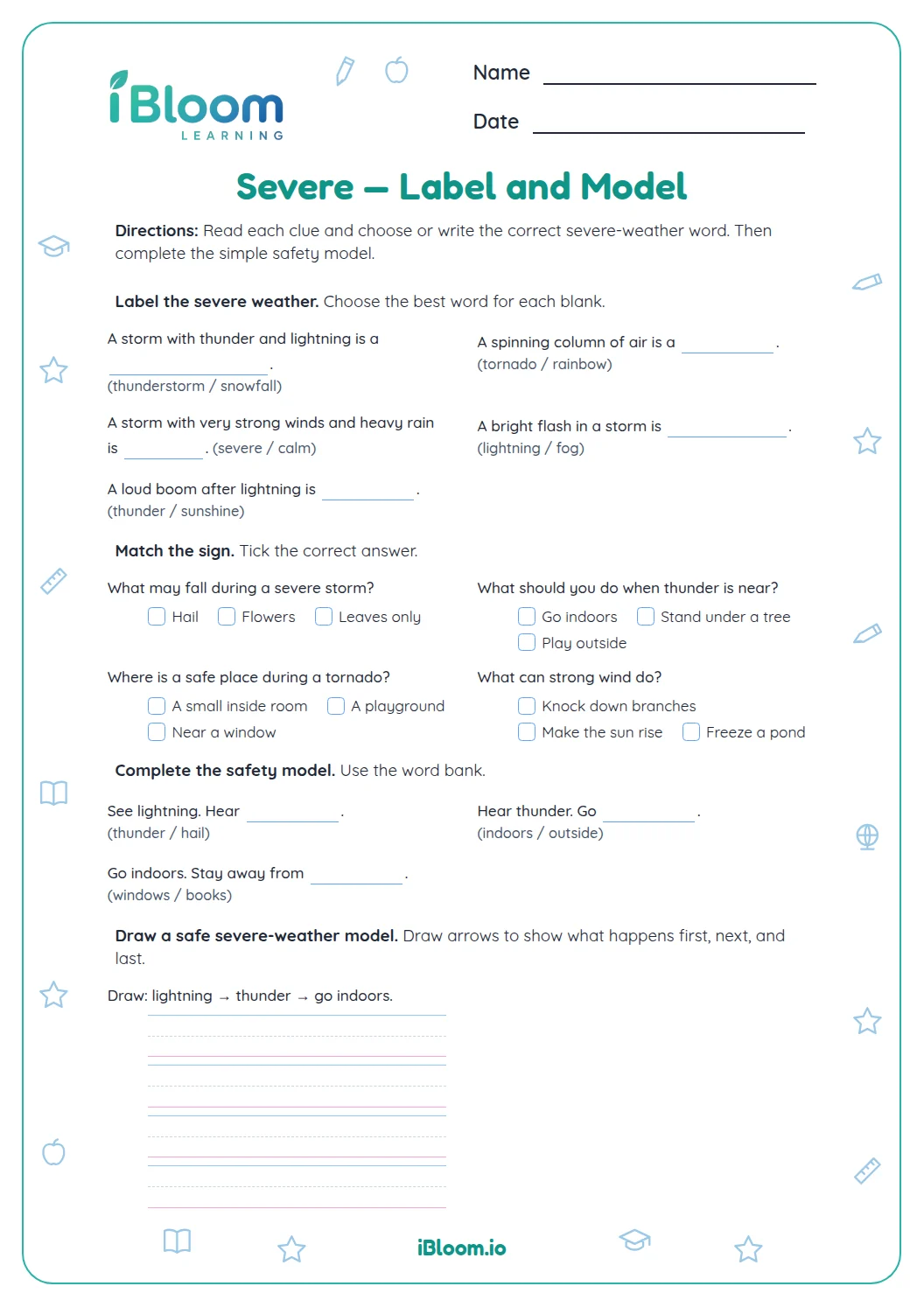
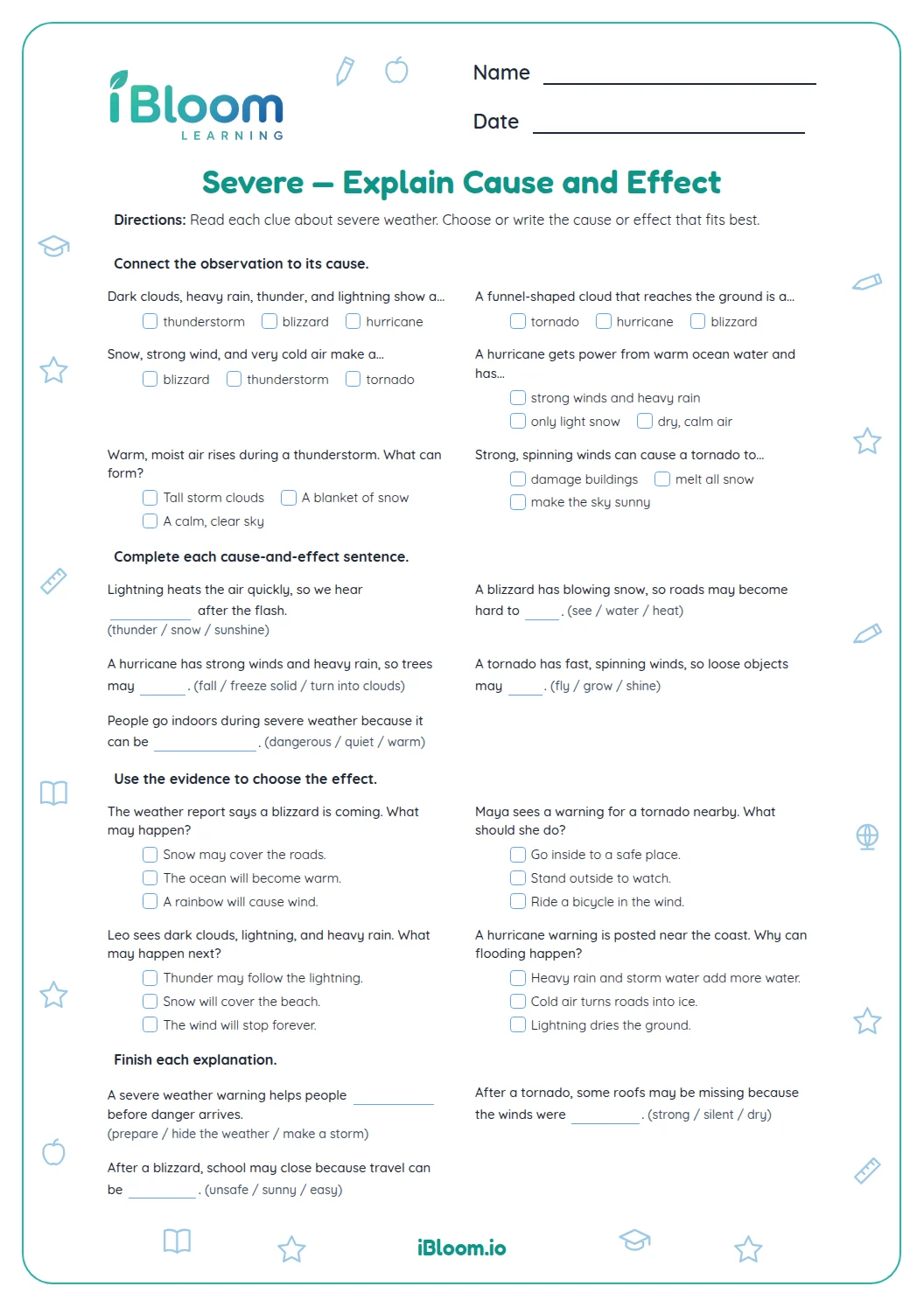
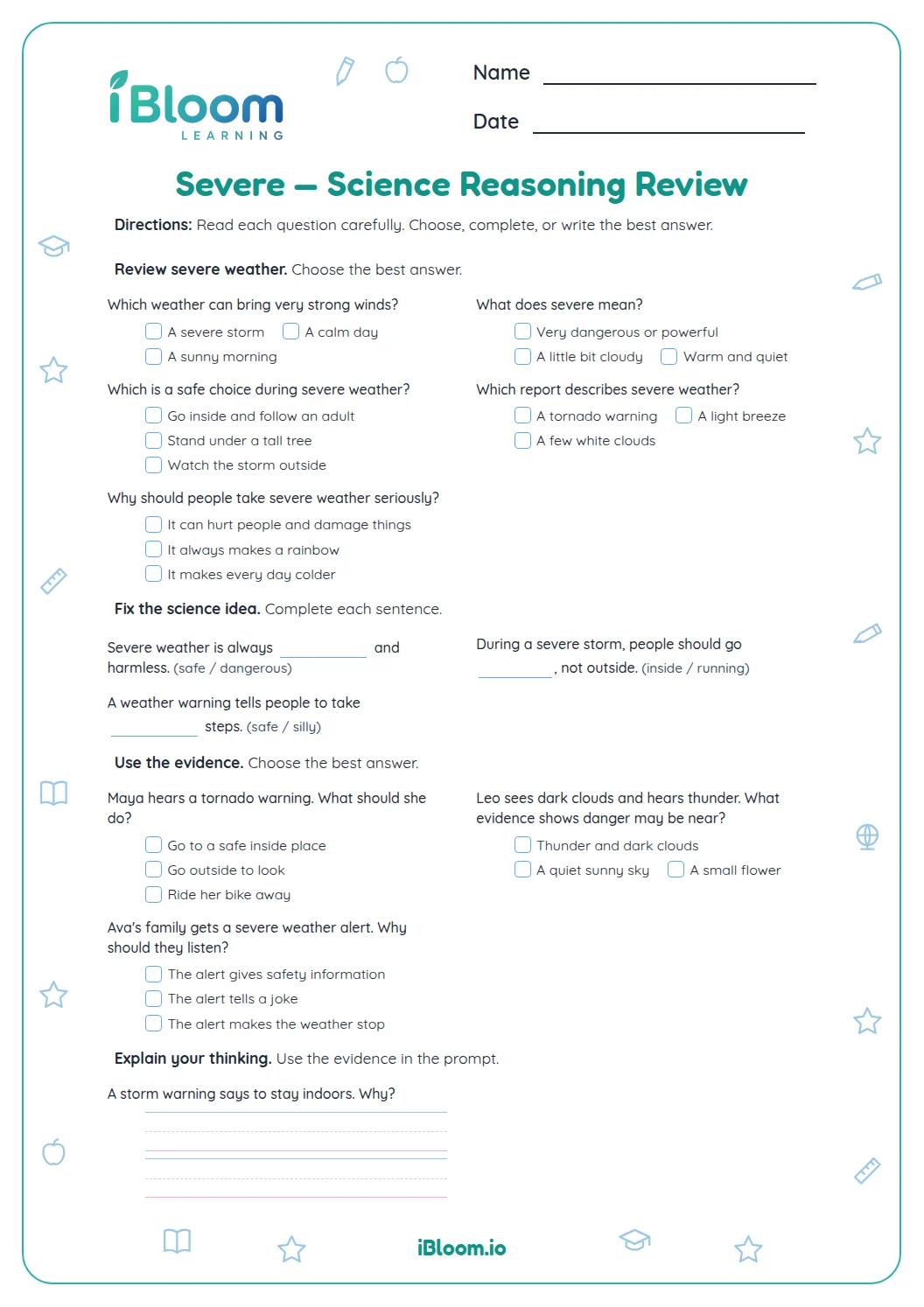
This Grade 1 science worksheet helps children distinguish severe weather from ordinary conditions and connect hazards with effects and safety. The 14 questions include quick choices and two short responses about forecasts and shelter. A separate answer key gives the intended classifications and sample responses.
Aligned to K-ESS3-2
Which weather events are severe?
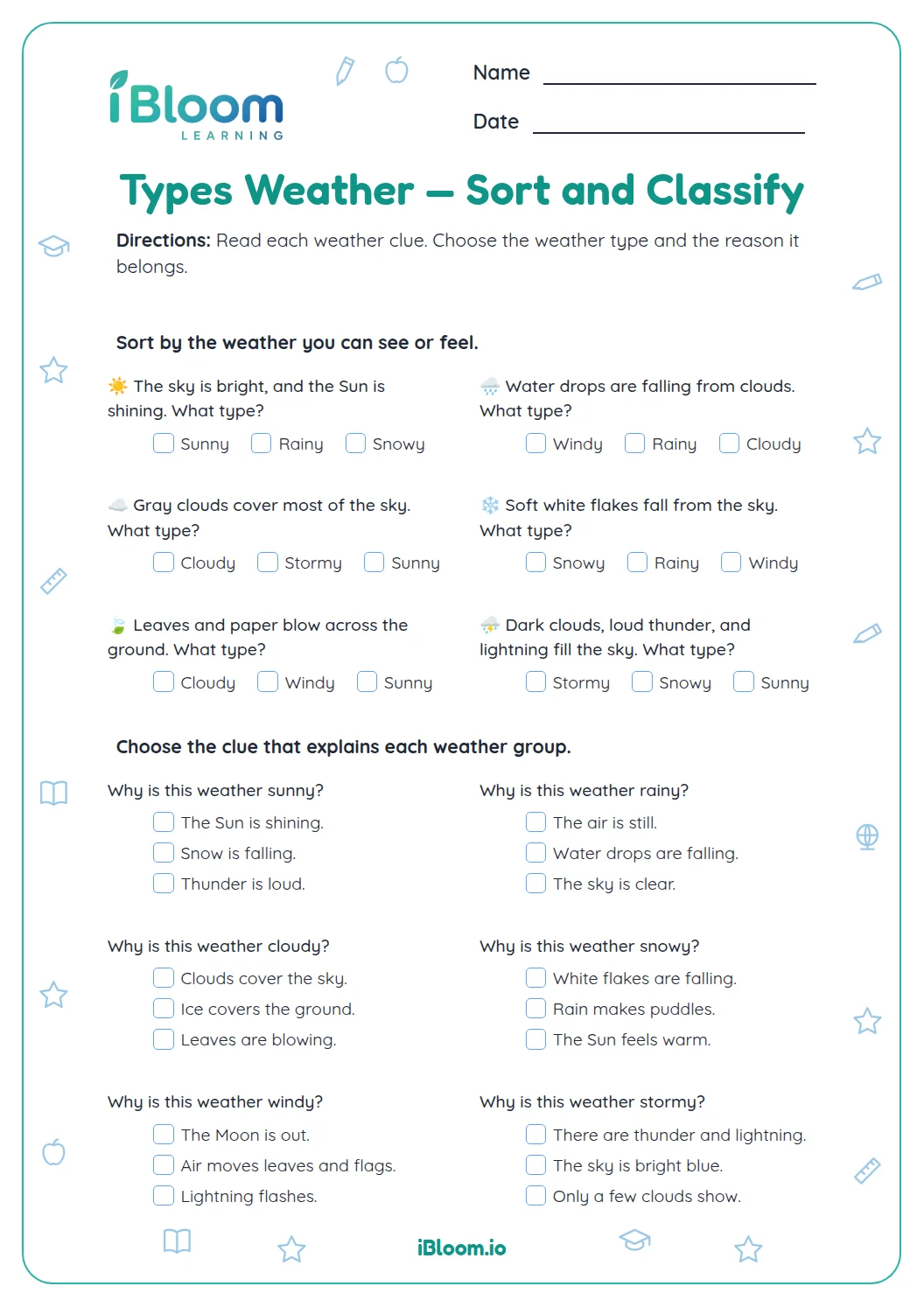
Children distinguish tornadoes, hurricanes, blizzards, and floods from ordinary sun, breeze, or brief light rain.
What effects can severe weather have?
The second part connects strong winds, heavy rain, snow, floodwater, and lightning with specific risks.
- 1Why can a tornado be dangerous? → It can damage homes and trees.
How can a forecast help a family?
Two short responses ask what a forecast can tell a family and where to go during a tornado warning.
How to use this worksheet
- 1Read the weather example carefully.
- 2Decide whether it describes severe or ordinary weather.
- 3For a hazard question, name the condition and a possible effect.
- 4For the forecast prompt, explain how advance notice helps.
- 5For the warning prompt, give a safe place or action.
Common mistakes and quick fixes
The mistake
Marking any rain or wind as severe weather.
The fix
Use the details in the example, such as intensity or danger.
The mistake
Naming a storm without explaining its effect.
The fix
Connect the hazard to what it can do, such as covering a road.
The mistake
Treating a warning as a reason to go outside and look.
The fix
Follow an adult’s safety directions and move to a safer place.
Curriculum alignment
The worksheet gives children direct practice with this standard.
Use forecasts to prepare for and respond to severe weather.
On this sheet: The final questions ask what forecasts tell families and how they can respond to a tornado warning.
Show the official wordingHide the official wording
Ask questions to obtain information about the purpose of weather forecasting to prepare for, and respond to, severe weather.
What to practice next
Make more practice
Further reading
Questions parents and teachers ask
What is severe weather?
Severe weather can create danger or damage. This worksheet contrasts tornadoes, hurricanes, blizzards, and floods with a sunny day, a gentle breeze, light rain, and passing clouds, then asks children to connect hazards with possible effects. It also introduces forecasts and warnings.
Which weather types are classified on the page?
The sorting section includes a tornado, sunny warm day, hurricane, gentle breeze, blizzard, light rain, flood, and passing clouds. Later questions also discuss thunderstorms and hail as hazards and ask about a tornado warning. Children compare severe and ordinary conditions.
How does the worksheet explain cause and effect?
Children match a weather hazard with a possible result. For example, excess floodwater may cover land or roads, while lightning can cause harm. Part B asks children to select a fitting effect; the last section asks about forecasts and safety.
What safe actions do the final questions ask about?
The final questions ask what a forecast can tell a family before severe weather and where a family should go during a tornado warning. A suitable response mentions advance notice and an interior room away from windows, with adult guidance.
How many questions are included?
There are 16 questions in three parts: eight sorting items, six hazard-and-effect choices, and two written responses. The printable has a separate answer key with sample wording for the open responses. The validator counts three rendered pages across the sheet and key.
Should a child answer the safety questions alone?
An adult should guide safety discussions and remind children to follow local instructions. The worksheet offers a simple practice scenario about a tornado warning; it is not a substitute for a family emergency plan. One written question asks where a family can shelter.