






About this worksheet
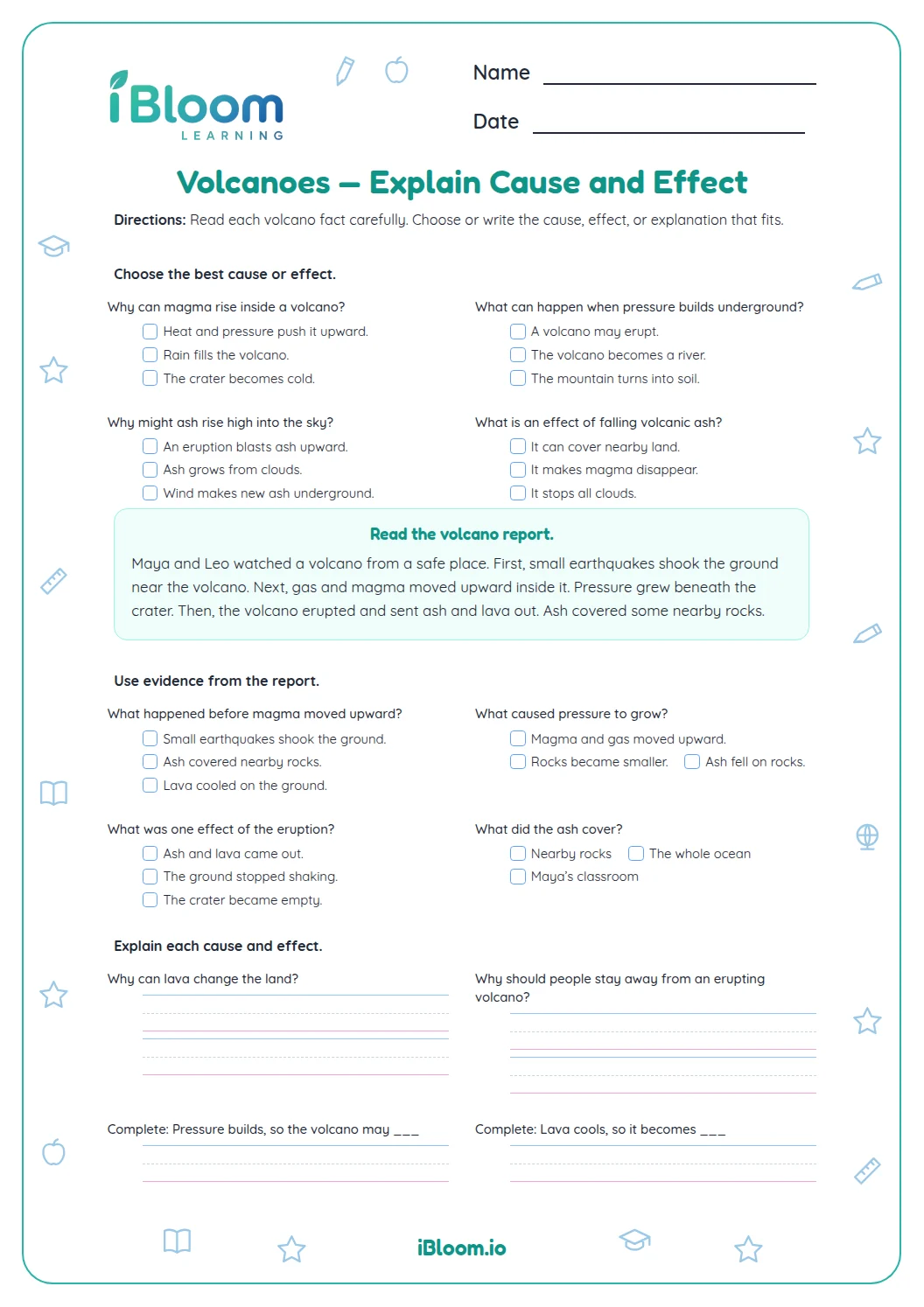
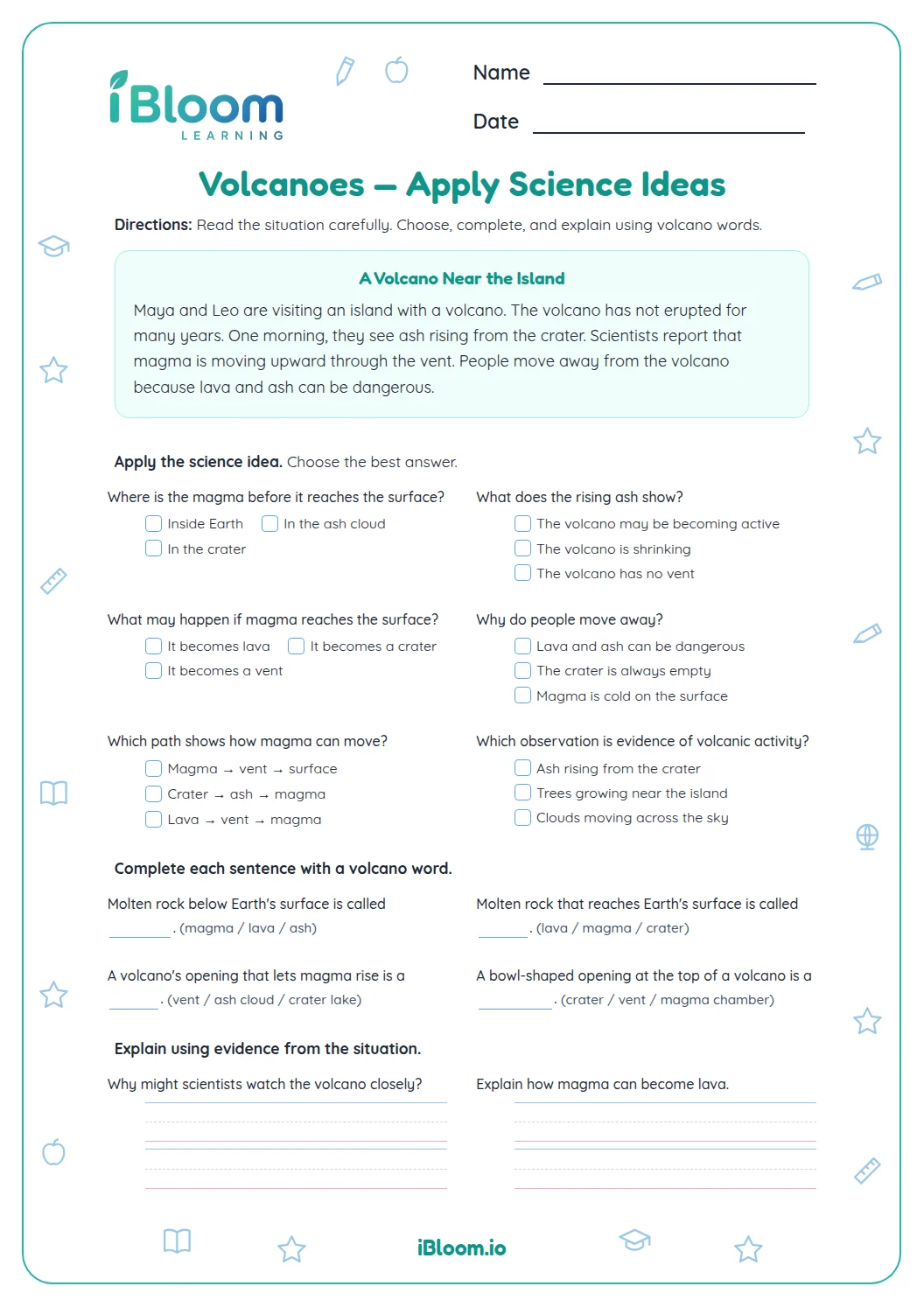
This free printable Grade 3 science worksheet asks students to classify volcano terms by both category and defining clue, then sort Earth events by how quickly they happen. The first part covers structures and materials such as a magma chamber, vent, lava, and ash. The second part contrasts sudden events with changes that take place over time. A separate answer key supports checking each classification.
How do I sort volcano parts from eruption materials?
Decide whether each term names a volcano part or a material, then use the short clue in the matching choice. For example, a vent is a part that magma passes through, while ash is material made of tiny rock pieces.
The first part combines the category and its defining clue in one choice, so students can check both parts of the classification.
- 1A vent is a part: magma passes through it.
- 2Ash is material: it is made of tiny rock pieces.
How can I tell a quick Earth event from a slow one?
Notice the time clue in the description. An eruption or earthquake can occur in a short time. A river wearing down rock or a glacier shaping a valley takes much longer.
Use the time clue in each description to sort the event. A river wearing away rock over many years is a slow change; a landslide moving in seconds is quick.
How do the reason questions help?
Use the defining clue to check a classification. A vent is a passage for magma, ash is tiny rock pieces, and lava is melted rock at the surface. Matching both the category and clue helps keep the terms straight.
How to use this worksheet
- 1Read each volcano term and its answer choices.
- 2Choose a choice that names both the term’s category and a matching clue.
- 3Read the time clue in each Earth event.
- 4Choose quick for a sudden event and slow for a change over a long time.
- 5Check each classification with the answer key.
Common mistakes and quick fixes
The mistake
Calling magma and lava the same term.
The fix
Use location: magma is below the surface; lava is at the surface.
The mistake
Sorting ash as a volcano structure because it comes from a volcano.
The fix
A structure is part of the volcano’s form; ash is material released into the air.
The mistake
Calling erosion a quick event because water is moving.
The fix
Focus on how long the land change takes: river erosion happens gradually.
What to practice next
Questions parents and teachers ask
What is a volcano part?
A volcano part is a structure, such as a vent, crater, cone, or magma chamber. The first section asks students to choose both a category and a clue for eight terms. For example, a vent is a passage magma can move through, while ash is made of tiny rock pieces.
How are magma and lava different?
Magma is melted rock beneath Earth’s surface. When it reaches the surface, it is called lava. Both are materials, and the first section asks students to distinguish them from volcano structures such as a vent or crater. The matching clues help show why each word belongs in its category.
What counts as a quick Earth event?
A volcanic explosion or earthquake can change Earth’s surface in a short time. River erosion and the shaping of a valley by a glacier happen over much longer periods. The second part asks students to sort six examples as quick or slow events.
How many questions are on the worksheet?
There are 14 multiple-choice questions in two parts. Students classify eight volcano terms by category and clue, then classify six Earth events as quick or slow. The separate key lists a correct choice for each item, so students can review both the term and the reason for its category.
How can I help if a child mixes up ash and magma?
Ask where each material is found and what it looks like. Magma is melted rock beneath Earth’s surface; ash consists of tiny rock pieces that can be sent into the air during an eruption. Returning to those clues helps students connect each word to its category.
What should students try next?
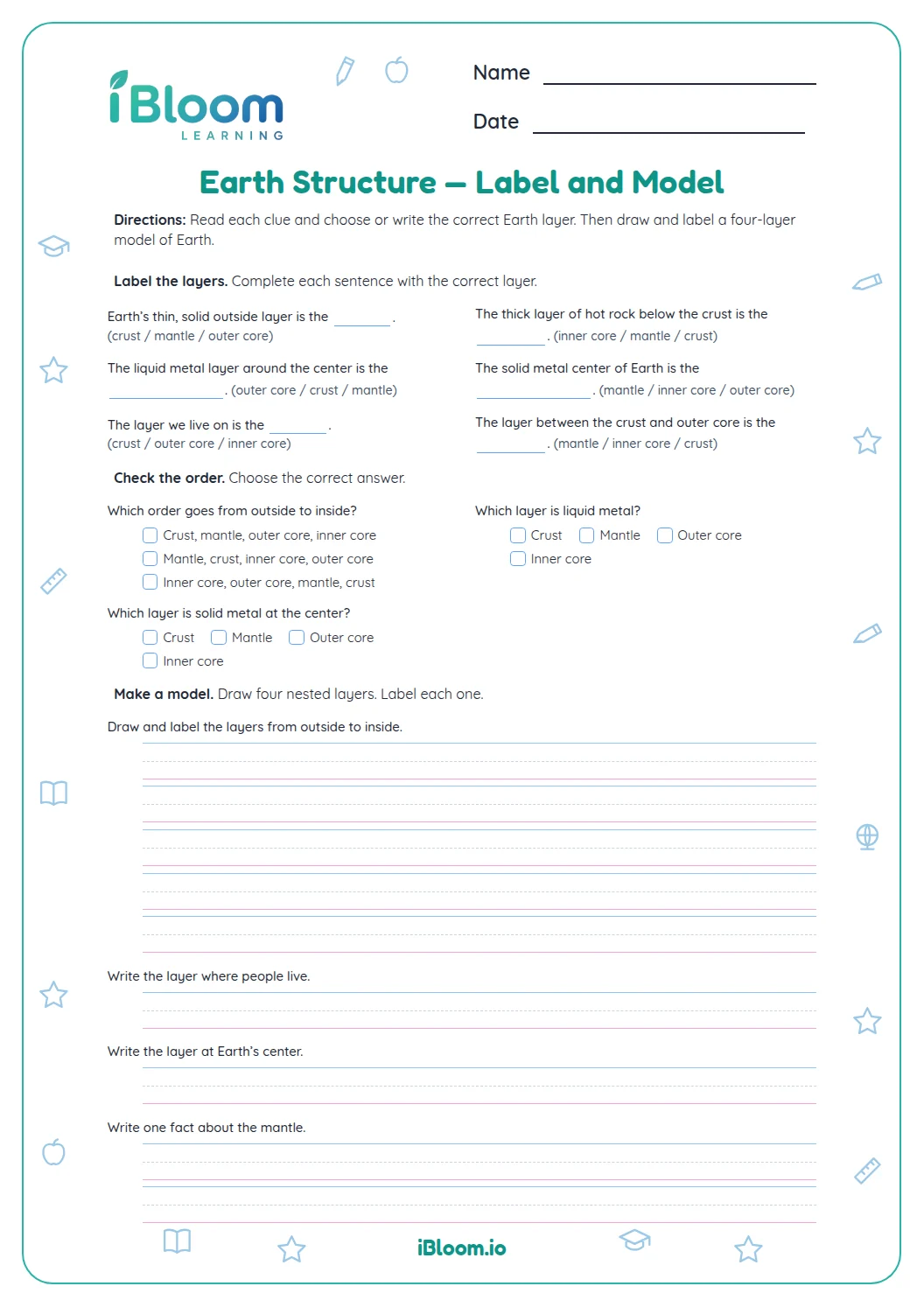
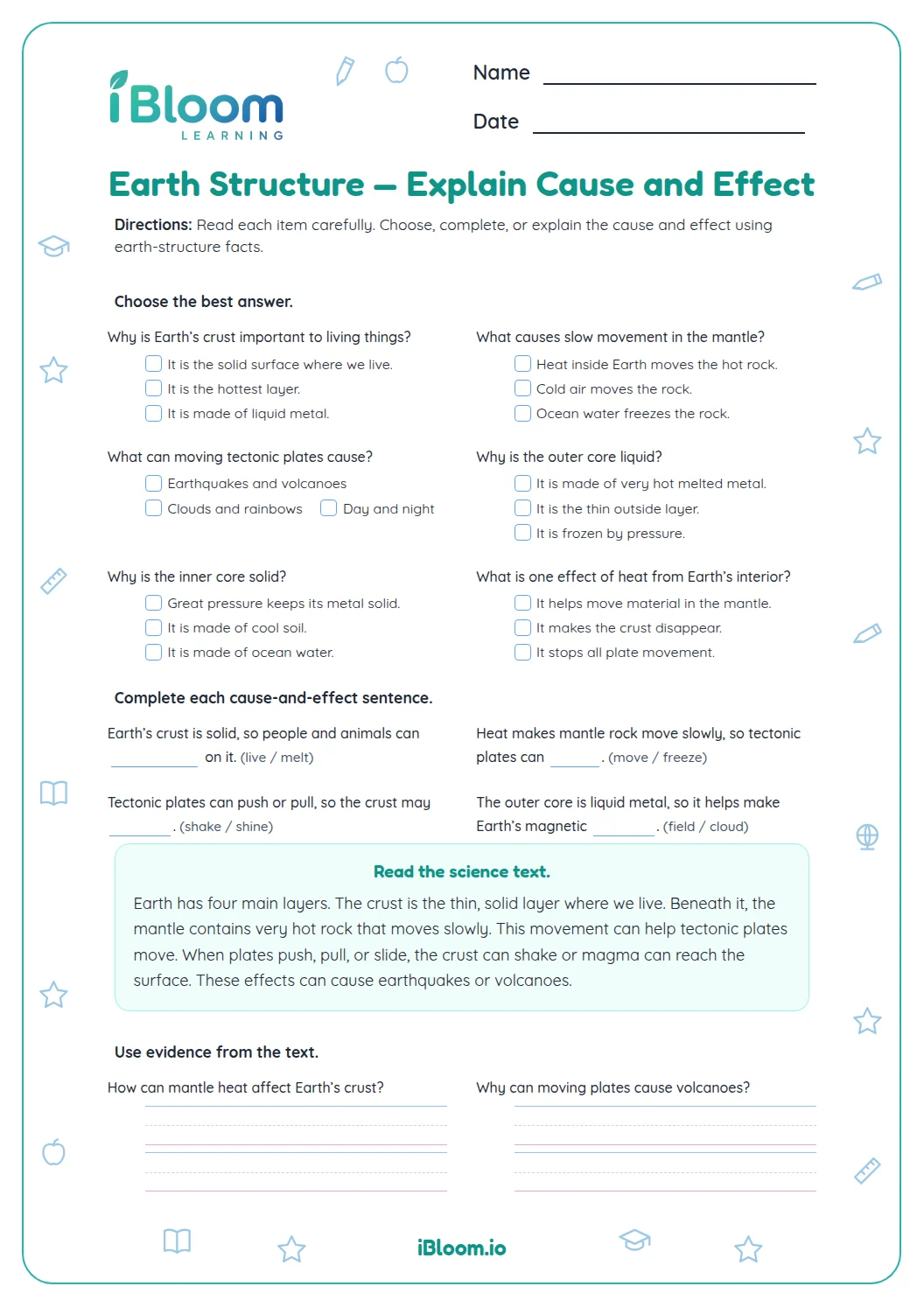
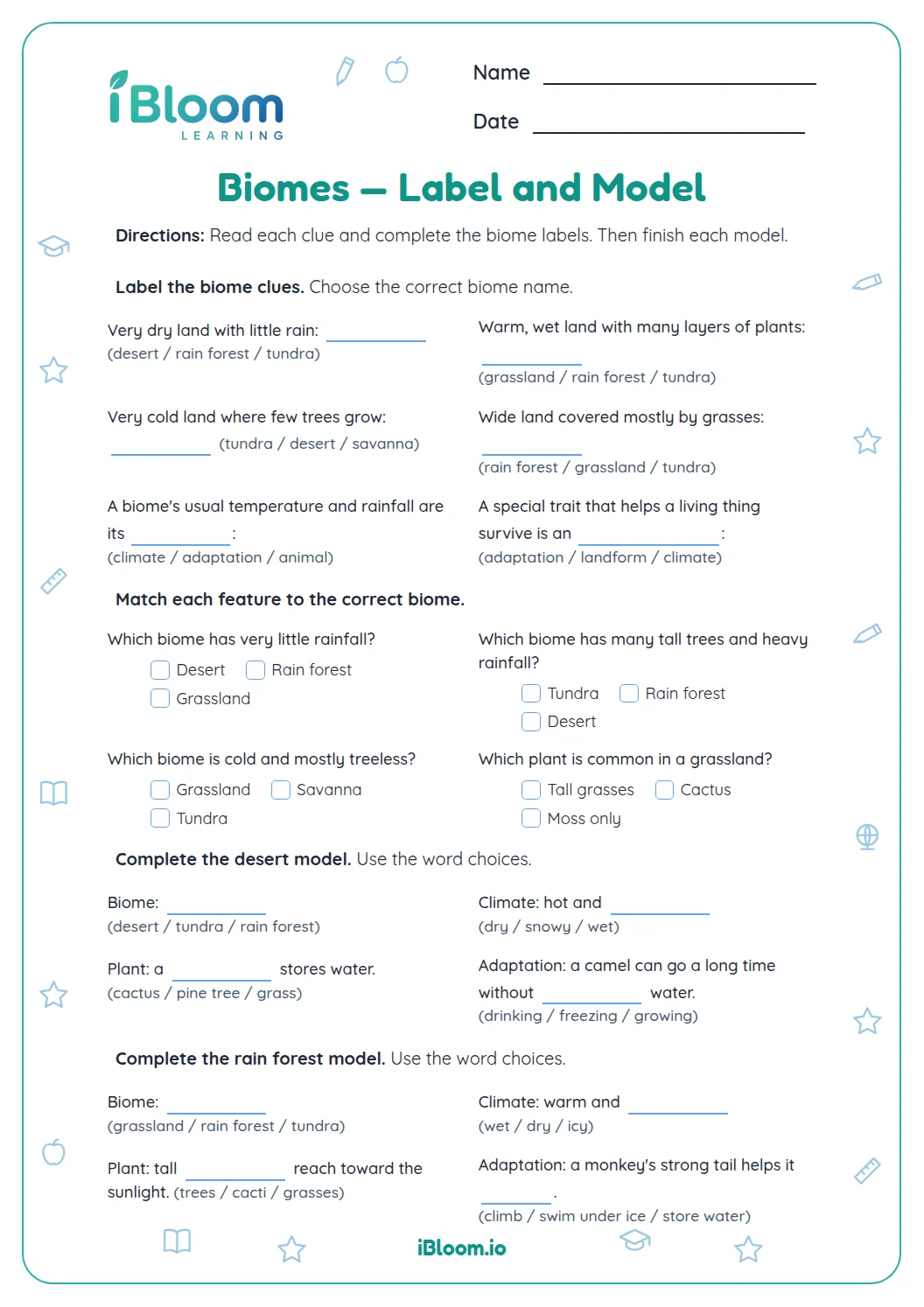
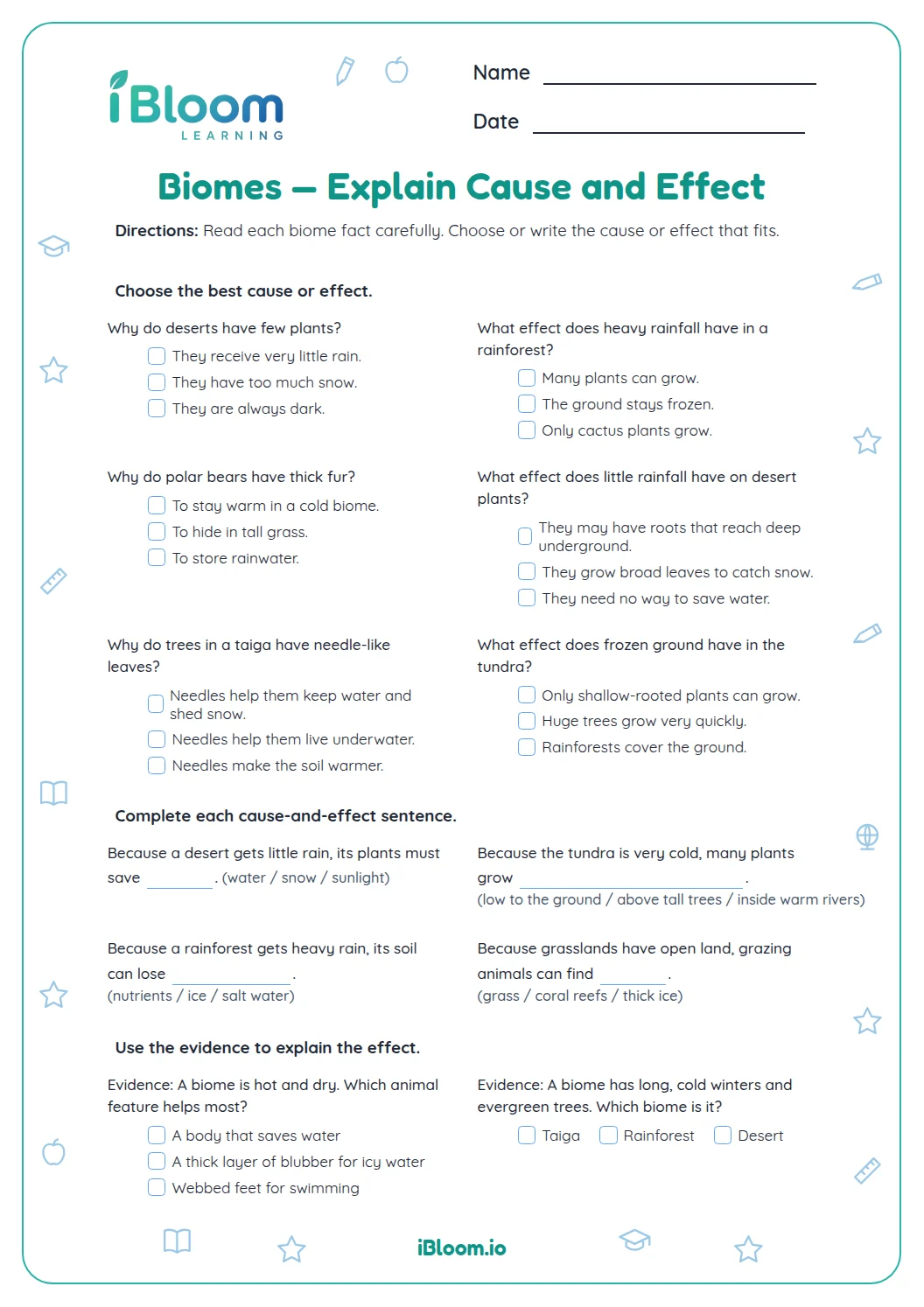
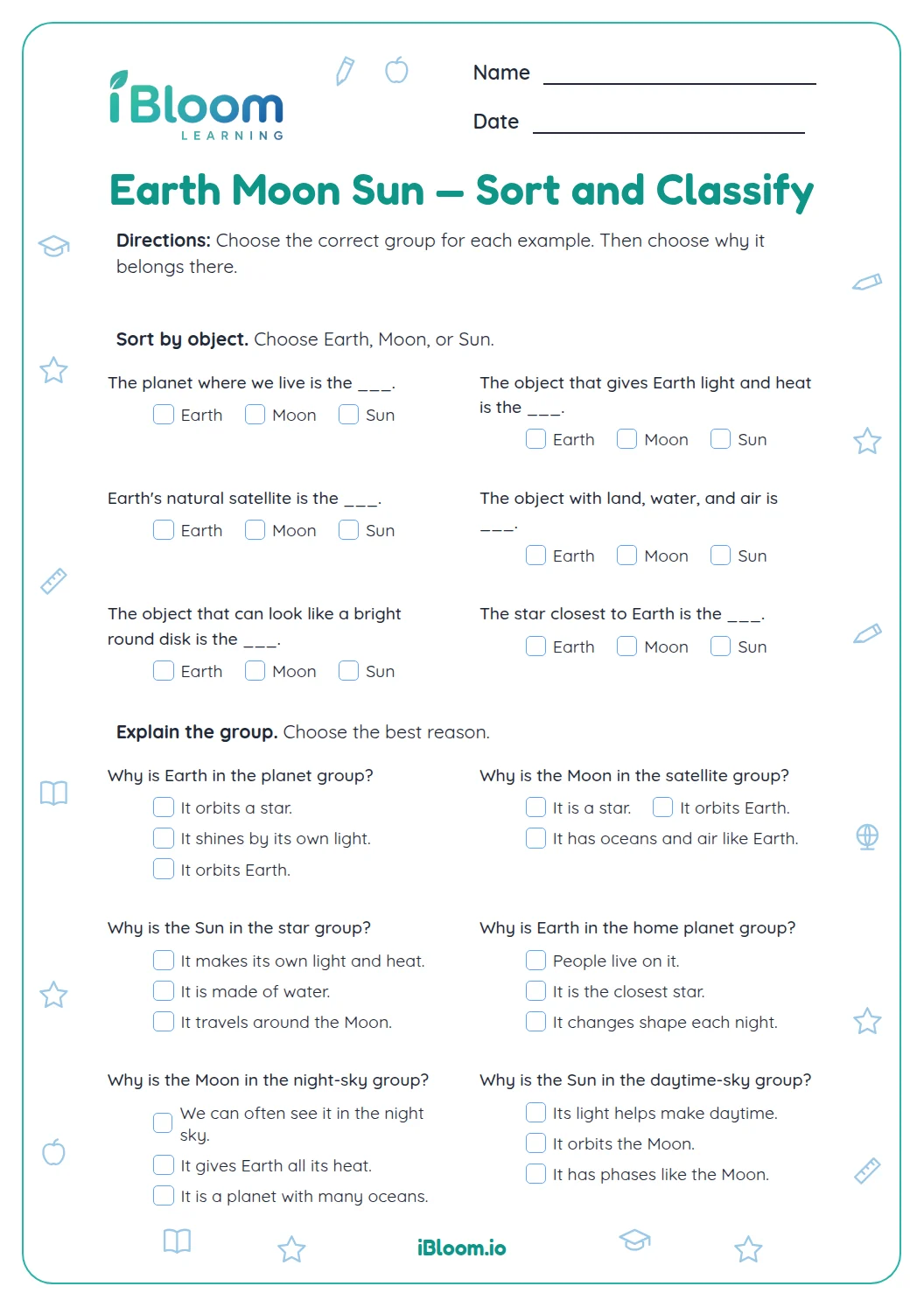
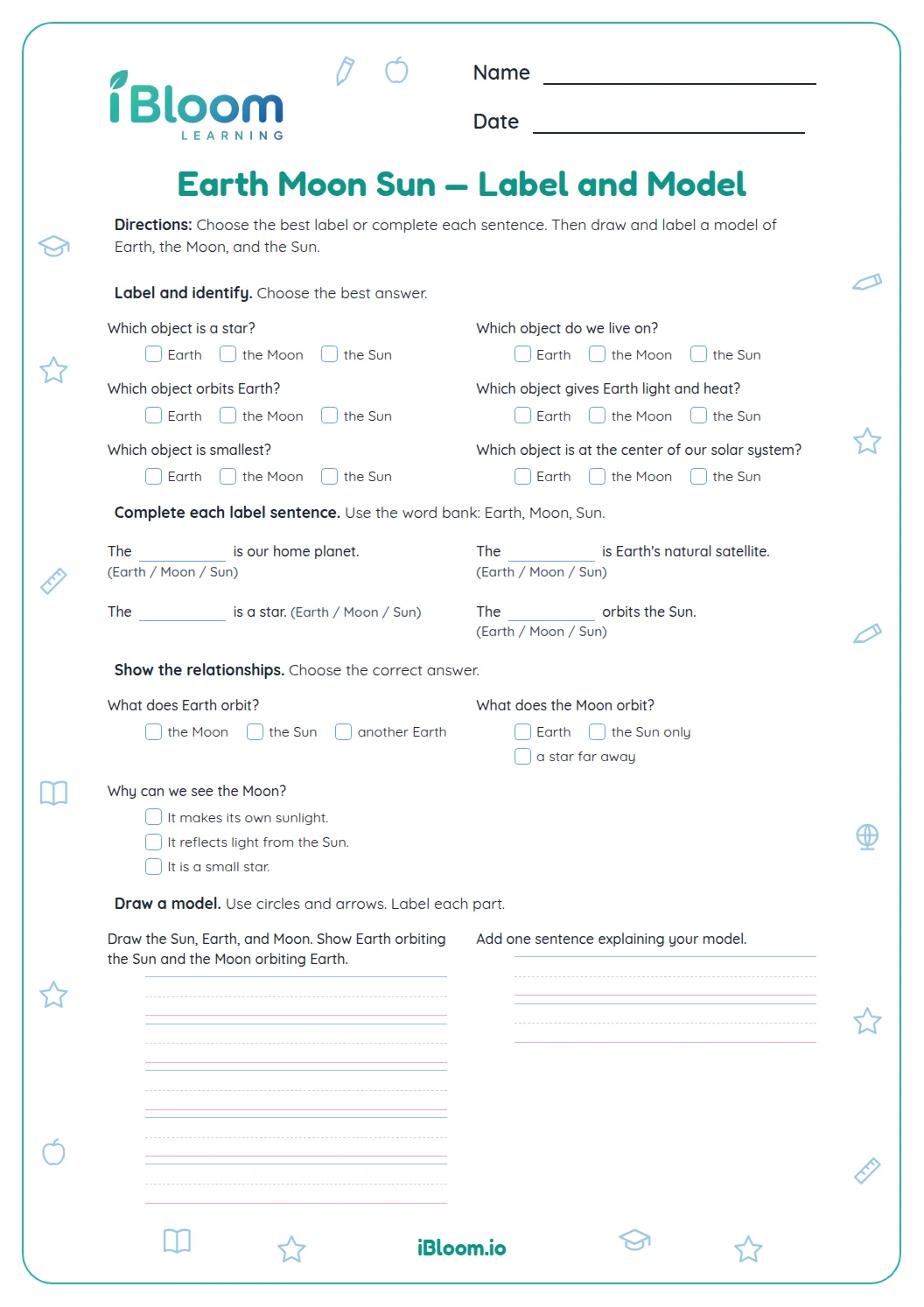
Students can continue with Earth structure, biomes, or Earth, Moon, and Sun activities. Each page explores a different Earth science topic and gives students a new set of ideas to observe, compare, or describe. These related activities can extend a unit beyond volcano vocabulary and event speed.