

About this worksheet
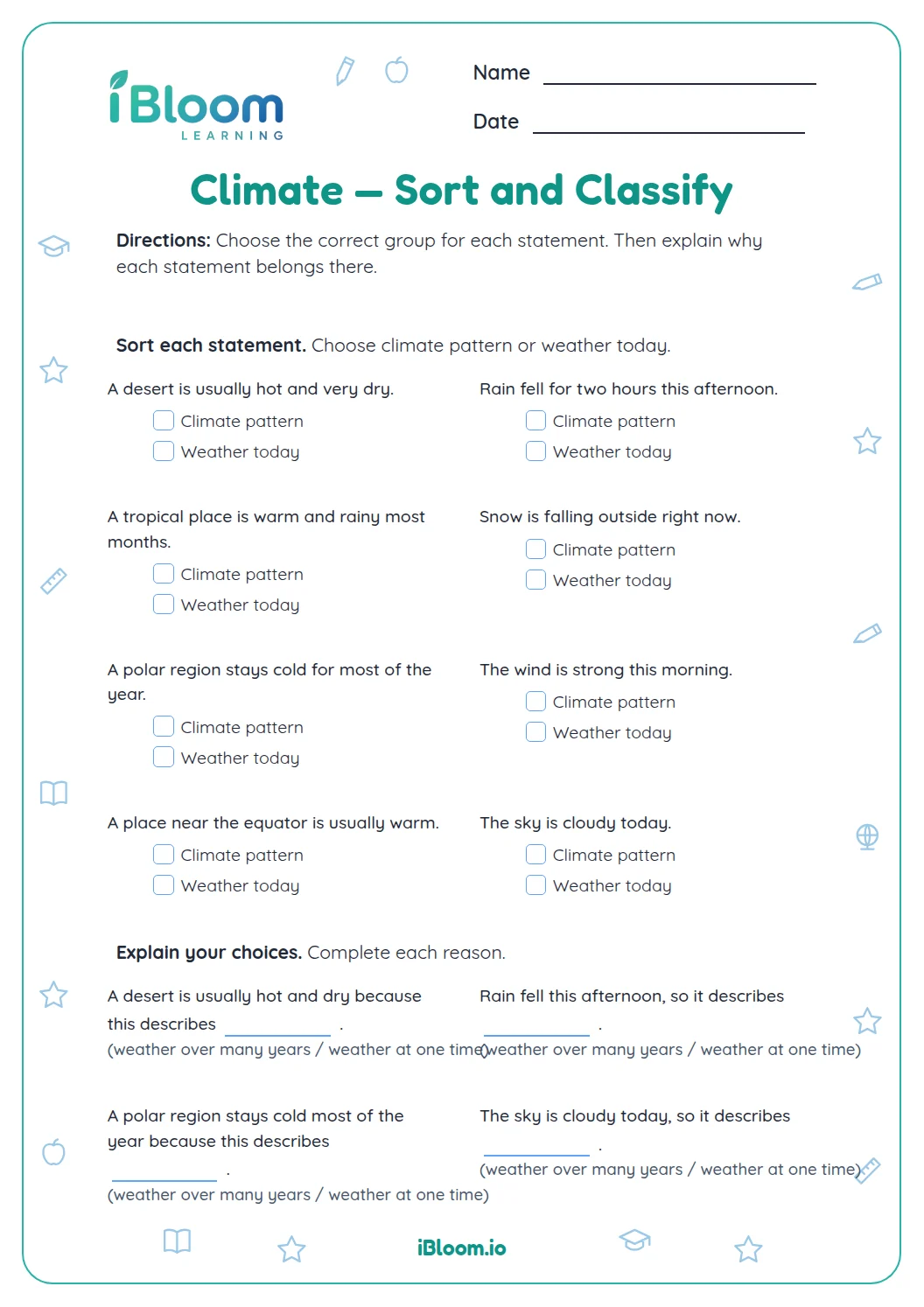
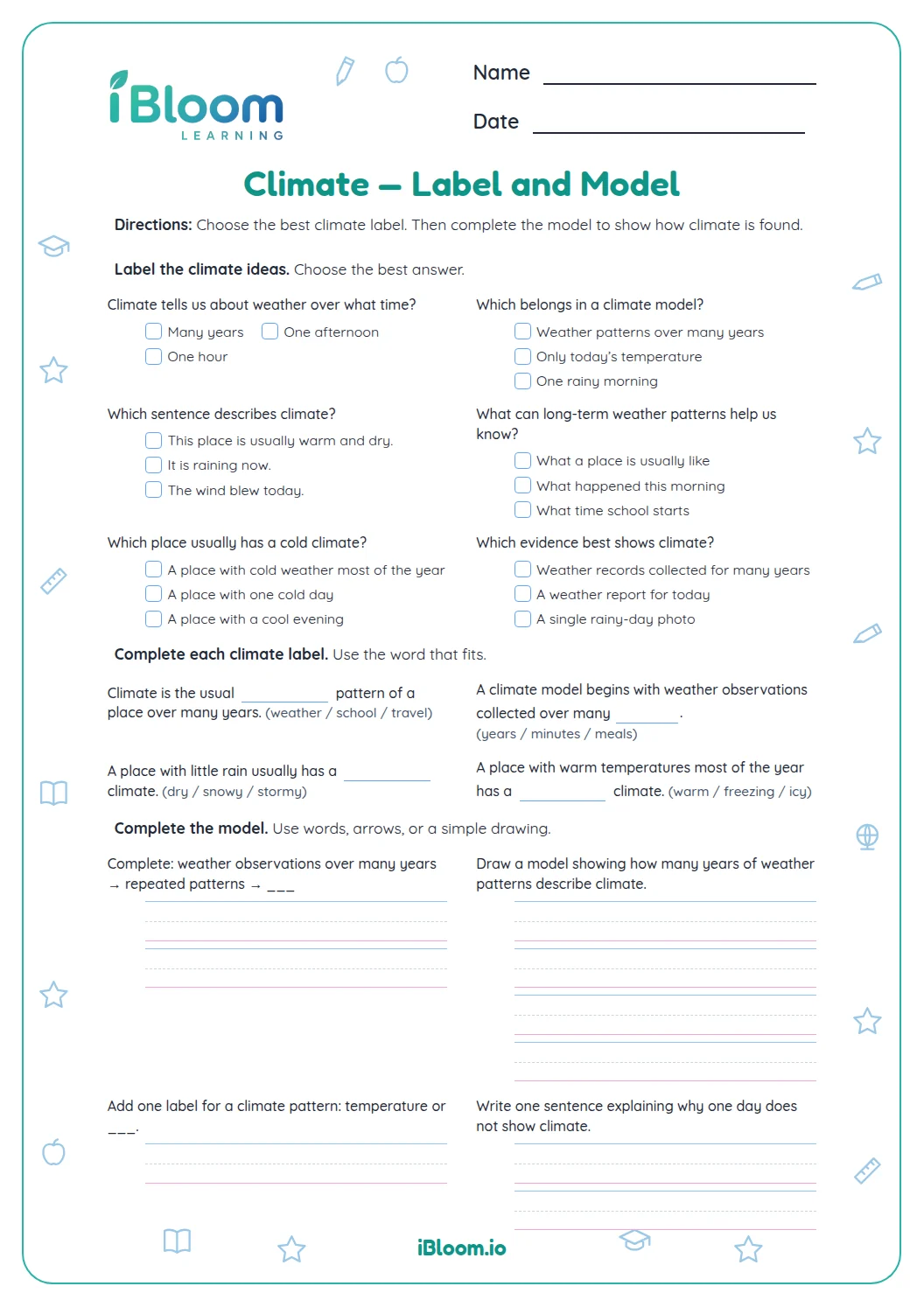
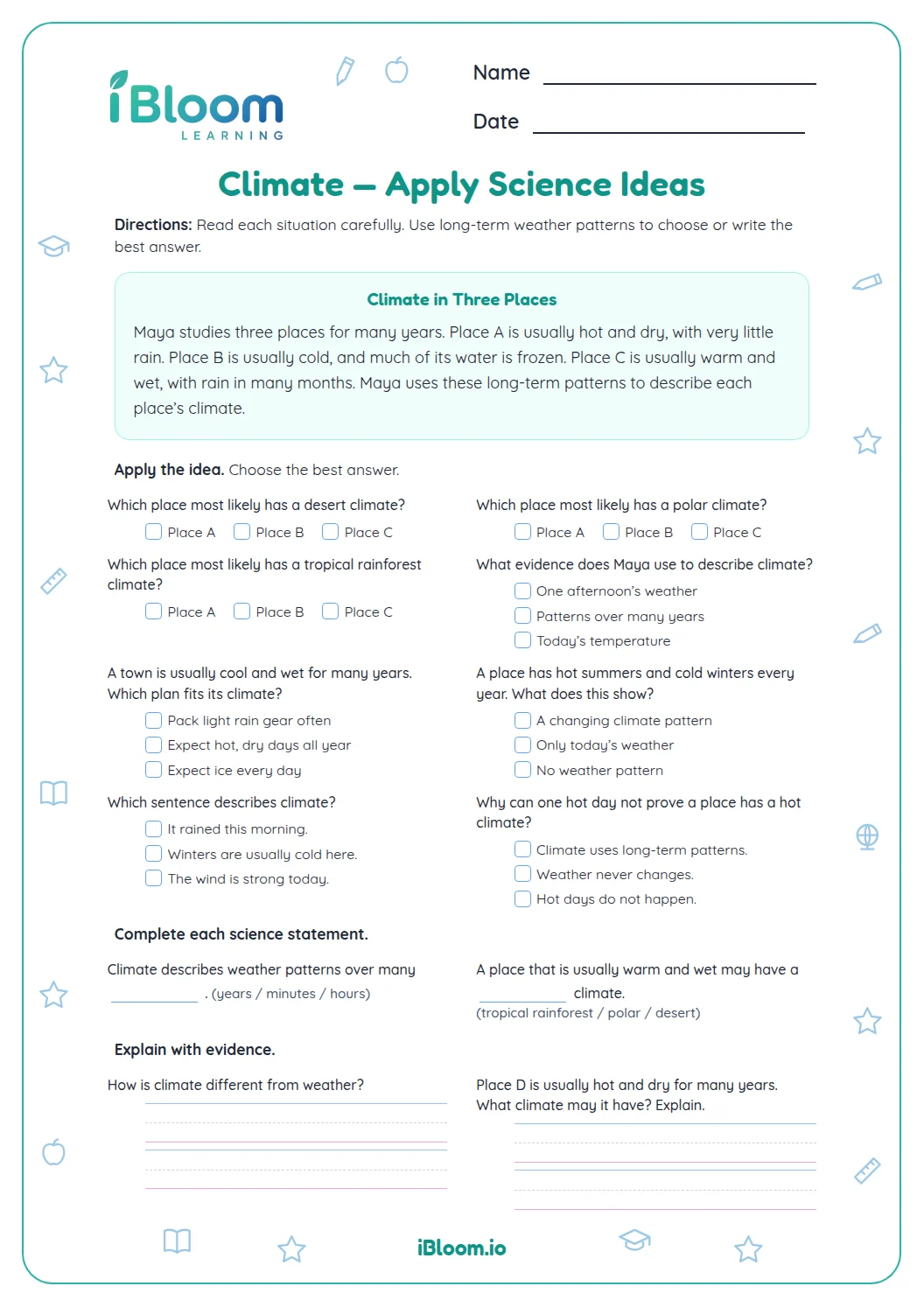
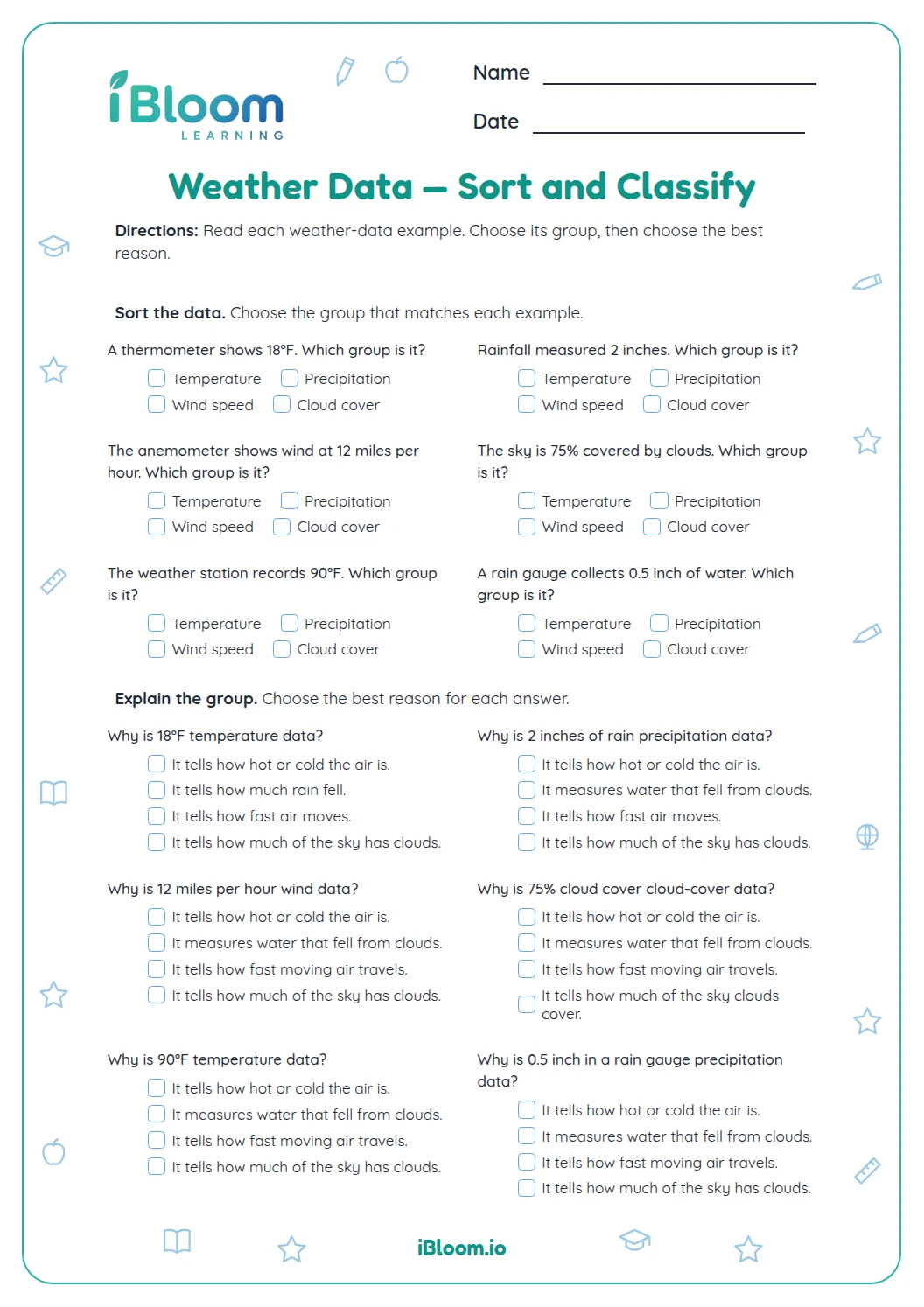
This Grade 3 science worksheet pairs a short passage about two regions with sixteen climate reasoning questions. Students distinguish a day’s weather from a pattern across years, use details about warm temperatures and rainfall, and reason from the passage about climate. It practices NGSS 3-ESS2-2 by asking students to obtain information from a short text and use it to describe climates. A separate answer key supports review.
Aligned to 3-ESS2-2
What does the climate passage describe?
The passage compares two regions using patterns from many years. Region A has warm temperatures and heavy rain in most months. Region B has long, cold winters and short, cool summers. Children use those details to identify climates rather than relying on one day.
Part A introduces climate patterns and regional clues. Part B checks weather and climate vocabulary, evidence over time, and whether a single event changes a climate. Part C returns to the passage for four evidence questions.
- Weather can change from day to day
- Climate describes typical conditions over years
- Temperature and rainfall records help show a pattern
How does one rainy day fit a climate pattern?
Question 9 asks whether one rainy storm changes a dry region’s climate. The answer is no: one storm is short-term weather, while climate describes patterns across many years.
- 1A dry region has one unusual storm today.
- 2Climate describes a pattern over many years.
- 3One storm is a weather event.
- 4So the storm does not change the region’s climate.
How can students answer from the passage?
Look back for the region’s name and the conditions linked to it. For question 13, Region A is described as warm with heavy rain in most months. For question 15, Region B is linked with long, cold winters. Select the option that matches the passage, not a detail from another region.
A useful explanation names the evidence and then connects it to climate: “The records show warm temperatures and rain in most months, so those are typical conditions for Region A.”
How to use the climate passage
- 1Read the passage once to meet both regions.
- 2Underline words that describe patterns over many years.
- 3Separate a one-day event from a usual seasonal pattern.
- 4Return to the named region when a question asks for evidence.
- 5Check that the selected answer matches the passage details.
Common weather and climate mix-ups
The mistake
Calling a rainy afternoon the climate of a region.
The fix
Climate describes typical conditions across many years; one afternoon is a weather event.
The mistake
Mixing up Region A’s warm, rainy pattern with Region B’s cold winters.
The fix
Find the region name in the passage first, then match its details to the answer.
The mistake
Assuming one unusual day changes a climate pattern.
The fix
Compare the event with the many-year records described in the passage.
Curriculum alignment
Use weather patterns over time to describe a region climate.
On this sheet: Questions distinguish short-term weather from patterns used to describe regional climates.
Show the official wordingHide the official wording
Obtain and combine information to describe climates in different regions of the world.
What to practice next
Further reading
Questions parents and teachers ask
What is climate?
Climate describes the usual weather conditions in an area over many years. It includes patterns in temperature and rainfall, not just what happens today. The passage shows this with Region A’s warm, rainy pattern and Region B’s cold winters. It gives a long view of what is typical.
How many questions are on the climate worksheet?
There are 16 questions and a short passage about two regions. Most questions ask students to distinguish climate from weather or recognize a pattern. The final four return to the passage and ask students to use its details as evidence.
What does the passage help students practice?
The passage gives specific temperature and rainfall patterns for two regions. Students use those details to identify each climate and to explain why a single rainy afternoon does not describe a region’s usual conditions. Students can point to the exact sentence that supports their choice.
Why is one rainy day not enough to describe climate?
A rainy day is a short-term weather event. Climate describes typical patterns across many years. Region B has a rainy afternoon in the passage, but its long, cold winters and short, cool summers provide a better description of its climate. The worksheet asks students to use this distinction in context.
Is an answer key included?
Yes. A separate three-page answer key covers all 16 questions. It identifies the correct choices and points back to the passage details for the final four questions, so an adult can check answers and help students find the evidence they used.