

About this worksheet
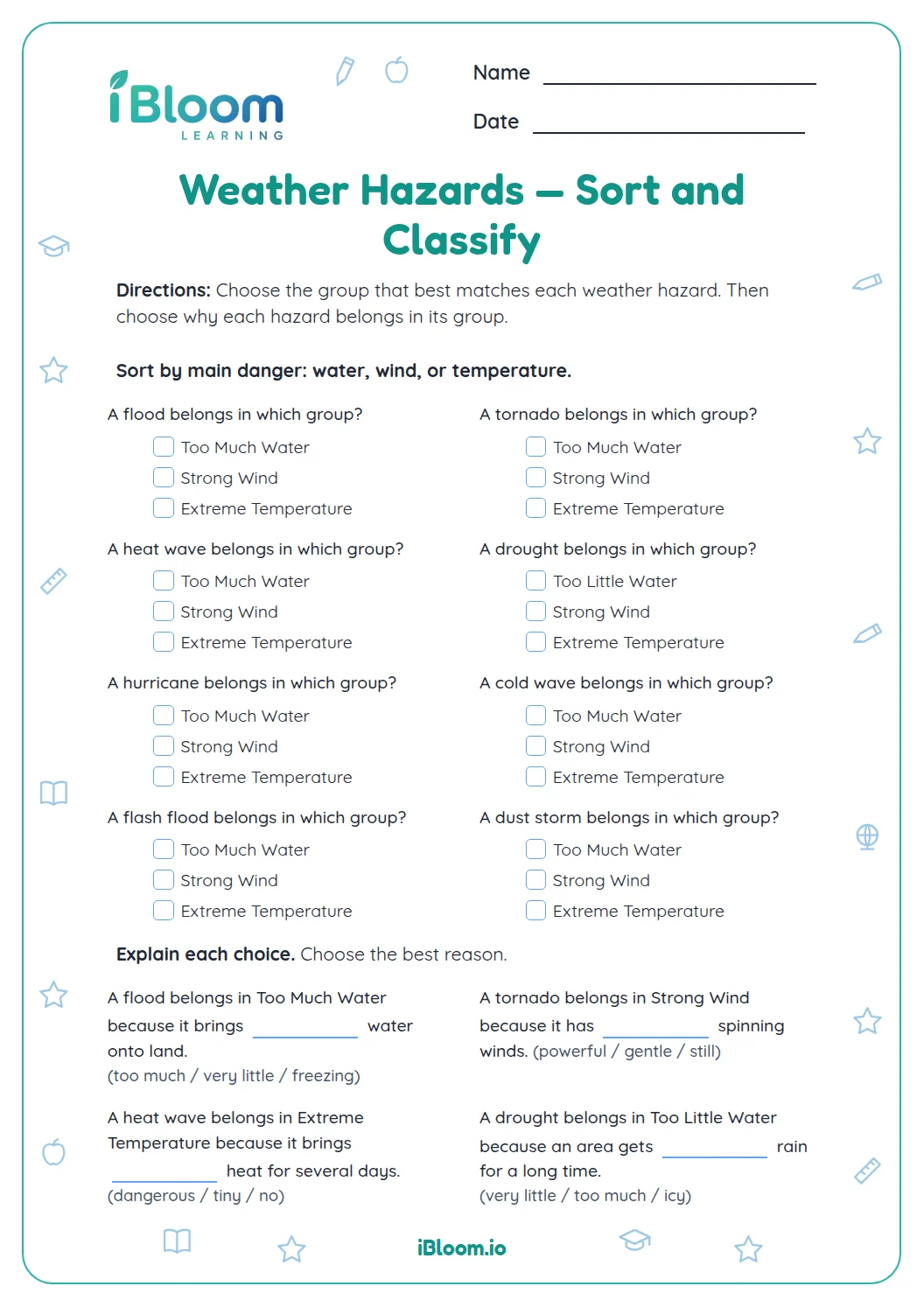
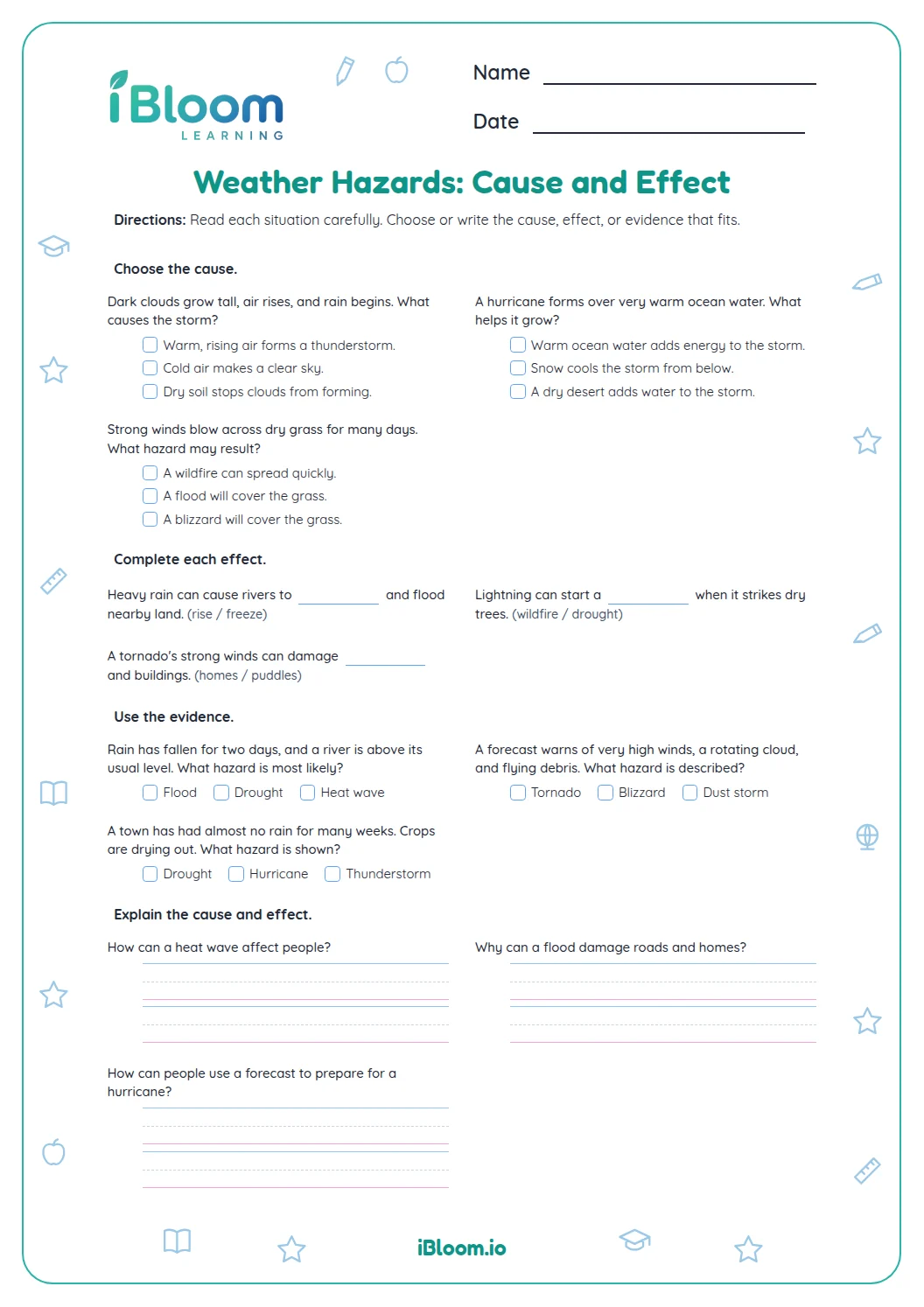
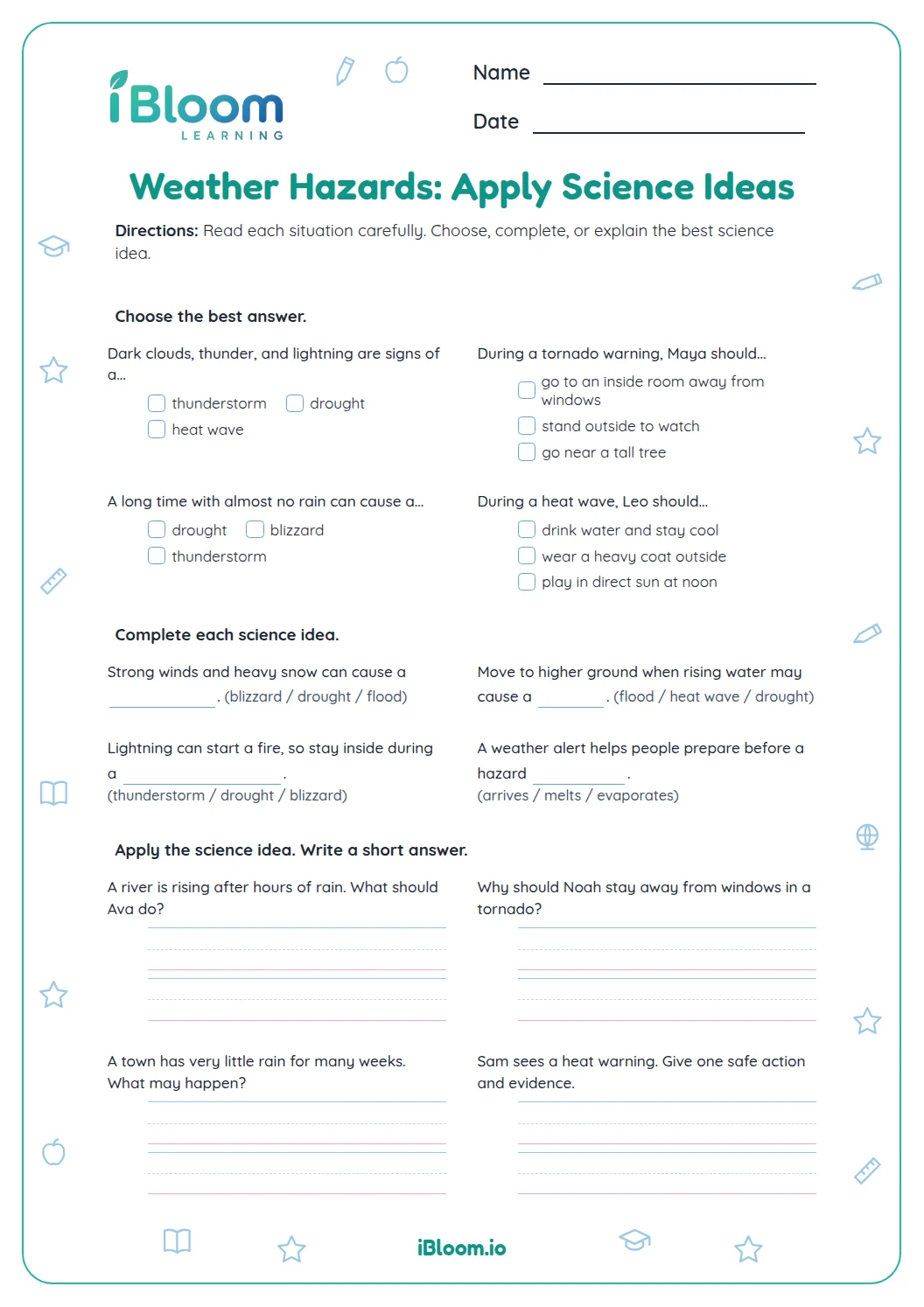
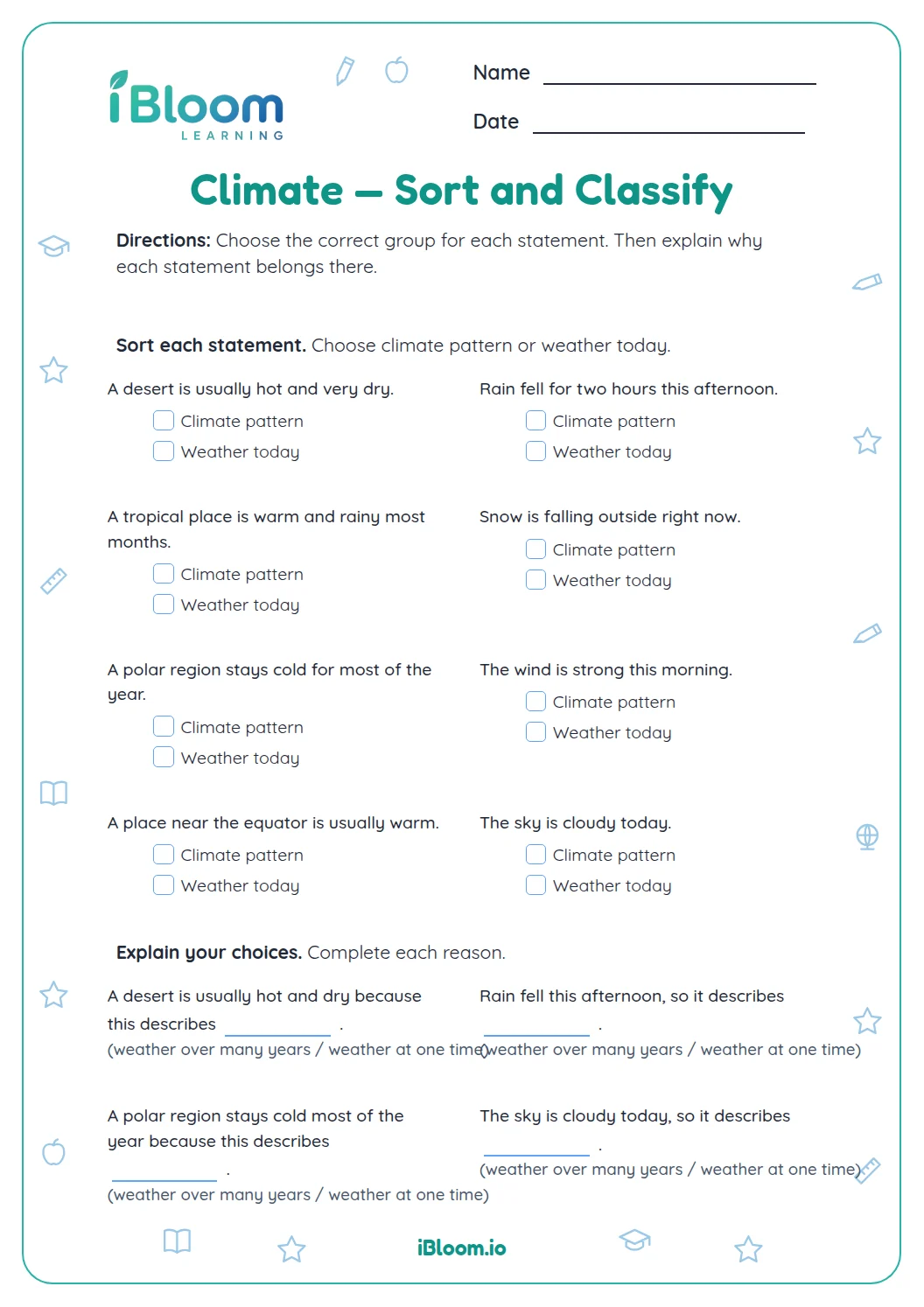
This Grade 3 science worksheet asks students to identify weather hazards, connect conditions such as heavy rain to possible impacts, and choose a design that reduces risk. It includes 14 questions, model chains, safety decisions, and a separate answer key. The design question practices NGSS 3-ESS3-1 by asking students to compare options and explain which better reduces harm.
Aligned to 3-ESS3-1
How do weather clues point to hazards?
Look for the condition named in the clue. Hours of heavy rain can lead to flooding; a long time with very little rain can lead to drought. The model chain asks students to connect one condition to a hazard.
- 1Model: heavy rain for hours → flood
- 2Possible hazard: flood
- 3The clue connects prolonged rain with rising water.
How can a design reduce harm?
Compare how each design would work during a hazard. A raised walkway can keep people above floodwater; choose it when asked which option better reduces risk.
How to use this worksheet
- 1Read the weather clue and name the condition.
- 2Match the condition with the hazard it can cause.
- 3Choose a safety action that fits the hazard.
- 4Compare the design options in the final question.
- 5Explain how the better design reduces risk to people.
Common mistakes and quick fixes
The mistake
Calling every strong storm a tornado.
The fix
Use the specific clue: rotating funnel winds point to a tornado.
The mistake
Confusing drought with flooding.
The fix
Drought follows a long period with little rain; flooding involves too much water.
The mistake
Naming a design without explaining its benefit.
The fix
Describe how the design changes what people face during the hazard.
Curriculum alignment
This worksheet practices 3-ESS3-1.
Apply weather hazards in the questions on this sheet.
On this sheet: The questions directly practice weather hazards.
Show the official wordingHide the official wording
Make a claim about the merit of a design solution that reduces the impacts of a weather-related hazard.
What to practice next
Make more practice
Further reading
Questions parents and teachers ask
How many questions are on the worksheet?
There are 14 questions about weather hazards, conditions, and safety. Students identify hazards, choose actions, complete a hazard model, and explain a design choice. The answer key is separate, with a sample explanation for the written design question.
What does the model table ask students to do?
The model chain connects a weather condition with a possible hazard. Students use the clue “heavy rain for hours” to identify flooding as a possible hazard. It provides a compact way to show how a condition and its risk are related.
What is the written design question?
Students compare a raised walkway with a path at ground level in a flood-prone area. They choose the design that keeps people above floodwater. The item links a feature of a design with its ability to reduce harm.
What should a student include in the design explanation?
Look for the design feature that changes what people face during a flood. A raised walkway is above floodwater, so people can cross more safely. The answer key identifies this choice and its safety reason. Students can name the hazard and connect its feature to a safer route.
Does the worksheet include an answer key?
Yes. A separate answer key follows the worksheet and gives the expected hazard labels and safety responses. For the design question, it includes a sample explanation. Students can finish independently and then review any choice that does not match the clue.