



About this worksheet
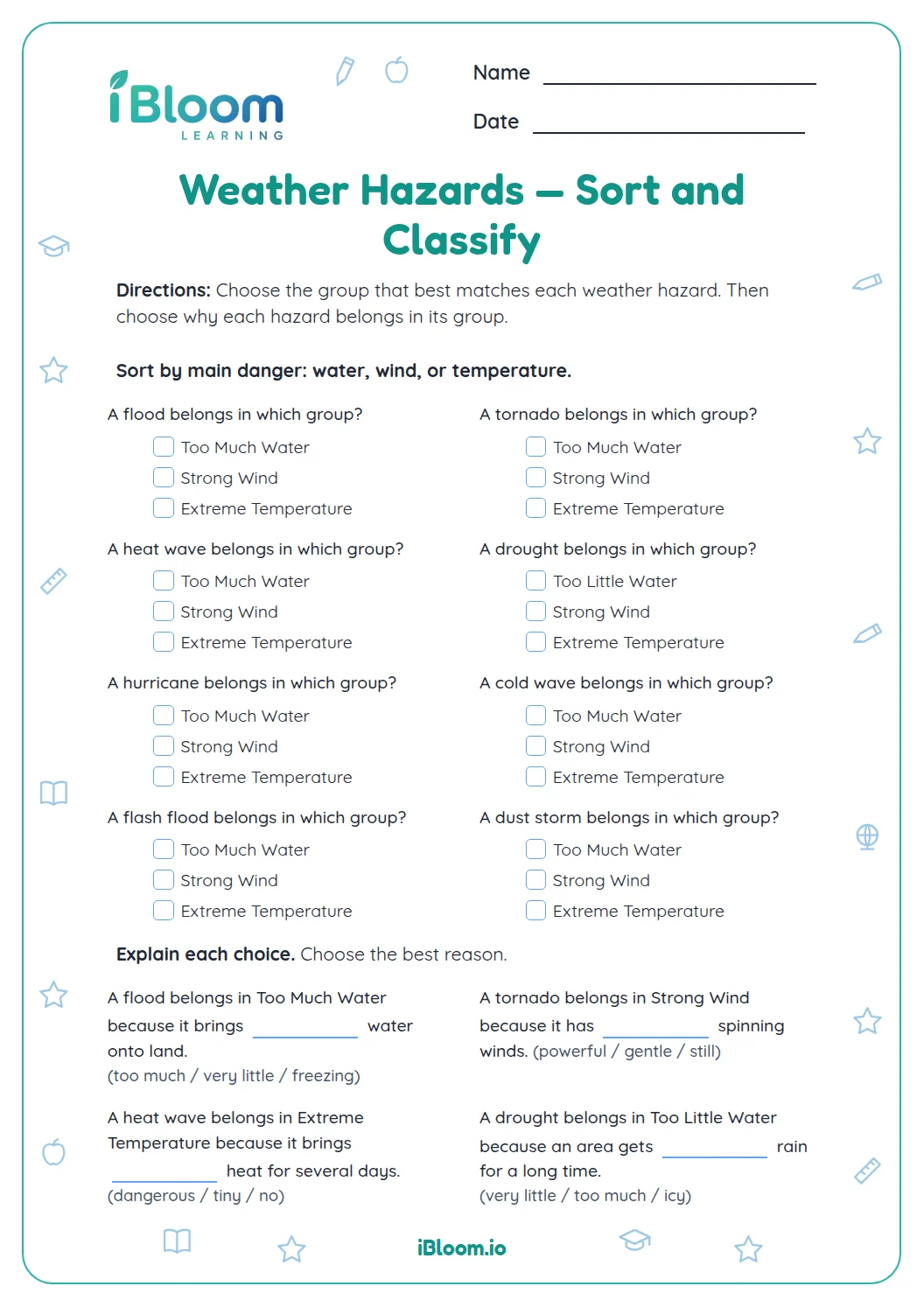
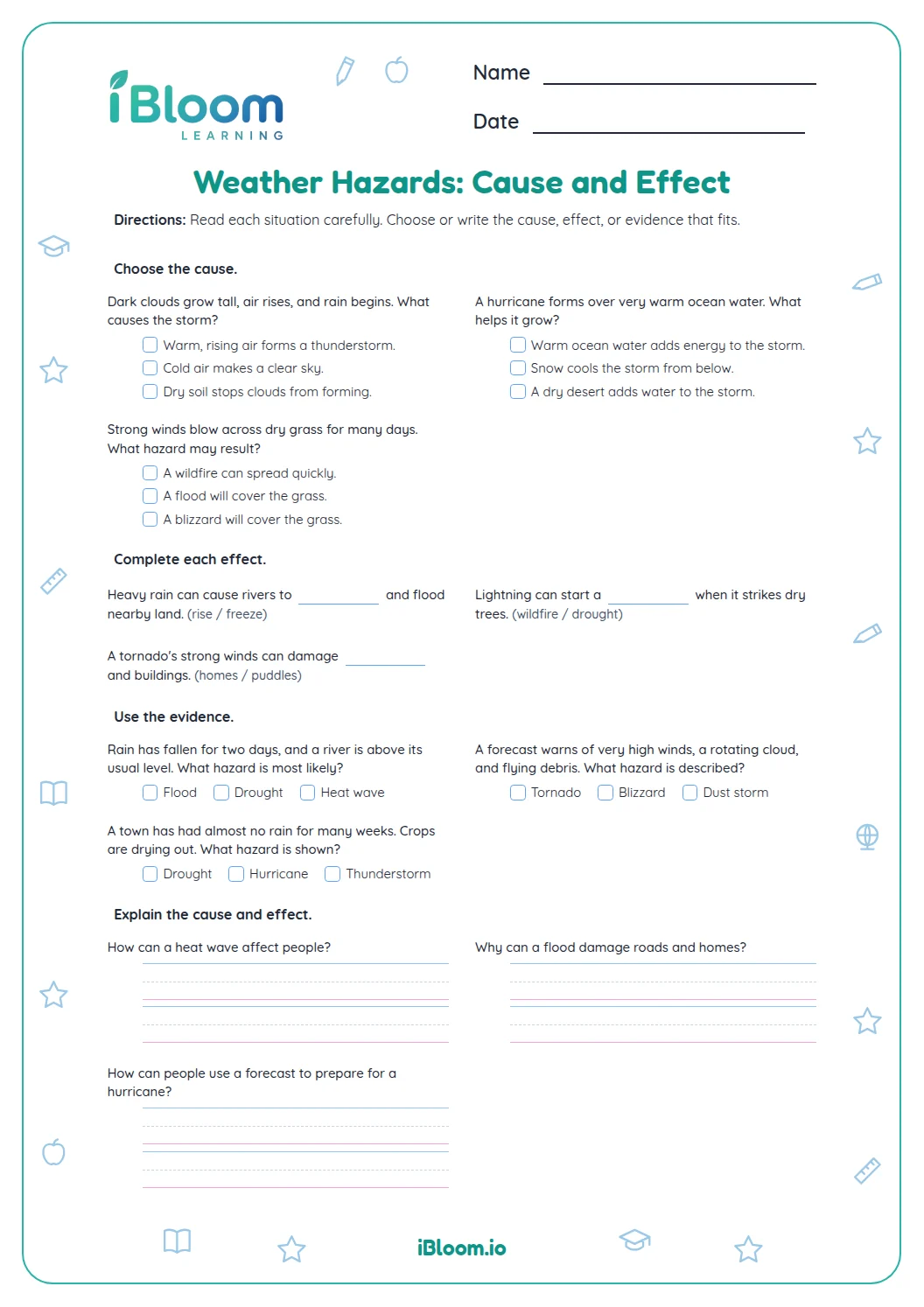
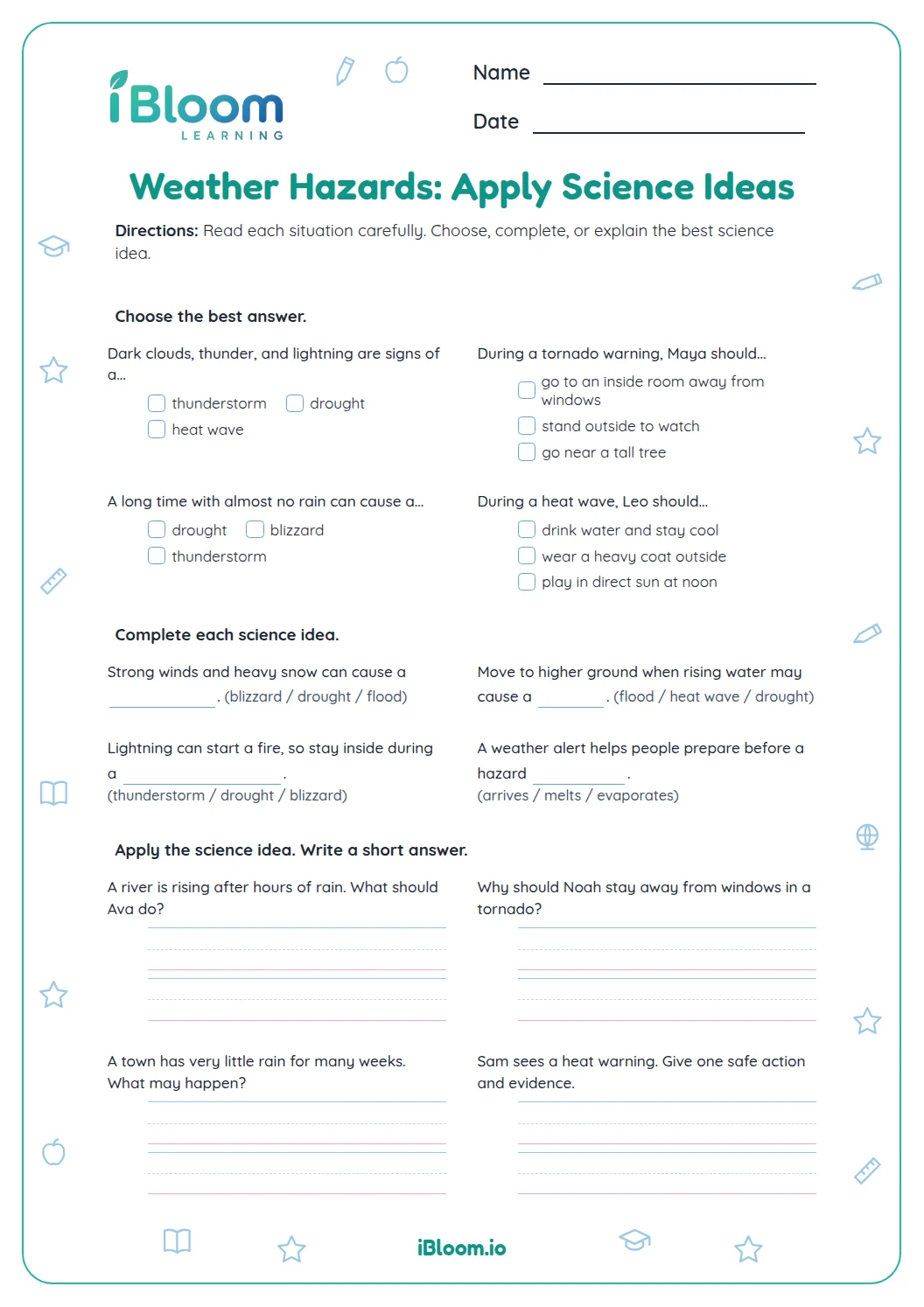
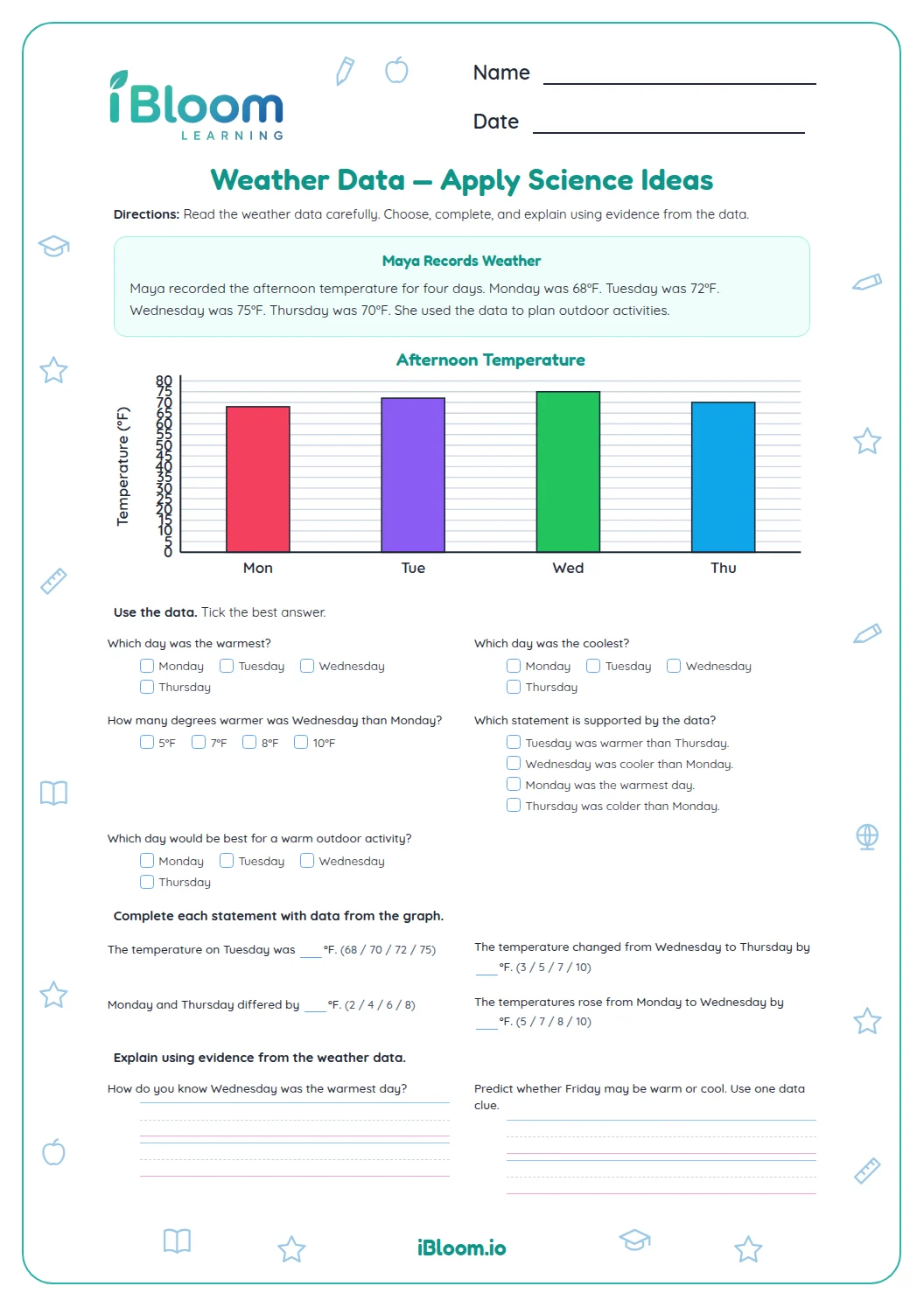
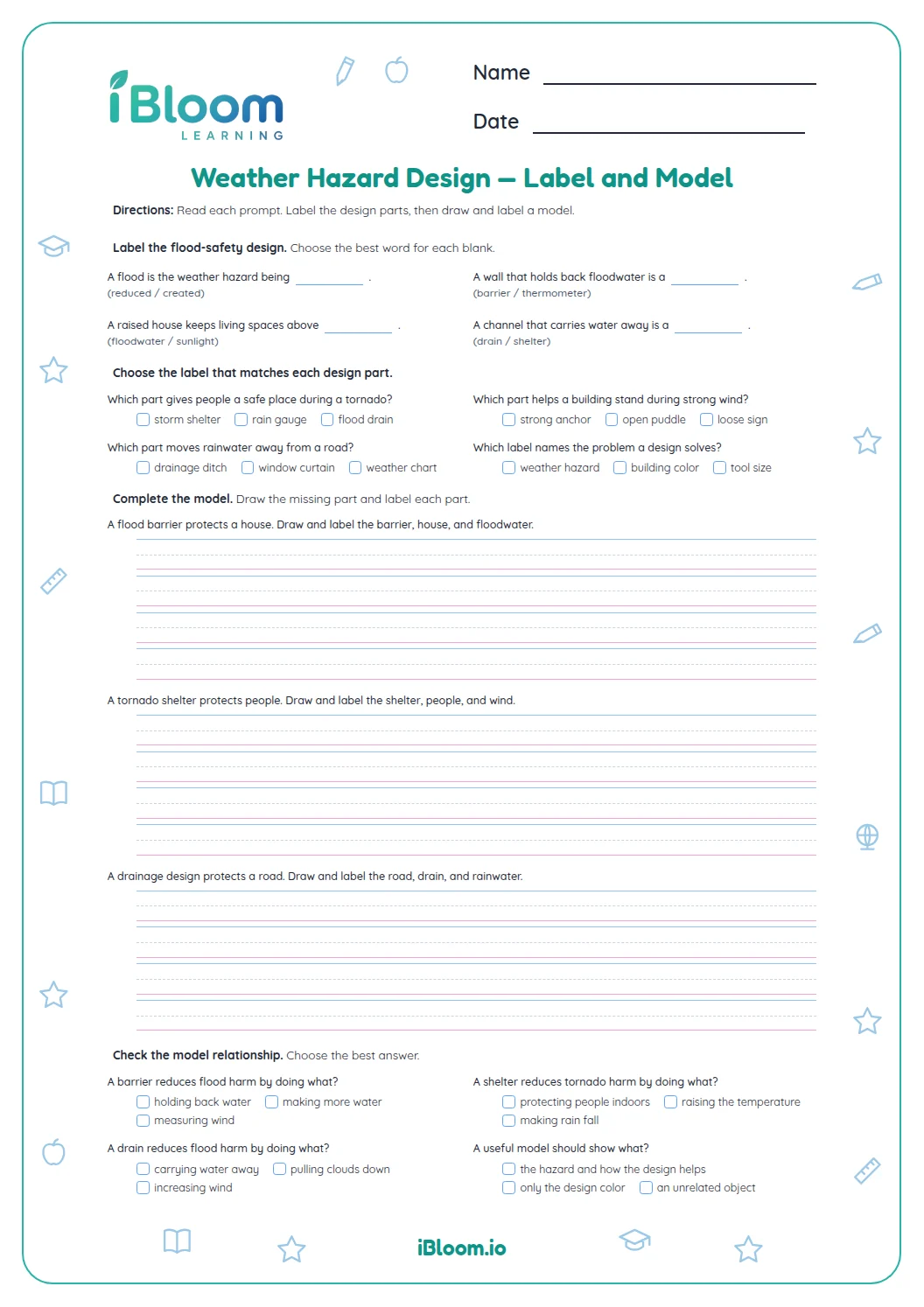
This Grade 3 science worksheet asks students to recognize weather hazards and reason about ways people can reduce their effects. Students identify hazards, compare protective designs using simple test results, and explain safety choices. The questions practice NGSS 3-ESS3-1 by asking students to make a claim about a design solution that reduces the impacts of a weather-related hazard. A separate answer key includes sample responses.
Aligned to 3-ESS3-1
What makes an event a weather hazard?
A weather hazard is a weather-related event that can harm people, buildings, or land. Strong storms, floods, lightning, and damaging winds can create risks. People cannot prevent weather from occurring, but they can plan and design ways to reduce some impacts.
How do design choices reduce harm?
A flood barrier may hold back water, while a wind-resistant roof is designed to stay attached in strong winds. Match each feature to the hazard it addresses. Then compare test results: a barrier that holds back more water or a roof that stays attached in more gusts has stronger evidence for reducing harm.
- 1A wall built to hold back floodwater is a barrier.
- 2The word names a structure designed to block or redirect water.
How can evidence support a solution?
A design claim is stronger when it refers to how the design performs. If Barrier A holds back 8 of 10 buckets and Barrier B holds back 5, the result supports choosing A to reduce floodwater. A roof staying attached in a wind test is useful evidence; its color is not.
What does the worksheet ask students to do?
Students identify hazards, choose protective designs, complete science vocabulary, and explain how a solution could reduce harm. The key offers sample explanations for open responses.
How to use this worksheet
- 1Name the weather hazard in the situation.
- 2Look for a design feature that addresses that hazard.
- 3Ask what harm the design could reduce.
- 4Use test results or details as evidence.
- 5Explain how the evidence supports the choice.
Common mistakes and quick fixes
The mistake
Claiming a design will stop a storm.
The fix
Explain how it may reduce harm from the storm instead.
The mistake
Choosing a solution without connecting it to the hazard.
The fix
Match the feature to the risk: barriers for floodwater, sturdy roofs for wind.
The mistake
Using appearance as evidence.
The fix
Use a result that shows how the solution works.
Next Generation Science Standards alignment
This review practices comparing design solutions that reduce the impacts of weather hazards.
Make a claim about a design solution that reduces the impacts of a weather-related hazard.
On this sheet: Students identify hazards, compare protective designs, and explain how evidence supports a solution.
Show the official wordingHide the official wording
Make a claim about the merit of a design solution that reduces the impacts of a weather-related hazard.
What to practice next
Make more practice
Further reading
Questions parents and teachers ask
What is a weather hazard?
A weather hazard is an event such as flooding, damaging wind, or lightning that can harm people, buildings, or land. The worksheet asks students to identify hazards and choose practical ways to reduce harm. Examples include seeking shelter during lightning and comparing designs that protect buildings. The answer key supports review.
How can a design reduce the impact of flooding?
A barrier may hold back or redirect floodwater and help protect nearby places. Students should name the design and explain the connection between its feature and the harm it could reduce, rather than claiming the design can stop rain or prevent all floods.
What does the worksheet ask students to explain?
Students compare protective choices and connect evidence to a claim. If one barrier holds back 8 of 10 buckets and another holds back 5, the first result better supports that barrier for reducing floodwater. Test results make the comparison concrete.
Which science standard does this review practice?
The questions align with NGSS 3-ESS3-1. Students make a claim about the value of a design solution that reduces the impacts of a weather-related hazard and explain how a feature or test result supports the choice. This gives students practice using evidence in science.
What evidence helps compare the flood barriers?
The test reports how many buckets of water each barrier holds back. Barrier A holds back 8 of 10, while Barrier B holds back 5 of 10. That result supports Barrier A as the stronger choice for reducing floodwater in this test.