



About this worksheet
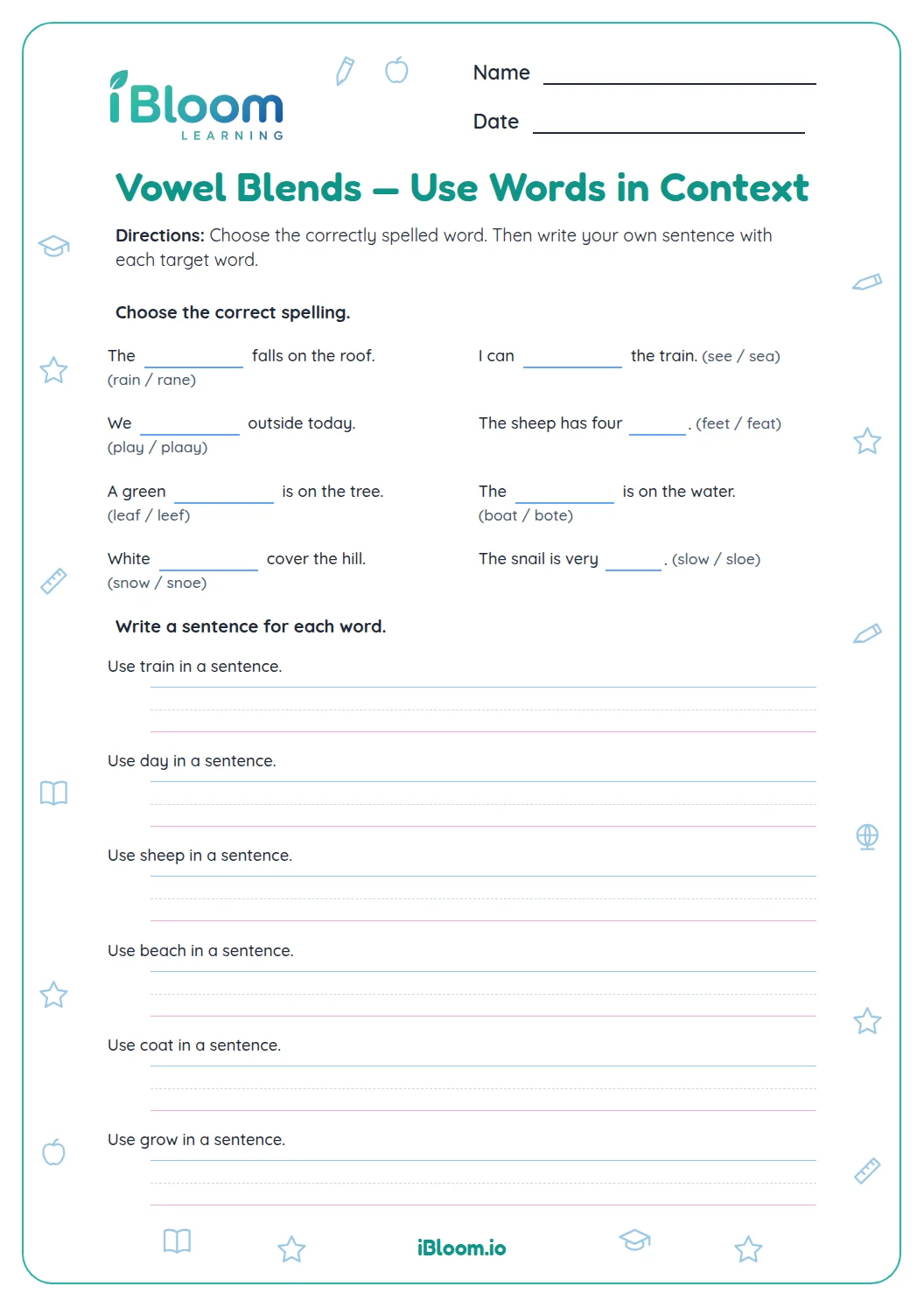
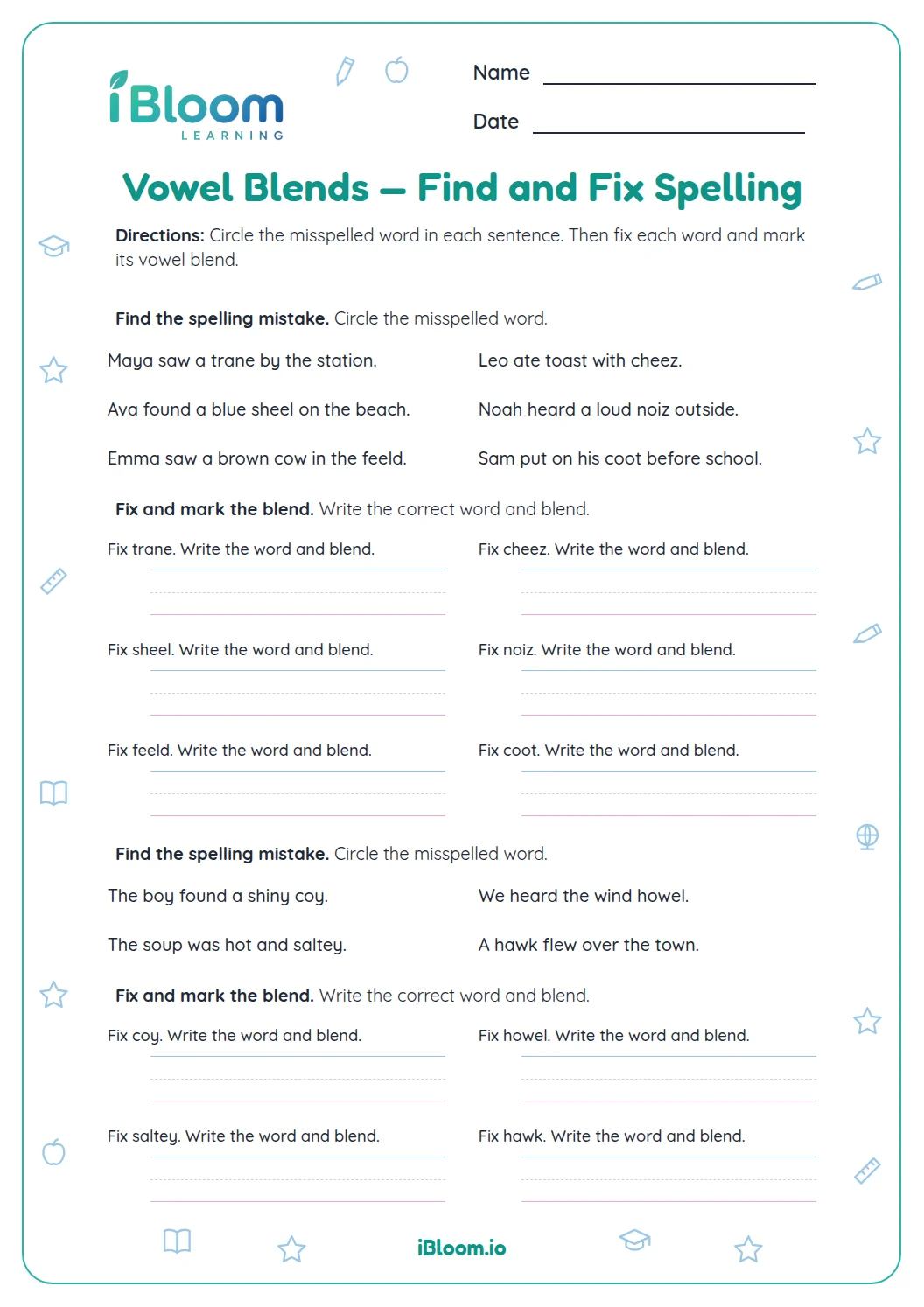
This Grade 1 spelling worksheet gives children 14 short opportunities to work with vowel teams. In Part A, they find words with /ai/, /ee/, /oa/, /ow/, or /oi/ sounds in short sentences. In Part B, they rewrite a misspelled word using the vowel-team spelling that makes the intended word. The page aligns with Common Core L.1.2.d, which addresses spelling patterns and conventions. A separate answer key lists each target word.
Aligned to L.1.2.d
What does the worksheet ask children to do?
Part A has eight short sentences. Children select the word containing the named vowel sound. Part B has six sentences with one misspelled word; children rewrite that word correctly.
The words stay familiar and concrete so children can focus on hearing the vowel and noticing the letters that spell it.
- 1“The snail is slow.” Which word has /ai/? → snail
- 2The vowel team ai spells the long a sound in snail.
How can a child spot a vowel team?
Say the whole word, then listen for its vowel sound. Look for two vowel letters working together, as in ai in train, ee in green, oa in boat, or oi in coin.
Some vowel sounds have more than one spelling. The sentence helps narrow the choice; sound and meaning work together.
How should children fix a misspelled word?
Read the sentence for meaning, say the target word, and compare the vowel letters with the sound. Then write the entire word correctly so the spelling can be checked at a glance.
After correcting an item, reread the sentence with the fixed word.
How to use this worksheet
- 1Read the Part A direction and name the sound in each item.
- 2Say the whole sentence before choosing a word.
- 3For Part B, read for meaning and locate the misspelled word.
- 4Write the whole corrected word, then reread the sentence.
- 5Use the answer key to review vowel teams that need another look.
Common mistakes and fixes
The mistake
Choosing a word that contains the target letters but has a different sound.
The fix
Say the word aloud and listen to the vowel sound, as in slow versus snail.
The mistake
Changing a consonant while fixing a vowel-team error.
The fix
Keep the rest of the word steady and replace only the vowel spelling that needs correction.
The mistake
Writing only the vowel team instead of the corrected word.
The fix
Copy the entire target word so the spelling can be checked.
Curriculum alignment
This page gives children focused practice with the named skill.
Spell common words with taught spelling patterns.
On this sheet: The page asks children to identify and correct words using common vowel-team spellings.
Show the official wordingHide the official wording
Use conventional spelling for words with common spelling patterns and for frequently occurring irregular words.
What to practice next
Further reading
Questions parents and teachers ask
What vowel teams does this page practice?
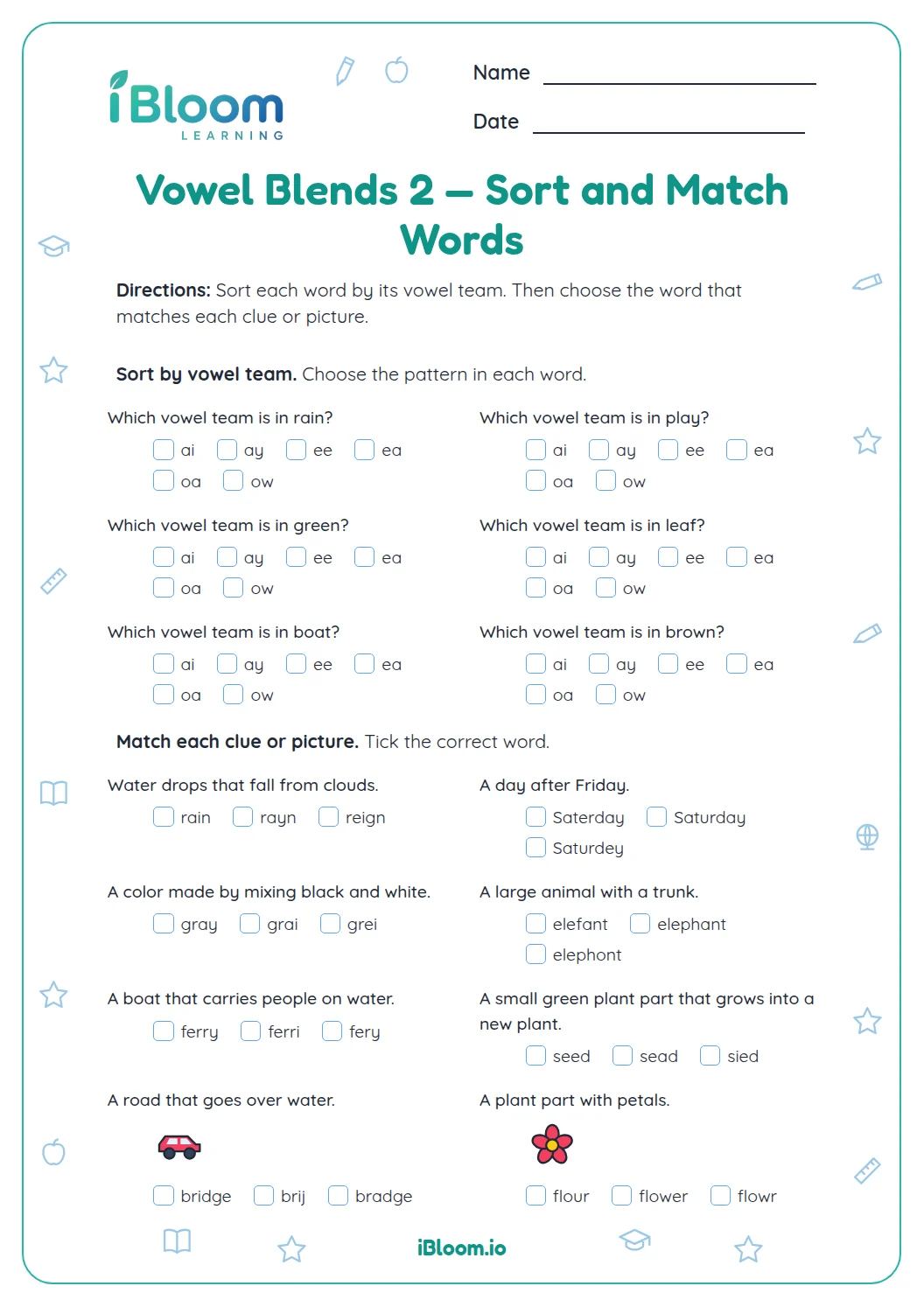
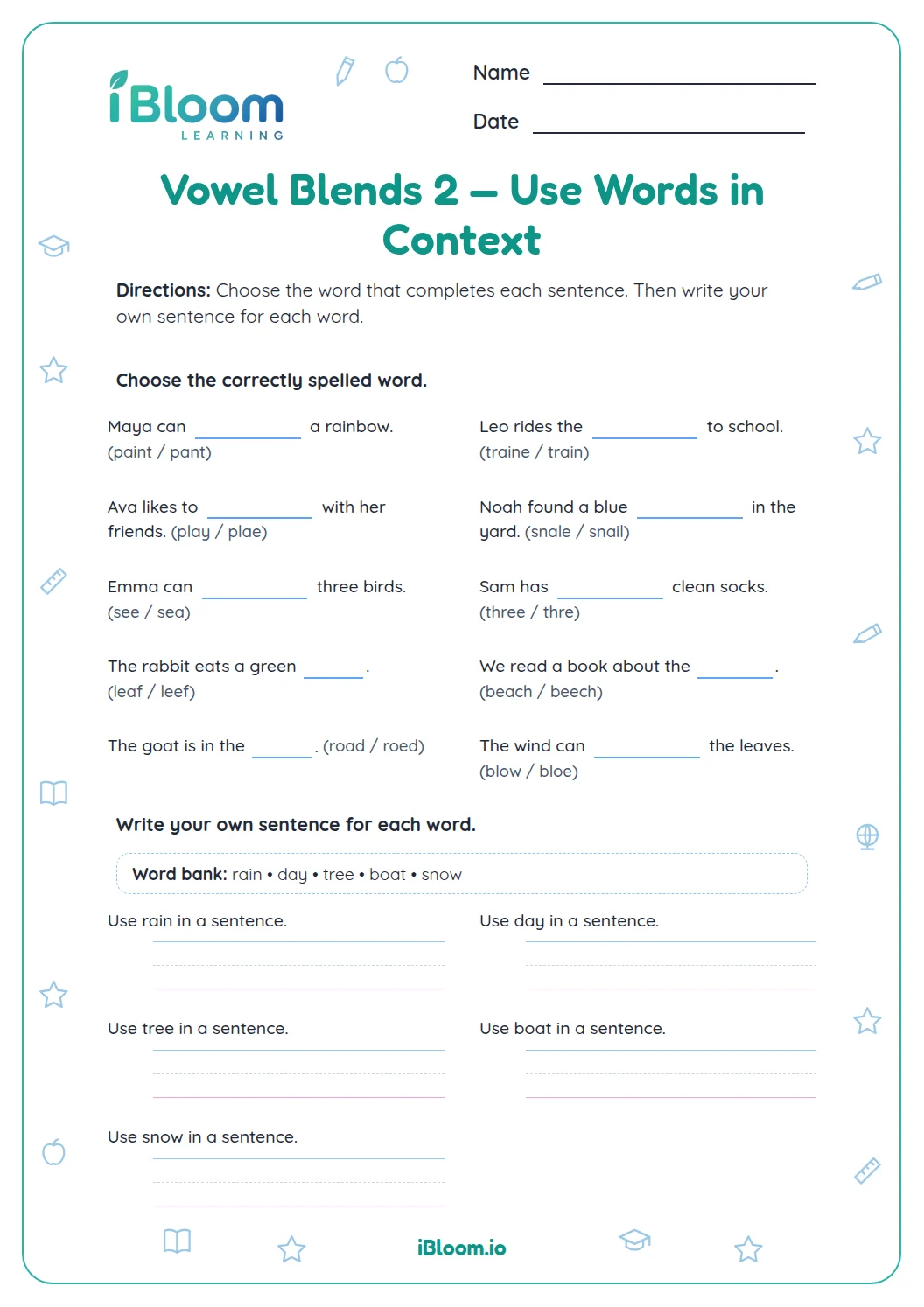
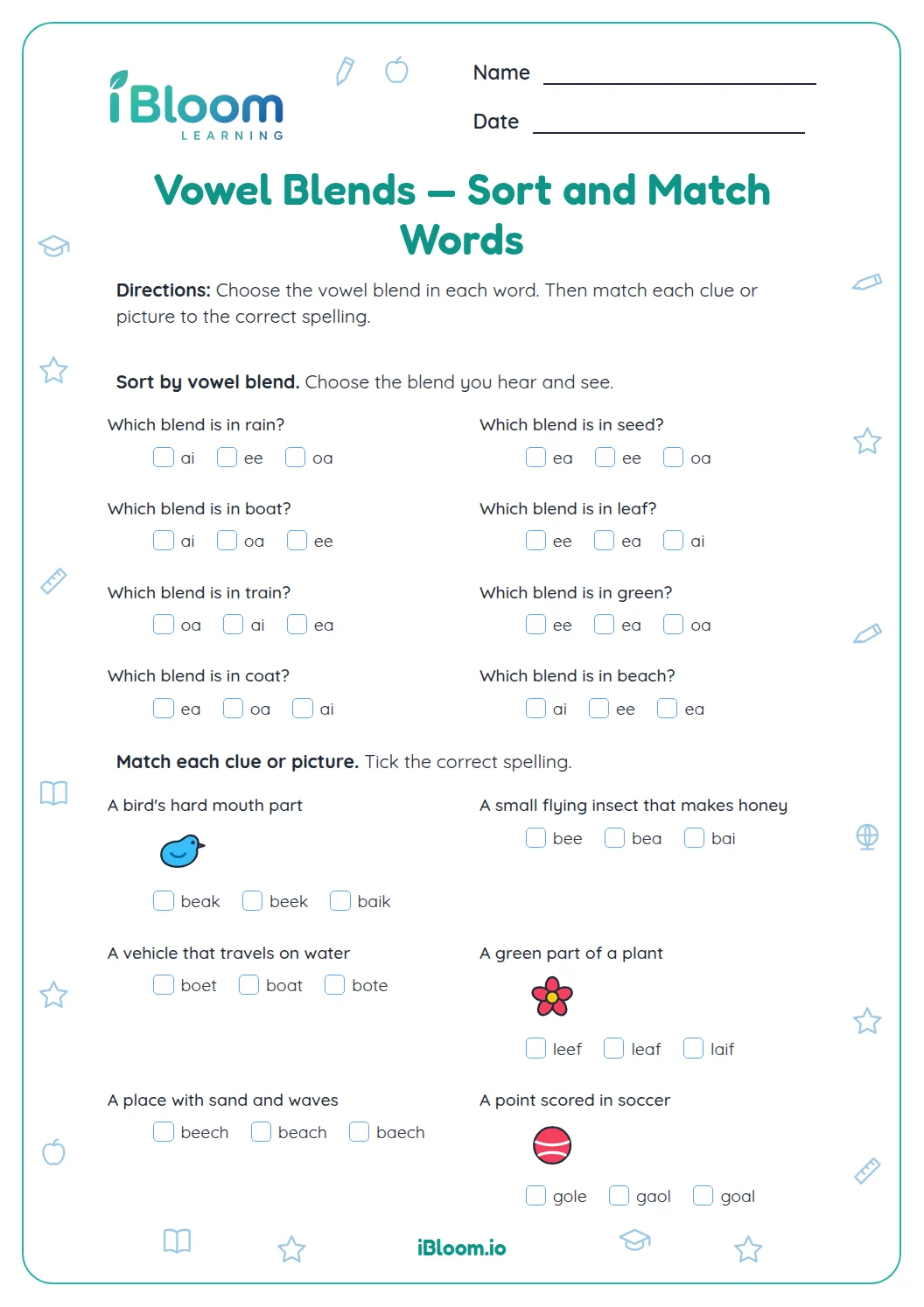
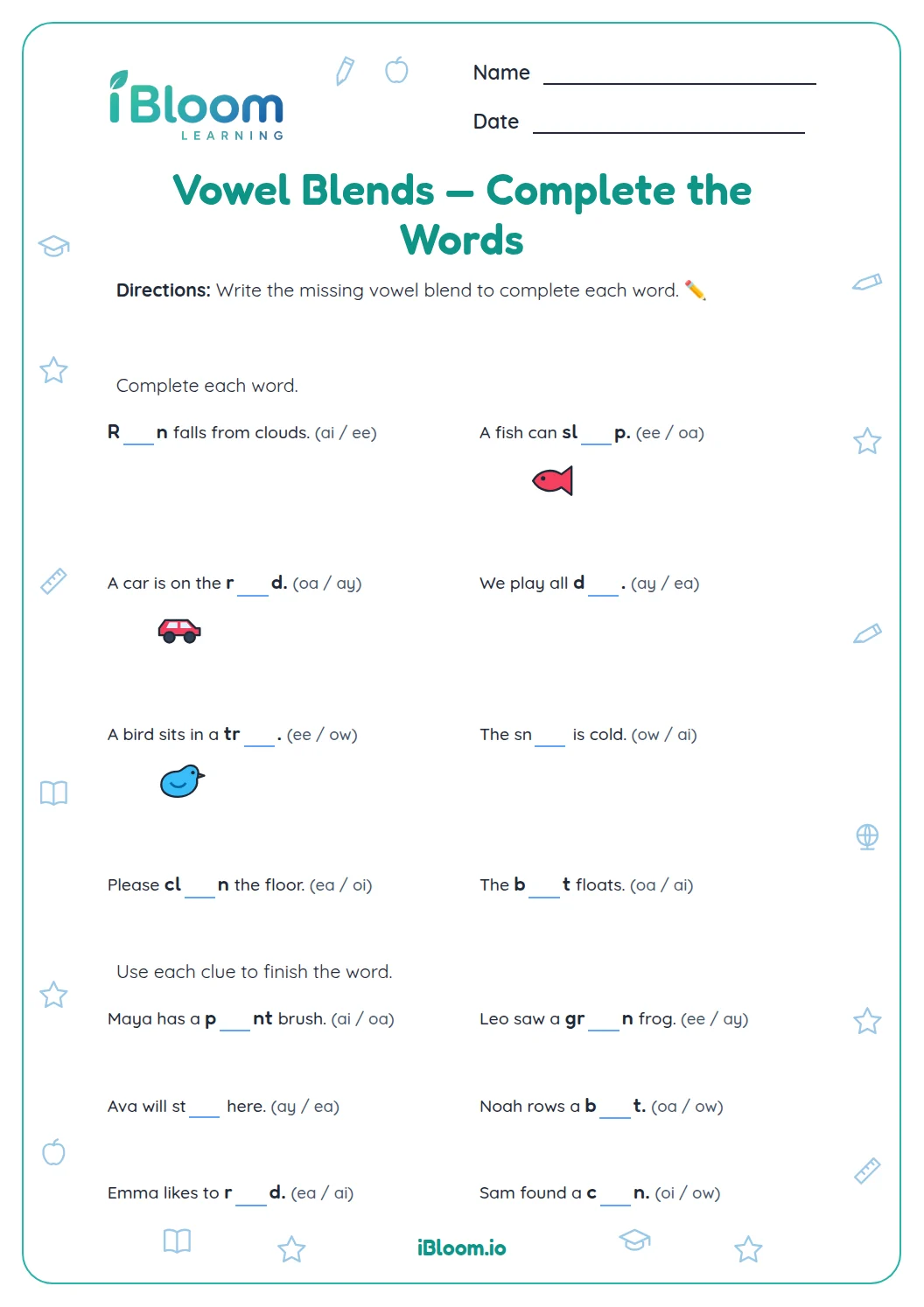
The page practices ai and ay, ee and ea, oa and ow, and oi and oy. Part A asks children to spot a target sound in a short sentence. Part B asks them to repair a misspelled word by choosing the vowel-team spelling that makes the intended word.
How many questions are on the worksheet?
There are 14 questions across two parts. Questions 1–8 ask children to find a word with a named vowel sound; questions 9–14 ask them to rewrite one misspelled word. The answer key gives the target word for every item. Read each fixed word aloud and point to its vowel team.
Why are there two parts?
The first part builds sound awareness by locating a word in a sentence. The second part applies that knowledge to a spelling error. Children can reread each sentence after making a correction and say the vowel team they used.
Should children say the words aloud?
Yes. Saying each sentence and stretching the target word can help a child hear the vowel sound before looking at its letters. For example, in “The snail is slow,” the long a sound is in snail, while slow has a different vowel sound.
What should count as a correct fix?
A correct response is the intended word spelled with its conventional vowel team, such as snail, green, boat, coin, plane, train, cloud, or choice. The answer key lists one spelling for each prompt because each sentence supplies enough meaning to identify its word.
What can we practice after this sheet?
The related vowel-blends and vowel-sound pages offer a useful next step. Children can reread each corrected sentence aloud, underline its vowel team, and keep a short list of words that share the same spelling pattern for later reading and writing practice.