




About this worksheet
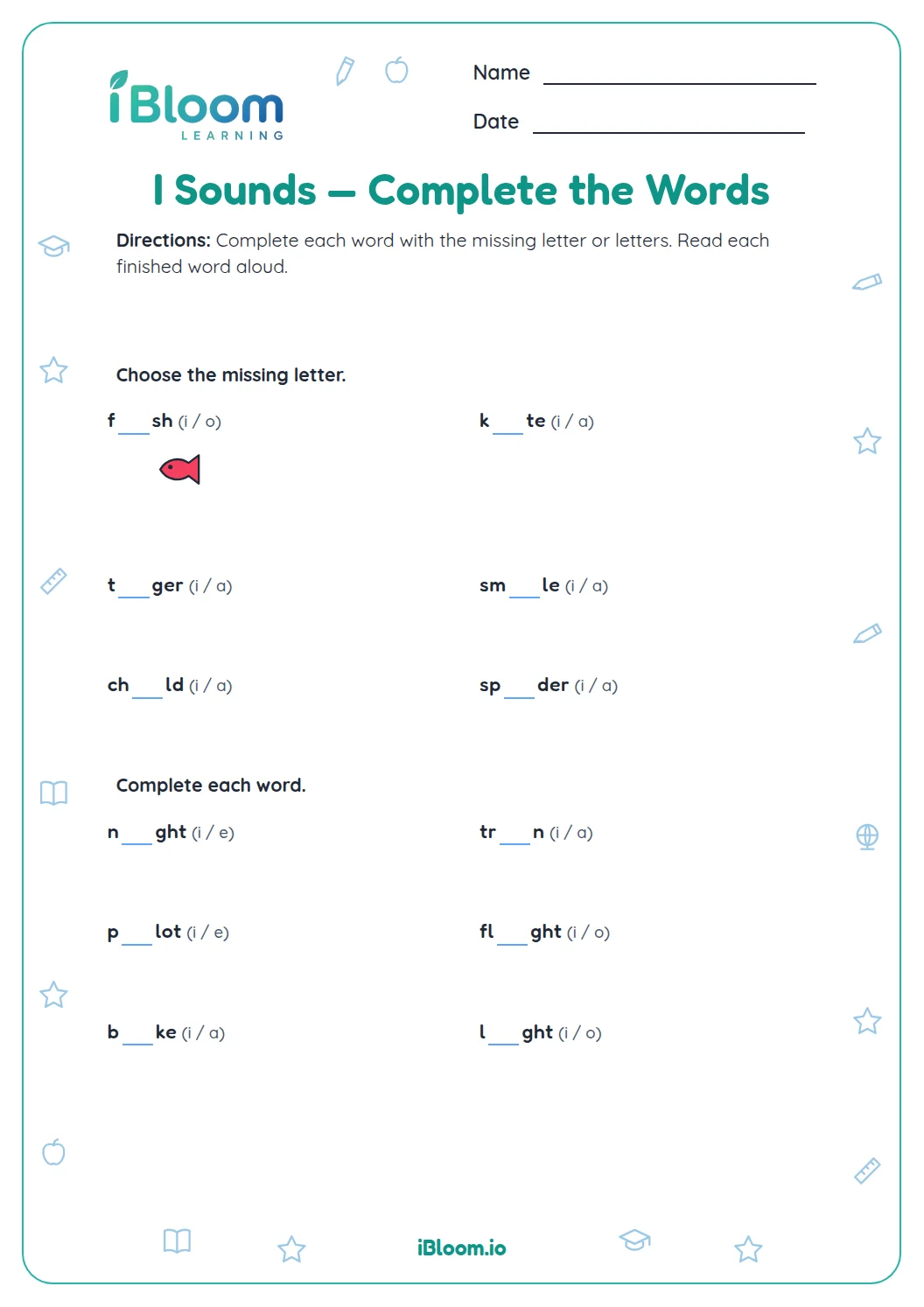
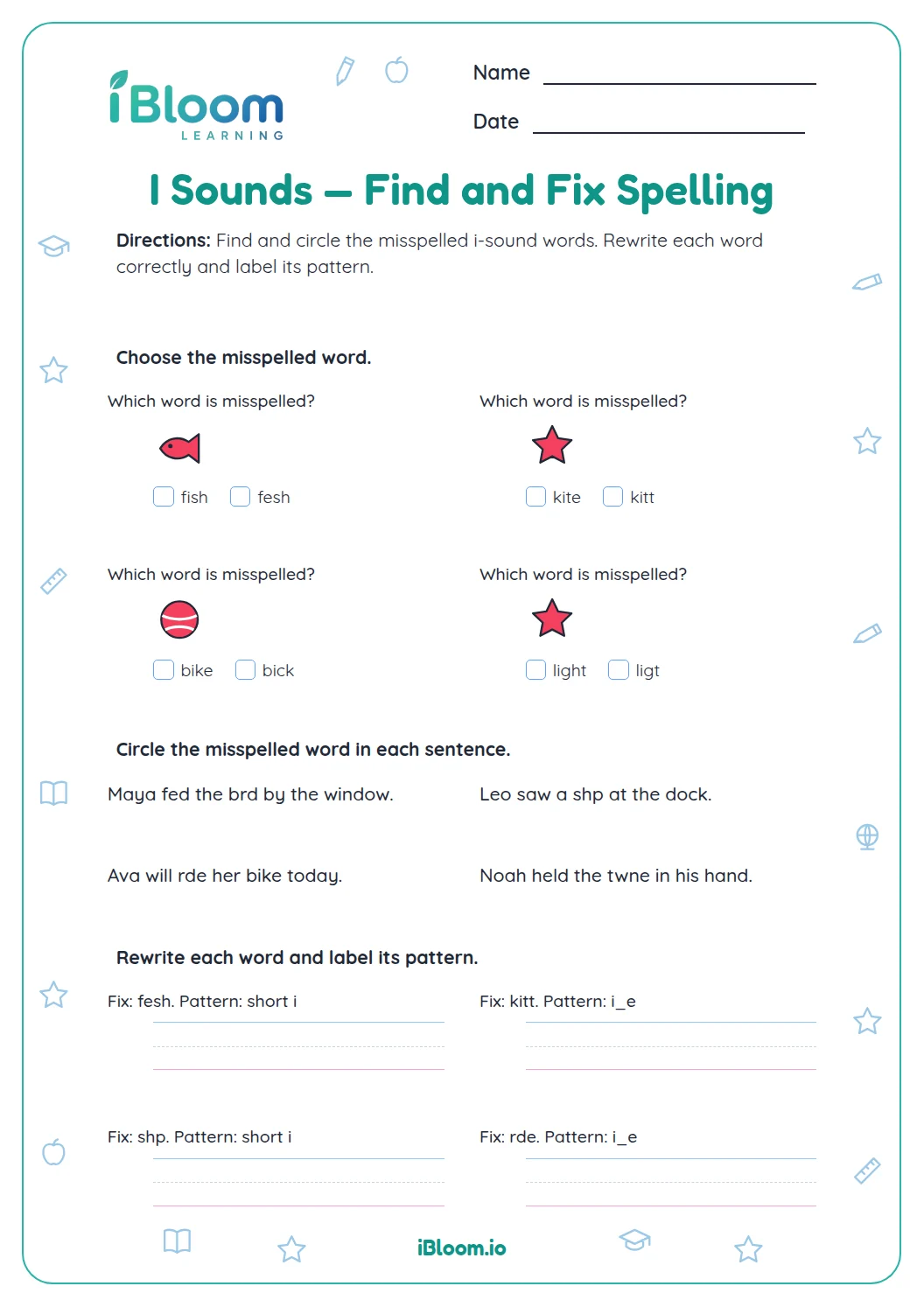
This Grade 1 worksheet gives children 16 ways to notice and write familiar words ending in y. They correct misspellings, choose a correctly spelled word from a clue, and complete short sentences. A separate answer key lists each target spelling. The practice aligns with Common Core L.1.2.e.
Aligned to L.1.2.e
How can you correct a word that ends in y?
Look closely at the final sound and the letters that spell it. Some words, such as fly and try, have a long i sound spelled with y. Other words, such as happy and sunny, end with a y that sounds like the end of “me.”
Question 1 changes happi to happy: the word ends in y, and the last syllable sounds like “ee.”
- 1The dog is happi. → happy
- 2Read the word aloud, then check the last letter.
Why do different y words need different checks?
The letter y can be part of different spelling patterns. Compare fly and sunny: both end in y, but the sound before y differs. Looking at the whole word helps prevent replacing the ending with a spelling that does not fit.
The multiple-choice items also include familiar words such as July, by, and why, which children can check against words they know.
How do sentence clues help with spelling?
A sentence gives meaning clues that narrow down a word. In “I can ___ my kite high in the sky,” the action word is fly. After writing it, reread the sentence and check the spelling.
The answer key supports checking the word form; an adult can also ask the child to say the word slowly and name its final letter.
How to use this worksheet
- 1Read the misspelled word and say the intended word.
- 2Check the final sound and ending letters.
- 3Rewrite the complete correct spelling.
- 4For choices, read every option before selecting.
- 5Reread each completed sentence to check its meaning.
Common mistakes and quick fixes
The mistake
Changing every final y to “ie.”
The fix
Check the whole word: happy ends in y, while “puppy” also keeps y after the double p.
The mistake
Choosing a word because it sounds right but ignoring its letters.
The fix
Say the word, then look at each letter in the written choice.
The mistake
Forgetting to reread a completed sentence.
The fix
Read the sentence with your answer in place and confirm the meaning fits.
Common Core alignment
This page gives first graders focused practice noticing and spelling familiar words that end in y.
Use familiar sound and spelling patterns when writing words.
On this sheet: Students correct and spell familiar words ending in y, applying sound and spelling patterns.
Show the official wordingHide the official wording
Spell untaught words phonetically, drawing on phonemic awareness and spelling conventions.
What to practice next
Make more practice
Further reading
Questions parents and teachers ask
What should my child do in Part A?
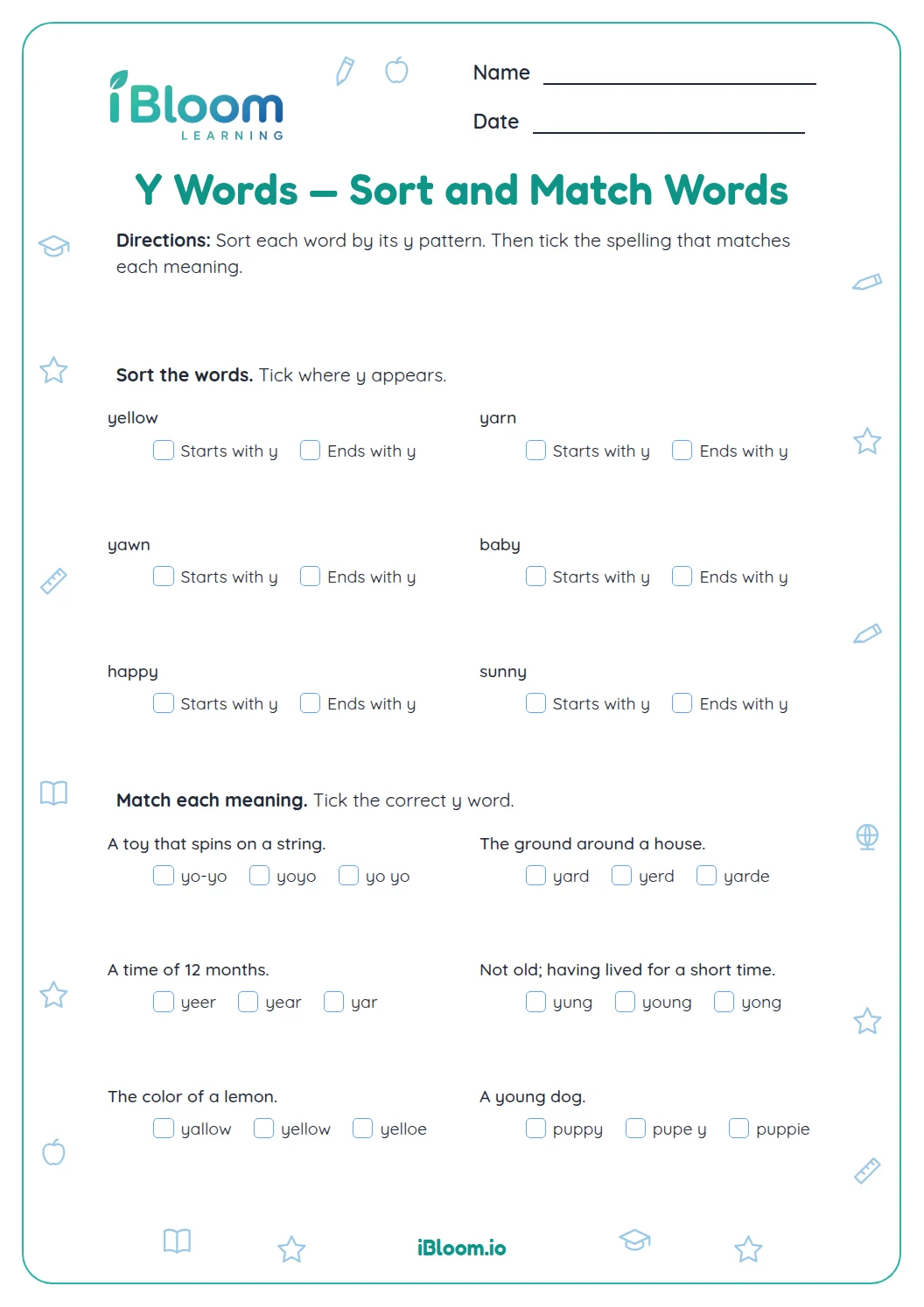
Part A shows a sentence with a misspelled word. The child writes that word correctly, checking the letters at the end. For example, “happi” becomes “happy.” Other words include baby, sunny, fly, try, puppy, shy, and cloudy. The prompts use short everyday sentences and words children can discuss.
Why does the worksheet include words with different y sounds?
The letter y spells different sounds at the ends of familiar words. In fly, it spells the long i sound; in happy, it spells the final “ee” sound. The questions include examples of both patterns, so children can check the whole word as they correct each spelling.
Is there an answer key?
Yes. The separate key gives the corrected word for each spelling fix, the right option for each multiple-choice question, and the word that completes each sentence. An adult can use it to review the spellings together with the child. Reread each answer to check its spelling in context.
How can I help a child check a spelling?
Have the child say the intended word slowly, look at the letters in order, and compare the ending with a familiar word. Then reread the sentence with the corrected word to make sure the spelling fits the meaning and the sentence still makes sense.
What does the sentence “I can ___ the kite” ask for?
It asks for “fly.” The sentence clue is an action that a person can do with a kite. After writing fly, the child can check that the word ends in y and that it names the action described by the sentence.