


About this worksheet
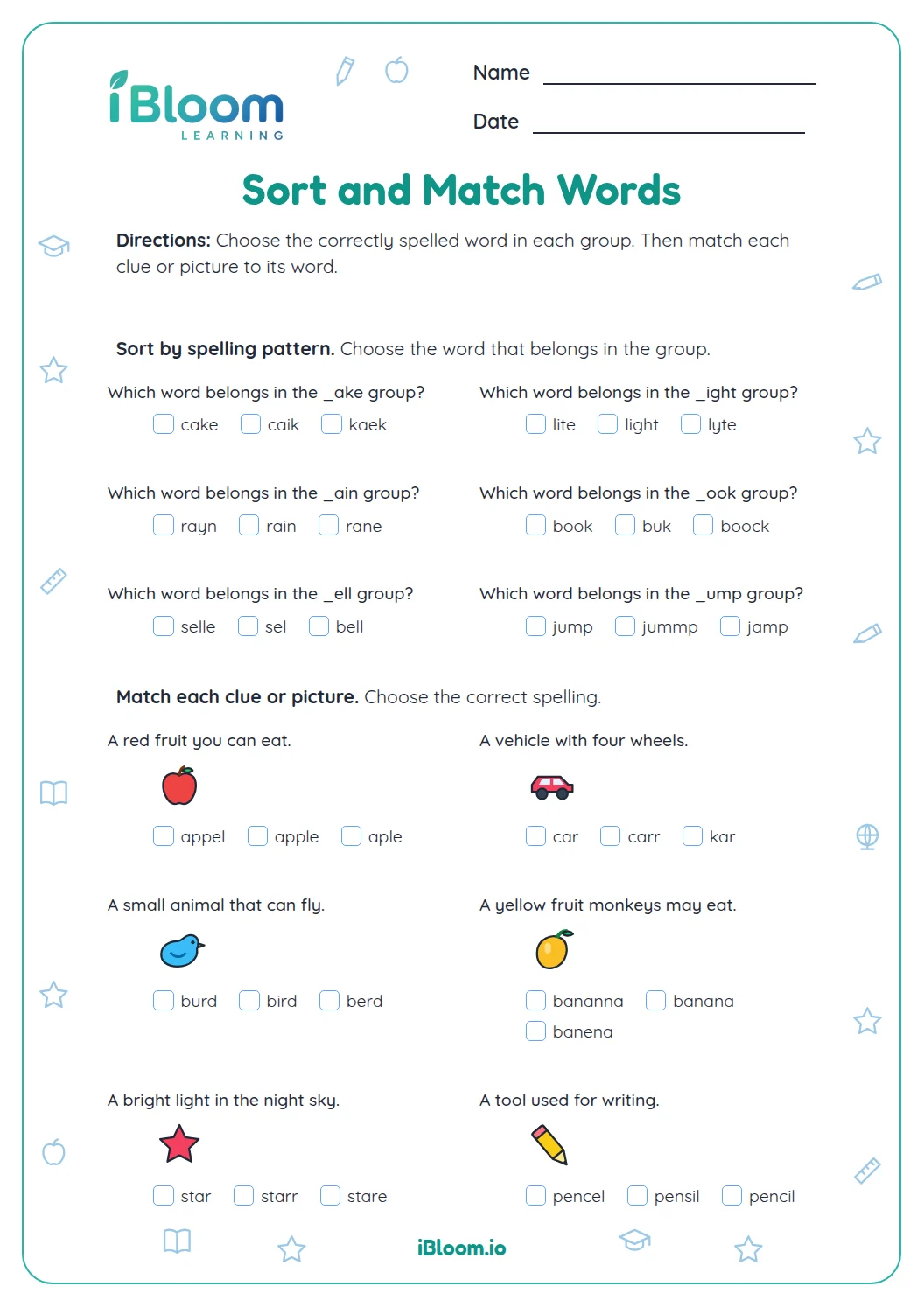
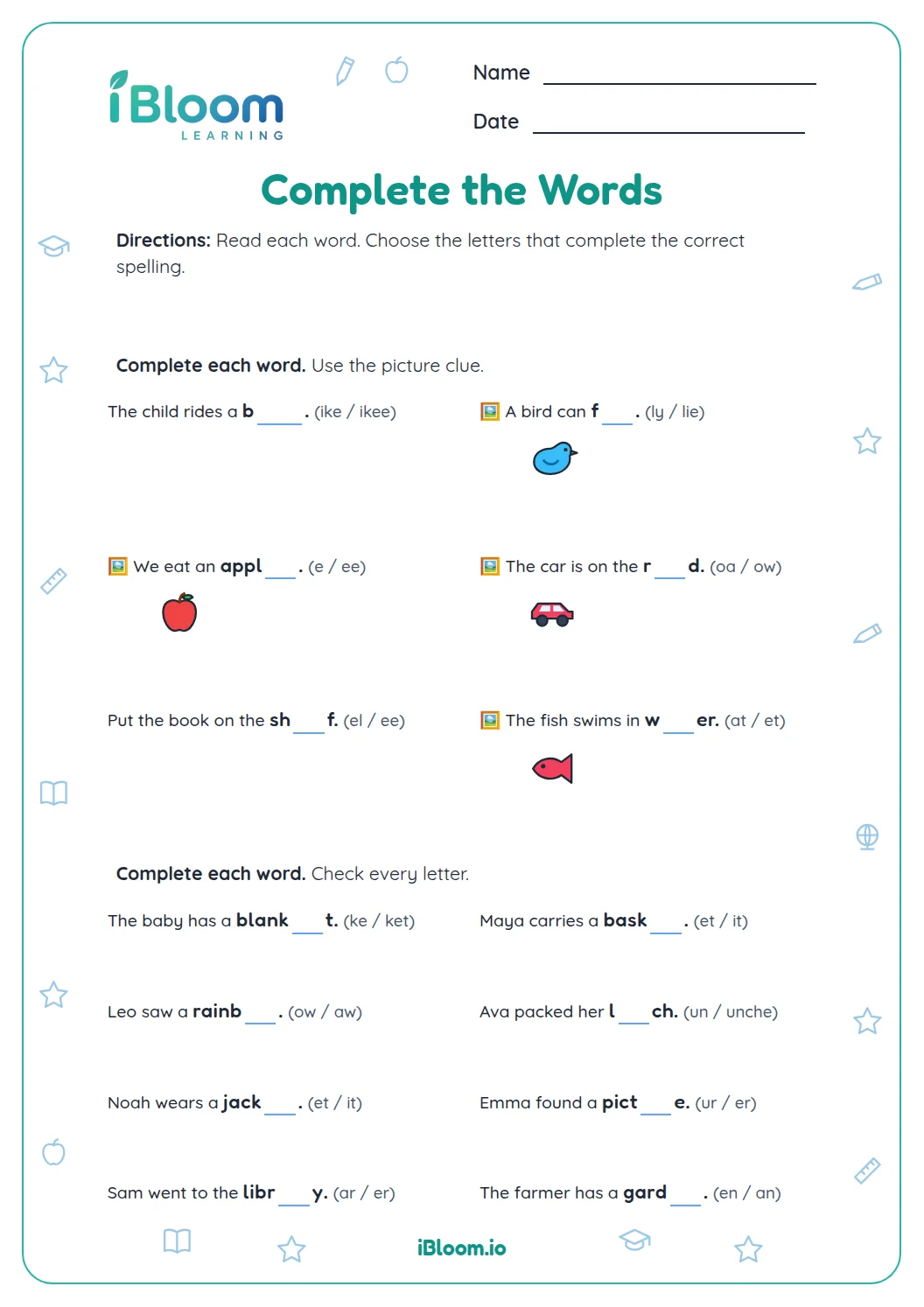
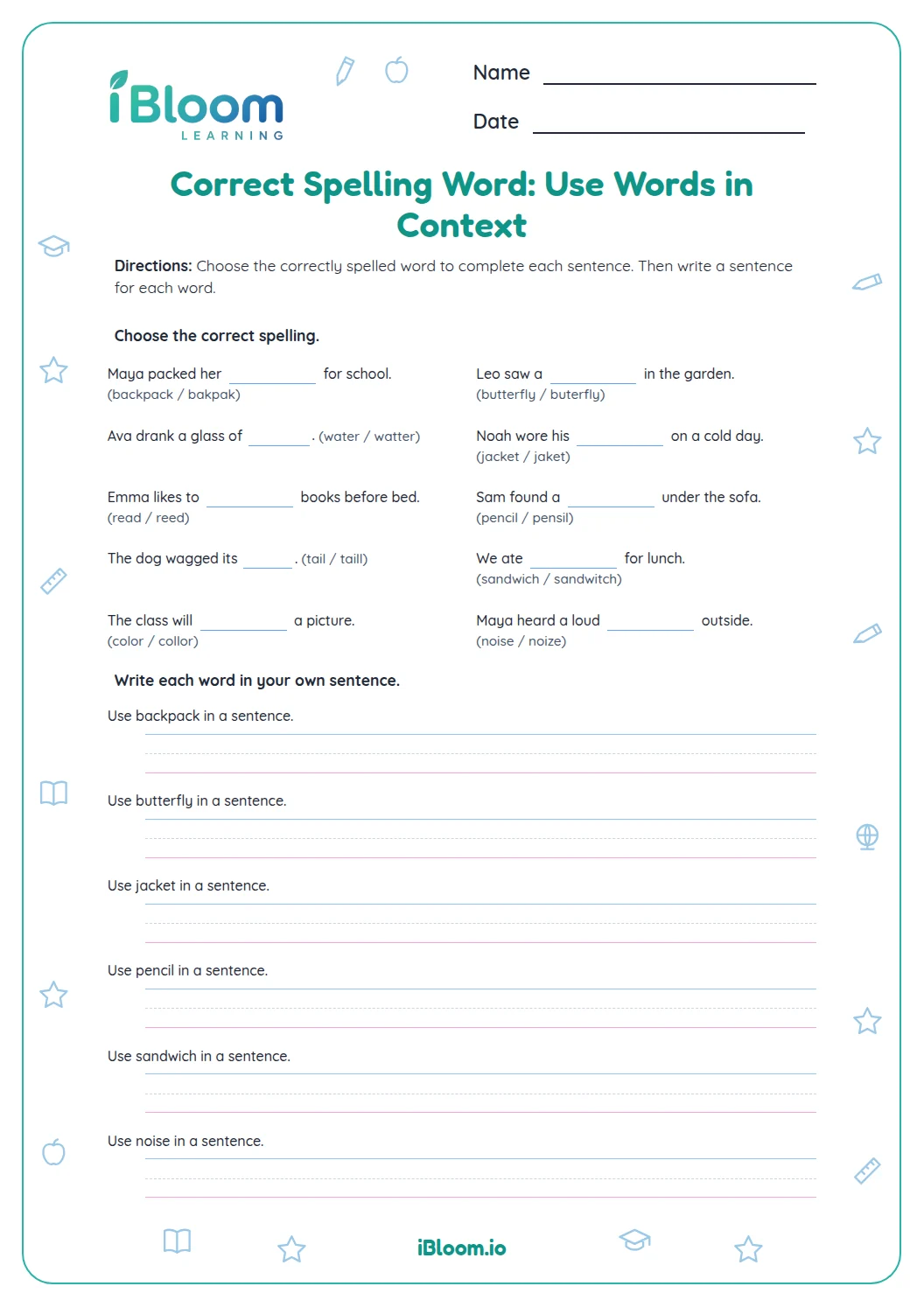
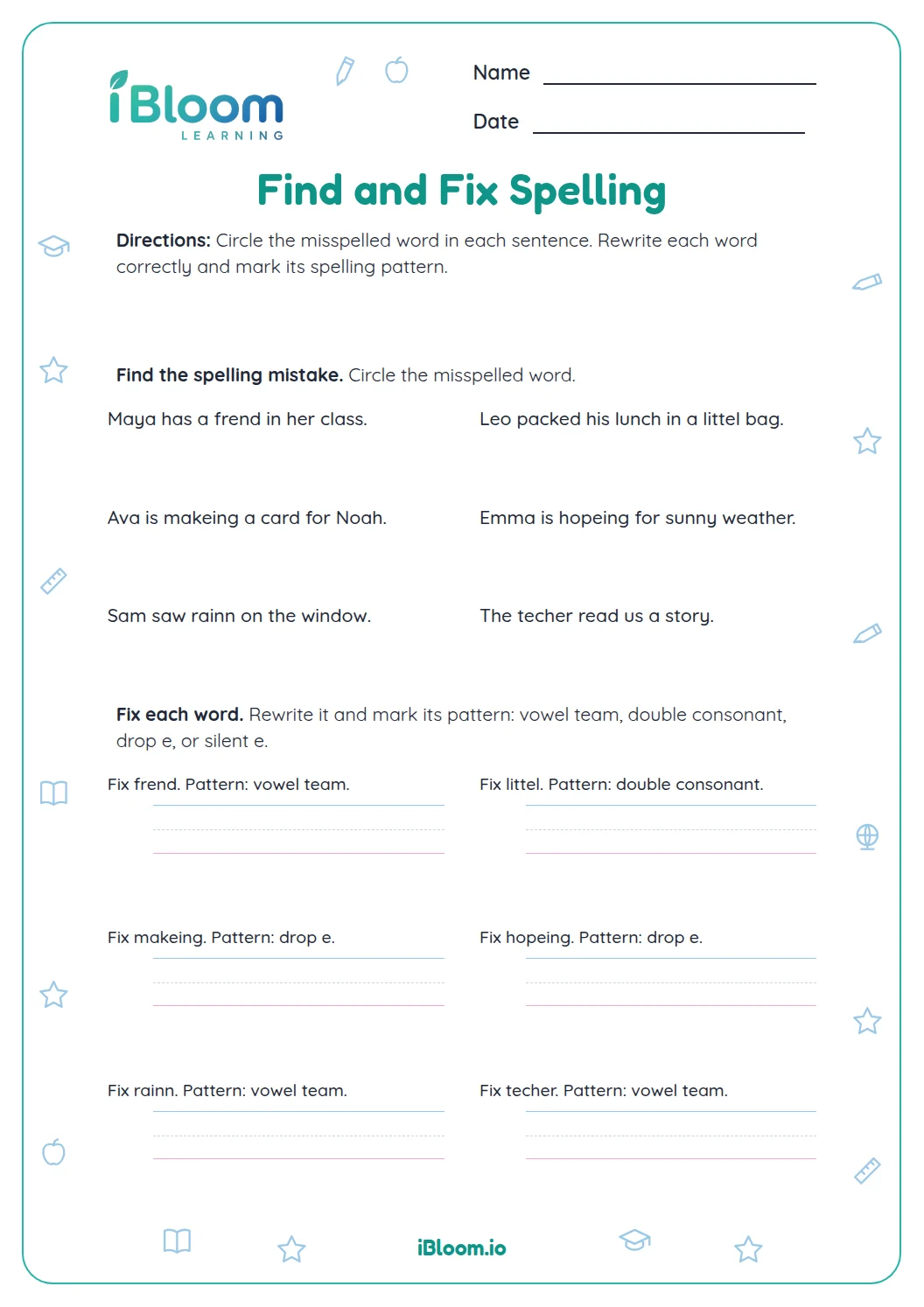
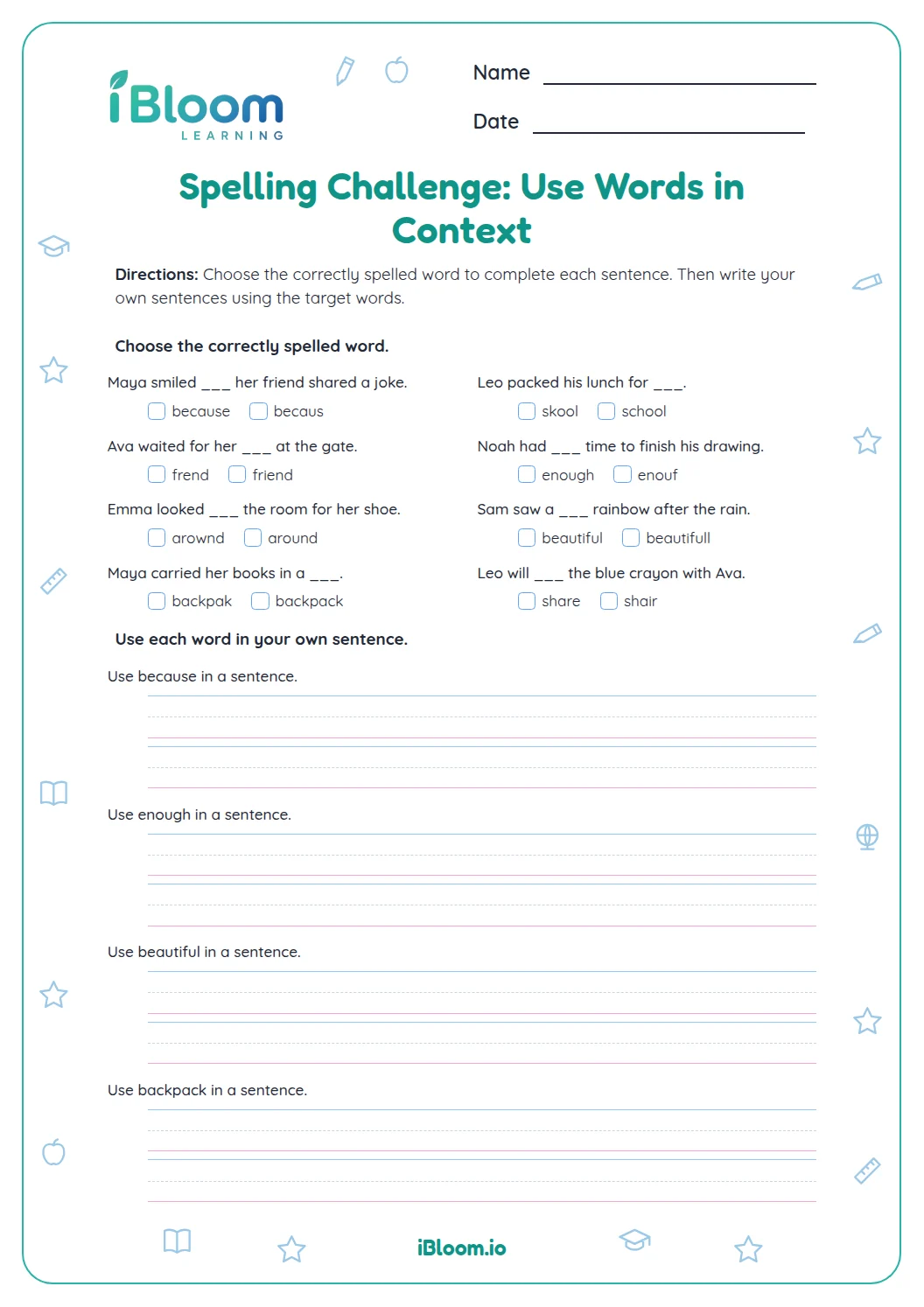
This free printable Grade 2 spelling worksheet is about the hidden letters that second graders skip when they write, like the i in friend, the o in people and the h in which. Children pick the correct spelling of four words, circle the misspelled word in four sentences, fix four more words and then use friend in a sentence of their own. It practices Common Core L.2.2, spelling conventions in writing, and suits Grade 2 children who are ready to proofread their own work. A matching answer key is included.
Aligned to L.2.2
What are hidden letters in spelling?
Hidden letters are the letters that are hard to hear or easy to skip. The i in friend is not heard as its own sound, and the l in would is silent. Children who spell by sound alone often write frend and wuld.
Part A shows three spellings of each word, so children compare how each version looks. The correct spelling is not always the one that is easiest to say, so they have to look closely.
- 1We stayed inside becuse it rained.
- 2Say it: be-cause
- 3Check: becuse is missing a letter
- 4The hidden letter is a
- 5Correct spelling: because
What is on this worksheet?
Thirteen questions on two pages, in four parts that grow harder.
- Part A, Pick the right spelling: four words, each with three spellings to choose from
- Part B, Find the mistake: four sentences, each with one misspelled word to circle
- Part C, Fix the word: four misspelled words to write correctly, such as iland for island
- Part D, Use it: one sentence with the word friend, with every letter checked
- Answer key, two pages, in the same layout
Why practice finding mistakes instead of just copying words?
Writers have to notice a mistake before they can fix it. When children circle peple in a sentence, they look at the word as a reader, which is the skill used every time they check their own writing.
Part C adds the fixing step. Children write the whole word correctly, which gives their hand and eye practice with the hidden letter. Part D then puts a hidden-letter word to use in a sentence.
How to use this worksheet at home or in class
- 1Read the worked example aloud, then stretch the word: “be-cause.” Point to each letter as you say each sound.
- 2Do question 1 together. Ask why friend looks different from frend, and point out the i.
- 3Let your child finish Part A alone, covering the other two spellings with a hand if that helps.
- 4For Part B, read each sentence aloud first. Ask your child to point to the word that looks wrong, then circle it.
- 5Have your child write the Part C words slowly, then check each one against a dictionary or word wall.
- 6Mark with the answer key and add any missed words to a list to practice again in a few days.
Common mistakes and quick fixes
The mistake
Leaving out a letter that is hard to hear, such as writing frend for friend or wich for which.
The fix
Teach a memory trick. “A friend is there till the end” shows the i and e, and “which” has an h like “what” and “when.”
The mistake
Writing only one of a pair of double letters, such as litle for little in question 8.
The fix
Clap the word in two beats, lit-tle. The first beat ends with t and the second starts with t, so little needs two.
The mistake
Choosing a spelling with the right letters in the wrong order, such as freind for friend or agian for again in Part A.
The fix
Spell the word aloud letter by letter while pointing: f-r-i-e-n-d, a-g-a-i-n. Then cover it and write it once from memory.
Common Core alignment
Most US states teach spelling with the Common Core standards or a close state version. This sheet practices the standard below.
Spell words correctly when writing.
On this sheet: Children choose, find and write correct spellings of common words, then use one in a sentence.
Show the official wordingHide the official wording
Demonstrate command of the conventions of standard English capitalization, punctuation, and spelling when writing.
What to practice next
Make more practice
Further reading
Questions parents and teachers ask
Which words are on this worksheet?
The sheet uses friend, family, would and again in Part A, people, because, which and little in Part B, and listen, answer, every and island in Part C. These are common words children meet in Grade 2 reading and writing, and each has a letter that is easy to skip.
Why do children skip letters when they spell?
Young spellers often write the sounds they hear, and some letters are silent or soft. The l in would and the t in listen make no sound of their own. Children may skip them when they write quickly. Slowing down and checking each word letter by letter helps.
What should a child do when a word still looks wrong?
Write the word two ways and compare them, then check a dictionary, a word wall or a list of spelling words. Looking a word up is a real writing habit. Praise the checking as much as the correct spelling, because checking is what children will use in their own writing.
Can children use a dictionary on this worksheet?
Yes, a beginning dictionary or a word wall works well, especially for Part C. Let your child try each word first, then check it. If the first try was wrong, ask your child to find the hidden letter and write the word again. That correction is where the learning happens.
How do I mark the circle questions?
In Part B, only the misspelled word should be circled: becuse, peple, wich and litle. If a child circles a correctly spelled word, read the sentence together and ask them to say each word slowly. Then point to the word that looks wrong and ask what is missing.
Is there an answer key for this worksheet?
Yes. The answer key shows the correct spelling for every question, the circled mistake in each sentence and the fixed word in Part C, on two pages that match the worksheet. Download the free PDF from this page, print the worksheet by itself and check your child's answers with the key.