



About this worksheet
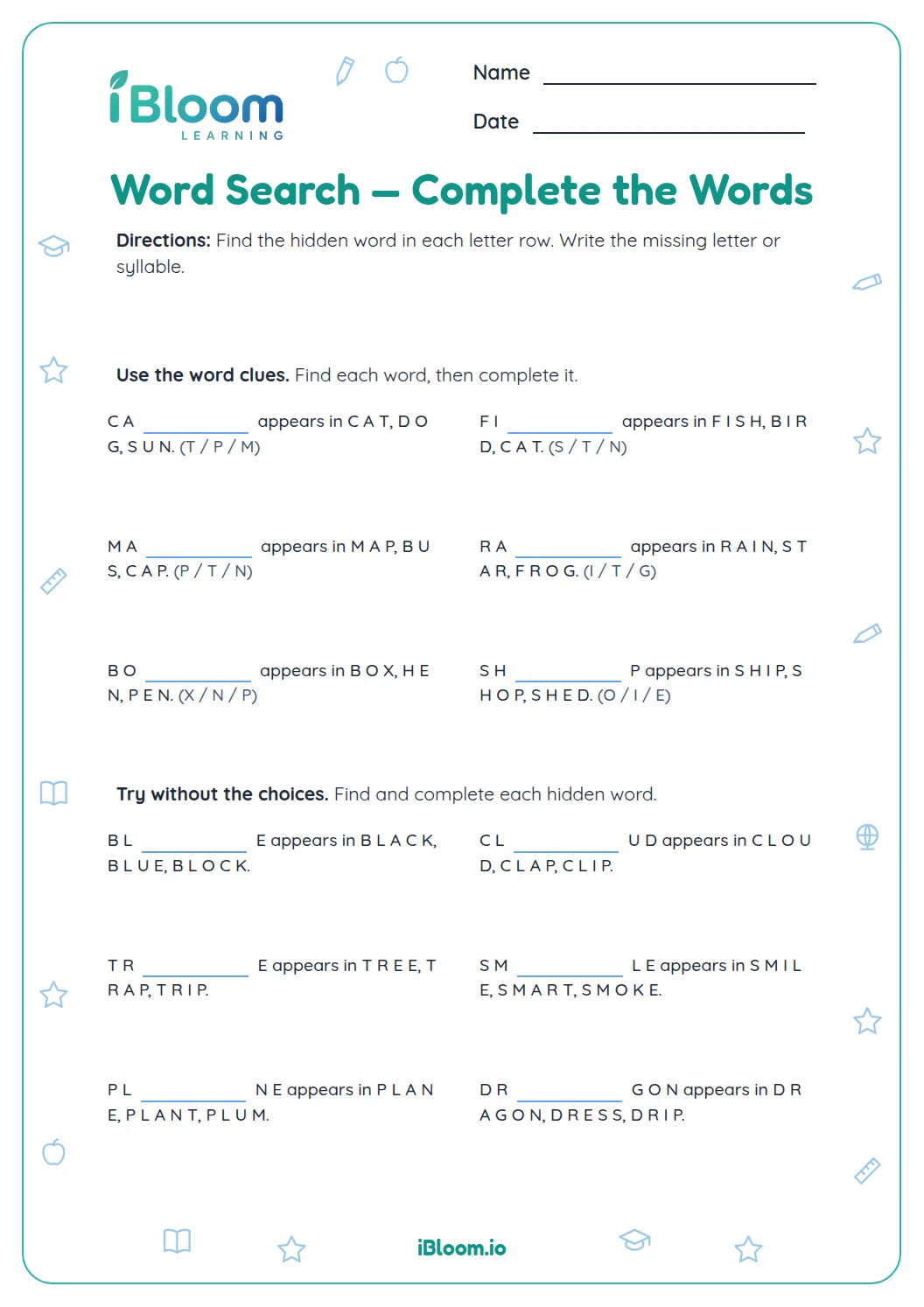
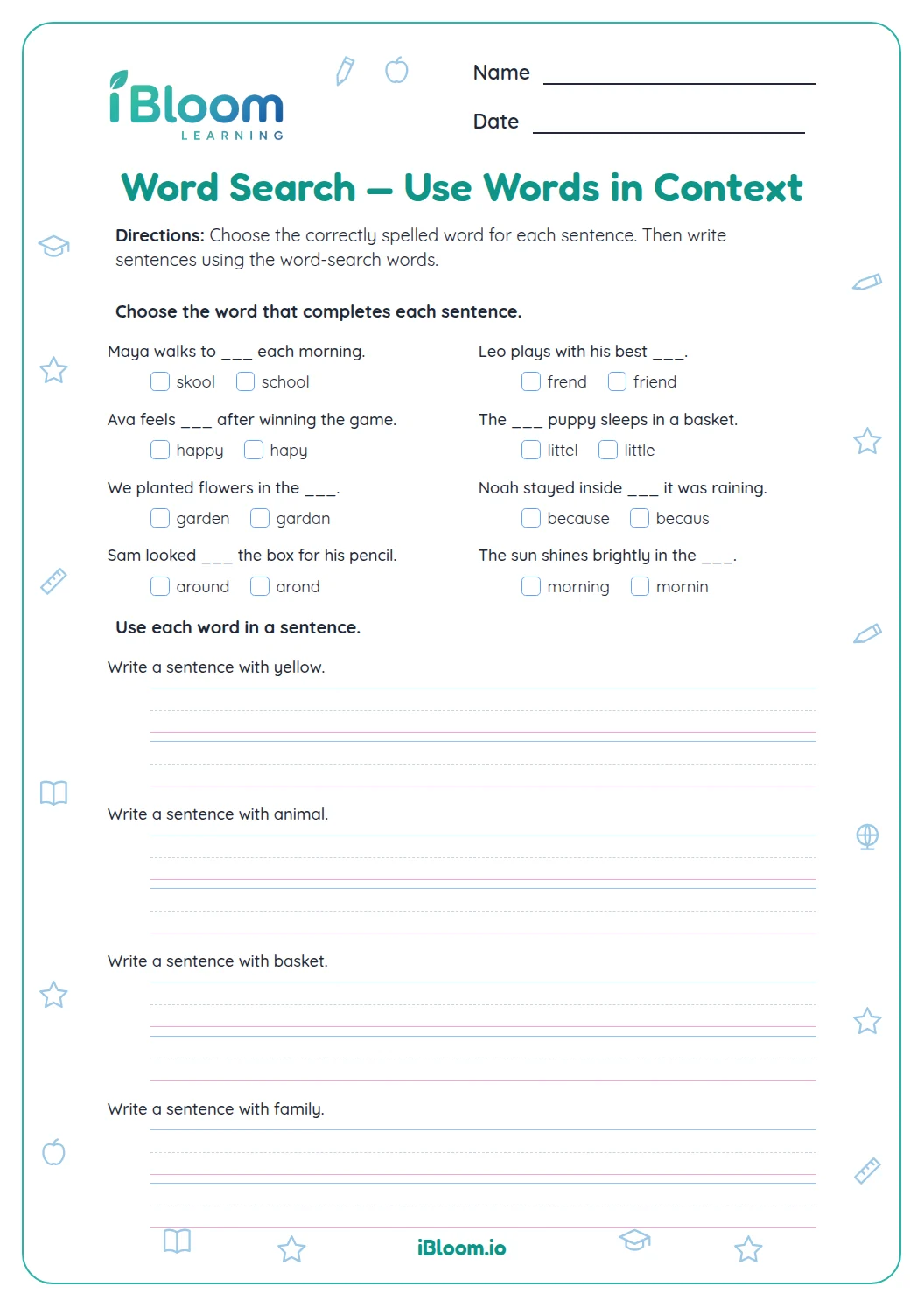
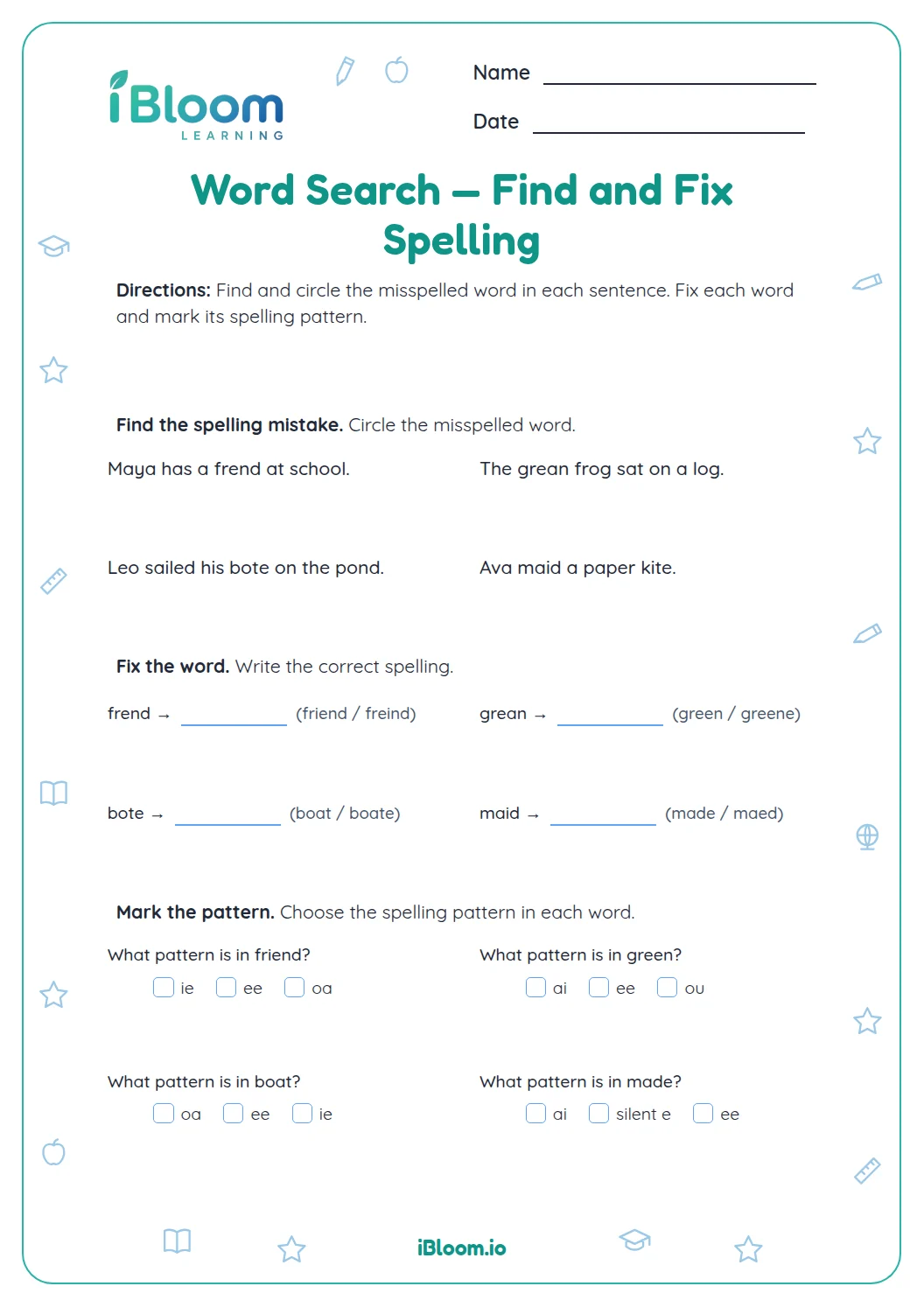
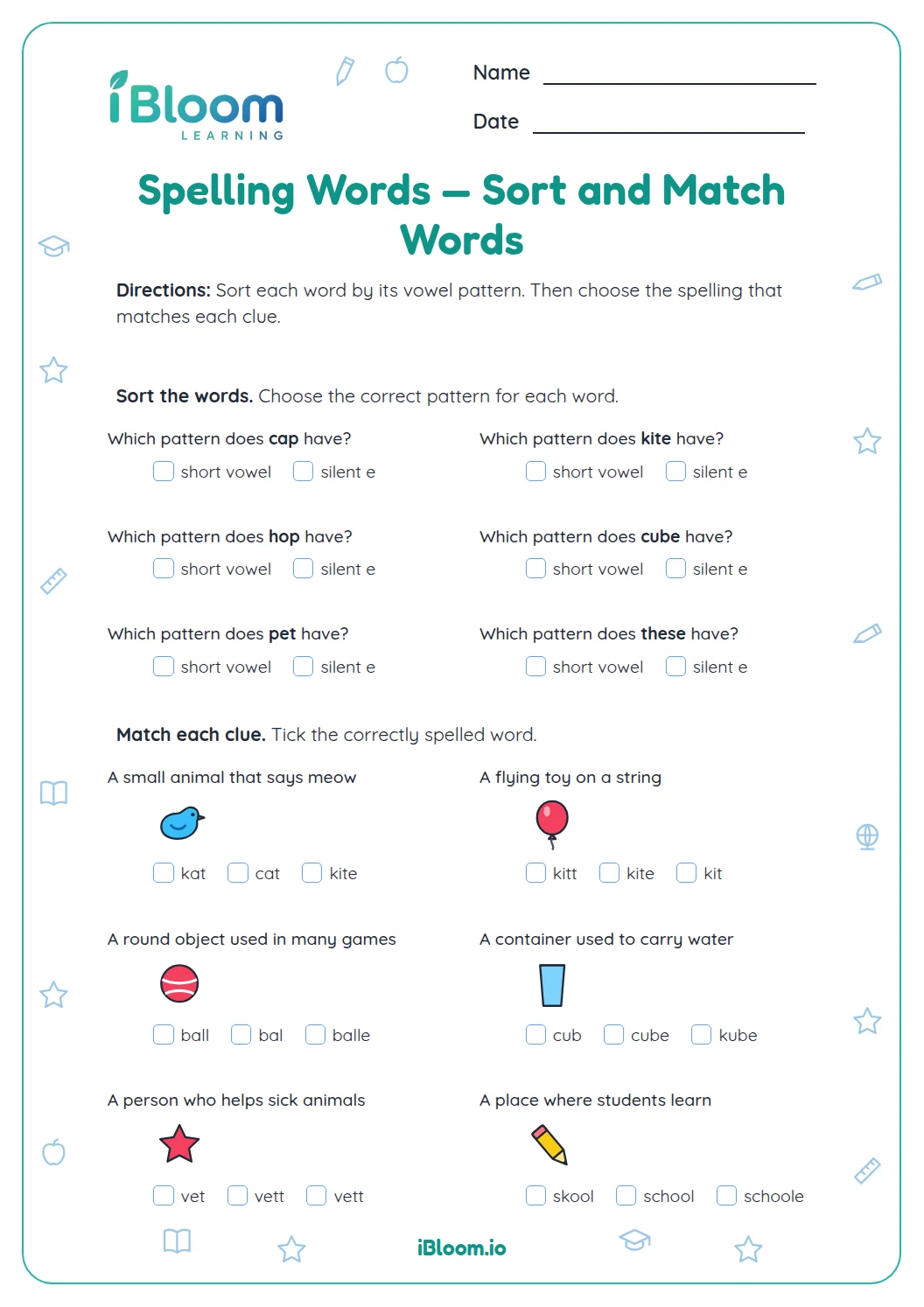
This free Grade 2 spelling worksheet uses short sentences to make hidden-letter practice meaningful. In Part A, students fill missing letters in words such as tail, seed, gate, and star, using the surrounding sentence as a clue. Part B asks them to choose the word that completes each sentence. The activities connect spelling patterns with context and fit CCSS L.2.2.d and L.2.4.a. A separate key gives the missing letters and correct choices.
Aligned to L.2.2.d and L.2.4.a
How do sentence clues help with hidden letters?
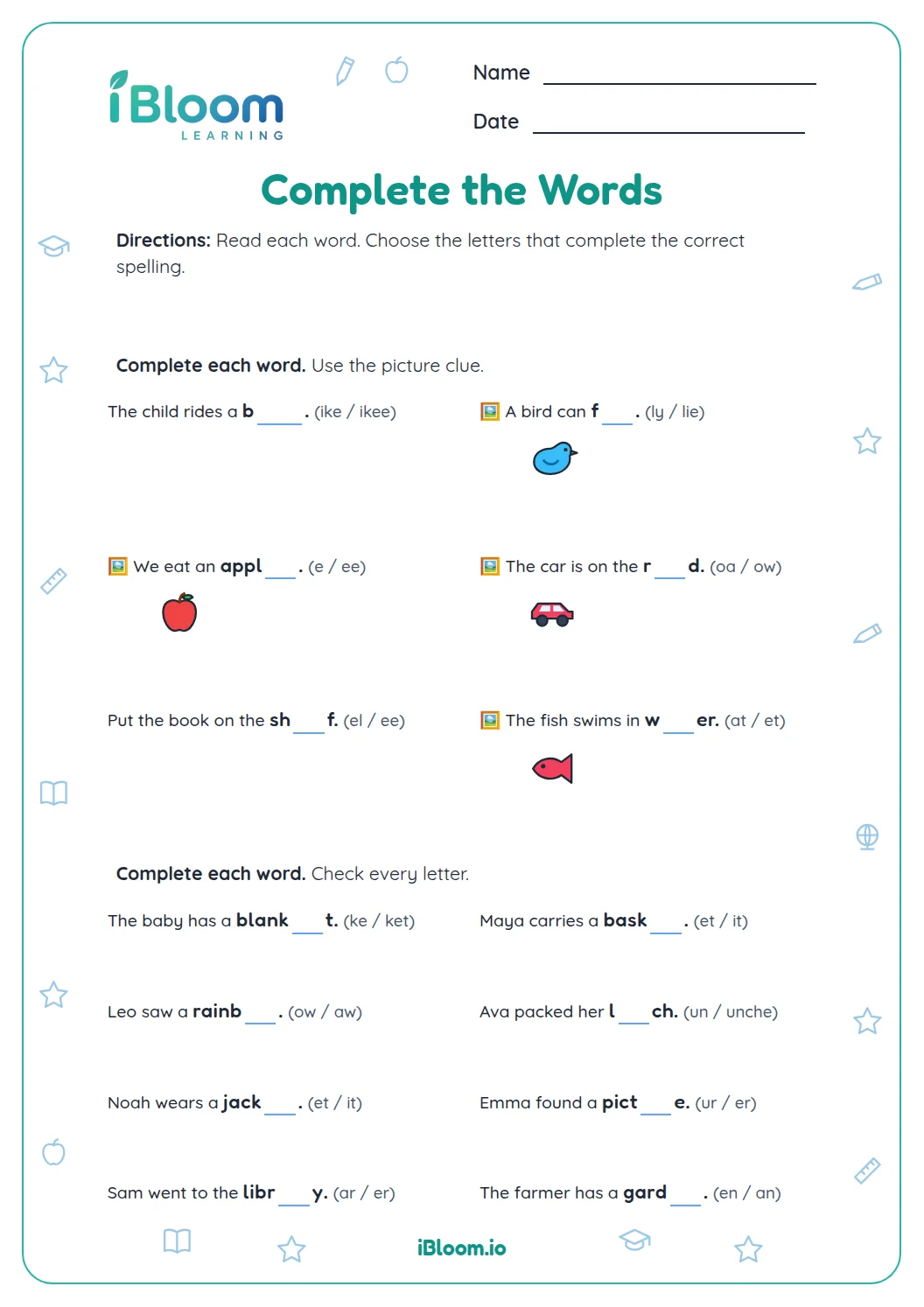
Part A hides one or two letters in each familiar word. The sentence gives a meaning clue, while the visible letters help students recall the spelling. For example, “The puppy wagged its t__l” points to tail; the missing letters are ai.
- 1The puppy wagged its t__l.
- 2“Wagged” and “puppy” point to a tail. Fill in ai to spell tail.
What does Part B ask students to do?
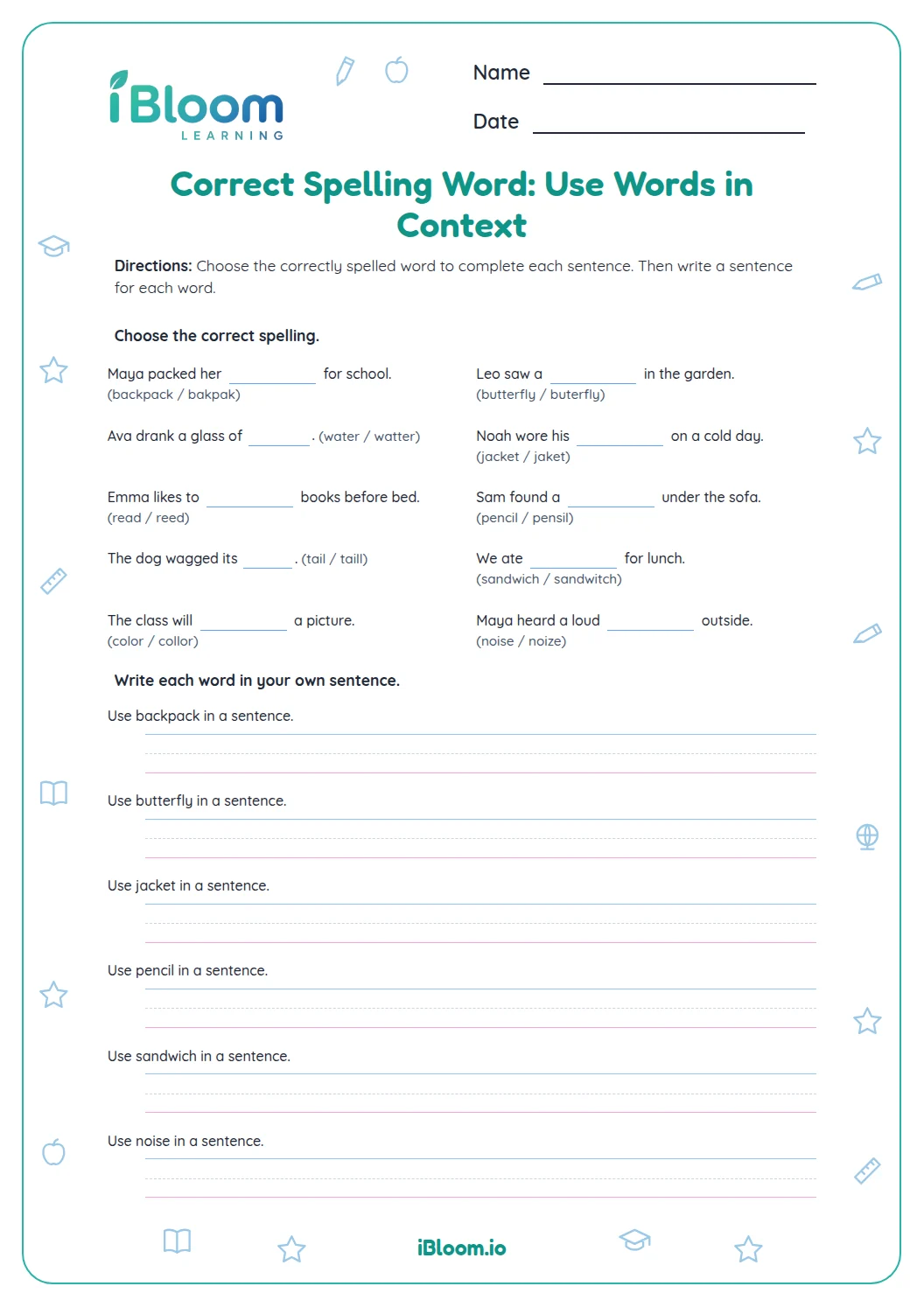
Part B gives three similar choices for each sentence. Students read the whole sentence first, then compare each option with the meaning. The distractors are plausible spelling or sound confusions, so context helps confirm the answer.
How can an adult review the answers?
Ask the student to read each completed sentence aloud and spell the target word. If the word is correct but the missing letters were difficult, point to the spelling pattern and let the student write the whole word once.
How can I use this worksheet?
- 1Read the complete sentence before filling a blank.
- 2Look at the letters already printed in the target word.
- 3Say the whole word and write only the missing letters.
- 4For Part B, test each option in the sentence.
- 5Read your completed sentence again and check it with the key.
Common slips and how to fix them
The mistake
Guessing from the first letter alone.
The fix
Use the sentence meaning and all visible letters together.
The mistake
Writing the whole word where only letters are missing.
The fix
Check the blank location and supply just the missing letters.
The mistake
Choosing a word that sounds close but changes the sentence meaning.
The fix
Read the entire sentence with each option before deciding.
Common Core alignment
Use learned spelling patterns when writing words.
On this sheet: Students supply hidden vowel teams and familiar spelling patterns in context.
Show the official wordingHide the official wording
Generalize learned spelling patterns when writing words (e.g., cage → badge; boy → boil).
Use sentence-level context to determine a word.
On this sheet: Students use sentence meaning to complete or select the intended word.
Show the official wordingHide the official wording
Use sentence-level context as a clue to the meaning of a word or phrase.
What to practice next
Make more practice
Further reading
Questions parents and teachers ask
Do students write the whole hidden word?
No. In Part A, the word is partly printed and students fill only the missing letter or letters. For “t__l,” they write ai to complete tail. The sentence clue helps them identify the word before they supply its missing spelling.
How many words have hidden letters?
There are ten hidden-letter sentences in Part A. They include tail, seed, gate, star, soup, clock, bring, nest, whale, and tractor. Some blanks hide one letter and others hide two, with the sentence helping identify the target word.
What is the purpose of the sentence clues?
Each sentence points to the word that belongs in the blank. “The bird built a n_st in the tree” gives both a meaning clue and visible letters for nest. Students use the clue and spelling pattern together before writing the missing letter.
What happens in Part B?
Part B has six multiple-choice sentences. Students select the word that makes sense in each blank, such as crib in “The baby slept in a ___.” The choices include similar-looking or similar-sounding spellings, so reading the whole sentence helps.
How can an adult review the answers?
Ask the student to read each completed sentence aloud and spell the full target word. If a missing letter was difficult, point to the visible letters and discuss how the sentence narrows the choices. The answer key lists the missing letters and selected words.