


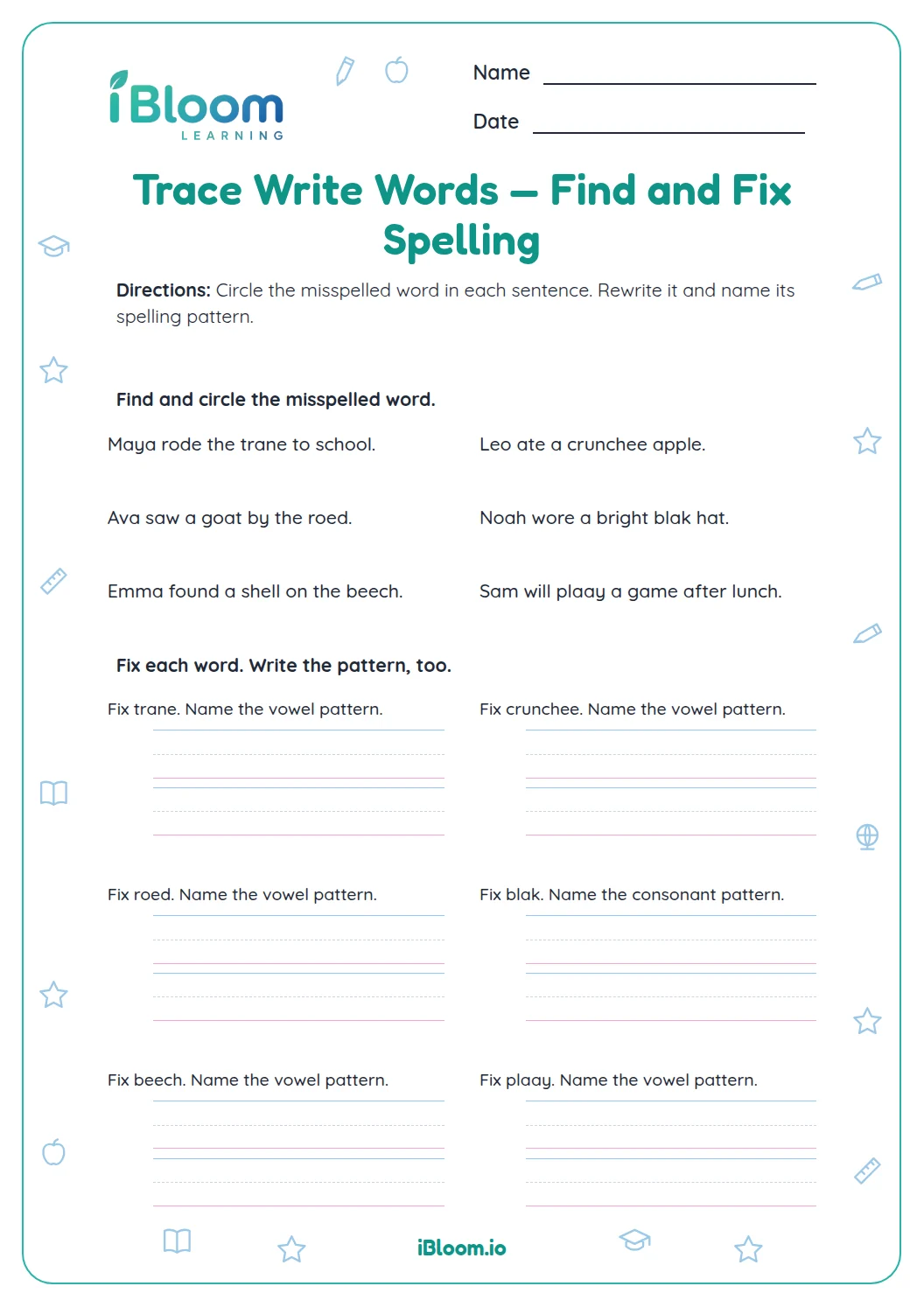
About this worksheet
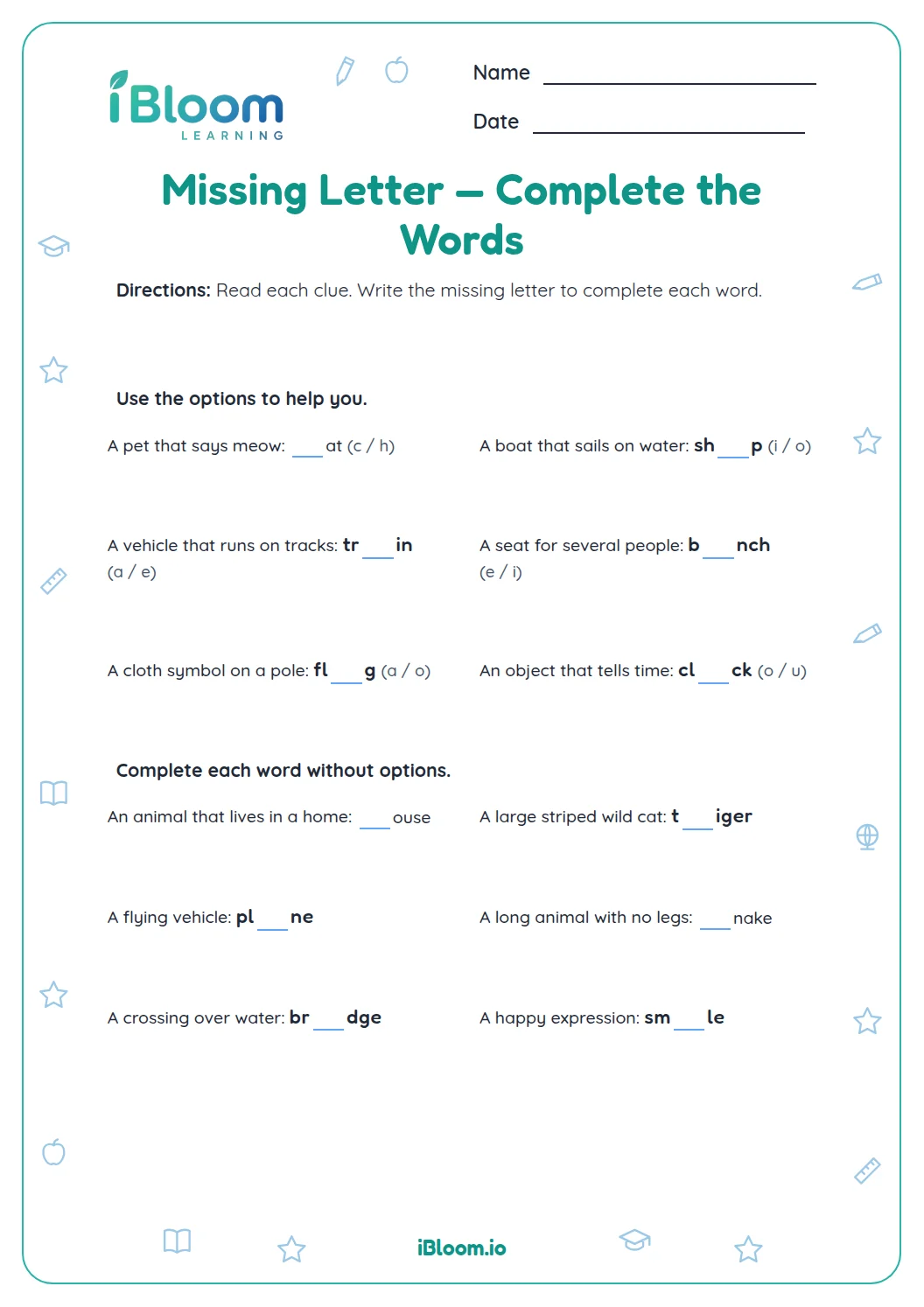
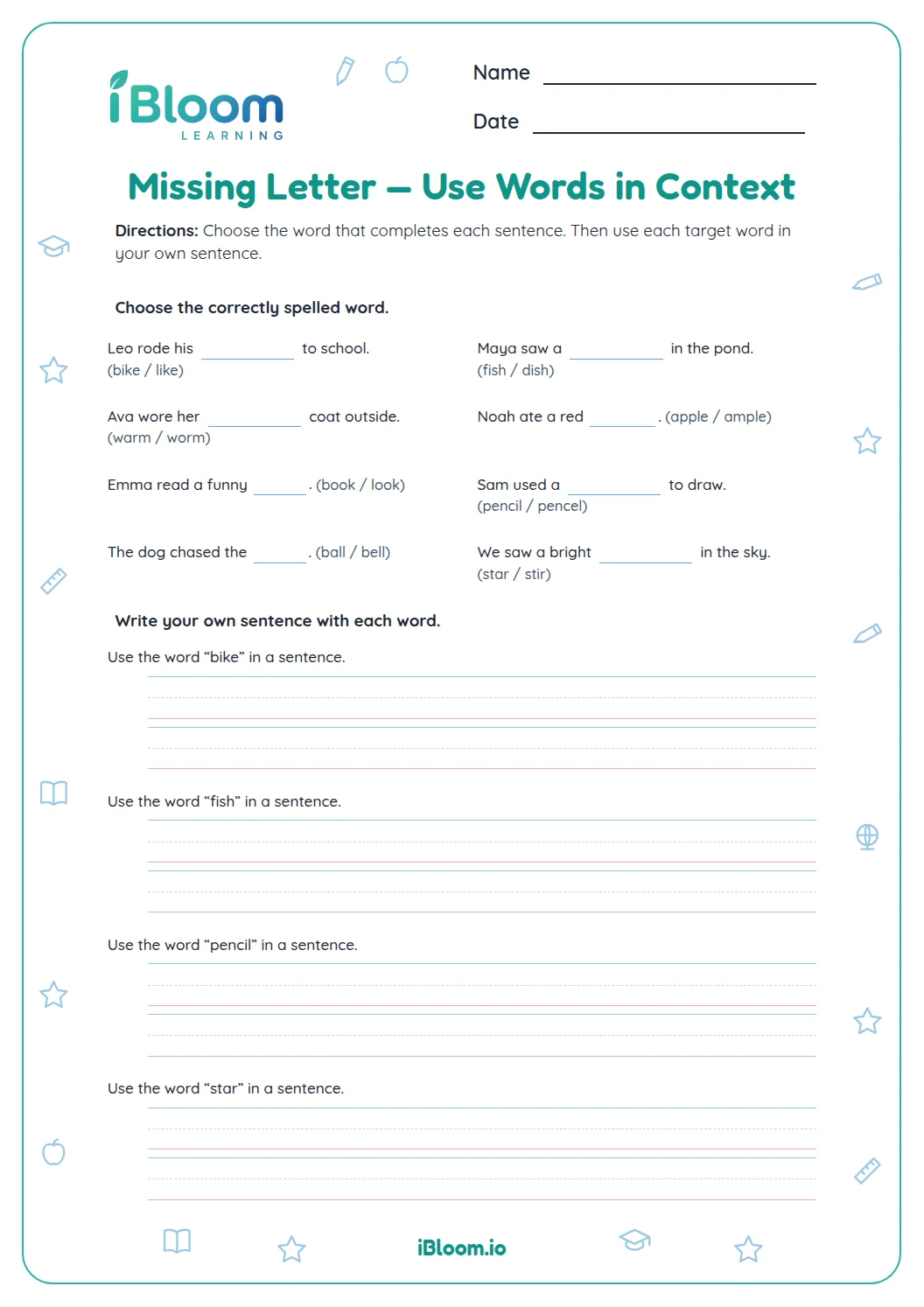
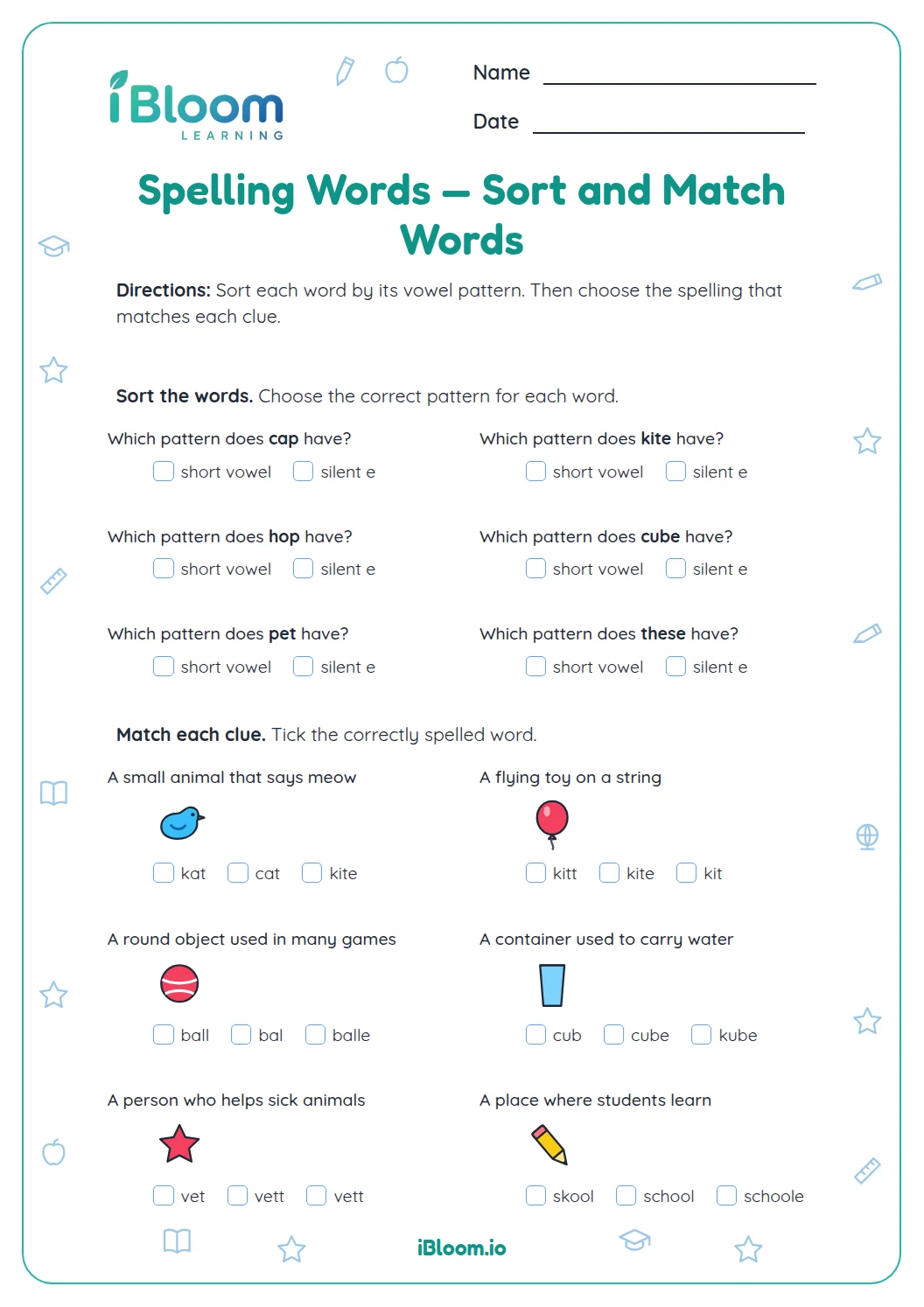
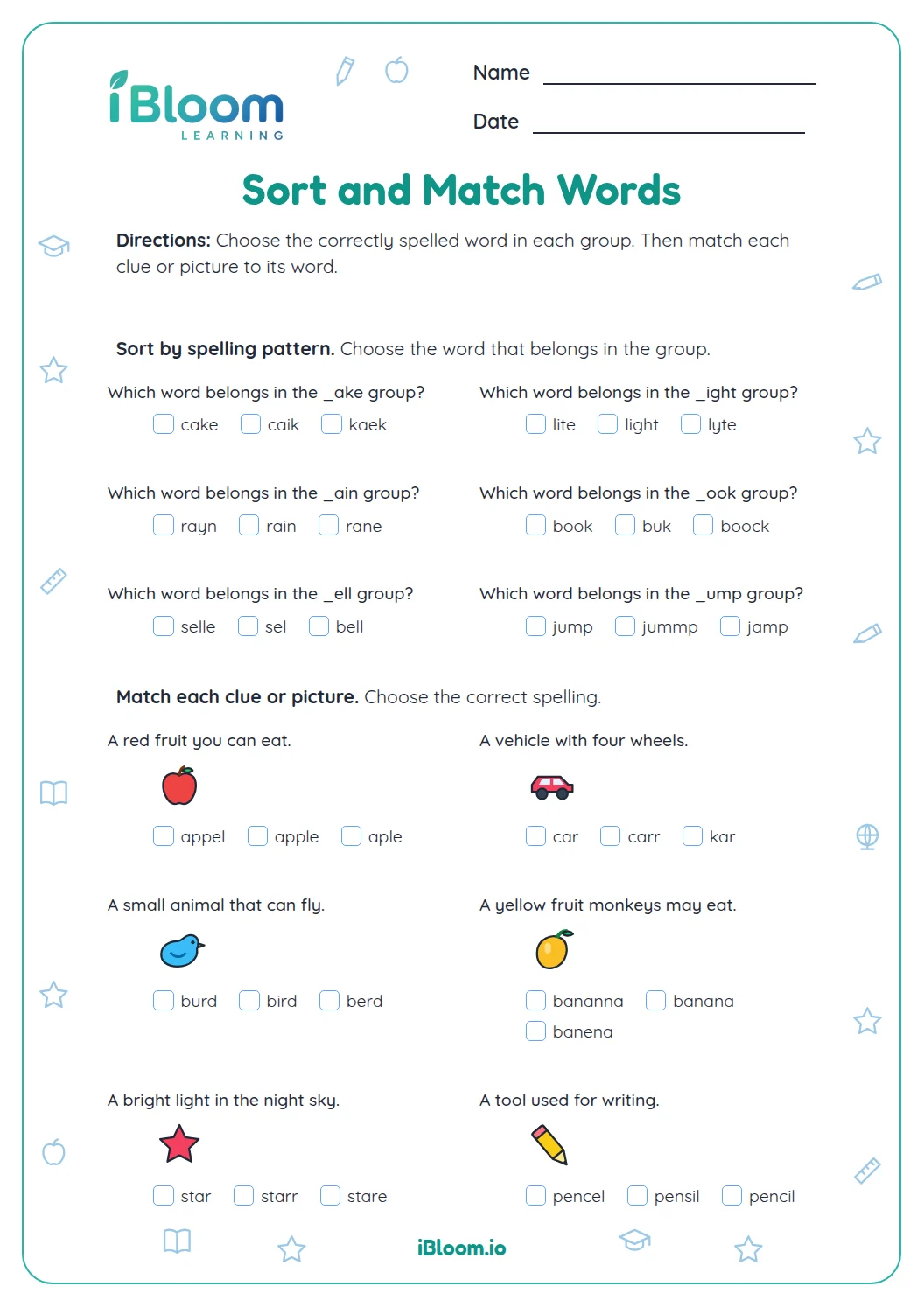
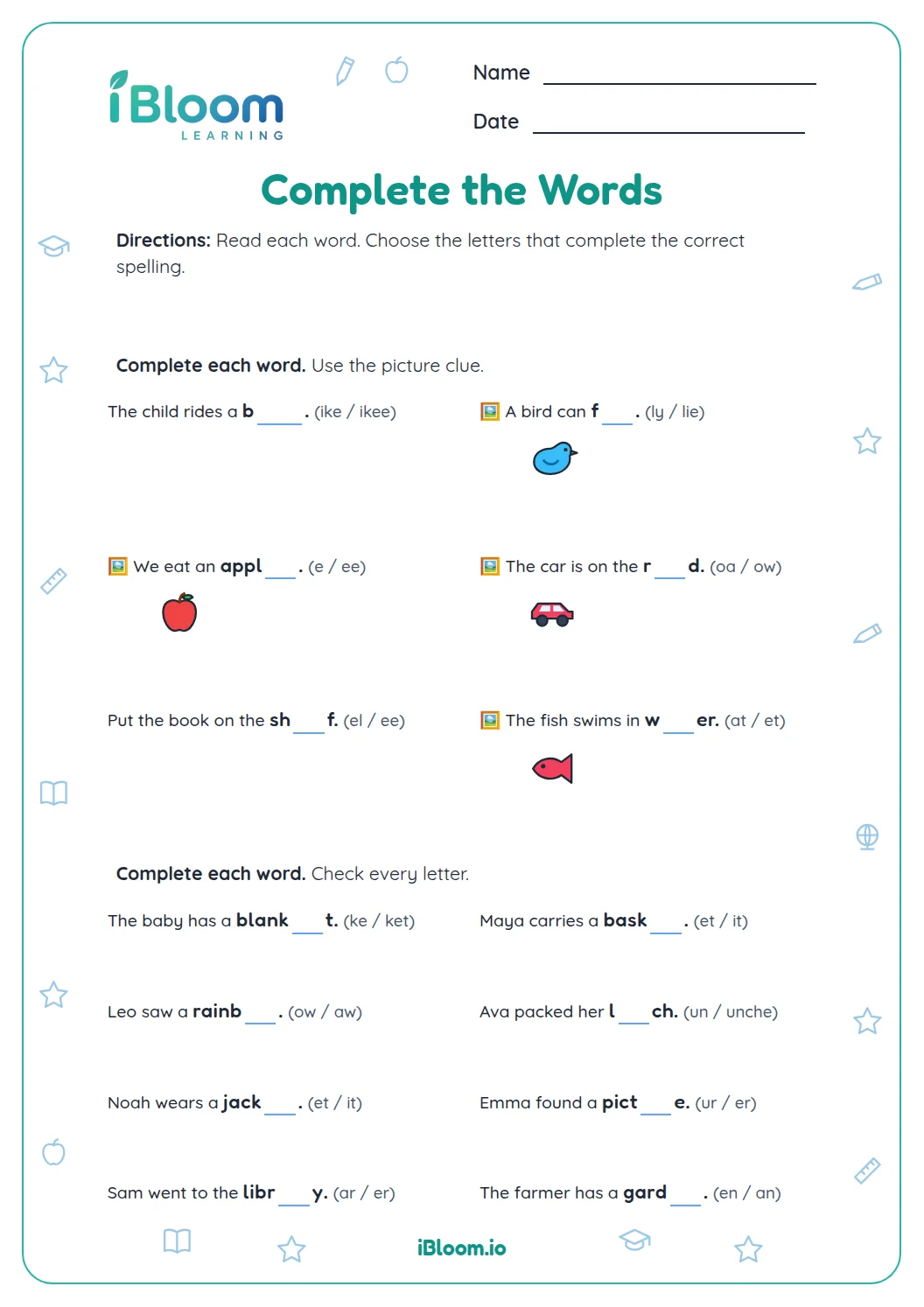
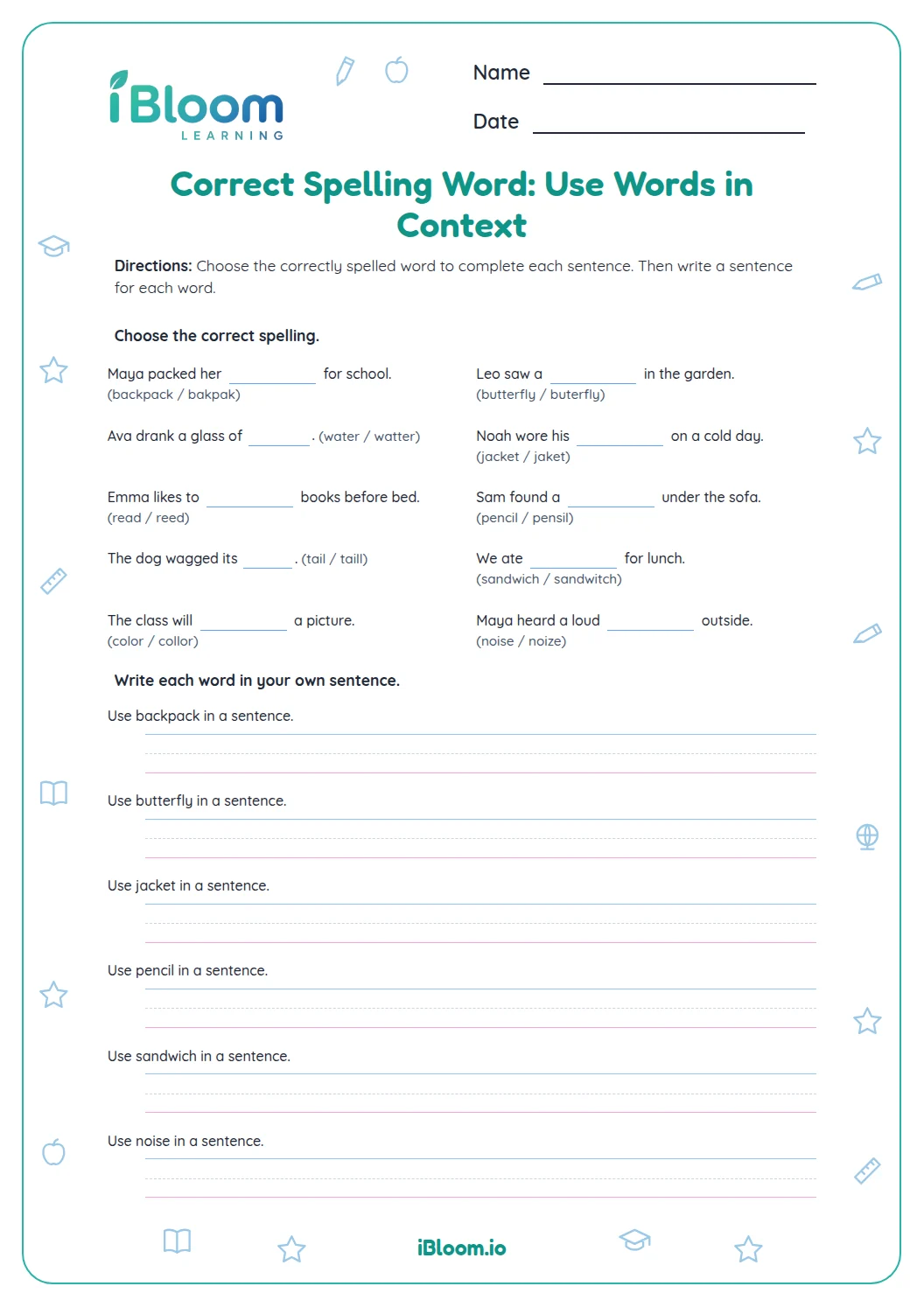
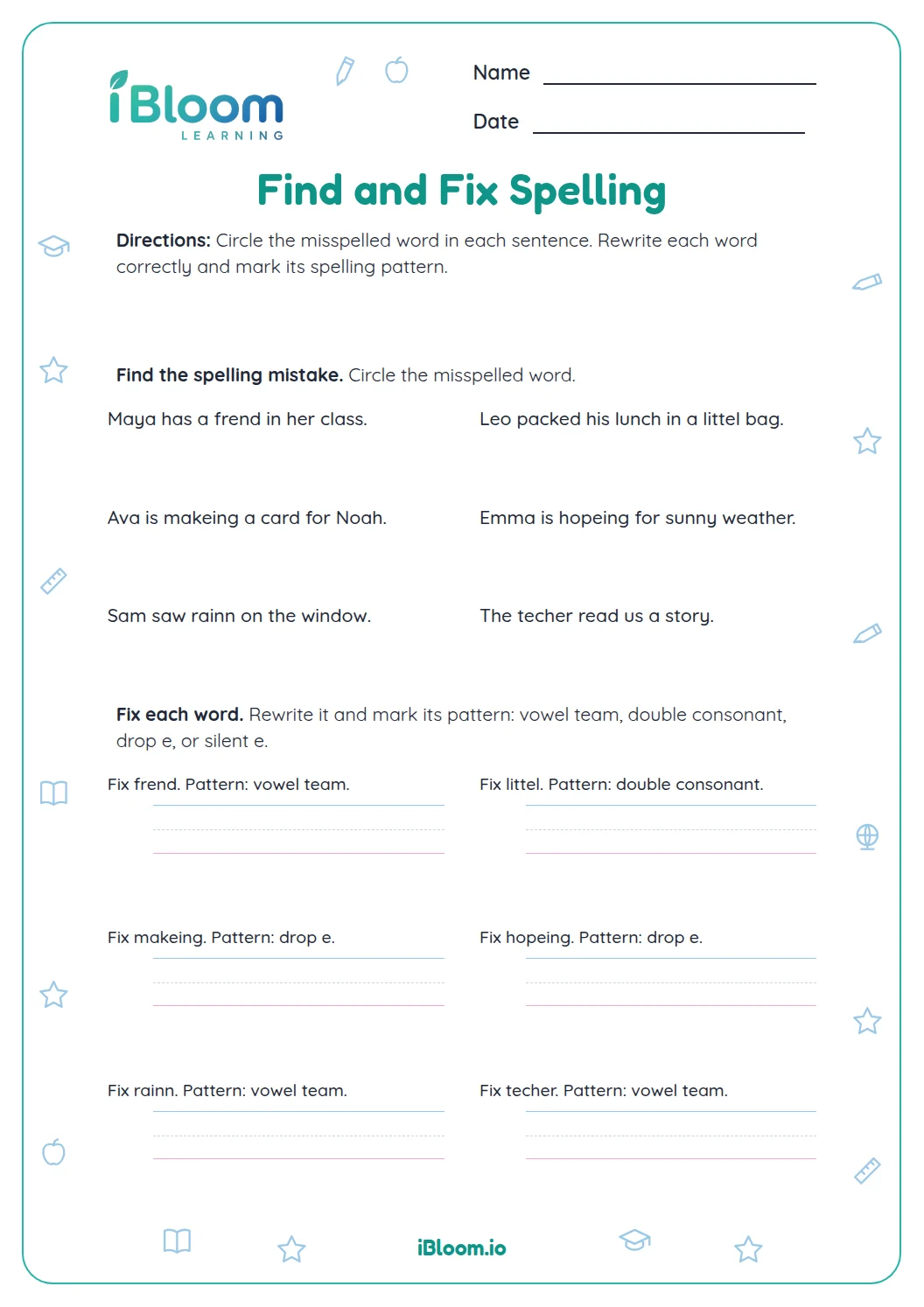
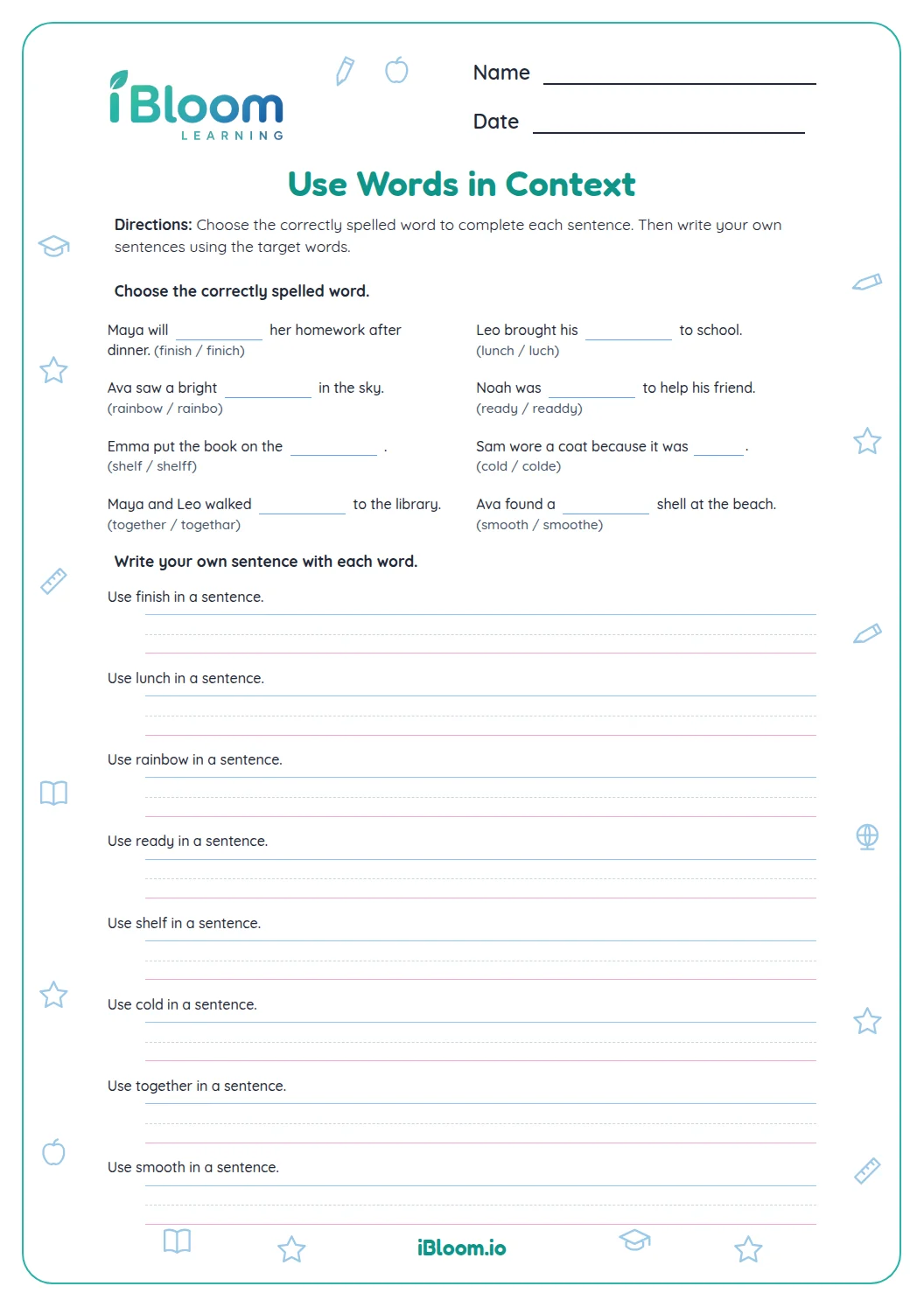
This two-page Grade 2 spelling worksheet asks learners to supply one missing vowel in familiar words, use context to complete four sentences, choose the correct spelling of friend, and write a sentence with bright. The two-page answer key gives the intended letters and words plus a sample sentence. The practice supports CCSS L.2.2.d by applying familiar spelling patterns in words and writing.
Aligned to L.2.2.d
What kinds of spelling items are included?
Part A has ten words with one missing vowel. Part B uses sentence clues for four whole-word blanks; Part C asks learners to choose between frend and friend; Part D asks them to write a sentence using bright.
How can a child check a missing letter?
Read the word around the blank, say the whole word, and test the vowel that completes its spelling. For tr___p, the letters form trip when i fills the gap. Read the completed word once more to confirm it is the intended word.
- 1tr___p
- 2Try i: trip
- 3Read the full word: trip
How does a sentence clue help?
A sentence gives meaning that can narrow the word choices. In “The bird can ___ to the nest,” fly fits the action and the rest of the sentence. Reread the completed sentence to check both spelling and meaning.
How to use this worksheet
- 1Read the one-line direction at the start of each part.
- 2Complete the first item together and explain the choice or strategy.
- 3Finish the remaining items without looking at the key.
- 4Compare each answer with the key and mark any item to revisit.
- 5For missed items, explain why the correct response fits.
Common mistakes and quick fixes
The mistake
Choosing a vowel from its sound without checking the whole word.
The fix
Write the completed word and read it back; check that it is spelled as a familiar word.
The mistake
Filling a sentence blank with a word that does not fit its meaning.
The fix
Read the entire sentence with the word in place and check that it makes sense.
The mistake
Leaving out a letter in the final sentence.
The fix
Reread the sentence slowly and check the spelling of bright.
Curriculum alignment
The spelling practice asks learners to apply common sound and letter patterns in words.
Use learned spelling patterns when completing and writing familiar words.
On this sheet: Children apply familiar spelling patterns while completing words and sentences.
Show the official wordingHide the official wording
Generalize learned spelling patterns when writing words (e.g., cage → badge; boy → boil).
What to practice next
Make more practice
Further reading
Questions parents and teachers ask
What is a missing-letter spelling item?
It gives a word with one letter left out for the learner to supply. This sheet begins with ten familiar words, then uses sentence meaning to complete whole-word blanks. Children also choose the correct spelling of friend and write their own sentence with bright.
What can a child do when a word is hard to spell?
Say the word, look at the letters already printed, and try a vowel that makes a familiar word. For example, tr___p becomes trip with i. Reading the completed word aloud helps check that the spelling and intended word match.
How many items are on the worksheet?
There are 16 items in four parts: ten missing-letter words, four sentence completions, one spelling choice, and one sentence-writing response. The worksheet has two pages, and its separate answer key has two pages with the intended responses. It also provides a sample for the open response.
Can an adult read the sentence prompts aloud?
Yes. An adult can read a sentence aloud to make its meaning clear, then let the learner choose and spell the missing word. Ask the child to reread the completed sentence and check that the word fits its meaning and spelling.
Why does the last question ask for a sentence?
Writing a sentence with bright lets learners apply a spelling word in their own writing. The key shows one sample, but another complete sentence is correct if it uses bright with its intended spelling and meaning. Reread the sentence to check it.