





About this worksheet
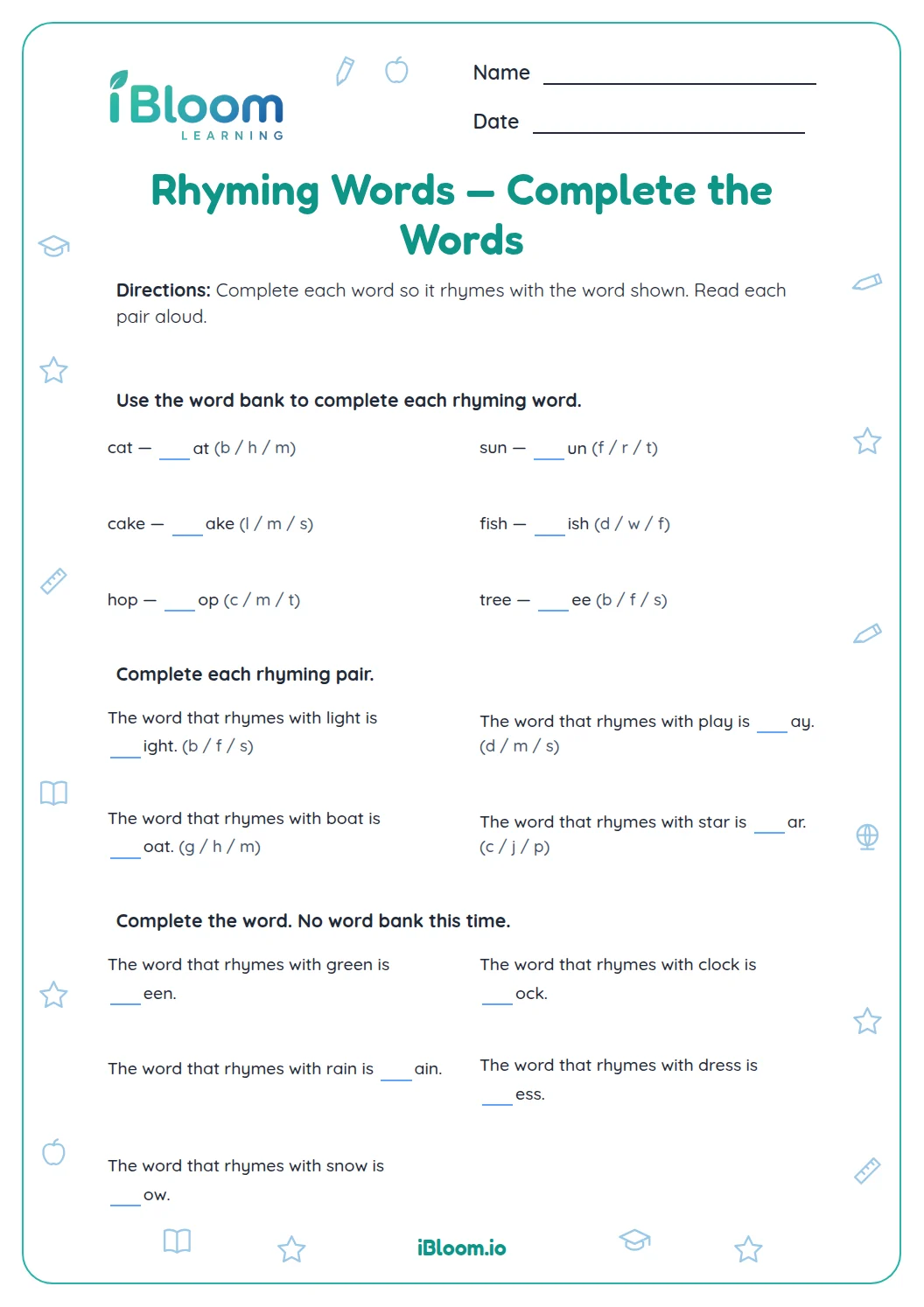
This Grade 2 printable practices rhyming words in context through 14 questions. Learners choose a word that fits a sentence and rhymes with its clue, identify rhyming pairs, and write completions such as lake, well, and play. The answer key gives sample responses for open-ended items.
How do the choice questions use rhymes in sentences?
The first seven items use choices. Each correct word must make sense in the sentence and share the target rhyme, as in cat/mat and train/lane.
For question 4, flight rhymes with light and completes “The kite took flight.”
What do learners write in the open-response questions?
Questions 8 and 9 ask learners to identify rhyme pairs already in short sentences. The remaining written prompts ask for words that complete a sentence and rhyme with a clue.
For open responses, say the clue and answer aloud, then reread the completed sentence.
How can learners check a word in context?
Check meaning and sound separately: a word can fit the sentence but fail to rhyme. The key gives examples for open responses.
Question 14 accepts stop: it rhymes with hop and completes “The rabbit will stop.”
How to use this worksheet
- 1Read the whole sentence before choosing.
- 2Say the target word and candidate aloud.
- 3Compare the ending sounds from the vowel onward.
- 4Try the candidate in the sentence and check its meaning.
- 5Use the key as a sample for open responses.
Common mistakes and quick fixes
The mistake
Choosing a word that fits the sentence but does not rhyme.
The fix
Check the ending sounds as well as the meaning.
The mistake
Matching only the last letter.
The fix
Compare the vowel and ending sounds in both words.
The mistake
Using a rhyme that makes the sentence confusing.
The fix
Reread the completed sentence and check its meaning.
What to practice next
Make more practice
Questions parents and teachers ask
What kind of rhyming practice is included?
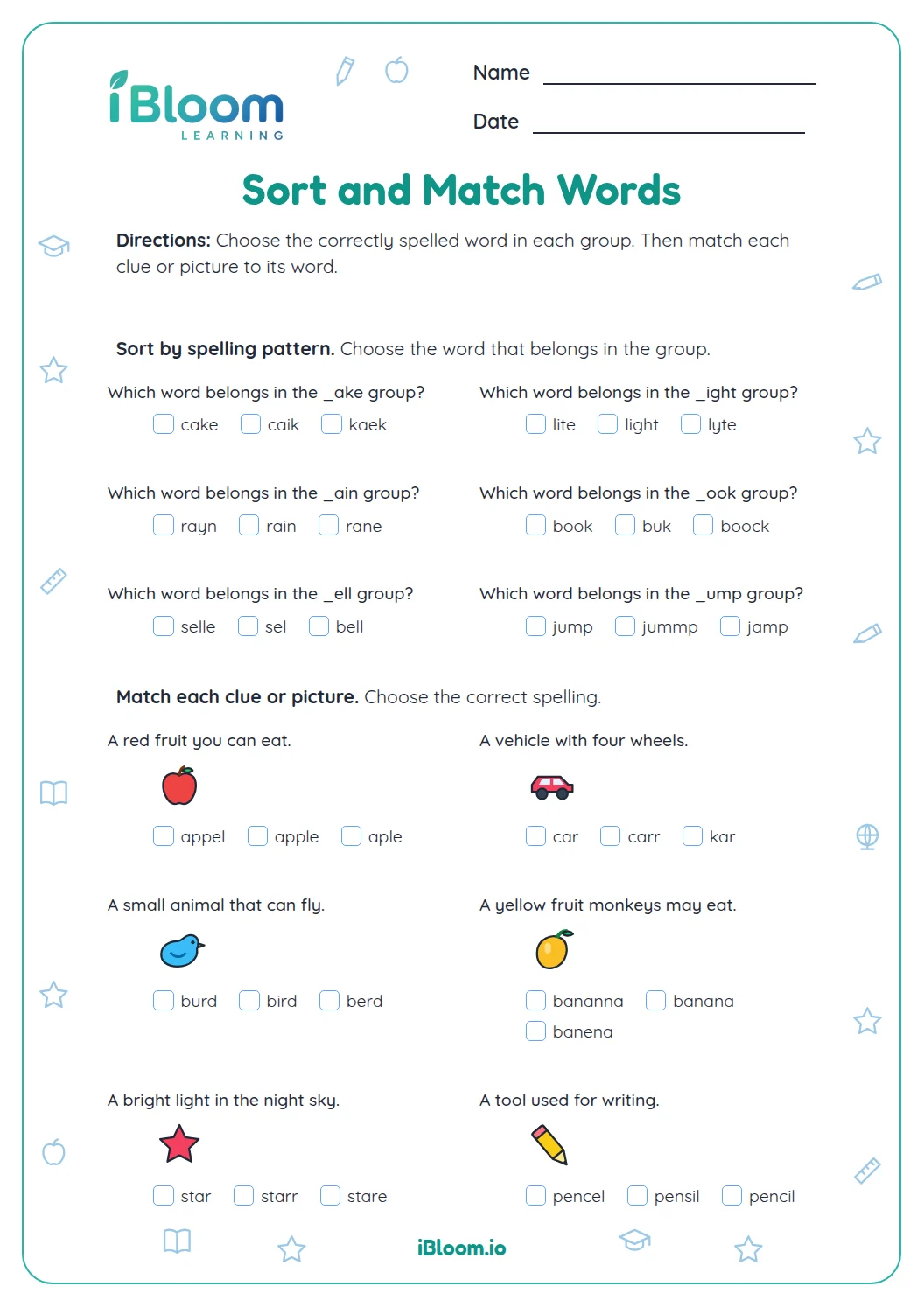
The first seven items offer word choices for sentences, and the next two ask learners to identify rhyming pairs. The final five invite a written completion or rhyme. Across the page, a correct word must match the target sound and fit the sentence.
How many questions are there?
There are 14 questions. Supported choices come first, followed by short identification and written tasks. The later items have sample answers in the key; other words may also work if they rhyme with the clue and make a sensible sentence.
Can more than one written answer be correct?
Yes. Some written prompts allow more than one rhyming word that fits the sentence. The key supplies a sample response, so check the ending sound and sentence meaning rather than requiring the exact sample word. Learners may explain another sensible answer aloud.
Should learners read the sentences aloud?
Reading aloud can make the ending sounds easier to compare. Say the target word, say the proposed answer, and listen to the last part of each word. Then reread the whole sentence to confirm that the answer makes sense.
What is a useful way to check a rhyme?
Compare the sounds from the vowel to the end, not just the final letter. For example, light and flight rhyme, while light and late do not. After checking sound, place the answer in the sentence and reread it for meaning.