



About this worksheet
This Grade 2 spelling review combines two word searches with questions about spelling patterns, syllables, rhymes, and word use. Children find 12 familiar words, check spellings such as rabbit and window, and use napkin in a sentence. The work practices the Grade 2 spelling pattern standard L.2.2d. The answer key lists each search word and gives answers or a sample sentence.
Aligned to L.2.2d
How do word searches support spelling review?
Searching makes children attend to the order of letters. After finding a word, they can say it, spell it aloud, and check the same sequence in the word list.
Which spelling patterns appear here?
The review includes double letters in rabbit and little, familiar endings in pocket and basket, and common word parts in sunshine and lunchbox.
- 1The incomplete word is rab___it.
- 2Say the word rabbit slowly and check the letters.
- 3Answer: b.
What is on the page?
Two searches provide repeated exposure to the review list. Short follow-up questions ask children to read, complete, and use words.
How to use this worksheet
- 1Read the word list aloud before searching.
- 2Look across and down the grid, then check diagonal directions.
- 3Circle a word and cross it off the list.
- 4For spelling questions, say the word and check letter order.
- 5Use the key to review any word you missed.
Common mistakes and quick fixes
The mistake
Finding a word but copying its letters in the wrong order.
The fix
Trace the letters in the grid from the first letter to the last.
The mistake
Mixing up short vowel spellings.
The fix
Say the word slowly and check the vowel sound in the middle.
The mistake
Skipping a double letter.
The fix
Tap each sound, then inspect the written word for repeated consonants.
Common Core alignment
This sheet gives children direct practice with the listed Grade 2 reading and writing skills.
Use familiar spelling patterns when writing words.
On this sheet: Children notice and apply familiar spelling patterns while checking words.
Show the official wordingHide the official wording
Generalize learned spelling patterns when writing words (e.g., cage → badge; boy → boil).
What to practice next
Make more practice
Further reading
Questions parents and teachers ask
Which words are in the searches?
The two grids contain basket, rabbit, sunset, pocket, window, garden, little, napkin, sunshine, picnic, lunchbox, and insect. Each word appears in one of the two search lists. The questions use the same review words so children can reread and check spellings.
What else does the worksheet practice?
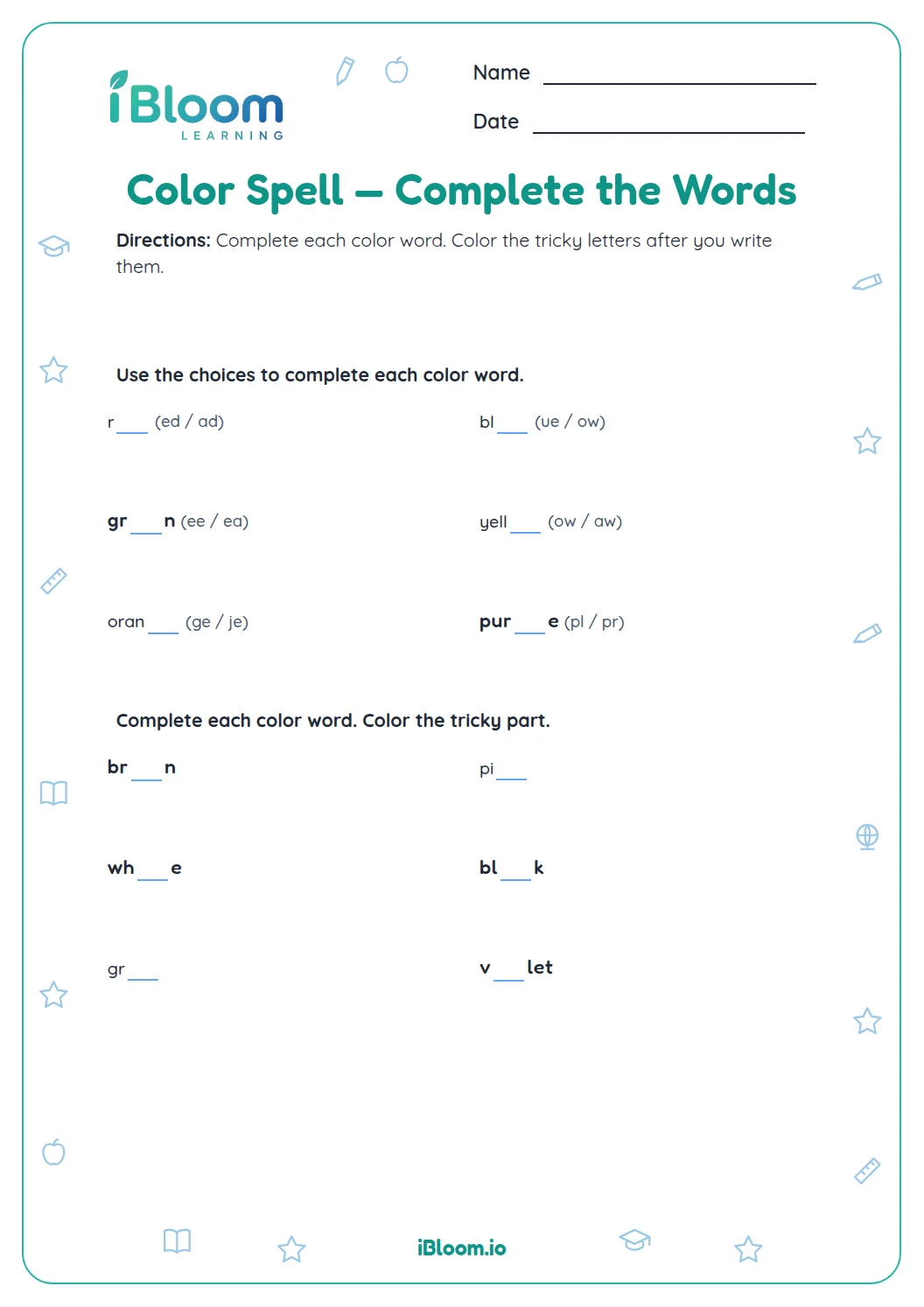
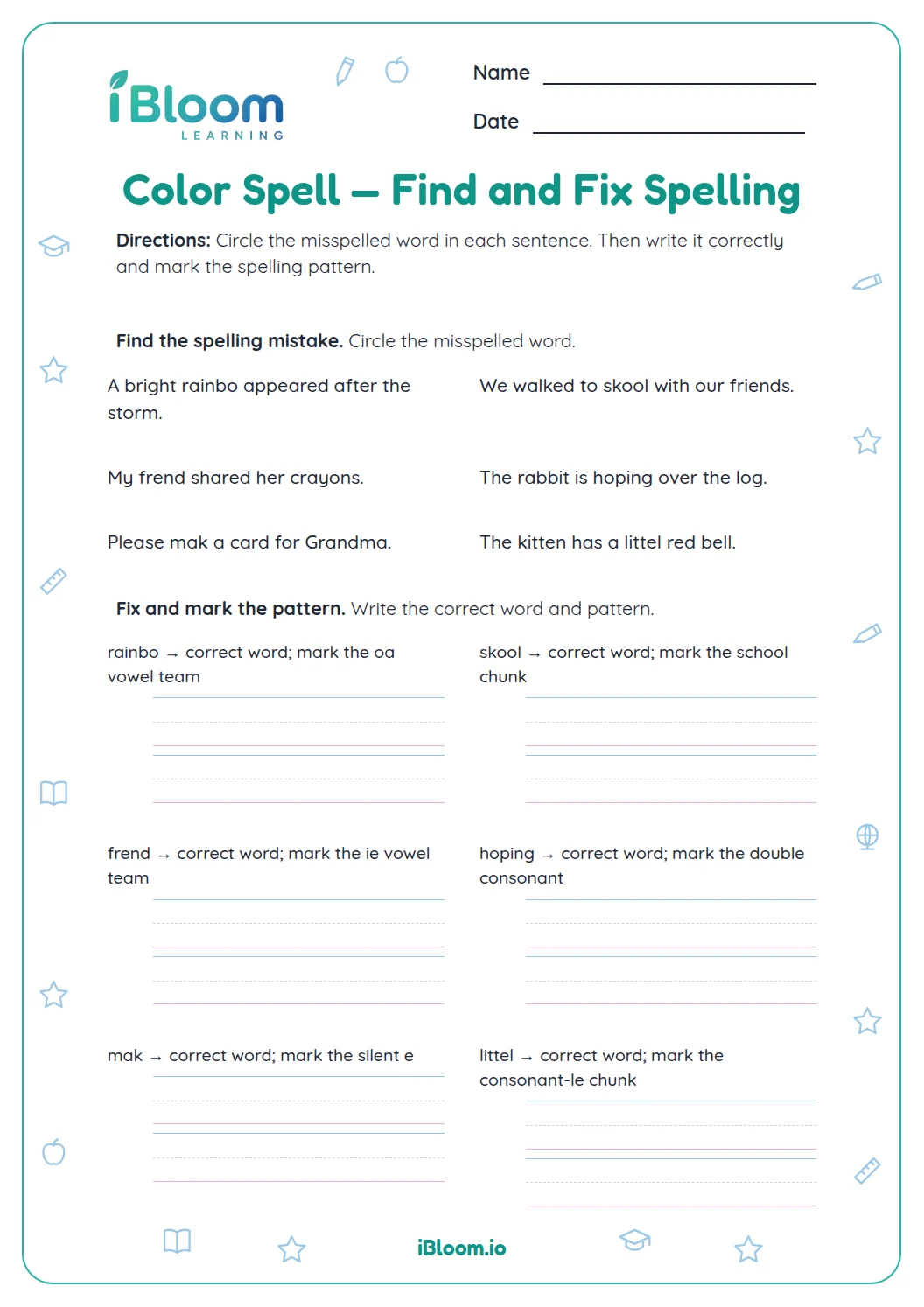
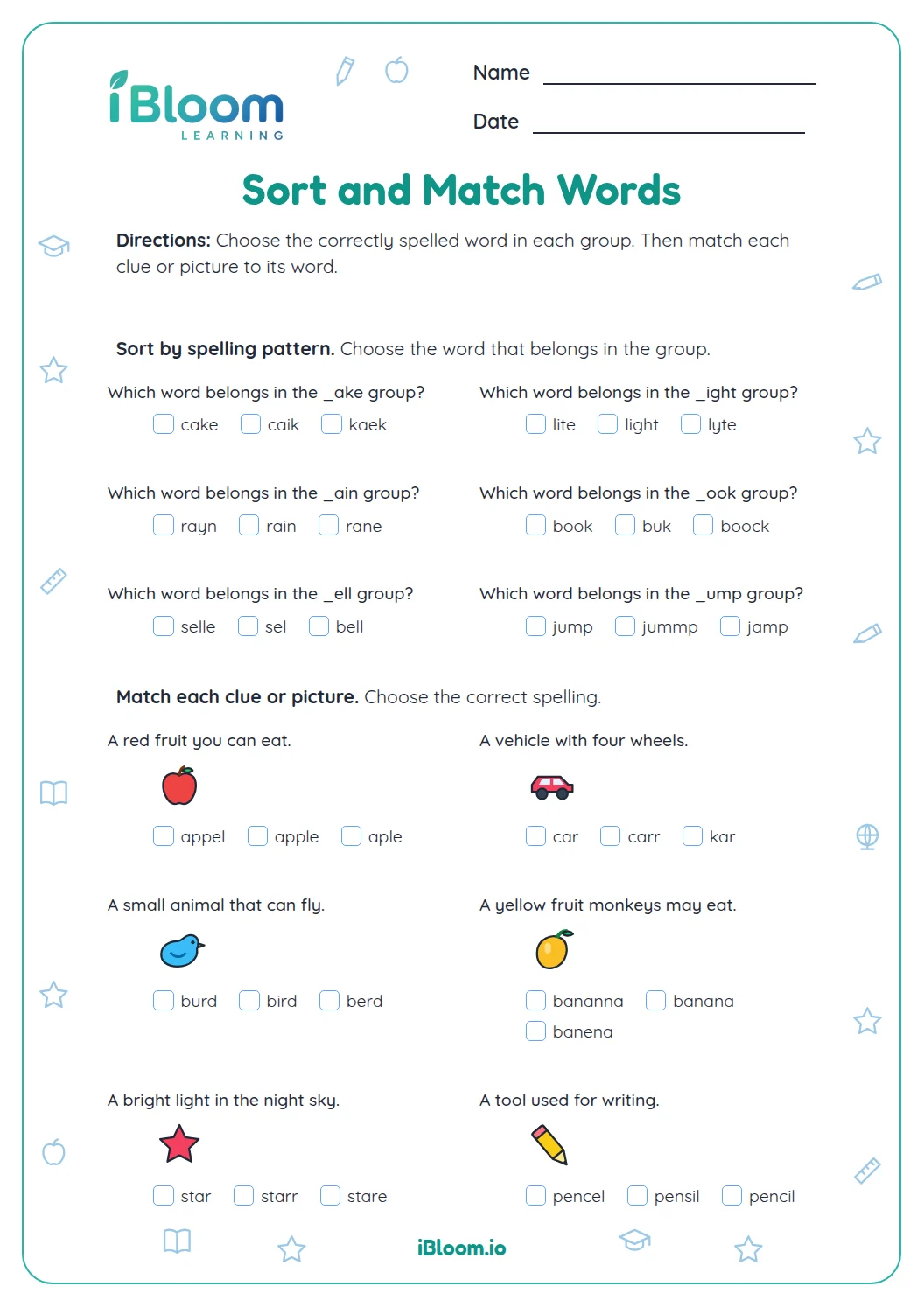
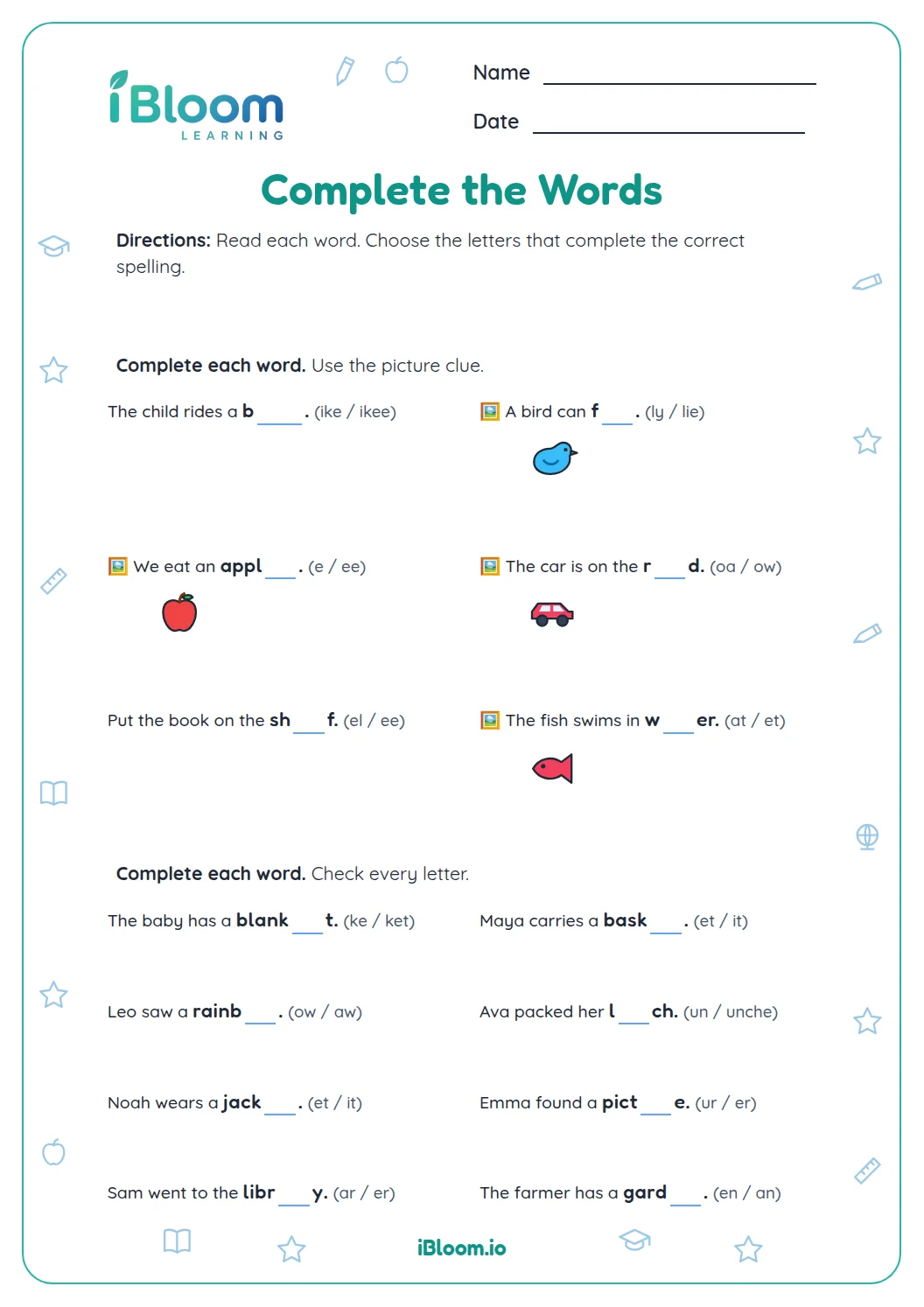
After the searches, children check spellings, complete missing letters, notice syllables, vowel patterns, and rhymes, and use a word in a sentence. These tasks ask them to look closely at the letters in familiar words. The questions use the same review words so children can reread and check spellings.
Does the answer key show where each word is hidden?
The key lists the words for each search and supplies the other answers. Children can compare their marked grid with the list to check that they found every target word. The questions use the same review words so children can reread and check spellings.
What does the sentence question require?
One prompt asks the child to use napkin in a sentence. A suitable answer shows what a napkin is used for, such as “I used a napkin at lunch.” The questions use the same review words so children can reread and check spellings.
How many questions are included?
There are 16 questions across three parts: two word searches, spelling and word-meaning checks, and two short written responses. The answer key is provided after the worksheet. The questions use the same review words so children can reread and check spellings.