





About this worksheet
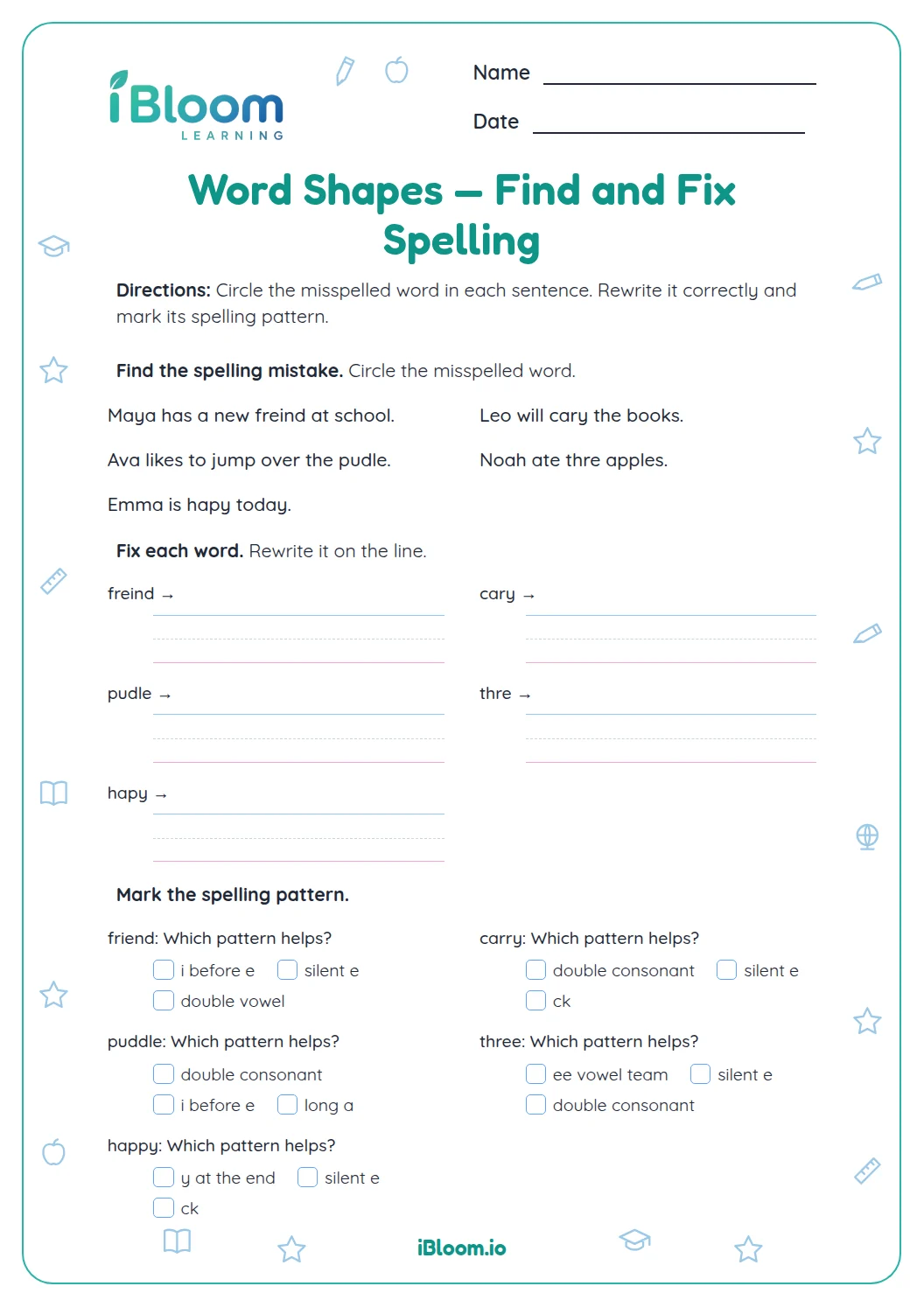
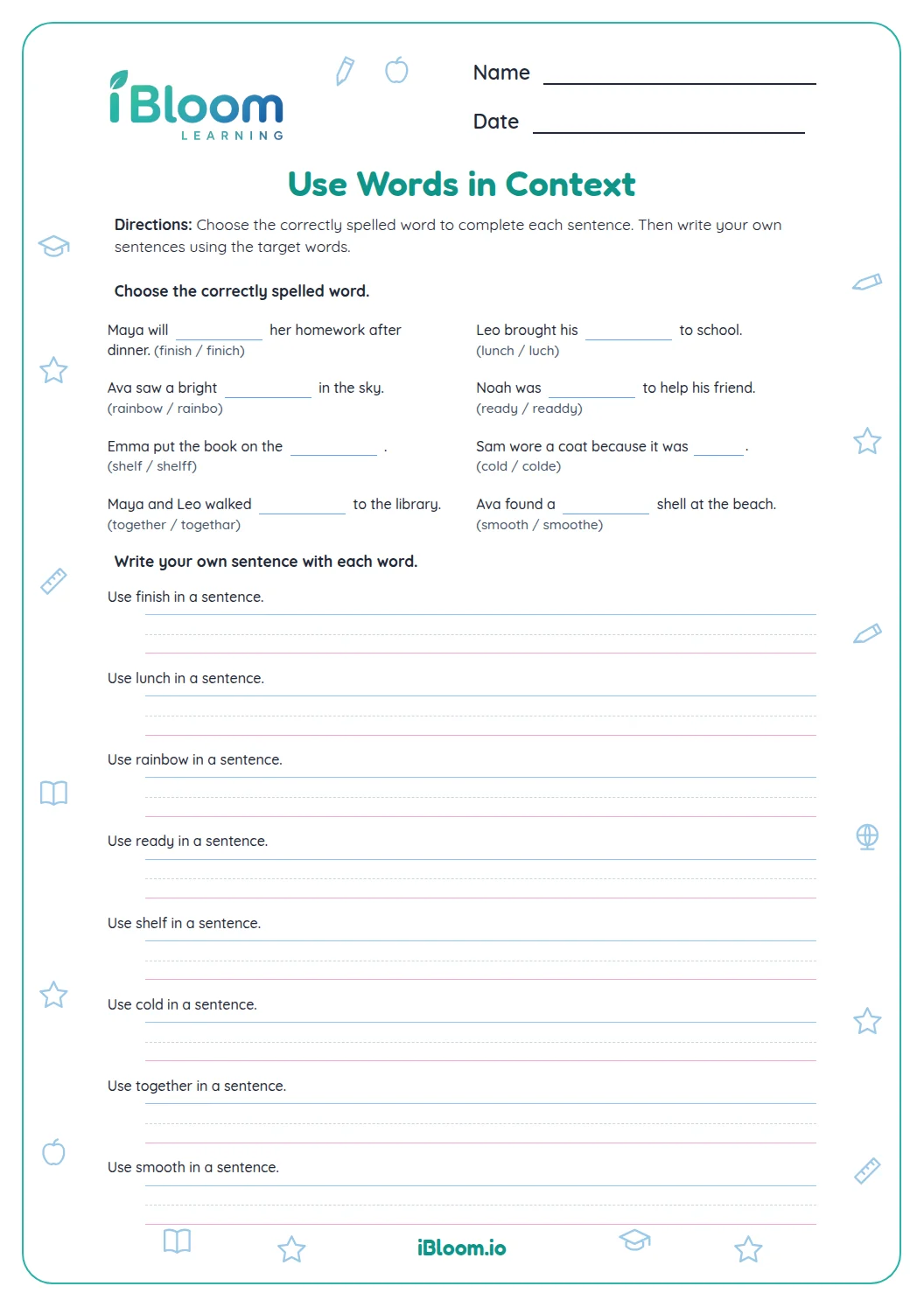
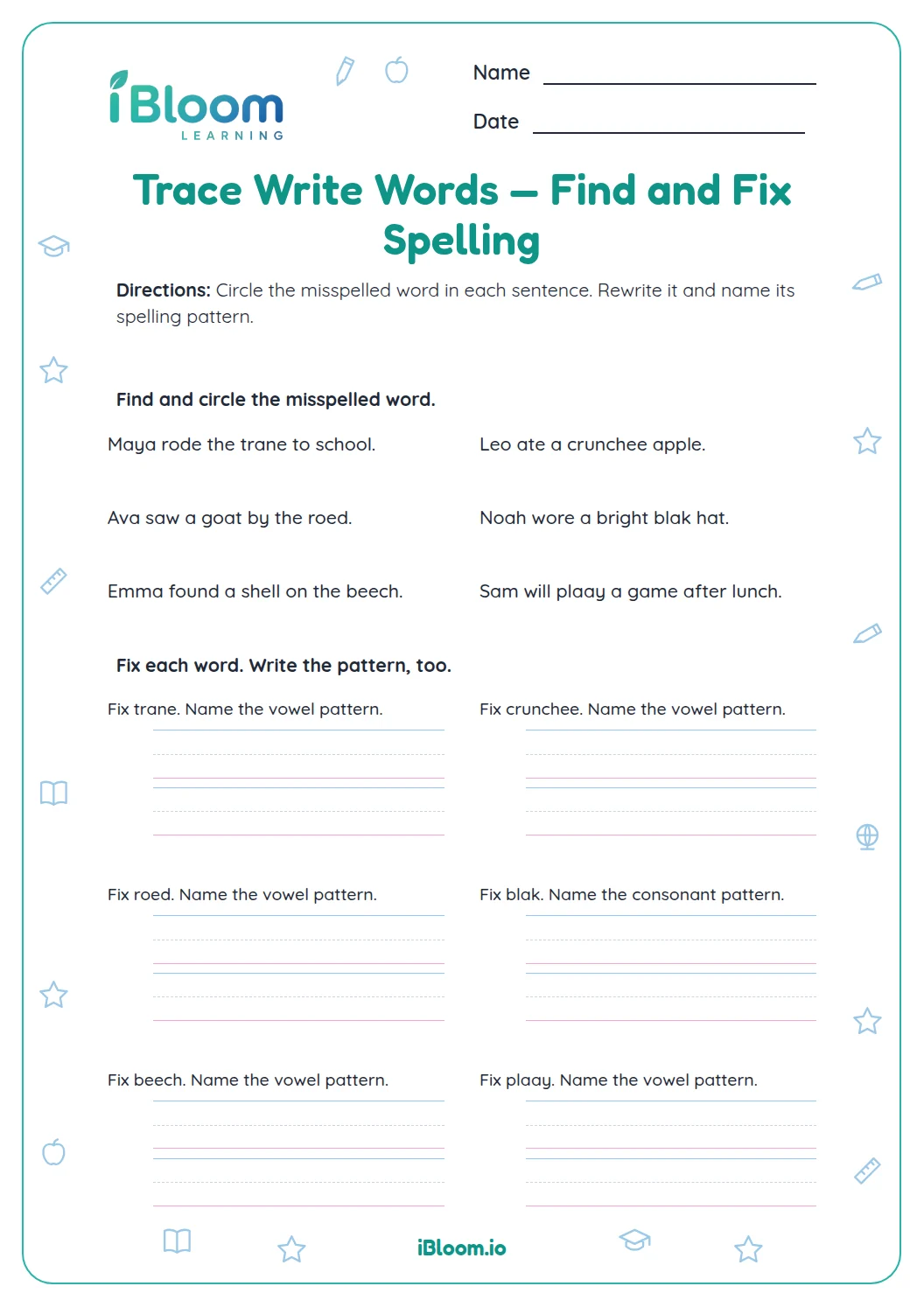
This Grade 2 worksheet connects spelling with lowercase letter shapes. Children identify tall, small, and dropping letters, match a pictured object to its spelling, and check letter shapes in familiar words. A separate answer key gives each response.
Aligned to 2.L.2
What are word shapes?
Tall letters rise above the middle writing line, drop letters extend below the baseline, and small letters stay between. In “bird,” b is a tall letter.
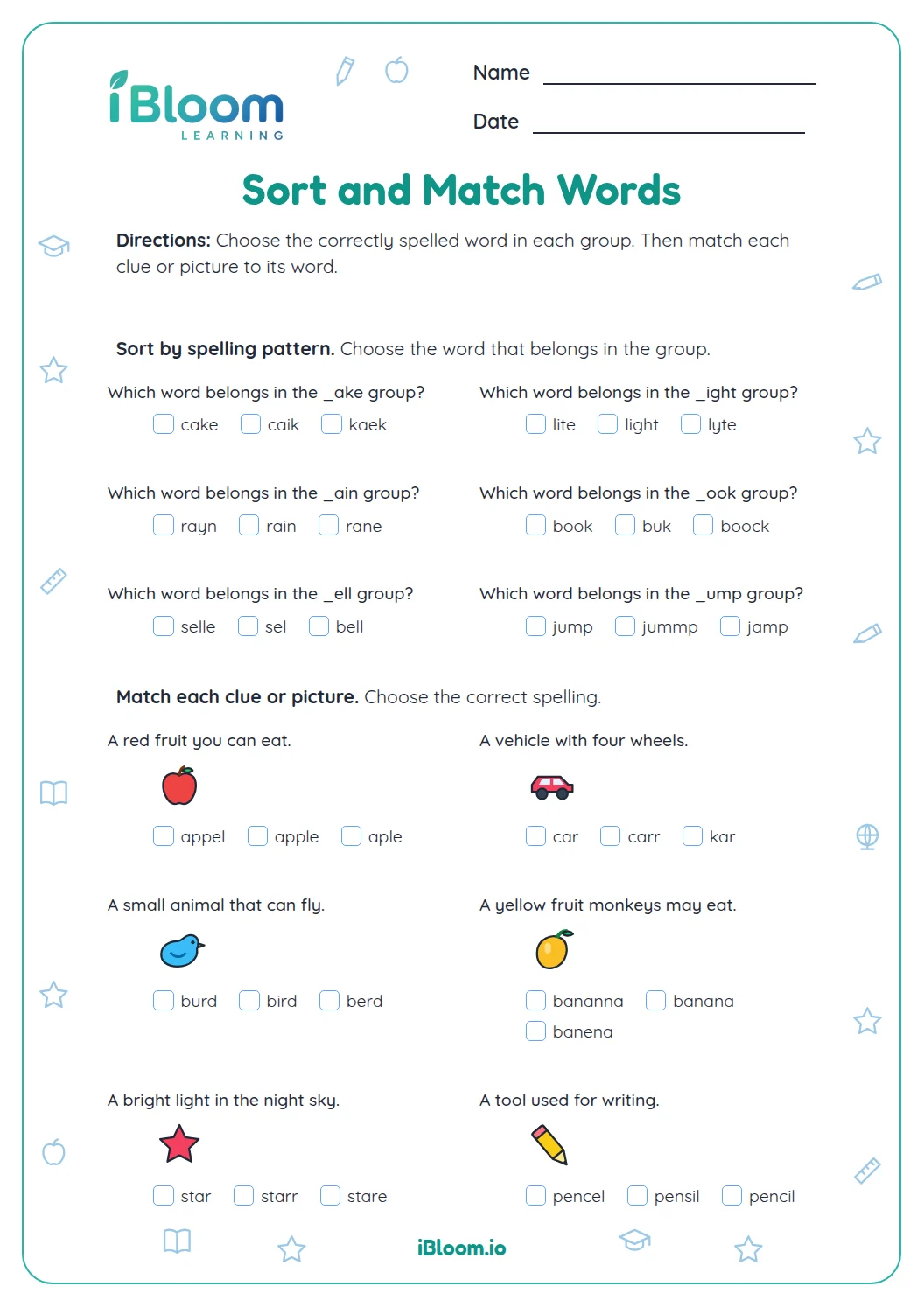
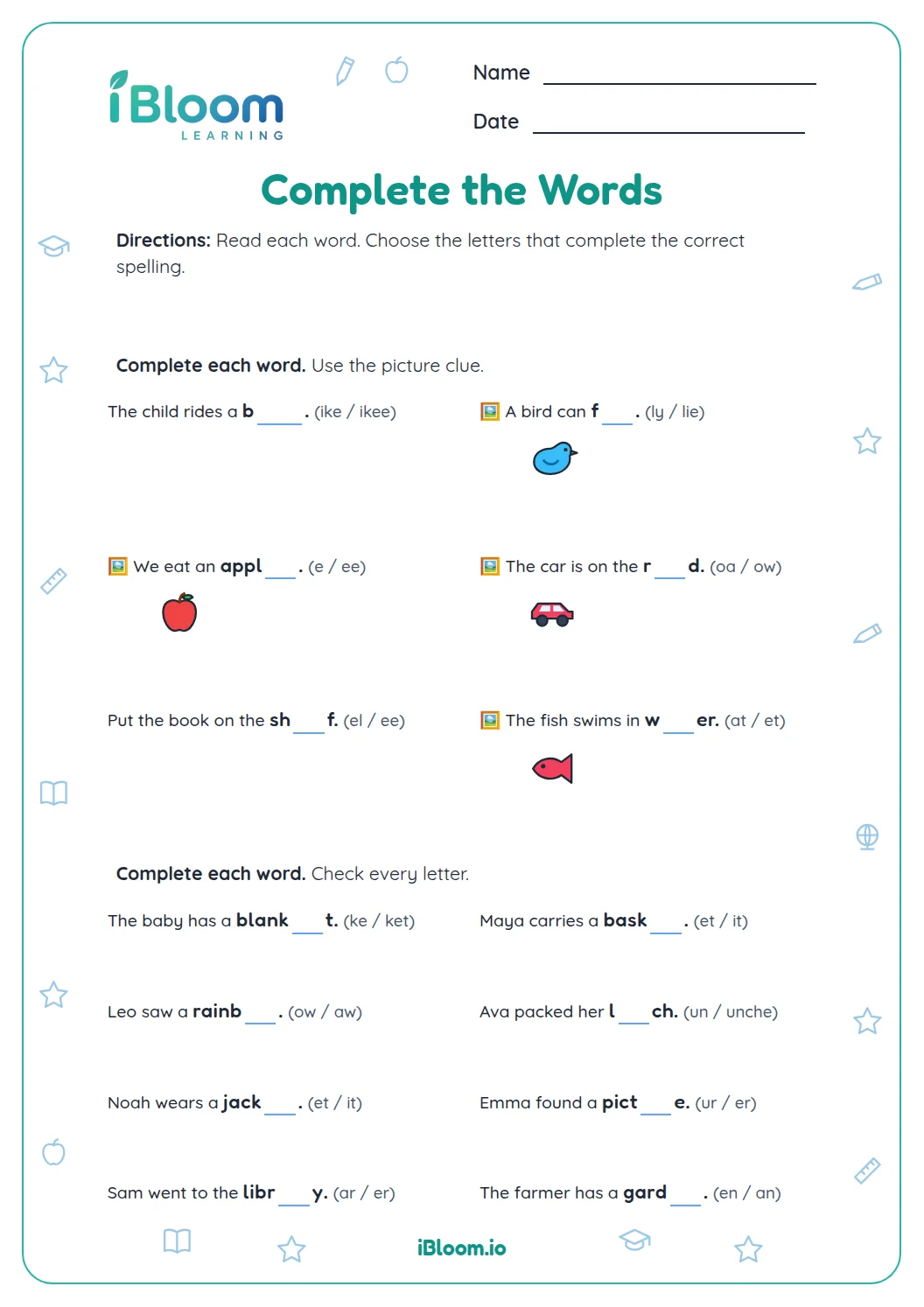
One question pairs a picture with a spelling response. Say the pictured word, then write its letters in order.
- 1Lowercase b is a tall letter.
- 2Look for a stem that rises above the middle line.
How can letter shapes help you check a word?
Look at each lowercase letter and compare it with the writing lines. Some letters rise above the middle line, some drop below the baseline, and others stay between the lines.
What questions are on the sheet?
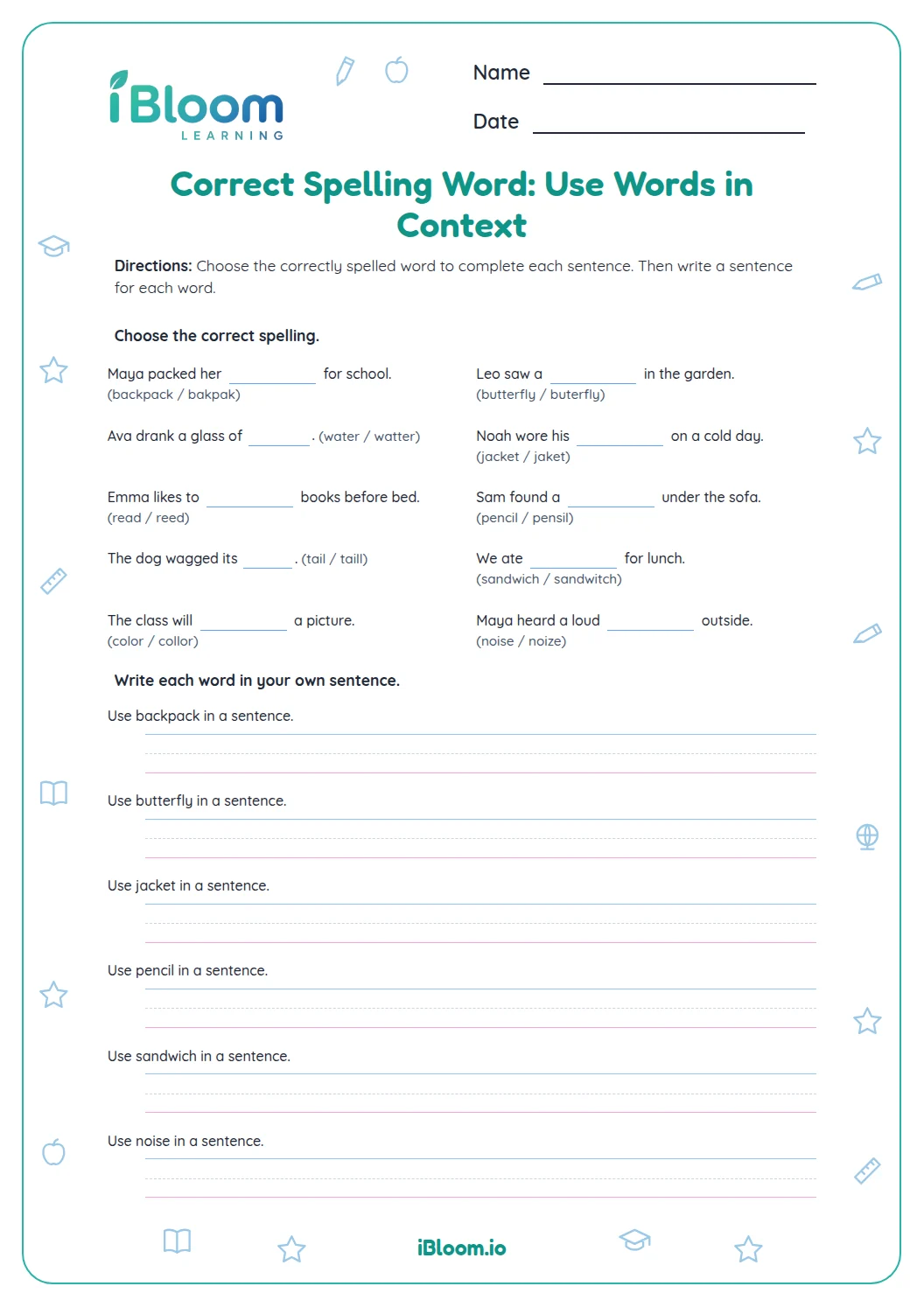
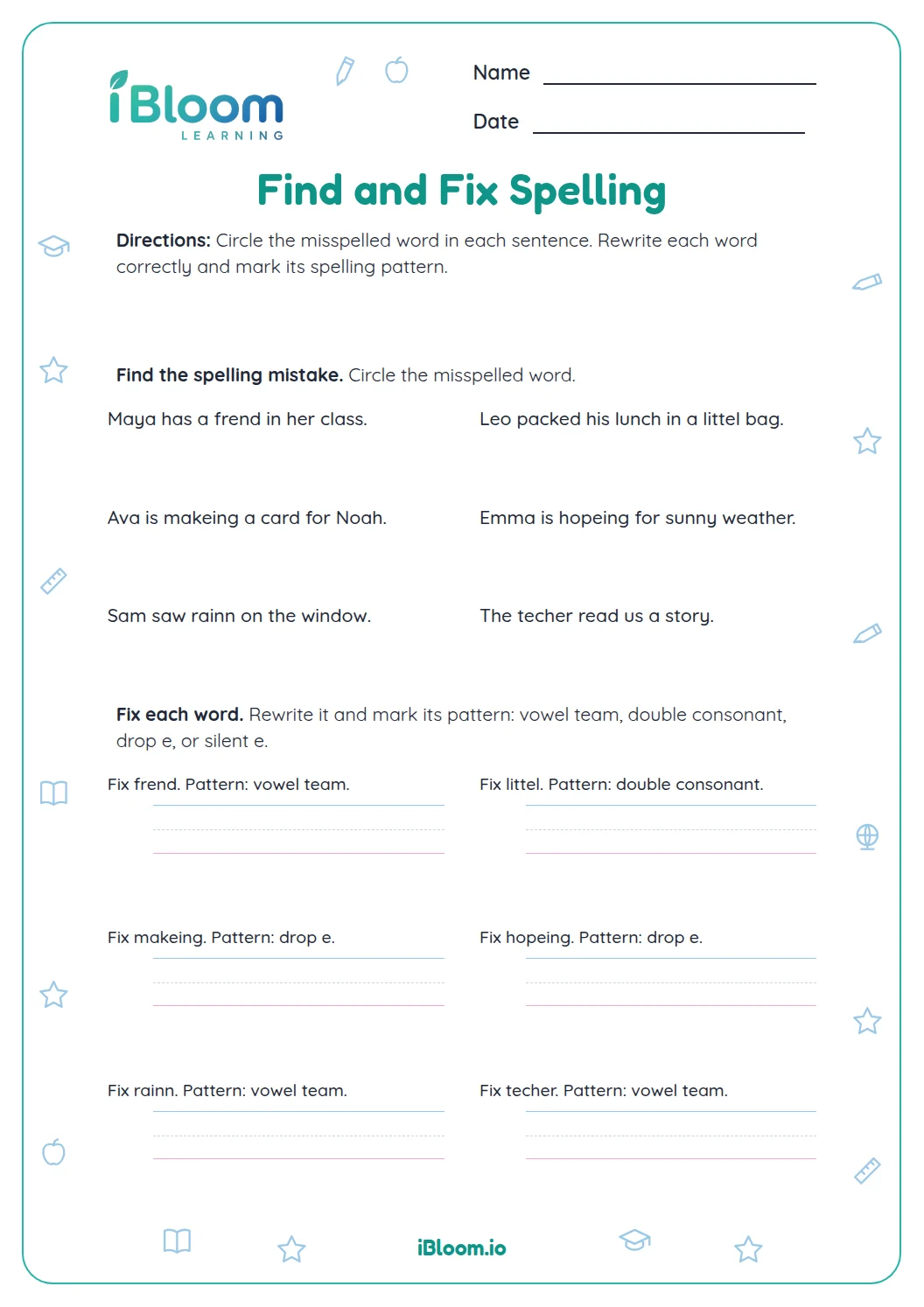
The worksheet has 14 short-answer questions: letter-shape checks and one pictured spelling match. The separate key lists target letters and spellings.
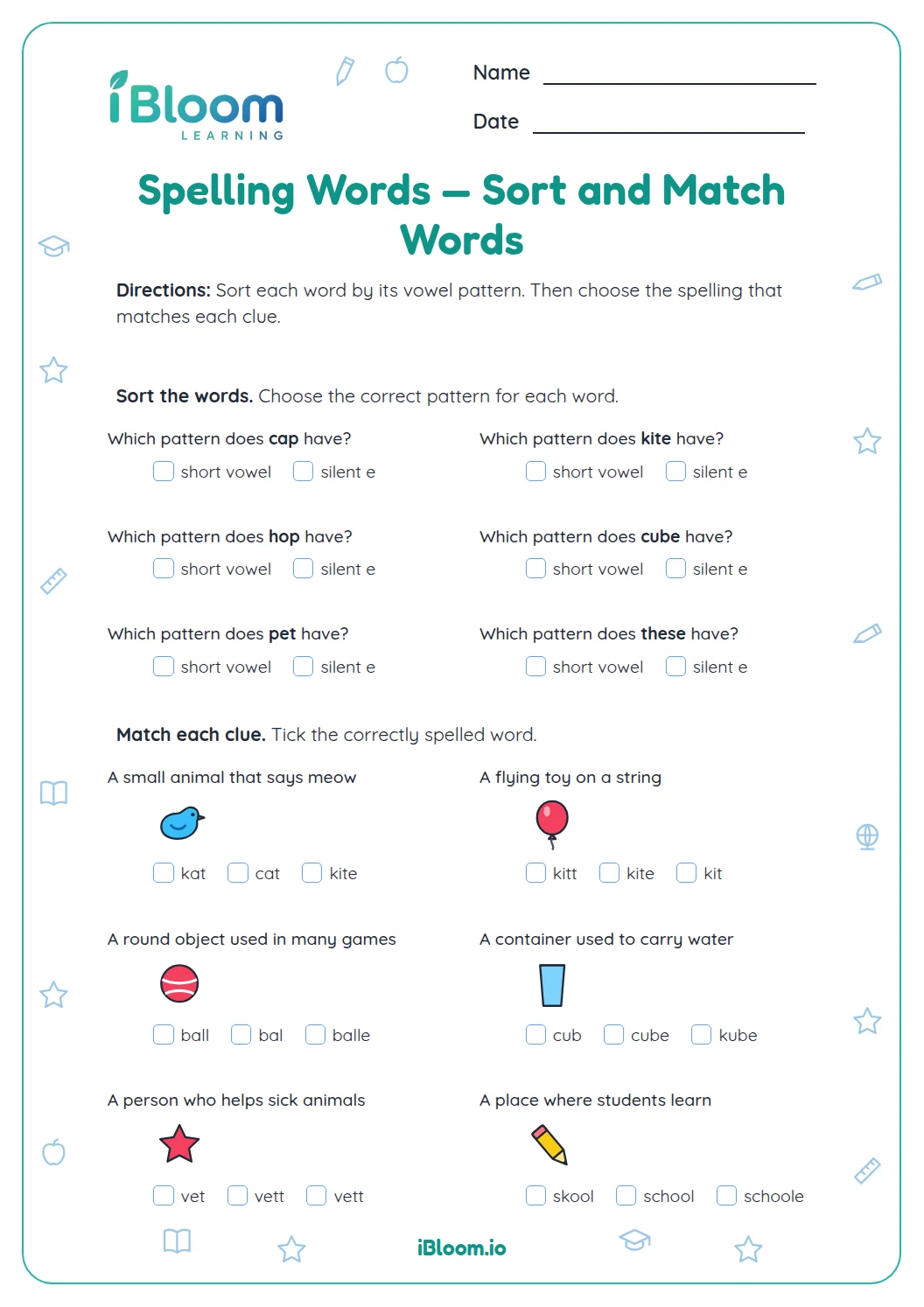
- Sort words by their tall, small, or drop letters.
- Match six familiar pictures to correctly spelled words.
- Write two words and identify a letter shape.
How to use this worksheet
- 1Read the one-sentence directions and complete each part in order.
- 2Pause at the end of each part to check how you reached an answer.
- 3Use the separate answer key to review answers and revisit any missed item.
- 4For open responses, compare your idea with the sample and explain your thinking.
Common slips to check
The mistake
Calling every letter in a word tall because one letter rises.
The fix
Look for a letter that rises; a word may also include small or drop letters.
The mistake
Confusing a tall letter with one that drops below the line.
The fix
Check whether the letter extends above the middle line or below the baseline.
The mistake
Choosing a spelling that only looks similar to the picture word.
The fix
Say the word slowly, then check every letter in order.
Curriculum alignment
Spell familiar words correctly when writing and notice letter patterns.
On this sheet:
Show the official wordingHide the official wording
Demonstrate command of the conventions of standard English capitalization, punctuation, and spelling when writing.
What to practice next
Make more practice
Further reading
Questions parents and teachers ask
What are tall, small, and drop letters?
Tall letters rise above the middle writing line, small letters stay between the lines, and drop letters extend below the baseline. The worksheet asks children to name the letter shape in familiar examples such as b, p, f, c, t, and g, then check more words.
Why are pictures included in a spelling worksheet?
One pictured clue gives a concrete spelling check. Learners name the pictured object and write its spelling, then compare the word with the answer key. The other items focus on whether lowercase letters rise above, stay between, or drop below the writing lines.
How can a child check a word shape?
Say the word, look at each lowercase letter, and notice whether it rises above the writing line, stays between the lines, or drops below. Then write the word and check that its spelling and letter positions match the example or word list.
What does the worksheet ask learners to do?
Learners sort six words by letter shape, match six pictures to correctly spelled words, and write two words while naming a letter that rises or drops. The short parts move from recognizing a visual pattern to applying it while writing.
How many pictured spelling clues are included?
One question shows a familiar object and asks the learner to write its name. The other questions focus on letter shape by asking whether letters are tall, small, or dropping. The answer key gives the target word and letter descriptions for checking.