

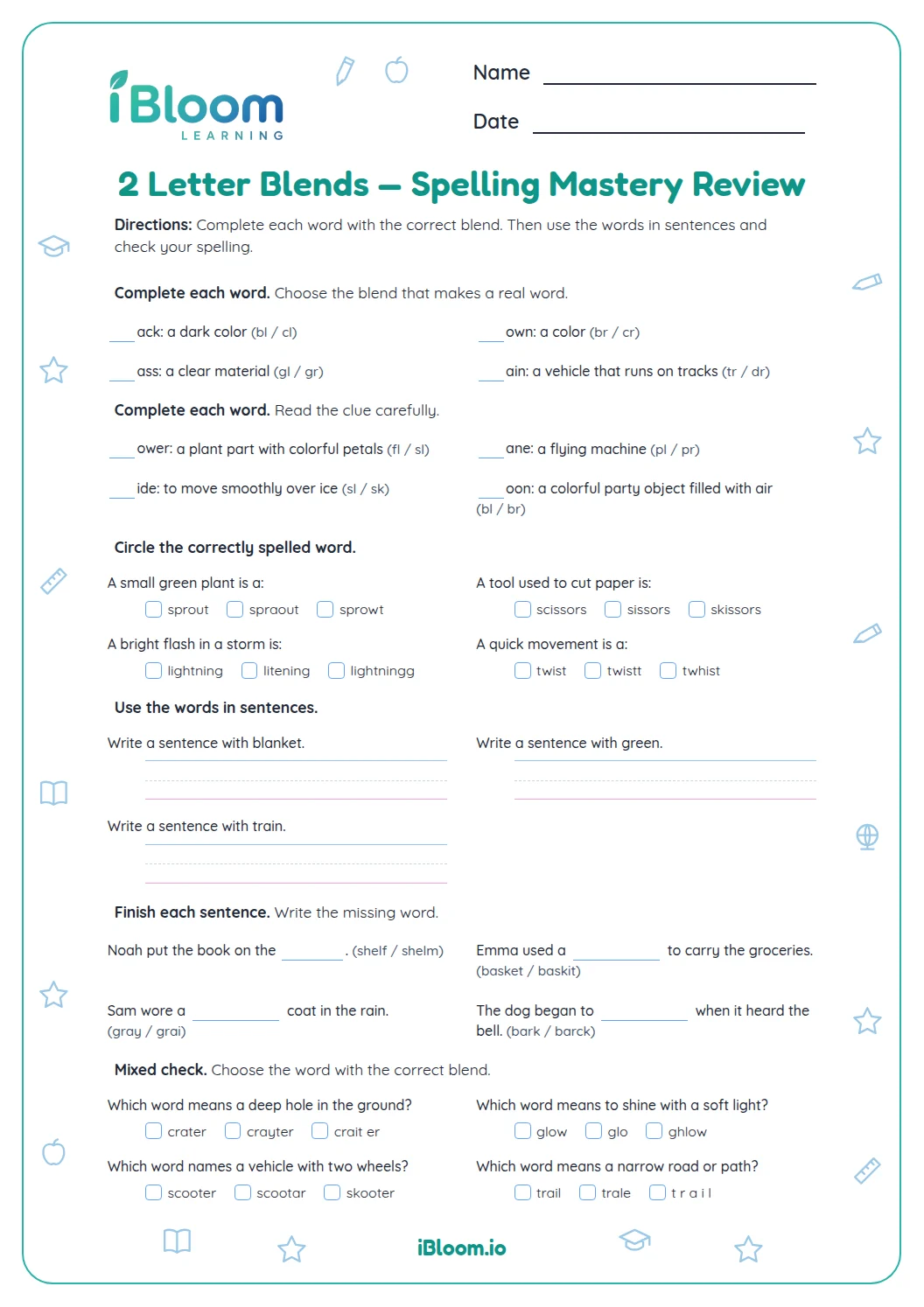
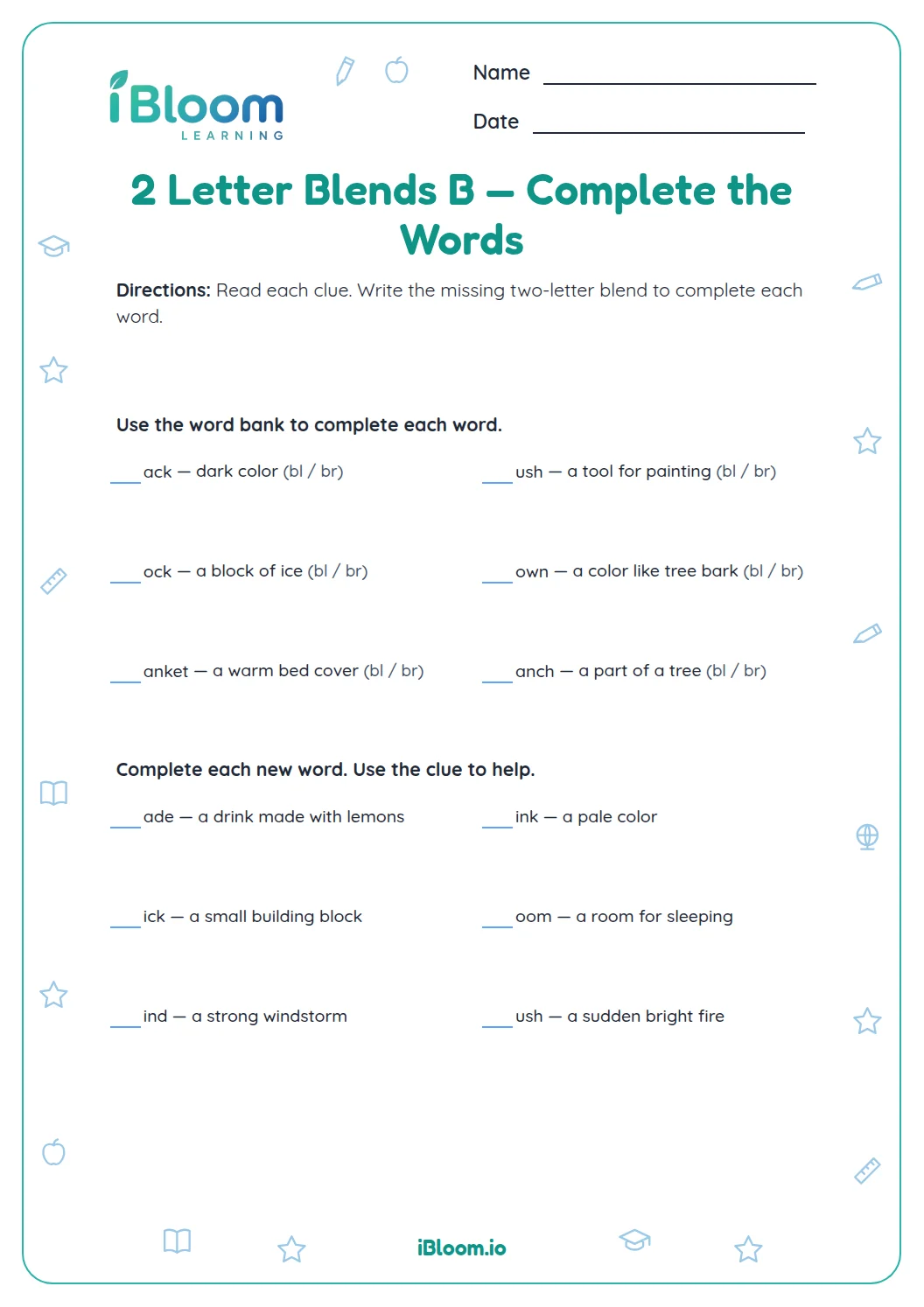


About this worksheet
This Grade 3 worksheet offers 14 questions on common two-letter beginning blends. Children identify blends in words, sort related examples, and complete words while keeping both consonants in order. A separate answer key includes acceptable sample words. The practice aligns with Common Core RF.3.3.
Aligned to RF.3.3
How do you spot a two-letter blend?
Look at the first two consonants in the word. In “black,” the letters b and l form the beginning blend bl, and both sounds are heard. Keep the letter order as you say the word.
Question 1 asks for a word beginning with bl. “Black” fits; clock begins with cl, while grin begins with gr.
- 1black → b + l
- 2Beginning blend: bl
- 3Both consonant sounds are heard
How does sorting help spelling?
Sorting words by their starting blends makes the shared spelling pattern easy to compare. For example, crab and crust both start with cr, while black starts with bl. Check the next letters when two blends look similar.
How can children use blends when spelling?
Say the word, listen for its opening consonants, then write those letters in order. Rereading the completed word helps catch a swapped or missing consonant.
How to match and sort blends
- 1Say the whole word.
- 2Listen for both beginning consonant sounds.
- 3Write the consonants in the same order.
- 4Group words with the same blend.
- 5Reread each spelling and check its blend.
Common mistakes and quick fixes
The mistake
Swap the second consonants in cl and cr.
The fix
Say each word slowly and listen for the second sound.
The mistake
Write only the first consonant.
The fix
Check that the blend has both beginning letters.
The mistake
Group words by rhyme instead of blend.
The fix
Compare the first two consonants, not the ending.
Common Core alignment
This worksheet gives children practice with the following Common Core skill.
Read and sort words by their beginning or ending consonant blends.
On this sheet: The tasks compare and decode one-syllable words with two-letter blends.
Show the official wordingHide the official wording
Know and apply grade-level phonics and word analysis skills in decoding words.
What to practice next
Further reading
Questions parents and teachers ask
What is a two-letter blend?
A two-letter blend is a pair of consonants at the beginning of a word where each consonant sound remains audible. In “crab,” children can hear /c/ and /r/. This worksheet practices matching words to blends and sorting similar-looking beginnings. For instance, both cr words belong in the same group, even when their endings differ.
How should children sort the words?
Listen to each word and write its first two consonants in order. Words beginning with the same pair belong together, such as crab and crust under cr. Sorting helps children notice that changing one consonant changes the word pattern. The key includes examples; a different correctly spelled word may also work.
Why are “cl” and “cr” easy to mix up?
Both blends start with c, so a reader may stop after noticing the first consonant. The second consonant distinguishes the groups. Say the word carefully, listen for the next sound, and check the second letter before choosing. Check the second consonant by saying the whole word aloud before selecting.
What if a child knows a blend but cannot spell the word?
Say the whole word, then say the opening sounds clearly and write the matching consonants in order. After filling in the rest, reread the word. Comparing it with related words on the sheet can help confirm the spelling. Have the child compare the chosen word with the printed blend pattern.
May a written word be different from the key?
Yes. Prompts asking children to supply a word allow other correctly spelled examples with the requested blend. The key provides samples such as flag for fl; accept another valid word that begins with the same two letters. A second valid example should begin with the requested letters in order.
How can the answer key support practice?
Use the key after a first attempt, then ask the child to explain one matching choice and one sort. For any missed item, reread the word and identify both consonants before trying again. The separate key includes sample open-ended answers.