



About this worksheet
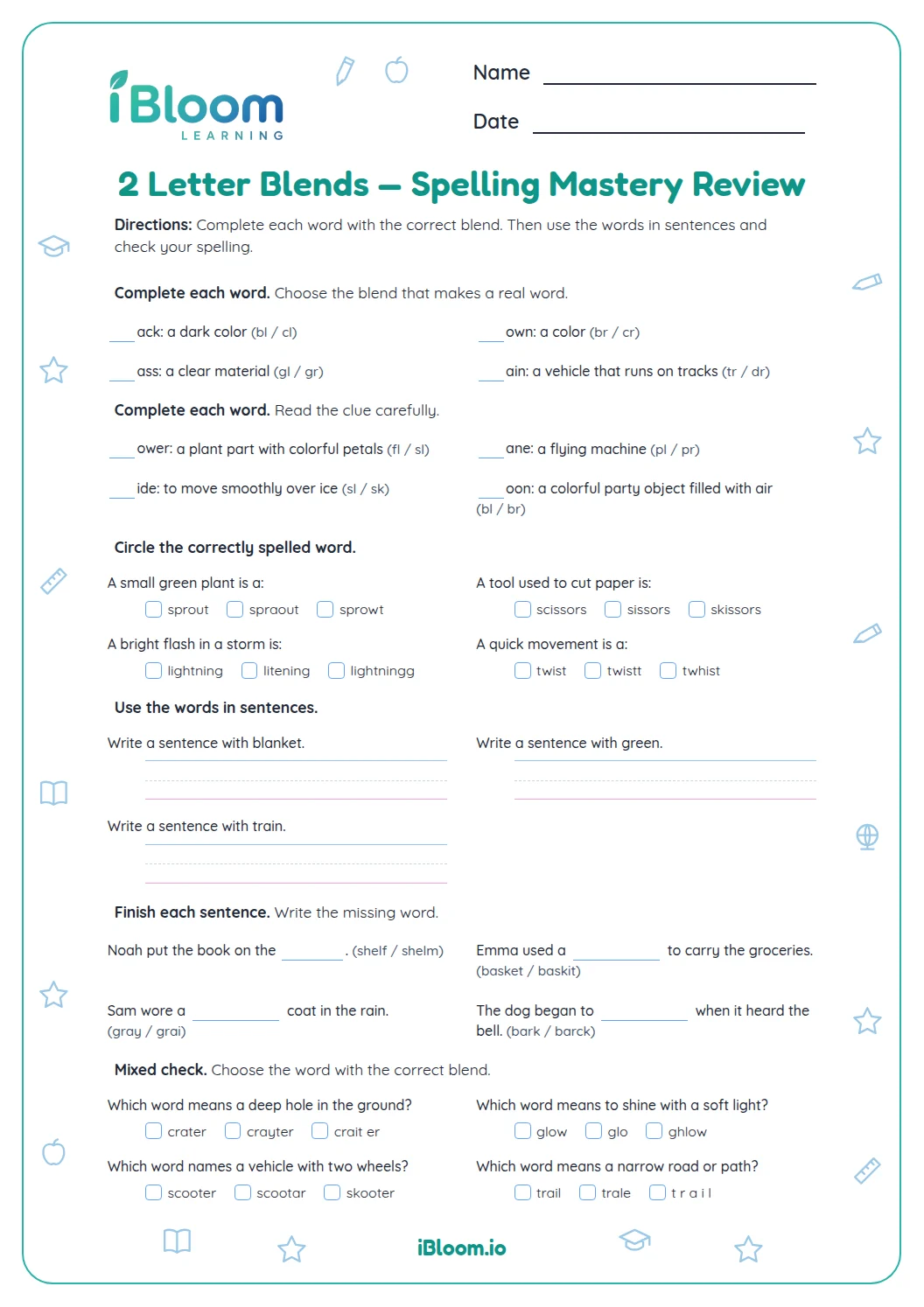
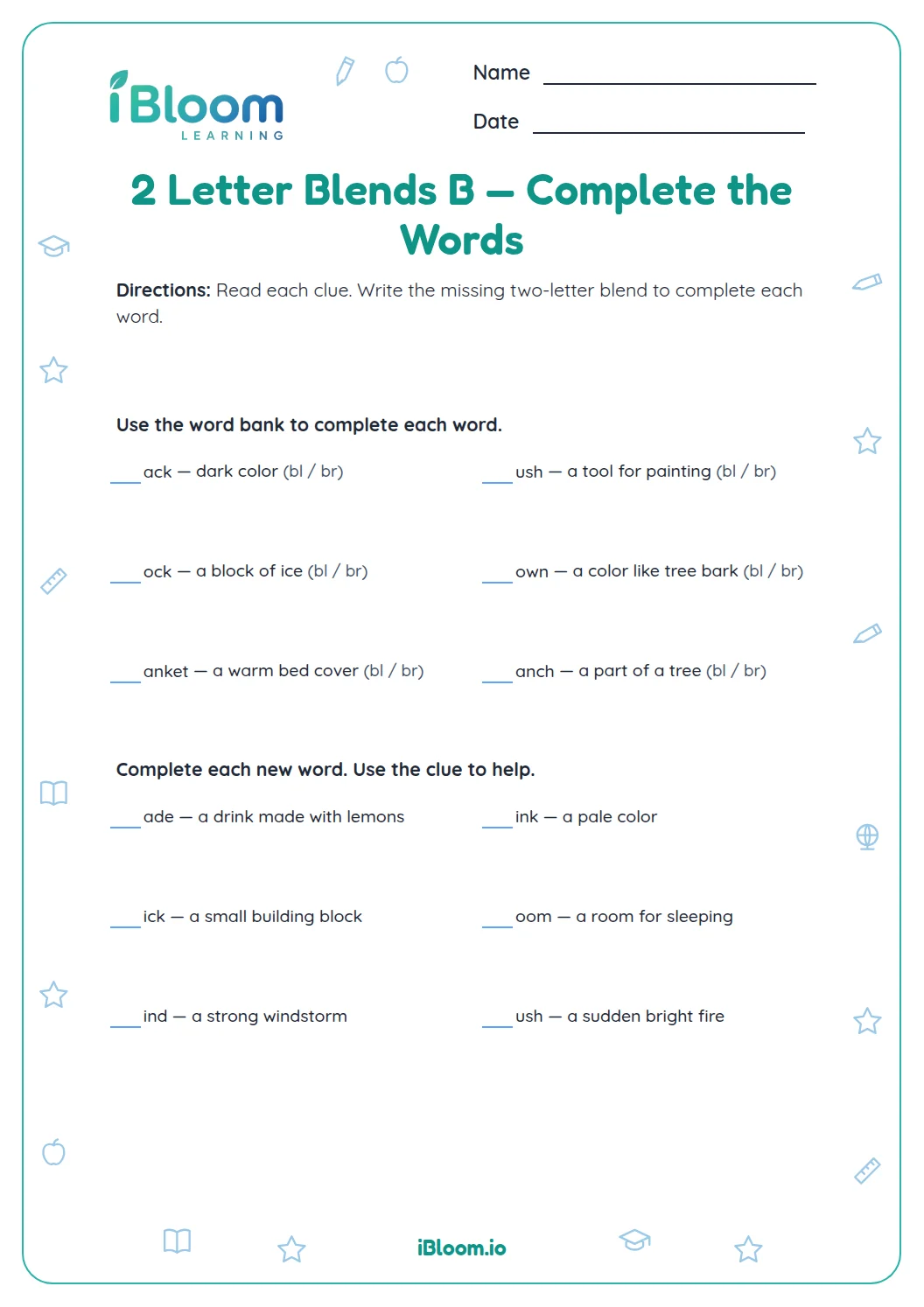
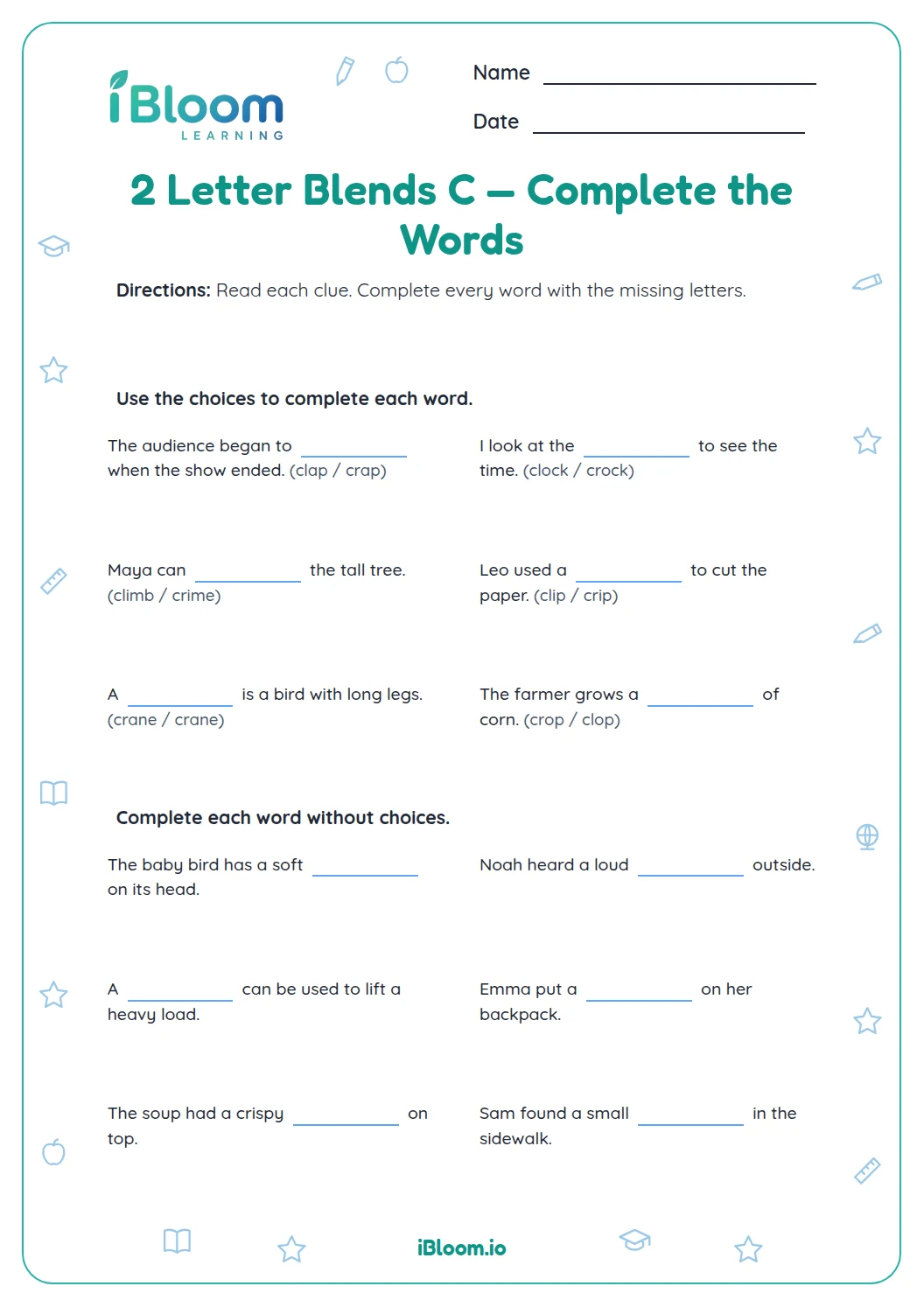
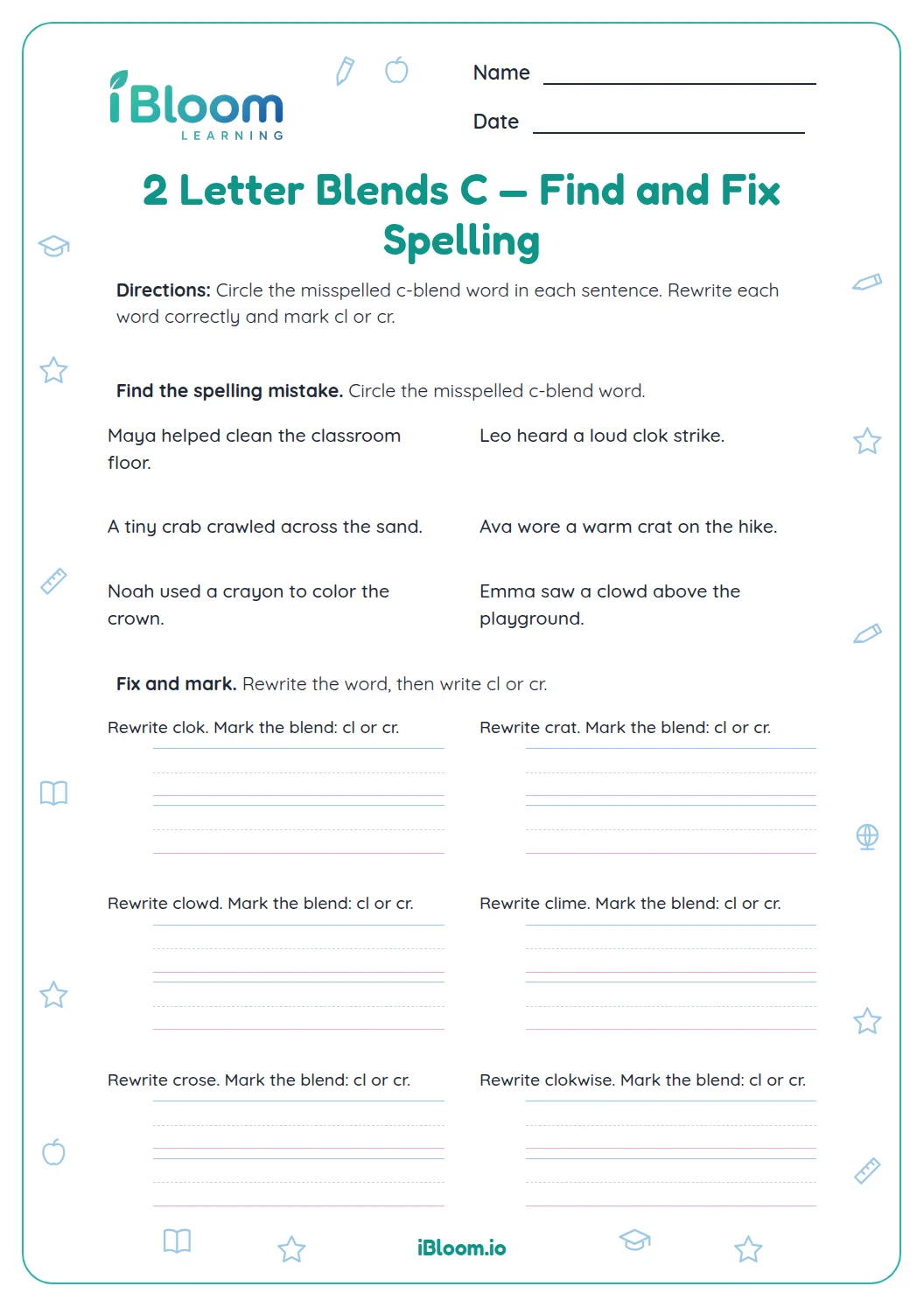
This Grade 3 spelling page has 16 misspelled words with beginning consonant blends. Children write each corrected word, checking that both consonant sounds in the blend appear in the spelling. The answer key lists the corrected words.
Aligned to L.3.2.e
Which blends appear on the page?
The 16 target words begin with blends such as br, fl, gr, pl, sn, tr, cl, dr, fr, bl, cr, sk, sp, and sw. The misspelling changes another letter or leaves one out, while the blend remains the clue.
- 16 words to correct
- Every target begins with a two-consonant blend
- The key shows the standard spelling
How can a blend help with spelling?
Say the word slowly and listen to both consonant sounds at the beginning. In brick, /b/ and /r/ are both heard, so both b and r belong in the spelling. Then check the remaining letters in the word.
How can a child correct a misspelled word?
For brik, the beginning blend br is already present. Say brick, listen for the ending /k/, and add the missing c before k to write brick.
A word correction routine
- 1Read the misspelled word aloud.
- 2Say it slowly and listen for both beginning consonant sounds.
- 3Check that both blend letters are present in order.
- 4Look across the rest of the word for a missing or changed letter.
- 5Write the complete corrected word.
- 6Compare it with the answer key.
Blend spelling slips
The mistake
Writing only one letter for a two-sound blend.
The fix
Listen for both starting sounds and write both consonants in order.
The mistake
Fixing the blend but leaving another misspelling.
The fix
Read the whole corrected word and compare every letter with the word you hear.
The mistake
Adding an extra repeated consonant, as in drumm.
The fix
Say the word and check how many ending consonants belong in its conventional spelling: drum.
Common Core alignment
This page practices conventional spelling of familiar words with consonant blends.
Use conventional spelling patterns.
On this sheet: Students retrieve the conventional spellings of familiar words containing consonant blends.
Show the official wordingHide the official wording
Use conventional spelling for high-frequency and other studied words and for adding suffixes to base words.
What to practice next
Make more practice
Further reading
Questions parents and teachers ask
What is a two-letter blend?
A two-letter blend is a pair of consonants whose sounds can both be heard, such as br in brick or fl in float. This sheet focuses on blends at the beginning of words. The spelling work asks learners to examine the full word after hearing its sounds.
How many words does the page include?
There are 16 misspelled words to correct. Each answer is a complete word that begins with a two-letter consonant blend, and the answer key shows the conventional spelling. Each correction can be checked by reading the finished word aloud. during this practice.
How can a learner find the spelling error?
Say the word aloud and listen to its sounds, especially the beginning blend. Then compare the letters with the sound sequence and check the rest of the word for a missing, changed, or extra letter. Listening carefully can help identify whether a consonant sound is missing.
Why do some wrong words have extra letters?
A spelling error can leave out, change, or add a letter. For example, drumm has an extra m; the corrected word is drum. Checking the whole word helps catch more than missing letters. The whole-word check catches errors beyond the blend itself.
How should families use the answer key?
Ask the learner to write each correction before looking at the key. Then compare the letters and say the blend aloud. If a spelling differs, identify whether a letter was left out, changed, or added. This makes the answer key useful for noticing the type of spelling slip.