



About this worksheet
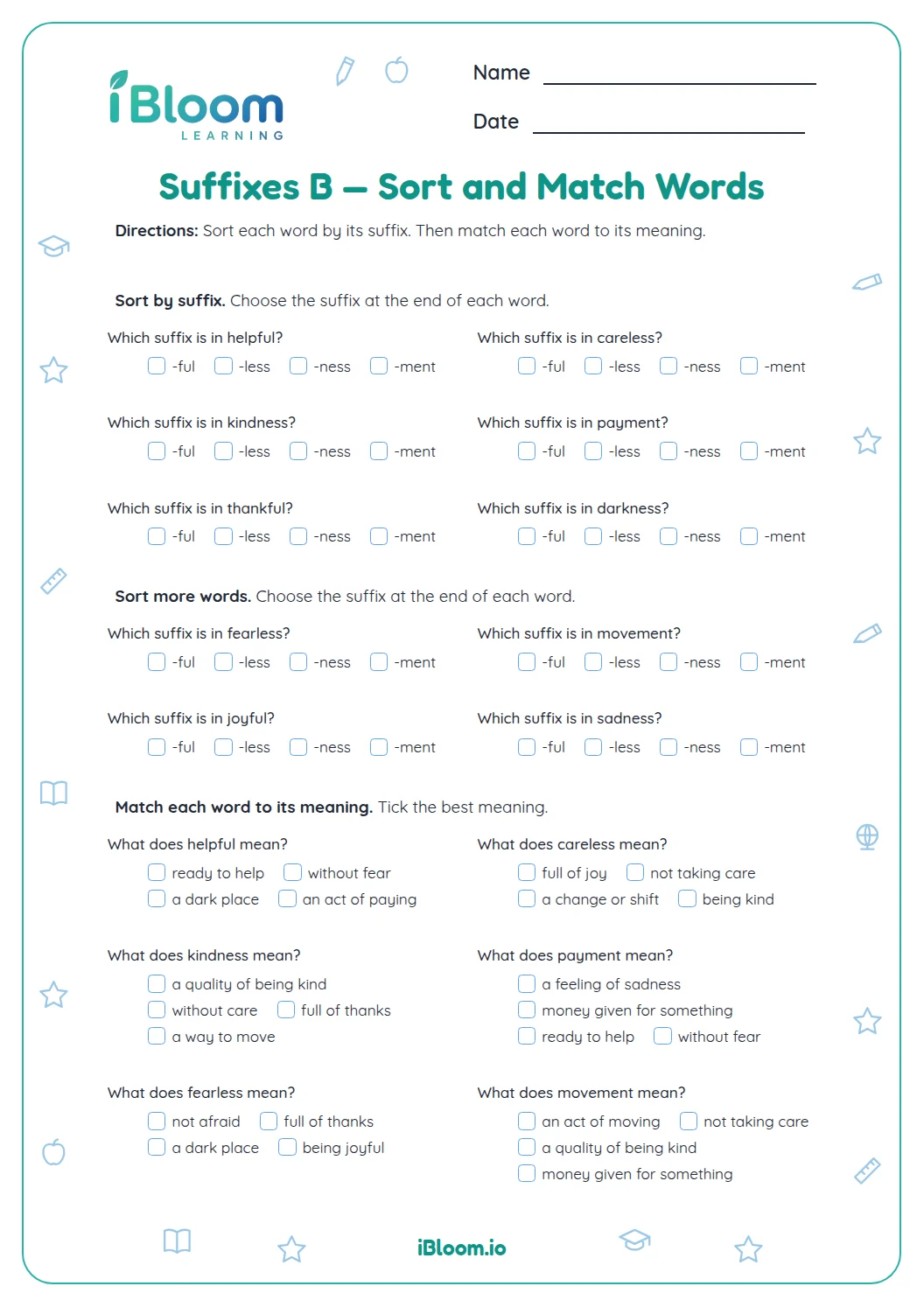
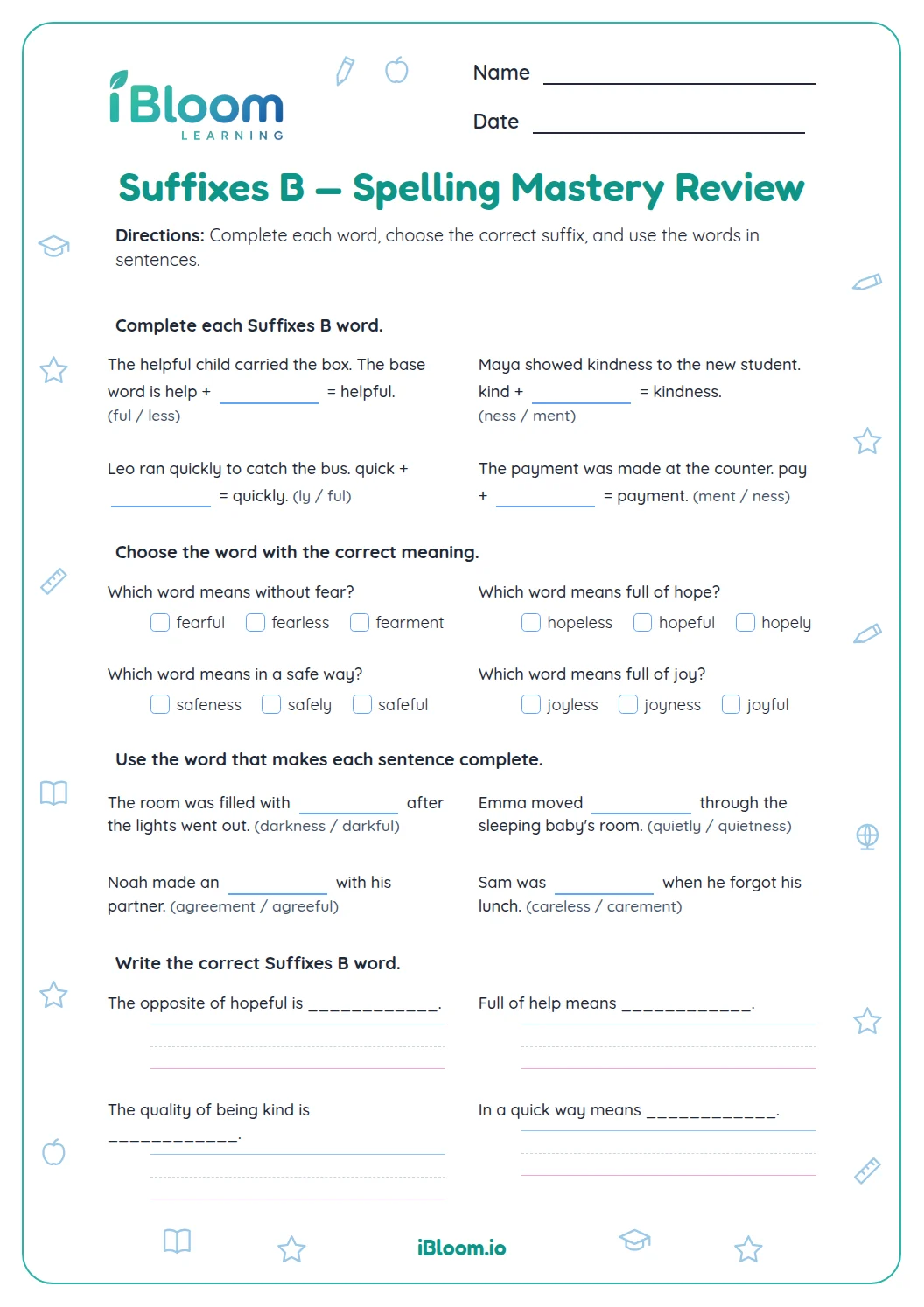
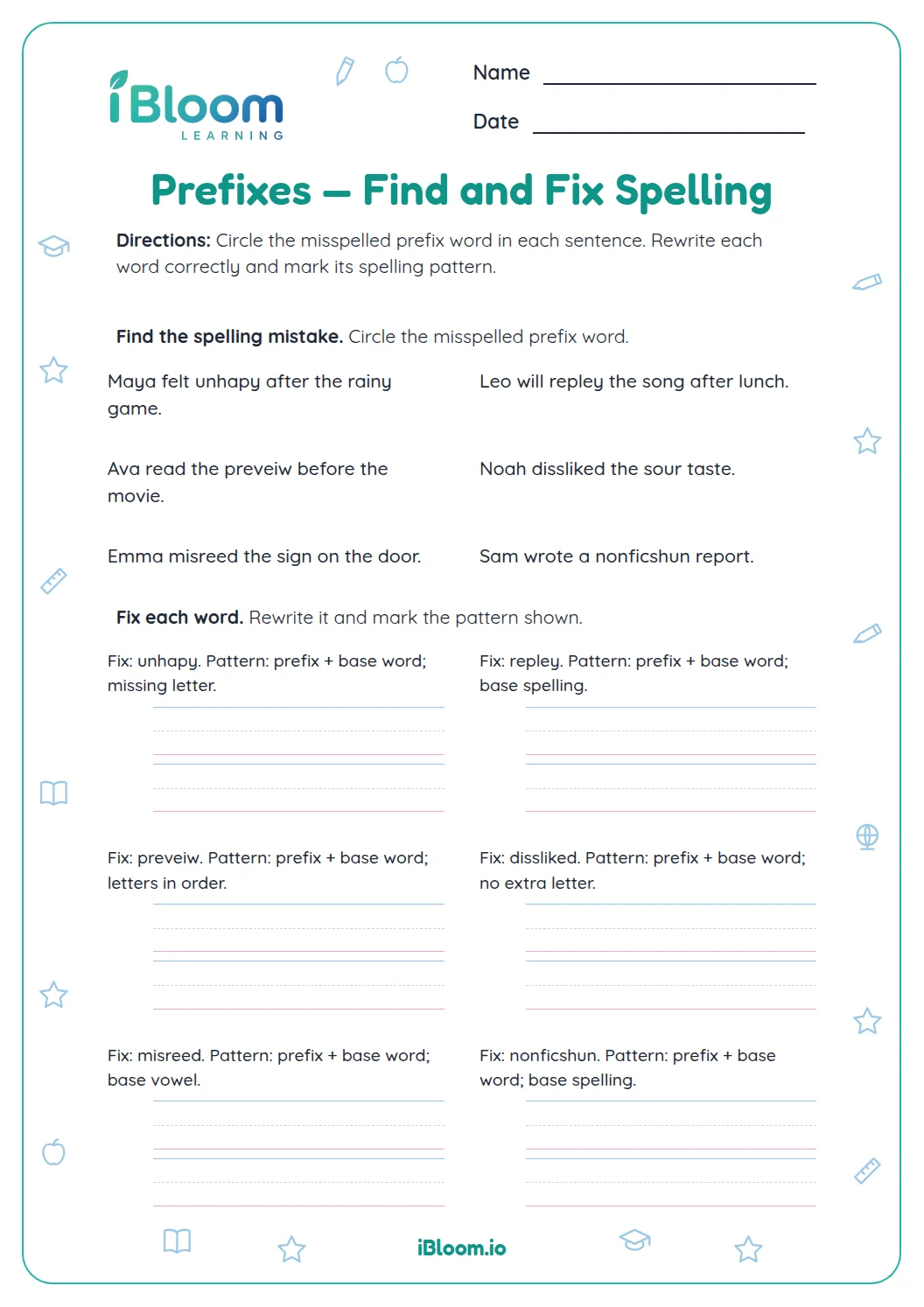
This free Grade 3 spelling worksheet gives children 16 words to complete with common suffixes. Sentence clues and short meanings practice -ful, -less, -ness, -ment, and -ly, including changes such as happy to happiness. It aligns with CCSS L.3.2.e and includes a separate answer key.
Aligned to L.3.2.e
How can a suffix finish a word?
A suffix is a group of letters added to the end of a base word. The clue helps a child choose a meaningful ending. A person who helps is helpful; a room without care is careless.
Some words change before the suffix is added. In happiness, the y in happy changes to i before -ness.
- 1happy
- 2Change y to i
- 3Add -ness
- 4happiness
Which spelling patterns appear here?
The 16 items use five common suffixes. Children complete adjectives, nouns, and adverbs, then check spelling and meaning against the key.
How to use this worksheet
- 1Read the full clue before writing.
- 2Say the base word and decide what meaning the sentence needs.
- 3Choose -ful, -less, -ness, -ment, or -ly.
- 4Check spelling changes such as happy to happiness.
- 5Read the completed word in the sentence and use the key to check.
Common mistakes and quick fixes
The mistake
Choosing -ful when a clue says something is without care.
The fix
Look for clue words such as “without” and choose careless.
The mistake
Keeping the y in happy when adding -ness.
The fix
Change y to i before adding -ness: happiness.
The mistake
Treating -ment as if it were part of the base word.
The fix
Find the base word first, then add -ment to form a noun such as enjoyment.
Common Core alignment
This spelling page practices conventional spelling when suffixes are added to base words.
Spell studied words and words formed by adding suffixes to base words.
On this sheet: Children add suffixes and apply spelling changes in each completed word.
Show the official wordingHide the official wording
Use conventional spelling for high-frequency and other studied words and for adding suffixes to base words (e.g., sitting, smiled, cries, happiness).
What to practice next
Make more practice
Further reading
Questions parents and teachers ask
What is a suffix?
A suffix is a word part added to the end of a base word. This page practices -ful, -less, -ness, -ment, and -ly in short sentence clues. Have the learner read the finished word aloud and check that the ending makes a real word that fits the sentence.
Why does happy become happiness?
When -ness is added to happy, the final y changes to i, making happiness. The child should read the completed word and check its spelling as well as its meaning. The same spelling change appears in happi___, where the missing suffix is -ness.
How does the suffix -ment change a word?
Adding -ment often makes a noun that names an action or result. Here, enjoy becomes enjoyment and move becomes movement. The completed word should fit the sentence, and the final spelling should be checked because adding an ending can change how a base word is written.
How many words are on this worksheet?
There are 16 complete-the-word questions in four groups. The items use -ful, -less, -ness, -ment, and -ly in adjectives, nouns, and adverbs. Ask the child to reread each word in its sentence to check spelling and meaning. That gives a practical spelling check.
Can a sentence clue help choose a suffix?
Yes. Each sentence gives a meaning or grammar clue. For example, “a room without care” needs careless, while “a person with hope” needs hopeful. Read the full clue before writing the ending, then check that the completed word is real.
Is the answer key included?
Yes. A separate answer key gives the suffix letters for each blank. Children can use it to check spelling and reread the completed sentence to confirm that the word fits. Have the learner reread the completed sentence to check both spelling and meaning.