
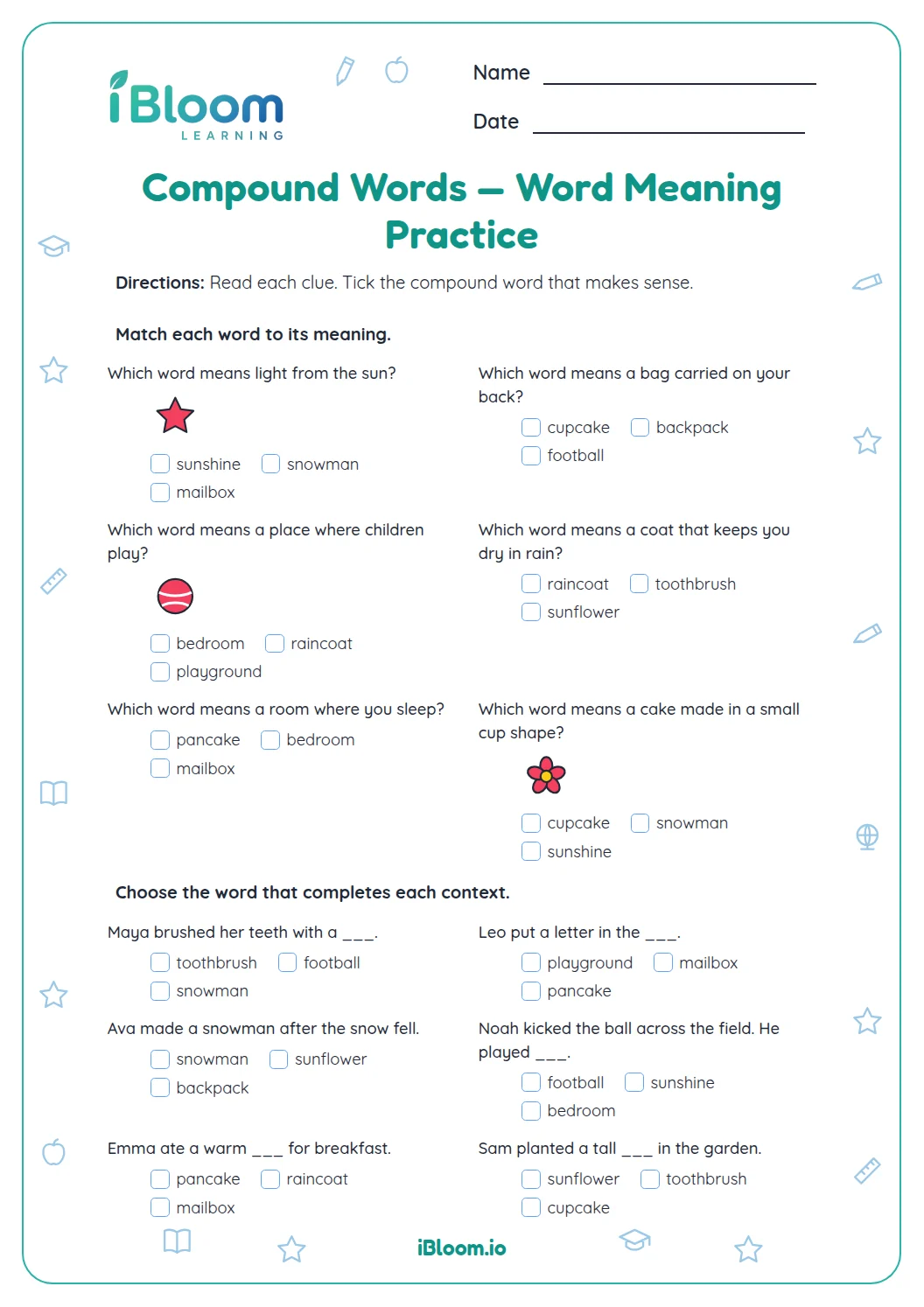


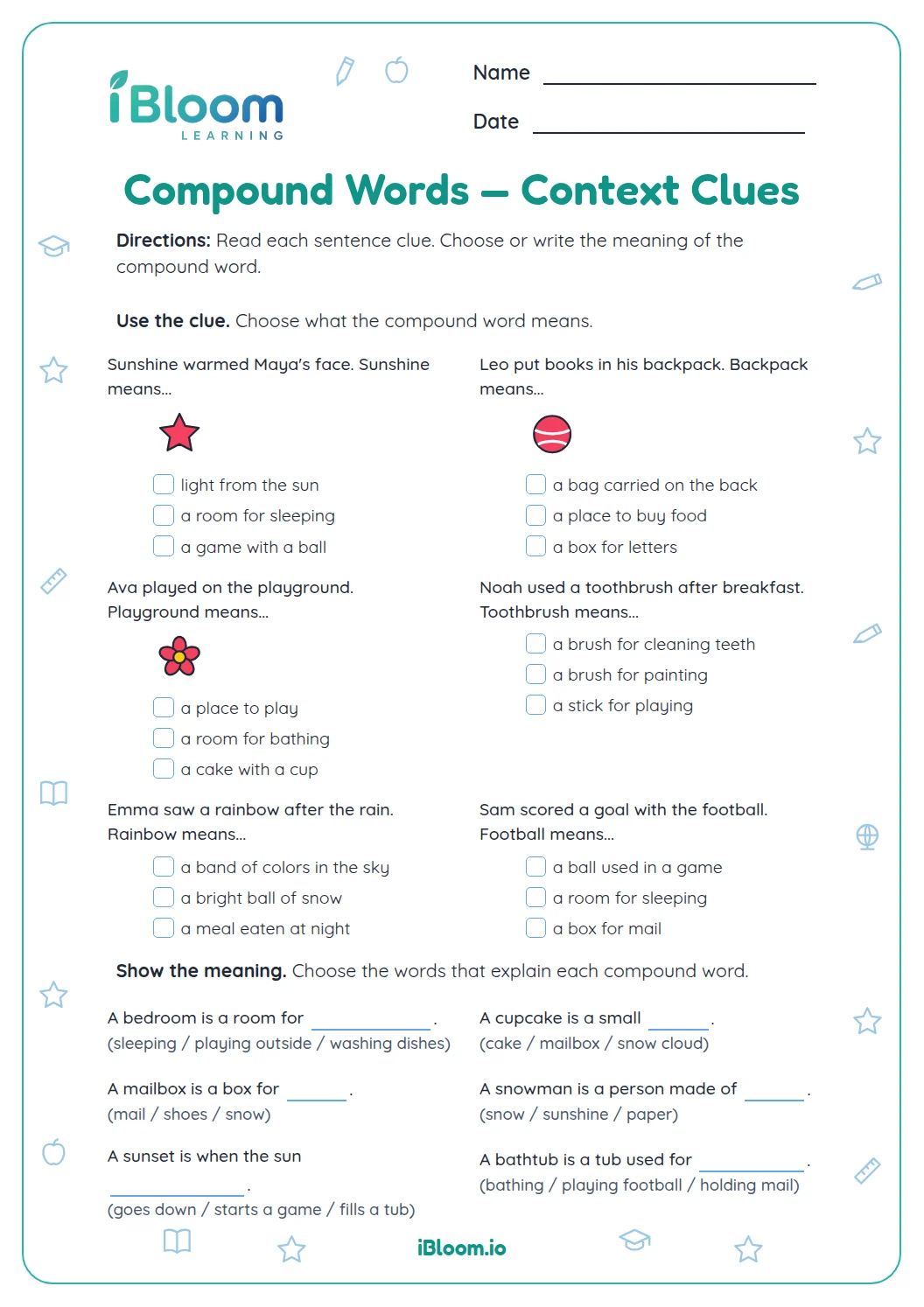
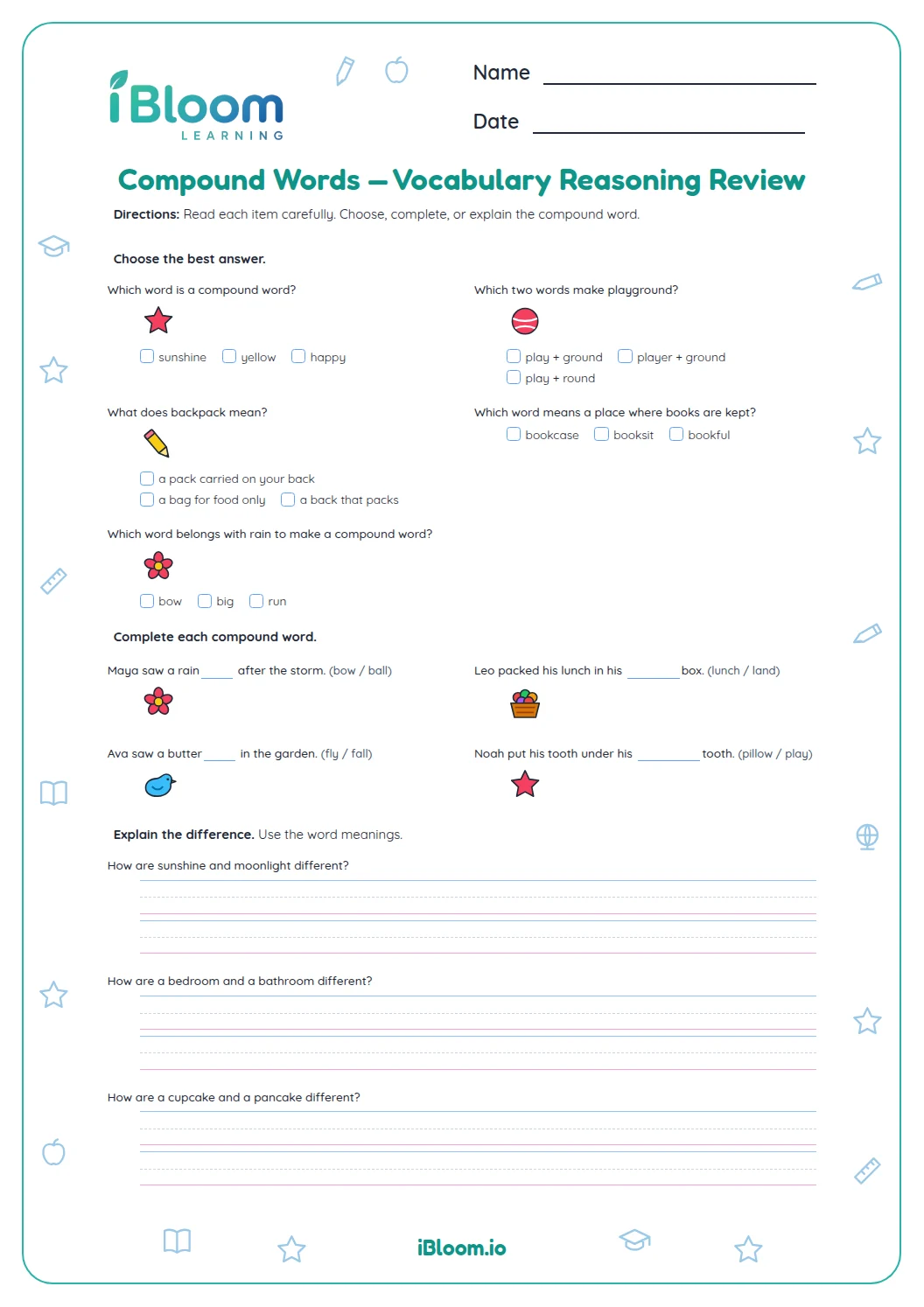
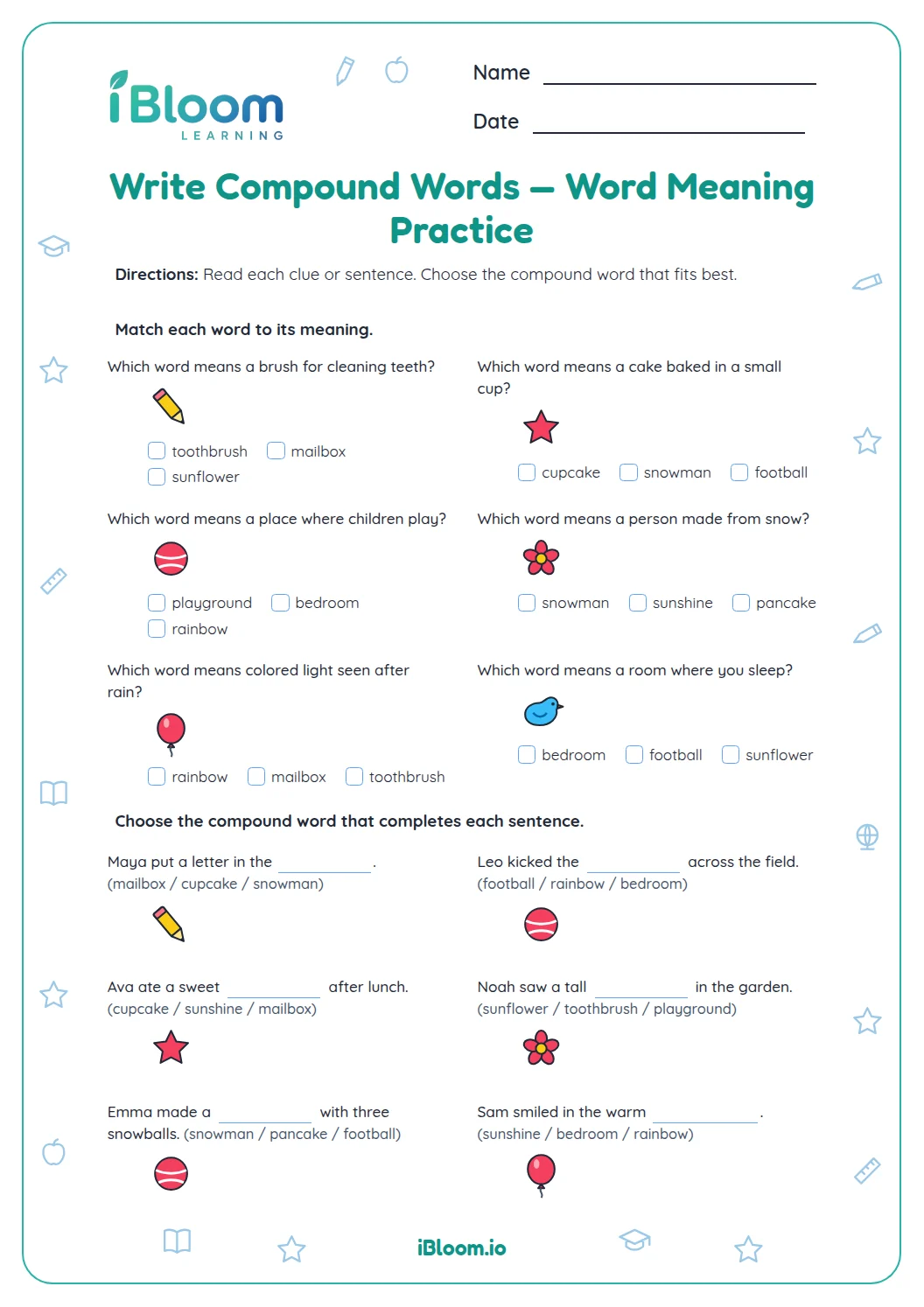





About this worksheet
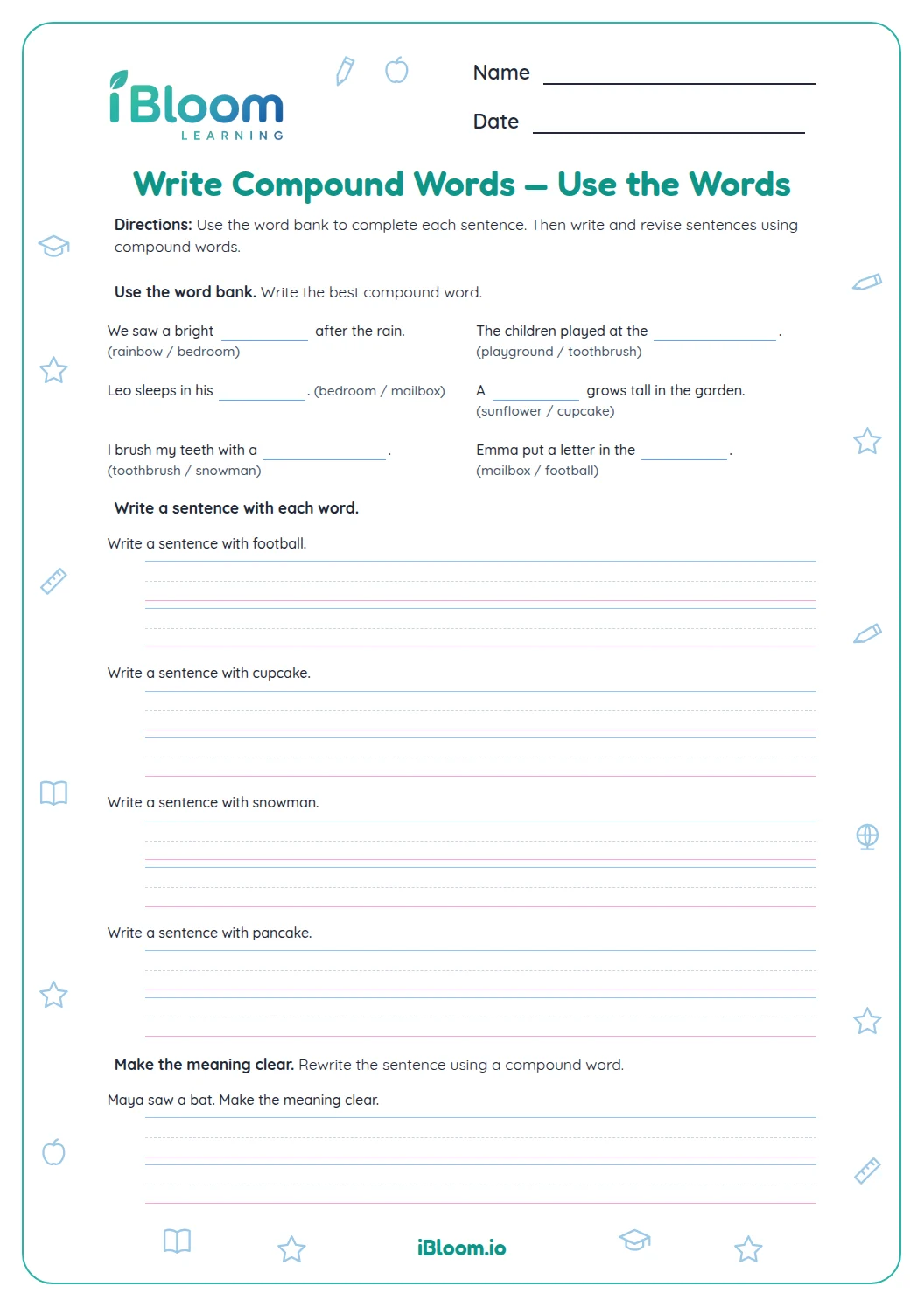
This Grade 1 vocabulary sheet helps children recognize and use familiar compound words. Part A uses short sentence clues and picture vocabulary such as bird, fish, and snow. Part B asks students to break a word into two smaller words, complete a clue, and write one short sentence. The included answer key gives sample wording for the open response. The word work supports understanding how familiar words combine to create a compound word, with a connection to Common Core L.2.4d.
Aligned to L.2.4d
How do two smaller words make a compound word?
A compound word joins two words to name one thing or idea. The parts can offer clues to the whole word: rain + coat names a coat worn in rain.
Read the whole word, say each smaller word, and then check how the complete word is used in the sentence.
- 1sunlight
- 2sun + light
- 3The two parts help name light that comes from the sun.
How does this page practice using compound words?
Part A has eight multiple-choice sentence clues. Part B has eight short responses: students identify word parts, name a compound word, or use one in a sentence.
How to use this worksheet
- 1Read the whole sentence or clue first.
- 2Say the possible compound word aloud.
- 3Look for the two smaller words inside it.
- 4Check that the whole word makes sense in the sentence.
- 5For the writing prompt, use the compound word in a complete idea.
Common mistakes and quick fixes
The mistake
Choosing a word because one part matches but the whole word does not fit.
The fix
Read the complete sentence with the choice in place.
The mistake
Leaving out one smaller word when splitting a compound.
The fix
Say the word slowly and name both parts.
The mistake
Writing two separate words when the clue asks for a compound.
The fix
Join the parts into the familiar compound spelling.
Common Core alignment
The page builds word meaning by attending to familiar word parts and context.
Use the meanings of familiar words to reason about a compound word.
On this sheet: Children identify component words and use common compounds in brief contexts.
Show the official wordingHide the official wording
Use knowledge of the meaning of individual words to predict the meaning of compound words (e.g., birdhouse, lighthouse, housefly; bookshelf, notebook, bookmark).
What to practice next
Make more practice
Further reading
Questions parents and teachers ask
What is a compound word?
A compound word joins two smaller words to make one word with its own meaning. For example, rain and coat combine to make raincoat. Students can look for both parts and then read the full word in a sentence. Looking at the joined parts can help students read and understand the full word.
Which compound words do students practice?
The questions include daytime, birdhouse, backpack, nighttime, fishbowl, outside, cupcake, snowflake, sunset, playground, bathroom, sunlight, football, and raincoat. Students choose a fitting word, identify word parts, or use a word in context. These words appear in short clues so students use meaning as well as word parts.
How many questions are on the worksheet?
There are 16 questions in two parts. Part A has eight multiple-choice sentence clues. Part B has eight short responses about word parts, meanings, or using a compound word in a sentence. The answer key includes the intended responses for all 16 items.
Can an adult read the prompts aloud?
Yes. An adult may read each sentence and its choices aloud while the student listens for a word that fits. For short responses, the student can say the two word parts or dictate a sentence before writing it. Short, familiar words keep attention on the compound word and its meaning.
What does the answer key show for open responses?
The key lists the expected word parts or compound word and gives one sample sentence for bedroom. Other sentences are acceptable when they use the compound word correctly and make its meaning clear. The word parts and sample response help adults check the open-ended items.