





About this worksheet
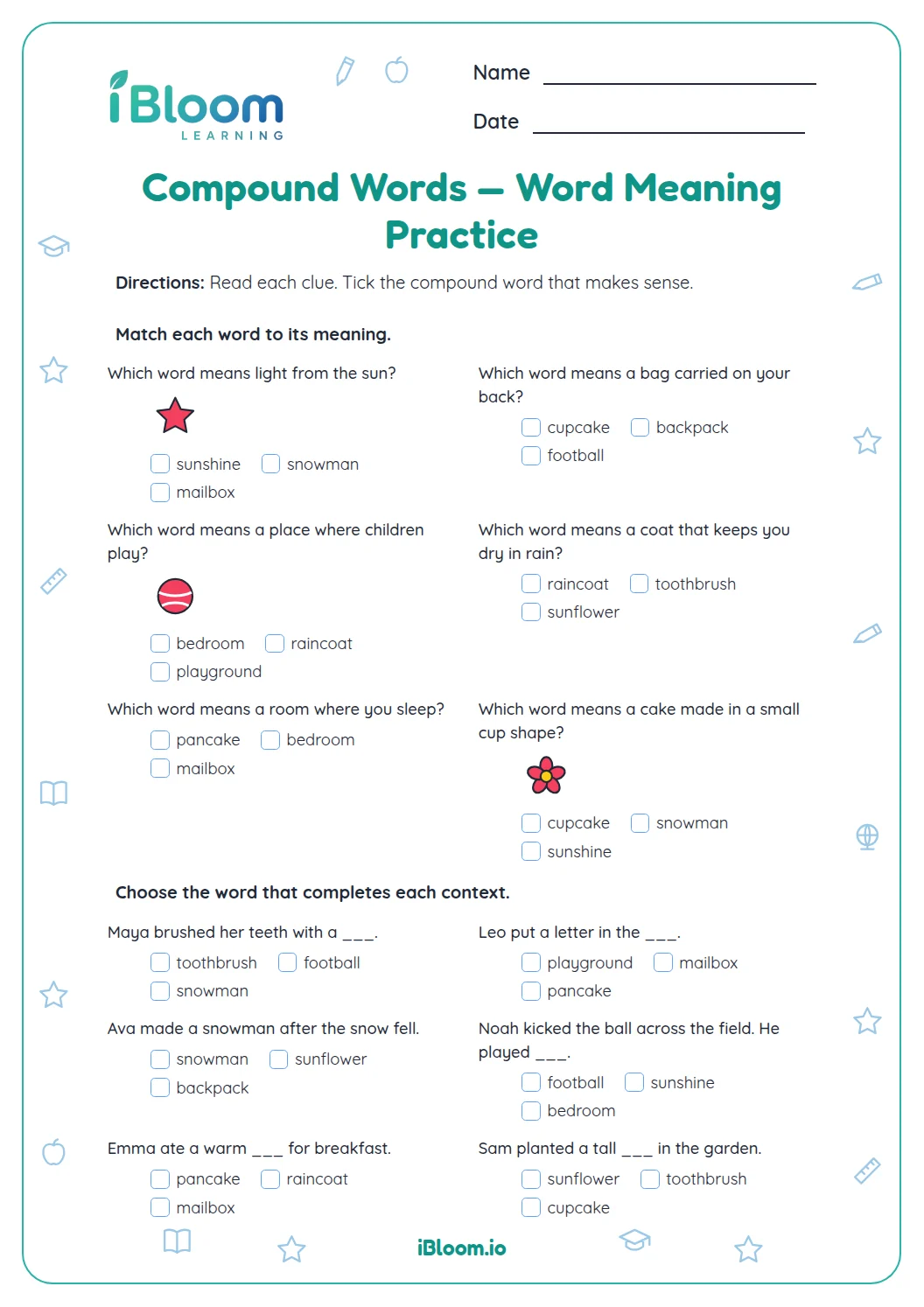
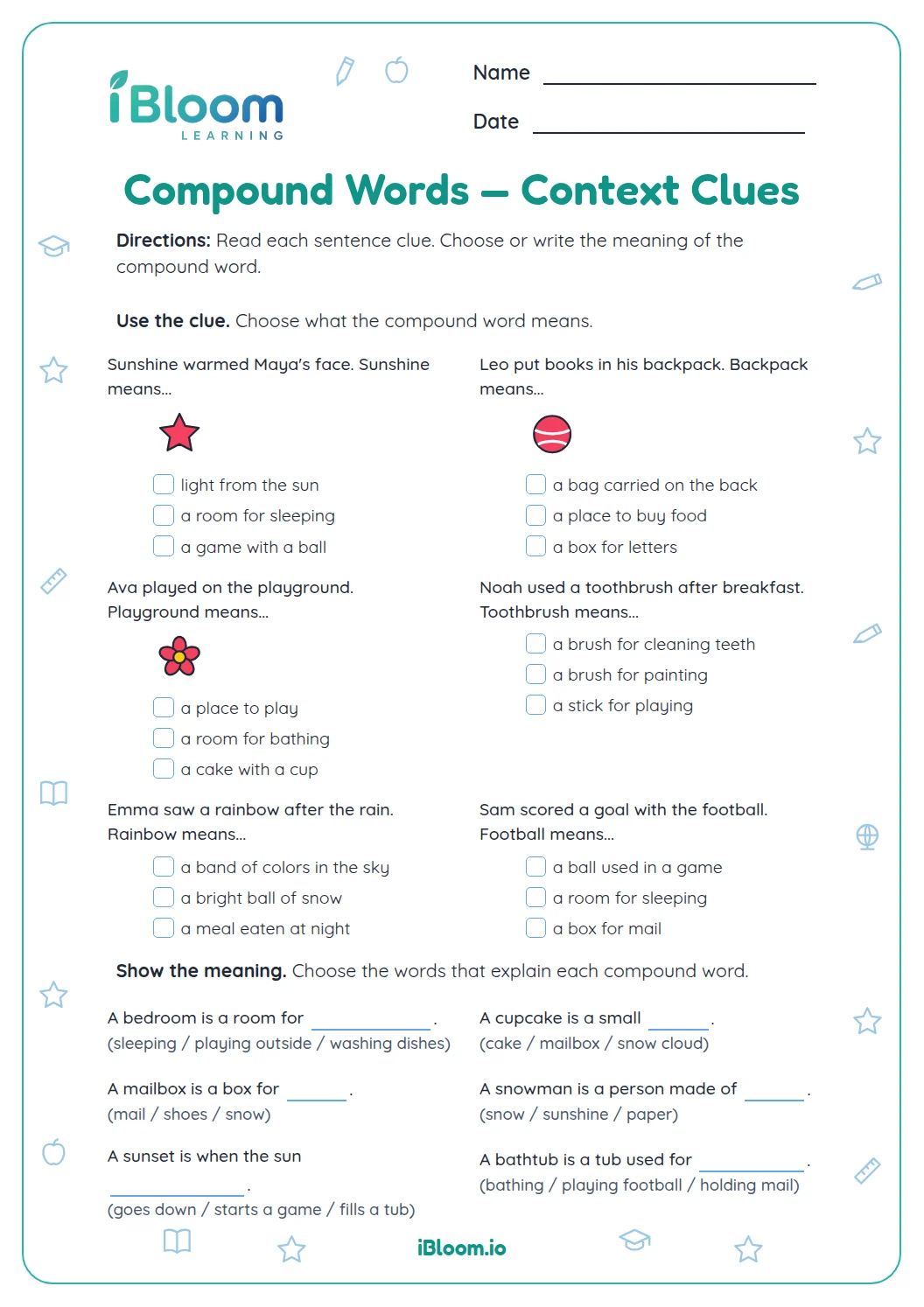
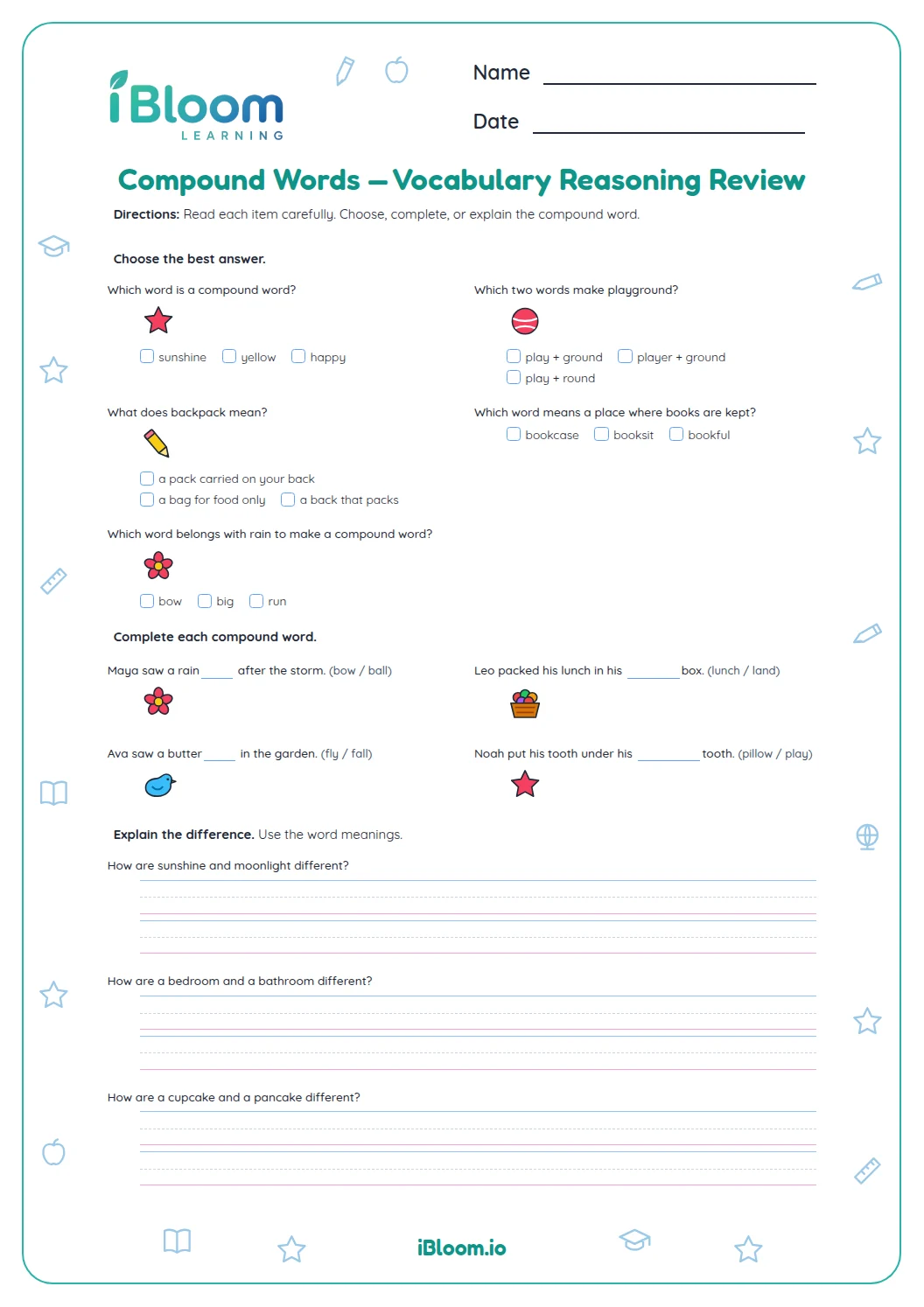
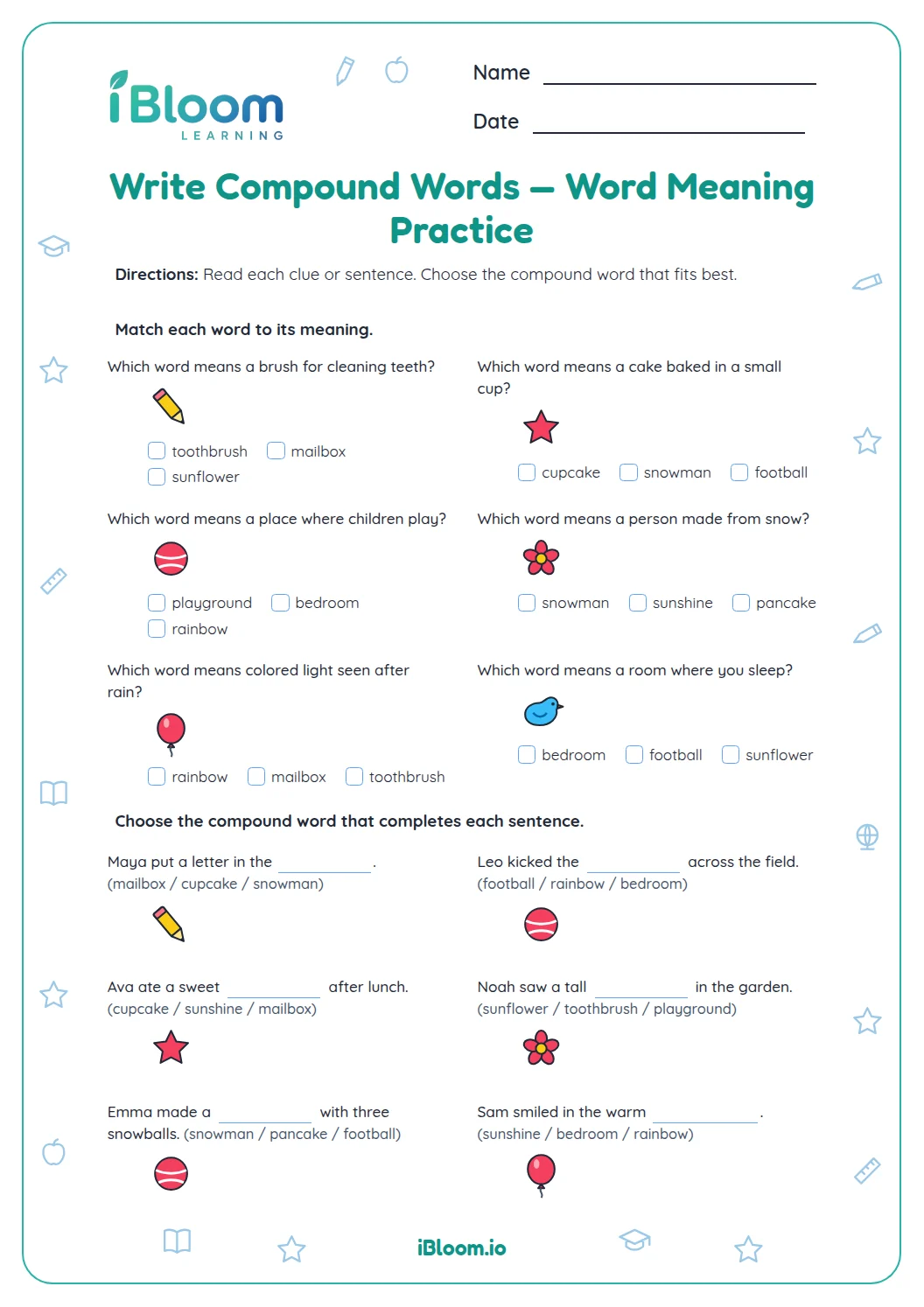
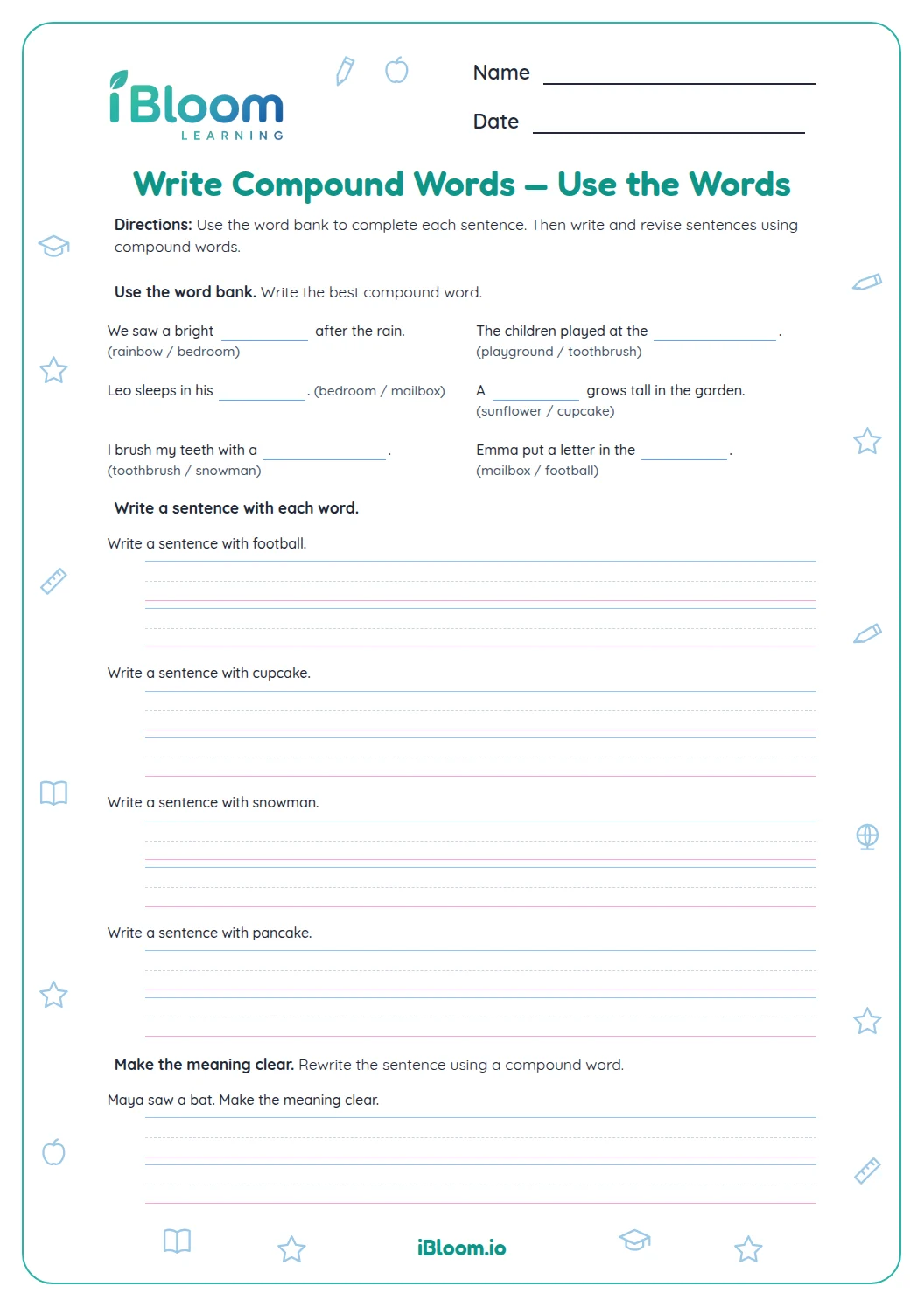
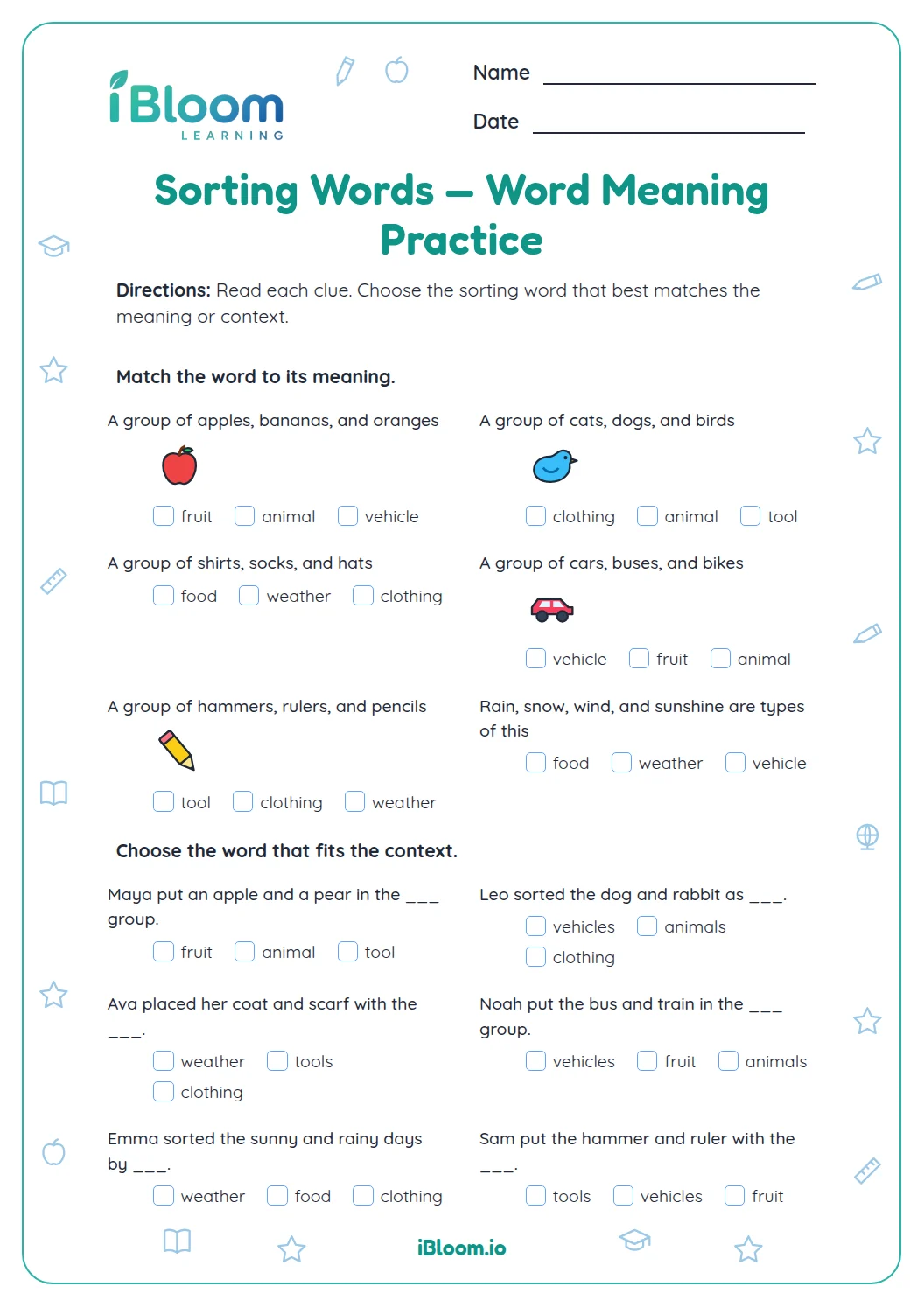
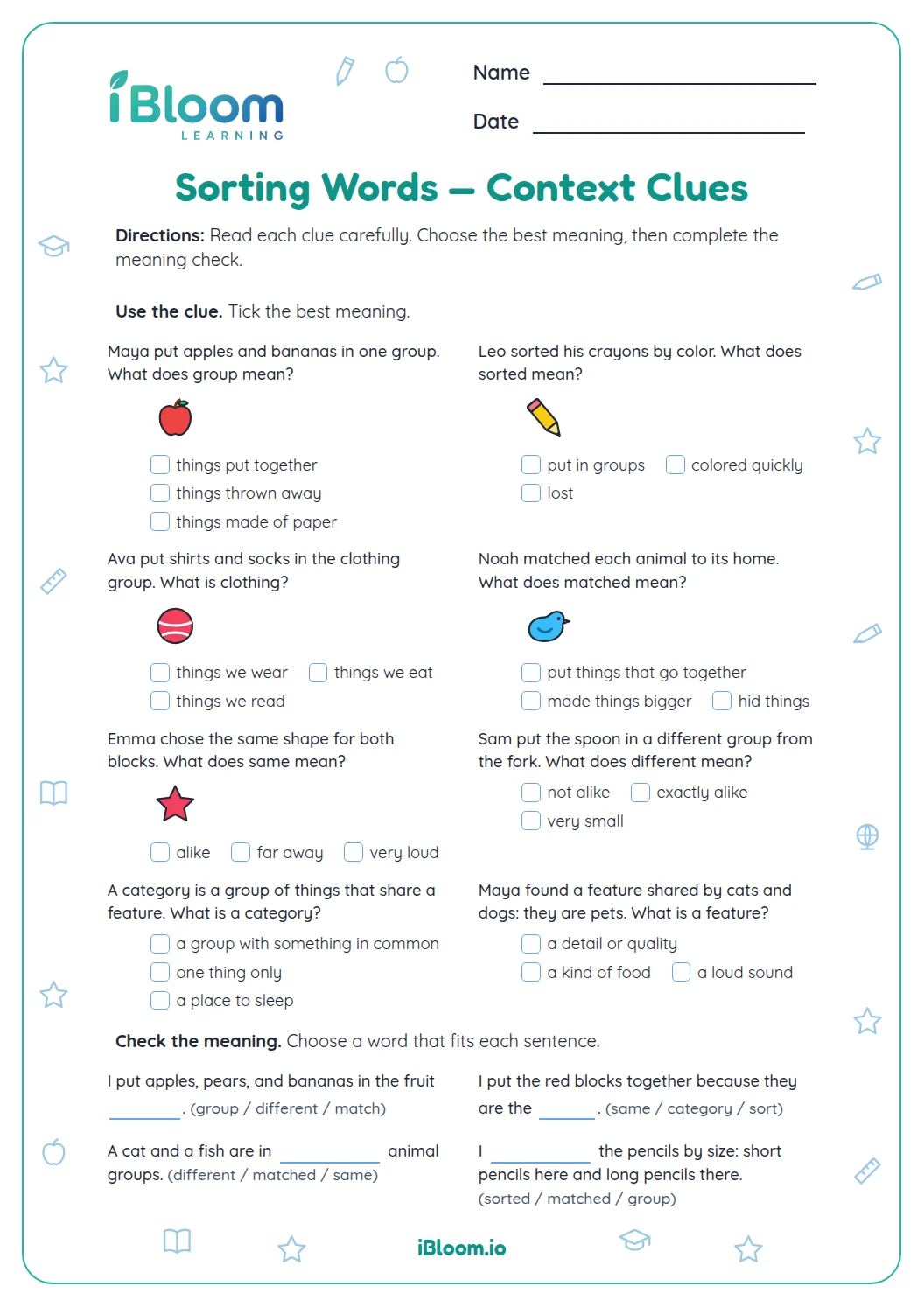
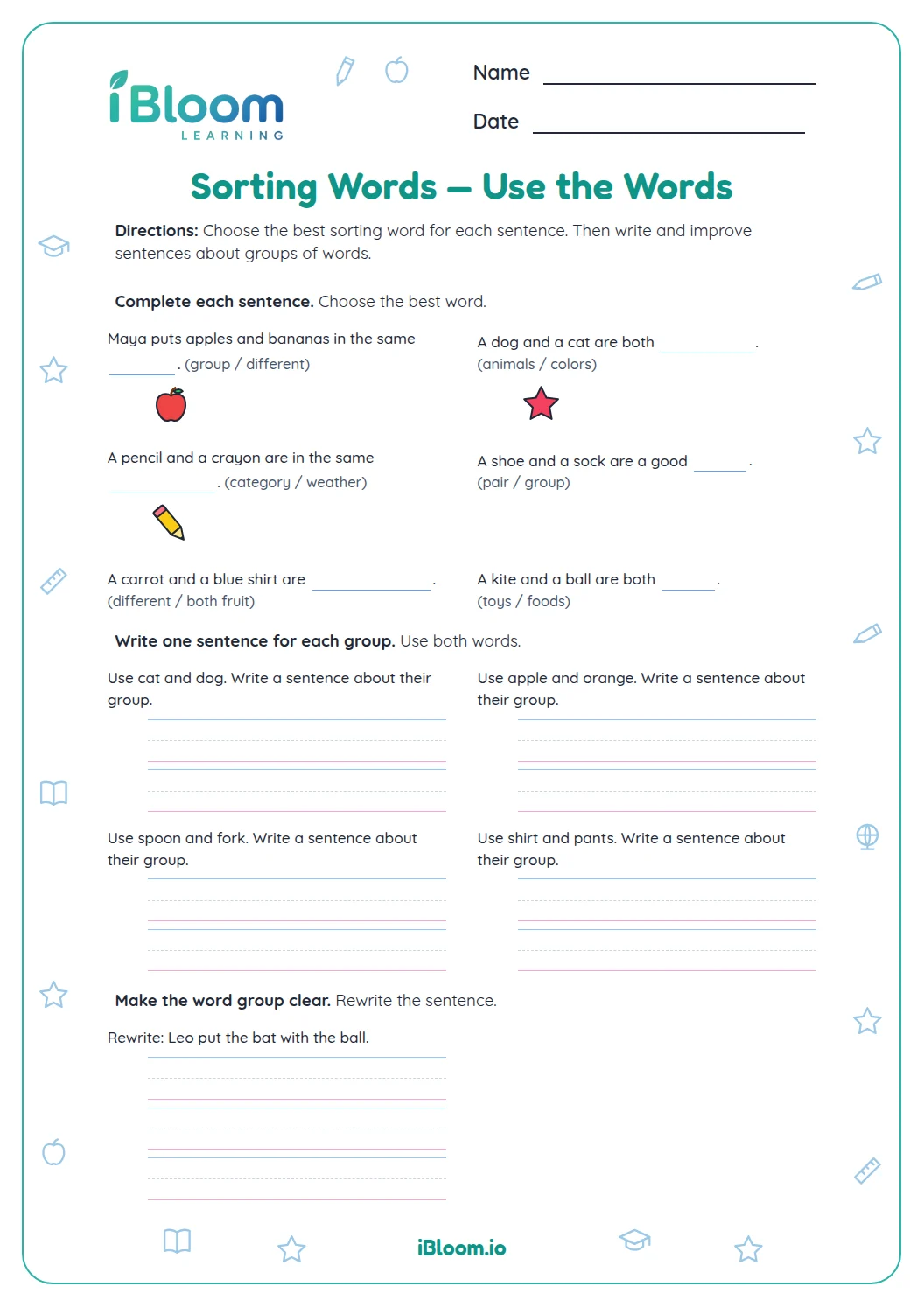
This free two-page worksheet helps Grade 1 children see that two small words can join to make one new word, and that the parts hint at what the new word means. In Part A, children sort compound words by meaning: a food, an animal, a room, something you wear. In Part B, they join two words six times, such as cup + cake, with a picture of each part and a word bank. In Part C, they split rainbow and toothbrush and tell what a birdhouse or a bathtub is. It practices Common Core L.1.5.a and L.2.4.d, and a separate answer key covers all 14 questions.
Aligned to L.1.5.a and L.2.4.d
What is a compound word?
A compound word is one word made by joining two smaller words. Sun and flower make sunflower. Rain and coat make raincoat. Nothing is added or dropped, so the two parts are still easy to see and say.
For first graders the useful idea is that the parts are clues. A child who knows what a bird is and what a house is can work out birdhouse without ever being told, which is how compound words grow a child's vocabulary quickly.
Why sort compound words by meaning?
Sorting makes children think about what a word is, not just how it is spelled. In Part A, each question names a group and gives three compound words. Only one belongs to the group: popcorn is a food, goldfish is an animal, bedroom is a room in a home, and a raincoat is something you wear.
The wrong choices are other compound words, so a child cannot pick the answer just by spotting two small words. They have to think about what each whole word means.
What is on this worksheet?
Part B shows a picture of each part above the question, such as a sun and a flower above "sun + ___ = sunflower," and a word bank gives the six missing words. Part C asks which two words make rainbow and toothbrush, then what a birdhouse and a bathtub are.
Here is a worked example from question 13.
- 1What is a birdhouse?
- 2Split it: bird + house
- 3A house is a place to live, so a birdhouse is a place for a bird to live.
- 4Answer: A home for a bird
- Part A: 4 questions, color the compound word that fits a group
- Part B: 6 questions, write the missing word (sunflower, cupcake, starfish, raincoat, sunglasses, honeybee)
- Part C: 2 questions that split rainbow and toothbrush, 2 that explain birdhouse and bathtub
How to use this worksheet at home or in class
- 1Warm up out loud: say "snow" and "man," then put them together and ask what the new word means.
- 2Read the Part A clues together. Ask your child to say each compound word and name its two small words before choosing.
- 3In Part B, look at the two pictures, say the whole word, and then write the missing part with no space between the parts.
- 4For Part C, have your child tell you the meaning in their own words before coloring a circle.
- 5Check with the answer key. If an answer is wrong, split the word into its parts and try the meaning again.
- 6Stretch it: ask your child to think of two more compound words that start with sun or rain.
Common mistakes and quick fixes
The mistake
Looking at only one small word. A child sees bed in bedroom and thinks of something to lie on, not a room.
The fix
Have your child say both parts, then ask what the two words mean together. Bed plus room is the room where you sleep.
The mistake
Spelling a part the way it sounds in a similar word, like teeth + brush for toothbrush.
The fix
Say the two small words slowly and spell each one. The brush is for a tooth, so the part is tooth.
The mistake
Writing a gap in the middle, as in rain bow or cup cake.
The fix
Remind your child that a compound word is one word, so the two parts touch. Tracing the whole word once with a finger helps.
Common Core alignment
Most US states use the Common Core Language standards or a close state version, so this sheet fits Grade 1 vocabulary work in most classrooms.
Sort words into groups to understand what each group means.
On this sheet: Part A sorts compound words into groups: food, animal, room and clothing.
Show the official wordingHide the official wording
Sort words into categories (e.g., colors, clothing) to gain a sense of the concepts the categories represent.
Use the meaning of the two small words to work out what a compound word means.
On this sheet: Part C splits compound words and uses the parts to tell what a birdhouse and a bathtub are.
Show the official wordingHide the official wording
Use knowledge of the meaning of individual words to predict the meaning of compound words (e.g., birdhouse, lighthouse, housefly; bookshelf, notebook, bookmark).
What to practice next
Make more practice
Further reading
Questions parents and teachers ask
What is a compound word for first graders?
A compound word is a word made from two smaller words joined together, with no space between them. On this sheet, sun and flower make sunflower, and rain and bow make rainbow. First graders can usually say both small words aloud, which makes the pattern easy to spot.
What are the answers to Part B?
The six missing words are flower, cake, fish, coat, glasses and bee, the same words as in the word bank. Each one completes a compound word, such as sun + flower = sunflower and star + fish = starfish. The answer key shows all six, along with the other eight answers on the sheet.
Why are there pictures above the Part B questions?
The pictures show the two small words, such as a star and a fish above starfish, so children can see the parts before they write. Seeing both halves helps early readers connect joining two things with joining two words, and the word bank supports children who are still learning to spell.
My child cannot read every word yet. Can I read the questions aloud?
Yes. Reading the clues and answer choices aloud keeps the focus on word meaning, which is the skill being practiced. Ask your child to point to the two small words in each compound word. Children who read the short words on their own should try them first.
How is a compound word different from a word with an ending, like jumping?
A compound word joins two whole words, such as bed and room. A word with an ending, like jumping, adds a small piece that is not a word by itself. Looking for two real words inside a bigger word is the quick test for a compound word.
Is there an answer key, and how long does the sheet take?
Yes. The answer key is two separate pages with the correct answer marked for all 14 questions. Most first graders finish in about 15 minutes. It can take a little longer if an adult reads aloud or if you stop to think of other compound words together.