




About this worksheet
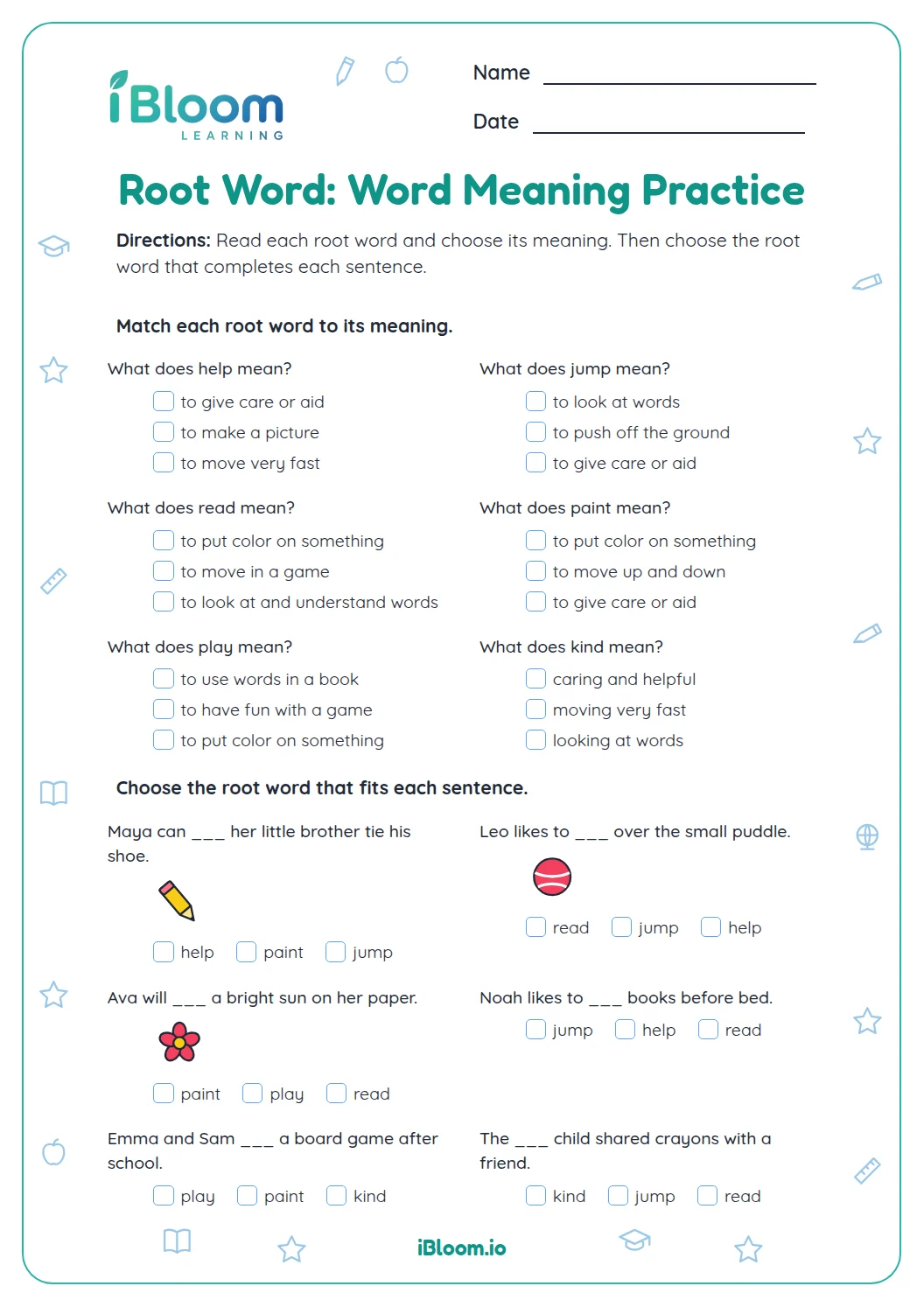
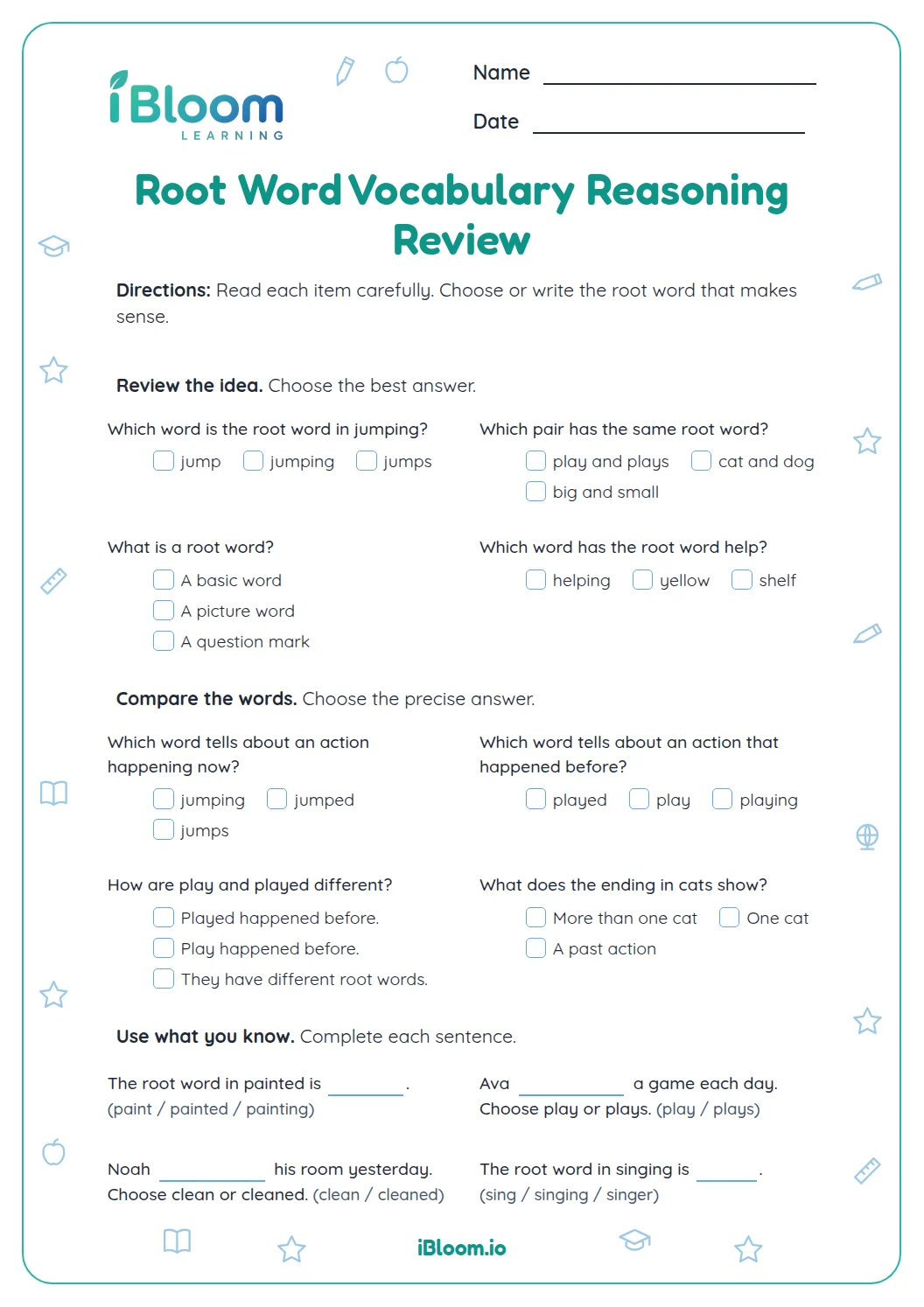
This Grade 1 worksheet helps children notice a familiar root word inside a longer word and use nearby words to understand meaning. Part A asks children to choose a meaning from a short context or identify a useful related word. Part B mixes root-word identification with meaning clues, including forms such as jumped, looking, and playful. The answer key gives a clear response for each item. The practice aligns with Common Core L.1.4a and L.1.4c.
Aligned to L.1.4a and L.1.4c
What is a root word?
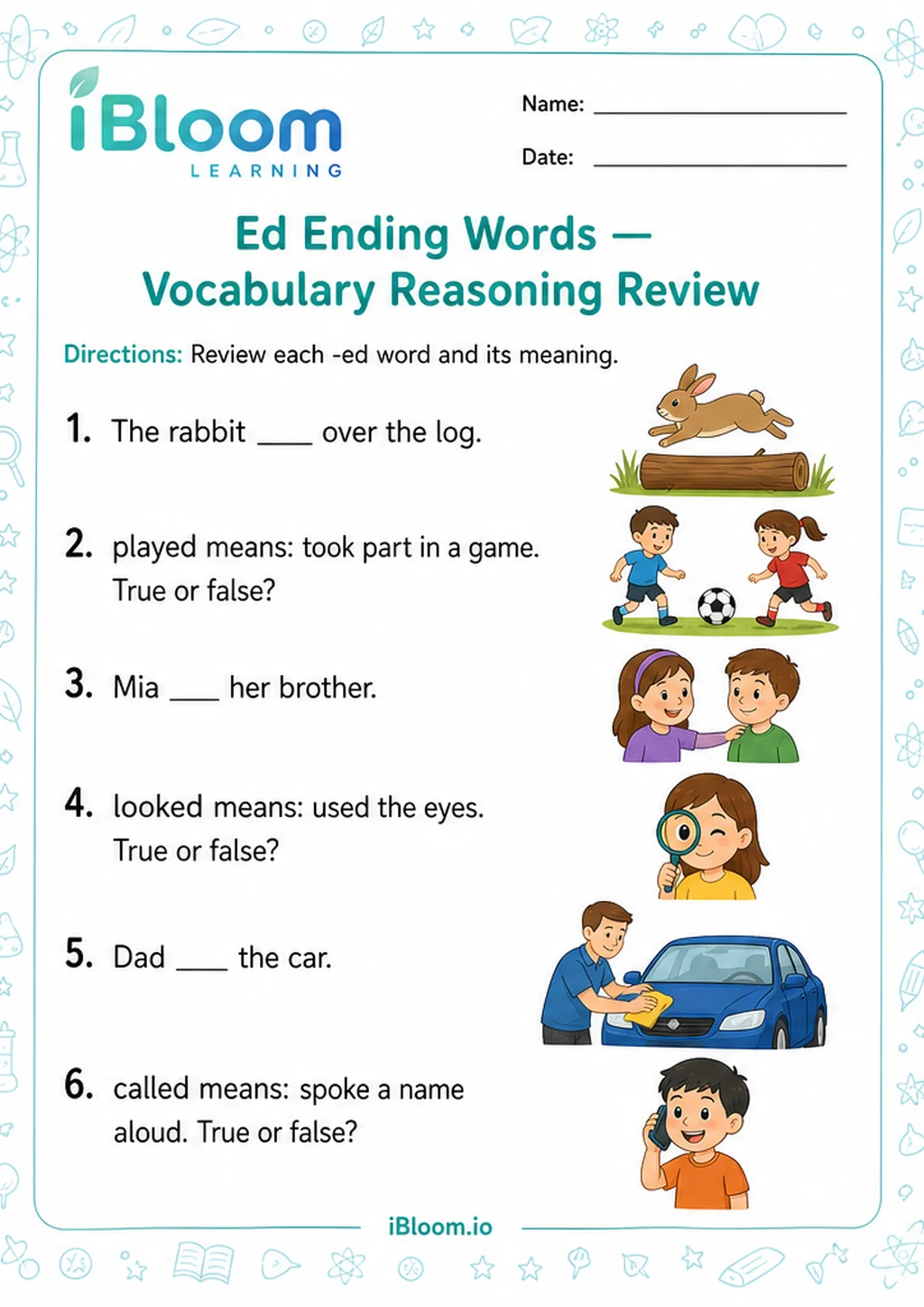
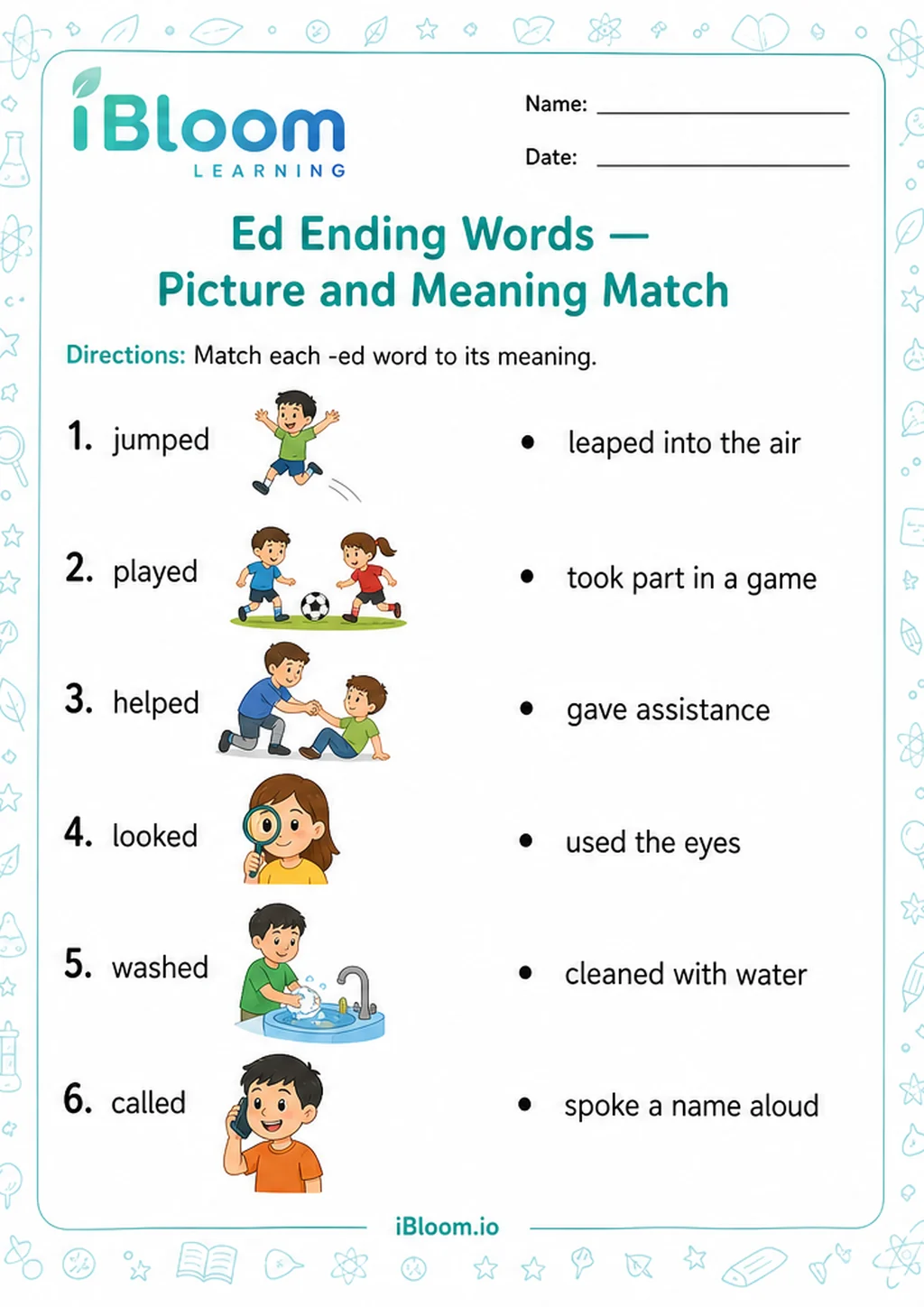
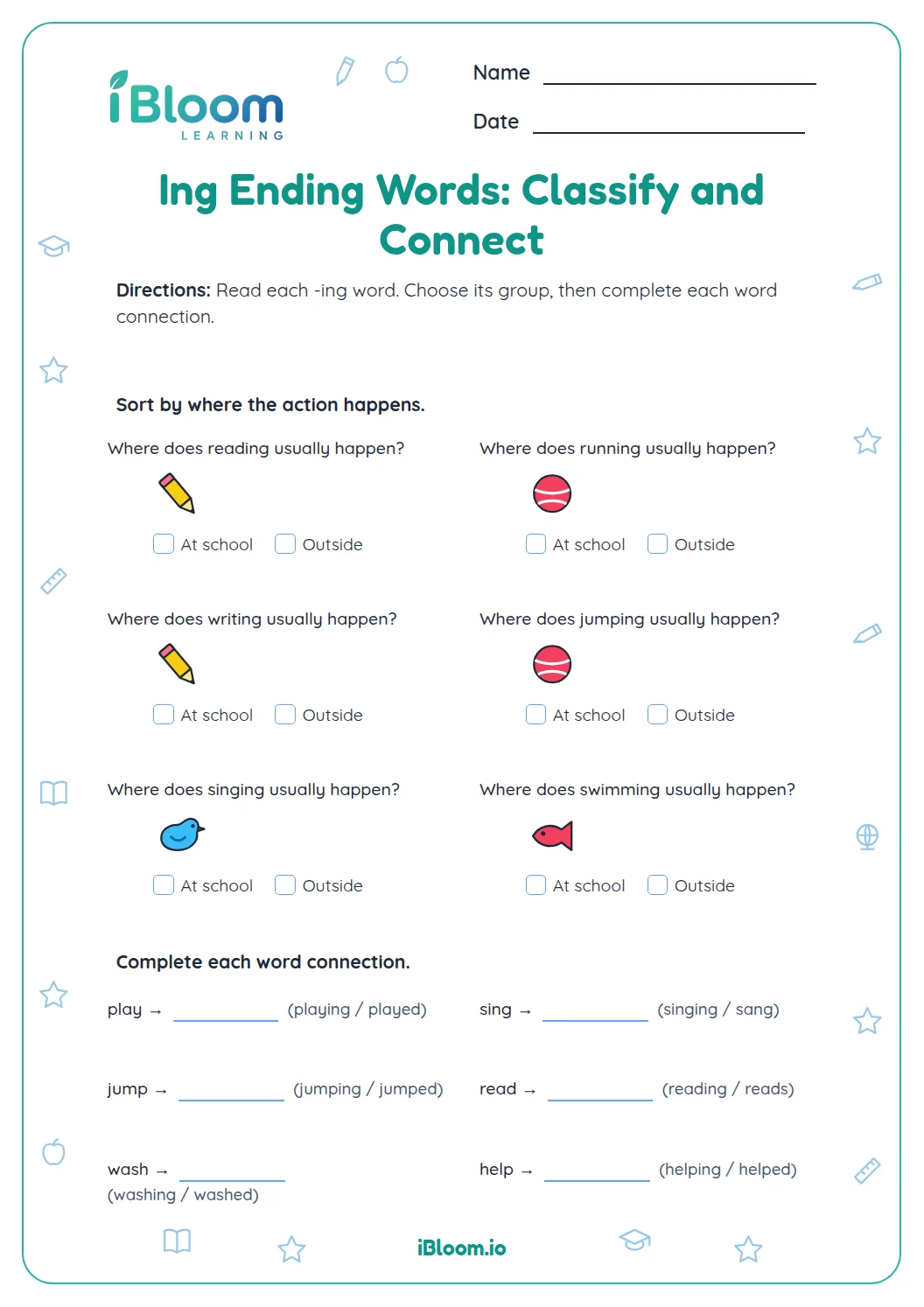
A root word is the main word that carries the basic meaning. In jumped, the root is jump; the ending tells when the action happened. In playful, play is the root and -ful helps describe someone who likes to play.
The opening questions help children identify where to start and connect a subtraction fact to a matching addition sentence. In Question 3, the first number said after 12 is 13.
How do sentence clues help?
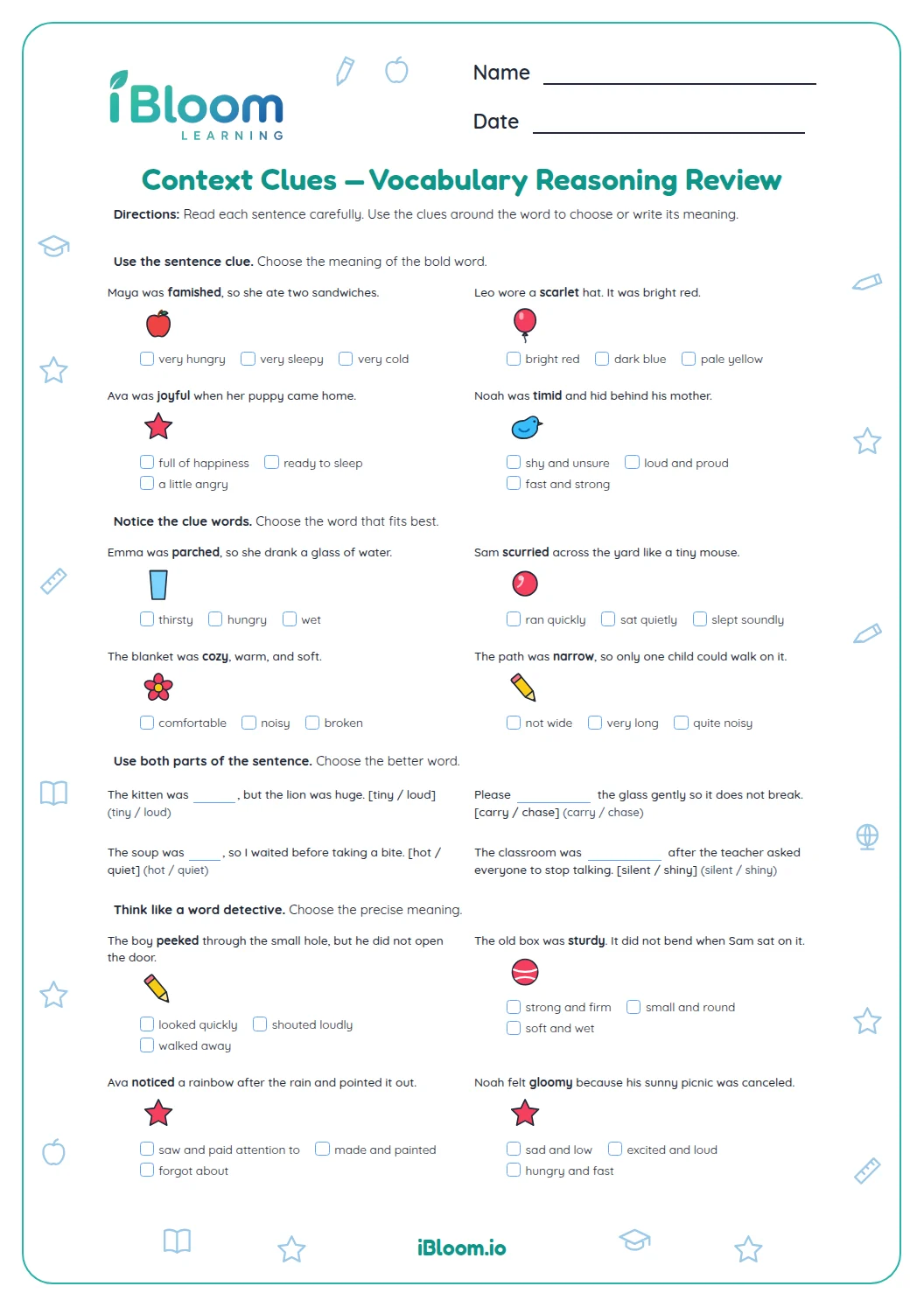
The words around a new word can explain what it means. In “A bird can sing,” make music with the voice fits the sentence. The other choices do not fit what a bird does in that sentence.
Ask children to read the entire line before choosing. A familiar root is useful, and the rest of the sentence confirms which meaning makes sense.
What will children practice?
The 15 questions move from choosing a meaning to finding roots and using context. Part A focuses on short word and sentence clues; Part B mixes root words, word forms, and a final clue-based choice.
How to use this worksheet
- 1Read the whole sentence aloud before looking at choices.
- 2For a longer word, say the familiar root and the ending separately.
- 3Try each choice in the sentence and keep the one that makes sense.
- 4For a short-answer item, write only the root word requested.
- 5Use the answer key to talk through the clue that helped.
What should children check?
The mistake
Choosing a word part that is only an ending, such as -ed in jumped.
The fix
Ask which part carries the main meaning; jump can stand alone as a word.
The mistake
Guessing from the target word without reading the sentence.
The fix
Reread the full sentence and point to the words that narrow the meaning.
The mistake
Treating a person word such as singer as an action.
The fix
Ask whether the word names someone or tells what someone does.
Common Core alignment
This page supports Grade 1 vocabulary work with familiar word forms and sentence clues.
Use a sentence clue to work out a word’s meaning.
On this sheet: Several items ask children to use a sentence clue to choose a meaning.
Show the official wordingHide the official wording
Use sentence-level context as a clue to the meaning of a word or phrase.
Find a familiar root word inside its word forms.
On this sheet: Items identify familiar roots in forms such as jumped and looking.
Show the official wordingHide the official wording
Identify frequently occurring root words (e.g., look) and their inflectional forms (e.g., looks, looked, looking).
What to practice next
Make more practice
Further reading
Questions parents and teachers ask
What does root word mean?
A root word is the main part that gives a word its basic meaning. In jumped, jump is the root and -ed shows that the action happened in the past. Children can often recognize the root because it is also a word they already know.
What should my child do when a word is new?
Read the complete sentence and look for a familiar root or nearby clue. Then try a possible meaning in the sentence. On this page, “A bird can sing” points to making music with the voice, not running or eating. Compare the root with the longer word aloud.
Does the sheet practice endings too?
Yes. A few items use familiar forms such as jumped, looking, and jumping. Children identify the base word inside each form; they do not need to memorize grammar labels to complete the activity. Have the child point to the sentence clue.
How many questions are included?
There are 15 questions. Some ask children to choose a meaning, while others ask for the root word or a person word that fits the sentence. Ask the child to name the clue before checking. Then ask the child to explain the choice in their own words.
Can I read the questions aloud?
Yes. Reading aloud lets a child focus on noticing the word parts and sentence meaning. You can pause after each sentence and ask which words provide a useful clue. Review one answer at a time with the key. Then ask the child to explain the choice in their own words.
Is an answer key included?
Yes. A separate answer key page shows the correct choice or short response for every item, so an adult can review the reasoning with the learner. Use the key to confirm each response. Then ask the child to explain the choice in their own words.