
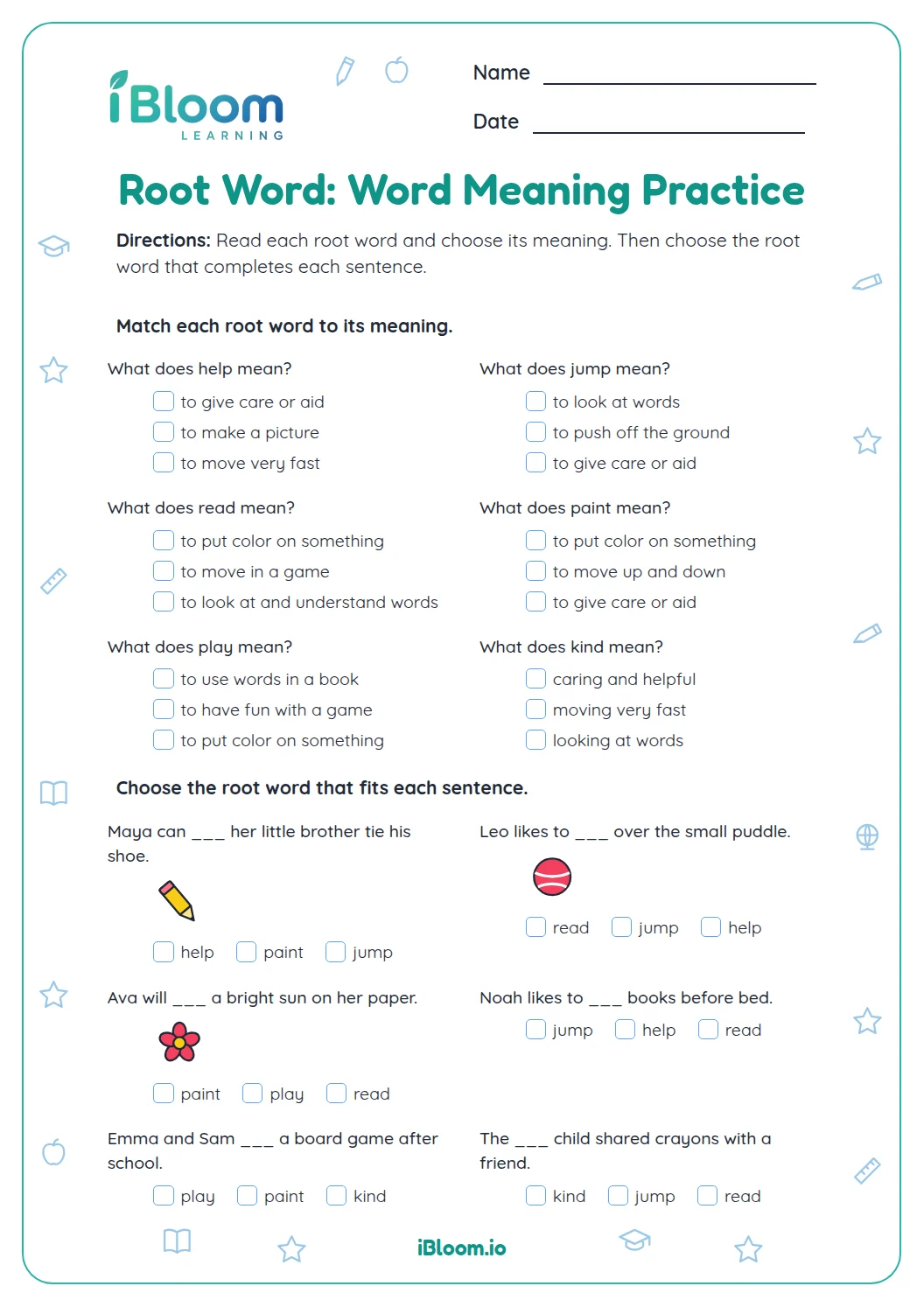

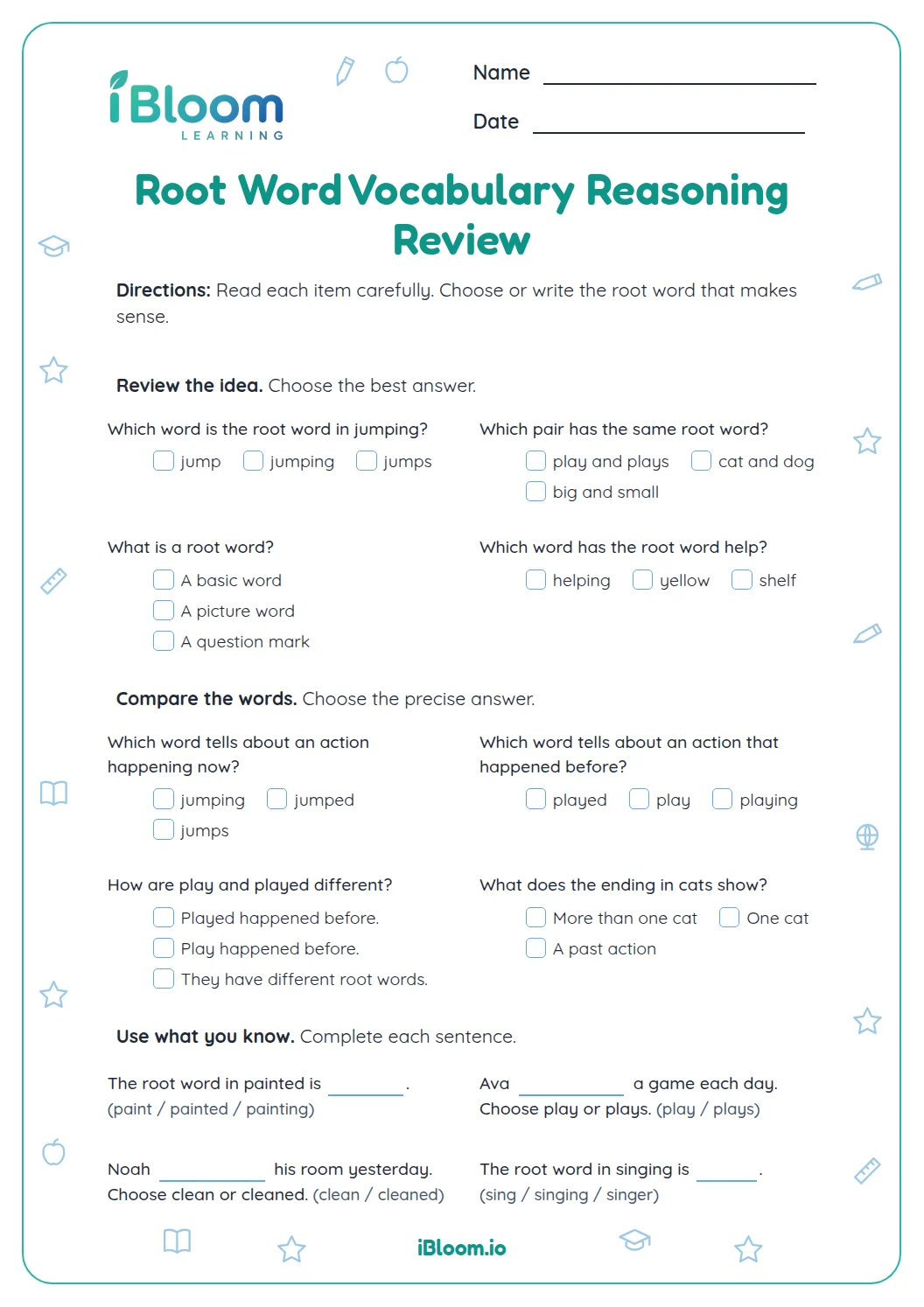
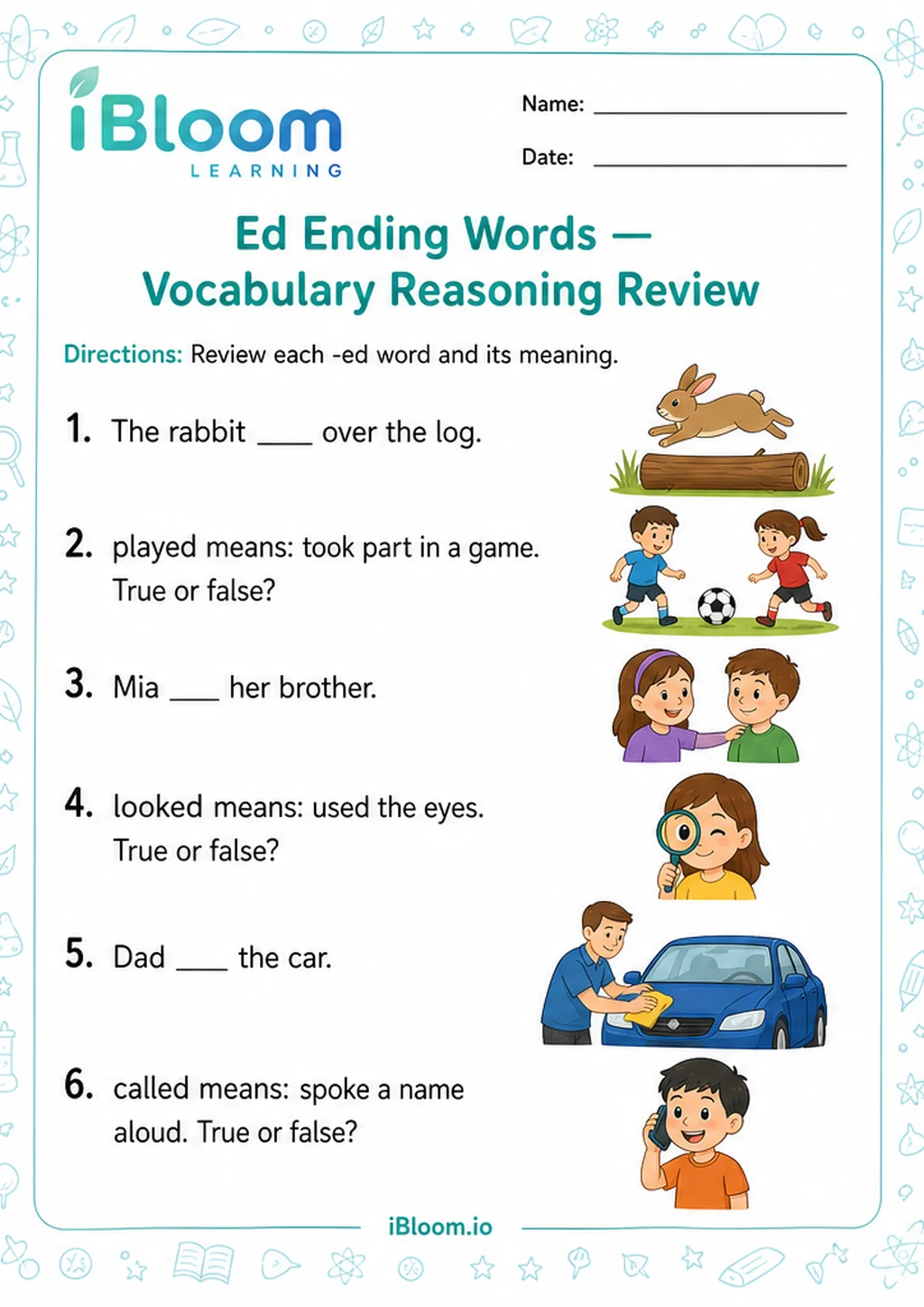
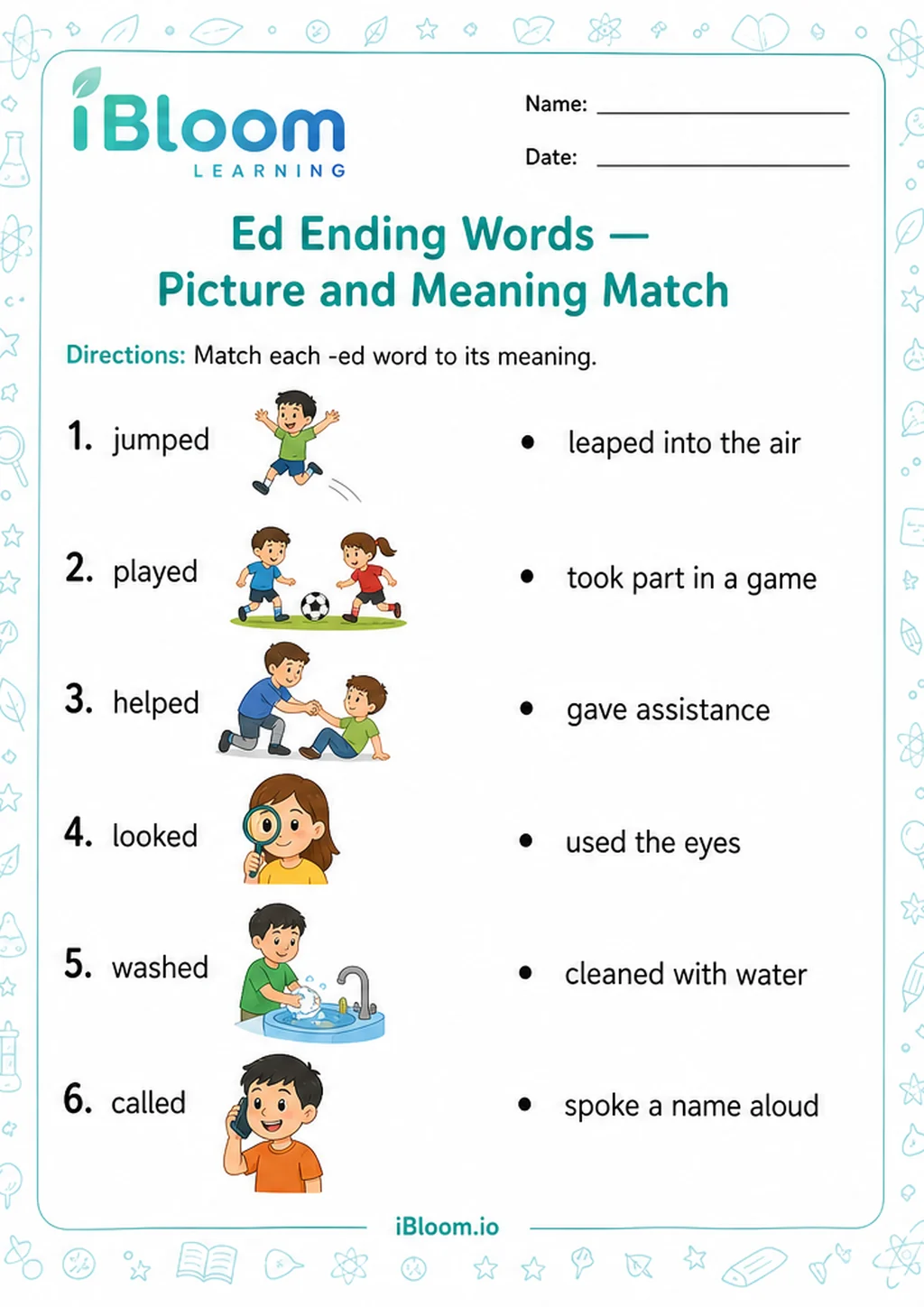
About this worksheet
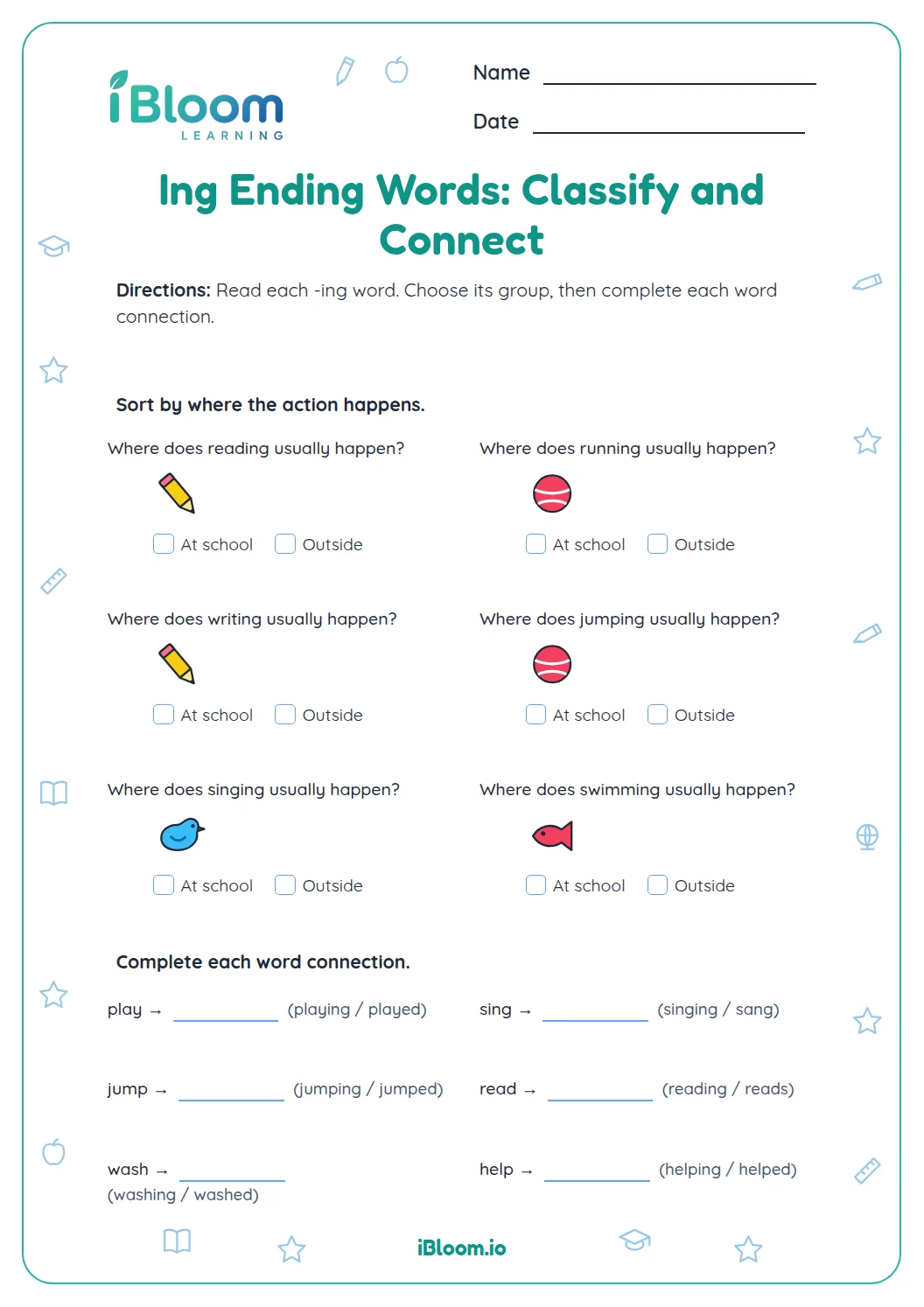
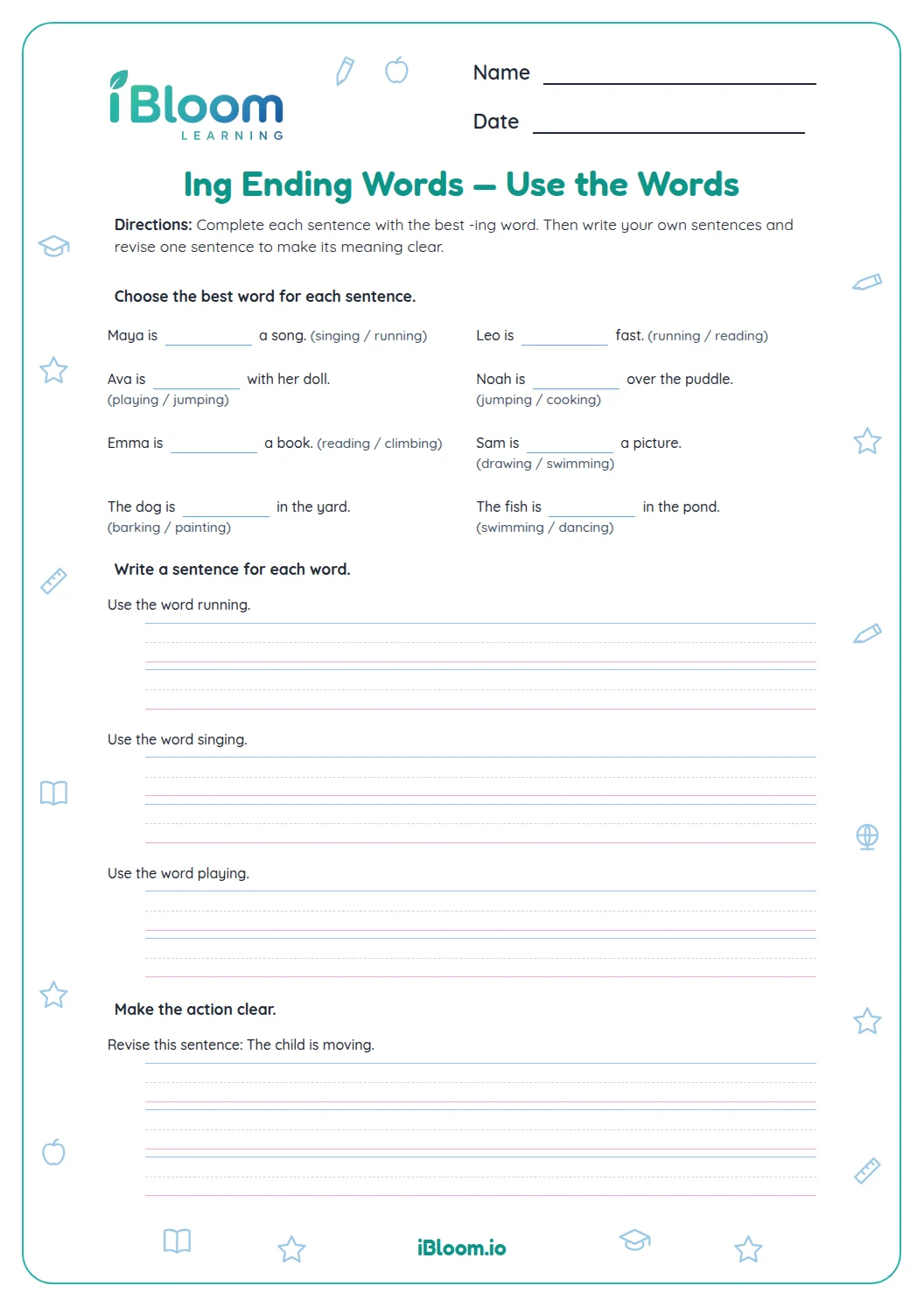
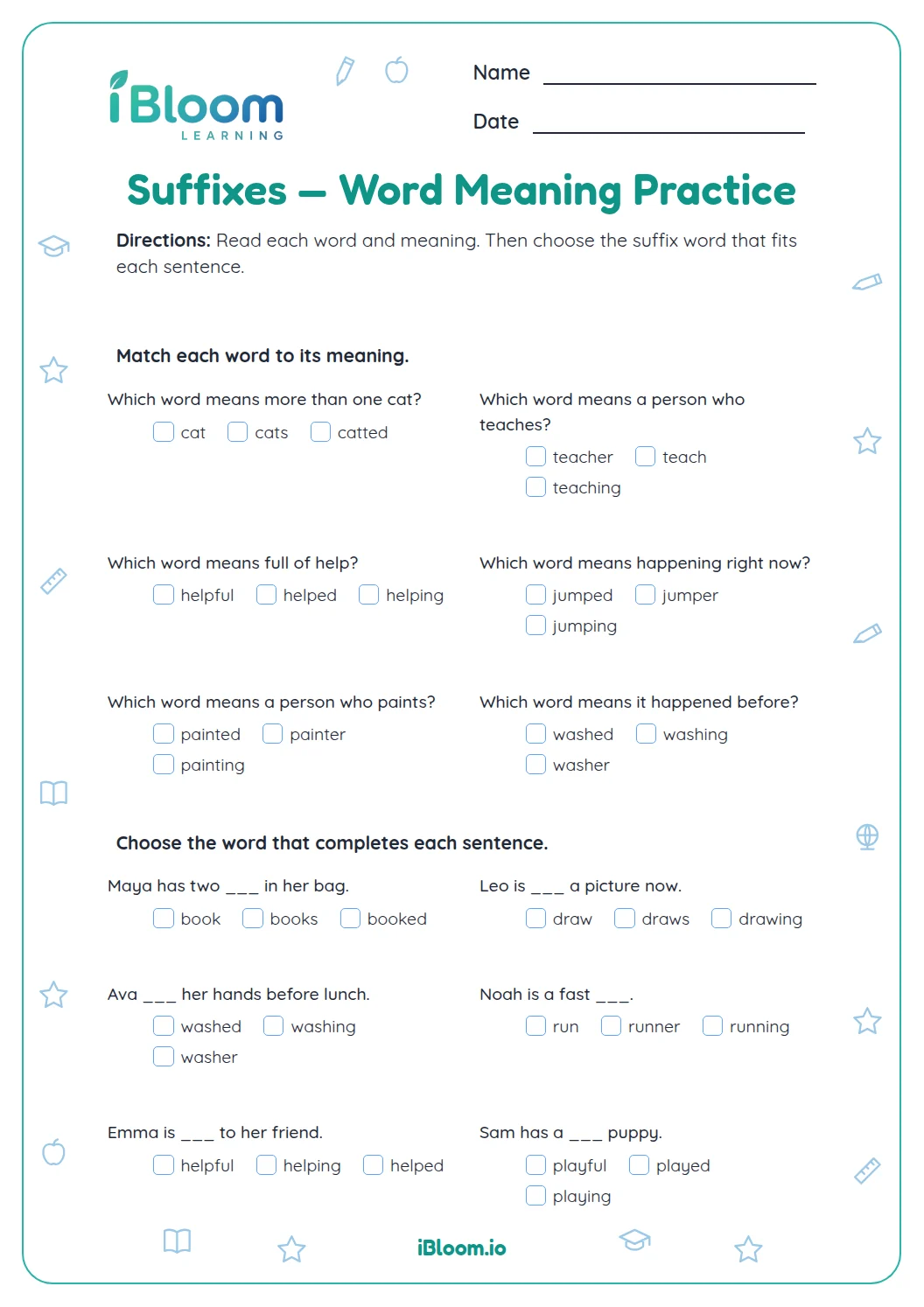
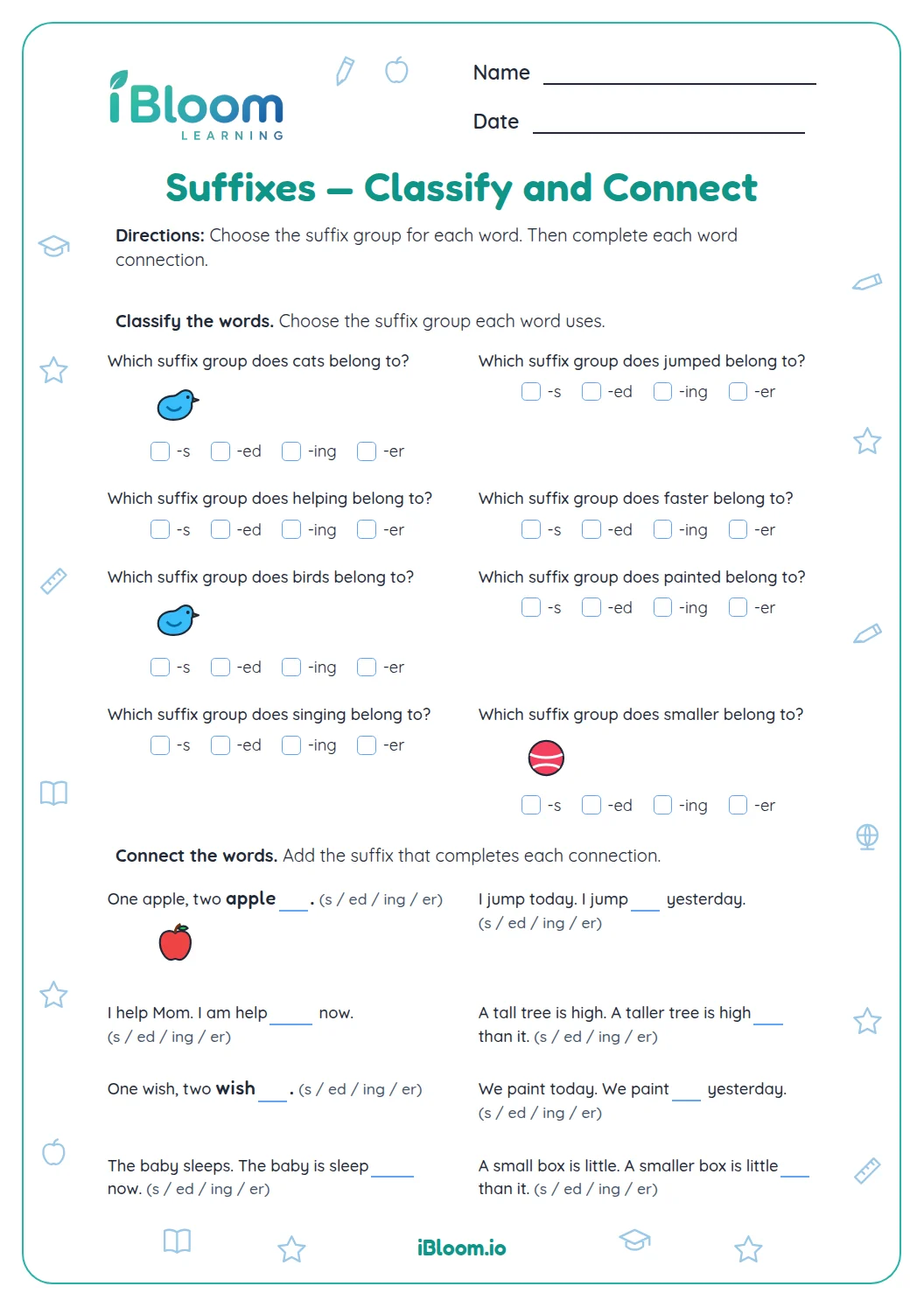
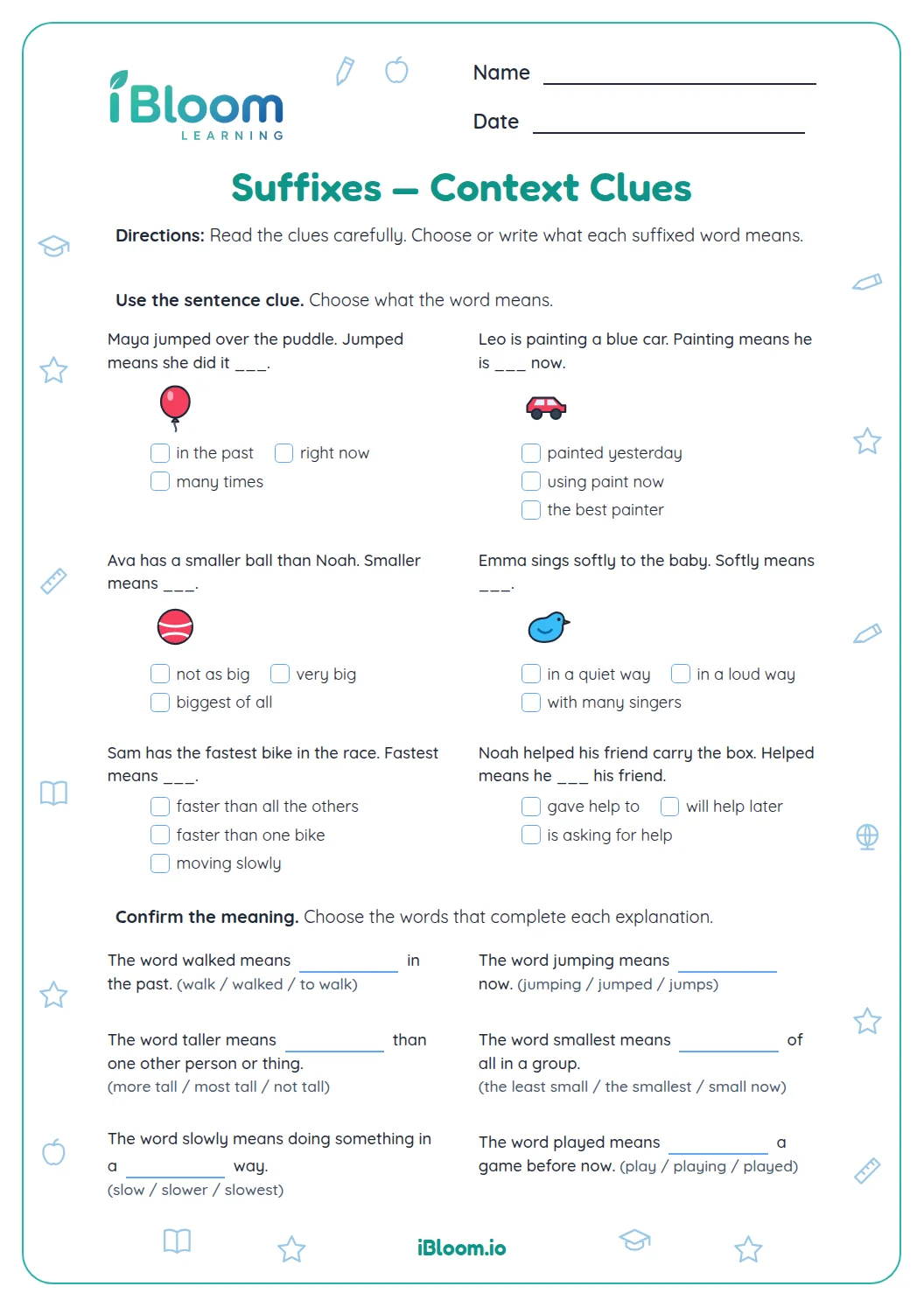
This Grade 1 vocabulary printable helps children notice a familiar base word inside a related word. Students choose words formed with -s, -ed, and -ing, then identify the base word in a few examples. The answer key lists each target word.
Aligned to L.1.4.c
How can a reader find the base word?
Look for a familiar word that remains when an ending is added. In jumping, jump is the base word and -ing is the ending.
The questions ask students to recognize word forms and separate the base from a familiar ending.
- 1jump + -ing
- 2jumping
- 3Base word: jump
How do endings connect related words?
An ending can show that an action is happening, happened, or happens regularly. Compare jump, jumping, jumped, and jumps; each keeps the base word jump visible.
Read the whole word, then check that the named base and ending both appear.
How to use this worksheet
- 1Say the base word aloud.
- 2Look at each choice and find the letters that carry the base.
- 3Read the whole word to check that it is related in meaning.
- 4For an ending, notice whether the base spelling changes slightly.
- 5Write a related word and check that it belongs in the family.
Common mistakes and quick fixes
The mistake
Choosing a word because it starts with the same letter.
The fix
Check the meaning and reread the whole question before answering.
The mistake
Missing a base word when a spelling changes slightly, as in bake and baker.
The fix
Check the meaning and reread the whole question before answering.
The mistake
Treating any word with similar letters as part of the same family.
The fix
Check the meaning and reread the whole question before answering.
Common Core alignment
This worksheet practices L.1.4.c through its base words and related word forms questions.
Recognize base words that stay visible in forms such as looked and looking.
On this sheet: The questions directly practice base words and related word forms.
Show the official wordingHide the official wording
Identify frequently occurring root words (e.g., look) and their inflectional forms (e.g., looks, looked, looking).
What to practice next
Make more practice
Further reading
Questions parents and teachers ask
What is a base word?
A base word is the main word that remains when a familiar ending is added. In jumped, jump is the base and -ed is the ending. The worksheet asks students to spot the base in forms such as jumping and painted.
Which endings appear on this page?
Students work with -s, -ed, and -ing. These endings appear in words such as helps, looked, and painting. Each question names the base word or ending so children can focus on how the related word is formed. Read the ending after identifying the base word.
How can a child tell whether the base word is still there?
Say the whole word and look for a familiar word inside it. For example, painted includes paint followed by -ed. In this practice, students compare forms built from the same base and identify the unchanged base word. Point to paint, then the ending.
Is this a spelling worksheet?
The main task connects base words with related forms. Children read each word, notice its ending, and identify the base. The answer key gives the target form for each question, so an adult can review the word parts together with the learner.
How should I help if a word is unfamiliar?
Read the base word and the ending separately, then blend them into the complete word. Ask what changed in the word form when the ending was added. The key can confirm the intended base and ending after the child has tried each question independently.