


About this worksheet
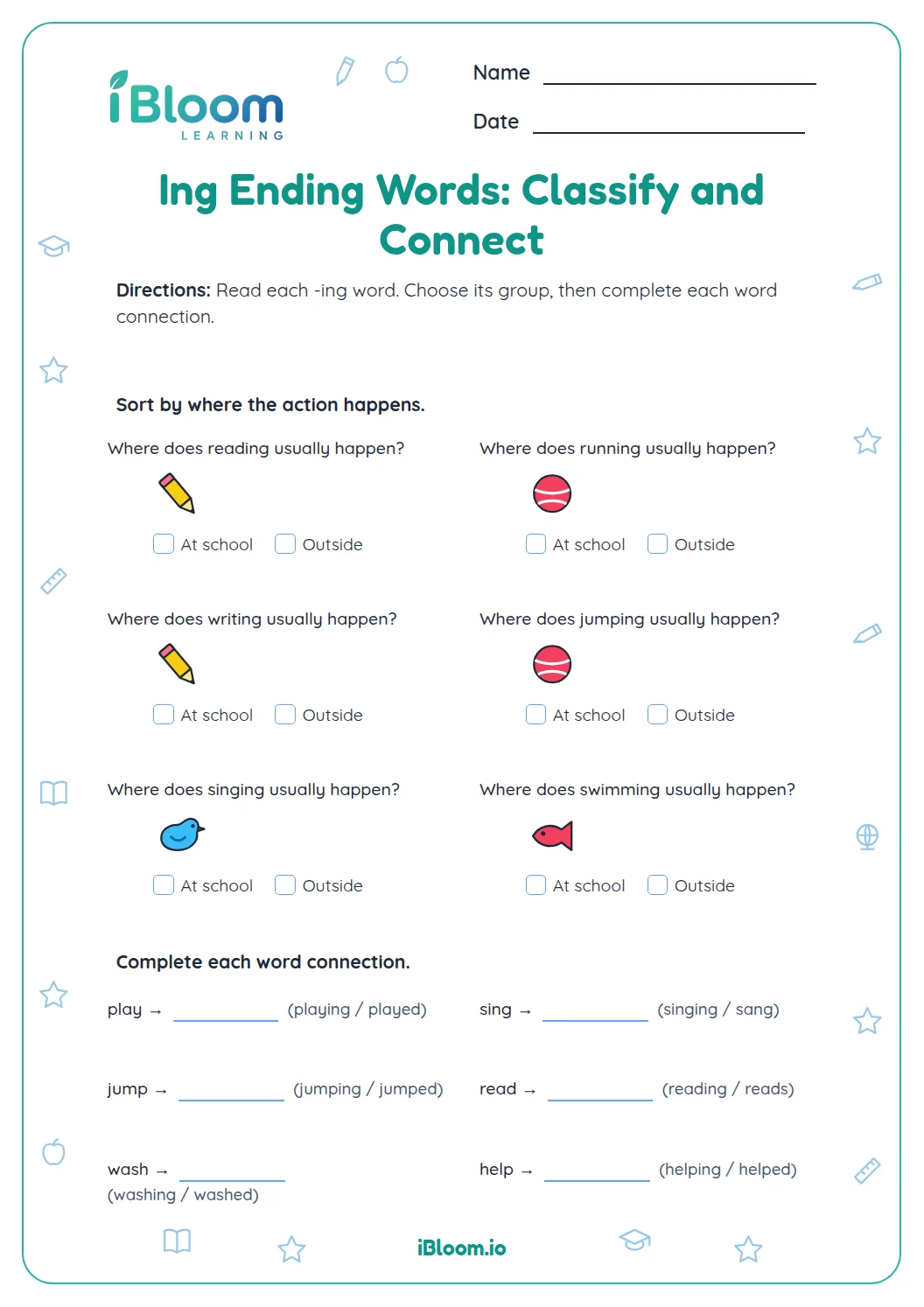
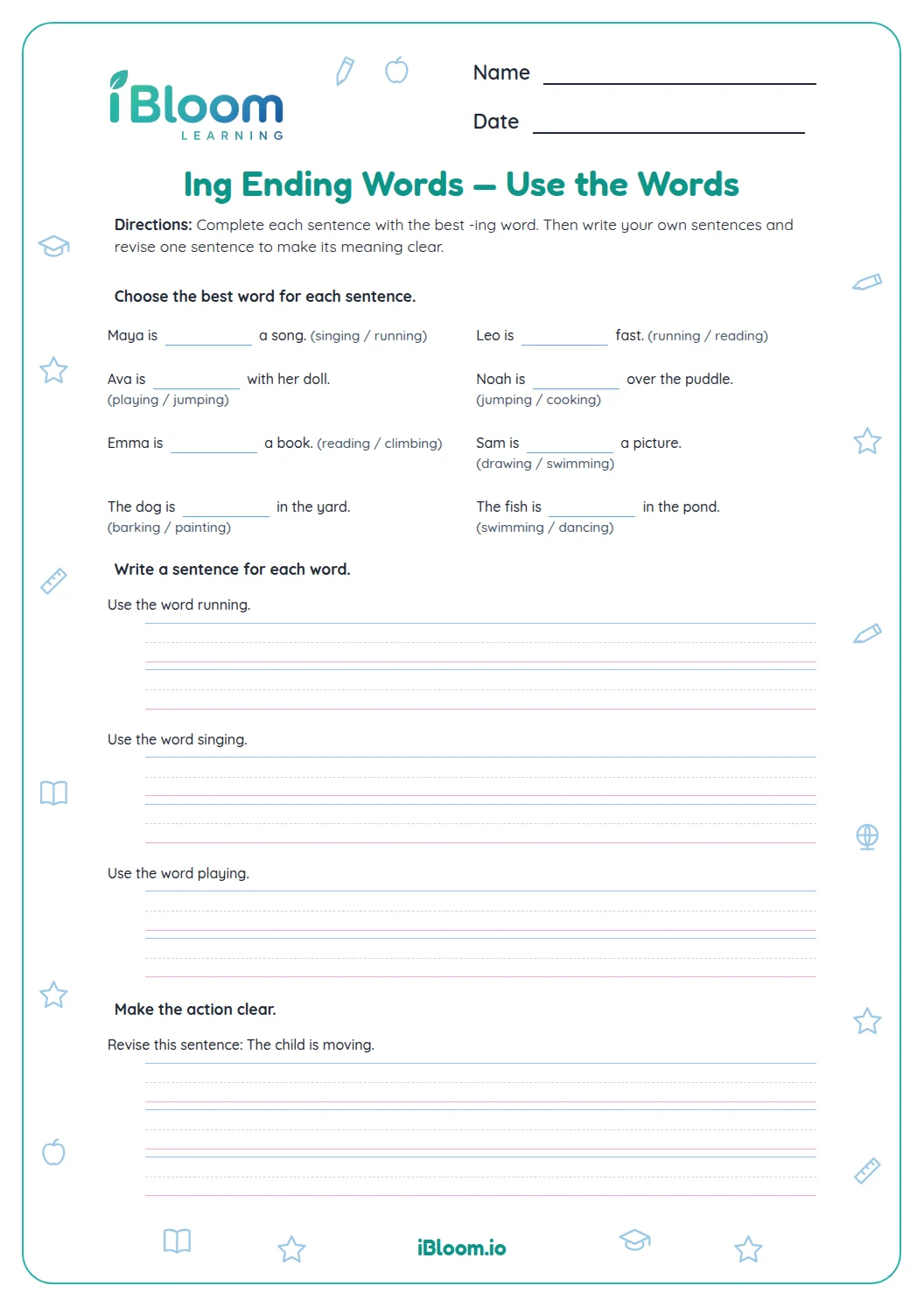
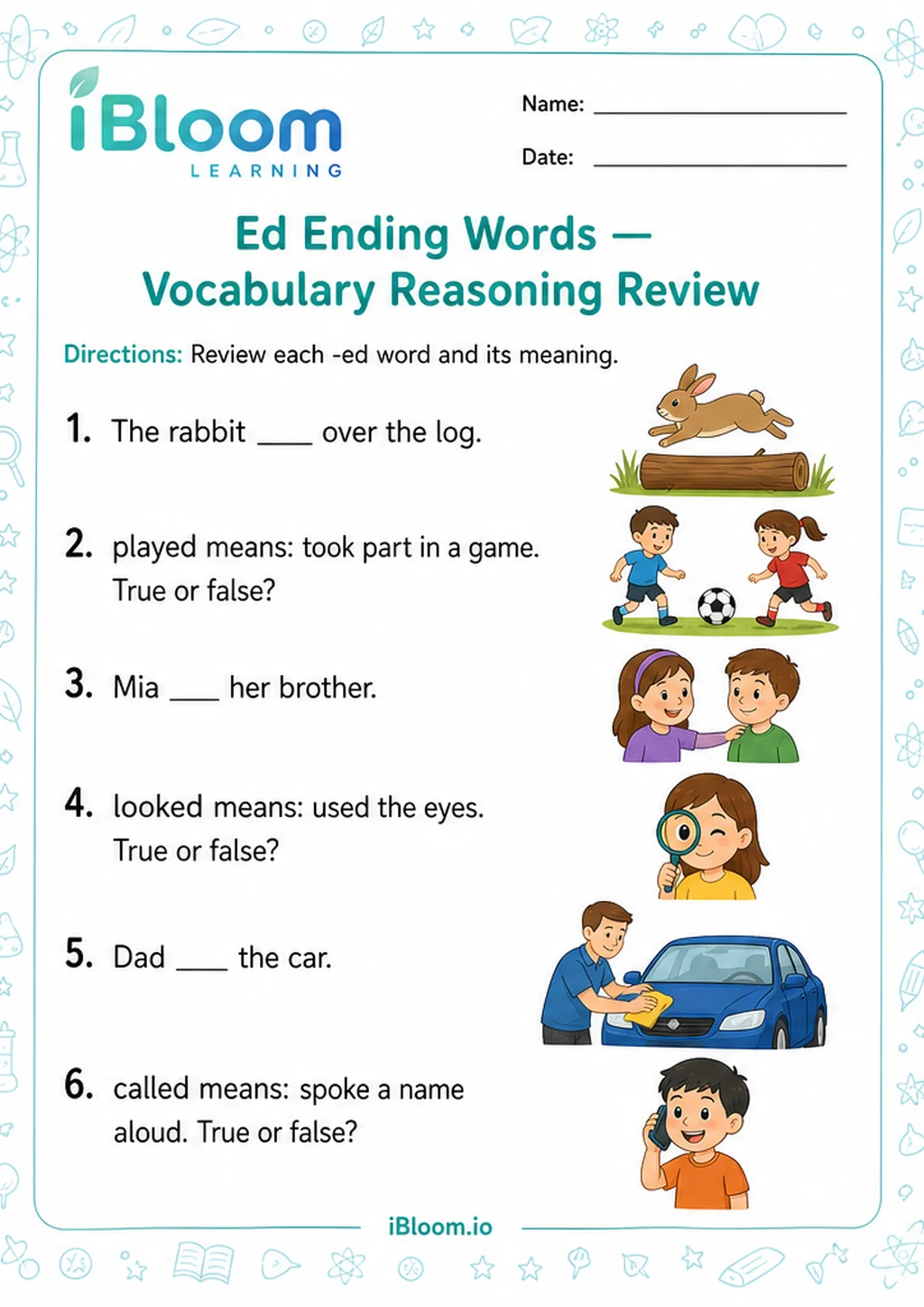
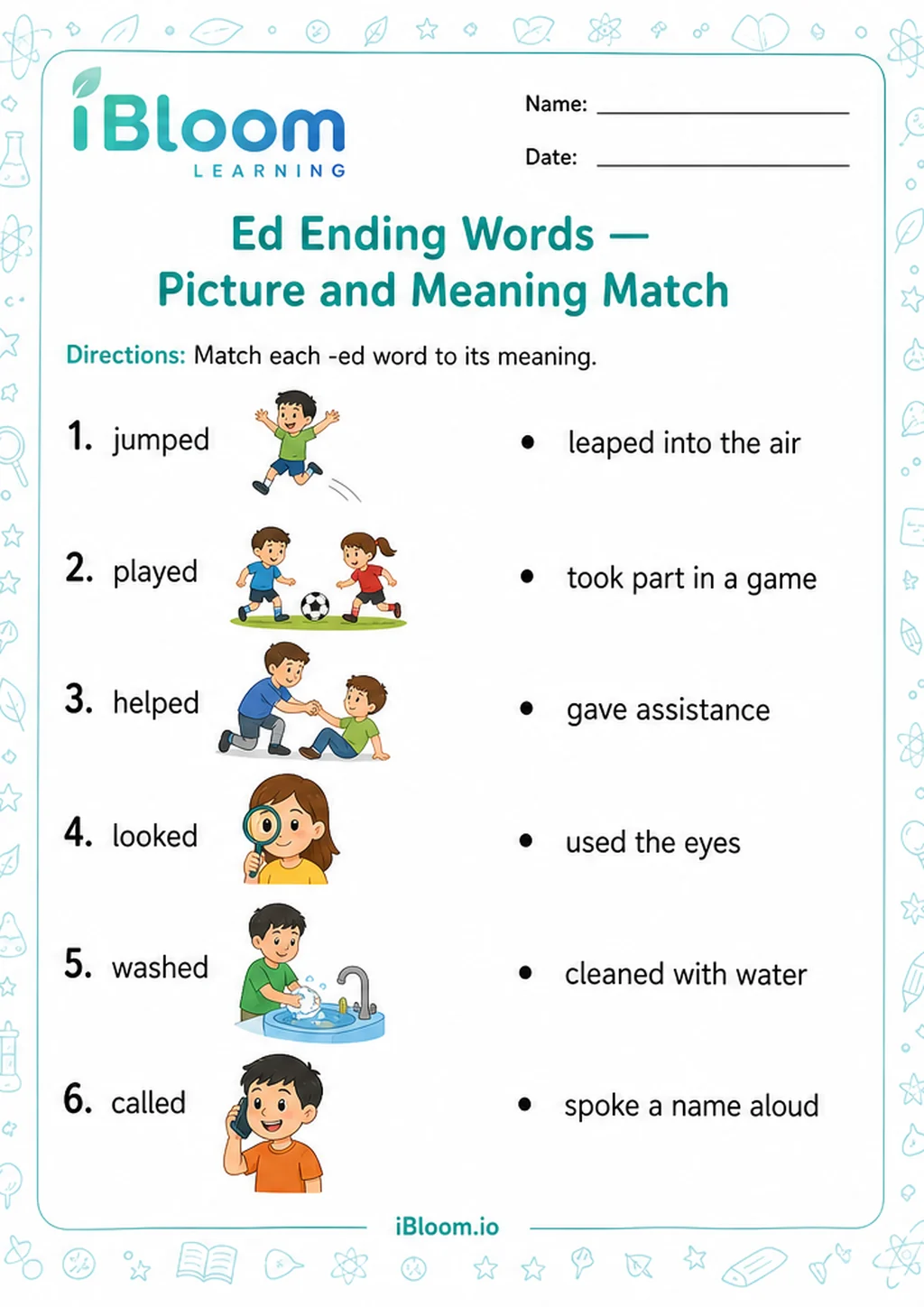
This Grade 1 vocabulary worksheet has 14 questions across two pages. Children use sentence clues to choose meanings for seven -ing action words and write short meanings for seven more. A separate answer key gives intended choices and sample meanings. The work practices context clues aligned to CCSS L.1.4a.
Aligned to L.1.4a
How do sentence clues help with -ing words?
An -ing word names an action in progress in these sentences. Children use the surrounding words to connect the action to its meaning, then explain several meanings in their own words.
How can a child explain an action?
Read the whole sentence and picture what the person, animal, or thing is doing. Use a short phrase that names the action, such as “moving through water” for swimming.
How does question 2 work?
Maya jumps over a rope, so the sentence clue points to moving up off the ground.
- 1Maya is jumping over a rope. What does “jumping” mean?
- 2Answer: moving up off the ground
How to use this worksheet
- 1Read the whole sentence.
- 2Find the word ending in -ing.
- 3Notice who or what is doing the action.
- 4Try each meaning in the sentence.
- 5Choose the meaning that makes sense.
Common mistakes and quick fixes
The mistake
Choosing a meaning without reading the sentence
The fix
Read all the words around the -ing word for clues.
The mistake
Mixing up who does the action
The fix
Ask who is doing something in the sentence.
The mistake
Guessing from just the ending
The fix
Use the whole sentence to decide what the word means.
Common Core alignment
This worksheet practices L.1.4a through grade-level tasks.
Use a sentence to understand what an action word ending in -ing means.
On this sheet: Use a sentence to understand what an action word ending in -ing means.
Show the official wordingHide the official wording
Use sentence-level context as a clue to the meaning of a word or phrase.
What to practice next
Make more practice
Further reading
Questions parents and teachers ask
What does this worksheet teach?
It gives first graders practice using sentence clues to understand action words ending in -ing. Children choose meanings for seven words and write short meanings for seven more. Read the whole sentence aloud and picture the action before answering. The surrounding details help children explain each word in their own language.
How many questions are included?
There are 14 questions across two worksheet pages. The first seven offer two answer choices; the next seven ask children to write a short meaning. Read the whole sentence aloud and picture the action before answering. The surrounding details help children explain each word in their own language.
What does “jumping” mean in question 2?
In the sentence about Maya going over a rope, jumping means moving up off the ground. The sentence helps children connect the word to an action they know. Read the whole sentence aloud and picture the action before answering. The surrounding details help children explain each word in their own language.
Do children need to define words from memory?
They can use the sentence as a clue. For example, “The fish is swimming in the pond” points to moving through water. Read the whole sentence aloud and picture the action before answering. The surrounding details help children explain each word in their own language.
Is the answer key included?
Yes. The separate answer key gives the intended choice or a short sample meaning for all 14 questions. Read the whole sentence aloud and picture the action before answering. The surrounding details help children explain each word in their own language.
How can an adult help with written answers?
Ask the child to describe what the subject is doing in the sentence. Accept a concise phrase that captures the action, then compare it with the sample in the key. Read the whole sentence aloud and picture the action before answering. The surrounding details help children explain each word in their own language.