







About this worksheet
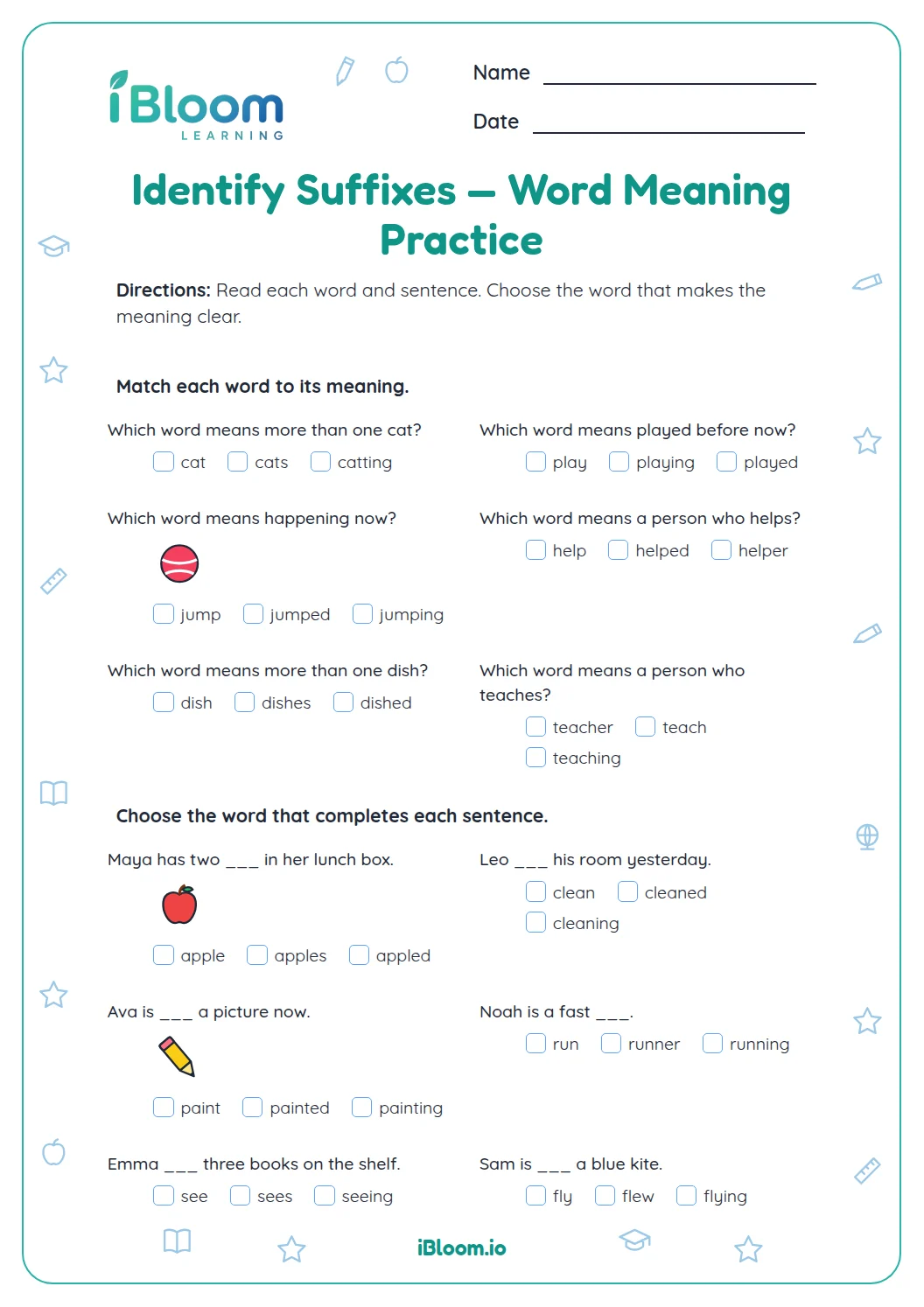
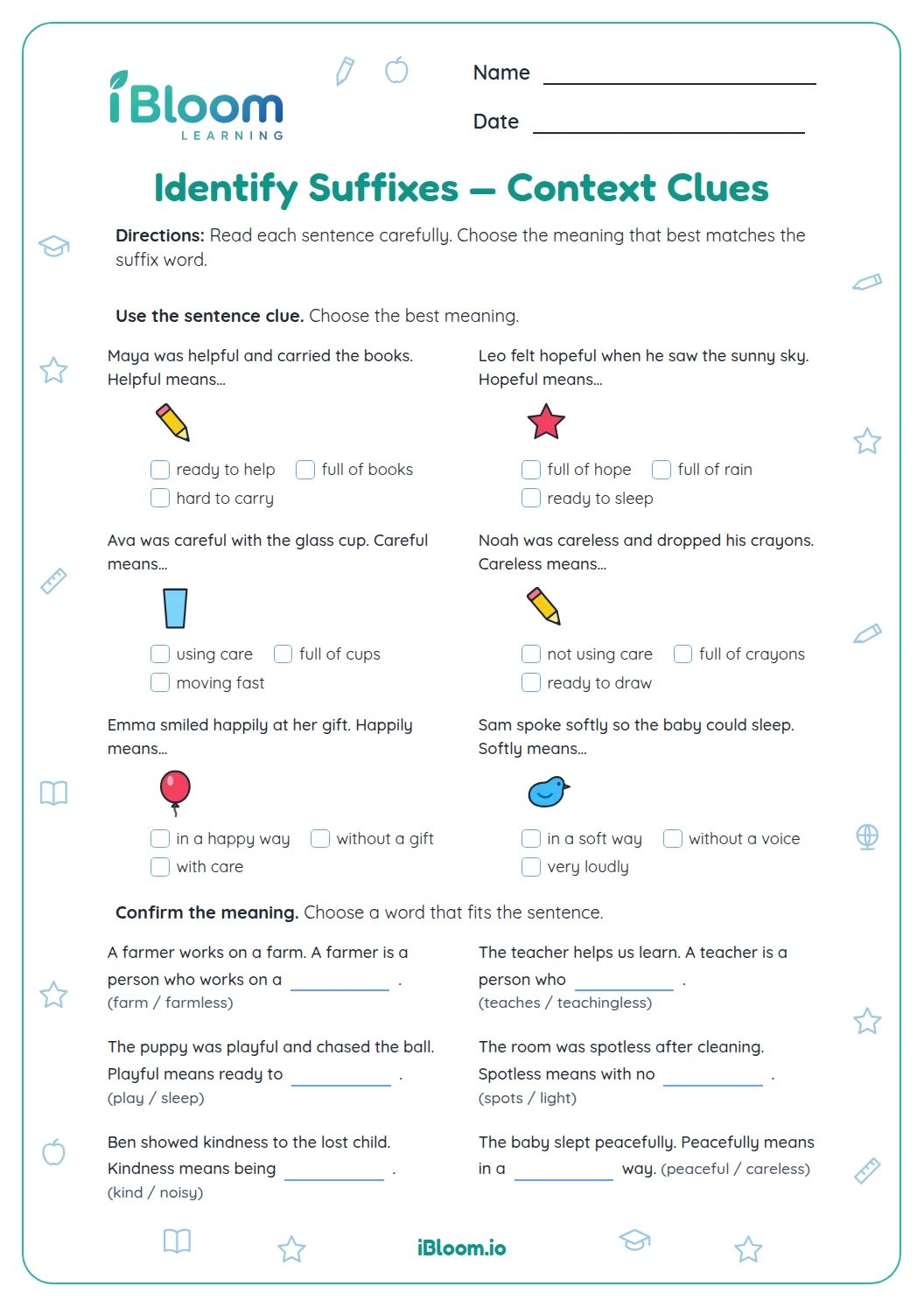
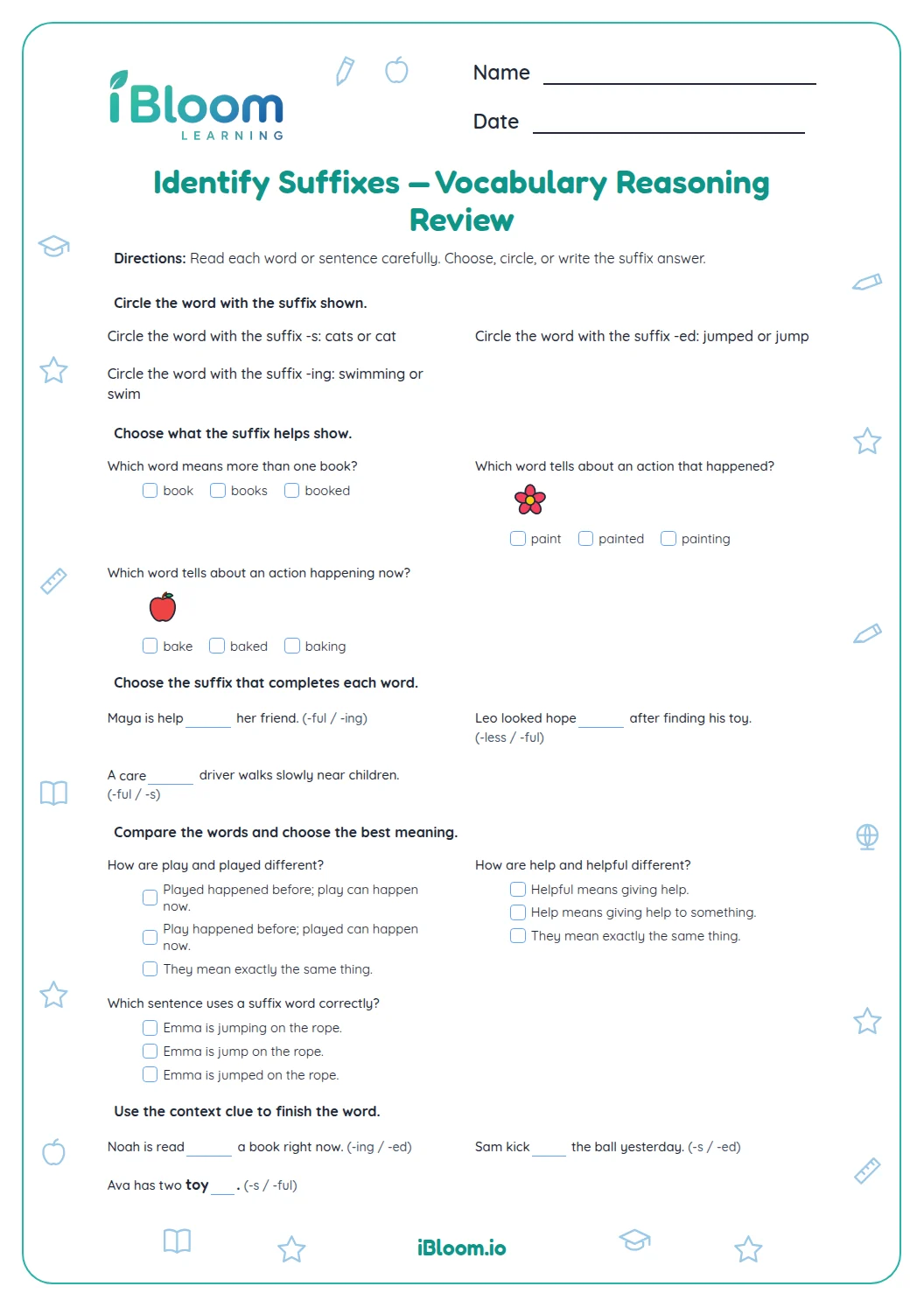
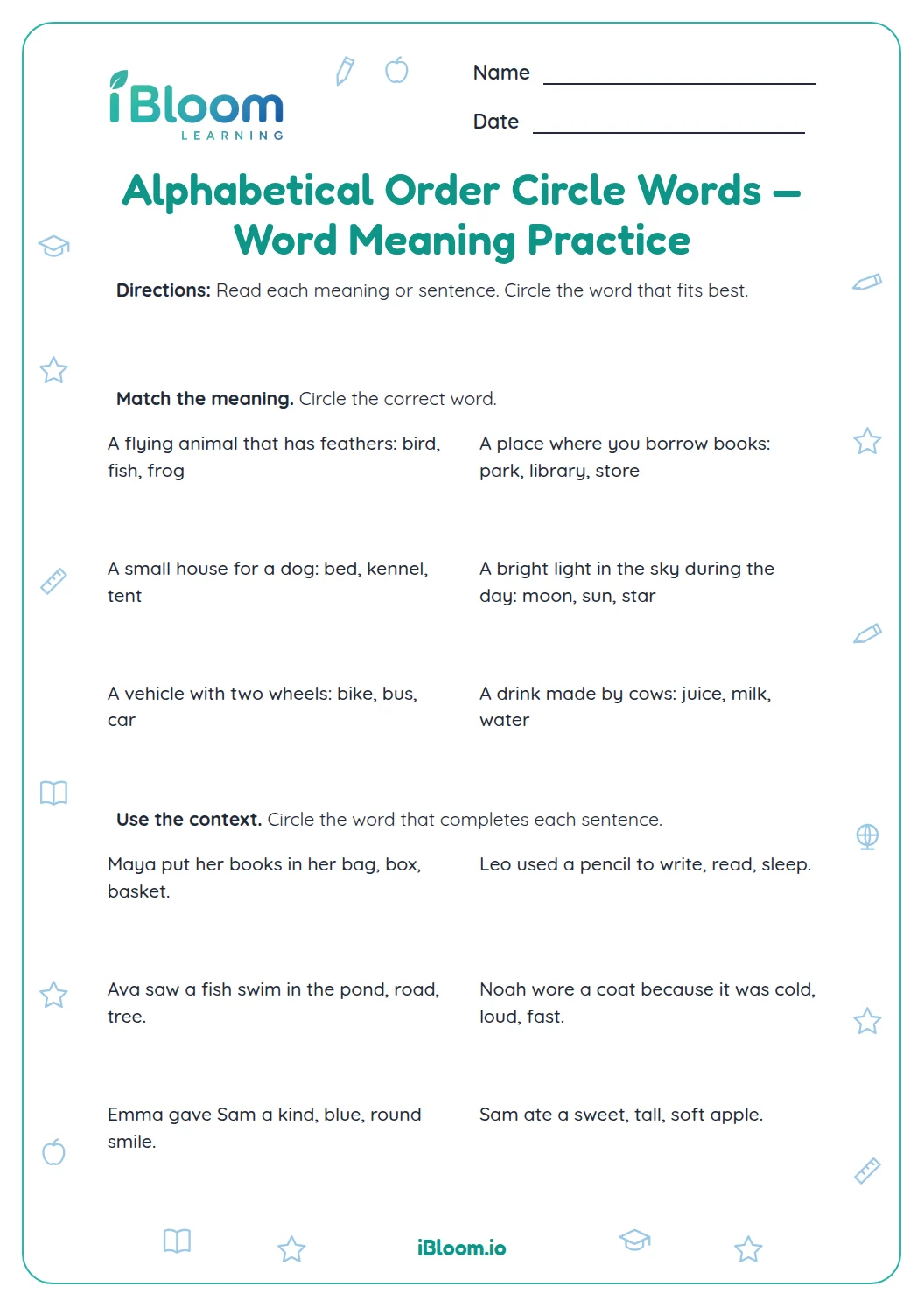
This Grade 1 vocabulary worksheet helps children notice how common endings change a base word or help complete a sentence. The first section selects an ending, the next identifies the meaning carried by a finished word, and the final section uses a word in context. Examples include jumps, painted, farmer, hopeful, and colorful. The separate answer key supports quick checking. It practices CCSS L.1.4b, using familiar affixes as clues to word meaning.
Aligned to L.1.4b
How does a suffix change a word?
A suffix is a word ending added to a base word. In “painted,” -ed shows the action happened before now; in “farmer,” -er names a person who farms.
What can a familiar ending tell you?
Look at the whole word and ask what the ending contributes. The ending -ful can mean “full of,” as in hopeful or colorful.
How do suffix words fit a sentence?
Use sentence clues such as yesterday or is ___ now to choose a matching form. Check that both the meaning and the sentence grammar fit.
How to use this worksheet
- 1Read the base word or sentence.
- 2Try each ending aloud to make a real word.
- 3Use clues such as yesterday or now to choose the verb form.
- 4For -er and -ful words, explain what the ending adds.
- 5Check the finished words with the key.
Common mistakes and quick fixes
The mistake
Choosing an ending that makes a real word but not the right form.
The fix
Use the time clue and the rest of the sentence.
The mistake
Treating -er as only a verb ending.
The fix
In farmer or painter, -er names a person who does the action.
The mistake
Reading a whole word without noticing its ending.
The fix
Point to the suffix and say what it adds to the base word.
Curriculum alignment
Use a familiar suffix as a clue to what a word means.
On this sheet: Children use -s, -ed, -ing, -er, and -ful to select meaningful words.
Show the official wordingHide the official wording
Use frequently occurring affixes as a clue to the meaning of a word.
What to practice next
Make more practice
Further reading
Questions parents and teachers ask
Which suffixes does the worksheet practice?
The questions use -s, -ed, -ing, -er, and -ful. Children choose endings for base words, recognize words such as farmer and hopeful, and select a word that fits a sentence. The answer key helps connect each ending with the finished word.
How many questions are included?
There are 14 multiple-choice questions in two parts, plus a separate answer key. Part A asks learners to choose endings for base words. Part B uses completed words in clues and sentences, including present and past actions. The choices are printed beside each question.
Is an answer key included?
Yes. The separate key gives one answer for each of the 14 questions. After checking, ask the learner to point out the suffix in the completed word. That quick step connects the ending to the word’s meaning or its role in the sentence.
How long does this worksheet take?
Plan for about 15 minutes, depending on whether the child reads independently or works with an adult. The two parts can be completed together or separately. Pause to sound out the base word and ending if a completed word is unfamiliar.
Can an adult read the questions aloud?
Yes. An adult may read the directions, clues, and choices aloud. The learner can still choose the suffix or word. For a sentence with “yesterday,” ask what ending shows the action happened before now, then check the response in the key.