
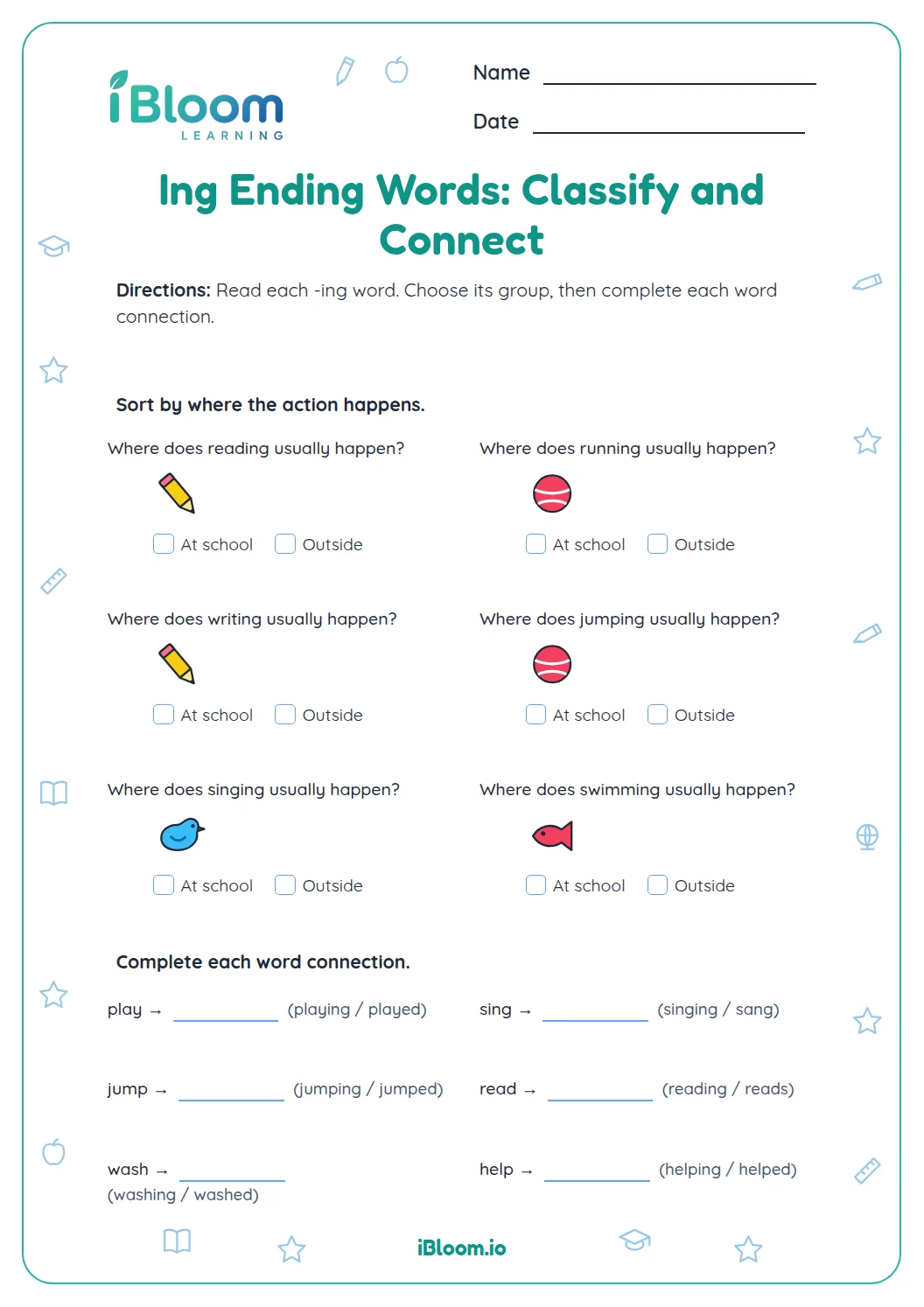
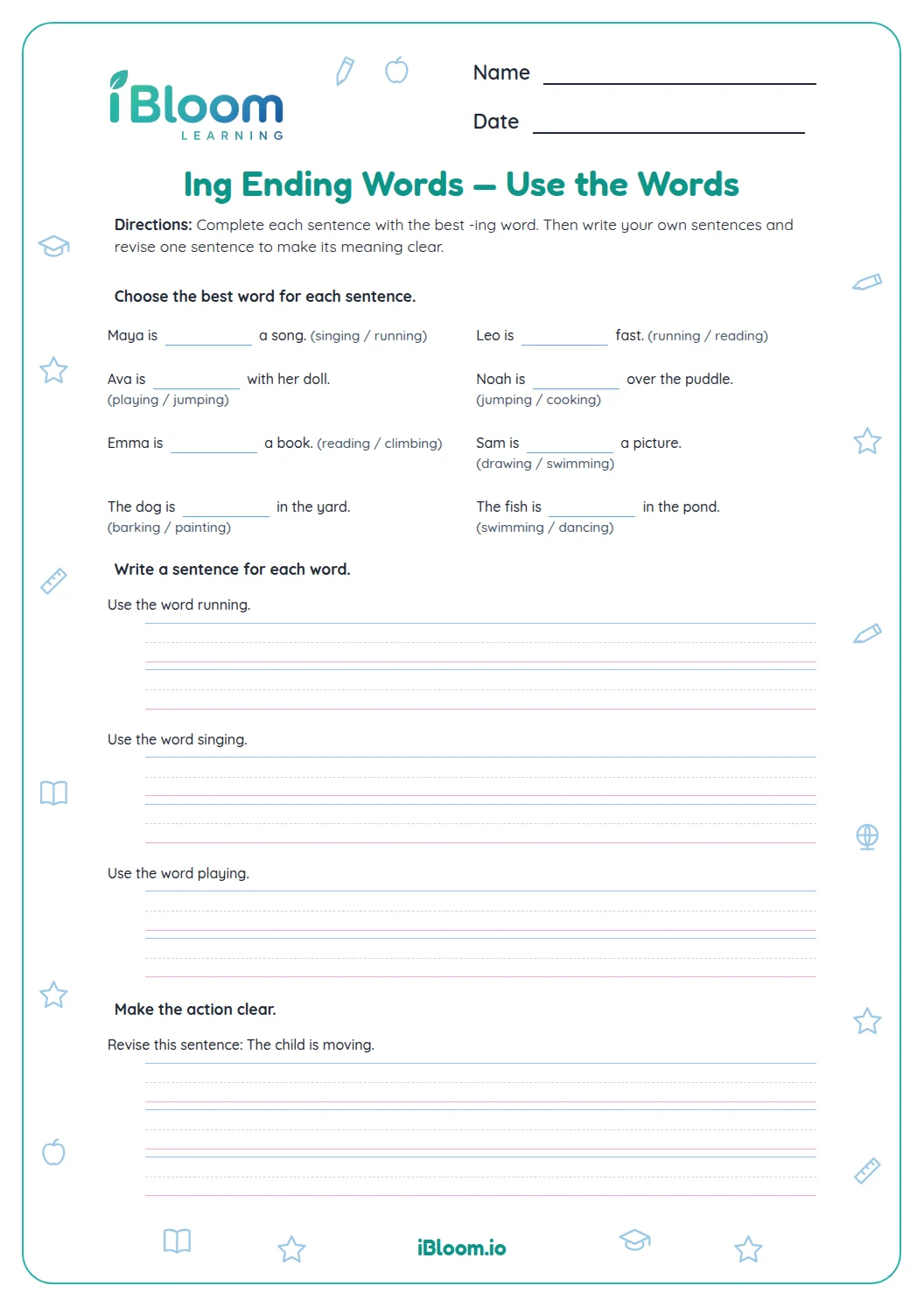
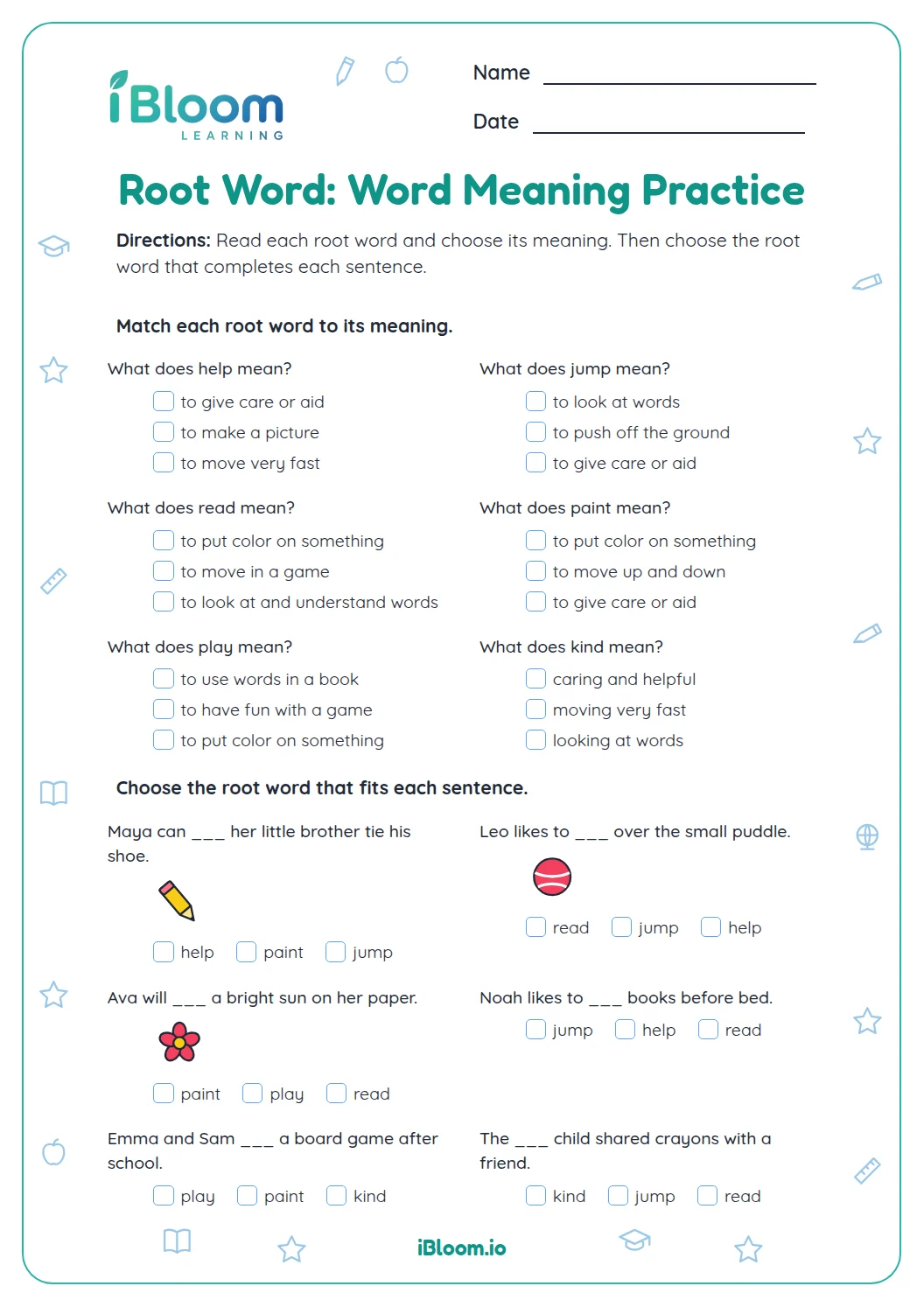

About this worksheet
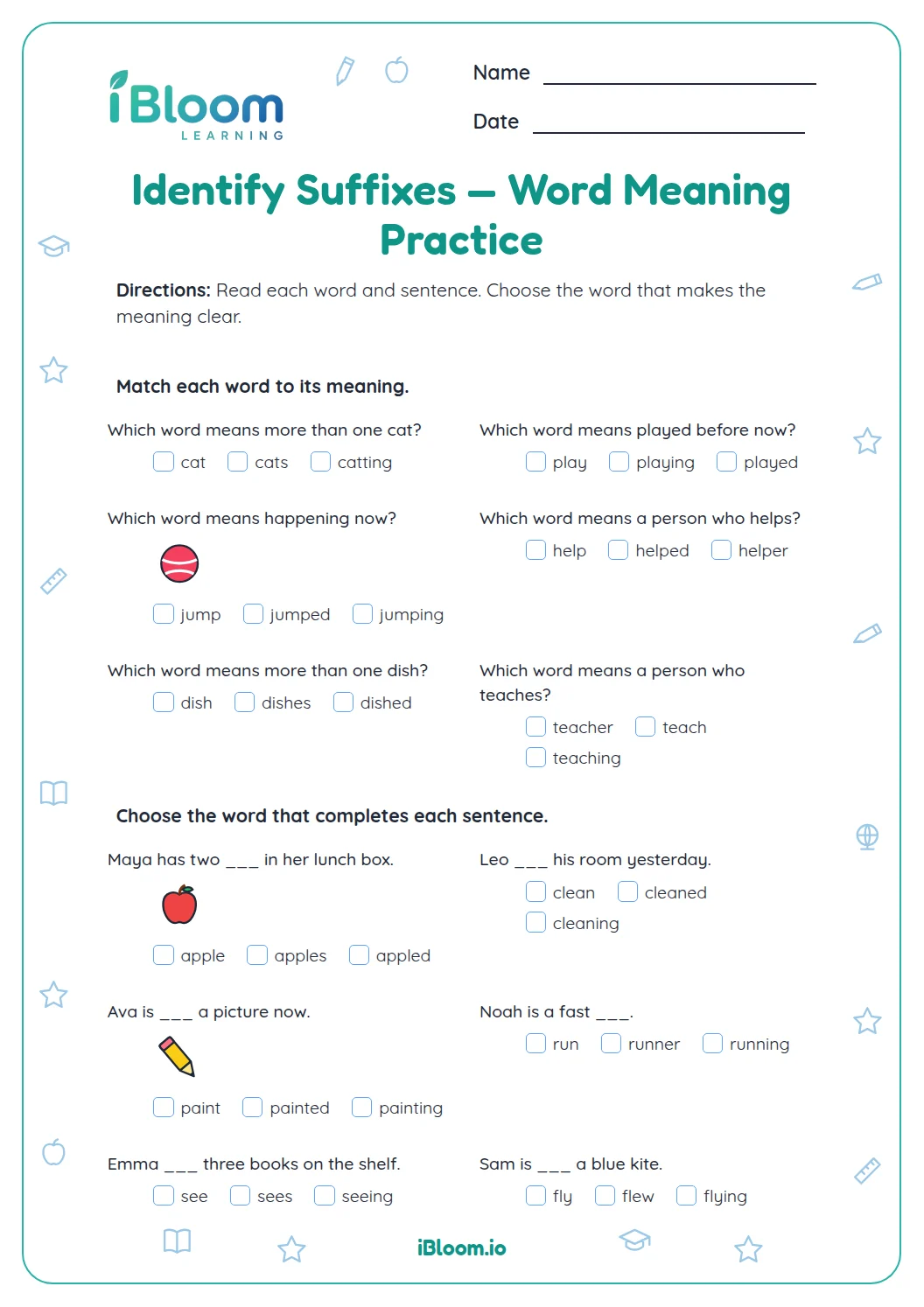
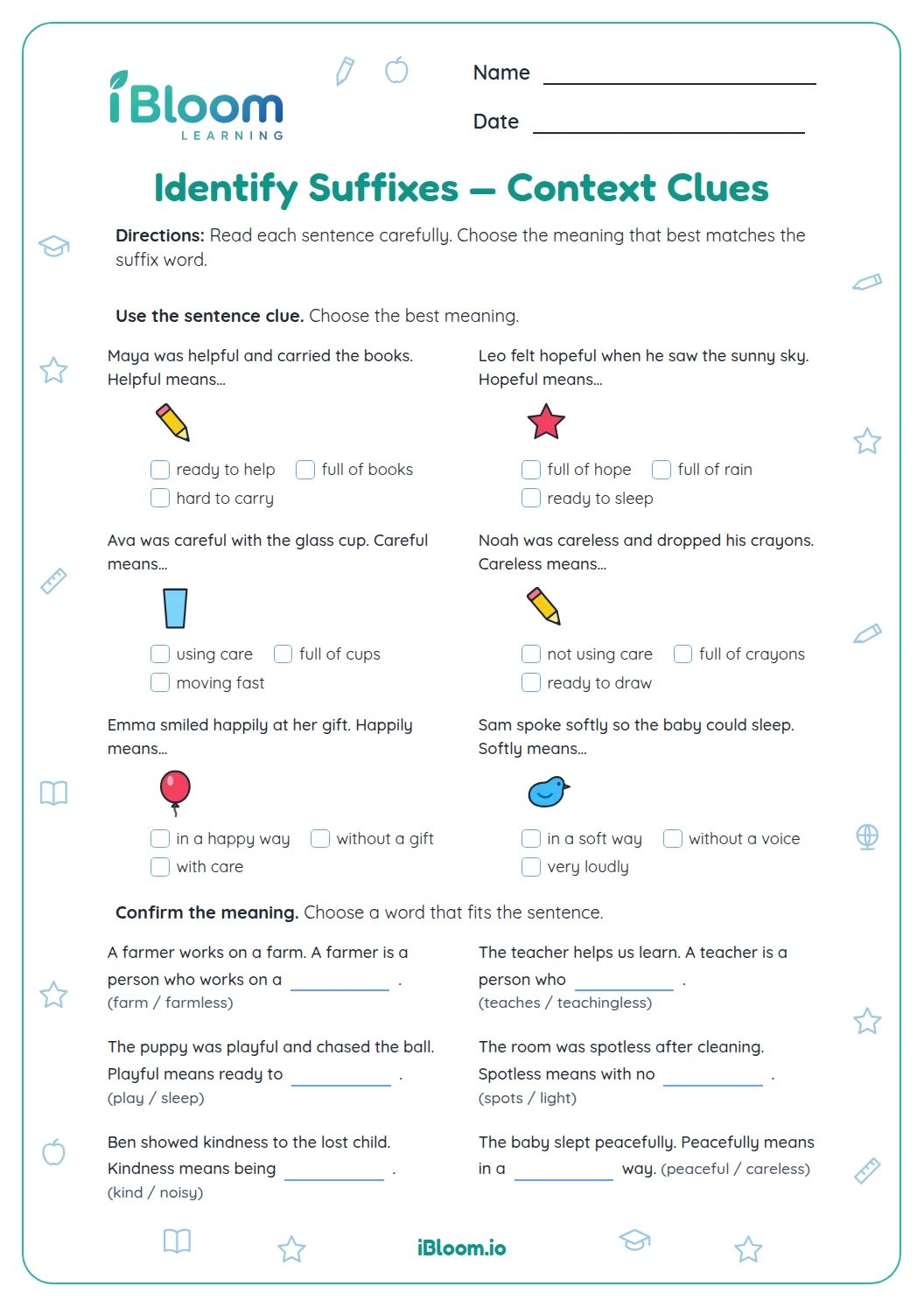
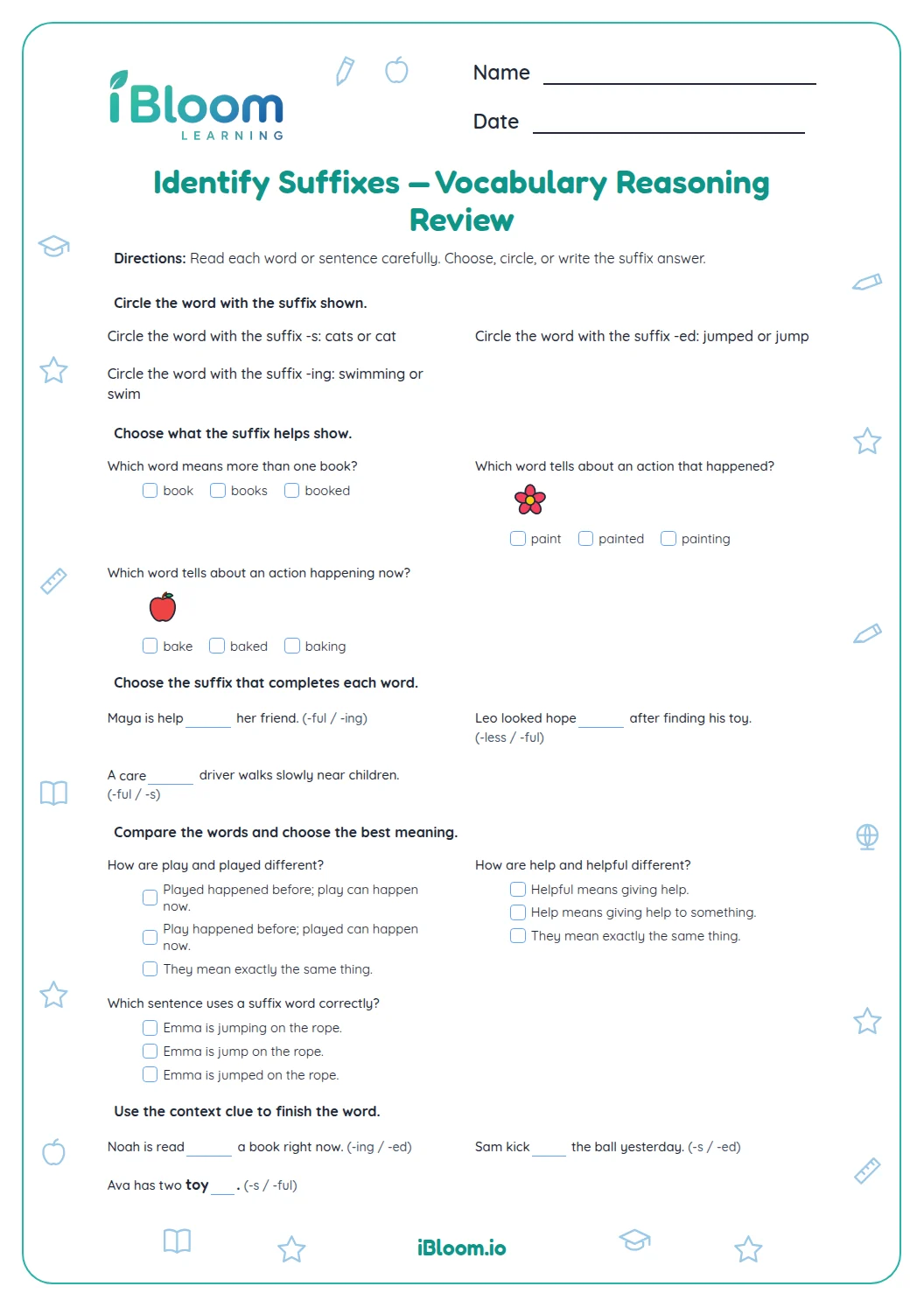
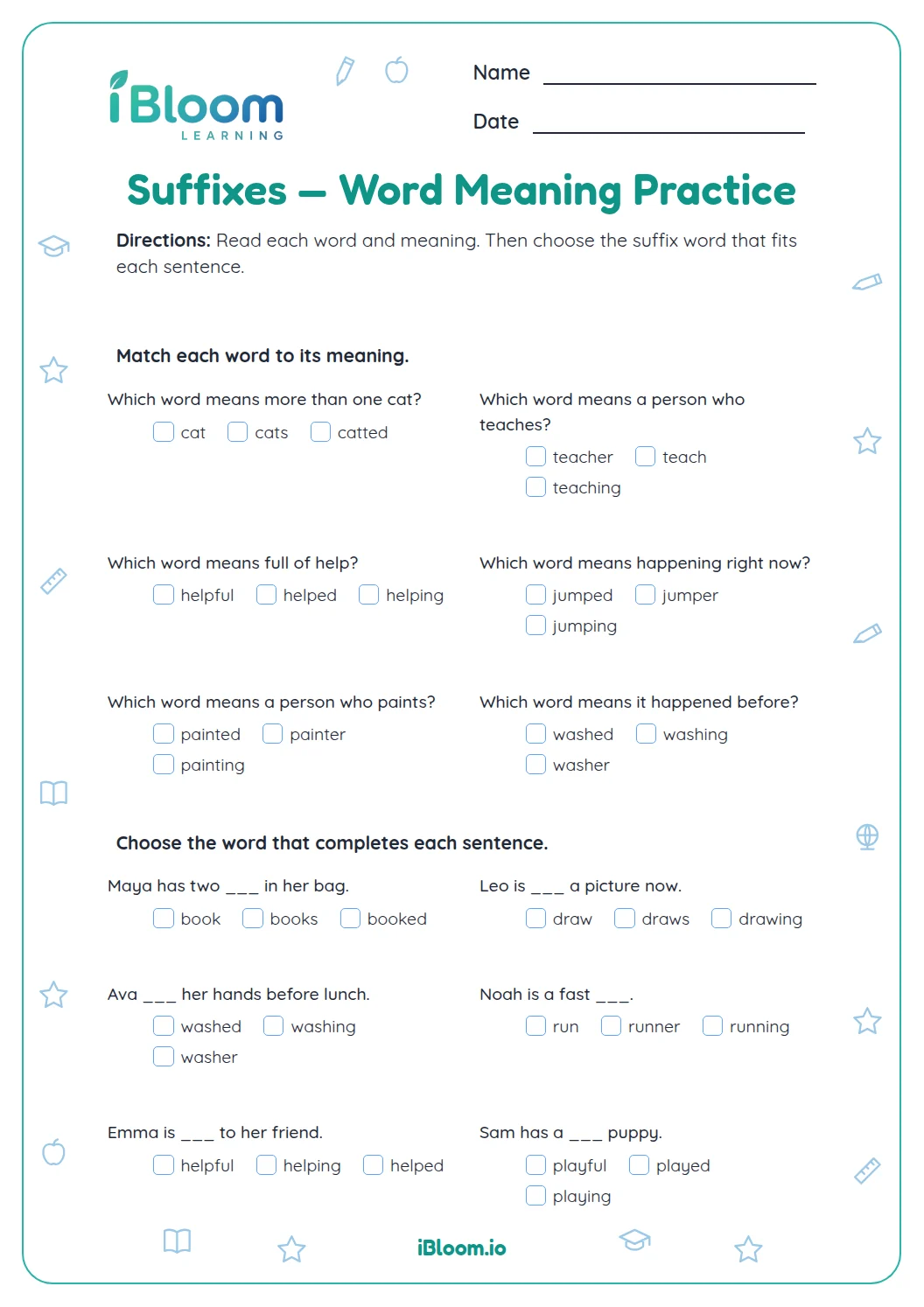
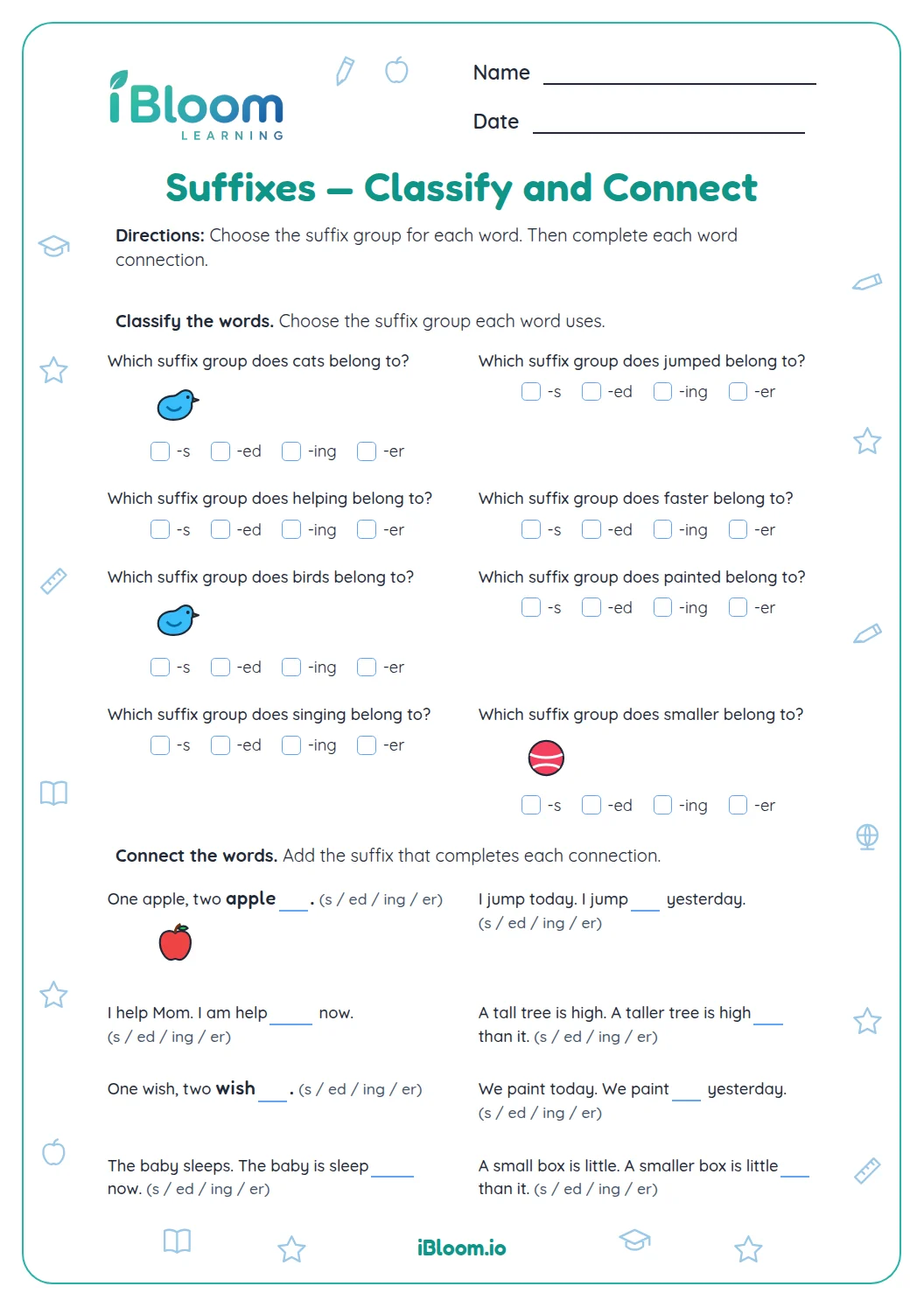
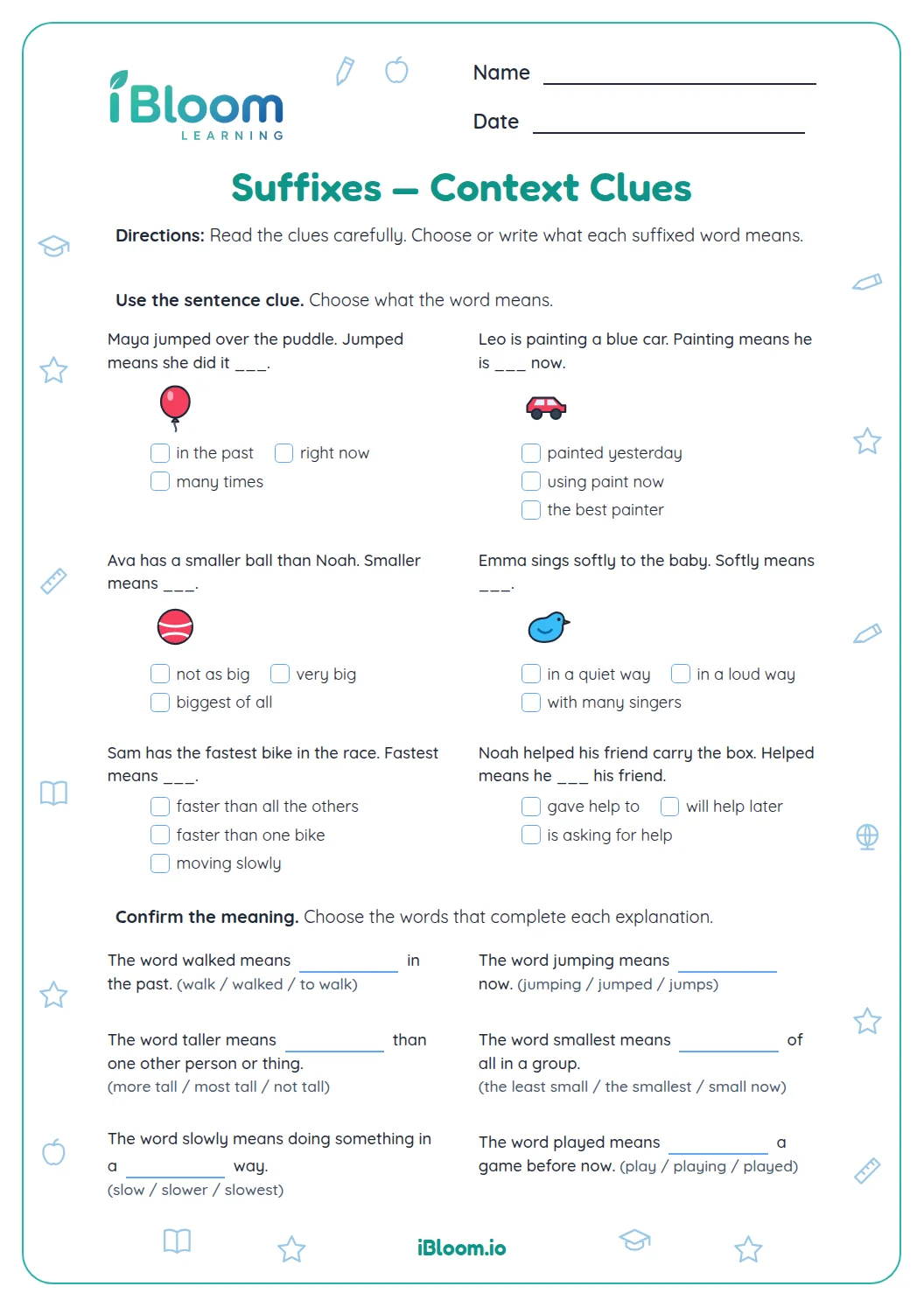
This printable Grade 1 worksheet gives learners 16 questions on identifying common suffixes and connecting them to meaning. The three parts move from a supported first step to independent practice, and a separate answer key makes it easy to check the work. Use the worked example to model the strategy before the learner begins. The practice supports Common Core L.1.4.b.
Aligned to L.1.4
What is a suffix?
A suffix is a word ending added to a base word. Endings such as -s and -es can show more than one; -ed and -ing can tell when an action happens.
- 1jump + -ed = jumped
- 2The ending -ed tells that the jump happened before now.
How do the questions build suffix knowledge?
Part A asks learners to spot a word ending. Part B groups words by matching endings. Part C connects -s, -ed, -ing, -er, and -ly to what those endings tell the reader.
How can an adult support the practice?
Say the base word and ending separately, then read the whole word. Check the answer key after each part and ask the learner to explain what the ending contributes.
How to use this worksheet
- 1Read the directions and name the skill being practiced.
- 2Work through the first part together, explaining the clue or step.
- 3Complete each question and keep the answers in order.
- 4Pause between parts to check the work with the key.
- 5For a missed item, redo the step and explain why the corrected answer fits.
Suffix mix-ups to watch for
The mistake
Choosing a word with the same base but a different ending.
The fix
Look at the final letters, then read the whole word.
The mistake
Mixing up -er as a person and -er as a comparison.
The fix
Use the sentence clue: baker names a person; faster compares.
The mistake
Thinking -ed means an action is happening now.
The fix
In jumped, -ed tells that the action happened before now.
Common Core alignment
Use common suffixes as clues to the meanings of words.
On this sheet: Learners identify common suffixes and use them to understand word meaning.
Show the official wordingHide the official wording
Use frequently occurring affixes as a clue to the meaning of a word.
What to practice next
Make more practice
Further reading
Questions parents and teachers ask
What is a suffix?
A suffix is a group of letters added to the end of a base word. It can change a word’s meaning or how the word is used. This worksheet asks learners to identify common endings and connect them with clues such as past action, comparison, or number.
Which suffixes appear on this worksheet?
The 16 questions practice -s, -es, -ed, -ing, -er, and -ly. Learners first identify endings in words, then group matching forms and connect selected endings to meaning. A separate key is provided for checking. Ask the learner to explain one answer aloud, then use the printed key to check the result and the clue that supports it.
How does -ed change a word like jump?
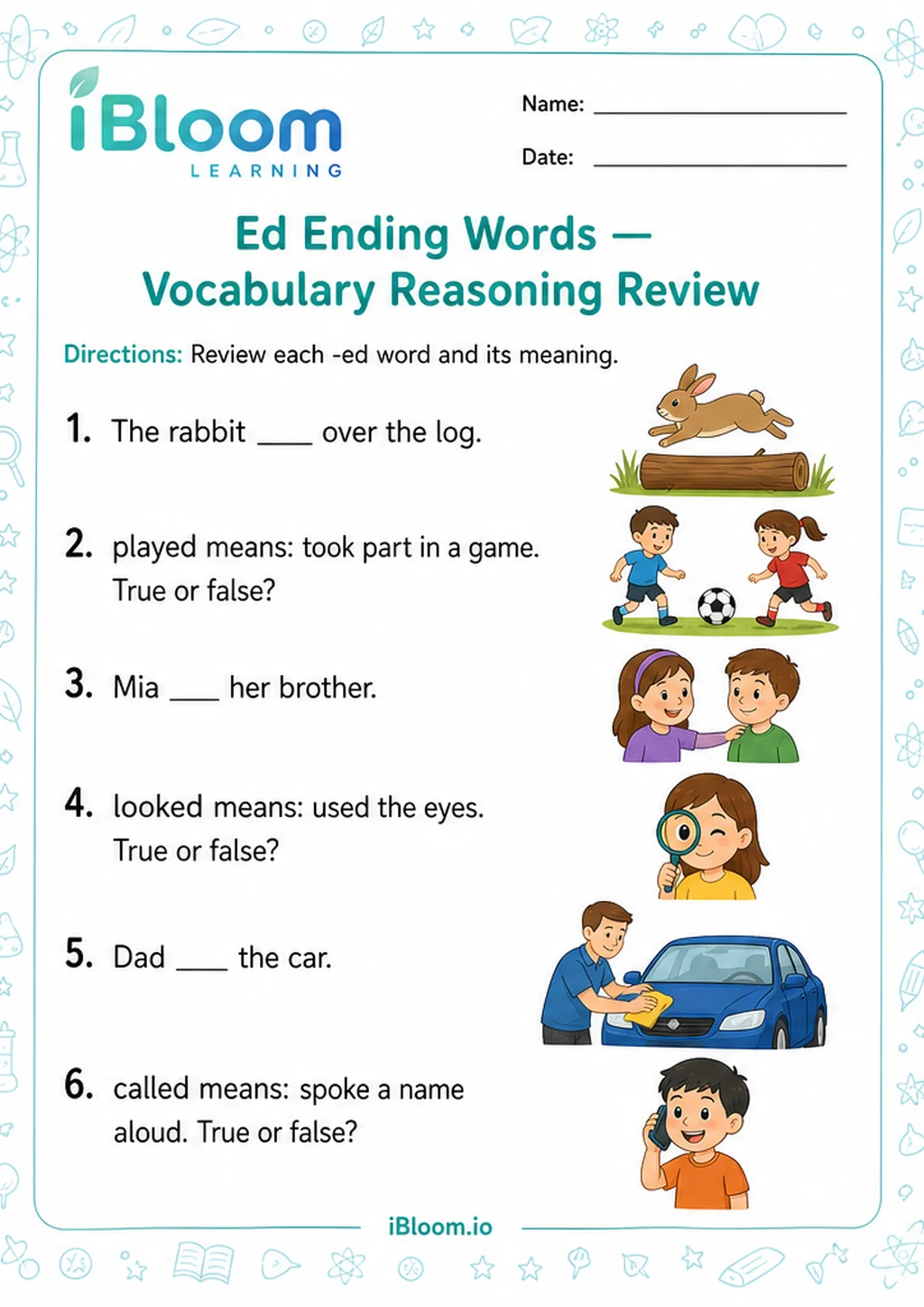
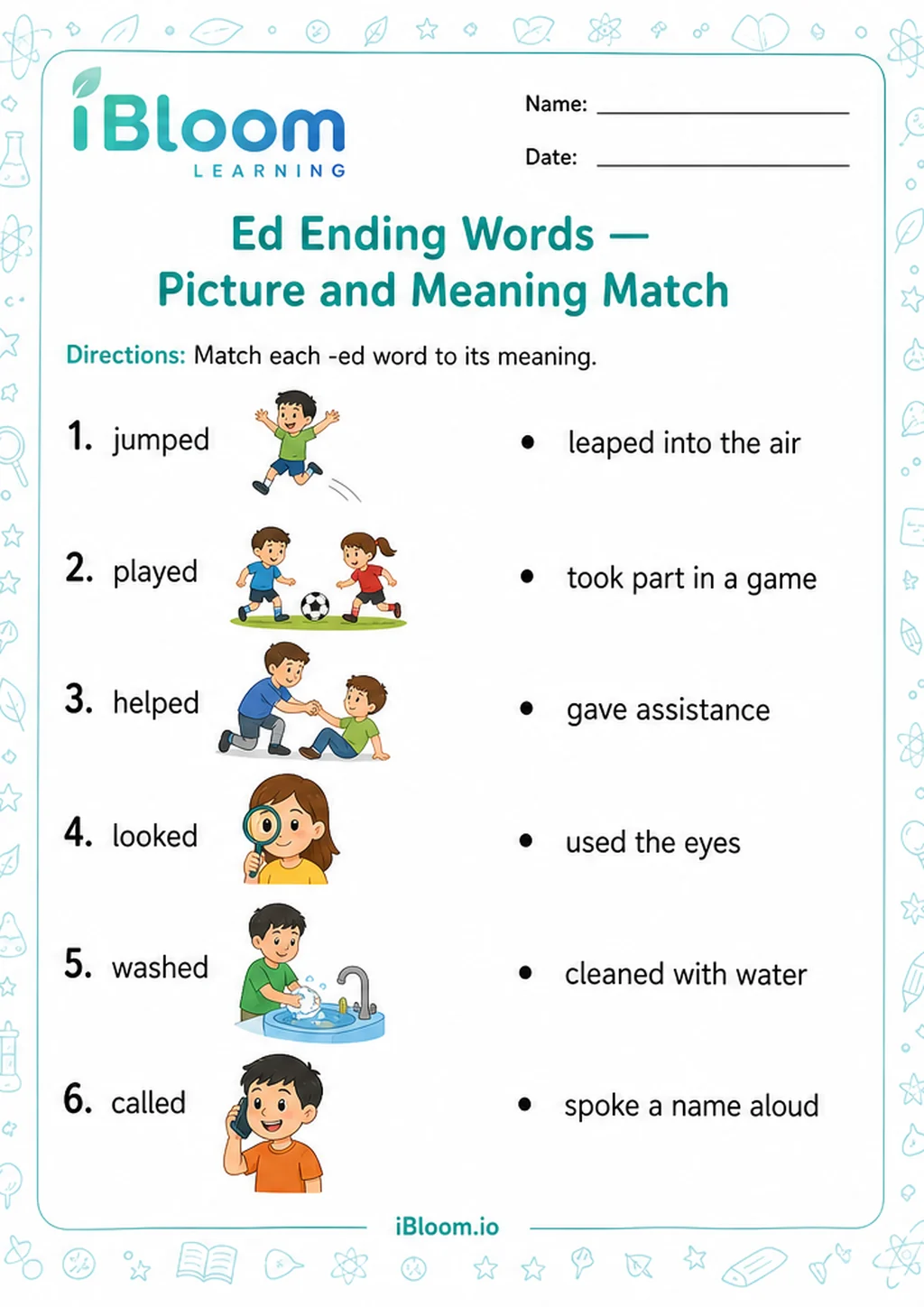
Adding -ed makes jumped, which tells that the action happened before now. The worksheet includes this pattern alongside -ing for an ongoing action. Learners compare the word ending with the clue in each question. Ask the learner to explain one answer aloud, then use the printed key to check the result and the clue that supports it.
Can -er have more than one meaning?
Yes. In baker, -er names a person who bakes. In faster, -er compares two things. The question sentence tells which meaning is being used, so learners should read the whole prompt as well as the word. Ask the learner to explain one answer aloud, then use the printed key to check the result and the clue that supports it.
How should an adult use the answer key?
Let the learner choose answers before checking. If an answer needs another look, underline the suffix and read the word aloud. Then discuss the clue, such as “more than one” for dogs or “how” for slowly. Ask the learner to explain one answer aloud, then use the printed key to check the result and the clue that supports it.