




About this worksheet
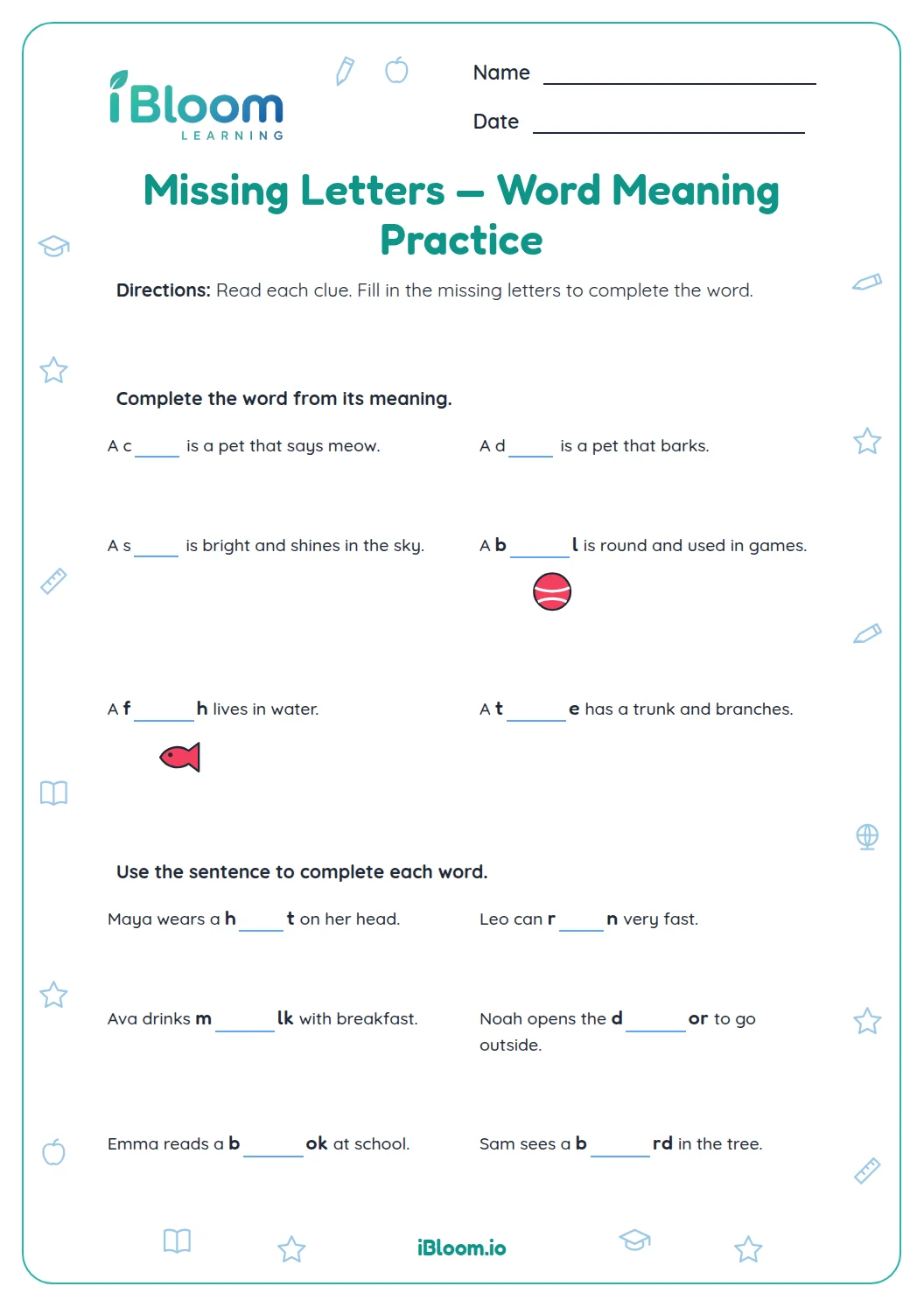
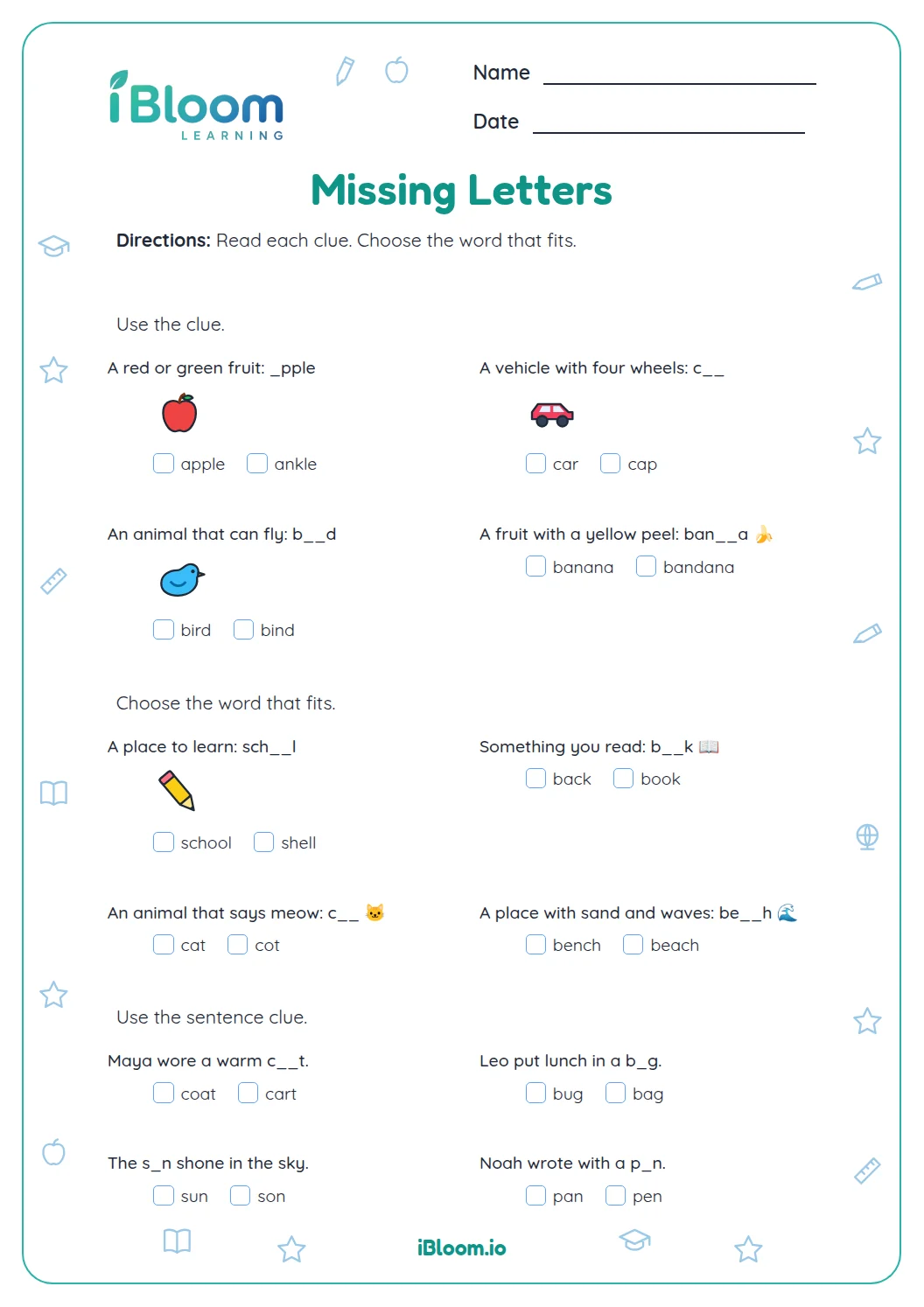
This Grade 1 worksheet gives children sixteen short-word completions. Each prompt includes a simple clue and a word with a missing letter; children use the clue and the remaining letters to write the complete word. A separate answer key lists the completed words.
How does a missing-letter pattern help?
Each prompt pairs a familiar word pattern with a short clue. Read the clue, say the word, then use the letters already printed to complete it.
How should children use the word bank?
Look at the letters before and after the gap. Say a word that fits the clue, then check that its spelling matches the pattern.
What words appear on the page?
Part A practices the first eight words. Part B adds eight more familiar words, including short vowel patterns and final consonants.
- 1Pattern: c_t
- 2Try cat: c-a-t fits both outside letters
- 3Missing letter: a
How to use this worksheet
- 1Read the pattern from left to right.
- 2Scan the word bank for a word with the same first and last letters.
- 3Say the word aloud to check it sounds familiar.
- 4Write the missing letter in the gap.
- 5Read the completed word once more.
Common mistakes and quick fixes
The mistake
Choosing a word with a different first letter.
The fix
Compare the first letter in the pattern with the word bank.
The mistake
Writing the whole word when only one letter is missing.
The fix
Check how many blank marks appear.
The mistake
Guessing from sound without checking the final letter.
The fix
Match both outside letters before choosing.
What to practice next
Make more practice
Questions parents and teachers ask
What does a child do on this sheet?
The child reads a short clue and completes a familiar word with one missing letter. There are 16 prompts in two parts, with one answer line for each word. The separate answer key lists every completed word so an adult or student can check the spelling.
Can I read the clues aloud?
Yes. Reading a clue aloud can help a beginning reader connect its meaning with a familiar word. Invite the child to say the word, listen for its sounds, and compare those sounds with the printed letters. Then the child can write the missing letter and read the finished word aloud.
How does the clue help?
The clue narrows down which familiar word fits the printed pattern. For example, “A pet says meow” points to a word that begins with c and ends with t. The child supplies the middle letter, then checks that the completed word matches both the clue and the letters.
Is an answer key included?
Yes. A separate answer key lists the completed answer for all 16 items. If a child writes only the missing letter, compare it with the matching position in the full word. Reading the word and clue together is another quick way to confirm the response.
How long should this worksheet take?
Plan for about 15 minutes, with time for reading each clue and saying the word aloud. Some children may finish sooner, while others benefit from discussing the clue before writing. Pause after each part to review how the missing letter completes a familiar word.