







About this worksheet
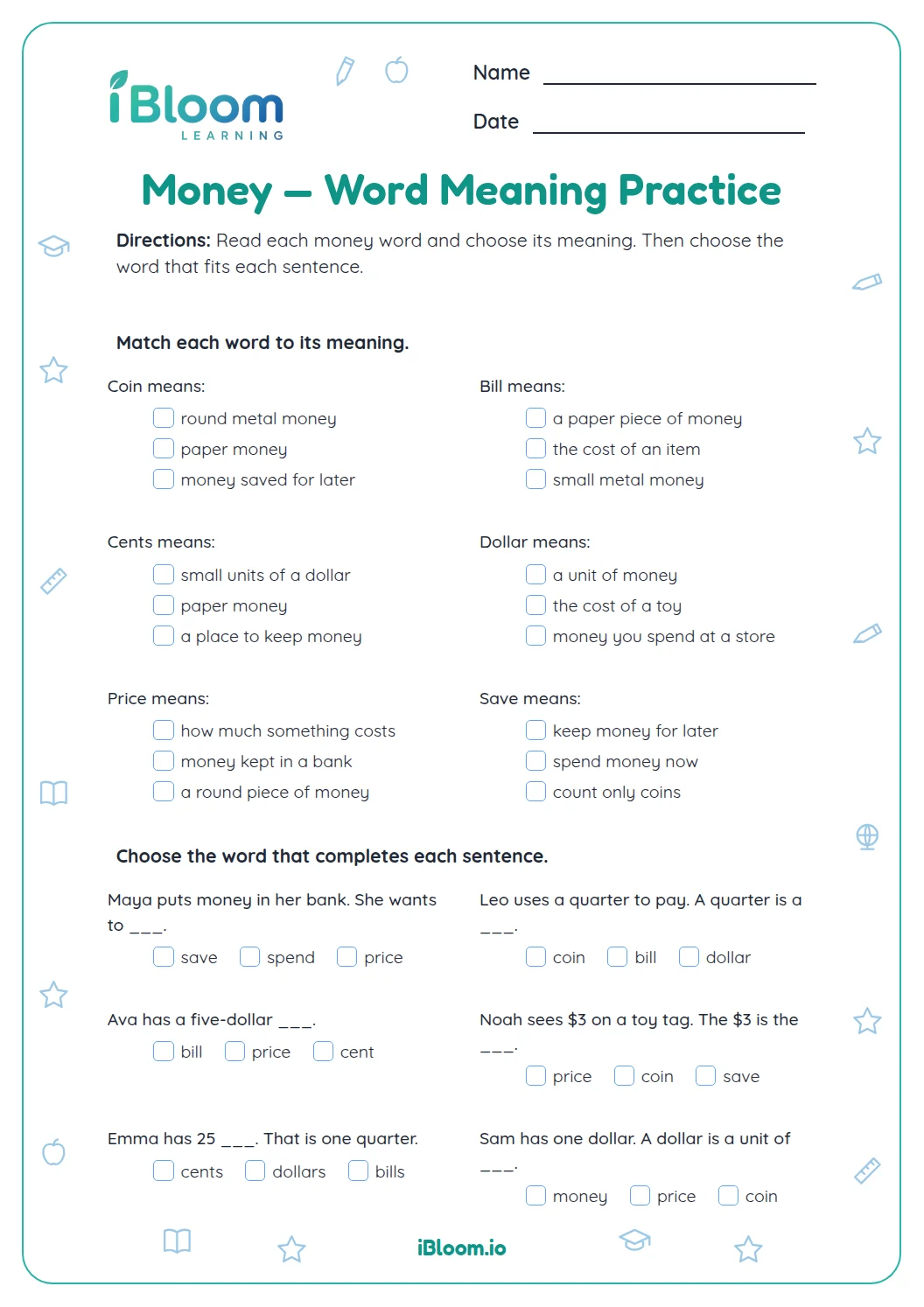
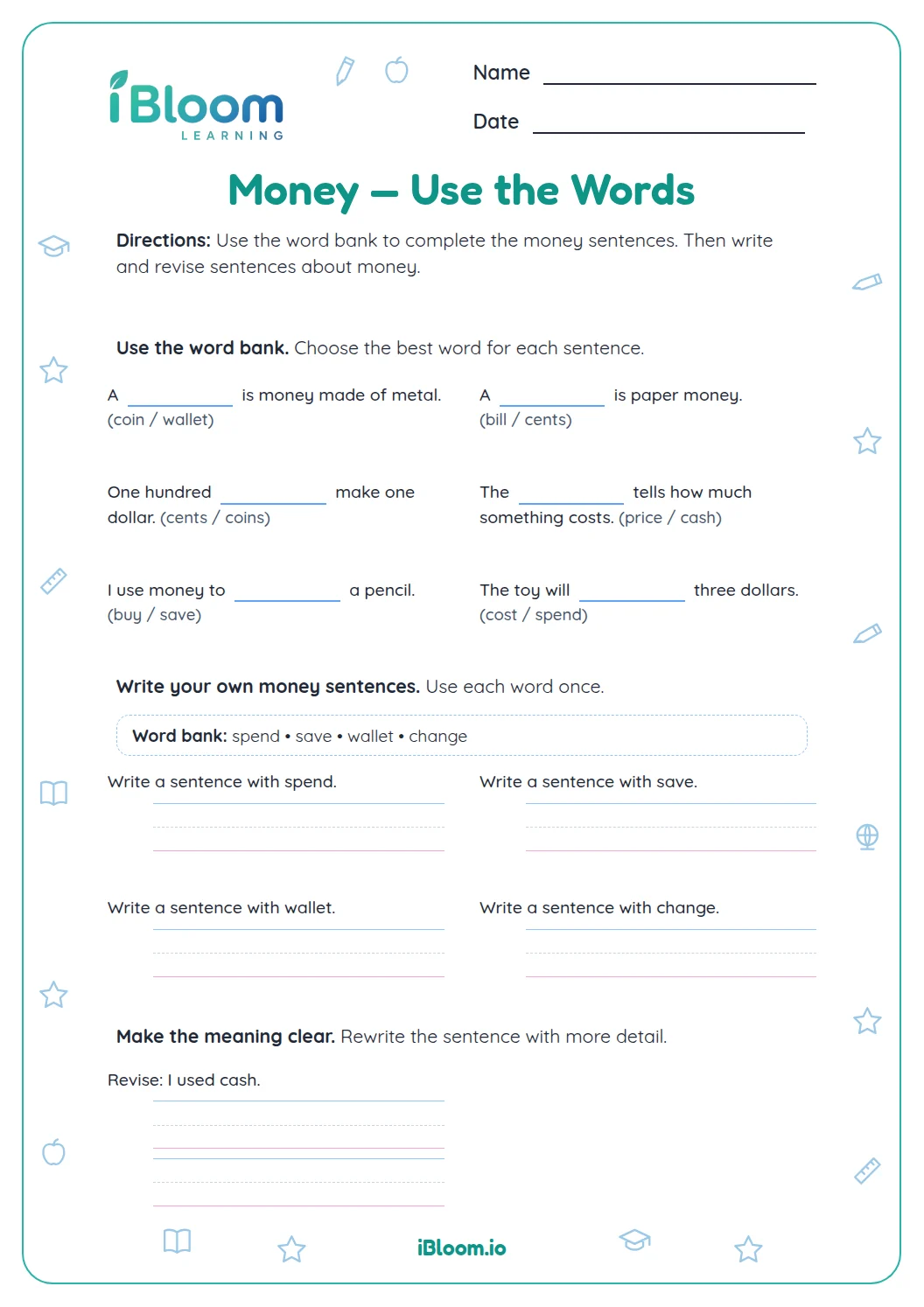
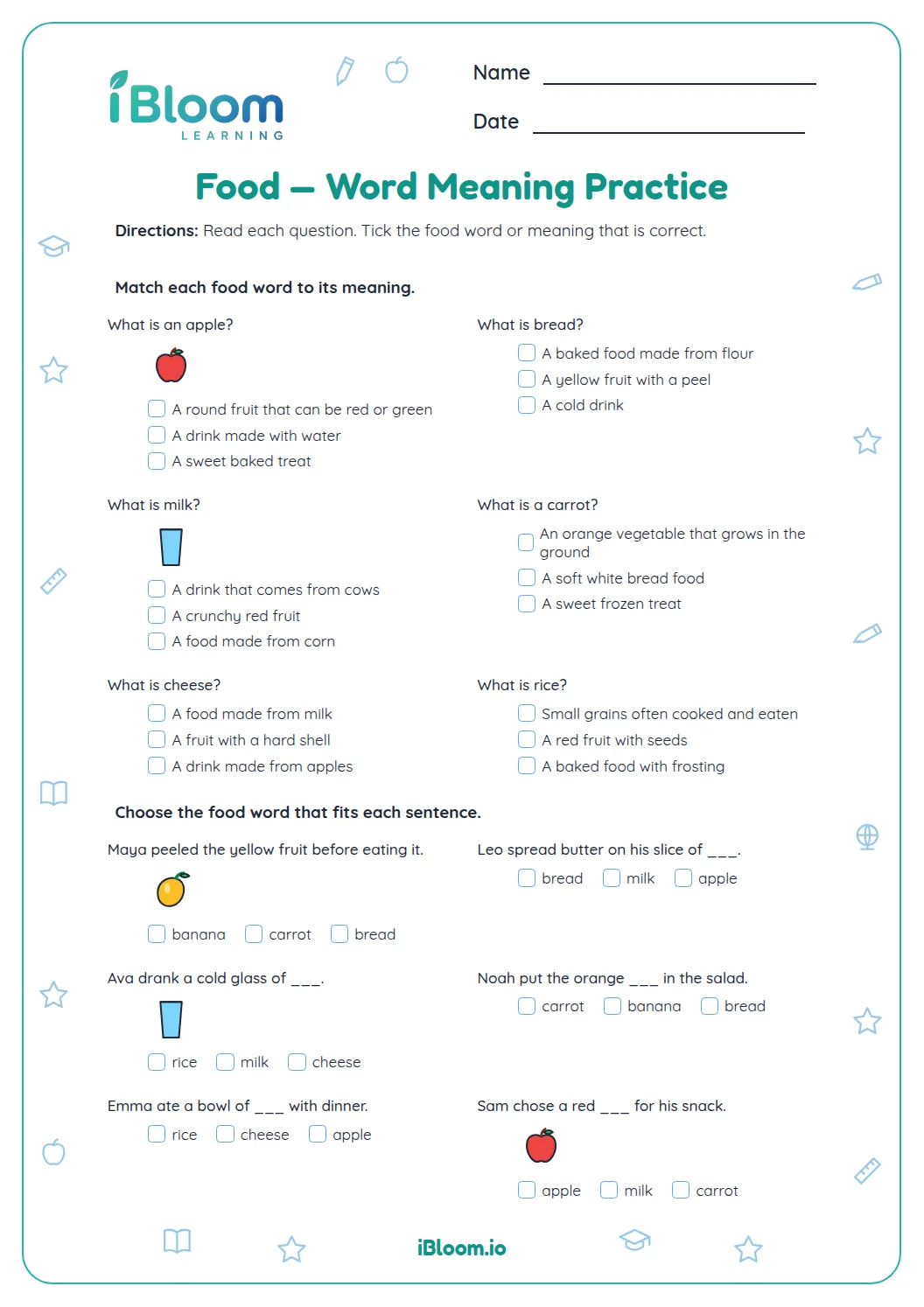
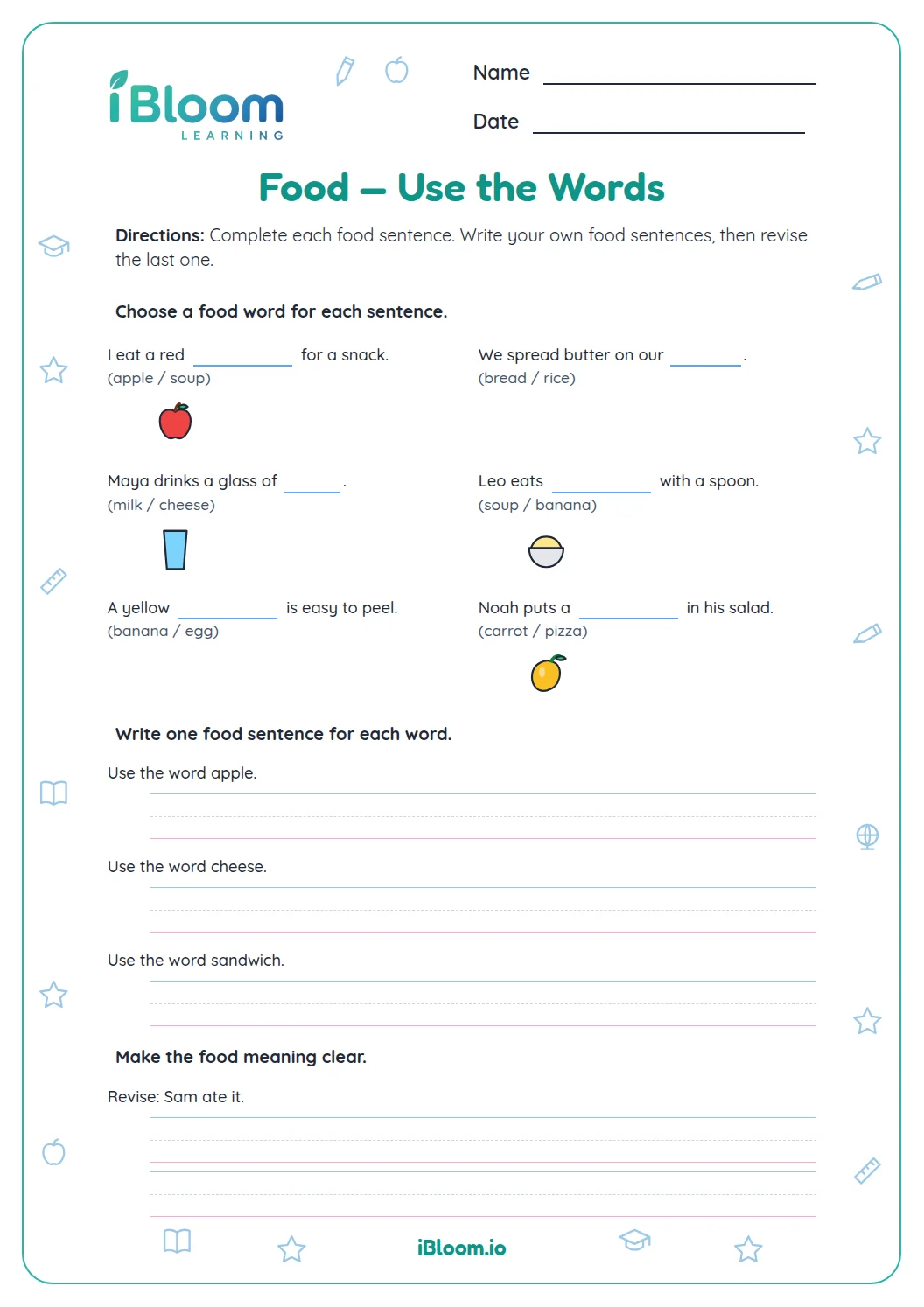
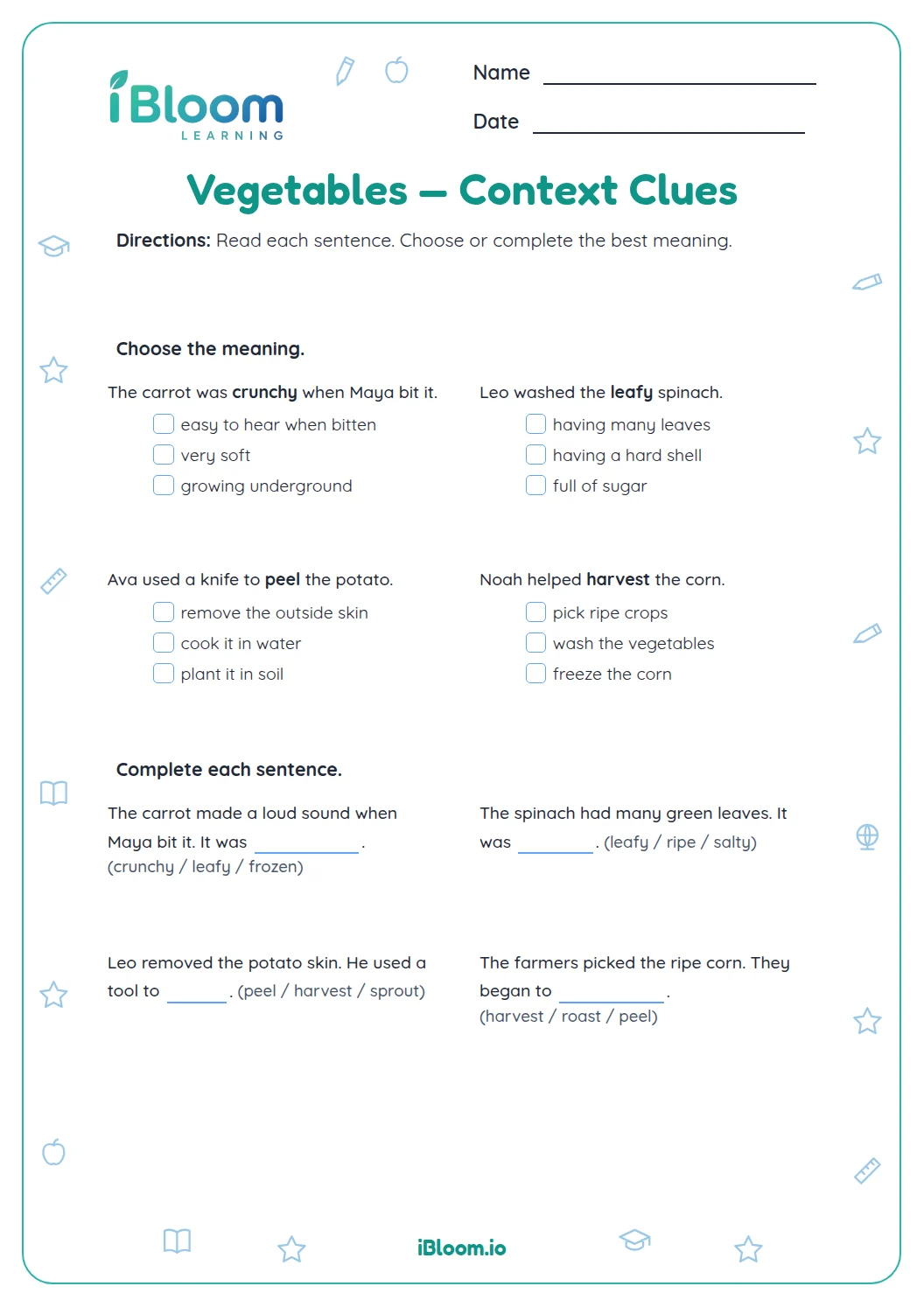
This printable combines a six-word money word search with eight vocabulary clues. Learners find coin, penny, nickel, dime, dollar, and bill, then use sentence clues about coins, cents, bills, buying, and paying. The questions distinguish words for kinds of money from words used in a money context. This vocabulary sorting supports CCSS L.1.5.a. A separate answer key lists the answers.
Aligned to L.1.5.a
Which words should children find in the grid?
Part A has six targets: coin, penny, nickel, dime, dollar, and bill. Find and circle each letter sequence in the grid, then check that each circled word matches the list.
How do the vocabulary clues work?
Part B gives short clues about what a word names or means. A nickel is a kind of coin; a dime is a ten-cent coin; a customer is a person who buys something.
- 1“Which is a kind of coin?” The answer is “nickel,” because a nickel is one kind of coin.
How can learners keep the money words straight?
Sort the words by meaning: penny, nickel, dime, and quarter name coins; dollar and bill name money amounts or forms of paper money; customer names a person. Reading the full clue helps distinguish these related words.
How to use this worksheet
- 1Read the six target words before searching.
- 2Scan the grid one row at a time and circle each complete word.
- 3Read each meaning clue carefully.
- 4Use the sentence clue to choose or write the word that fits.
- 5Check answers with the key and explain one word in your own words.
Common mistakes and quick fixes
The mistake
Treating a bill and a coin as the same kind of object.
The fix
A bill is paper money; a coin is made of metal.
The mistake
Mixing up a money word and a person who uses money.
The fix
A customer is a person who buys something.
The mistake
Guessing from one familiar word in the clue.
The fix
Read the whole sentence and match the word to the meaning.
Common Core alignment
The worksheet asks learners to sort vocabulary words into a meaningful category and connect words with their meanings.
Group familiar money words and understand the category they name.
On this sheet: Learners recognize money words as members of a shared category.
Show the official wordingHide the official wording
Sort words into categories (e.g., colors, clothing) to gain a sense of the concepts the categories represent.
What to practice next
Make more practice
Further reading
Questions parents and teachers ask
Which words are hidden in the money word search?
The six target words are coin, penny, nickel, dime, dollar, and bill. They appear in the letter grid in Part A. Learners circle each one, then move to the meaning clues in Part B to use money vocabulary in short contexts.
What is the difference between a coin and a bill?
A coin is a piece of metal money, such as a penny, nickel, dime, or quarter. A bill is paper money. The worksheet asks learners to connect those familiar words with clues about cents, dollars, buying, and paying in familiar Grade 1 contexts.
What does the word customer mean here?
A customer is a person who buys something. Question 12 uses a store context: “At a store, a person who buys something is a ___.” This clue practices a word used in money situations, even though it does not name a coin or bill.
How many questions are on the printable?
The page has 14 questions: six target words in the grid, followed by eight meaning clues. The two worksheet pages come with a separate two-page answer key. Plan for about 20 minutes to search, answer, and review the words together.
How can I help if a child gets stuck on a clue?
Read the clue aloud and ask what kind of word it needs: a coin, a form of money, an amount, or a person. For example, “a person who buys something” points to customer. Then use the answer key to check and discuss the meaning.