



About this worksheet
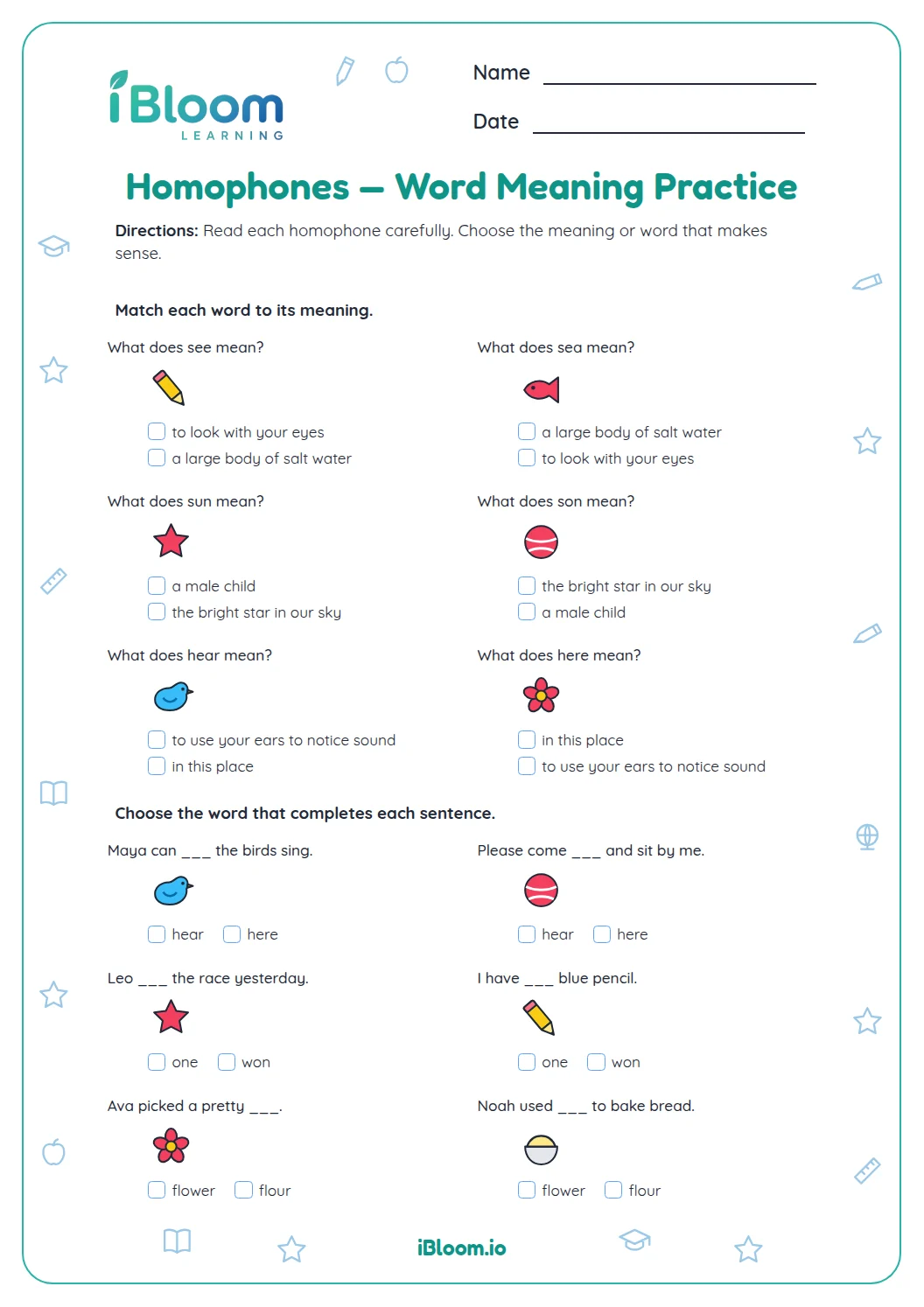
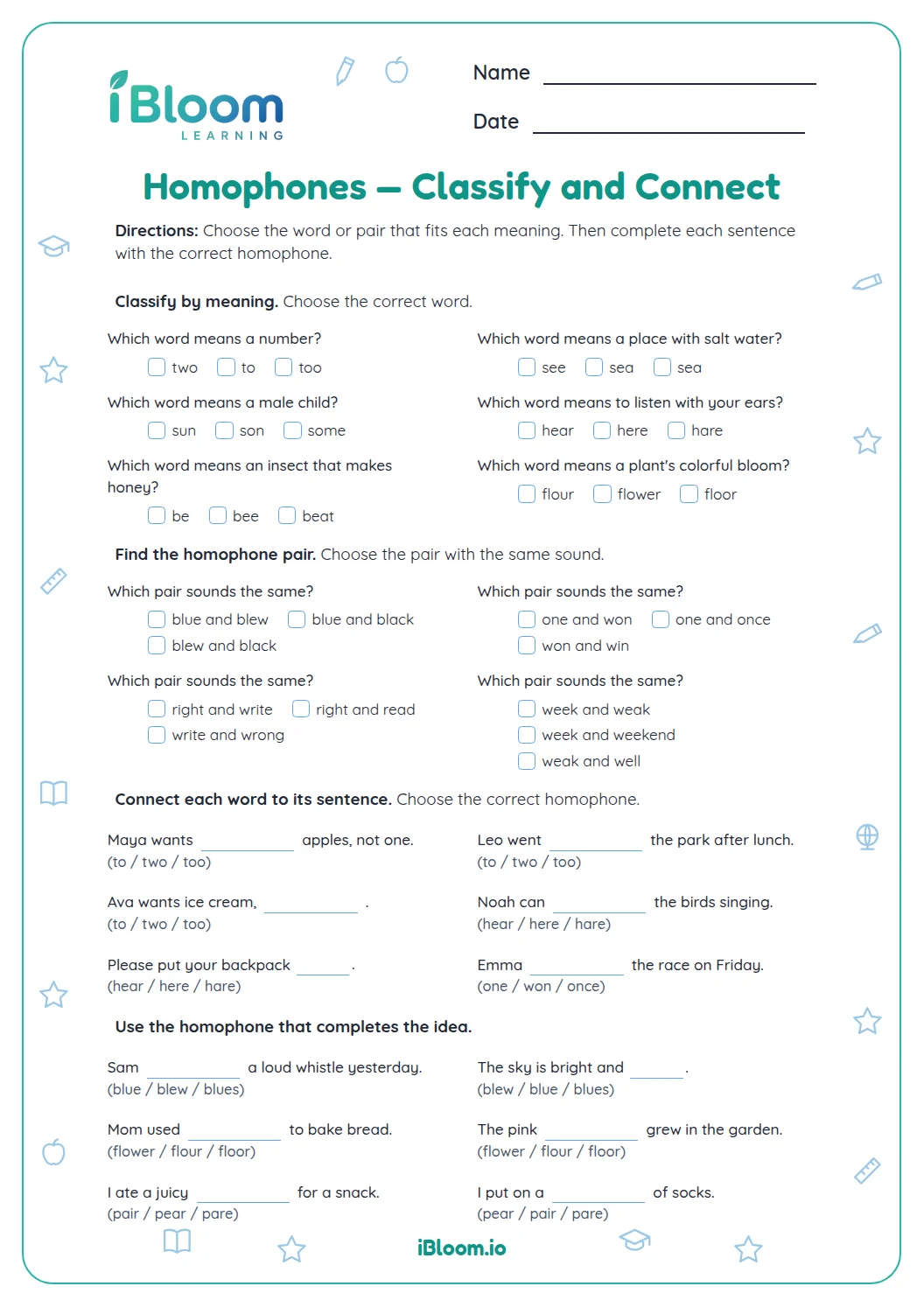
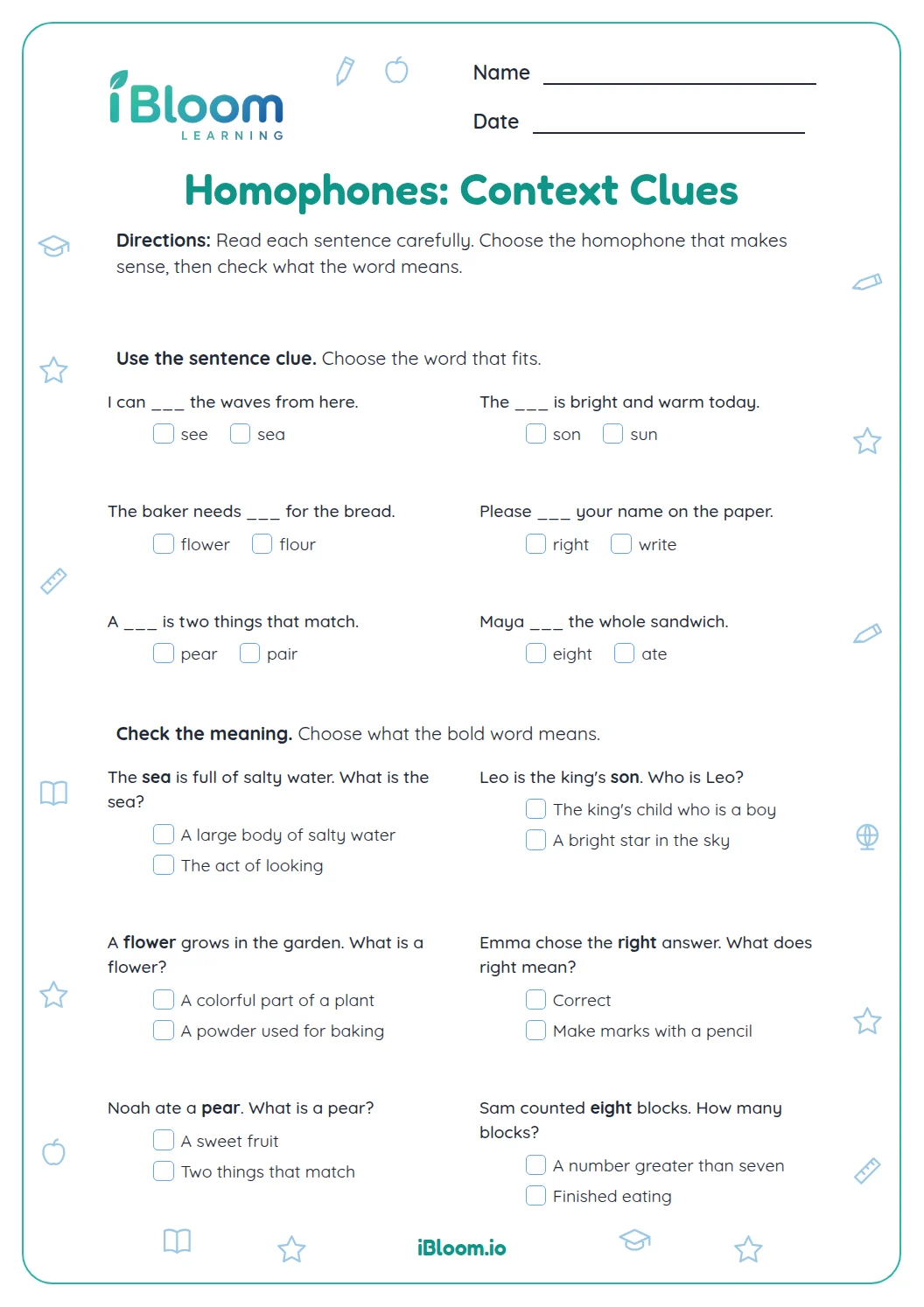
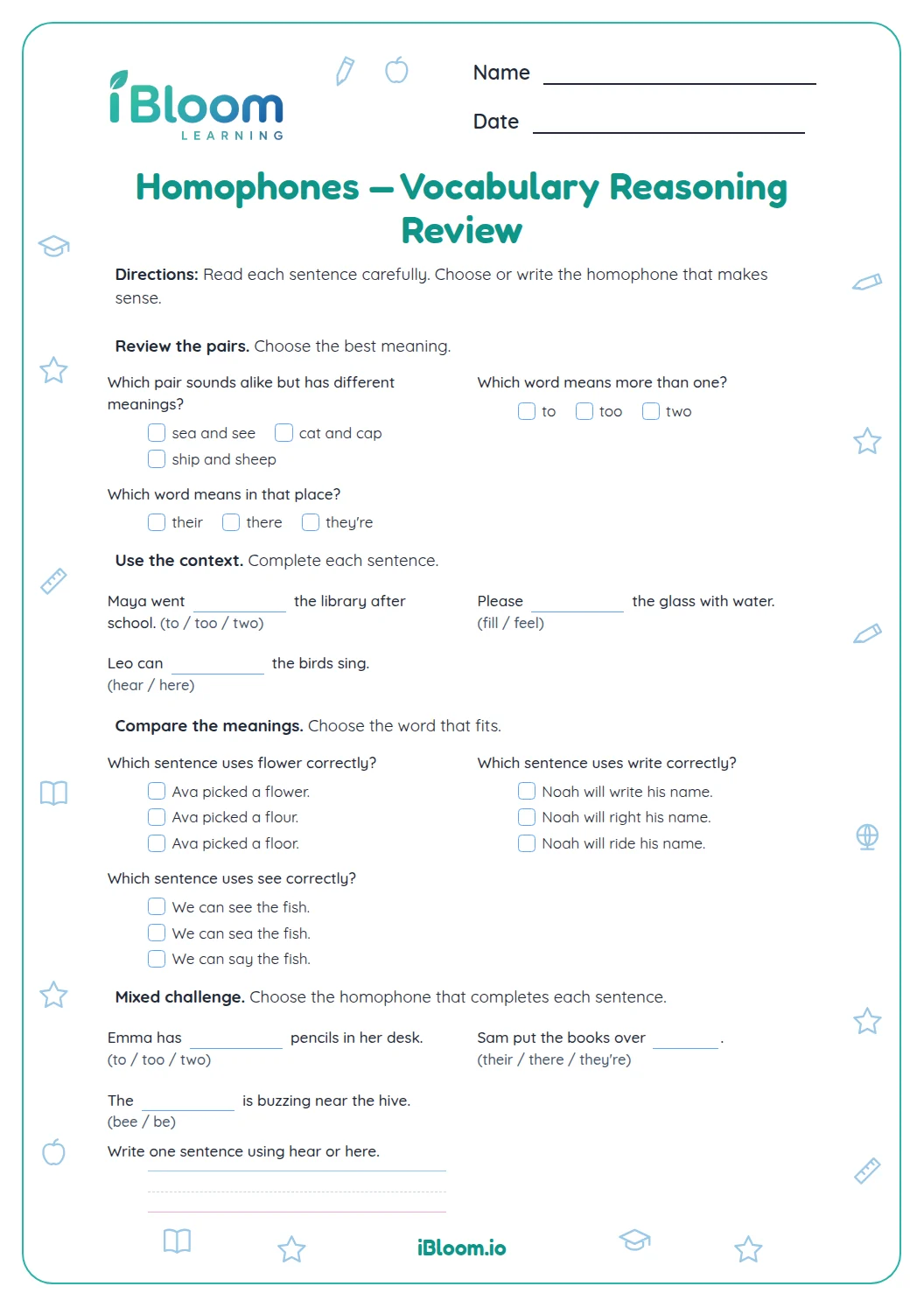
This Grade 2 vocabulary sheet gives students 12 short sentences with two homophones to choose from, then two tasks that ask them to use homophones in their own writing. Context makes each intended meaning clear: a student can hear birds, see the sea, or write a note. The answer key lists the choices and sample sentence responses. The practice focuses on sentence-level context clues, matching Common Core L.2.4.a.
Aligned to L.2.4.a
What clue does the sentence give?
Homophones sound alike but have different meanings and spellings. The words around the blank show which meaning makes sense. In question 1, “birds singing” is a clue that the missing word is about listening.
- 1I can ___ the birds singing outside.
- 2Singing points to listening, so choose hear.
How can students compare homophones?
Read each choice, then think about what it means in the sentence. Some pairs name different things, such as sun and son; others are used in different ways, such as see and sea.
How can students check a choice?
After choosing a word, read the completed sentence aloud and explain the clue. If the meaning fits the whole sentence, the word is likely the right choice.
How to use this worksheet
- 1Read the sentence from beginning to end.
- 2Say each choice and recall what it means.
- 3Look for a clue in the rest of the sentence.
- 4Choose the word that fits the meaning.
- 5Read the completed sentence aloud to check it.
Common mistakes and quick fixes
The mistake
Choosing a word because it sounds right without checking meaning.
The fix
Explain the sentence and match the word to that meaning.
The mistake
Confusing a place word with a sound-alike word.
The fix
Ask whether the sentence names a place, an action or a thing.
The mistake
Reading only the words beside the blank.
The fix
Use the full sentence; a clue may come at the end.
Common Core alignment
This page practices the listed Common Core skill through its worksheet questions.
Use the sentence to choose a word that fits its meaning.
On this sheet:
Show the official wordingHide the official wording
Use sentence-level context as a clue to the meaning of a word or phrase.
What to practice next
Make more practice
Further reading
Questions parents and teachers ask
What is a homophone?
Homophones are words that sound alike but have different meanings and spellings. Sea names a body of water, while see means to notice something with your eyes. This worksheet pairs familiar homophones and asks students to use a sentence clue to choose the word that fits.
Do students need to memorize every meaning first?
Knowing the words helps, but students can also use sentence clues. Ask what the sentence describes, then check which choice makes sense. In question 1, “birds singing” points to listening, so hear fits where here does not. They can reread the full sentence to confirm.
Why are there two choices for each blank?
The first twelve questions focus on pairs of sound-alike words that can be confused in writing. The final two ask students to use homophones in their own sentences. Choosing a word in context and then writing with the pair connects recognition to everyday use.
Can both words ever fit a sentence?
The choice questions provide context for one intended answer. Students should read the whole sentence and use its clue, such as birds singing, a backpack’s location, or a balloon moving in wind. In the writing tasks, they show each meaning in a complete sentence.
How can I help if my child is unsure?
Have your child explain what each choice means, then read the complete sentence with both words. Ask which meaning matches the situation. For example, a boat can sail across the sea, while see means to notice something with your eyes.