







About this worksheet
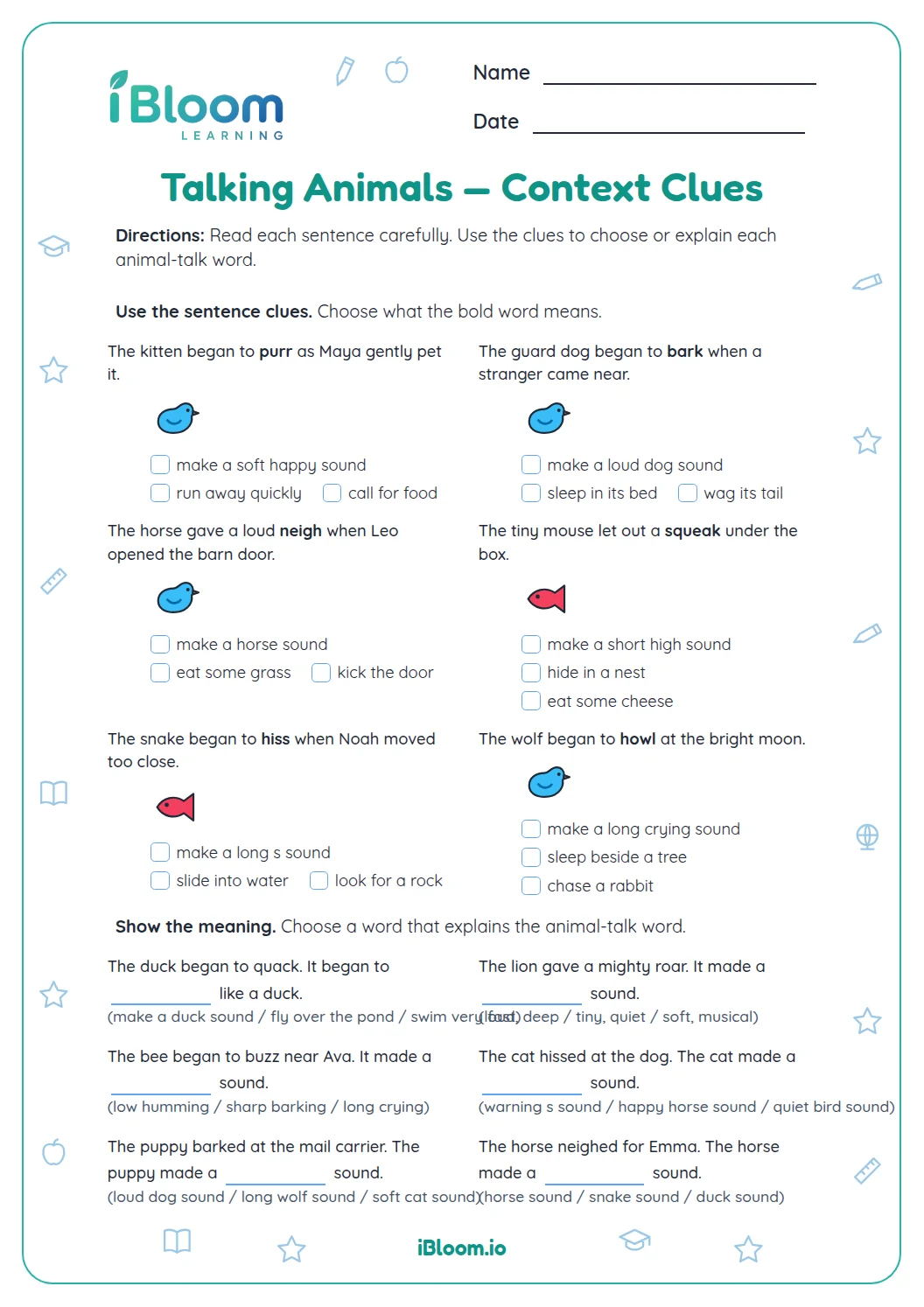
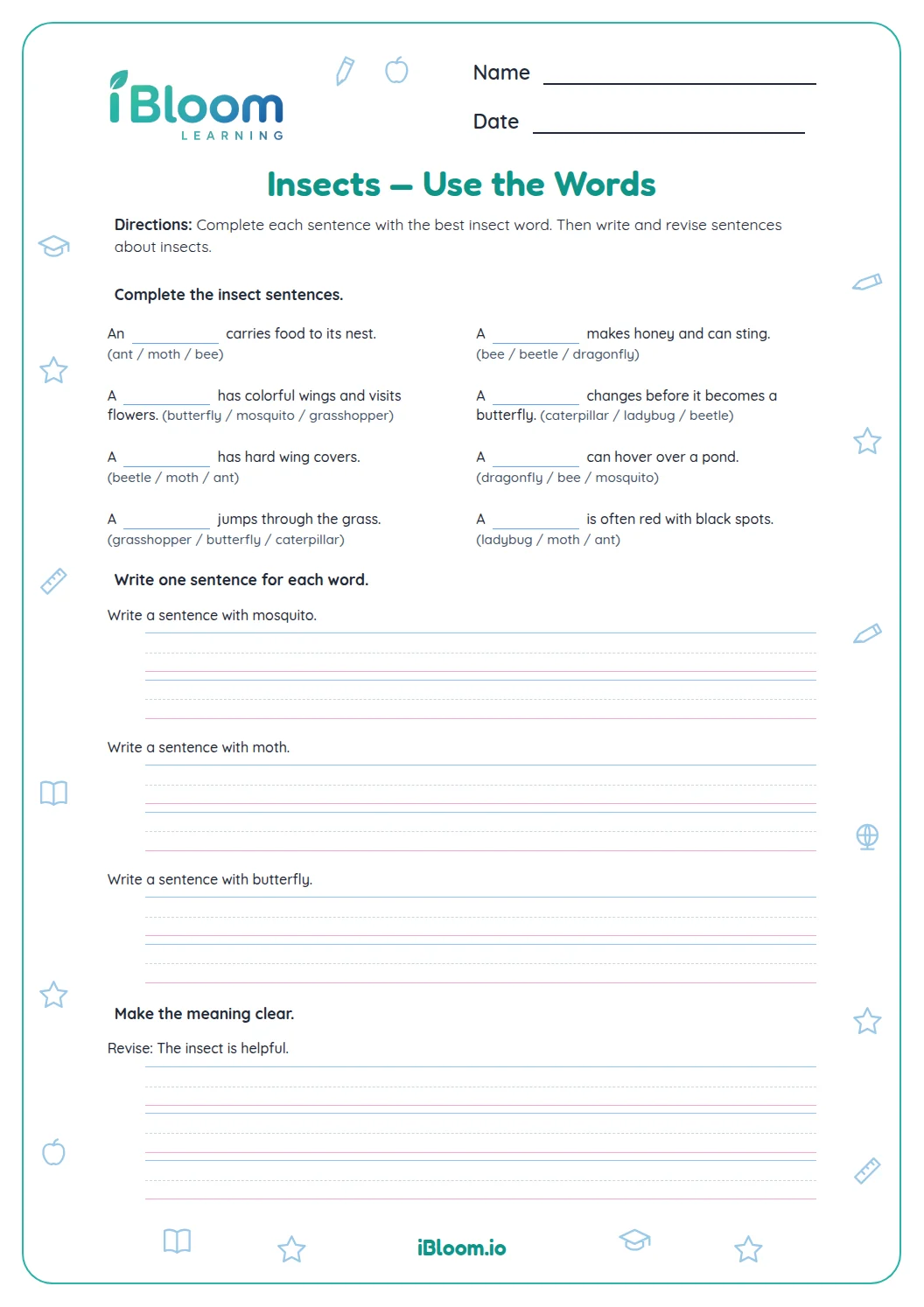
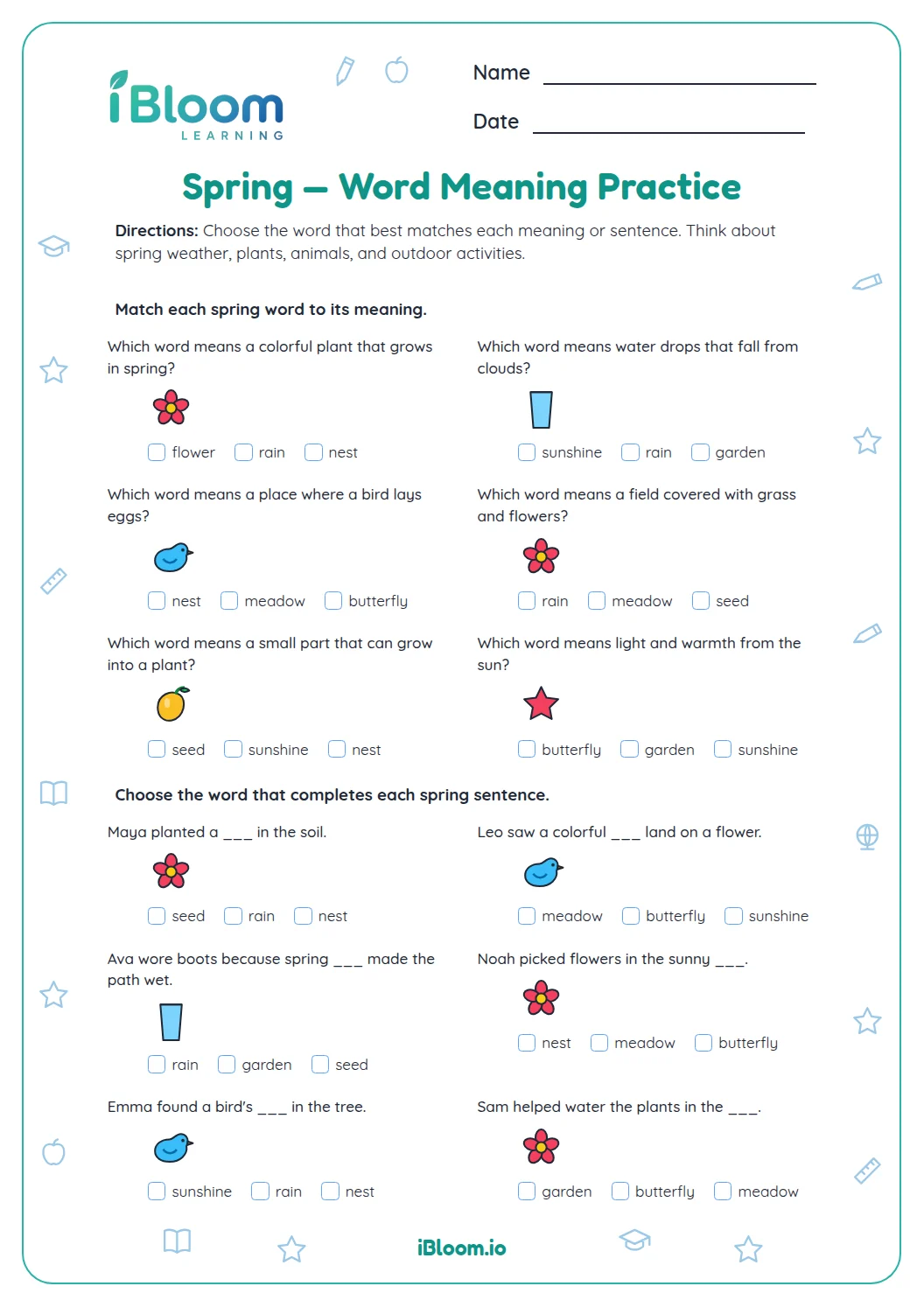
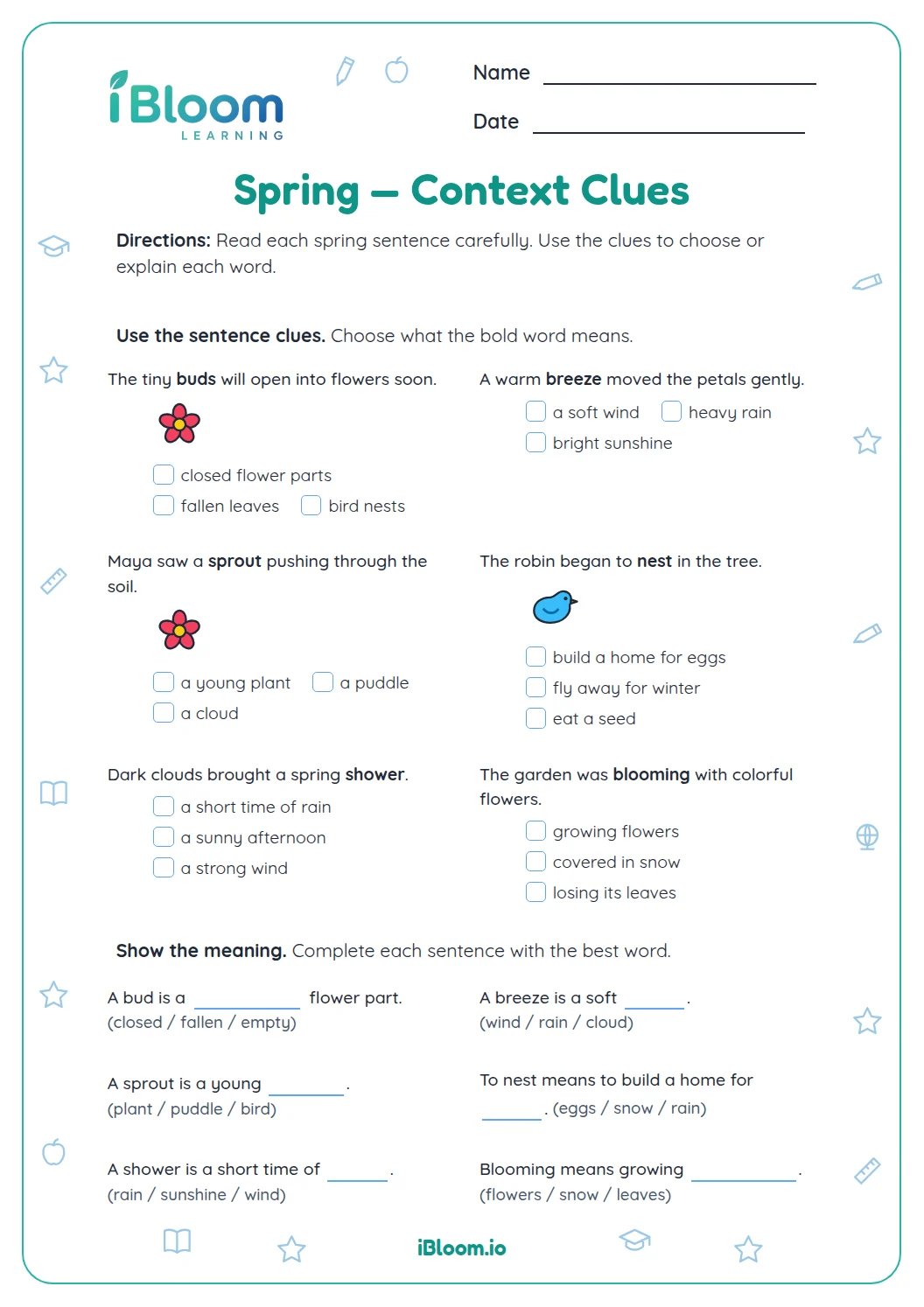
This Grade 2 printable combines animal vocabulary with word-search practice. Part A has one five-word grid. Part B asks students to complete six familiar animal sounds, and Part C uses short sentences as context clues for seven animal words. A separate answer key is included. Real-life animal contexts support Common Core L.2.5a by connecting words with how they are used.
Aligned to L.2.5a
How do animal clues help explain a word?
A sentence gives information about what an animal does or what sound it makes. Those details help readers connect an animal with its sound or understand a vocabulary word.
The worksheet starts with a compact grid, then uses six short sound blanks and seven meaning choices.
How can you find the clue in a sentence?
For a sound blank, think of the familiar word that completes the sentence. For a context question, read the whole clue and compare each meaning with the scene.
- 1The rabbit hopped over a log.
- 2Clue: hopped over a log
- 3A rabbit moved in jumps over the log.
- 4Answer: moved in jumps
What does the word search add?
Part A has one compact letter grid. Part B practices animal sounds, while Part C uses context clues and a young-animal word.
How to use this animal vocabulary worksheet
- 1Read the complete sentence before looking at the options.
- 2Notice the words that tell what the animal does or where it is.
- 3Try each possible meaning in the sentence.
- 4Choose the answer that makes the sentence clear.
- 5For each grid, scan across the rows for the listed animal words and circle them.
Common mistakes and quick fixes
The mistake
Choosing an animal word from memory without using the sentence.
The fix
Point to the clue words in the sentence and explain how they help.
The mistake
Mixing up a young animal name with an adult animal.
The fix
Check the animal in the sentence and ask whether the word names its young.
The mistake
Skipping a short word while searching the grid.
The fix
Track each row with a finger and compare its letters with the target word from left to right.
Common Core alignment
This worksheet practices a specific Common Core skill through short, grade-level tasks.
Connect animal words with real-life meanings and examples.
On this sheet: Animal vocabulary is used in short real-life descriptions and a word search.
Show the official wordingHide the official wording
Identify real-life connections between words and their use (e.g., describe foods that are spicy or juicy).
What to practice next
Make more practice
Further reading
Questions parents and teachers ask
What does this talking-animals worksheet practice?
Children find animal names in a letter grid, complete familiar animal sounds, and read short context clues. The 14-item worksheet includes six sound blanks, seven meaning questions, and a five-word letter grid. A separate answer key supports checking after the child has completed each part.
How do children use sentence clues?
Read the whole sentence and notice what the animal is doing or where it is. In “The turtle crawled slowly,” the word crawled names a way of moving, and slowly tells how the turtle moved. The choices help compare possible meanings.
Which words are hidden in the word searches?
The grid contains dog, cow, hen, duck, and fish. The answer key names each word. Students can scan one row at a time and circle each animal name as they find it. The grid begins the worksheet before the sound and context questions.
How many worksheet questions are there?
There are 14 numbered tasks: one word-search activity, six sound blanks, and seven meaning choices. The grid has five target words, so students look for animal names before completing the sound and context questions. The answer key lists each response.
Can a student complete this with help?
Yes. A grown-up can read the sentences and answer choices aloud, then ask the child which clue points to the meaning. For the grids, a reader can point to one row at a time while the student searches for the listed animal words.
Does the worksheet include an answer key?
Yes. A separate two-page answer key gives the correct response for each sound or context question and lists the five target words in the grid. Students can check the animal-word meanings and confirm they found each listed word. An adult can review missed clues together with the student.