



About this worksheet
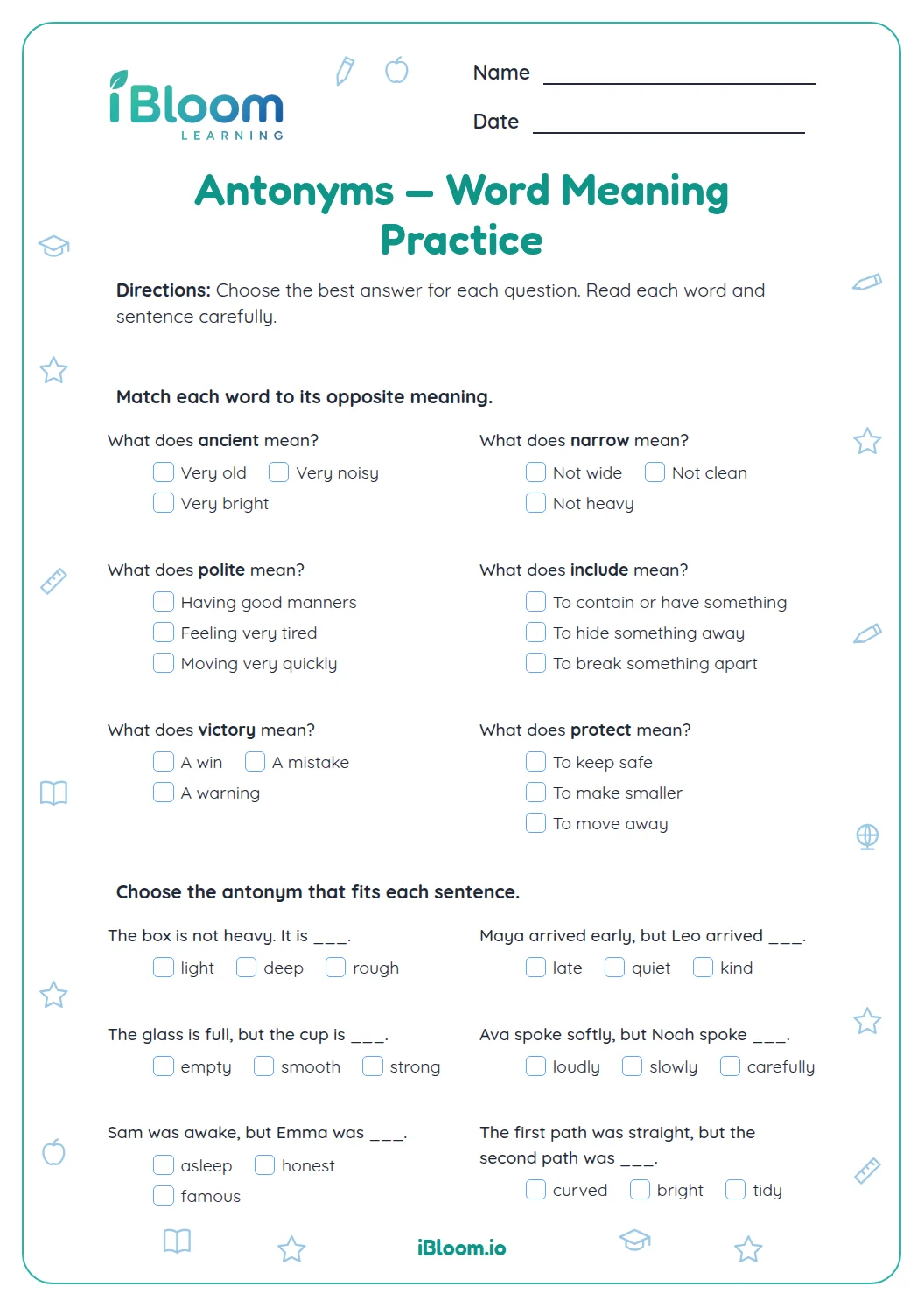
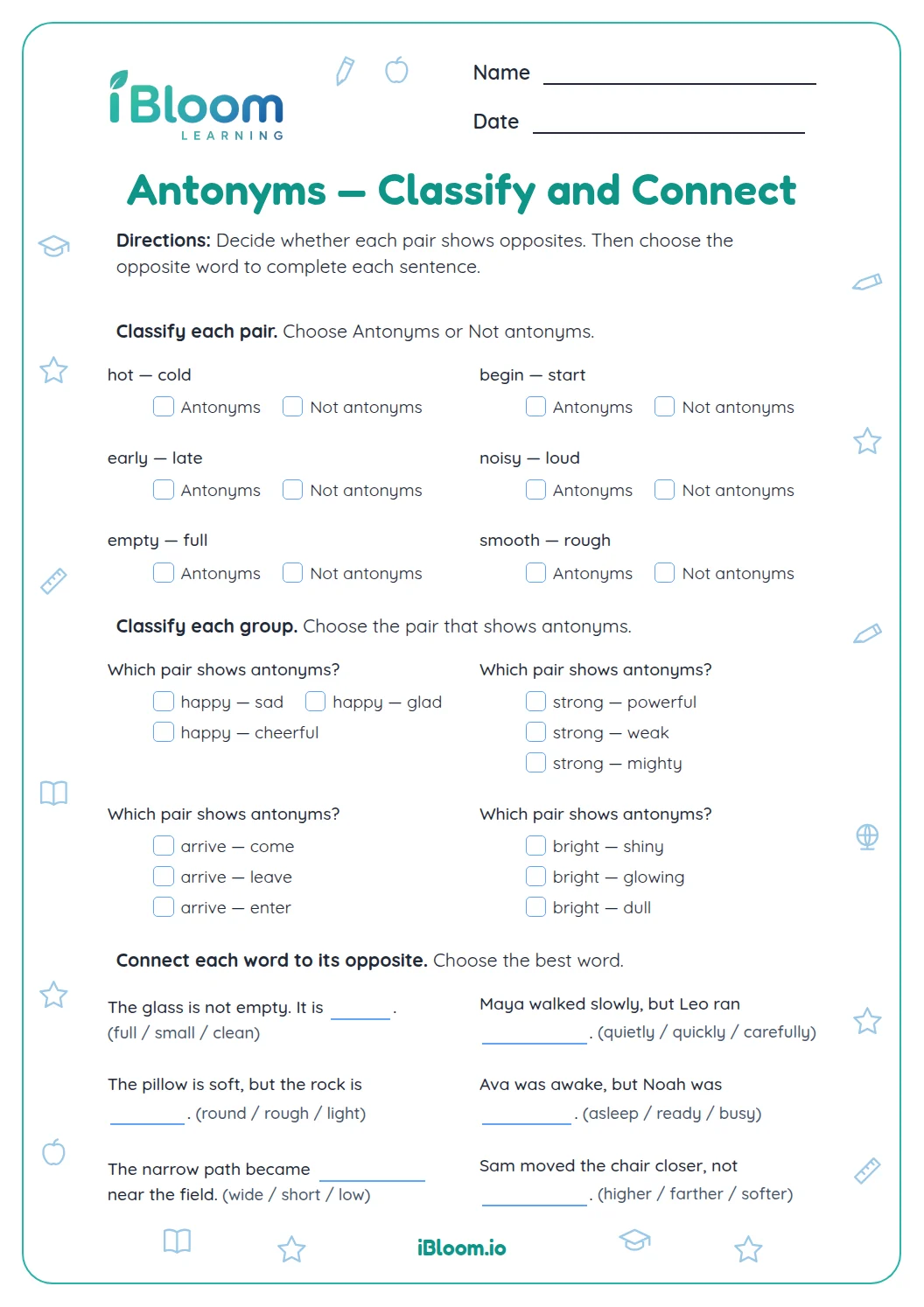
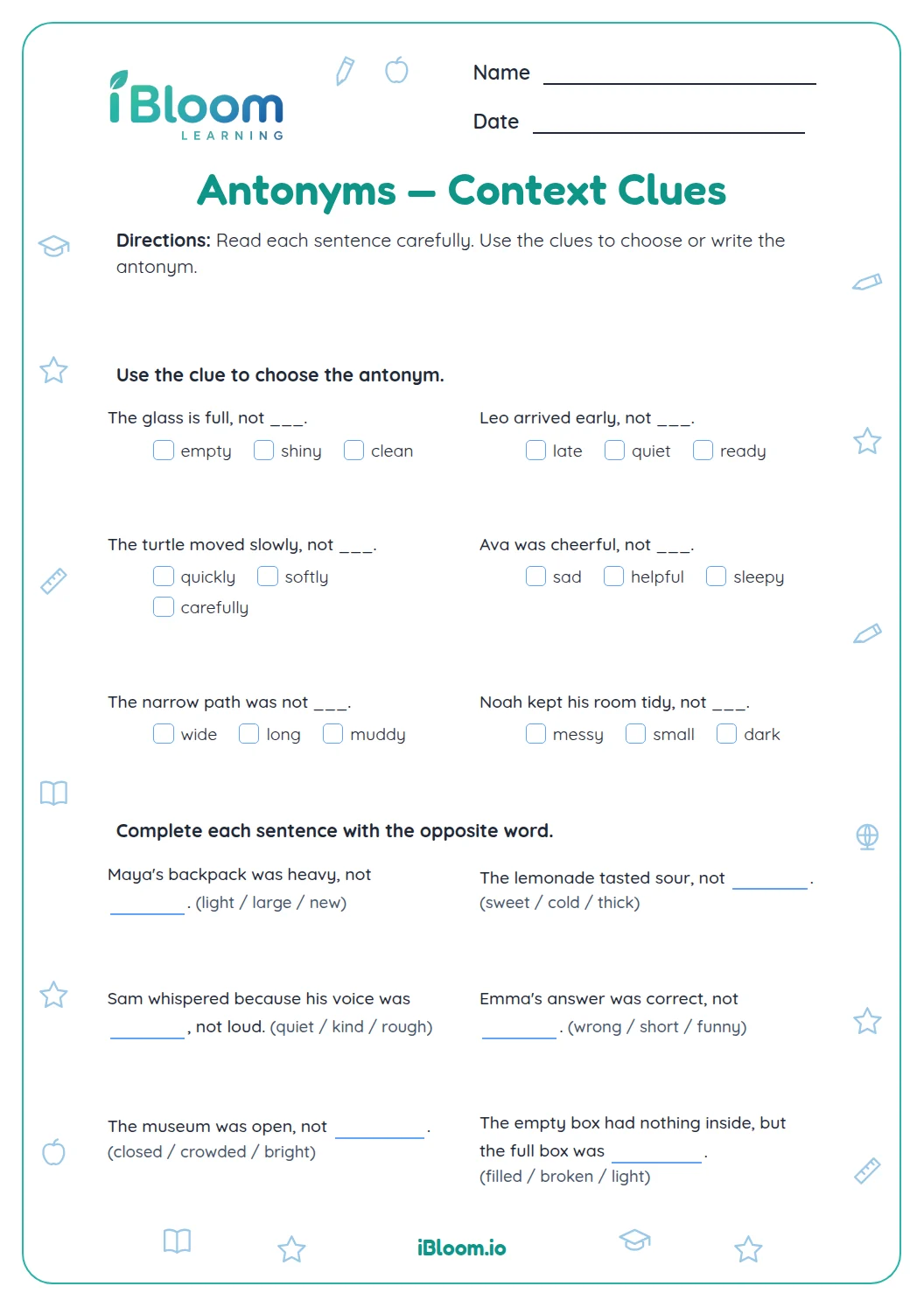
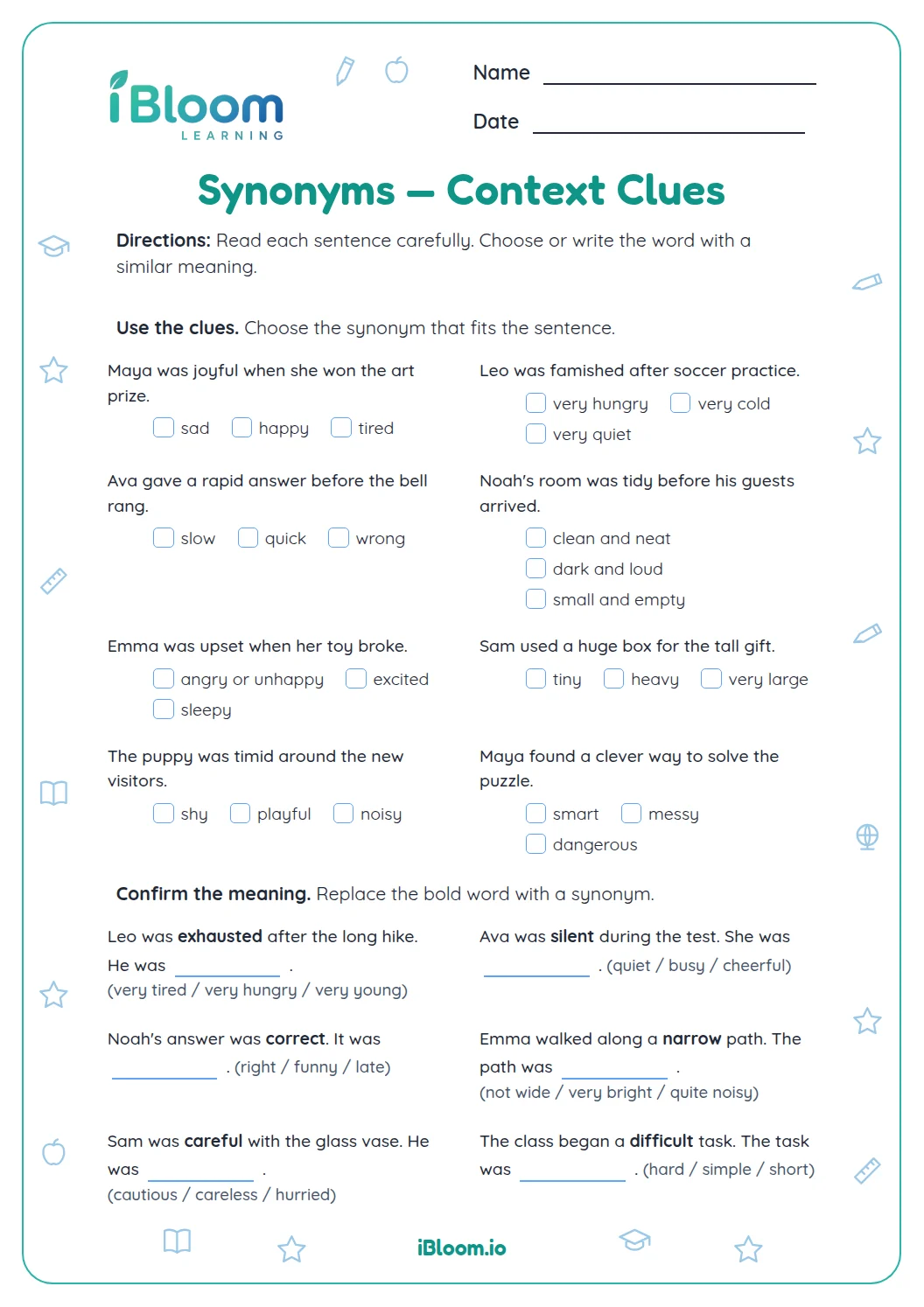
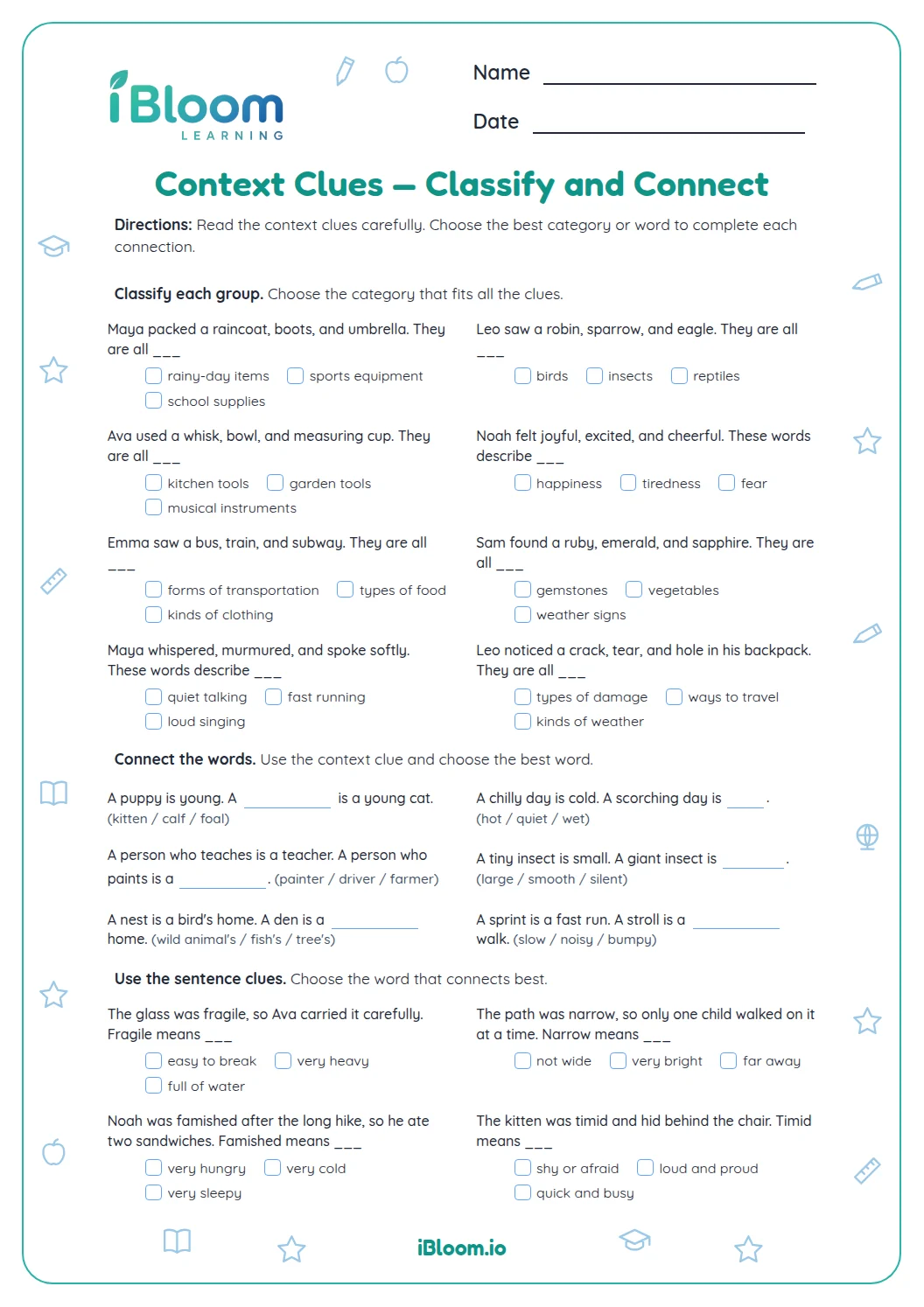
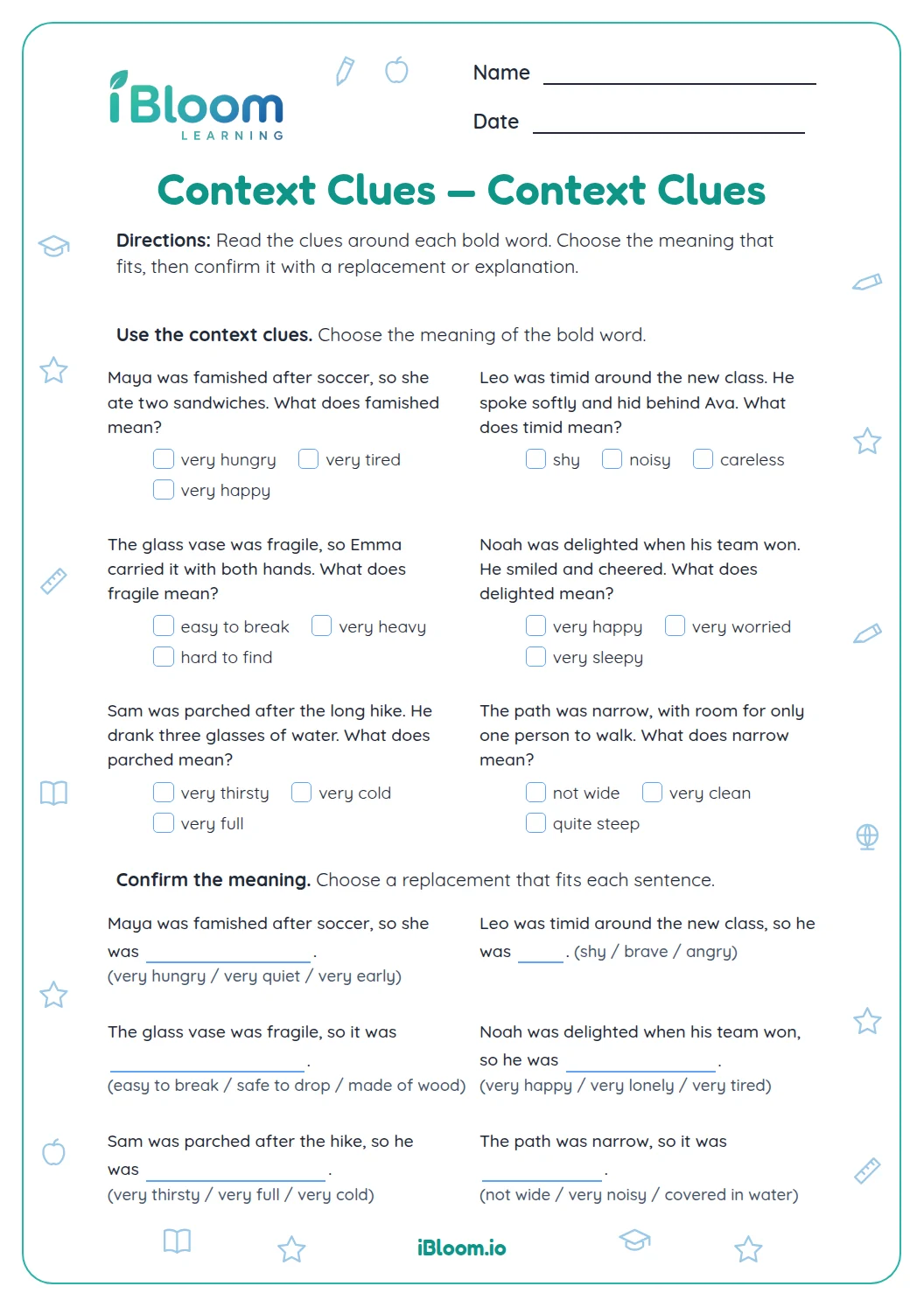
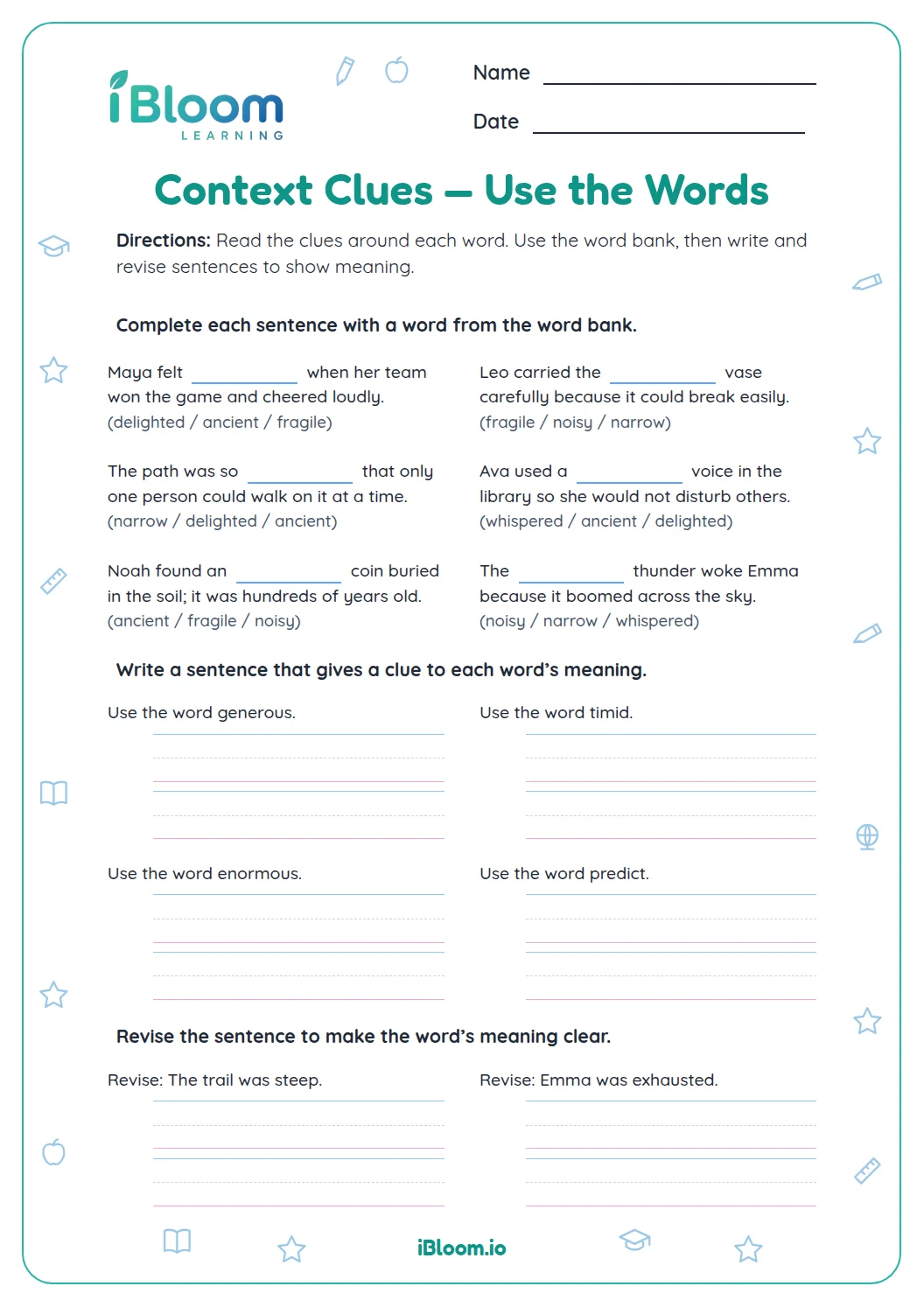
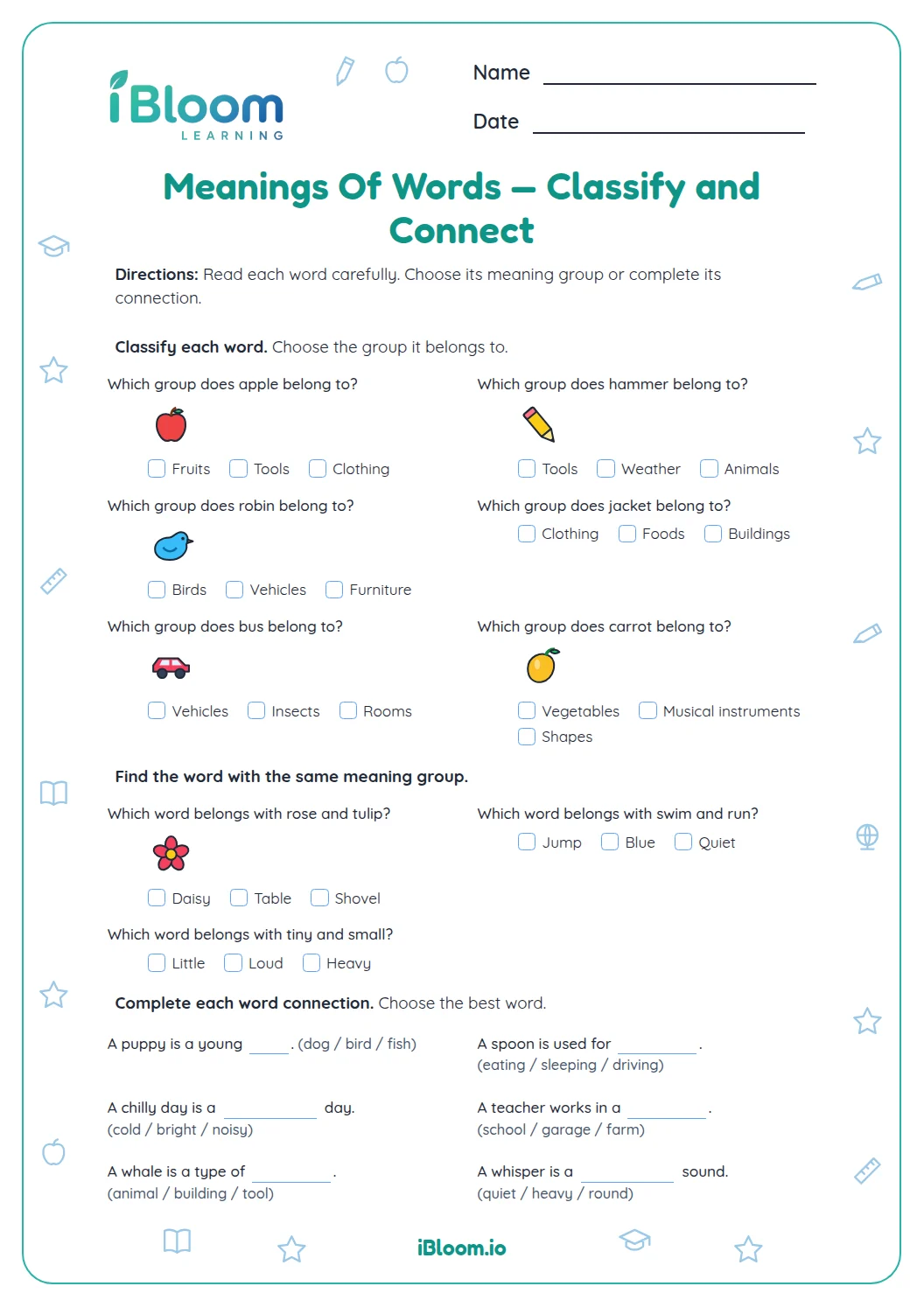
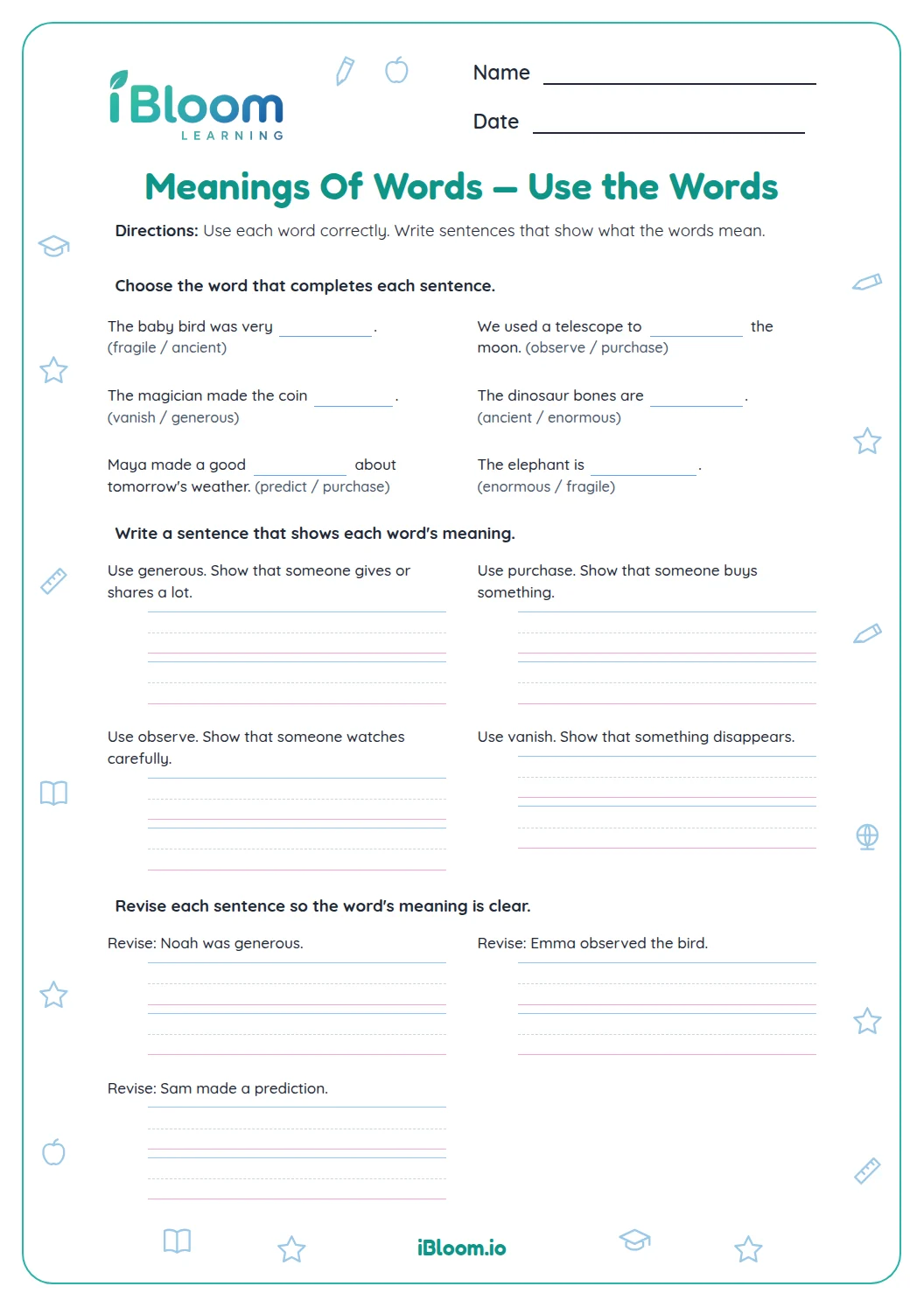
This Grade 3 antonyms worksheet asks children to use opposites in meaningful sentences. Students choose antonyms, complete four context sentences, and write six sentences that use opposite pairs or revise a sentence with an antonym. The separate answer key provides fixed answers and sample responses. The activity practices CCSS L.3.5 by building understanding of word relationships and shades of meaning.
Aligned to L.3.5
How do antonyms help a sentence make sense?
Antonyms are words with opposite meanings. In a sentence, an antonym should fit the grammar and make sense beside the contrast clue. “The soup was hot, but the lemonade was cold” pairs two temperature words that point in opposite directions.
How can you test an antonym in context?
Look for a contrast word such as but, then read the sentence with a possible opposite in the blank. Check that the meaning contrasts and the word form fits the sentence.
- 1The soup was hot, but the lemonade was ___.
- 2Hot and cold are opposites, and both describe temperature.
- 3Answer: cold.
What kinds of antonym practice are included?
Questions 1–6 ask students to select an opposite that fits a sentence or direct prompt. Questions 7–10 complete context sentences. Questions 11–16 ask students to write or revise a sentence using opposite-meaning words, as in the original worksheet’s sentence-writing practice.
How to use this worksheet
- 1Read the whole sentence and notice contrast clues such as but.
- 2Name the meaning of the given word.
- 3Choose or supply a word with the opposite meaning.
- 4Reread the sentence with the antonym in place.
- 5For the final items, write a complete sentence using an opposite word.
Common mistakes and quick fixes
The mistake
Choosing a related word that is not an opposite.
The fix
Ask whether the two words point to contrasting meanings.
The mistake
Ignoring the sentence clue.
The fix
Reread the words around the blank to see what kind of opposite fits.
The mistake
Writing an antonym that does not fit the sentence grammar.
The fix
Check whether the blank needs a describing word or an action word.
Common Core alignment
This activity gives children focused practice with the language and reasoning named in this standard.
Find the contrast, choose an opposite, then reread to check grammar and meaning.
On this sheet: Students use word relationships and shades of meaning to select and apply antonyms in sentences.
Show the official wordingHide the official wording
Demonstrate understanding of figurative language, word relationships and nuances in word meanings.
What to practice next
Make more practice
Further reading
Questions parents and teachers ask
What is an antonym?
An antonym is a word with an opposite meaning. Hot and cold are antonyms, as are early and late. The worksheet asks students to notice these meaning pairs and choose an opposite that fits the sentence rather than naming a pair in isolation.
How does “but” help in question 1?
The word but signals a contrast between the soup and the lemonade. If the soup is hot, the blank should name the contrasting temperature. Cold fits the meaning and works grammatically in the sentence, so rereading the whole sentence confirms the choice.
Can more than one answer work in a written sentence?
Yes. Questions 11–16 ask students to write or revise sentences using antonyms. The key gives sample responses, not the only possible wording. Accept another sentence when it uses the intended opposite accurately, follows the prompt, and makes sense in context.
What should students do when an opposite seems unclear?
Say the given word and a possible opposite aloud, then test both in the sentence. For “narrow,” wide provides a clear contrast about width. A word that is merely related, such as long, may not be the opposite the sentence needs.
Does this worksheet include an answer key?
Yes. The separate key lists the correct choices and sentence-completion answers. It also gives sample sentences for the two original-sentence questions, which can help check whether the opposite word is used accurately in a complete sentence. Accept different wording when the antonym is clear.
How many antonym questions are included?
There are 16 questions: six choices, four sentence completions, and six written sentences. The first items offer answer choices, while the final prompts ask students to use opposite-meaning words in their own sentences. The key gives sample responses.