


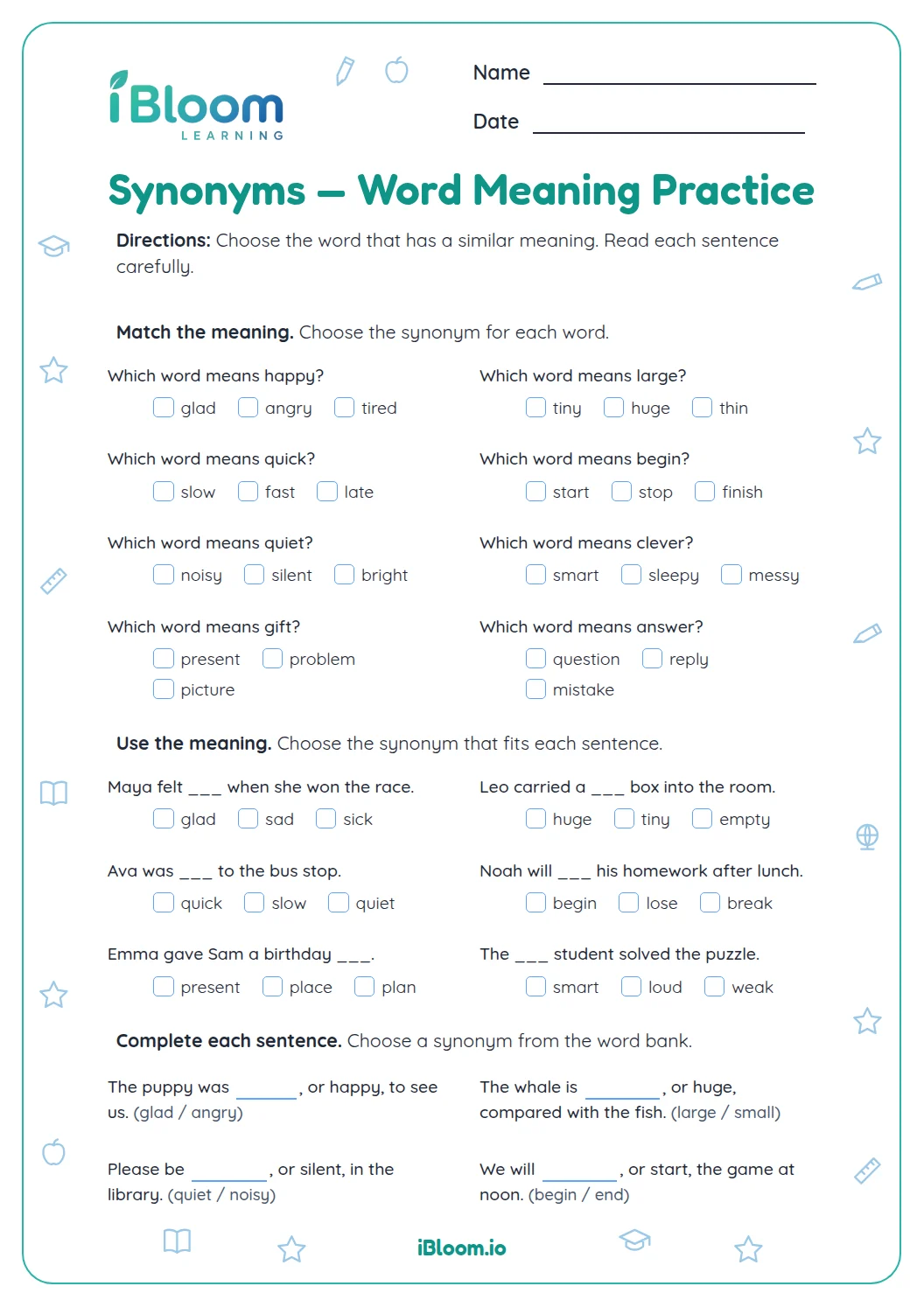
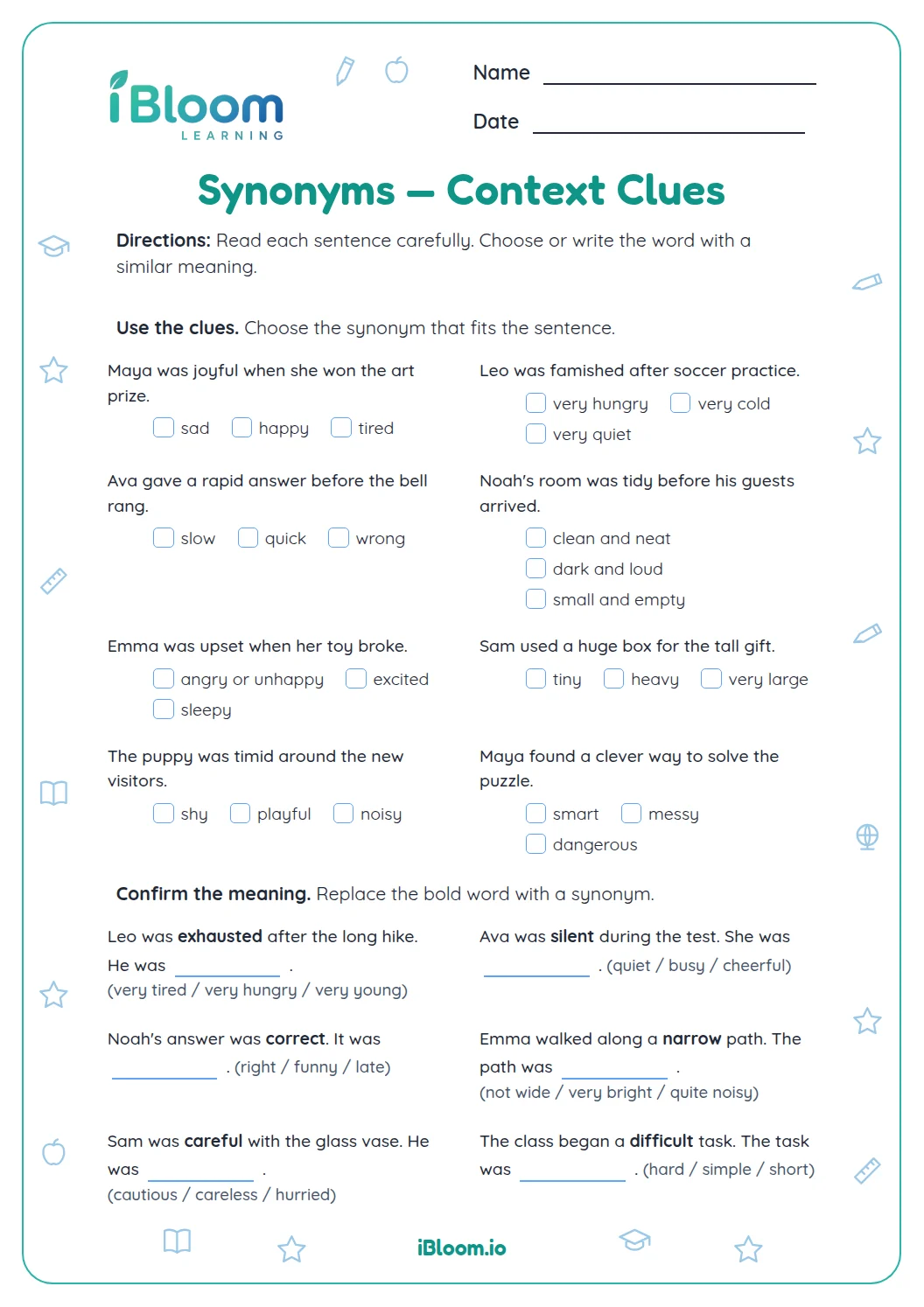

About this worksheet
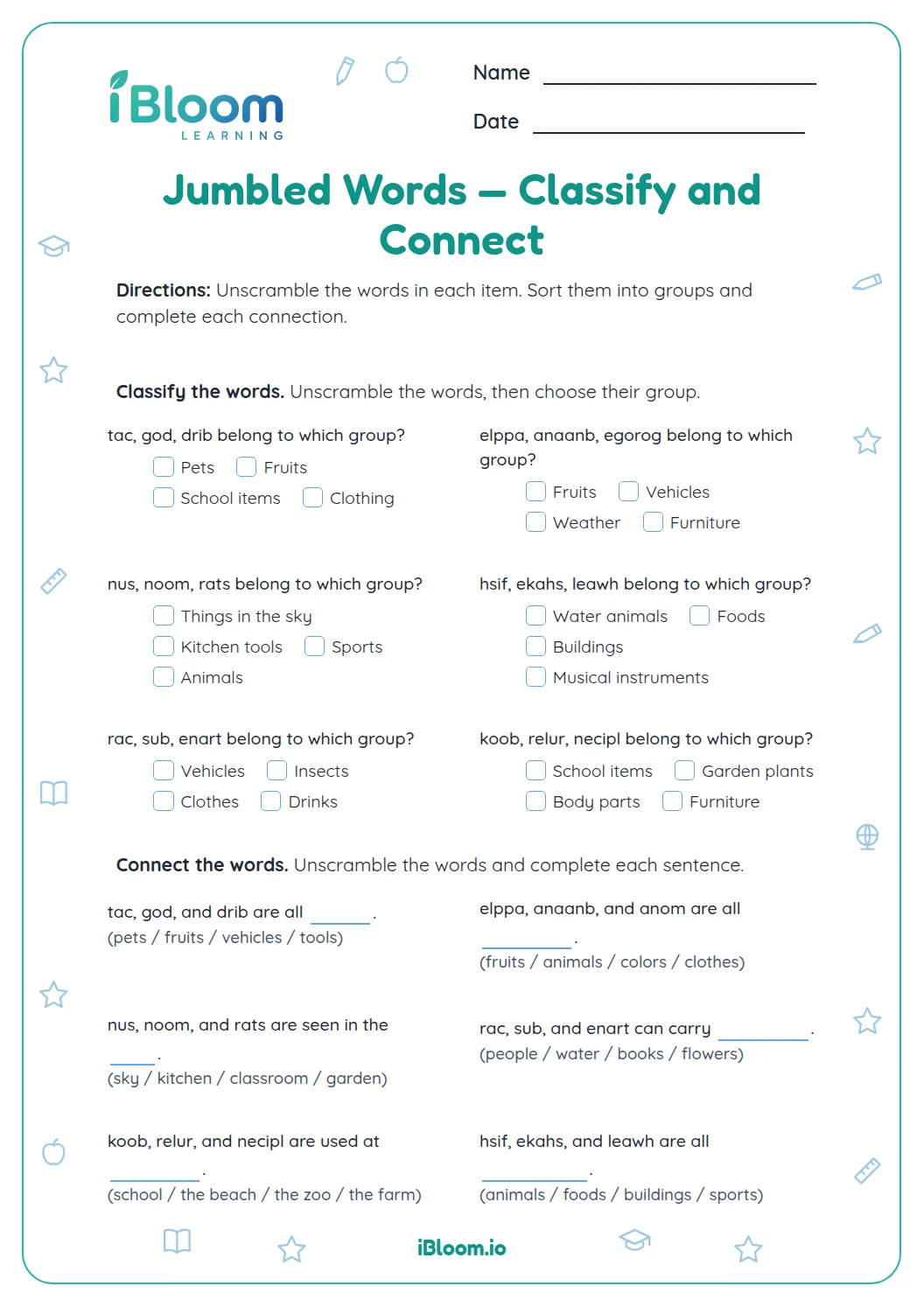
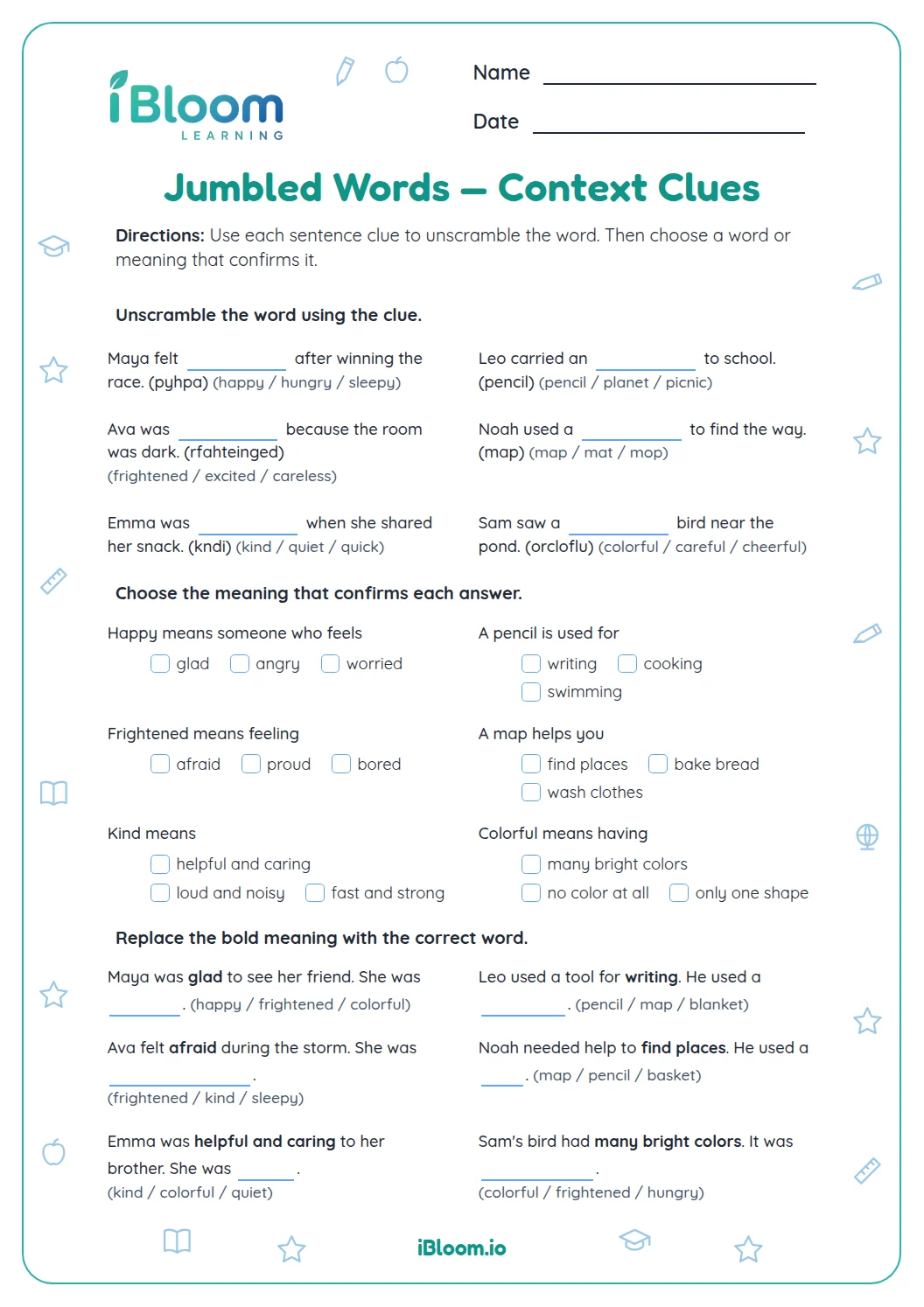
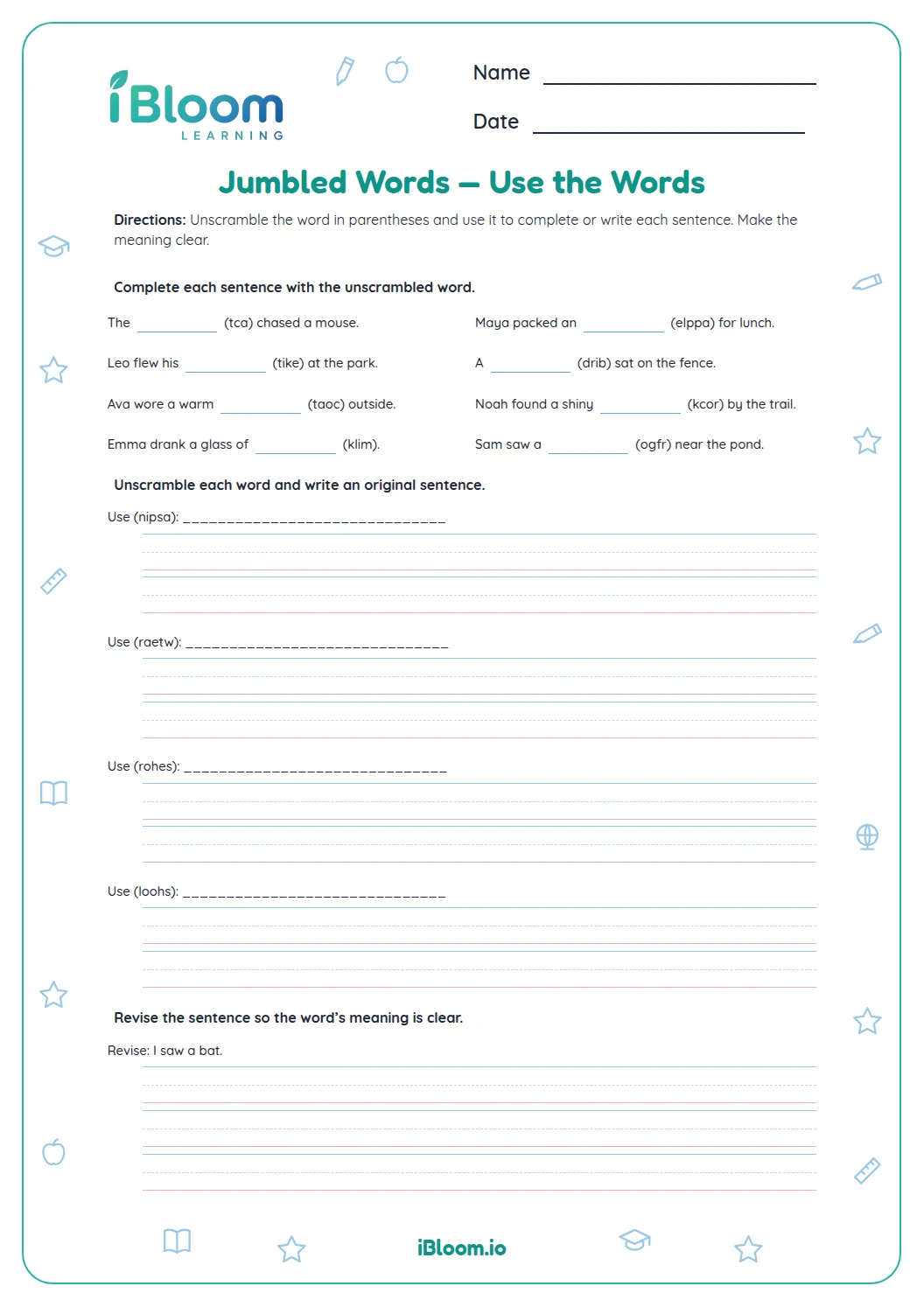
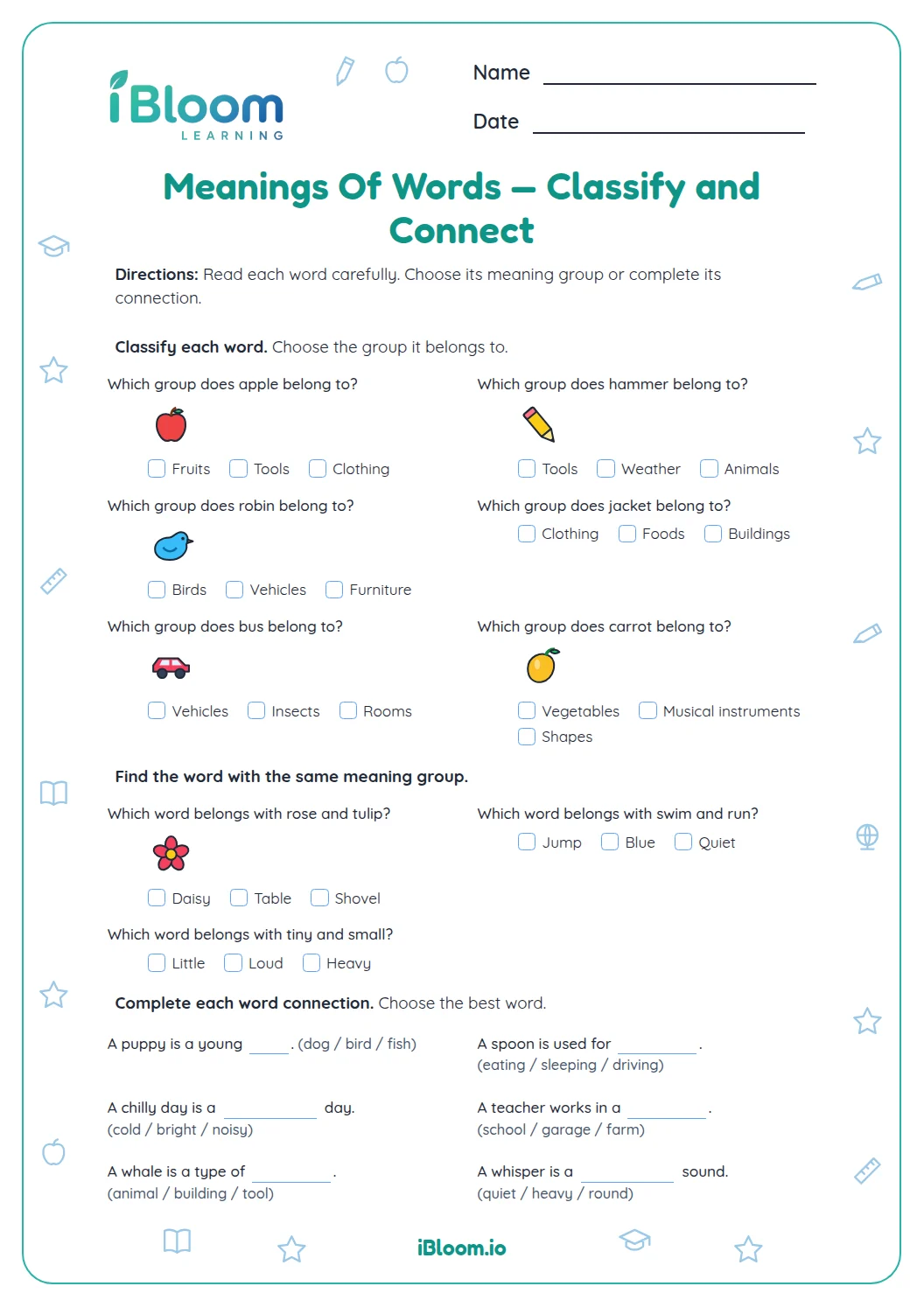
This free printable Grade 3 worksheet gives children 14 jumbled words to unscramble. The first seven pair the letters with answer choices; the next seven ask children to write the word that fits a definition, category or sentence clue. Both parts use the original solve-and-select routine, with a short written finish. Children practice using sentence context as a clue to word meaning (Common Core L.3.4a). The answer key is on two separate pages.
Aligned to L.3.4a
How does the worksheet combine letters and clues?
Every question gives a scramble and a clue or sentence. Children rearrange the letters, then choose or write the word that makes sense. A word that fits the sentence but uses a different set of letters is not the answer.
The four parts keep the familiar routine while changing the kind of clue: a simple description, a category or context, a sentence, and a mixed challenge.
What does a worked answer look like?
Try the item “Please ___ this book aloud. (DAER).” The words book aloud point to an action. Read uses D, A, E and R exactly once, and the sentence makes sense.
- 1Please ___ this book aloud. (DAER)
- 2Clue: story aloud
- 3DAER → read
- 4Check: all four letters are used.
What words and clues are included?
The 14 scrambles include familiar words such as cat, sun, book and rain, category clues such as fruit, and sentence clues for words such as hear, here and teacher. The first seven offer choices; the last seven ask children to write the unscrambled word.
The key lists one choice for each scramble. Invite children to point to the clue that helped them decide, especially when two choices look or sound similar.
How can an adult support the practice?
Ask the child to name the clue before looking at the options. If needed, read the sentence aloud and have the child cross off letters as each is used. Then read the completed sentence once more to check that the word works.
A simple routine for each scramble
- 1Read the whole clue or sentence.
- 2Say what kind of word would make sense.
- 3Rearrange the letters and cross off each one as it is used.
- 4Try the word in the sentence and reread it.
- 5Use the key to review any answer that does not fit both checks.
Scramble slips and quick fixes
The mistake
Choosing a word that fits the clue but uses different letters.
The fix
Compare each letter in the answer with the scramble, including repeated letters.
The mistake
Rearranging letters before reading the sentence.
The fix
Read the whole sentence first and underline the words that hint at the answer.
The mistake
Stopping after making a possible word.
The fix
Read the completed sentence aloud to check that the meaning fits.
Common Core alignment
Use sentence context and clues to work out the meaning of a word.
On this sheet: The sentence and category clues help children select the meaning of each unscrambled word.
Show the official wordingHide the official wording
Use sentence-level context as a clue to the meaning of a word or phrase.
What to practice next
Make more practice
Further reading
Questions parents and teachers ask
Do children use every letter in each scramble?
Yes. Each item is built from the letters in its answer, and children should use every letter once. For example, DAER becomes read. Crossing letters off as they are used helps children notice an extra or missing letter before checking the completed sentence.
What kinds of clues appear on the page?
The clues include short descriptions, categories and full sentences. “Which word names a fruit?” gives a category clue, while “I can ___ music from the radio” gives context. Children can read the sentence first, then use the letters to narrow the choices.
What is the answer to the story sentence?
The answer is read: “Please read this book aloud.” The word book and the phrase aloud point to an action, and read uses D, A, E and R exactly once. The answer key lists all 14 responses on its own pages.
Why are answer choices included?
The first seven questions include answer choices, and the last seven ask children to write a word. In both cases, they must check the letter arrangement and the meaning. For hear and here, for example, rereading the sentence shows whether it refers to sound or place.
Can I read the clues aloud?
Yes. Reading a clue aloud can help a child focus on the word meaning while still doing the rearranging independently. Ask what kind of word belongs in the blank, then let the child compare the choices and verify the letters before looking at the key.