


About this worksheet
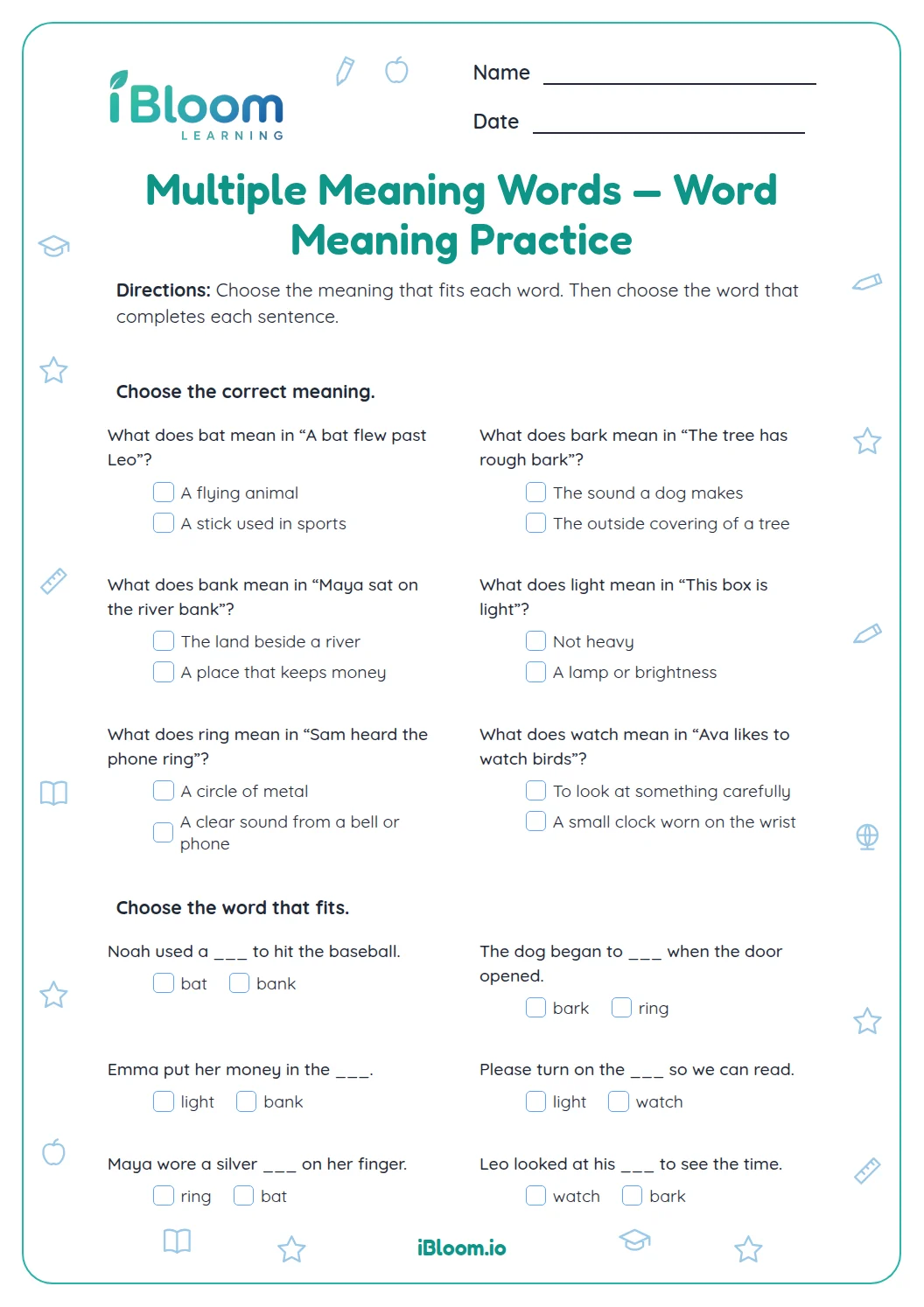
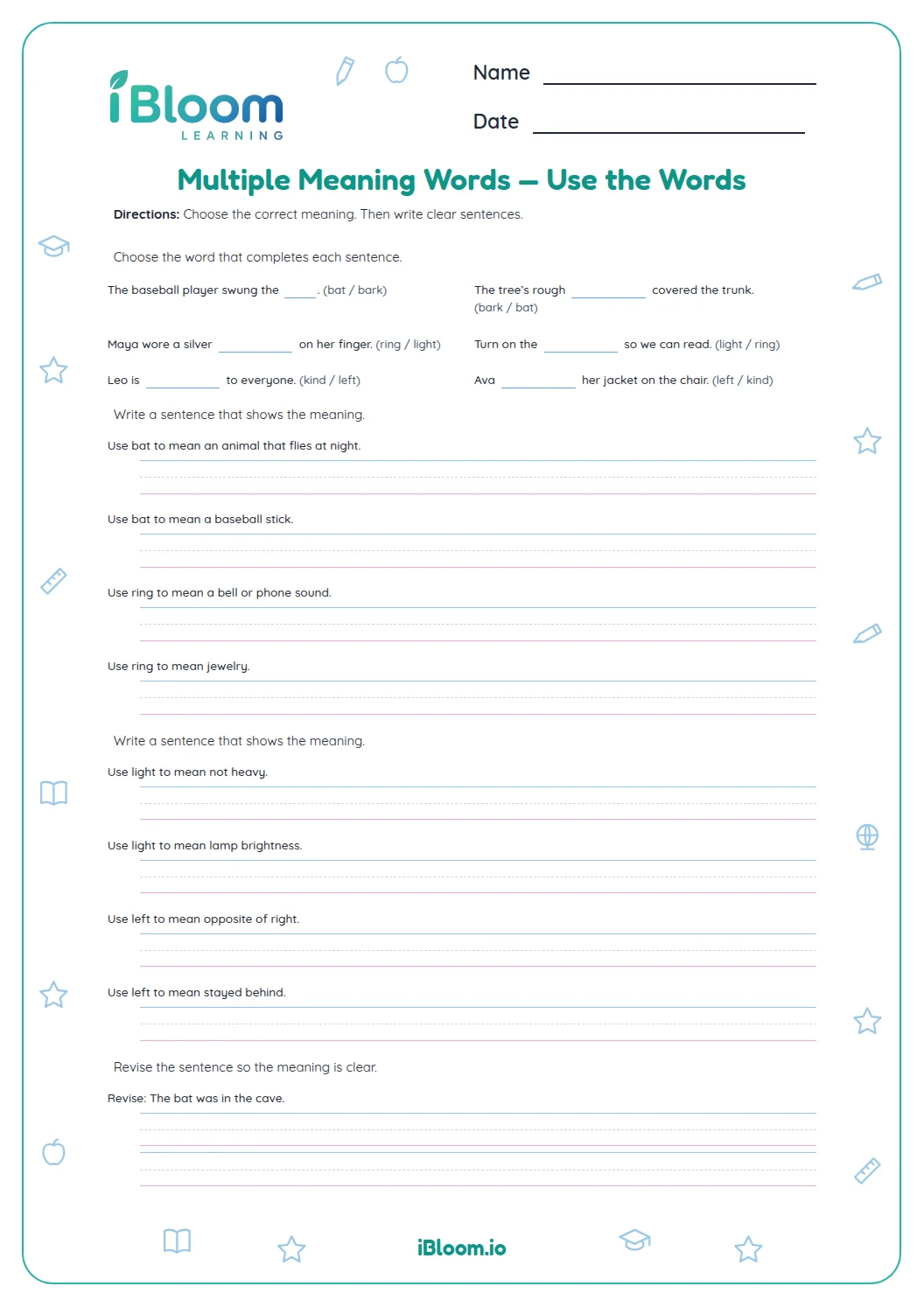
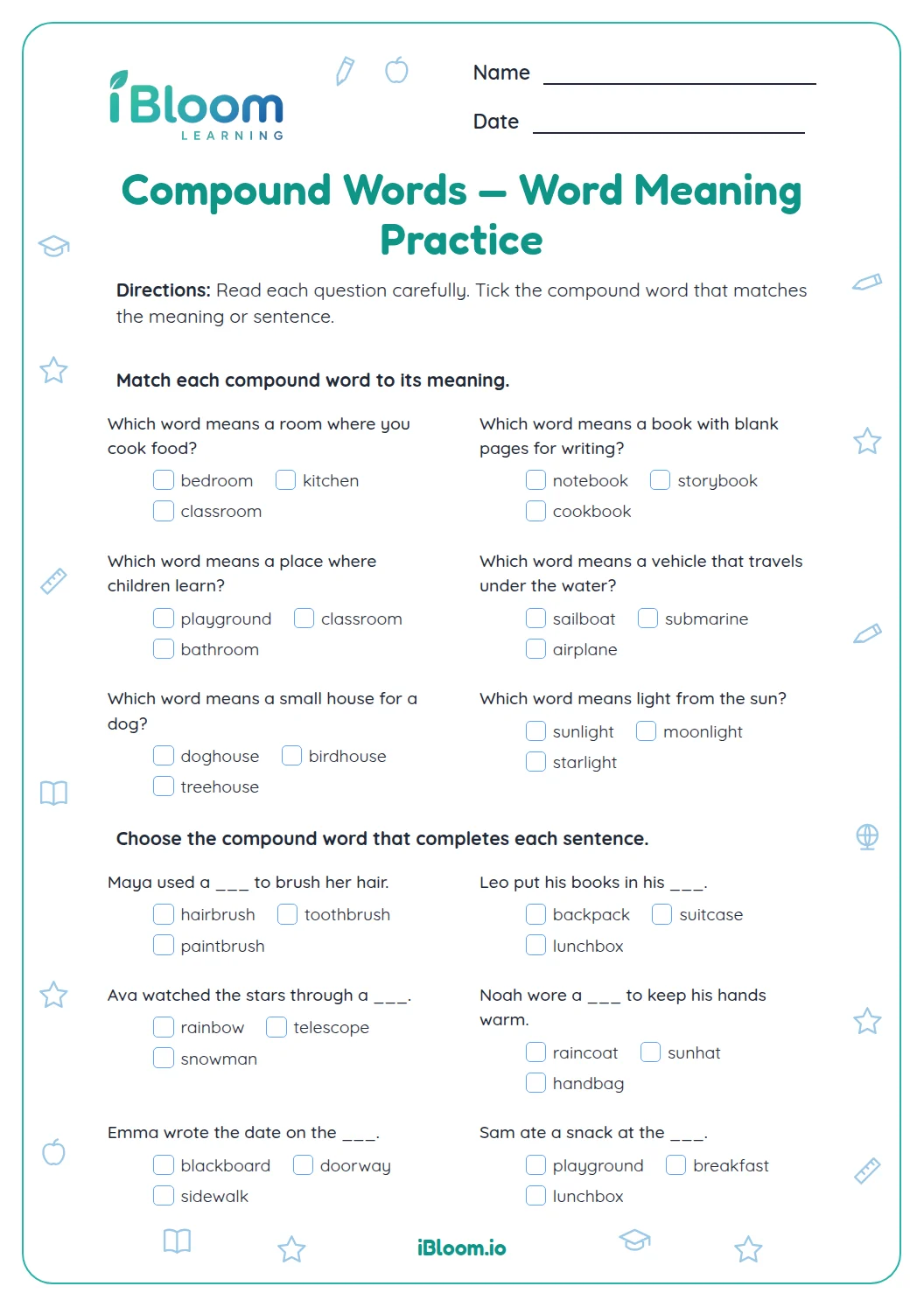
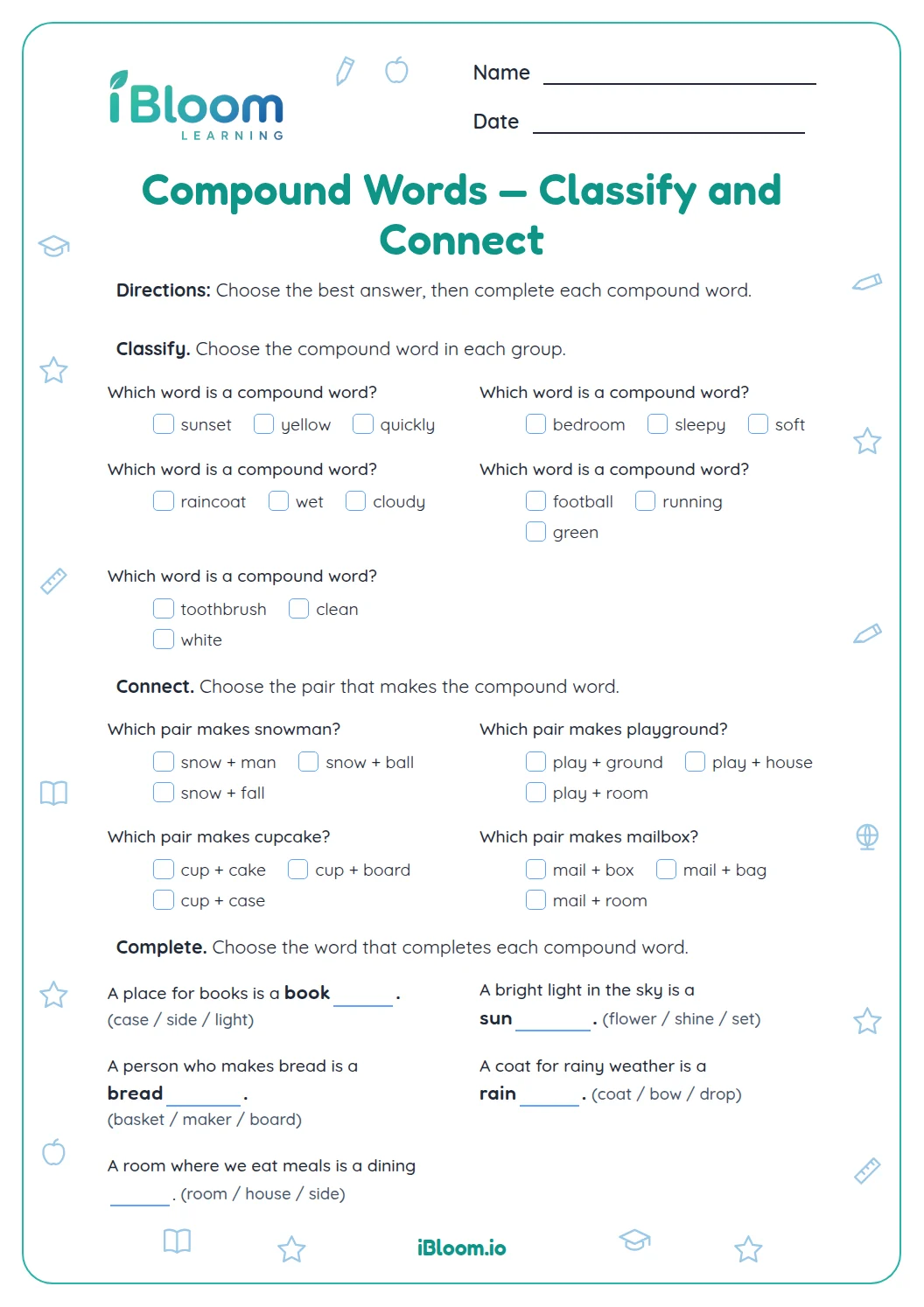
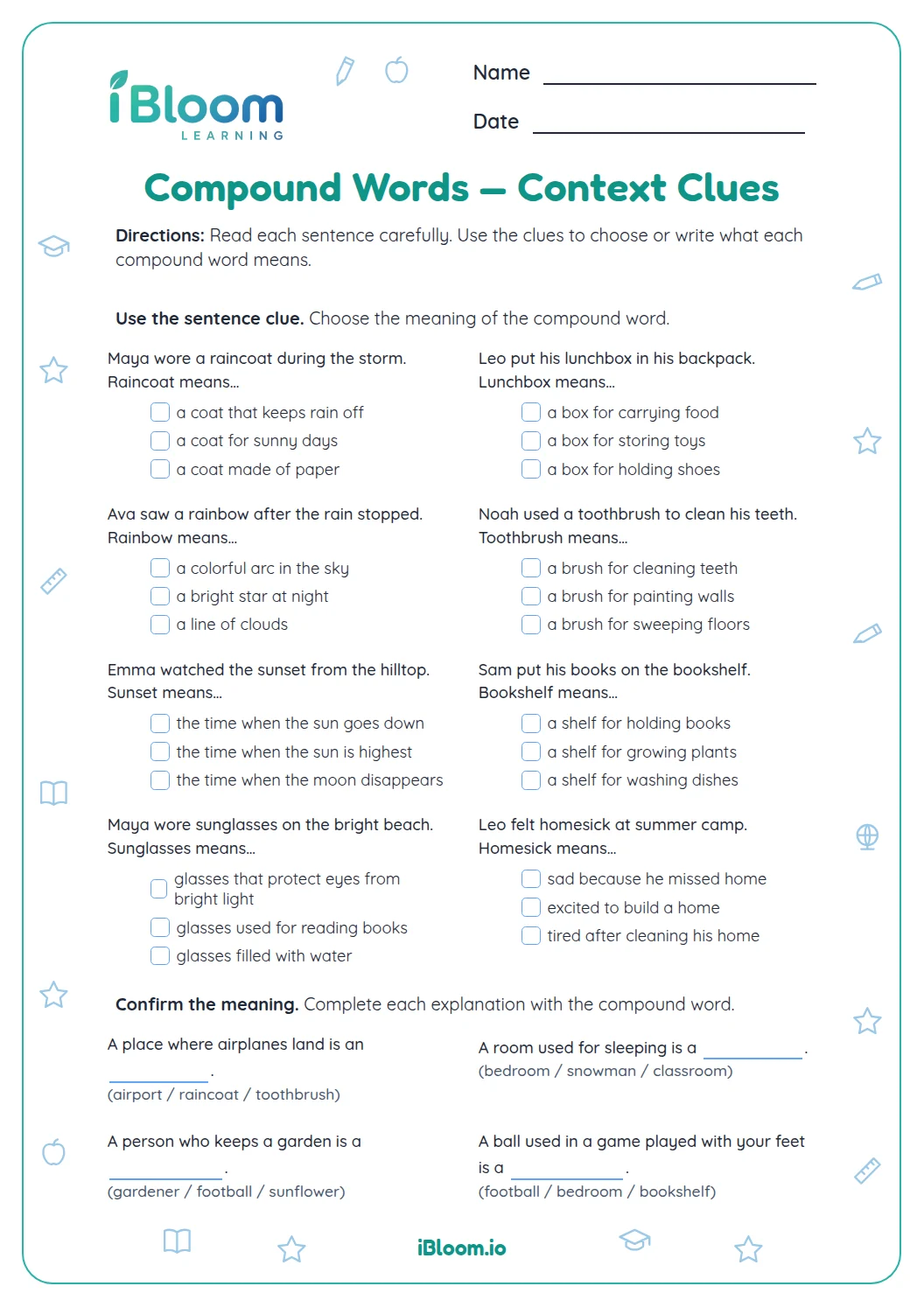
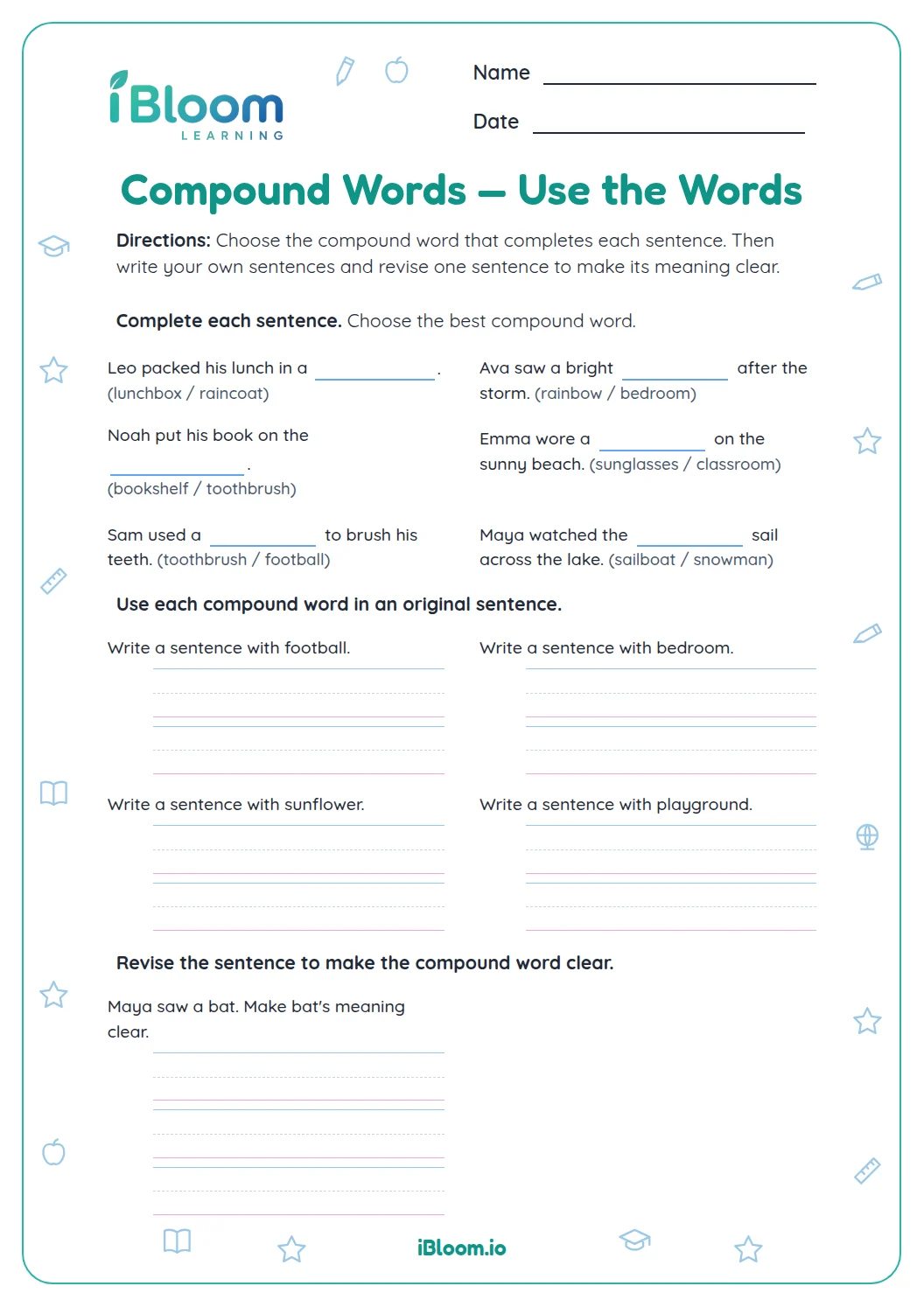
This Grade 3 vocabulary worksheet practices CCSS L.3.4 through two kinds of multiple-meaning word questions. In Part A, children read a sentence and choose which meaning fits words such as bat, ring, bark, and light. In Part B, they match a word to two clue meanings, such as a season and a bouncing coil for spring. A matching answer key marks all 16 correct choices.
Aligned to L.3.4
What are multiple-meaning words?
A multiple-meaning word has more than one meaning. A bat can be an animal or sports equipment; a ring can be jewelry or a sound. Readers use the surrounding words to work out which meaning fits.
How do sentence clues help?
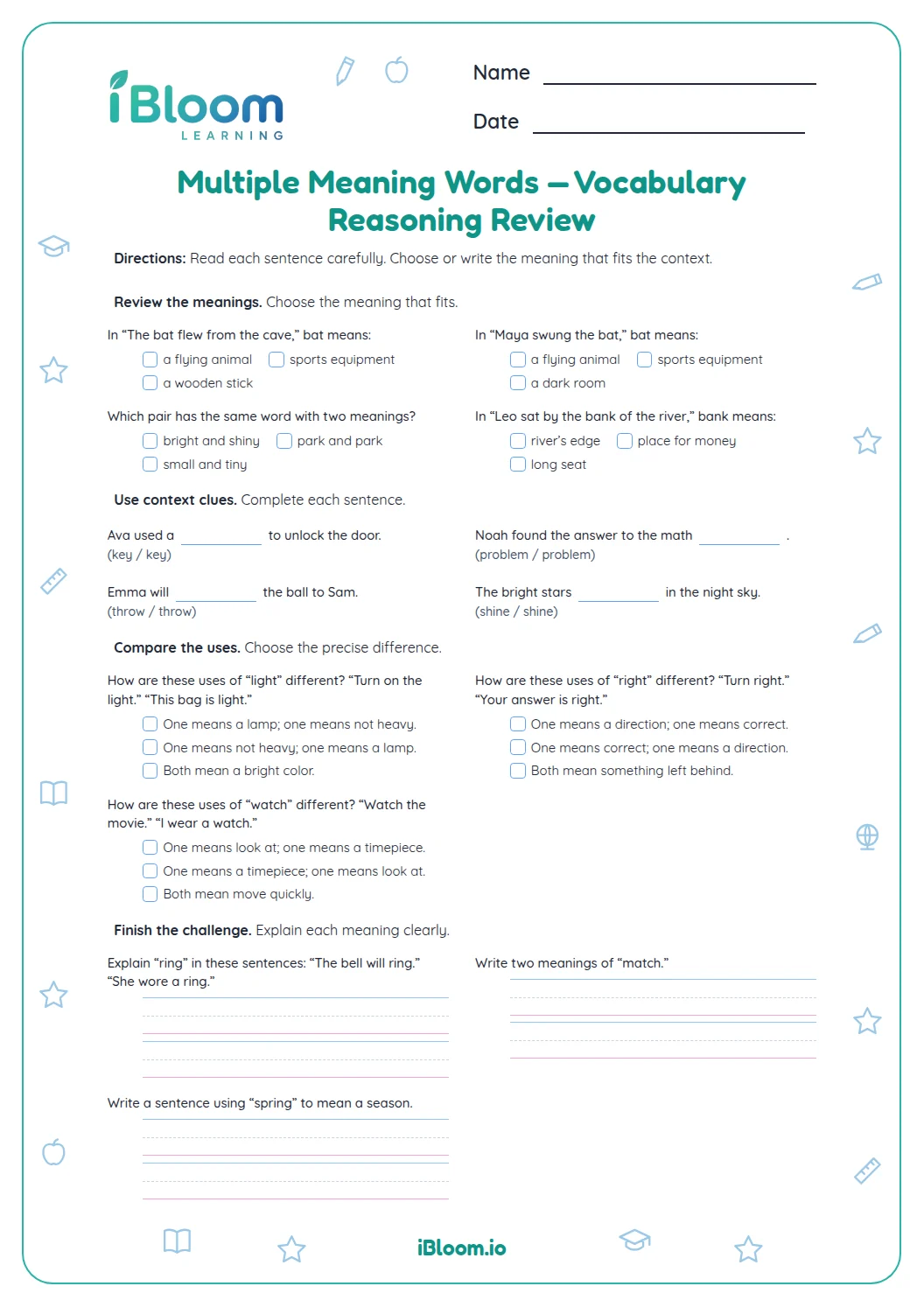
In “The bat flew from the cave,” flew and cave point to an animal. Try each meaning in the sentence: “The sports stick flew from the cave” does not fit as well as “The animal flew from the cave.”
- 1The bat flew from the cave.
- 2Clues: flew, cave
- 3Meaning: an animal
What does “classify and connect” mean here?
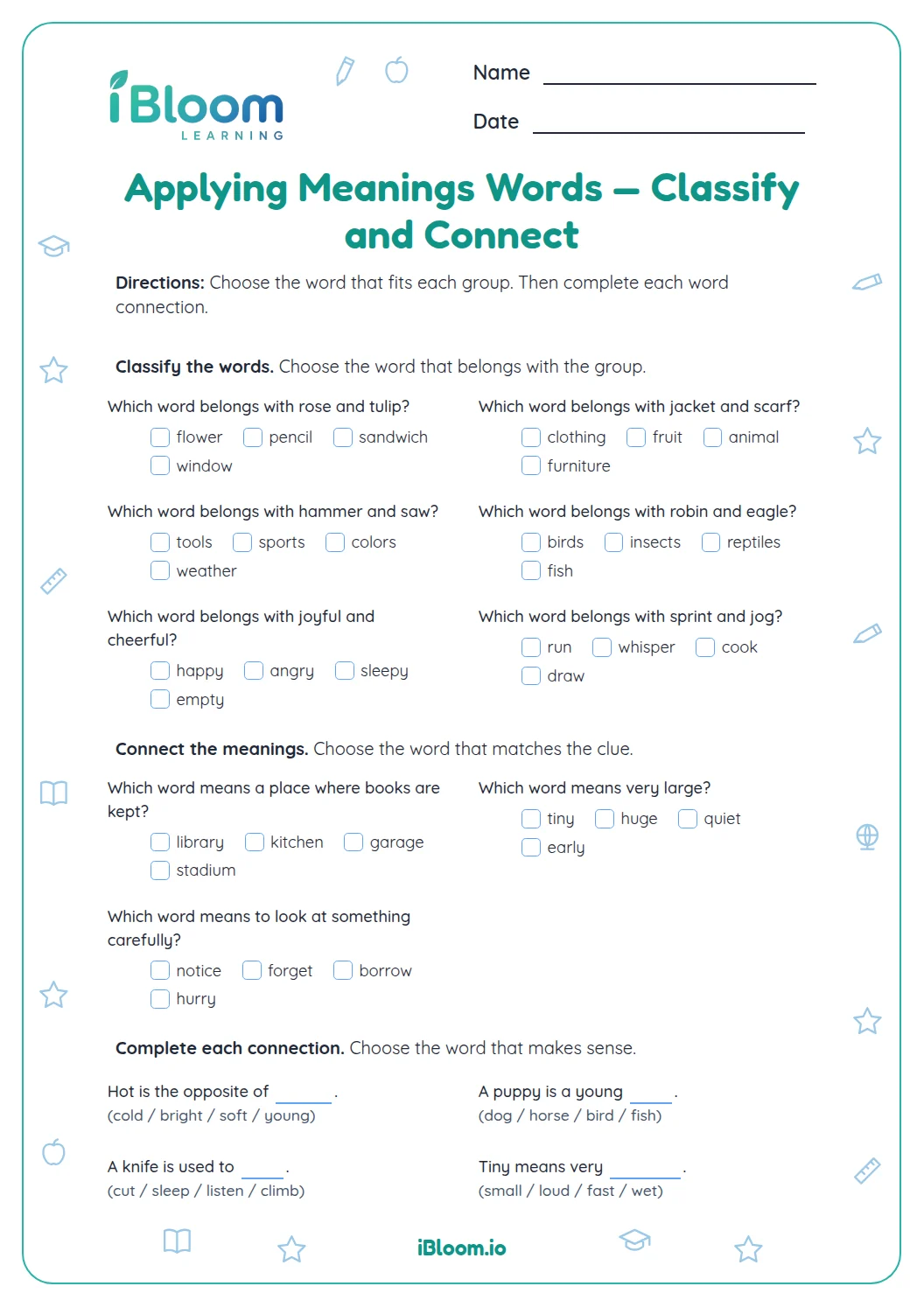
Part A has eight context questions. Part B gives two clue meanings and asks for one word that fits both. For example, spring names a season after winter and a coil that bounces.
How to use this worksheet
- 1Read the full sentence or both clues.
- 2Notice words that point toward a meaning.
- 3Try each choice in the sentence.
- 4For a connection question, check the choice against both clues.
- 5Choose the answer that fits the context or both meanings.
- 6Use the key to review any choice that did not fit.
Common mistakes and quick fixes
The mistake
Choosing a familiar meaning without reading the sentence.
The fix
Read all the clue words first; “flew from the cave” points to an animal bat.
The mistake
Picking a word that fits only one of two clues.
The fix
Test the choice against both meanings before selecting it.
The mistake
Confusing a related clue with the target word.
The fix
The question asks for one word that carries both meanings, not a word related to only one clue.
Common Core alignment
Use sentence clues and paired meanings to clarify multiple-meaning words.
On this sheet: Part A uses sentence context; Part B connects multiple meanings of familiar words.
Show the official wordingHide the official wording
Determine or clarify the meaning of unknown and multiple-meaning word and phrases based on grade 3 reading and content, choosing flexibly from a range of strategies.
What to practice next
Make more practice
Further reading
Questions parents and teachers ask
What is a multiple-meaning word?
It is one word that has more than one meaning. On this sheet, bat can name an animal or sports equipment, while bark can mean tree covering or a dog sound. The sentence or pair of clues helps readers decide which meaning is intended.
How do sentence clues help with the answer?
Other words in a sentence narrow the meaning. “The bat flew from the cave” includes flew and cave, which fit an animal. “The bat hit the ball” includes hit and ball, which fit sports equipment. Read the complete sentence before choosing.
What happens in the connection part?
Each question gives two clues and three word choices. Choose the word that fits both clues. For example, spring can mean the season after winter and a coil that bounces, so it connects both meanings. The key lists the correct choices.
Are all the words used twice?
The worksheet revisits several words in more than one context, including bat, ring, bark, and light. Seeing the same word in different sentences lets children compare how the surrounding clues change the intended meaning. It includes eight sentence examples.
How many questions are included?
There are 16 multiple-choice questions. The first eight use sentence clues, and the next eight ask children to connect a word to two meanings. The matching three-page answer key marks the correct choice for every question, in the same numbered order.