



About this worksheet
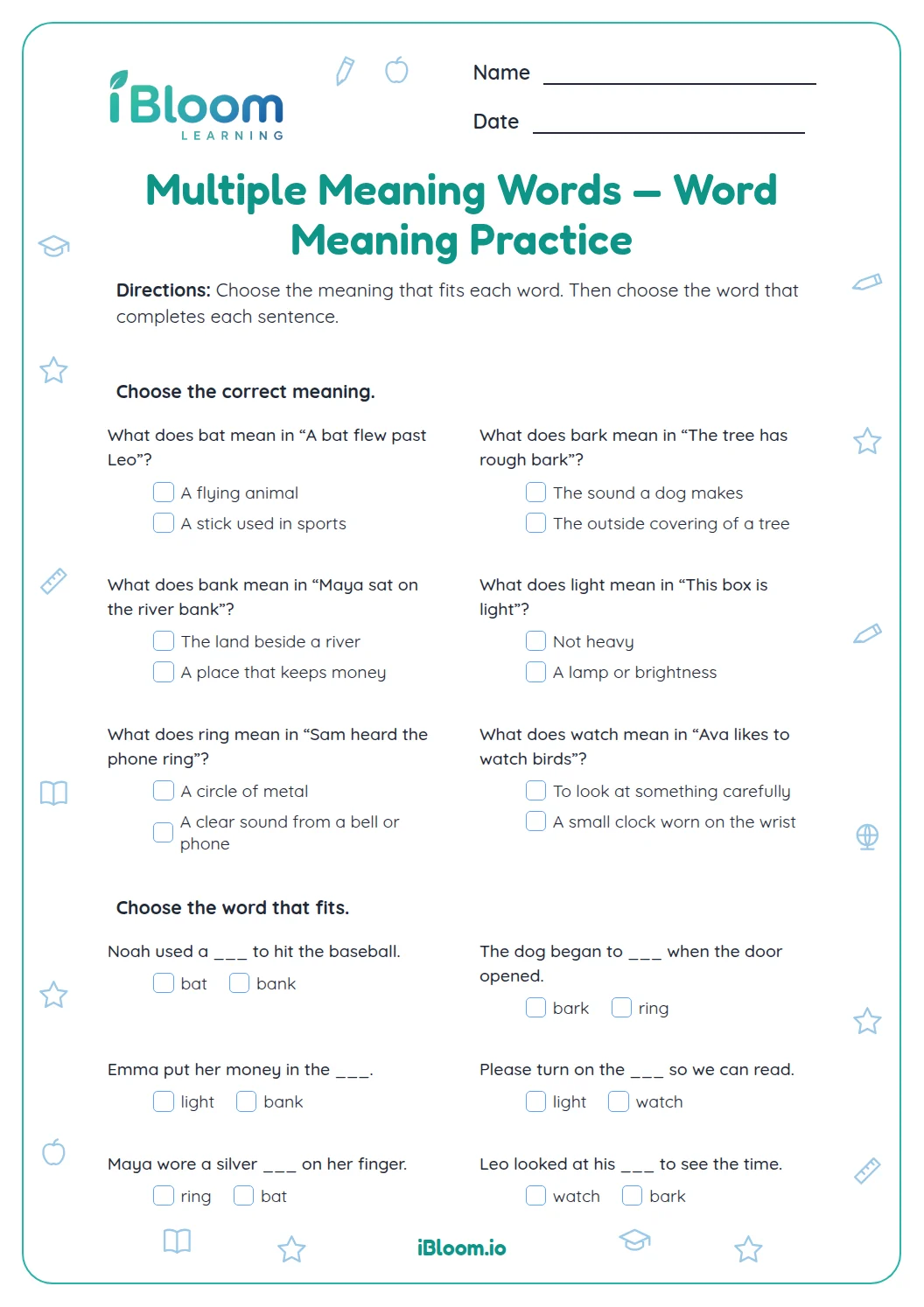
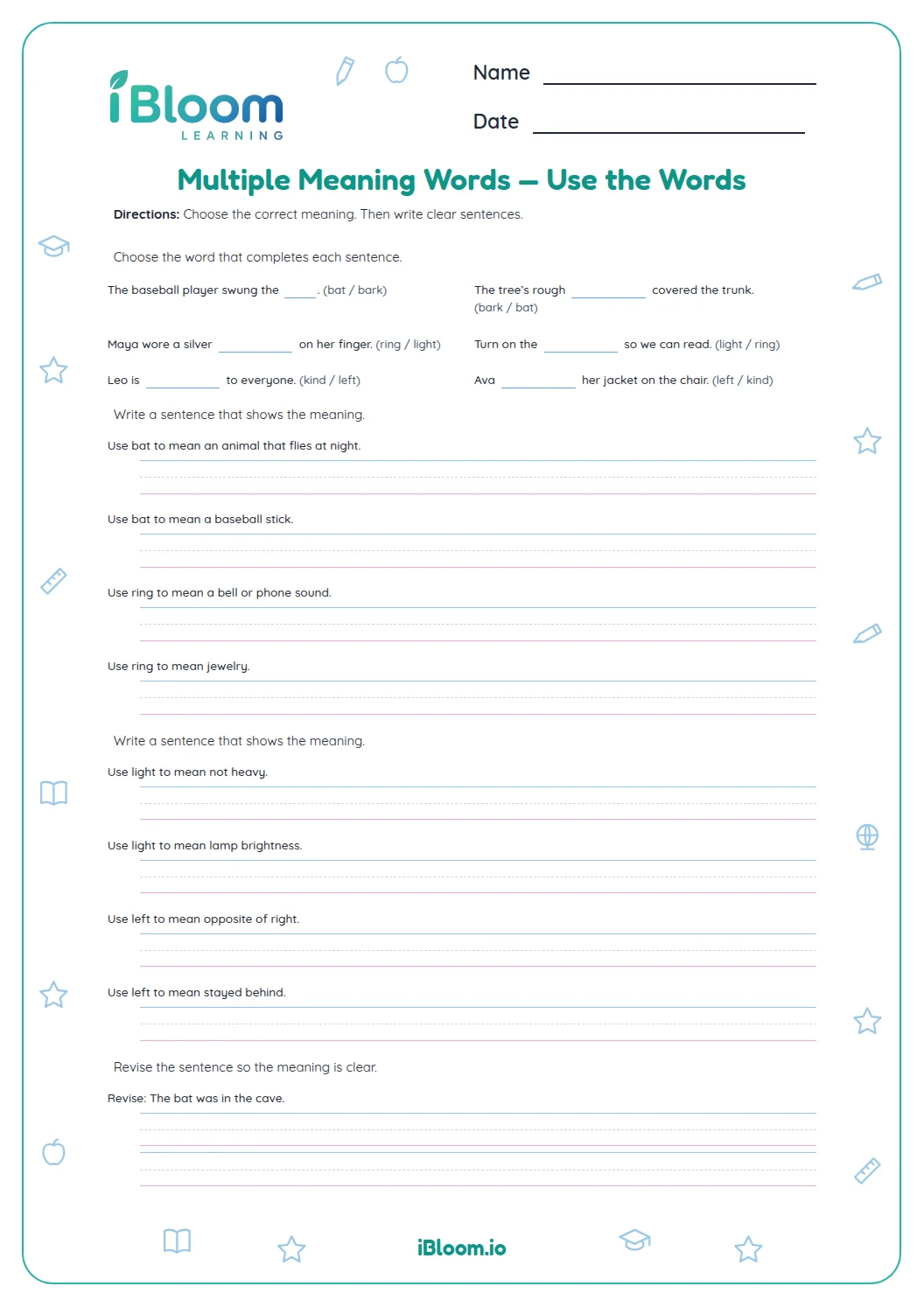
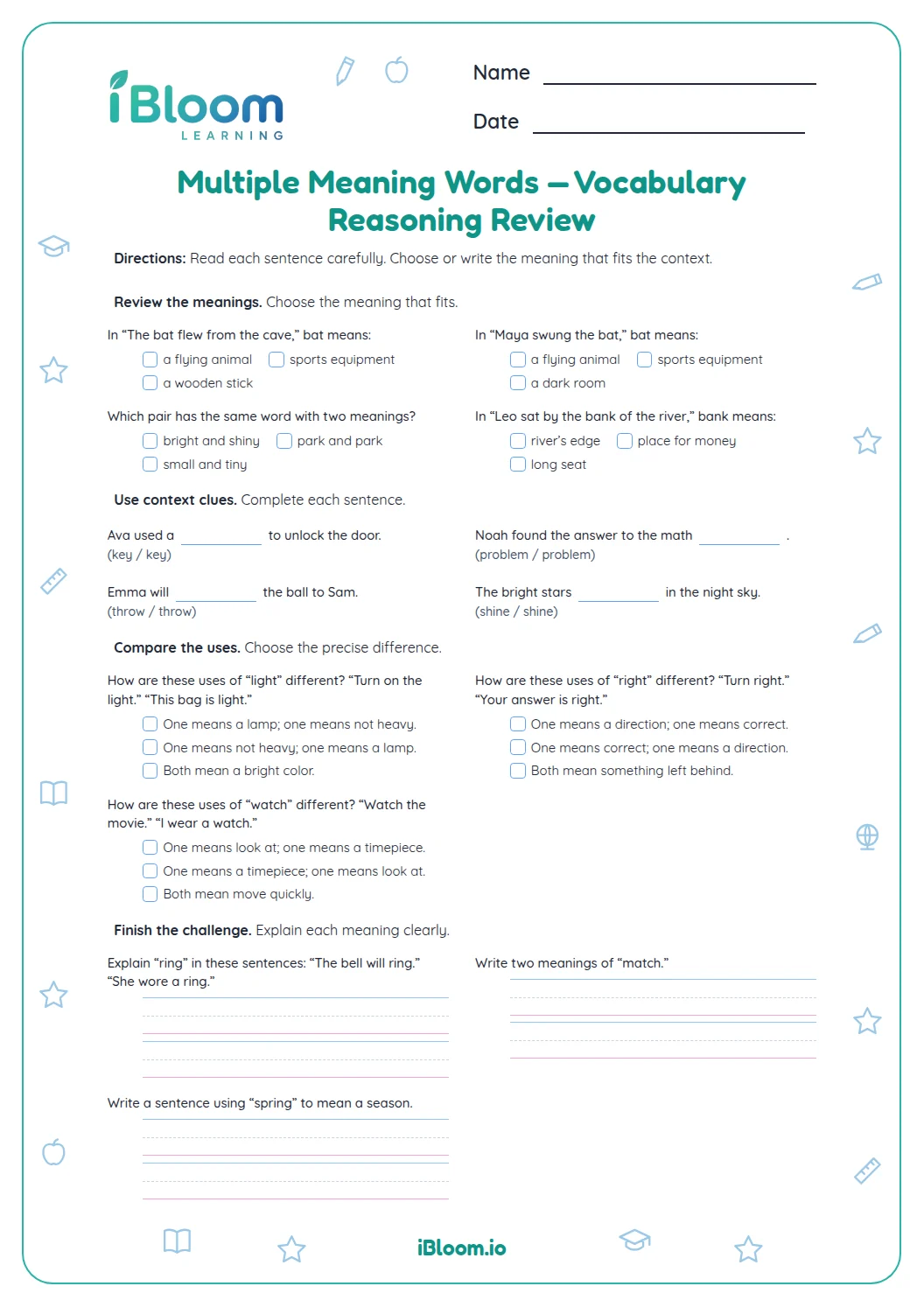
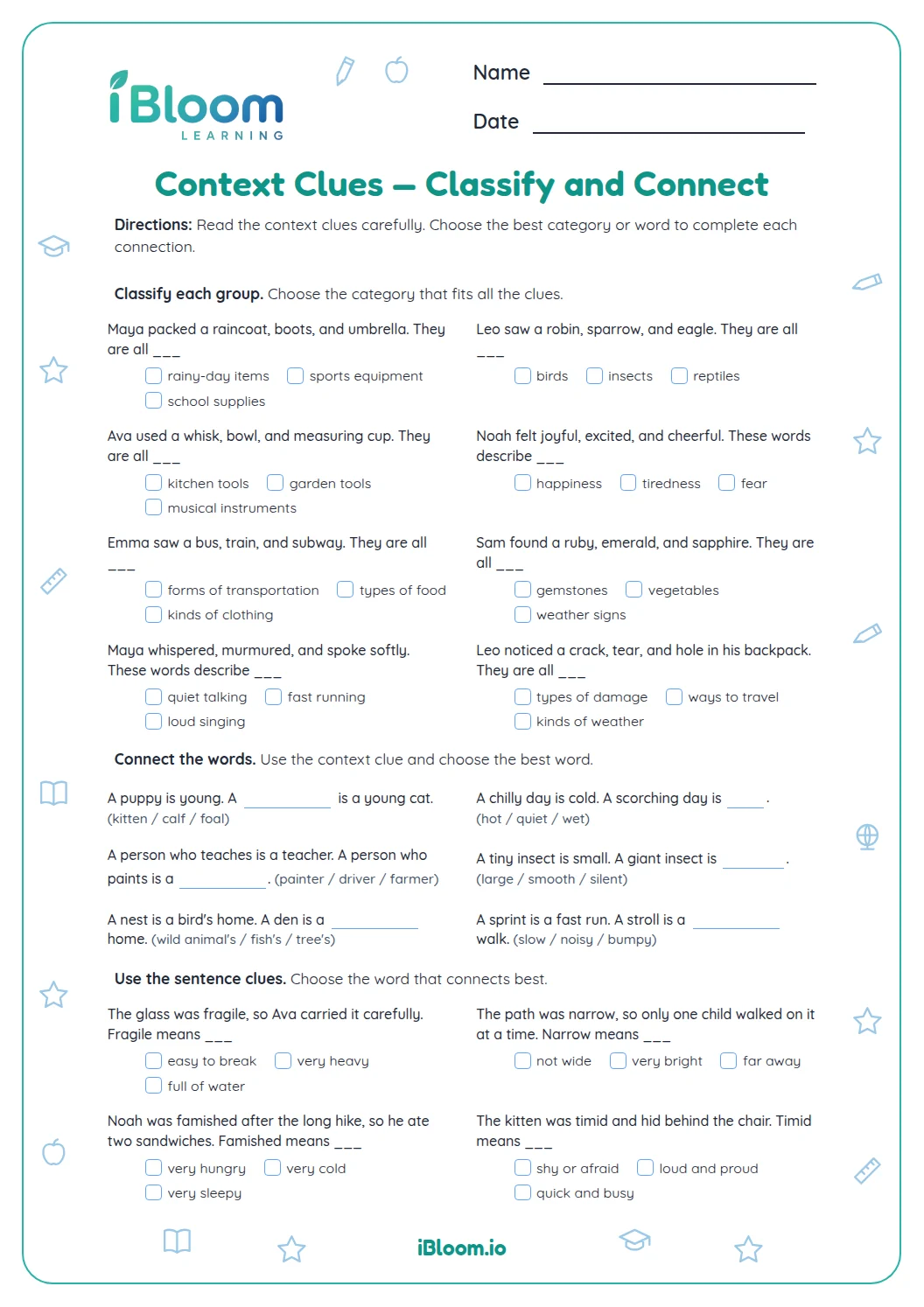
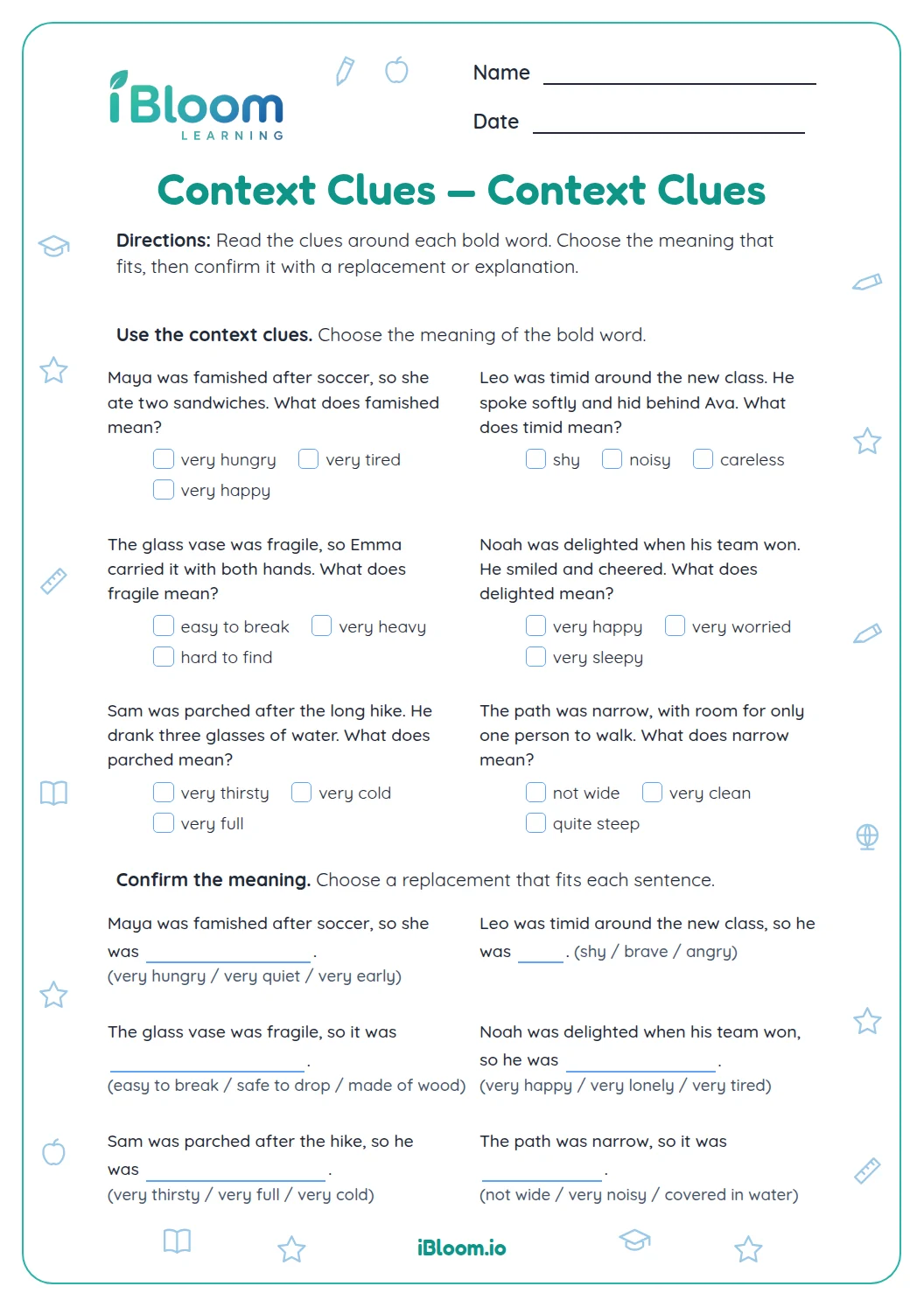
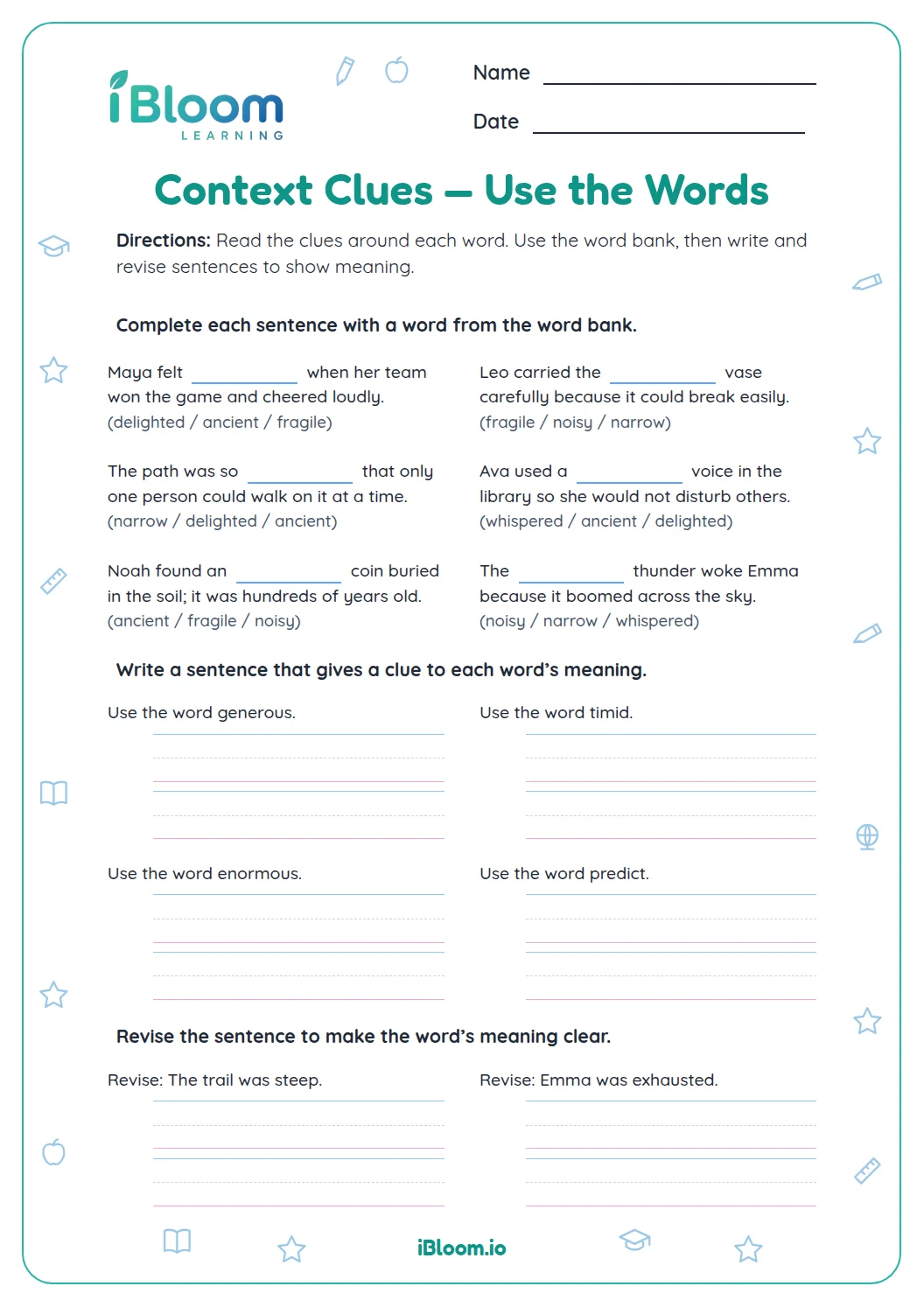
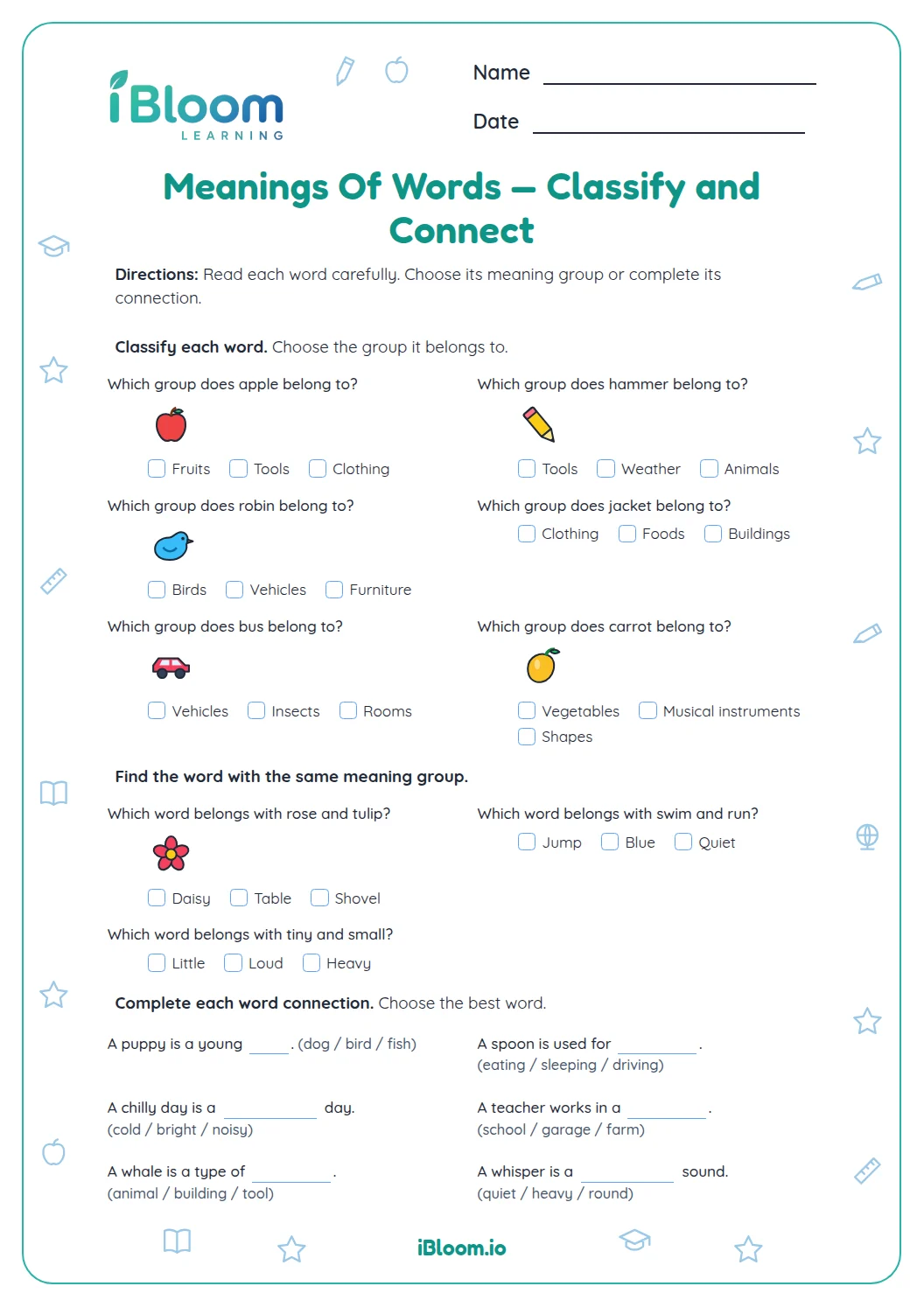
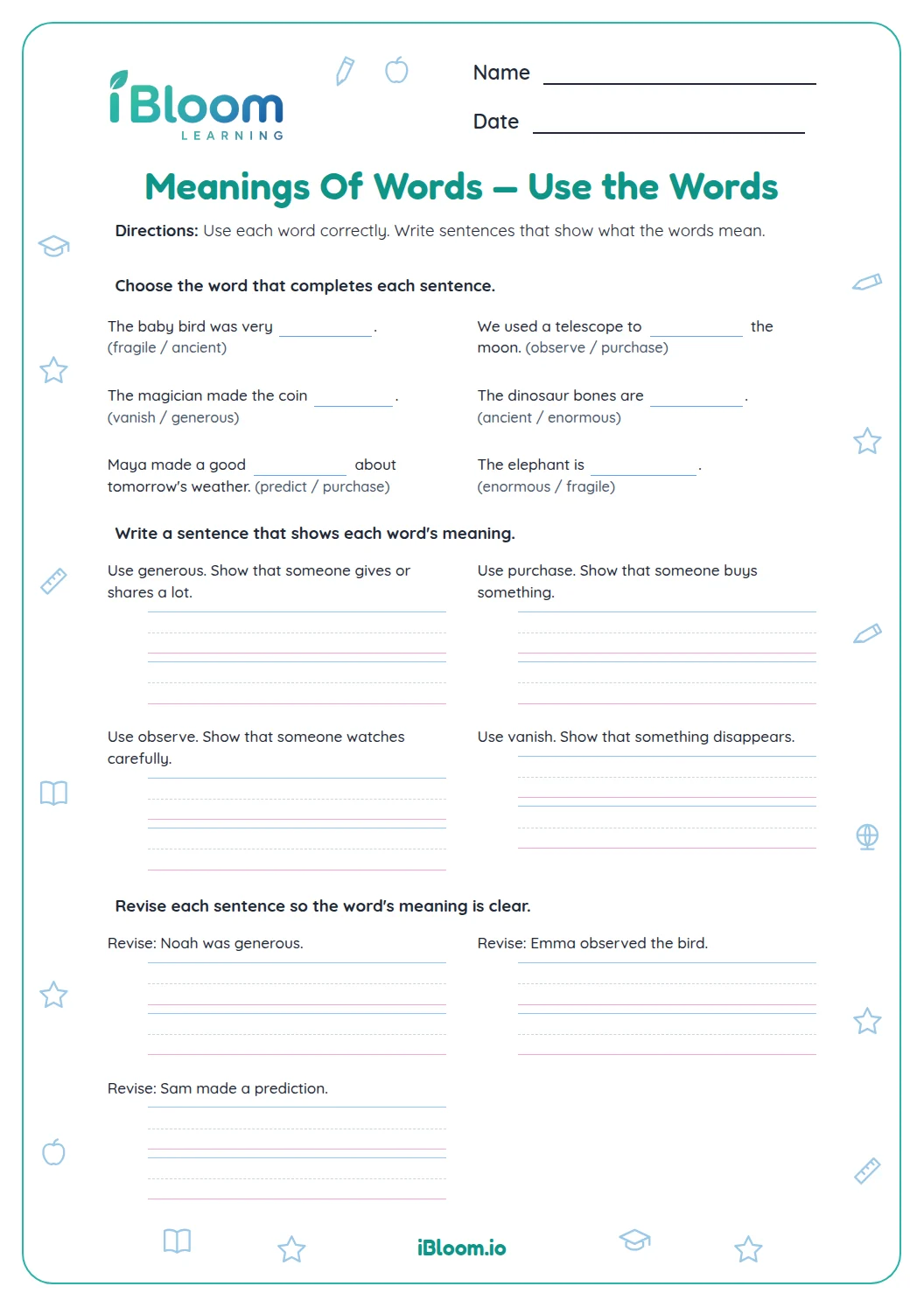
This free Grade 3 worksheet helps readers use sentence-level context to identify the intended meaning of a multiple-meaning word. Eight multiple-choice items ask children to choose a meaning that fits; eight fill-in items ask them to supply the word that matches a sentence and paired definitions. The practice aligns with CCSS L.3.4a. A separate answer key is included.
Aligned to L.3.4a
How do context clues work?
A sentence often contains information that narrows a word to one meaning. Instead of choosing the first meaning that comes to mind, read the whole sentence and substitute each possible meaning. The meaning that fits the action and details is the best match.
What kinds of words appear on the sheet?
The choices include words such as hole, watch, park, pitcher, light, wave, plant, and bat. In the last section, each sentence presents two possible meanings, then gives a clue so the learner writes the matching word.
- 1The pitcher threw the ball.
- 2Clue: threw the ball
- 3A drink container cannot throw a ball.
- 4Answer: the player who throws.
How can learners explain their choices?
Ask which exact words gave the clue. In “The pitcher threw the ball,” the verb threw points to a player. Naming the clue helps children show how they reached an answer and makes the strategy useful with other reading.
How to use this worksheet
- 1Read the whole sentence before looking at the options.
- 2Notice an action or object that gives a clue.
- 3Try each meaning in the sentence and keep the one that makes sense.
- 4For fill-ins, match the sentence clue to the word with that meaning.
- 5Check the answer key and name the clue for any missed item.
Common mistakes and quick fixes
The mistake
Picking the most familiar meaning automatically.
The fix
Substitute the other meaning and see whether the sentence still makes sense.
The mistake
Using only the target word and ignoring the sentence.
The fix
Point out the nearby clue, such as threw, river, or spill.
The mistake
Writing a related but different word in a blank.
The fix
Match both the definition and the sentence context before filling it in.
Common Core alignment
Use sentence-level context to determine which meaning of a word fits.
On this sheet: Each question asks learners to use a sentence context to identify a multiple-meaning word’s intended meaning.
Show the official wordingHide the official wording
Use sentence-level context as a clue to the meaning of a word or phrase.
What to practice next
Make more practice
Further reading
Questions parents and teachers ask
What are multiple-meaning words?
They are words with more than one meaning. The sentence helps a reader decide which meaning is intended. On this sheet, watch can mean look after or a clock, while the sentence about soup spilling points to looking after it.
How do context clues help?
Context clues are words around an unfamiliar or multiple-meaning word that help explain it. Read the entire sentence, try each possible meaning in place of the target word, and keep the one that makes sense. Question 2 uses soup and spill as clues for watch.
What is the answer to question 4?
Pitcher means the player who throws because the sentence says the pitcher threw the ball. A pitcher can also be a container, but a container would not throw a ball. The answer key lists this choice and the remaining 15 answers.
Why are some questions multiple choice and others fill-in?
The first eight questions let children focus on identifying a meaning from a short sentence. The last eight ask them to supply the word that fits a pair of meanings and a sentence clue. Both formats make the child use context rather than guess from the target word alone.
Can a word have more than two meanings?
Yes. A word may have several meanings, and one sentence may point to just one of them. This worksheet shows two possibilities at a time so Grade 3 readers can compare them carefully. A dictionary can help explore more meanings after the sentence clue is identified.
How long will this worksheet take?
About 15 to 20 minutes is a useful estimate for 16 items. Some children may finish sooner; others may want to explain which words in each sentence gave the clue. That explanation is good practice because it shows how they selected the meaning.