
About this worksheet
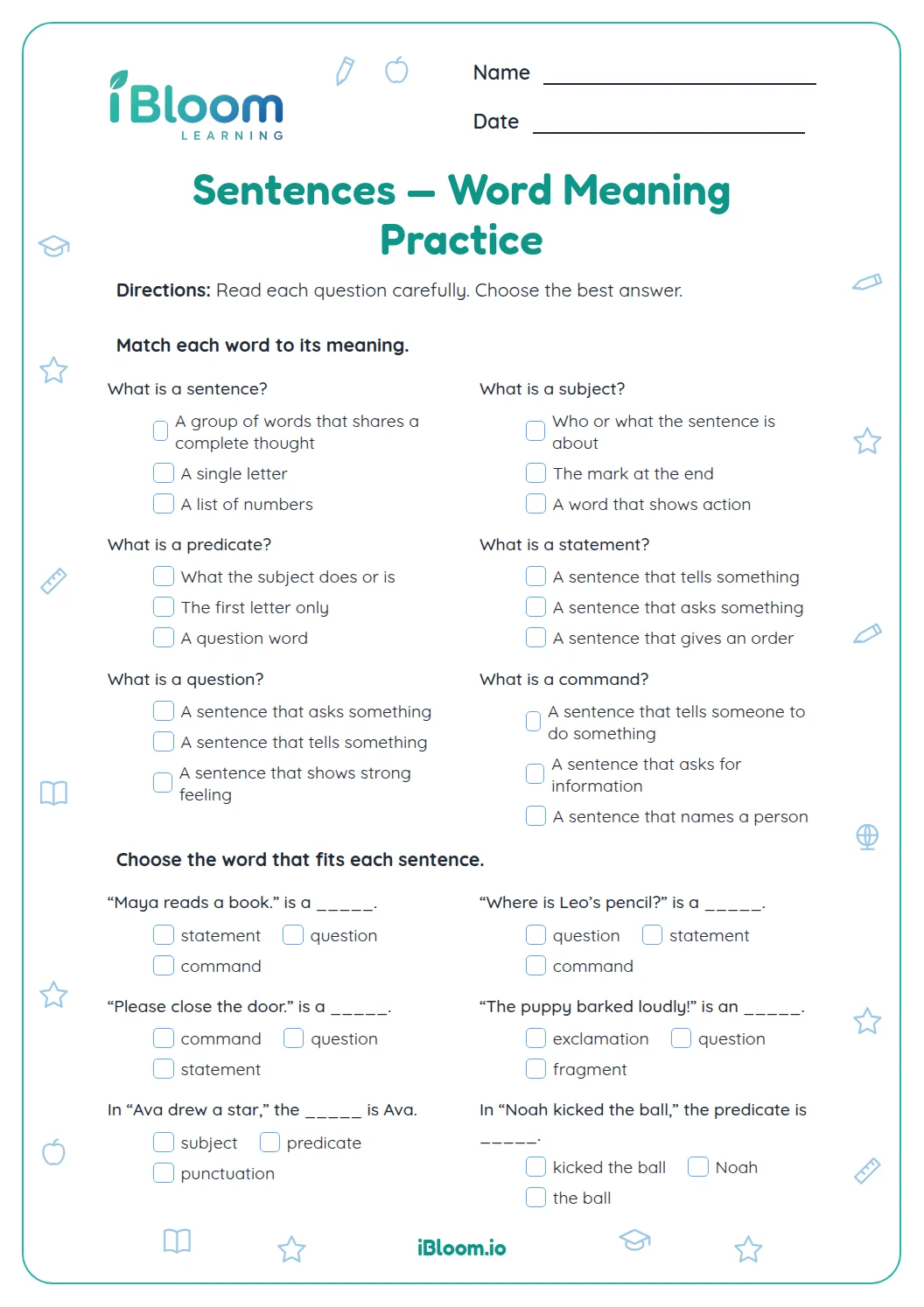
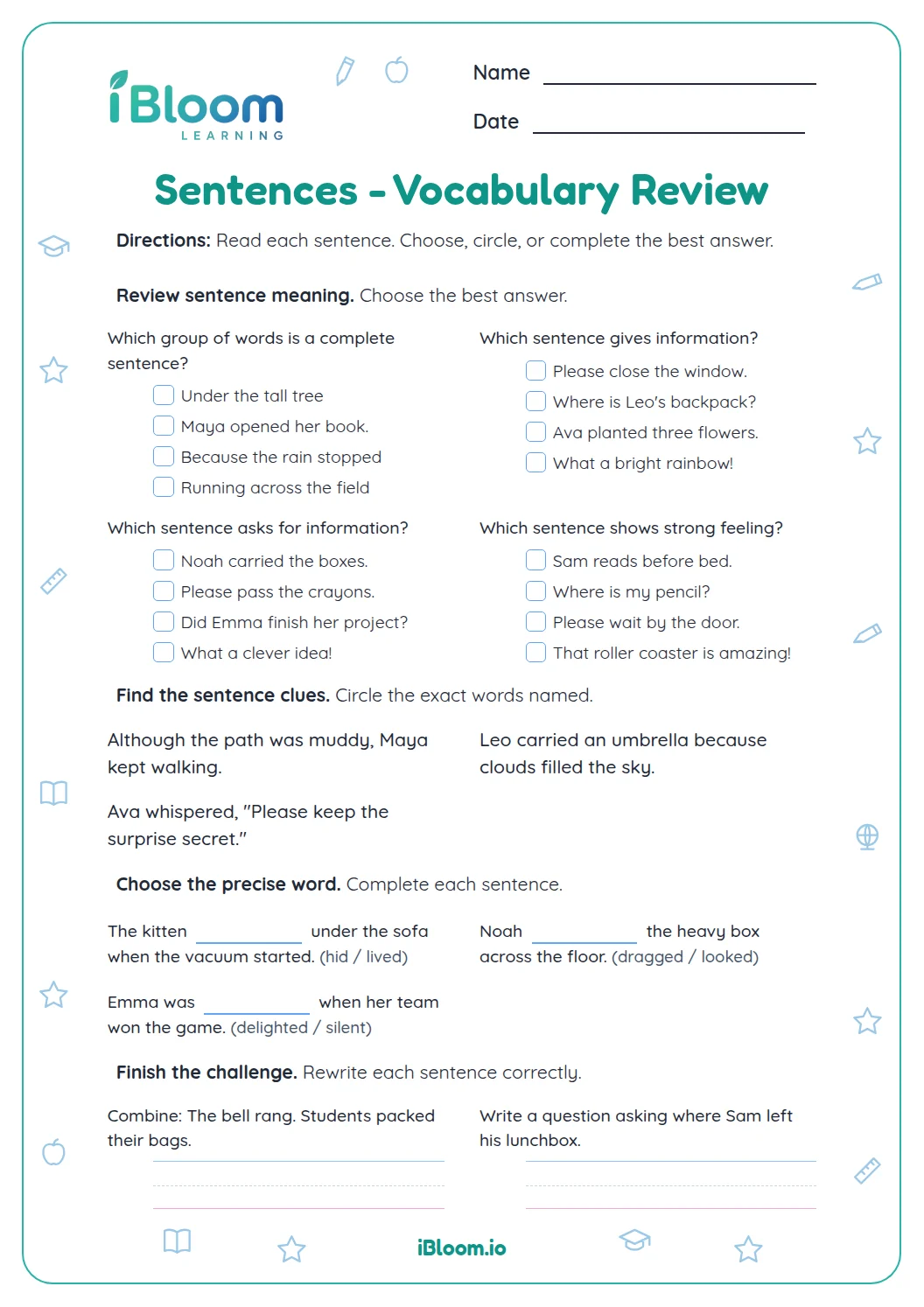
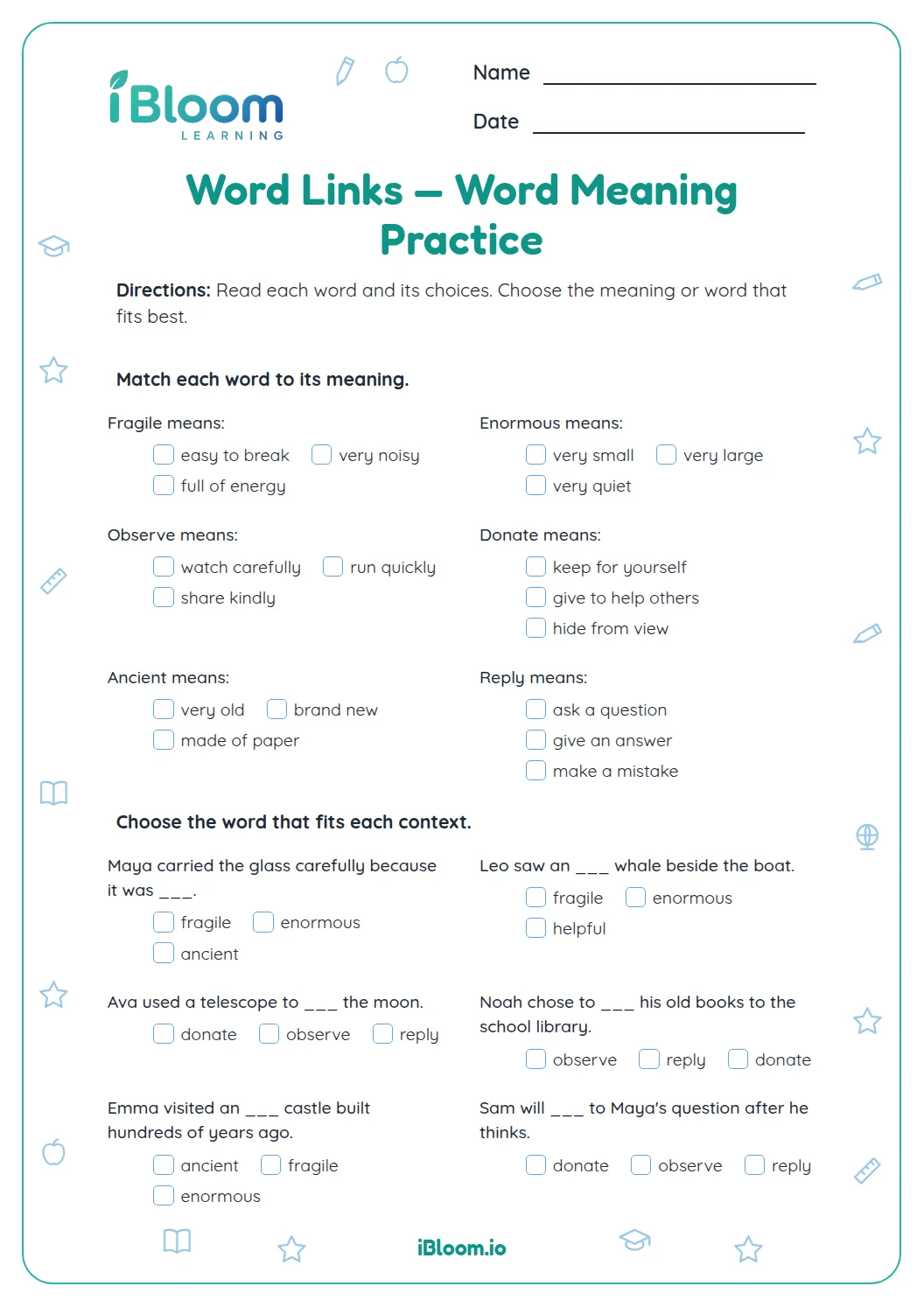
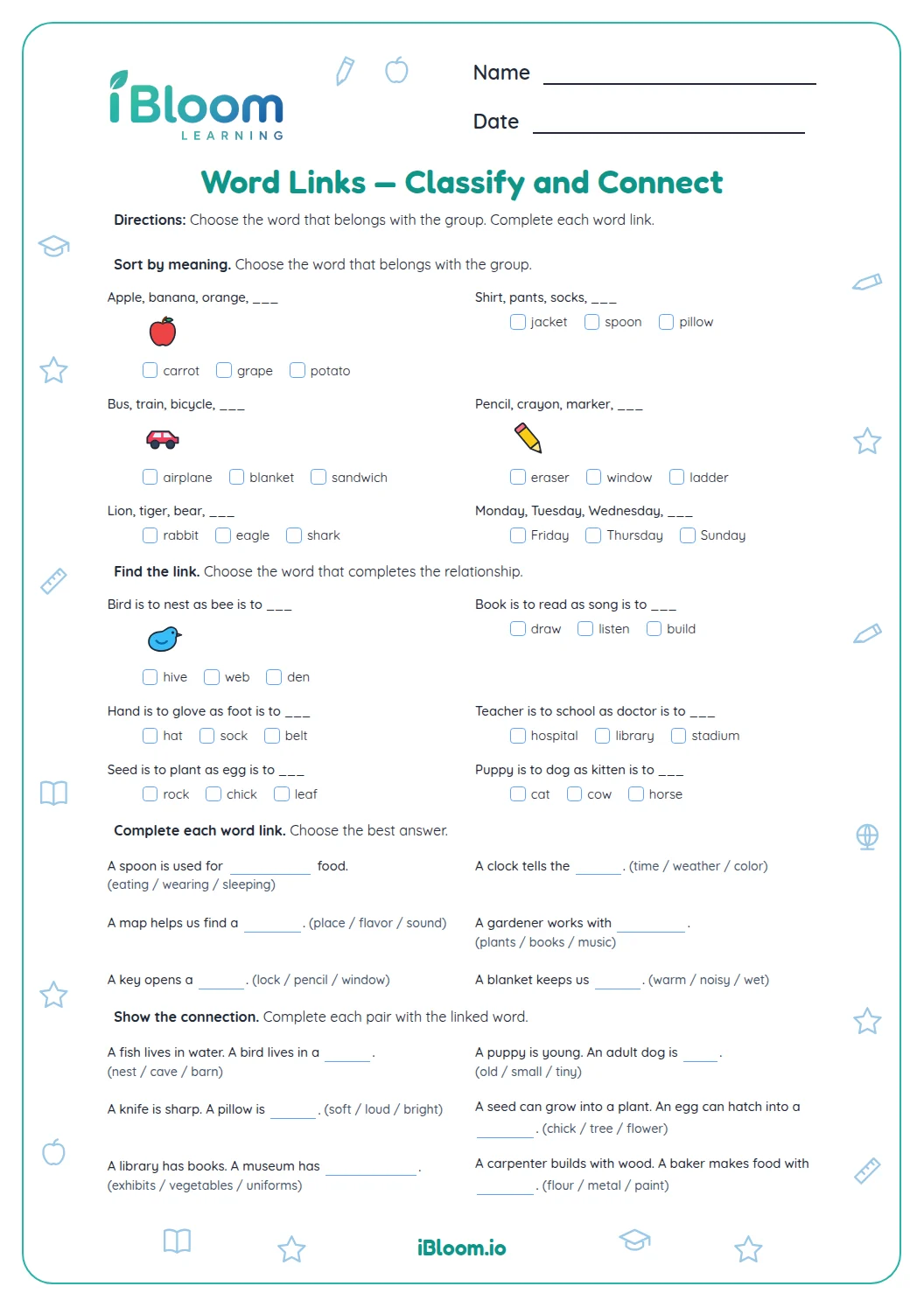
This printable Grade 3 worksheet gives children focused practice with sentence types and conjunctions. It includes 14 questions across 8 sentence type choices, 6 conjunction choices, moving from recognition to using the skill in new examples. The answer key is provided on its own page. The worksheet aligns with L.3.1h.
Aligned to L.3.1h
How can a sentence be classified?
A statement tells something, a question asks, a command tells someone what to do, and an exclamation expresses strong feeling. Part A gives eight sentences with varied punctuation. Read the whole sentence and listen to how it would sound aloud before choosing a type.
How do conjunctions connect ideas?
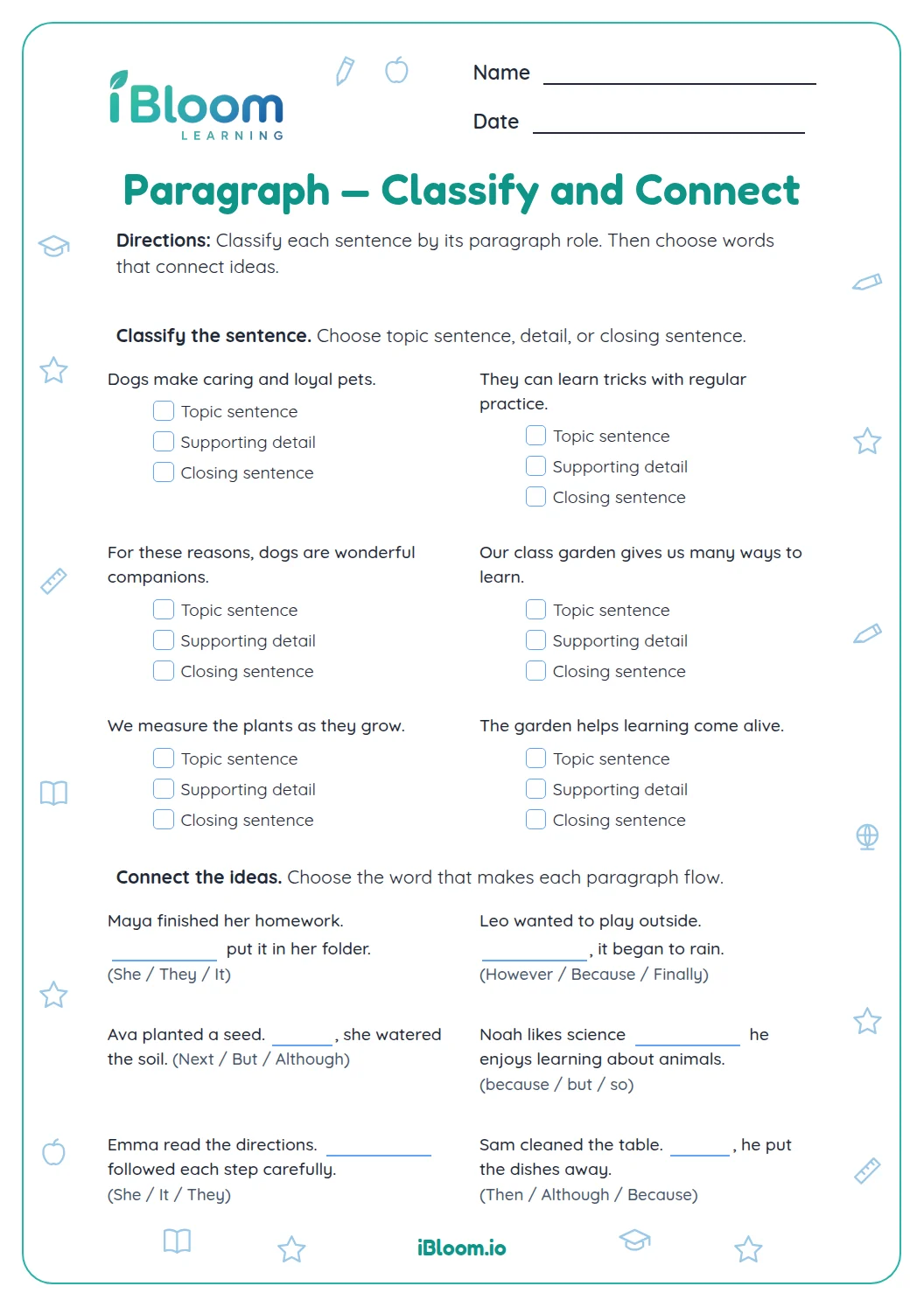
A joining word shows how two ideas fit together. And adds information, but signals a contrast, so gives a result, because gives a reason, and or offers a choice. In “Maya wanted to play outside, but it was too cold,” but connects contrasting ideas.
- 1Maya wanted to play outside, ___ it was too cold.
- 2The ideas contrast.
- 3Choose but.
What does this worksheet include?
Part A has eight classification questions about statements, questions, commands, and exclamations. Part B has six fill-in-the-blank sentences using coordinating or subordinating conjunctions. The answer key identifies the sentence type or joining word for every item.
How to use this worksheet
- 1Read the sentence and notice its ending punctuation.
- 2Ask whether it tells, asks, directs, or expresses strong feeling.
- 3For Part B, read the ideas on both sides of the blank.
- 4Choose a conjunction that matches their relationship, then reread.
Common mistakes and quick fixes
The mistake
Calling every sentence with an exclamation mark an exclamation.
The fix
Read its meaning and tone too; punctuation alone is not the full clue.
The mistake
Choosing a conjunction that merely sounds familiar.
The fix
Decide whether the ideas add, contrast, give a reason, show a result, or offer a choice.
The mistake
Reading only one side of the blank.
The fix
Read both ideas so the joining word matches their relationship.
Common Core alignment
This worksheet practices the listed Grade-level language or mathematics skills through short, varied items.
Choose conjunctions that connect related ideas.
On this sheet: Part B uses coordinating and subordinating conjunctions to connect ideas in complete sentences.
Show the official wordingHide the official wording
Use coordinating and subordinating conjunctions.
What to practice next
Make more practice
Further reading
Questions parents and teachers ask
What are the four sentence types in Part A?
Part A asks learners to identify statements, questions, commands, and exclamations. A statement tells something, a question asks, a command gives a direction, and an exclamation expresses strong feeling. The eight items use complete Grade 3 sentences and varied punctuation.
What does a conjunction do?
A conjunction joins words or ideas and signals how they relate. This worksheet uses words such as and, but, so, because, and or. Learners read the ideas on both sides of the blank before choosing the joining word that makes the sentence clear.
How can I explain the difference between but and so?
But joins ideas that contrast: Maya wants to play outside, but it is too cold. So joins an action with its result: Leo finished his chores, so he watched a movie. Part B gives examples of these relationships for children to classify.
Is an answer key provided?
Yes. The separate key gives one sentence type for each Part A item and one conjunction for each Part B item. If an answer is missed, reread the sentence aloud and ask what the punctuation or relationship between ideas tells the reader.
Which Common Core skill does Part B practice?
Part B practices Grade 3 Language standard L.3.1.h: use coordinating and subordinating conjunctions. The six items ask learners to select a joining word that completes the sentence and connects its ideas in a sensible way across different sentence types. The answer key lists each correct choice in order.